Greenhouse Watering & Irrigation Guide: Manual vs Automatic Systems
The best greenhouse watering system is one that suits your plants and available water supply. Hand watering gives you close control. Drip irrigation and capillary matting can help when you are away, but both need testing. Check whether the equipment needs mains pressure, gravity feed or a pump. Match the reservoir and watering schedule to actual plant demand, rather than greenhouse size alone.
Key takeaways
- Check plants regularly and water according to need. A fixed daily or weekly schedule will not suit every season.
- Drip irrigation delivers water near the roots. Set up the outlets carefully and check their flow.
- A water butt stores rainwater; how much you collect depends on rainfall and roof area.
- Consistent moisture helps prevent problems such as blossom end rot in tomatoes.
- Try your holiday setup before leaving, so you know how often it needs refilling.
- Rainwater is useful for established plants. Use fresh mains water for vulnerable seedlings and follow relevant plant-care advice.
Expert Tip
Work out how you will refill the system before buying it. A water butt may be convenient, but a dry spell can leave it empty. Keep a backup watering plan and make sure you can reach every pot without moving half the greenhouse.
How often should you water a greenhouse?
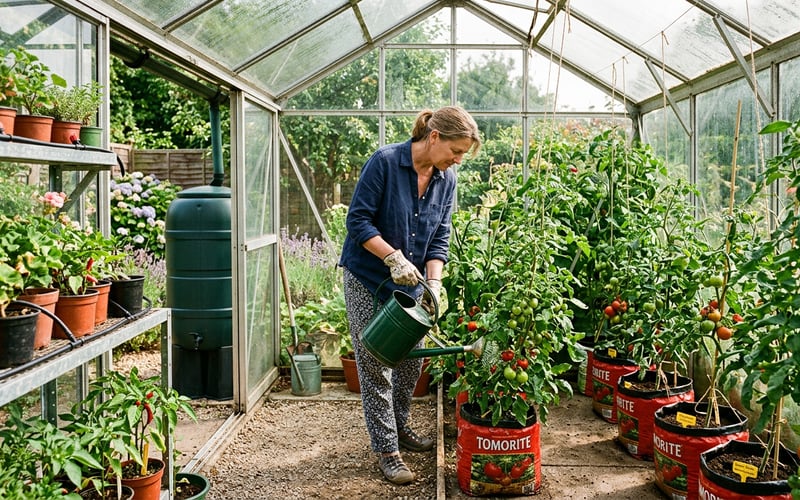
Check greenhouse crops daily in warm weather. Small pots and growbags may need more frequent attention, while dormant plants need much less water. Morning watering is convenient, but water a dry, wilting plant when it needs it.
Feel the compost below the surface and check the weight of small pots. Match watering to the crop and container. The top layer alone can be misleading, especially in a large pot.
| Season | What to check |
|---|---|
| Spring | Seedlings need consistent moisture; sunny days can dry small pots quickly. |
| Summer | Check daily and more often during heat. Adjust for crop size. |
| Autumn | Reduce watering as growth and water use slow. |
| Winter | Check before watering. Avoid leaving dormant roots wet and cold. |
Growbags and small containers can dry quickly in hot weather. Keep the root zone evenly moist without waterlogging it. Our tomato growing guide explains why consistent watering matters.
Six greenhouse watering methods compared
Choose according to your plants, water supply and time available. The options below suit different growing routines.
Hand watering with a can or hose
Hand watering works in any greenhouse you can comfortably keep up with. It lets you adjust each pot separately. Direct water towards the compost, using a fine rose for delicate seedlings. Check drainage rather than leaving containers standing in excess water.
Drip irrigation
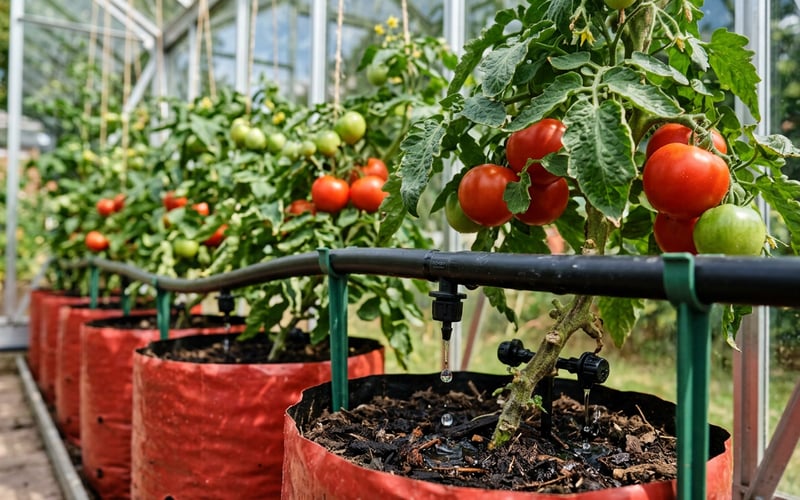
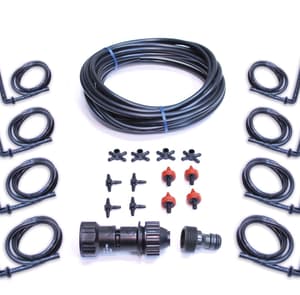
Drip irrigation supplies water through small outlets near the roots. Adjusting each outlet helps put water where your plants need it. The Palram Drip Irrigation Kit costs £45. Check its fittings, pressure requirements and included components before ordering.
Shop the Palram Drip Irrigation Kit →
Lay out the tubing before cutting it. Position outlets for the actual pots or beds, then check that each delivers water. Do not assume one outlet suits every container or that extra kits will work without checking the supply.
Capillary matting
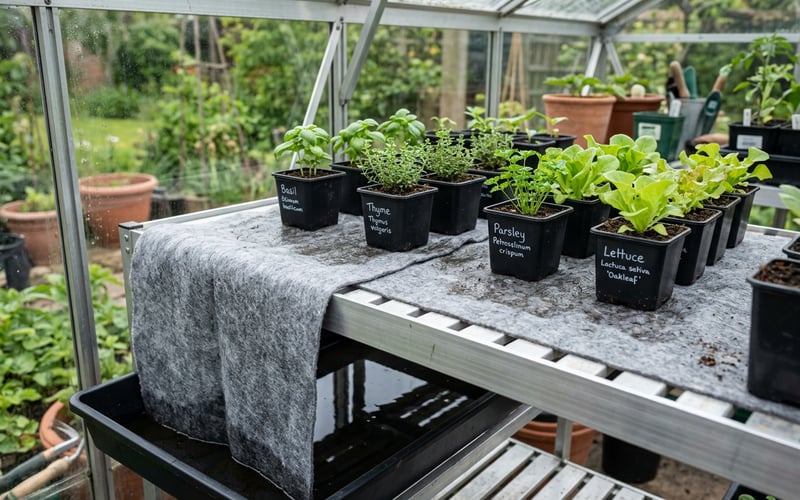
Capillary matting moves water into suitable pots through contact with moist compost at their drainage holes. Wet the mat thoroughly before use and follow its reservoir instructions. Pots must make good contact; an air gap can stop water reaching the compost.
Try a small group of pots first. Check whether each stays evenly moist over several days. Note how quickly the reservoir empties as the weather changes. Our greenhouse staging range can help you plan a suitable bench.
Expert Tip: test contact with the mat
Pot material alone does not determine whether capillary watering works. Check that the compost can draw water through the drainage holes. Raised pot feet, gaps and coarse drainage layers can interrupt contact. Remove any pot that stays too dry or becomes waterlogged.
Automatic timer systems
A timer turns the supply on and off; it does not know how wet every pot is. Choose one compatible with your water source and irrigation kit. Check battery condition and retest the schedule as plants grow.
Gravity systems need equipment specifically rated for low pressure. A standard tap timer or dripper may not work from a butt. Follow the minimum head-height instructions and use a stable, load-rated stand. Where a pump is required, choose one compatible with the irrigation system.
Solar-powered irrigation
Solar-powered systems can pump from a reservoir without a mains socket. Check the manufacturer instructions for lift height, outlet capacity and panel positioning. Different systems control watering differently.
This can suit an allotment without a nearby tap. It still needs a reliable refill plan, clean filters and a trial run. Cloudy weather, low water levels or a blocked outlet can interrupt watering.
Overhead misting
Misting is useful for some propagation setups and plants needing humid conditions. It is not a substitute for watering roots. Prolonged wet foliage can encourage disease, so match it to the crop and provide suitable greenhouse ventilation.
Watering method comparison table
| Method | Useful for | Main check |
|---|---|---|
| Hand watering | Individual pots and mixed crops | Can you visit often enough? |
| Drip irrigation | Rows of pots or beds | Supply pressure and outlet flow |
| Capillary matting | Suitable pots on a bench | Compost contact and reservoir level |
| Timer | Regular watering cycles | Compatibility, batteries and changing demand |
| Solar pump | A reservoir without mains electricity | Lift height, panel position and filters |
| Misting | Selected propagation uses | Crop suitability and humidity |
|
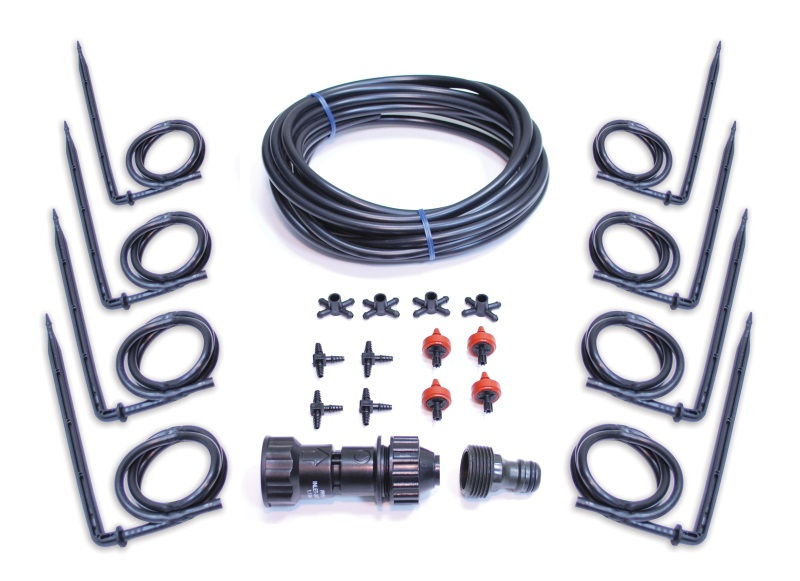
A drip irrigation optionUseful for: A root-zone drip layout with a compatible supply and enough outlets. Before buying: Count your containers and check the tubing route, connectors and water pressure. A timer is a separate requirement unless the chosen kit includes one. Price: £45 |
How to connect a water butt to your greenhouse
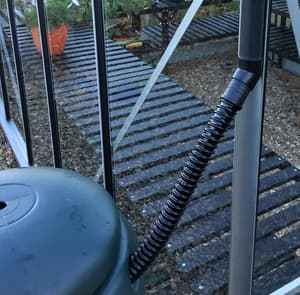
Guttering can collect useful rainwater if you have compatible downpipes and storage. The yield depends on roof area and local rainfall. Position the butt where you can refill it easily during a dry spell.
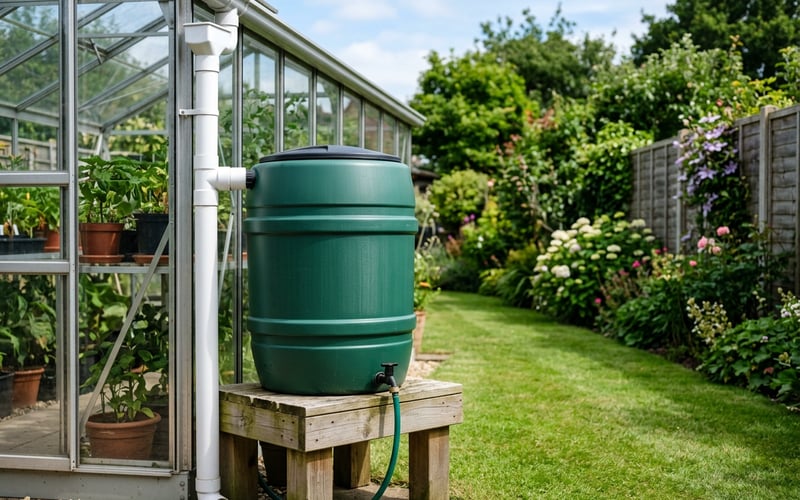
Shop the Vitavia Water Butt Connecting Kit →
The Vitavia Water Butt Connecting Kit costs £24. Check compatibility with your exact greenhouse and gutter arrangement. Plan an overflow route that does not soak the greenhouse foundations.
Choose storage around the space available, refill options and measured water use. Use a secure lid and a firm, level, load-rated support. Do not raise a full butt on improvised blocks to chase extra pressure.
How to water your greenhouse on holiday
Set up holiday watering well before leaving. Test it through ordinary daily use and check again during hot weather. Arrange someone to inspect the greenhouse if possible.
For matting, check every pot and measure how quickly the reservoir falls. Group plants with similar needs. Containers that do not wick reliably need another arrangement.
For drip systems, check the furthest outlet, filter, timer and connections. Measure a normal day of water use, then allow for hotter weather and growing plants. Keep ventilation working rather than closing vents to conserve water. Our greenhouse accessories include equipment for managing the growing space.
Common greenhouse watering mistakes
These are useful checks when plants wilt, pots stay wet or a watering system behaves unevenly.
- Following a clock instead of the plants. Check compost and water when needed; do not delay an urgently dry plant until morning.
- Leaving foliage wet unnecessarily. Direct water towards the compost and give splashed leaves a chance to dry.
- Alternating drought and heavy soaking. Aim for even moisture suited to the crop.
- Assuming rainwater is always clean. Keep storage covered and use fresh mains water for seedlings.
- Trusting the first dripper. Check outlets along the whole line and inspect filters regularly.
Blossom end rot involves poor calcium supply to developing fruit, often linked to irregular water uptake. Damaged fruit will not repair itself. Improve watering consistency and check the wider growing conditions.
Which watering system fits your greenhouse?
Match your system to your greenhouse size and growing style. A few pots may only need a watering can; rows of crops can make a drip system worthwhile.
- A few pots: hand watering may be the simplest option.
- Rows of growbags or pots: consider a drip layout with enough correctly positioned outlets.
- Mixed crops: separate plants with different water needs rather than using one schedule for everything.
- No mains tap: look for a rated gravity-fed or pumped reservoir system.
- Holiday cover: choose a tested setup and arrange a backup check.
Start with the water source, then choose compatible equipment. Our greenhouse setup guide covers the wider planning jobs.
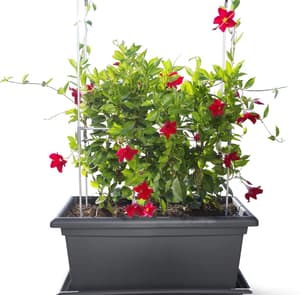
Watering needs change between crops and growth stages.
Frequently asked questions
How often should I water my greenhouse in summer?
Check daily in summer, then water according to the plants and compost. Hot weather and small containers may require more frequent attention. Avoid a fixed volume for every crop.
What is the best automatic watering system for a greenhouse?
A compatible drip system with a timer is useful for many greenhouse crops. Check water pressure, outlet capacity and the needs of your plants. Test the complete setup before relying on it.
How do I water my greenhouse when on holiday?
Use a tested watering system and arrange backup checks where possible. Measure reservoir use before leaving. Allow extra water for hot weather and growing plants.
Can I use a water butt with drip irrigation?
Yes, with equipment designed for the available pressure or a suitable pump. Follow the manufacturer requirements for height, filters and connections. Standard mains-pressure parts may not work from a butt.
What size water butt do I need for a greenhouse?
Choose storage around measured demand, space and refill options. A larger butt gives more reserve, but plants can use it quickly during a hot spell. Keep it covered and securely supported.