Growing Aubergines in a Greenhouse UK: Beginner's Guide
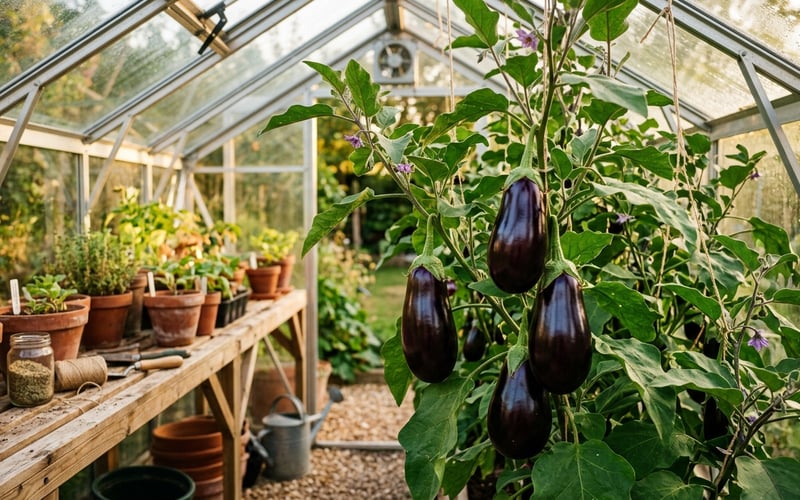
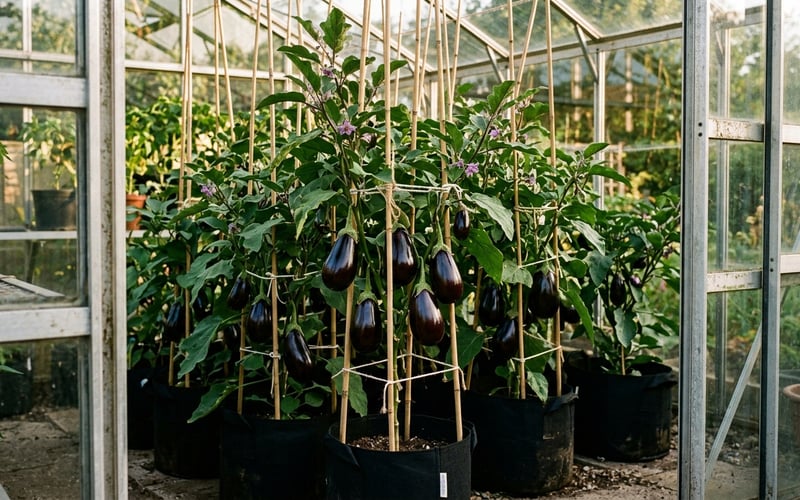
From our work with Greenhouse Stores customers since 2012, we know aubergines are one of the most rewarding crops you can grow under glass. Seeds need 25-30C to germinate. Plant out in May. Mist flowers daily to set fruit. Expect 4-6 glossy purple aubergines per plant from August to October. A 6x8 greenhouse holds six plants comfortably.
Key takeaways
- Sow aubergine seeds in February or March at 25-30C using a heated propagator
- Black Beauty and Moneymaker are the most reliable UK greenhouse varieties
- Pinch out the growing tip when the plant reaches 30cm for bushier, heavier crops
- Mist flowers daily with a fine spray to improve fruit set by up to 40%
- Feed weekly with tomato fertiliser once the first fruits begin to swell
- A 6x8 greenhouse holds six plants, producing 24-36 fruits per season
Shop the Vitavia Venus 5000 Greenhouse →
Expert Tip
In our experience installing greenhouses for many years, aubergine growers get the best results in a greenhouse with high eaves. Low-eave models force you to pinch and train plants sideways, which cuts yield. Our Elite High Eave range has 1585mm eaves (5ft 2 inches). That gives aubergine stems room to grow upright without hitting the glazing bars. If you are buying a greenhouse for growing aubergines, tomatoes or chillies, go for the tallest eaves you can afford.
Which aubergine varieties grow best in a UK greenhouse?
Not every variety suits our shorter, cooler summers. Even in a heated greenhouse, you need types bred for reliability rather than sheer size. Here are the five we recommend after years of feedback from customers growing under glass.
Black Beauty is the UK's most popular aubergine variety. It produces 4-6 glossy dark purple fruits per plant. Reliable in unheated greenhouses from late May. Harvest in 16-20 weeks from sowing. If you have never grown aubergines before, start here.
Moneymaker crops heavier with 6-8 slightly smaller fruits per plant. Its compact habit suits 6ft wide greenhouses where space is tight.
Bonica F1 is an early-maturing hybrid. It sets fruit 2-3 weeks ahead of open-pollinated types. Ideal for northern UK growers or anyone with an unheated greenhouse.
Pinstripe F1 has ornamental striped skin and outstanding flavour. Yields are lower at 3-5 fruits per plant. Works well in containers on greenhouse staging.
Slim Jim is a mini aubergine that grows to just 45cm tall. Produces 8-12 finger-sized fruits per plant. Well suited to smaller greenhouses and staging shelves.
When should you sow aubergine seeds?
Timing matters more than almost anything else with aubergines. Sow too early without heat and seeds sit dormant in cold compost. Sow too late and fruits will not ripen before autumn frosts.
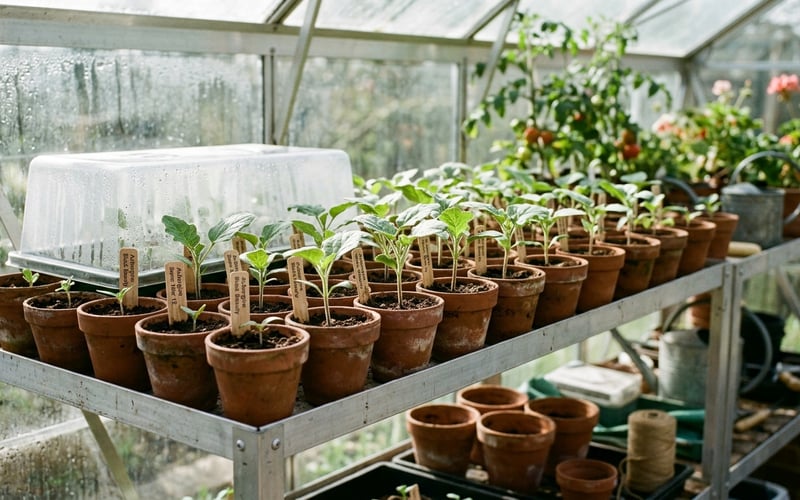
February to March is the ideal sowing window. Seeds need a soil temperature of 25-30C to germinate. Use a heated propagator or place seed trays on a heat mat on your greenhouse staging. The basics of how to grow seeds in a greenhouse apply here.
Expect germination in 10-14 days at 25C. At 20C, germination takes 21 days or longer. Below 18C, most seeds will not germinate at all.
Shop the Vitavia 2 Tier Staging →
Key milestones for UK aubergine growing:
- February-March: Sow seeds in 7cm pots at 25-30C
- April: Pot on to 12cm pots when 2 true leaves appear
- May: Plant out into final positions: grow bags, pots or borders
- June-July: Pinch growing tip at 30cm. Stake stems. Begin feeding
- August-October: Harvest when skin is glossy and firm to the touch
How to grow aubergines step by step
Step 1: Sow seeds. Fill 7cm pots with seed compost. Water well and let drain. Place one seed per pot, 1cm deep. Cover with a propagator lid or clear plastic bag. Maintain 25-30C.
Step 2: Pot on. When seedlings show 2 true leaves (typically 3-4 weeks after germination), move them to 12cm pots. Use multipurpose compost mixed with perlite for drainage.
Step 3: Plant out. Once night temperatures hold above 15C (mid-May in southern England, late May to June further north), move plants to final positions. Space them 60cm apart. Three aubergine plants fit in a standard grow bag.
Step 4: Pinch and stake. Pinch out the growing tip when the plant reaches 30cm tall. This encourages side shoots and a bushier, more productive habit. Stake the main stem with a bamboo cane. Aubergine stems are brittle and snap under fruit weight.
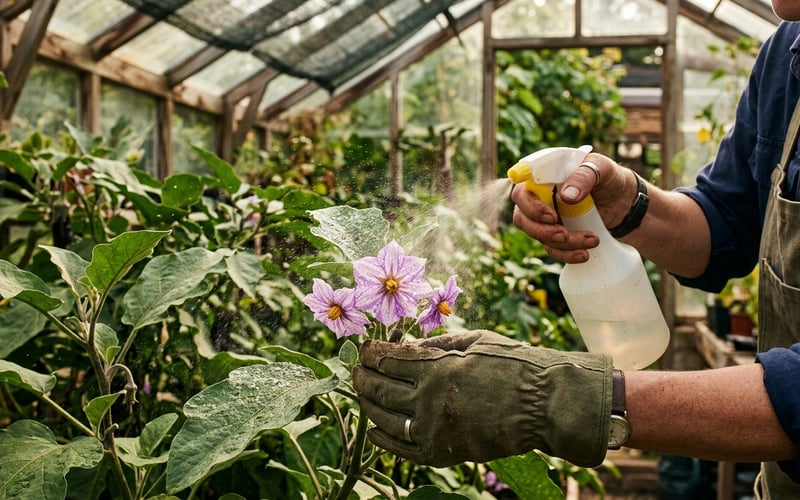
Step 5: Mist and pollinate. Mist flowers daily with a fine spray. Aubergines are self-fertile but set fruit much better when humidity around the flowers is high. Tapping stems at midday shakes pollen loose.
Step 6: Feed and water. Water regularly. Aubergines need consistently moist compost but hate sitting in water. Feed weekly with tomato fertiliser once the first flowers open. Switch to a high-potassium feed when fruits begin to swell.
|
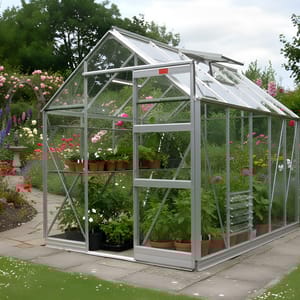
Matt's pick for growing auberginesBest For: Tall crops like aubergines, tomatoes and chillies Why I Recommend It: The 1585mm high eaves give aubergine plants room to grow upright. Standard greenhouses have 1240mm eaves, which forces sideways training and reduces yield. I have fitted over 200 Elite High Eave models and vegetable growers always tell us the extra headroom was worth every penny. Price: From £849 |
Matt's installation tip
Never place aubergine grow bags directly on an uninsulated concrete greenhouse floor. Concrete wicks heat away from the root zone, especially overnight. We always recommend standing grow bags on 50mm polystyrene insulation boards or wooden pallets. This keeps root temperatures 3-4C warmer at night. We have seen this make a measurable difference on installs across the Midlands. Plants on insulated floors start cropping 2-3 weeks earlier than those on bare concrete.
What temperature do greenhouse aubergines need?
Temperature control is the single biggest factor in a successful aubergine crop. Get this wrong and nothing else you do will save the harvest.
- Germination: 25-30C (heated propagator essential)
- Daytime growing temperature: 20-25C
- Night minimum: 15-18C
- Growth stops below: 12C
- Flowers drop below: 15C at night
A 2kW propane greenhouse heater with a thermostat keeps a standard 6x8 greenhouse at these temperatures through spring. The Eden 2KW Greenhouse Heater (from £140) is our best seller for this job. By June, solar gain handles most of the heating. Fit automatic roof vents to prevent overheating on sunny days.
Shop the Palram Drip Irrigation Kit →
Matt's tip: companion planting
I always plant basil alongside aubergines. Basil releases volatile oils that deter whitefly and aphids, the two worst greenhouse pests for aubergine plants. Place one basil between every two aubergines. You get natural pest protection and a ready supply of fresh basil for your cooking. I picked this up from a customer in Surrey who had been growing aubergines for 20 years. Companion planting in a greenhouse is one of the simplest ways to keep pests down.
Common aubergine growing problems and fixes
Flower drop. Night temperatures falling below 15C is the usual cause. Set your heater thermostat to 15C minimum. Check you are misting flowers daily.
No fruit set. Poor pollination. Mist flowers with a fine spray and tap stems at midday. Open vents on warm days to allow air movement across the plants.
Yellowing lower leaves. Nitrogen deficiency in the early growing stage. Use a balanced feed (NPK 10-10-10) before switching to high-potassium later in the season.
Aphids and whitefly. The two most common pests on greenhouse aubergines. Use biological controls from May: Encarsia formosa for whitefly, ladybird larvae for aphids.
Blossom end rot. Dark, sunken patches on the base of fruits. Caused by irregular watering leading to calcium uptake problems. Water consistently and never let the compost dry out between sessions.
Shop the Vitavia Venus 6200 Greenhouse →
| Variety | Fruits Per Plant | Weeks to Harvest | Plant Height | Best For | Matt's Verdict |
|---|---|---|---|---|---|
| Black Beauty | 4-6 | 16-20 | 60cm | Beginners, reliable all-rounder | Matt's Pick |
| Moneymaker | 6-8 | 18-22 | 50cm | Heavy cropping, compact spaces | Best yield per plant |
| Bonica F1 | 5-7 | 14-18 | 55cm | Northern UK, early harvest | Fastest to fruit |
| Pinstripe F1 | 3-5 | 18-22 | 55cm | Flavour, ornamental value | Best flavour |
| Slim Jim | 8-12 (mini) | 12-16 | 45cm | Small greenhouses, containers | Well suited to staging |
"From our work with Greenhouse Stores customers since 2012, we know that aubergines need two things above all else: consistent warmth and vertical growing space. The Elite High Eave range delivers both. Its 1585mm eaves are 345mm taller than standard models. That extra height means you can grow aubergines upright without forcing them sideways. We have fitted these in kitchen gardens, allotments and schools across the UK, and the feedback from aubergine growers is always the same: they wish they had chosen high eaves from the start."
, Matt W, Greenhouse Stores
Frequently asked questions
Can you grow aubergines in an unheated greenhouse in the UK?
Yes, but only from late May onwards. Aubergines need minimum night temperatures of 15C. In an unheated greenhouse, this usually means planting out in late May (south) or June (north). Your harvest window will be shorter: August to September. A heated propagator is still essential for germination in February or March.
What temperature do aubergines need to germinate?
Aubergine seeds need 25-30C to germinate. At 25C, expect seedlings in 10-14 days. Below 20C, germination is slow and patchy. Use a heated propagator or heat mat placed on greenhouse staging for the most consistent results.
How many aubergines can I grow in a 6x8 greenhouse?
Six plants fit comfortably in a 6x8 greenhouse. Space them 60cm apart. Two standard grow bags hold three plants each. This gives you 24-36 fruits across the season from Black Beauty or Moneymaker varieties.
When should I harvest aubergines in the UK?
Harvest from August to October. Pick when the skin is glossy and the flesh springs back when pressed gently. Dull skin means the fruit is overripe and will taste bitter. Cut with secateurs, leaving 2cm of stem attached.
Why are my aubergine flowers dropping off?
Low night temperature is the most common cause. Aubergine flowers drop when nights fall below 15C. Other causes include underwatering, overfeeding with nitrogen, and poor pollination. Mist flowers daily and set overnight heating to at least 15C.
Do aubergines need pollinating in a greenhouse?
Aubergines are self-fertile but benefit from help. In an enclosed greenhouse, there is less air movement to distribute pollen. Mist flowers with a fine spray and gently tap stems at midday. This mimics bee vibration and improves fruit set by up to 40%.
What is the best fertiliser for greenhouse aubergines?
Use tomato fertiliser once flowers appear. Aubergines and tomatoes have the same feeding needs. Apply a balanced feed (NPK 10-10-10) during early growth, then switch to a high-potassium tomato feed (NPK 4-4-8) when the first fruits set. Feed weekly through the growing season.