Wireworm Damage in UK Gardens: Spot It, Stop It, Beat It
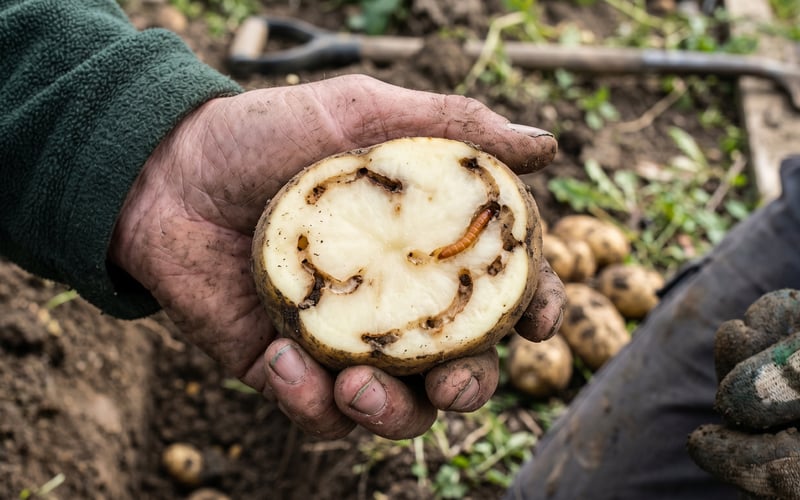
Wireworm is the slender orange-brown larva of the click beetle (Agriotes species), a serious UK soil pest that tunnels through potatoes, carrots, beetroot, parsnips, and the roots of seedling brassicas. A heavy infestation can spoil 30-50% of a potato crop, leaving narrow 2mm-wide tunnels through the tubers. Wireworm is worst on newly broken pasture, ex-lawns, and plots where grass has been allowed to grow for over a year. The control toolkit is cultural rather than chemical: deep winter digging exposes larvae to frost and birds, halved-potato traps catch them in spring, and a four-year rotation that puts brassicas (which wireworm dislikes) on infested ground breaks the population. From our work with Greenhouse Stores customers since 2012, this guide covers identification, life cycle, damage assessment, and the six control methods that actually work.
Key takeaways
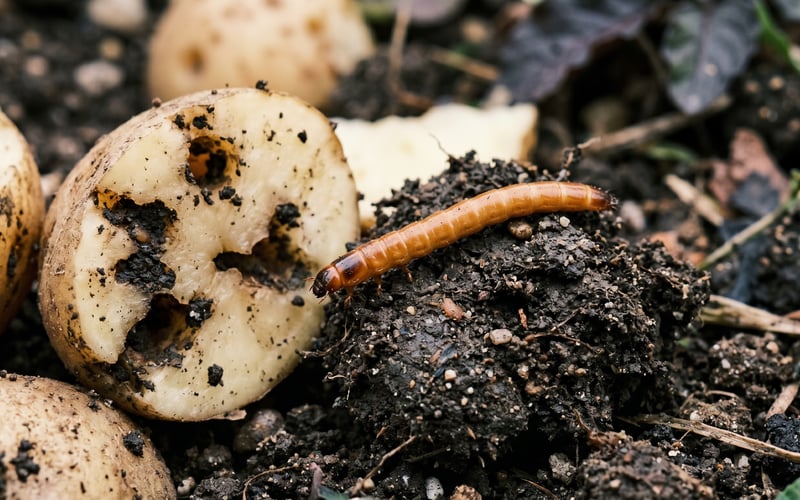
- Wireworm = click beetle larva. Slender, hard, orange-brown, 2-3cm long, with six tiny legs at the head. Lives in soil for 3-5 years.
- The damage is unmistakable. Narrow 2mm circular tunnels through root crops, often with healed brown edges. Different from slug damage (wider holes) and millipede damage (surface grooves).
- Plots at highest risk: newly broken pasture, ex-lawns dug in within 2 years, allotments left fallow under grass, fields next to permanent pasture.
- Potato halves are the best trap. Bury cut-side-down, lift after 4-5 days, drop the worms in soapy water. Sustained trapping for 6 weeks cuts populations by 60-80%.
- Brassicas are the natural break crop. Wireworm dislikes the mustard oils. A year of cabbage, broccoli or kale on infested ground reduces the next year’s pressure dramatically.
- Deep winter digging works. Exposes larvae to frost and predator birds. The single most effective free intervention.
Expert Tip
The phone call about wireworm comes every July when the customer lifts their first earlies and finds them riddled with tiny tunnels. Nine times out of ten it’s an ex-lawn plot or a piece of allotment broken from old turf within the last two years. The reassuring news is that wireworm runs itself down. Cultivation alone — turning the soil twice a year, growing the right rotation crops, and trapping with potato halves — gets most plots clean within three growing seasons. There is no chemical control approved for amateur use against wireworm in the UK; cultural methods are it.
Identifying wireworm
Wireworm is one of the easiest UK pests to identify once you have seen one. Six features:
- Colour: Bright orange-brown to copper, glossy. Never green, never grey.
- Body: Slender, cylindrical, hard, segmented. Looks like a piece of fine orange wire (hence the name).
- Length: 5mm when newly hatched, 25-30mm when mature.
- Legs: Six small legs clustered at the head end. The rest of the body is legless.
- Head: Slightly darker brown than the body, with small but visible jaws.
- Behaviour: Slow-moving. Curls into a tight C-shape when disturbed. Does not jump or move quickly.
Easily confused with: millipedes (have many legs and curl into a flat spiral), centipedes (faster, flatter, with one pair of legs per segment), and chafer grubs (white C-shaped grubs with brown heads — very different shape). Leatherjackets (cranefly larva) are grey and tubular, not orange.
The click beetle life cycle
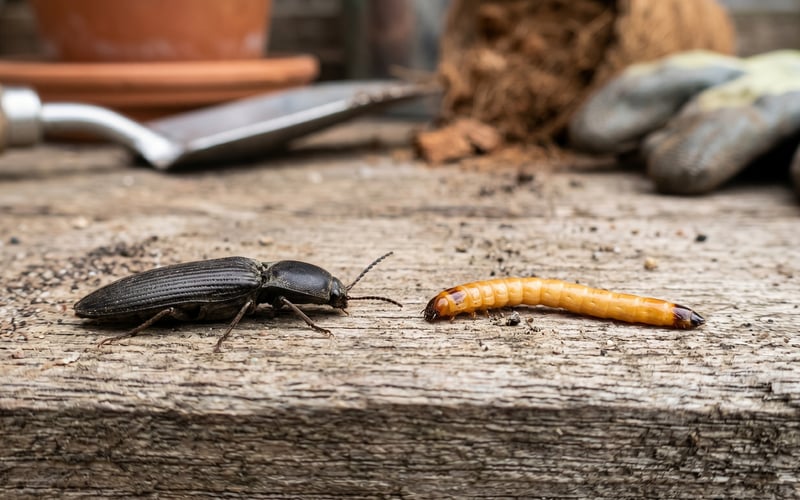
Wireworm is the larval stage of click beetles — the slender 8-10mm dark beetles that “click” loudly when they flip themselves over. Three UK Agriotes species cause most garden damage: A. lineatus, A. obscurus, and A. sputator. The life cycle is unusually slow:
Year 1 (spring): Adult click beetles emerge from soil in April-May and mate. Females lay 60-200 eggs in the top 2-5cm of moist grassland soil between May and July.
Year 1 (summer): Eggs hatch in 3-6 weeks. Newly hatched wireworms are 3-5mm long, pale, and start feeding immediately on roots and decaying organic matter.
Years 1-4: Wireworms remain in the soil, feeding on plant roots, growing slowly. Each year they shed their skin once and grow longer. They move down to 20-30cm depth during dry summers and frosty winters; they come up to the top 10cm in spring and autumn when soil is moist and warm.
Year 4-5 (autumn): Mature wireworms (25-30mm) pupate in the soil. Pupae develop into adult click beetles over winter and emerge the following spring.
The 3-5 year life cycle is why wireworm problems persist on a plot for several seasons even after the source (e.g. an old lawn) has been removed. Different age cohorts are present at the same time; a plot can carry 1st-year, 2nd-year, 3rd-year and 4th-year wireworms all simultaneously.
What wireworms eat (and what they do not)
Wireworm has a wide but selective diet. The crops it damages most heavily:
- Potatoes: The most-damaged crop. Wireworm tunnels into tubers from late June onwards, especially in dry summers.
- Carrots, parsnips, beetroot: Tunnelled in the same way as potatoes. The damage is more visible because the root is the eaten part.
- Onions, leeks (seedlings): Severed at the root just below soil level. Seedlings collapse and never recover.
- Sweetcorn, beans, peas (germinating seed): Eaten before they emerge. Patchy or non-existent germination in known wireworm beds.
- Lettuce, spinach, brassica seedlings: Severed at the root. Sudden collapse of newly-planted-out seedlings.
- Strawberry roots: Tunnelled and weakened, leading to red core symptoms and plant decline.
Crops wireworm tends to leave alone:
- Established brassicas (cabbage, broccoli, kale, sprouts): Wireworm dislikes the mustard-oil compounds in mature brassica roots. Brassicas are the natural break crop on infested ground.
- Established alliums (mature onions, garlic): The sulphur compounds put them off.
- Tomatoes, peppers, cucurbits (cucumber, squash): Generally untouched; wireworm focuses on the underground storage organs and seedling roots that suit its diet.
Assessing the wireworm population on your plot
Before deciding how aggressive your control needs to be, measure the population. Two methods:
Soil sampling. In March-April when wireworms are near the surface, dig 4-6 spade-deep test pits across the plot. Sift the soil from each pit through a 5mm garden sieve and count the wireworms. Damage thresholds:
- 0-1 wireworm per pit: Tolerable. No special action needed beyond rotation and good cultivation.
- 2-4 per pit: Moderate infestation. Plan brassica rotation, deep winter digging, and potato traps.
- 5+ per pit: Heavy infestation. Avoid root crops entirely for at least one season; grow brassicas or green manures.
Potato halves test. Easier than sampling. Bury 8-10 halved potatoes cut-side-down across the plot in March, 5cm deep. Lift after one week. Count wireworms in the cut surfaces. 0-2 per halved potato is low; 3-6 is moderate; 7+ is heavy.
Six control methods that work
1. Halved-potato traps

The most effective DIY control. Wireworms are drawn to the sugars and moisture in fresh potato flesh. Cut a potato in half, push the cut side down into moist soil 5-7cm deep, and mark the spot. Lift after 4-5 days and drop the trap (potato plus worms) into a bucket of soapy water. The wireworms drown within an hour.
Density: 1 trap per square metre of bed. Run continuously from March to early June when wireworms are surface-active. Discard the soggy potato after use; do not return it to compost.
A sustained 6-week trapping programme on a moderate infestation reduces the population by 60-80% according to Allotment and Gardens Council trials. Cheap, harmless, legal, and works.
2. Deep winter digging
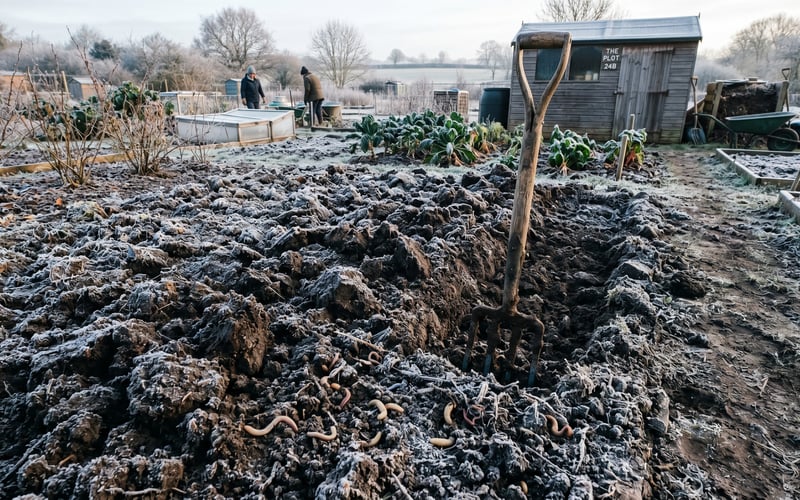
Wireworm overwinters 20-30cm below ground. Digging the plot in November-December turns these dormant larvae to the surface where two things kill them: frost (which they cannot survive at below -5C exposed), and birds (robins, blackbirds and starlings strip a freshly dug bed clean within 24 hours).
Method: turn the soil to a full spade depth with a fork. Leave the surface rough — do not rake. Repeat in February if the plot is still bare. Two winter dig cycles cuts wireworm populations by 40-60% with no other intervention.
3. Brassica rotation
The most effective long-term solution. Plant a year of brassicas (cabbage, broccoli, kale, sprouts, kohlrabi, mustard) on infested ground. Wireworm cannot survive on brassica roots alone — the population starves out within a single growing season.
Sequence: year 1 brassicas, year 2 alliums (onions, leeks, garlic), year 3 legumes (peas, beans), year 4 root crops. By year 4 the wireworm population on most plots is below the damage threshold and you can grow potatoes safely again.
4. Green manure mustard
Caliente mustard (Brassica juncea ‘Caliente’) is a biofumigant green manure used commercially against wireworm. Sown in July-August and dug in green in October, it releases isothiocyanate compounds as the leaves break down. These compounds are toxic to wireworm in the soil.
Effect: a single Caliente mustard rotation reduces wireworm populations by 50-70% on commercial trials. For amateur plots it is the closest thing to a chemical control without using chemicals.
5. Encourage natural predators
Wireworm is eaten by:
- Birds: robins, blackbirds, starlings, thrushes. A wildlife-friendly garden recruits them automatically.
- Ground beetles: several Carabid species hunt wireworms in the top 5cm of soil.
- Hedgehogs: opportunistic but effective on smaller plots.
- Parasitic nematodes: not all nematodes work on wireworm. The species sold for chafer grub and leatherjacket (Steinernema feltiae, Heterorhabditis bacteriophora) have only limited effect on wireworm. Apply optimistically rather than as a primary control.
6. Avoid risk factors
The single biggest variable in wireworm pressure is the previous land use. Five rules to keep populations low:
- Do not break new ground from old turf and plant potatoes in the first 2-3 years — brassicas, peas and legumes are better starter crops.
- Keep weed grass off the plot. Couch grass and meadow grass support wireworm populations.
- Maintain a 4-year rotation including a brassica year.
- Do not leave a plot fallow under grass — once grass establishes, wireworm follows.
- Lift maincrop potatoes early (early August) on known infested ground. Late lifting (October) gives wireworms more weeks to tunnel.
Crops to grow if you know you have wireworm
| Crop | Wireworm risk | Suitable in year 1? |
|---|---|---|
| Cabbage / broccoli / kale | Very low | Yes |
| Sprouts / kohlrabi | Very low | Yes |
| Mustard (green manure) | None | Yes |
| Onions / leeks / garlic | Low (seedlings vulnerable) | Yes if planted as sets |
| Tomatoes / peppers / cucurbits | None (greenhouse or outdoor) | Yes |
| Beans / peas (established) | Low | Yes if started in pots |
| Lettuce / spinach (seedlings) | High | Risky — module-raise indoors first |
| Carrots / parsnips / beetroot | Very high | No — wait until year 3-4 |
| Potatoes | Very high | No — wait until year 3-4 |
| Strawberries | High (perennial) | No |
Matt’s Pick: grow above the wormsBest for: Allotment plots with known wireworm where you still want to grow root crops. Why I recommend it: A greenhouse with a deep-bed border filled with fresh peat-free compost gives you wireworm-free root-crop space immediately. Potatoes in 40-litre grow bags, carrots in 30cm deep raised troughs, beetroot in modules — all safe from soil-dwelling wireworm. The Vitavia Apollo 6x10 fits comfortably on an allotment plot and pays back in two seasons of saved potatoes. Price: £829 |
Matt’s Tip: trap before you plant
The smartest single intervention is to set 5-6 halved-potato traps across each bed two weeks before you plant anything. Lift the traps, count and dispose of the wireworms. If you found 3+ per trap, switch your planned crop to brassicas or wait a year. If you found 0-2 per trap, your soil is in good condition and you can plant root crops with reasonable confidence. Five minutes of trap-setting saves a season of damaged tubers.
Frequently asked questions
What does wireworm look like?
Wireworm is a slender, hard, orange-brown larva 5-30mm long with six tiny legs at the head and a segmented cylindrical body that looks like a piece of fine wire. It curls into a tight C-shape when disturbed. The colour is bright copper-orange, never green or grey.
How do I get rid of wireworm in my garden?
Combine four cultural methods: deep winter digging to expose larvae to frost and birds, halved-potato traps from March to June, a year of brassicas on the infested ground, and a 4-year rotation that delays root crops until year 3-4. There is no chemical control approved for amateur use against wireworm in the UK.
What plants are most affected by wireworm?
Potatoes, carrots, parsnips, beetroot, strawberries and seedling brassicas are the most-damaged UK crops. Established brassicas, mature alliums, and most greenhouse crops (tomatoes, peppers, cucurbits) are generally untouched.
How long do wireworms live?
Wireworms live 3-5 years in UK soil as larvae before pupating into adult click beetles. This long larval stage is why wireworm problems persist on a plot for several seasons even after the original source (e.g. an old lawn) has been removed.
Are wireworms harmful to humans?
No, wireworms are harmless to humans. They do not bite, sting, or carry diseases. They damage crops only, and any potato or carrot you eat from a wireworm-affected plant is safe once the damaged sections are cut away.
Will frost kill wireworms?
Frost kills exposed wireworms below -5C, but most overwinter at 20-30cm depth where soil stays above freezing. The trick is winter digging — turning the soil to expose larvae to surface frost and predator birds. Two cycles of deep digging cuts populations by 40-60%.
Can chickens eat wireworms?
Yes, free-range chickens scratch up and eat wireworms. Allowing chickens onto a fallow plot for 2-3 weeks before sowing reduces the local wireworm population significantly. Pigs and ducks have similar effect on a larger scale.
What is the difference between wireworms and millipedes?
Wireworms have six small legs clustered at the head and a smooth cylindrical body; millipedes have many pairs of legs along the entire length of their segmented body. Both can damage root crops but millipedes prefer rotting plant matter and rarely cause primary damage to healthy roots.