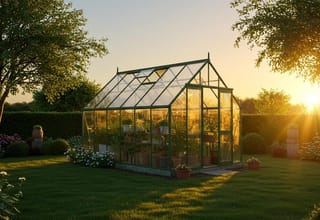
How to Heat a Greenhouse
Electric fan heaters are the most popular choice for greenhouses under 8×10ft. Running costs sit between £30 and £80 per winter month depending on greenhouse size and target temperature. Bubble wrap insulation cuts heating costs by up to 50%. A 2kW heater keeps a 6×8ft greenhouse frost-free through the coldest UK nights. This guide covers every heating method we recommend based on our work across the UK since 2012.
Key Takeaways
- Electric fan heaters are the safest and most popular option for most hobby greenhouses.
- Insulate first — bubble wrap reduces heat loss by up to 50% and costs under £30.
- Running costs for a 2kW heater in a 6×8ft greenhouse are roughly £30–£50 per month in winter.
- Paraffin and gas heaters work well for greenhouses without mains electricity but need ventilation.
- A thermostat is essential — it prevents the heater running when temperatures are already safe.
- Even 2–5°C above outside temperature protects most overwintering plants from frost damage.
Installer's Note
I have fitted heating systems in hundreds of greenhouses over many years. The single biggest mistake I see is customers buying a heater before insulating. A bare aluminium greenhouse loses heat so fast that even a powerful heater struggles on cold nights. I always recommend spending £25 on bubble wrap first. After that, a modest 1.8–2kW electric heater handles most 6×8ft greenhouses comfortably. The difference in monthly running costs between an insulated and uninsulated greenhouse is dramatic — often £20–£30 per month.
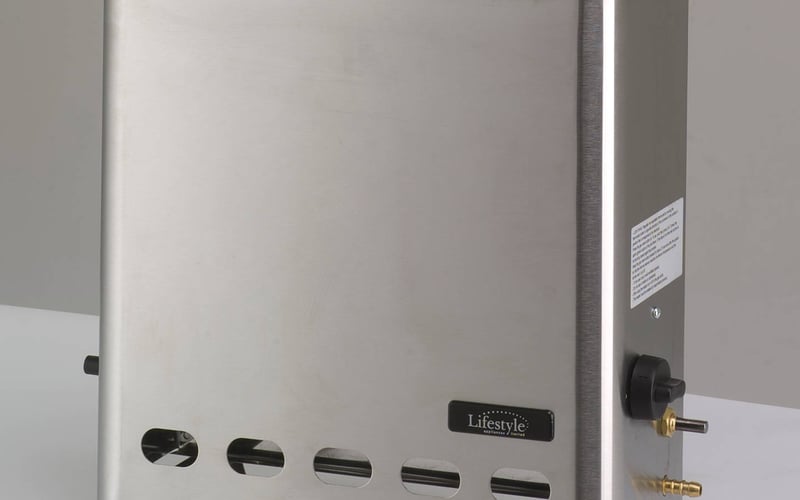
Why heat your greenhouse?
Most UK gardeners lose plants every winter to unexpected frosts. A heated greenhouse changes that completely. Even a small amount of warmth extends your growing season by two to three months at each end.
Tender plants like citrus trees, pelargoniums, and fuchsias cannot survive below 0°C. Keeping your greenhouse just 2–5°C above the outside temperature protects most overwintering plants. That modest temperature lift is surprisingly affordable to maintain.
A heated greenhouse also lets you start seeds in February rather than April. Tomatoes, peppers, and aubergines need warmth to germinate. Starting early gives them a longer growing season and better yields. Our guide to what to grow in a greenhouse in winter covers this in more detail.
There are practical benefits beyond plants too. Heating prevents condensation build-up that causes mould on greenhouse frames. It also stops water in trays and butts from freezing and cracking.
Electric greenhouse heaters
Electric heaters are the most popular choice for hobby greenhouses. They produce no fumes, need no ventilation, and switch on and off automatically with a thermostat. I recommend them for any greenhouse with a mains power supply nearby.
There are two main types: fan heaters and tube heaters.
Fan heaters
Fan heaters blow warm air across the greenhouse. This circulates heat evenly and prevents cold spots forming around plants at floor level. A 2kW fan heater handles most greenhouses up to 8×10ft. For smaller 6×8ft greenhouses, a 1.8kW unit is sufficient when combined with insulation.
The built-in thermostat is the key feature. It measures the air temperature and only runs the heater when needed. Without a thermostat, the heater runs continuously and costs three to four times more per month.
Running costs depend on your electricity tariff and how cold it gets. At around 24p per kWh, a 2kW heater running for 8 hours overnight costs roughly £3.84 per night. In practice, the thermostat means it cycles on and off. Expect £30–£50 per month for a well-insulated 6×8ft greenhouse through winter.
Tube heaters
Tube heaters are long, low-wattage heating elements that mount along the base of your greenhouse. They provide gentle background warmth rather than quick blasts of heat. A single 120W tube heater will not keep a greenhouse frost-free on its own. You typically need two or three tubes running together.
Tube heaters work best as a supplement to a fan heater. They keep the base temperature slightly above freezing so the fan heater runs less often. This combination is more energy-efficient than relying on a single powerful heater.
Browse our full range of greenhouse heaters to find the right size for your setup.
| |
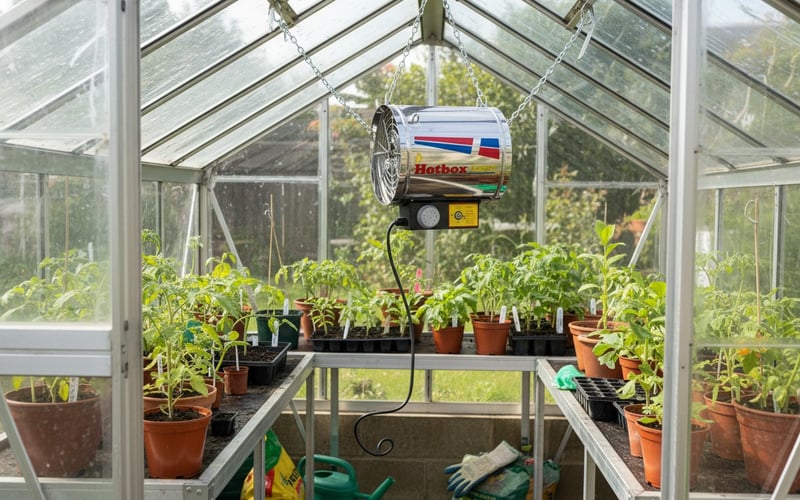
| Matt's Pick for Electric Heating | |
| Best For | Greenhouses up to 8×6ft that need frost protection through winter |
| Why I Recommend It | I install these regularly because they hang from the frame and blow warm air downward across the greenhouse. The built-in thermostat keeps temperature steady without wasting electricity. At 1.8kW it handles a well-insulated 6×8ft greenhouse comfortably and costs less to run than larger units. |
| Price | £165 |
| View Hotbox Levant 1.8kW Heater | |
Gas and paraffin greenhouse heaters
Gas and paraffin heaters suit greenhouses without mains electricity. They are portable, need no wiring, and produce enough heat for most structures. However, they require more attention than electric options.
Propane and butane gas heaters
Gas heaters run on bottled propane or butane. They produce strong, consistent heat and can warm larger greenhouses that electric heaters struggle with. A 4kW gas heater handles greenhouses up to 10×12ft.
The main drawback is moisture. Gas combustion releases water vapour into the air. In a sealed greenhouse, this causes heavy condensation on the glass. You must leave a roof vent slightly open when running a gas heater. This lets moisture escape but does mean some heat is lost too.
Gas heaters also produce carbon dioxide. In small doses this actually benefits plants during the day. But overnight, in a sealed space, CO2 levels can become excessive. Always ventilate.
| |
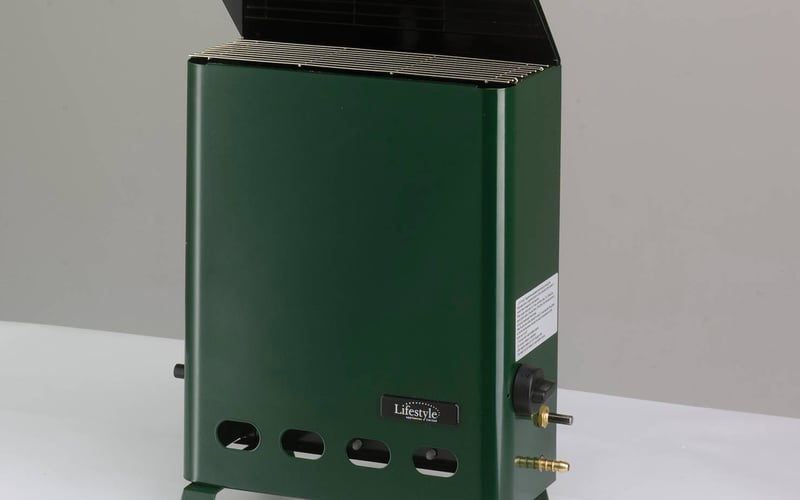
| Eden 2KW Greenhouse Heater | |
| Best For | Budget propane heating for greenhouses up to 6×10ft |
| Why It Works | A compact 2kW propane heater with piezo ignition and built-in thermostat. Twin safety systems (ODS valve and flame failure device) make it safe to leave running overnight. Hose and regulator included in the box. I recommend it for smaller greenhouses where mains electricity is not available. |
| Price | £140 |
| View Eden 2KW Greenhouse Heater | |
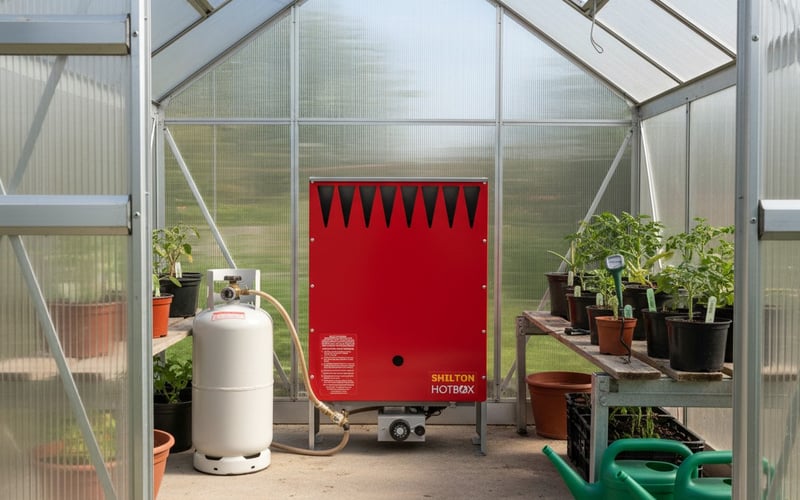
| |
| Regal 4.0kW Gas Greenhouse Heater | |
| Best For | Larger greenhouses 8×10ft and above without mains electricity |
| Why It Works | Runs on a standard propane bottle and puts out 4kW of heat. That is enough for greenhouses up to 12×10ft. Piezo ignition means no matches needed. We fit these on allotment sites where mains power is not available. |
| Price | £279 |
| View Regal 4.0kW Gas Heater | |
Paraffin heaters
Paraffin heaters are the traditional off-grid option. They burn paraffin oil to produce gentle warmth without any electricity. A single paraffin heater keeps a 6×8ft greenhouse above freezing on most winter nights.
Like gas heaters, they produce moisture and need ventilation. They also need daily attention — topping up fuel, trimming wicks, and cleaning the burner. The fuel cost works out at roughly £1–£2 per night depending on the setting.
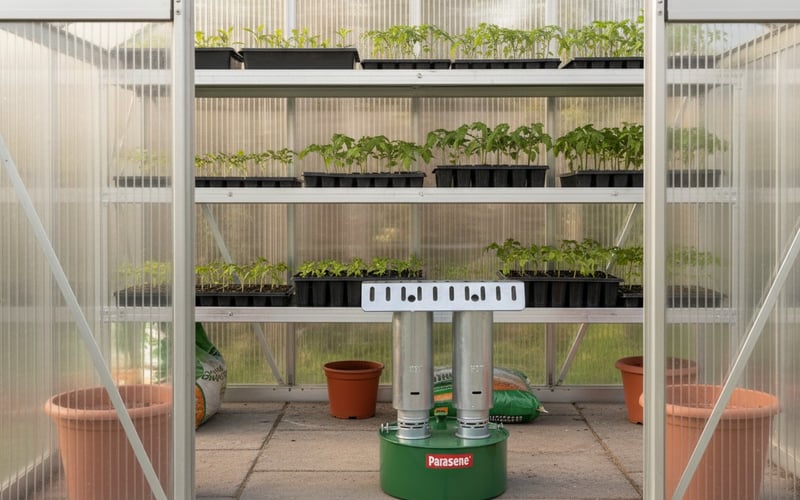
| |
| Elite Super Warm 5 Paraffin Heater | |
| Best For | Off-grid greenhouses without mains electricity |
| Why It Works | Produces 1.7kW of heat and runs for up to 20 hours on a single fill. No wiring, no electricity needed. I recommend it for allotment greenhouses and sheds where running a power cable is not practical. |
| Price | £110 |
| View Elite Super Warm 5 Paraffin Heater | |
Free and low-cost heating methods
Not every heating method costs money to run. Several techniques use stored heat or natural processes to keep temperatures above freezing.
Water bottle heat sinks
Fill black plastic bottles with water and line them along the north wall of your greenhouse. During the day, the water absorbs solar heat. At night, it releases that warmth slowly back into the air. This raises the overnight temperature by 1–3°C depending on how many bottles you use.
It will not keep a greenhouse frost-free during a hard freeze. But it takes the edge off mild frosts and costs nothing to set up. I have seen customers line their entire back wall with 2-litre bottles and gain a consistent 2°C overnight.
Compost heating
Fresh compost generates heat as it decomposes. Placing a compost bin inside your greenhouse adds background warmth. A well-built hot compost pile reaches 40–60°C internally and radiates heat into the surrounding air.
The practical challenge is space. A compost heap large enough to heat a 6×8ft greenhouse takes up a third of the floor area. It works better as a supplement than a primary heat source. It also adds humidity, which some plants dislike.
Soil warming cables
Soil warming cables sit beneath your seed trays or directly in greenhouse beds. They warm the root zone to 15–20°C without heating the whole greenhouse. This is far more efficient when your goal is seed germination rather than frost protection.
A 6m soil warming cable uses about 75W — a fraction of what a fan heater consumes. They cost roughly £2–£3 per month to run. They are excellent for starting seeds early but will not protect potted plants on shelving above ground level.
We cover more off-grid methods in our guide to heating a greenhouse without electricity.
Insulation before heating
Insulation is the single most cost-effective step you can take. A bare glass greenhouse loses heat rapidly through the glass, frame joints, and any gaps around doors and vents. Insulating properly before switching on a heater cuts your running costs dramatically.
Bubble wrap insulation
Horticultural bubble wrap is the standard choice. It attaches to the inside of your greenhouse frame with clips. A full layer of bubble wrap reduces heat loss by up to 50%. For a 6×8ft greenhouse, you need roughly 20–25 square metres of wrap.
Use proper horticultural bubble wrap, not packaging material. Horticultural grade has larger bubbles, UV stabilisation, and lasts two to three seasons. Packaging bubble wrap degrades within months and lets in less light.
Our guide to insulating a greenhouse walks through the full process step by step.
Draught sealing
Check every door seal, vent seal, and panel overlap for gaps. Cold air entering through gaps undermines your heating and insulation. Self-adhesive foam draught strip from any hardware shop costs under £5 and takes 30 minutes to apply.
Pay attention to the base. Many greenhouses sit on a base with small gaps between the frame and the foundation. Seal these with silicone or foam strip. I find the base is the most overlooked source of heat loss in the greenhouses I work on.
Reducing heated volume
If you only need a few plants warm, partition off a section of your greenhouse with bubble wrap. Heating half the space uses roughly half the energy. This is especially useful in larger greenhouses where you might only have a dozen tender plants to overwinter.
Matt's Tip: Insulate First, Then Size Your Heater
I always tell customers to insulate before buying a heater. A well-insulated 6×8ft greenhouse needs only a 1.8kW heater to stay frost-free. Without insulation, the same greenhouse needs 2.5kW or more. That is a significant difference in running costs over a whole winter. Spend £25 on bubble wrap first and you will save it back within the first month of heating.
Greenhouse heaters compared
This table compares the four heaters I recommend most often. The right choice depends on your greenhouse size and whether you have mains electricity.
| Heater | Type | Output | Best For | Price |
|---|---|---|---|---|
| Eden 2KW Greenhouse Heater | Propane gas | 2.0kW | Budget propane heating for greenhouses up to 6×10ft | £140 |
| Hotbox Levant 1.8kW ★ Matt's Pick | Electric hanging | 1.8kW | Hanging heater with air circulation for up to 8×6ft | £165 |
| Elite Super Warm 5 Paraffin | Paraffin | 1.7kW | Greenhouses without mains electricity | £110 |
| Regal 4.0kW Gas Heater | Propane gas | 4.0kW | Larger greenhouses 8×10ft and above | £279 |
How much does it cost to run a greenhouse heater?
Running costs depend on three factors: heater wattage, electricity price, and how many hours the thermostat keeps it running. Here are real-world figures from greenhouses I have fitted.
A 2kW electric fan heater in an insulated 6×8ft greenhouse runs roughly 6–8 hours per night in midwinter. At 24p per kWh, that is £2.88–£3.84 per night. Over a month, expect £30–£50 depending on how cold it gets.
Without insulation, the same heater runs 10–14 hours per night. Monthly costs jump to £50–£80. That extra £20–£30 per month adds up quickly over a five-month heating season.
Gas heaters cost roughly £1.50–£3 per night in fuel. Paraffin heaters cost £1–£2 per night. Both are cheaper per hour than electric but lack thermostatic control, so they often run longer than necessary.
We break down the full cost calculations in our detailed guide to greenhouse heating costs.
Frequently asked questions
What is the cheapest way to heat a greenhouse?
Bubble wrap insulation is the cheapest first step. It costs under £30 for a 6×8ft greenhouse and cuts heat loss by up to 50%. For active heating, a 2kW electric fan heater with a thermostat costs £30–£50 per month to run in winter. Paraffin heaters cost less per hour but need regular refuelling.
Can I heat a greenhouse without electricity?
Yes, paraffin and gas heaters need no mains power. Paraffin heaters burn liquid fuel and cost £1–£2 per night. Gas heaters use bottled propane or butane. Both produce moisture and CO2, so you must leave a vent open. Water bottle heat sinks and compost also add small amounts of warmth for free.
What size heater do I need for my greenhouse?
A 2kW heater suits most greenhouses up to 8×10ft. For smaller 6×8ft greenhouses with insulation, 1.8kW is sufficient. Larger structures over 8×10ft need 3–4kW. These figures assume bubble wrap insulation is fitted. Without insulation, increase the wattage by 50% or expect higher running costs.
How much does it cost to heat a greenhouse in winter?
Electric heating costs £30–£80 per month in winter. The exact amount depends on greenhouse size, insulation, target temperature, and your electricity tariff. A well-insulated 6×8ft greenhouse with a 2kW thermostat-controlled heater costs roughly £35–£45 per month through December and January.
Should I heat my greenhouse all winter?
Only heat when frost is forecast to save money. Most overwintering plants survive fine at 2–5°C. You do not need to maintain 15°C all winter. Set your thermostat to 3–5°C for frost protection and only raise it higher if you are germinating seeds. Mild spells in November and March rarely need heating at all.
Is it worth heating a greenhouse in the UK?
Yes, heating protects plants worth far more than the running cost. Replacing frost-damaged citrus trees, pelargoniums, and tender perennials costs hundreds of pounds. Keeping a 6×8ft greenhouse frost-free costs £150–£250 for the whole winter season. The heater itself pays for itself within the first winter if you overwinter valuable plants.