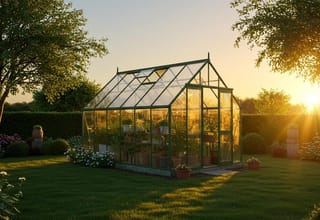
Do Greenhouses Stay Warm in Winter?
Matt W | Greenhouse Installer & Gardener
An unheated greenhouse stays 2-5C warmer than the outside temperature on cold winter nights. On sunny winter days, the difference can reach 15-20C even in December and January. Glass warms up faster during the day. Twin-wall polycarbonate loses 38% less heat overnight. A single layer of bubble wrap insulation adds 2-3C. A tube heater with thermostat set to 2C keeps a 6x8 frost-free for around £8-12 per month at current electricity prices.
Key Takeaways
- An unheated greenhouse stays 2-5C warmer than outside on cold nights, 15-20C warmer on sunny days
- Glass greenhouses warm up faster in sunshine but twin-wall polycarbonate retains 38% more heat overnight
- Bubble wrap insulation adds 2-3C of extra warmth for under £20 of material
- A tube heater with thermostat keeps a 6x8 frost-free for £8-12 per month
- Close all vents, doors, and louvres before nightfall to trap daytime heat
Installer's Note
I get asked this question every autumn without fail. Yes, greenhouses stay warmer than outside. But not as warm as most people expect. On a still, clear January night when the air drops to -5C, your greenhouse will be sitting around -2C to -1C. That saves hardy plants but kills tender ones. The single biggest improvement you can make is bubble wrap insulation. I have measured the difference in dozens of greenhouses. It consistently adds 2-3C. That turns a -2C night into a +1C night, and that one degree above zero is the difference between a live plant and a dead one.
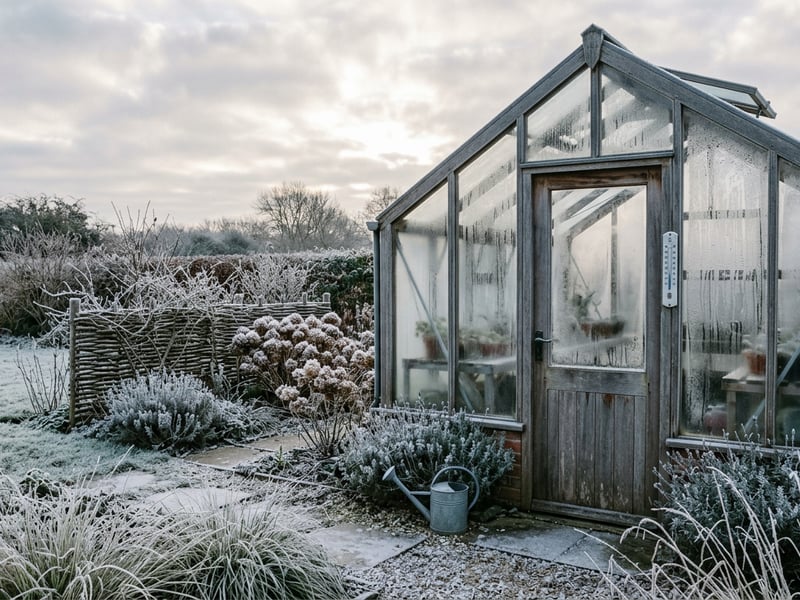
How warm does a greenhouse stay in winter?
The temperature inside a greenhouse depends on three things: sunlight, insulation, and whether you add heat. Without any heating, your greenhouse acts as a solar collector during the day and a partial shelter at night.
On a sunny December day with 5C outside, a closed greenhouse can hit 15-20C inside. The glass or polycarbonate panels trap solar radiation and the enclosed air heats up fast. This is why ventilation matters even in winter. An overheated greenhouse on a bright January afternoon stresses plants just as much as cold does.
After dark, your greenhouse starts losing heat through the glass. On a still, cold night, an unheated greenhouse typically stays 2-5C warmer than outside. On windy nights, that margin shrinks because moving air strips heat from the glass faster. By dawn, the temperature inside an unheated, uninsulated greenhouse can be only 1-2C above the outside air.
| Condition | Outside temp | Unheated greenhouse | With bubble wrap | With heater at 2C |
|---|---|---|---|---|
| Sunny winter day | 5C | 15-20C | 18-22C | 18-22C |
| Overcast winter day | 3C | 5-8C | 7-10C | 7-10C |
| Still, cold night | -3C | -1C to 1C | 1C to 3C | 2C |
| Windy, cold night | -5C | -4C to -2C | -2C to 0C | 2C |
| Hard frost night | -8C | -6C to -4C | -4C to -2C | 2C (heater working hard) |
The numbers above are based on a standard 6x8 aluminium greenhouse with single-glazed glass. Twin-wall polycarbonate models perform better at night because the air gap between the panels acts as insulation.
Why do greenhouses lose heat at night?
Glass is a poor insulator. A single pane of 3mm horticultural glass has a U-value of around 5.8 W/m²K. For comparison, a modern house wall has a U-value below 0.3. Heat escapes through greenhouse glass roughly 20 times faster than through an insulated wall.
Three types of heat loss work against you:
- Radiation: Warm surfaces inside the greenhouse radiate heat outward through the glass. This is the biggest loss on clear nights.
- Conduction: Heat transfers directly through the glass and aluminium frame. Metal frames conduct heat faster than timber.
- Convection: Warm air rises inside, contacts the cold glass, cools, and sinks. Gaps around vents, doors, and panes let warm air escape and cold air enter.
This is why draught-proofing matters so much. Two loose panes and a badly sealed door bleed heat fast. Check every pane clip, replace perished rubber seals, and make sure the door closes tightly before winter arrives.
Glass vs polycarbonate: which stays warmer?
We get asked this constantly. The answer depends on whether you mean daytime warmth or overnight heat retention.
| Property | Single glass | Twin-wall polycarbonate (4mm) |
|---|---|---|
| U-value (heat loss rate) | 5.8 W/m²K | 3.6 W/m²K |
| Light transmission | 90% | 80% |
| Daytime warming | Excellent (more light enters) | Good |
| Night heat retention | Poor | Better (38% less heat loss) |
| Condensation | Heavy | Light |
| Breakage risk | Higher | Very low |
Glass greenhouses warm up faster on sunny days because more light enters. But they lose that heat faster after dark. Twin-wall polycarbonate loses 38% less heat overnight thanks to the trapped air layer between the panels. For cold regions or overwintering tender plants, twin-wall polycarbonate keeps things warmer at night. Read our full comparison in wooden vs aluminium greenhouses for more on material choices.
How to keep a greenhouse warm in winter without heating
Heating costs money. Before you spend anything on electricity, these free and low-cost methods make a real difference.
Bubble wrap insulation
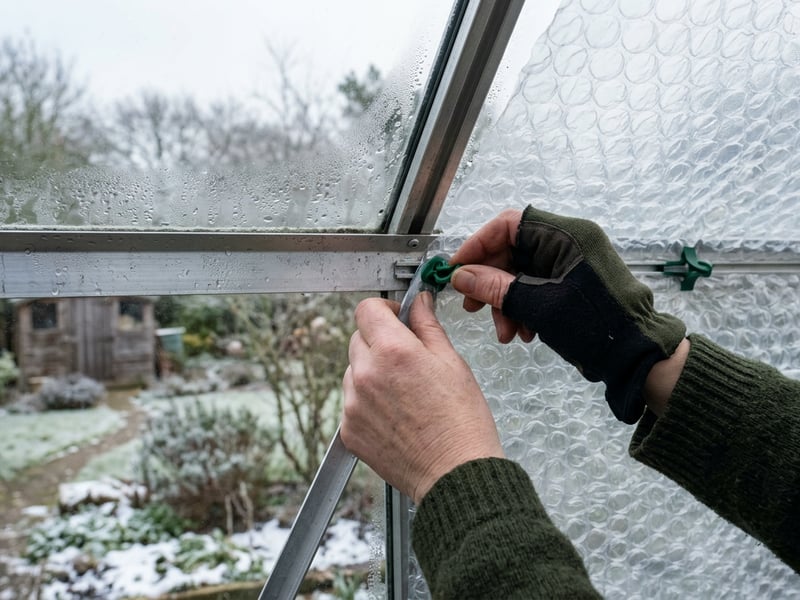
Horticultural bubble wrap gives you the biggest temperature gain for the least money. Pin it to the inside of the frame using glazing clips or specialist insulation clips. Use large-bubble wrap, not the small-bubble packing type. The bigger air pockets trap more warmth. A full lining of a 6x8 greenhouse costs under £20 in materials and adds 2-3C overnight.
Leave a small gap between the bubble wrap and the glass for air circulation. Do not cover vents completely. You still need some ventilation on mild winter days to prevent fungal disease from high humidity.
Close everything before dark
This sounds obvious but it is the most common mistake we see. Close every roof vent, louvre vent, and door before sunset. If you have automatic vent openers, they should close themselves as the temperature drops. Check them regularly. A single open vent on a -5C night lets all your trapped warmth escape in minutes. For more on vent management, see our greenhouse ventilation guide.
Thermal mass
Thermal mass stores daytime heat and releases it slowly at night. Water is the best thermal mass for a greenhouse. Fill black-painted water butts or large plastic bottles with water and place them along the back wall. During the day, the water absorbs solar heat. At night, it radiates that warmth back into the greenhouse. Four 25-litre containers in a 6x8 greenhouse can add 1-2C to the overnight minimum.
Fleece and cloches
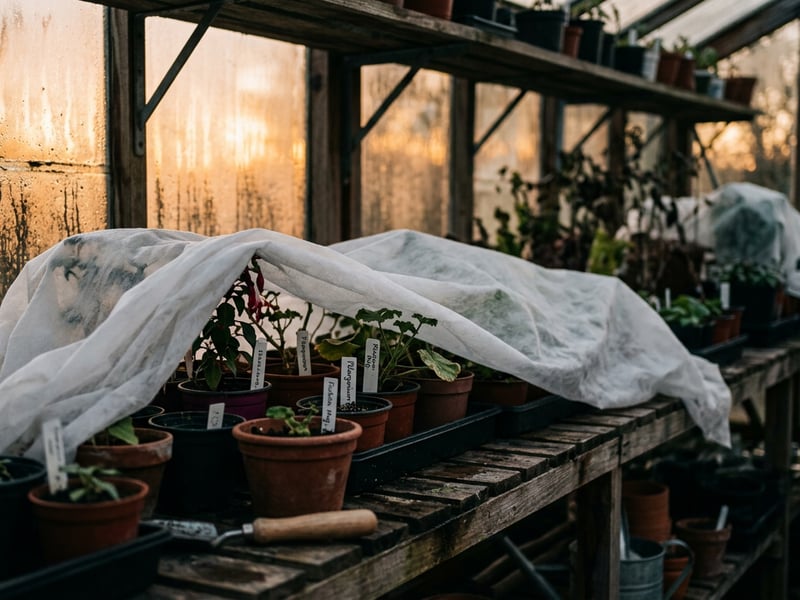
Double up protection on the coldest nights. Drape horticultural fleece over individual plants or across staging shelves. Fleece adds another 2-3C of frost protection. Combined with bubble wrap insulation, you can keep an unheated greenhouse above freezing on most UK winter nights.
Matt's Tip: The double layer trick
On nights when the forecast drops below -5C, I drape fleece over my tender plants inside the bubble-wrapped greenhouse. That gives three layers of protection: glass, bubble wrap, and fleece. I have kept pelargoniums alive through -8C nights this way without a heater.
When do you need a greenhouse heater?
An unheated greenhouse with bubble wrap handles most UK winters for hardy and half-hardy plants. You need a heater to keep tender plants alive through prolonged cold spells. Anywhere that regularly drops below -5C needs one.
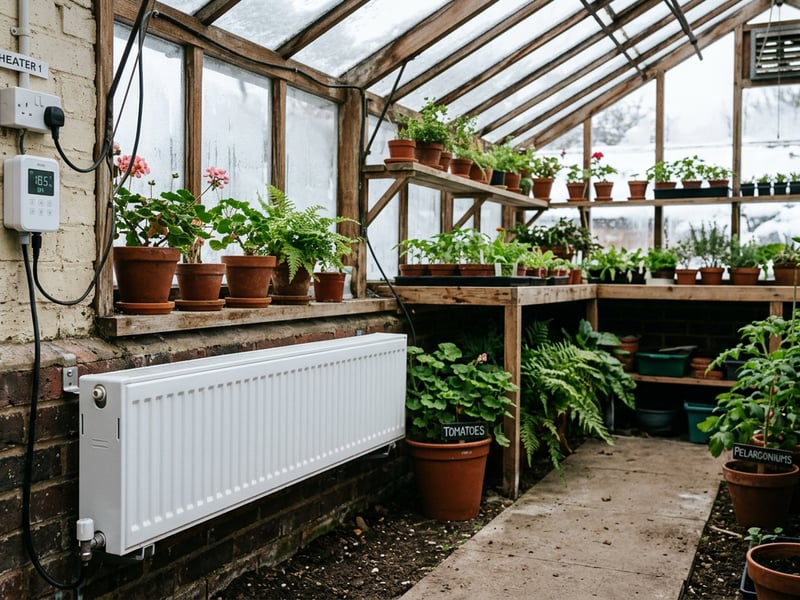
The cheapest option that actually works is a tube heater with a thermostat. Set the thermostat to 2C for frost protection. The heater only runs when the temperature drops to that level, so it uses very little electricity on mild nights. A single tube heater keeps a 6x8 greenhouse frost-free for around £8-12 per month at current UK electricity rates. For detailed running costs, read our guide on how much it costs to heat a greenhouse.
| Heater type | Best for | Running cost (6x8, frost-free) | Pros | Cons |
|---|---|---|---|---|
| Tube heater (80-120W) | Frost protection | £8-12/month | Low cost, thermostat, safe | Not enough for tropical plants |
| Fan heater (2kW) | Active growing (7-10C) | £30-50/month | Moves air, quick warmth | Expensive to run, noisy |
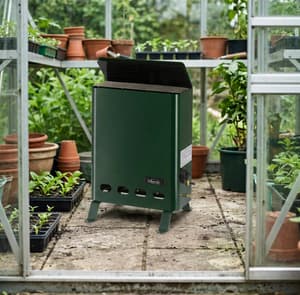
| Gas heater (1.9kW) | No electric supply | £15-25/month | No electricity needed | Creates moisture, needs ventilation |
| Paraffin heater | Emergency backup | £10-20/month | Portable, no installation | Fumes, moisture, fire risk |
Always insulate before you heat. Running a heater in an uninsulated greenhouse is like heating a house with the windows open. Bubble wrap first, heater second.
Greenhouse Heaters
What can you grow in an unheated greenhouse over winter?
Even without heating, your greenhouse extends the growing season by weeks in both directions. That 2-5C advantage plus shelter from wind and rain means you can grow more than you might think.
- Hardy salads: winter lettuce, lamb's lettuce, rocket, mizuna, and mustard greens all grow slowly through winter in an unheated greenhouse.
- Oriental greens: pak choi, tatsoi, and Chinese cabbage handle cold well under glass.
- Herbs: parsley, chervil, coriander, and chives survive and provide fresh pickings.
- Spring bulbs: force hyacinths, narcissi, and tulips for early indoor displays.
- Overwintering plants: pelargoniums, fuchsias, and citrus trees survive if kept frost-free.
For a complete month-by-month plan, see our guide on what to grow in an unheated greenhouse.
Common mistakes that make greenhouses colder
Leaving vents open overnight
Automatic vent openers close as the temperature drops, but manual vents stay where you left them. Forgetting to close a roof vent before leaving the garden is the most common winter greenhouse mistake. One open vent on a cold night drops the inside temperature to match outside within an hour.
Ignoring gaps and broken seals
Cracked panes, missing glazing clips, and perished door seals create draughts. Cold air enters through gaps as small as 2mm. Inspect your greenhouse in autumn. Replace broken glass, tighten clips, and re-seal any gaps with greenhouse sealant or draught-excluding tape.
Insulating with the wrong bubble wrap
Small-bubble packing wrap breaks down in UV light within weeks and traps less air than horticultural bubble wrap. Always use UV-stabilised large-bubble greenhouse wrap. It lasts 3-5 seasons and insulates far better.
Heating without insulating first
Running a fan heater in a single-glazed, uninsulated greenhouse wastes up to 40% of the heat through the glass. Insulate first, then add a heater. Bubble wrap reduces heat loss by 30-40%, meaning your heater runs less and your electricity bill stays lower.
Overwatering in winter
Wet soil and damp foliage lose heat faster and create the conditions for botrytis (grey mould). Water sparingly in winter. Water in the morning so excess moisture evaporates during the warmer daytime hours.
Matt's Pick for Winter Warmth
Best For: holding a frost-free 3 to 5C in a small or mid-size greenhouse through winter.
Why I Recommend It: An electric fan heater like the Eden 2KW is the simplest way to keep winter lows off your plants. The built-in thermostat means it only fires when needed, so running costs stay sensible. I recommend it for anyone overwintering tender plants.
Price: £140
Frequently asked questions
Do greenhouses stay warm in winter without heating?
They stay 2-5C warmer than outside at night. During sunny days the difference can reach 15-20C. On cold, overcast nights an unheated greenhouse offers only modest protection. Bubble wrap and closing all vents before dark are the two best free fixes.
What temperature does a greenhouse drop to at night in winter?
An unheated greenhouse sits 2-5C above outside temperature. If it is -3C outside, expect -1C to 1C inside. With bubble wrap insulation, that improves to 1-3C inside. A tube heater set to 2C prevents the temperature falling below freezing regardless of outside conditions.
Is it worth heating a greenhouse in winter UK?
It depends on what you grow. Hardy crops and overwintering hardy plants do not need heating. Tender plants like pelargoniums, citrus, and peppers need frost protection. A tube heater at 2C costs £8-12 per month for a 6x8.
Will bubble wrap insulation stop my greenhouse freezing?
Bubble wrap adds 2-3C but cannot guarantee frost-free. On nights when the outside temperature drops below -5C, a bubble-wrapped greenhouse can still go below zero. For reliable frost protection, combine bubble wrap with a thermostat-controlled heater set to 2C.
Can you use a greenhouse all year round in the UK?
Yes, a greenhouse is useful in every month. From January seed sowing to December overwintering, it extends your growing season by 4-8 weeks at each end. Winter uses include growing hardy salads, forcing spring bulbs, overwintering tender plants, and starting early seed sowings from February.
Do polycarbonate greenhouses stay warmer than glass?
Twin-wall polycarbonate retains 38% more heat overnight. The trapped air layer between the two panels acts as built-in insulation. Glass lets in more light during the day, so glass greenhouses warm up faster in sunshine. For overnight heat retention in winter, twin-wall polycarbonate has the advantage.