What to Grow in an Unheated Greenhouse: Month by Month UK Guide
Key takeaways
- An unheated greenhouse stays 5-8C warmer than outside at night and 15-20C warmer on sunny winter days. That is enough to keep hardy salads growing through every month of the year.
- Lamb's lettuce, claytonia, land cress, and mizuna all survive to -15C under glass. You can harvest fresh salad leaves in January without spending a penny on heating.
- Sow winter salads in August and September. Miss that window and plants won't bulk up before the short days stall growth in November.
- Tender crops (tomatoes, cucumbers, peppers) need a heated propagator to germinate, but they grow fine in an unheated greenhouse from late April once nights stay above 10C.
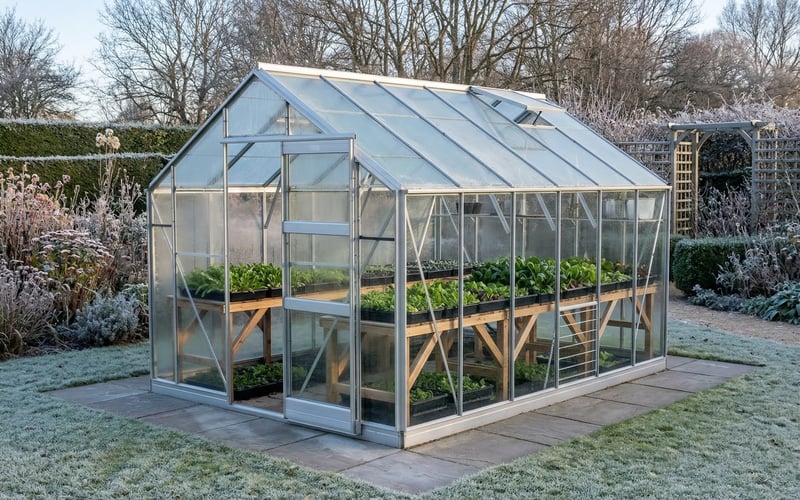
Shop the Elite Belmont 8x12 Greenhouse →
Expert Tip
Most of our customers assume a greenhouse is only useful from April to September. That's wrong. I grow fresh salad leaves in my own unheated greenhouse every single month, including January. No heater, no electricity, no running costs. The greenhouse does the work by trapping solar heat during the day and releasing it slowly at night. The trick is knowing what to grow and when to sow it. Get the timing right and an unheated greenhouse produces food 12 months a year.
An unheated greenhouse is 5-8C warmer than outside on cold nights and up to 20C warmer on sunny winter days. That temperature difference turns a standard aluminium greenhouse into a year-round growing space without any heating costs. On a sunny January day when outside is 4C, the inside of an unheated greenhouse reaches 20C or more. That is enough to keep hardy salads growing slowly through the darkest months and gives you a 4-6 week head start on spring sowing compared to growing outdoors.
This guide covers what to grow in an unheated greenhouse month by month, with specific crops, sowing dates, and the varieties that perform best in cold conditions. Every timing is based on UK conditions.
How cold does an unheated greenhouse get?
On a still, cloudy night with outside temperatures at -2C, the inside of an unheated greenhouse typically sits around 2-3C. Above freezing, but only just. Add bubble wrap insulation and the advantage increases to 8-12C above outside, which keeps the interior above freezing on all but the hardest nights.
On clear nights with no cloud cover, the greenhouse can actually drop below outside air temperature. This catches people out. Clouds act as a blanket, trapping ground heat. Without them, heat radiates straight up and out through the glass. A layer of horticultural fleece over your plants on forecast clear frost nights solves this. Lightweight 17gsm fleece adds 2-3C of protection.
The daytime advantage is where an unheated greenhouse really earns its space. Even in December, a sunny day pushes internal temperature to 15-20C while outside sits at 7C. That solar gain keeps growth ticking over, however slowly, right through winter.
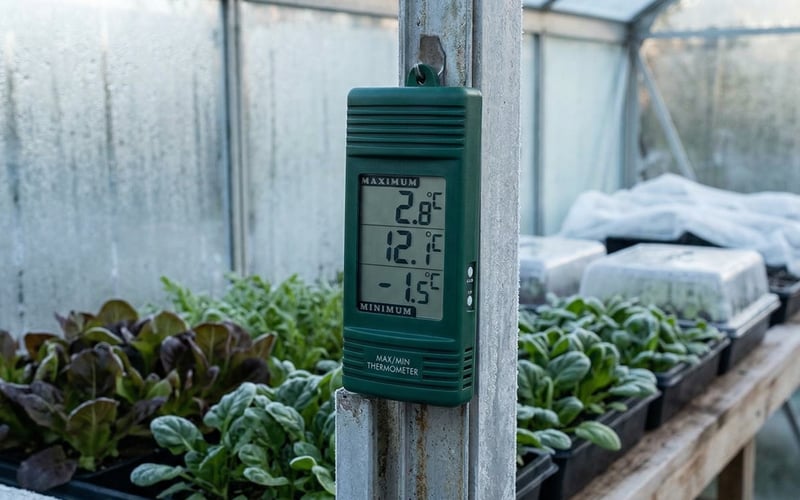
Shop the Elite ETI Digital Thermometer →
Matt's tip: check your overnight lows
Hang a digital thermometer in the greenhouse and check the overnight minimum every morning. If it regularly drops below -2C inside, your fleece or insulation isn't doing enough. The Elite ETI Digital Thermometer costs £44 and records the max and min from the last 24 hours. I've used one for years. Knowing your actual overnight temperatures tells you exactly which crops will survive and which are a gamble.
The five hardiest crops for an unheated greenhouse
These crops survive hard frosts and keep producing leaves through winter with no heating at all. They are the backbone of cold greenhouse growing.
| Crop | Survives To | Sow | Harvest | Notes |
|---|---|---|---|---|
| Lamb's lettuce (mache) ★ | -15C | Aug-Sep | Oct-Mar | The hardiest salad leaf. Mild, nutty flavour. Cut-and-come-again. |
| Claytonia (winter purslane) | -15C | Aug-Oct | Nov-Apr | Heart-shaped leaves with a mild taste. Self-seeds freely. |
| Land cress | -12C | Aug-Sep | Oct-Apr | Peppery, like watercress. Grows in partial shade. |
| Mizuna | -4C | Aug-Sep | Oct-Mar | Feathery Japanese mustard. Mild when young, peppery when older. |
| Winter spinach | -12C | Aug-Sep | Oct-Apr | Bloomsdale Long Standing is the hardiest variety. |
All five crops are cut-and-come-again. Harvest outer leaves only and leave the growing point intact. Each plant gives you 8-12 harvests over winter. A single tray of lamb's lettuce sown in August provides fresh salad leaves from October through to March.
Month by month: what to sow, grow, and harvest
January and february
Growth is at its slowest. Days are short (8 hours in January, 10 by late February) and nights are cold. This is a harvesting season, not a sowing season.
Harvest: Lamb's lettuce, claytonia, land cress, mizuna, winter spinach, overwintered spring onions (White Lisbon Winter Hardy), kale outer leaves. These were all sown back in August or September and are now producing slowly but steadily.
Sow from mid-February: The first new sowings of the year. Hardy lettuce (Arctic King, Winter Density), peas in root trainers, broad beans in deep pots, and onions in modules. Radish seeds germinate at 6C, so a February sowing in an unheated greenhouse works. Microgreens and pea shoots grow fast enough to beat the short days.
If you have a heated propagator sitting inside the unheated greenhouse, sow tomatoes from mid-February and peppers from early February. They need 20-25C to germinate. The propagator provides that; the greenhouse itself doesn't need heating. Once germinated, the seedlings grow on at greenhouse temperature with supplementary light if you have it.
March
This is when the greenhouse earns its money. Internal nights average 6-10C. Growth rate jumps. Crops sown now that wouldn't survive outdoors until May get a 4-6 week head start.
Sow direct: Lettuce (Little Gem, Tom Thumb), spinach, Swiss chard, pak choi (late March), radishes, carrots in containers (Nantes, Amsterdam Forcing), beetroot from late March (Boltardy is the most bolt-resistant), spring onions, broad beans, peas in guttering, and hardy herbs (parsley, chives, coriander).
Plant: First early potatoes in large containers from late February or early March. Varieties like Rocket, Arran Pilot, and Swift give you new potatoes by May. Read our seed starting guide for more on getting seeds going under glass.
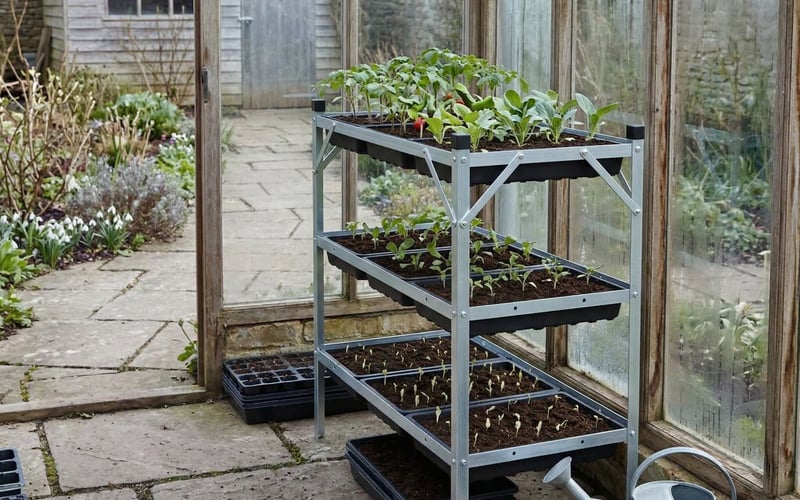
Shop the Elite 3 Tier Seed Tray Frame →
April
The transition month. Hardy crops go in direct, tender crops that were started under heat move into the greenhouse to harden off.
Sow direct: French beans from mid-April (not frost hardy, so don't move them outside until late May), courgettes in pots from late April, cucumbers from late April, basil from late April. Sweetcorn in modules for outdoor transplant in June.
Move into the greenhouse: Tomato and pepper seedlings from the house or heated propagator. Let them adjust to cooler greenhouse temperatures before planting in their final position. March-sown radishes should be ready to harvest by late April (28-35 days from sowing).
May
Last frost passes for most of England (mid-May south, late May north, early June Scotland). Night temperatures in the greenhouse now sit above 10C consistently.
Plant in final positions: Tomatoes into growing bags or large pots once nights reliably exceed 10C. The best varieties for unheated greenhouses are Sungold, Gardener's Delight, and Stupice (a Czech variety bred for cold tolerance that sets fruit at lower temperatures than most). Cucumbers go in once nights exceed 15C, typically late May. Peppers and chillies from mid-May once nights hold above 12C.
Harvest: First early potatoes planted in February containers. Spring onions sown in March. Succession lettuce and spinach from March sowings. Read our guide to growing tomatoes in a greenhouse for detailed planting advice.
June and july
Summer production. The greenhouse is now about managing heat rather than cold. Ventilate daily. Open everything on hot days. Internal temperature can reach 35-40C on sunny afternoons, which stops tomato fruit set above 30C.
Harvest: First tomatoes from late June (Sungold ripens earliest). Cucumbers from late June. Green peppers from late July. French beans continuously. Basil leaf tips regularly to prevent flowering.
Sow for winter (from late July): This is the window most people miss. Start sowing your winter salads now: lamb's lettuce, land cress, claytonia, mizuna, autumn spinach. If you wait until October it's too late. Plants need to bulk up before the short days stall growth in November. Pair crops using our companion planting guide for best results.
August and september
The critical sowing window for winter crops. Everything you'll harvest from November to March gets sown now.
Sow in August: Spring onions (White Lisbon Winter Hardy) for March harvest. Lamb's lettuce, land cress, mizuna, mustard greens, and spinach in trays or modules. Hardy lettuce varieties: Arctic King, Winter Density, Valdor, Winter Marvel. Pak choi for autumn harvest (bolt risk drops as days shorten).
Sow in September: Last main sowing window. Overwinter broad beans (Aquadulce Claudia) from late September. Garlic cloves go in from September through to December. Autumn carrots in containers (Paris Market Atlas, a globe-shaped variety with short roots). Push salad sowings to mid-October at the latest for claytonia.
Harvest: Tomatoes at peak production. Pick daily. Cucumbers, peppers, chillies. Remove spent cucumber plants by late September. August-sown salads give first cuts from late September.
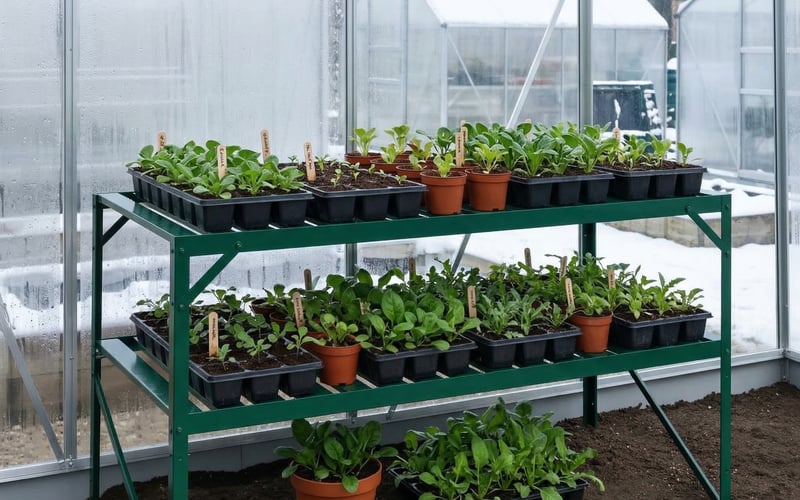
Shop the Vitavia 2 Tier Green Staging →
October
Transition from summer to winter growing. Pick all remaining tomatoes (even green ones, ripen indoors in a paper bag with an apple). Clear spent summer crops. Clean the glass inside and out. Fit bubble wrap insulation from mid-October.
Last sowings: Mid-October is the cut-off for most crops. Claytonia is worth pushing to mid-October. Pea shoots and microgreens (radish microgreens germinate at 6C) work as quick crops right through winter.
Harvest: September-sown lamb's lettuce and mizuna giving first cuts. Pak choi sown in August ready as whole heads. Lettuce varieties sown in August cropping through.
November and december
Growth slows to a crawl. Harvest what's there. Water sparingly, only on mild mornings so foliage dries before nightfall. Wet leaves in cold still air means grey mould (botrytis). Ventilate briefly on dry days, even in December. Read our overwintering guide for protecting tender perennials you've brought under glass.
Harvest: Winter salads every 2-3 weeks (growth is slow, don't over-pick). Kale outer leaves. Overwintered spinach. Microgreens and pea shoots if you kept sowing through autumn. Hardy herbs (chives, parsley) stay alive but barely grow.
Sow: Microgreens only. Broad beans can go in up to early November in mild areas (South West, South Coast). Garlic cloves any time the ground isn't frozen.
Crops that will not survive an unheated greenhouse in winter
These all die at or near 0C. Don't leave them in an unheated greenhouse past October unless you're prepared to lose them.
| Crop | Growth Stops At | Killed By |
|---|---|---|
| Tomatoes | 5C | First frost (0C) |
| Cucumbers | 10C | 2C |
| Peppers and chillies | 8C | First frost (0C) |
| Aubergines | 10C | First frost (0C) |
| Basil | 10C | 5C (chilling injury) |
| Courgettes | 5C | First frost (0C) |
| French beans | 5C | First frost (0C) |
Tomatoes are the biggest cause of disappointment. People leave them in hoping for one last truss and lose the lot to the first October frost. Pick everything with any colour by early October and ripen indoors. Green tomatoes make good chutney.
How to keep an unheated greenhouse warmer (without a heater)
Bubble wrap insulation is the single biggest upgrade. Horticultural 20mm bubble wrap reduces heat loss by 35-45% while transmitting 85-90% of light. Fit it from mid-October and remove in April to improve ventilation. The insulation guide covers the full method.
Thermal mass is the second trick. Fill black-painted water containers (200-300 litres for a 6x8 greenhouse) and place them against the north wall. They absorb solar heat during the day and release it slowly at night, reducing overnight temperature swings by 3-8C. Water has the highest heat capacity of any common material. It costs nothing to run and works surprisingly well.
Fleece draped directly over plants on frost nights adds 2-5C depending on thickness. Double layers add 5-7C. Remove every morning so plants get maximum light. In December and January, every percentage point of light transmission matters.
|
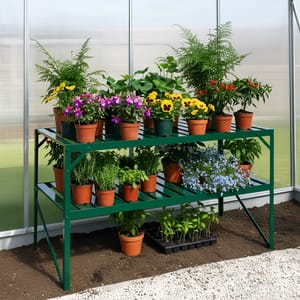
Matt's pick for unheated greenhouse growingBest For: Organising seed trays and winter salad pots at working height Why I Recommend It: Raising plants off the ground floor puts them in warmer air (cold sinks) and saves your back. Two tiers means you can have seedlings up top and established plants below. Powder-coated aluminium won't rot in damp winter conditions. I have two of these in my own greenhouse. Price: £109 |
Germination temperatures: what will start in a cold greenhouse
| Crop | Minimum Germination Temp | Earliest Unheated Sowing | Needs Propagator? |
|---|---|---|---|
| Onion | 1C | January | No |
| Lettuce | 2C | February | No |
| Spinach | 2C | February | No |
| Pea | 6C | February | No |
| Broad bean | 6C | February | No |
| Radish | 6C | February | No |
| Carrot | 6C | March | No |
| Beetroot | 6C | March | No |
| Tomato | 10C | Late April (borderline) | Yes, for early start |
| French bean | 8C | Mid-April | No, but faster with |
| Pepper / chilli | 16C | Not viable without heat | Yes |
| Cucumber | 16C | Not viable without heat | Yes |
| Courgette | 16C | Late April (borderline) | Yes, for reliability |
The shown rows are crops that benefit from a heated propagator for germination but grow perfectly well in the unheated greenhouse once they've sprouted. A £30 electric propagator mat inside an unheated greenhouse lets you start tomatoes in February and peppers in January without heating the whole space. For more on running costs if you do decide to add heating, read our greenhouse heating costs guide.
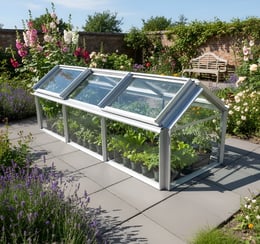
Matt's Pick for Unheated Growing
Best For: extending an unheated greenhouse with hardening-off and winter salad space.
Why I Recommend It: A cold frame is the perfect partner to an unheated greenhouse. I use one to harden off seedlings before they go outside and to grow winter salads at ground level. The Elite Min E Lite is a sturdy aluminium frame that holds heat low to the ground.
Price: £299
Frequently asked questions
Can I grow tomatoes in an unheated greenhouse?
Yes, but not before late April when night temperatures stay above 10C. Tomato plants stop growing below 5C and die at 0C. Start seeds in a heated propagator from mid-February, grow them on indoors or in the greenhouse, and plant in their final position from late April. Sungold and Stupice are the best varieties for unheated growing because they set fruit at lower temperatures than most.
What is the hardiest salad crop for a cold greenhouse?
Lamb's lettuce (corn salad or mache) survives down to -15C. It is the single best winter salad for an unheated greenhouse. Sow in August or September, start harvesting outer leaves from October, and it keeps producing through to March. Claytonia is equally hardy and self-seeds for the following year.
When should I sow winter salads in my greenhouse?
August is the ideal month, with September as the last reliable window. Plants need enough daylight hours to bulk up before November, when growth stalls due to short days rather than cold. Sow after mid-October and you'll get tiny plants that sit dormant until February. The August sowing window is the single most important timing for year-round greenhouse growing.
How much warmer is an unheated greenhouse than outside?
5-8C warmer at night, and 15-20C warmer on sunny days. With bubble wrap insulation fitted, the night-time advantage increases to 8-12C above outside. On a sunny January day at 4C outside, the greenhouse interior reaches 20C or more. On clear, still nights the advantage is smallest, and in rare cases the greenhouse can drop below outside air temperature due to radiative cooling.
Do I need to insulate an unheated greenhouse?
Not essential, but bubble wrap insulation makes a big difference. It reduces heat loss by 35-45% and can mean the difference between 1C and 5C inside on a cold night. That matters because 1C kills lettuce seedlings while 5C keeps them alive. Fit horticultural bubble wrap from mid-October and remove in April. The light reduction (10-15%) is a worthwhile trade-off for the extra warmth.
Can I grow all year round in an unheated greenhouse?
Yes, if you choose the right crops and sow at the right time. Hardy salads (lamb's lettuce, claytonia, land cress, spinach) produce fresh leaves every month including January. Summer crops (tomatoes, cucumbers, peppers) run from May to October. The gap is bridged by sowing winter crops in August before summer crops finish. Our year-round growing guide covers the full cycle.