What to Grow in a Potting Shed: Month-by-Month UK Guide
A potting shed gives you a frost-free workspace, built-in staging, and enough headroom to grow year-round. After working with Swallow's ThermoWood range since they launched, we've tested what actually thrives in a potting shed versus an open greenhouse. The answer: almost everything - if you follow the right monthly schedule. Swallow potting sheds start from £3,307 with free UK delivery and professional installation by Swallow's own factory-trained team.
Key Takeaways
- Year-round growing: A potting shed with ThermoWood insulation lets you start seeds 4-6 weeks earlier than an unheated greenhouse
- Best crops: Tomatoes, cucumbers, peppers, aubergines, herbs, and overwintering salads all thrive in a potting shed
- Temperature edge: ThermoWood timber holds 3-5°C warmer than standard softwood sheds in winter
- Built-in staging: Every Swallow potting shed includes slatted staging on both sides - no extra cost
- Payment model: Pay just 20% deposit at order, then nothing more until after Swallow's factory-trained installers finish the build
- Prices from: Swallow Jay 6x6 from £3,307, Rook 8x8 from £4,606
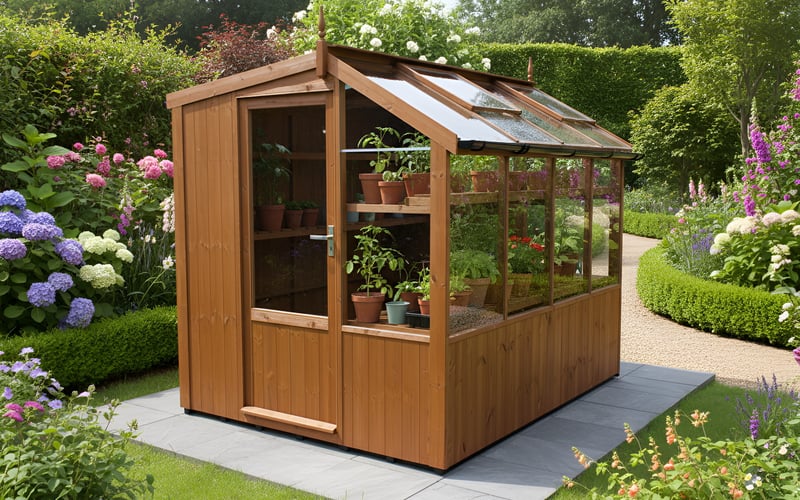
Shop the Swallow Jay 6x8 Potting Shed →
Expert Tip
I've seen customers try to grow in standard garden sheds and wonder why everything bolts or goes leggy. The difference with a proper potting shed is the glass. Swallow's ThermoWood sheds use 4mm toughened safety glass on the glazed side, which gives you the light levels of a greenhouse with the insulation of a timber building. That combination is what makes year-round growing possible. The ThermoWood timber itself is heat-treated to 215°C during manufacturing, which means it won't rot, won't warp, and holds warmth better than pressure-treated softwood.
Why a potting shed is better for growing than a standard shed
A standard garden shed has solid walls on all four sides. Light levels inside drop to 10-15% of outdoor levels. Plants stretch, go pale, and produce little fruit.
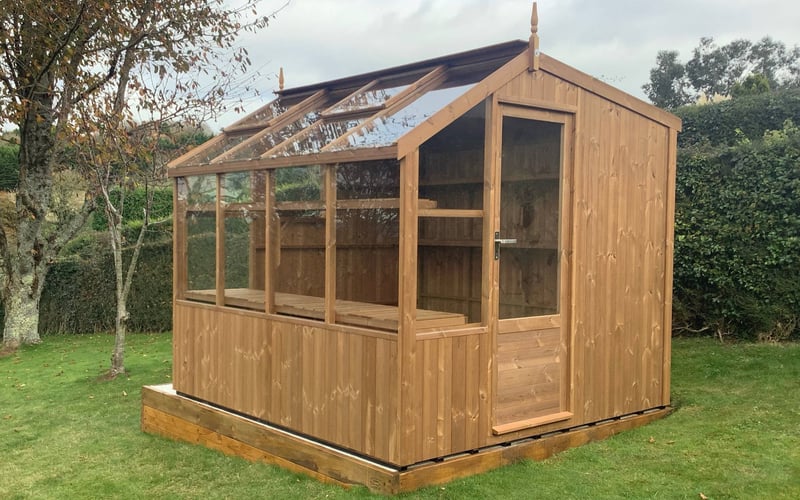
A potting shed solves this with a half-and-half design. One side is fully glazed with 4mm toughened glass - the same spec as a greenhouse. The other side is solid timber with built-in staging at waist height. You get greenhouse-level light on the growing side and a proper workspace on the timber side.
Swallow's ThermoWood construction adds a third advantage: insulation. Heat-treated timber has 25% lower thermal conductivity than standard softwood. In our experience, that translates to 3-5°C warmer overnight temperatures in winter without any heating. For seed germination and overwintering tender plants, that margin is the difference between success and failure.
Every Swallow potting shed comes with slatted staging on both sides as standard. The Swallow Jay 6x8 gives you 4.8m² of growing space, while the larger Swallow Rook 8x10 stretches to 7.4m² - enough for serious propagation work.
What to Grow in a Potting Shed in January and February
January and February are propagation months. The potting shed's insulated timber walls keep frost at bay while the glazed side captures every hour of weak winter sun.
Start these seeds on heated propagator mats:
- Tomatoes (sow late January for an early crop) - 18-21°C germination temperature
- Peppers and chillies (sow early February) - need 21-25°C, so a heated propagator is essential
- Aubergines (sow mid-February) - slow to establish, so the earlier the better
- Early lettuce varieties like 'Winter Density' - sow direct into trays on the staging
If temperatures drop below -5°C outside, a small electric heater keeps the potting shed above freezing. The Eden 2KW Greenhouse Heater at £140 is sized right for sheds up to 8x10.
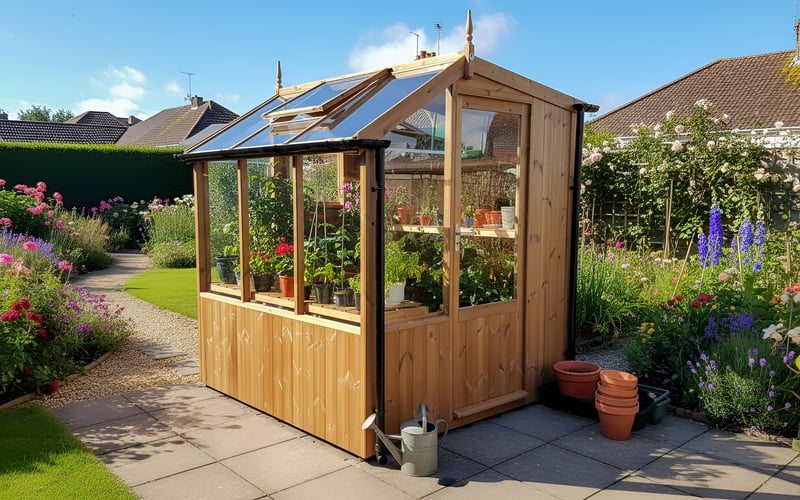
Shop the Swallow Jay 6x6 Potting Shed →
The Swallow Jay 6x6 is the most popular compact potting shed for seed starting. At 6ft x 6ft, it fits in most gardens while giving you two full runs of staging for trays and pots.
Matt's Tip: Winter Seed Starting
Don't waste money heating the whole shed in January. Put a heated propagator mat on the staging and cover trays with clear lids. The mat keeps compost at 20°C for pennies a day, and the potting shed's ThermoWood walls stop the ambient temperature dropping below 2-3°C on most nights. I start all my tomatoes and peppers this way - they're ready to pot on by mid-March.
What to Grow in a Potting Shed in March and April
Spring is the busiest time in a potting shed. Every inch of staging earns its keep as you pot on seedlings and harden off plants for outside.
March sowings:
- Courgettes and squash - sow in 9cm pots, one seed per pot
- French beans and runner beans - sow in deep pots from late March
- Basil, coriander, and parsley - sow in trays on the warm side of the staging
- Sweet peas - start in root trainers if you haven't already
April activity:
- Pot on tomatoes into 12cm pots and grow them on in the potting shed until late May
- Prick out peppers into individual pots
- Start hardening off early lettuce, broad beans, and peas by moving them outside during the day
- Plant up hanging baskets and keep them in the shed until the last frost passes
Our April gardening jobs guide covers the full list of tasks for this busy month. The key advantage of a potting shed in spring is the workspace: you can pot on at the timber-side staging while seedlings grow undisturbed on the glazed side.
What to Grow in a Potting Shed in May and June
By May, the potting shed becomes a production line. Tender crops go into their final positions and the staging fills with succession sowings.
May and June crops:
- Tomatoes - plant into grow bags or large pots on the glazed side. Cordon varieties work best in the confined space
- Cucumbers - train up strings from the staging to the roof. One plant produces 20-30 fruits
- Peppers and chillies - keep on the staging in 10-litre pots
- Herbs - basil, coriander, and dill thrive in the warmth. Succession sow every 3 weeks
- Melons - possible in the Rook 8x10 with its extra headroom and floor space
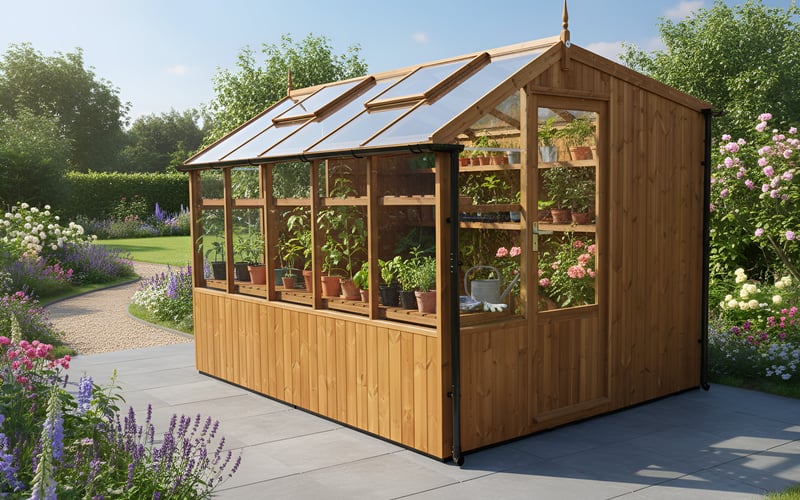
The Swallow Rook 8x10 is the serious grower's choice. At 8ft x 10ft, you get enough floor space to stand grow bags along the glazed wall while keeping both staging runs clear for pots and trays. The ridge height of 2540mm gives tomatoes and cucumbers room to grow tall.
Ventilation matters in summer. Open the door and roof vent on hot days to prevent temperatures exceeding 30°C. If you're out during the day, fit an automatic vent opener to the roof light - it opens and closes with temperature changes.
What to Grow in a Potting Shed in July and August
Peak harvest season. Your potting shed should be producing daily pickings of tomatoes, cucumbers, peppers, and herbs.
Harvest and maintain:
- Tomatoes - pick when fully coloured. Remove lower leaves to improve airflow and reduce blight risk
- Cucumbers - harvest at 15-20cm. Pick regularly to encourage more fruit
- Peppers - leave some to ripen red for sweeter flavour
- Herbs - pick little and often. Cut basil above a leaf node to encourage bushy growth
Start planning for autumn:
- Sow winter lettuce ('Arctic King', 'Winter Gem') in late August for autumn cropping
- Sow spring cabbage in trays for transplanting in September
- Take cuttings of tender perennials (pelargoniums, fuchsias) and root them on the staging
For detailed advice on what to grow through the warmer months, our guide to growing seeds in a greenhouse covers techniques that work equally well in a potting shed.
|
Matt's pick for serious growersBest For: Year-round growing with tomatoes, cucumbers, and overwintering Why I Recommend It: The 8x10 floor plan gives you grow bags along the glass AND full staging on both sides. ThermoWood means zero maintenance and 3-5°C warmer in winter. Price: £5,185 (20% deposit, balance after installation) |
What to Grow in a Potting Shed in September and October
Autumn is transition time. Summer crops wind down while winter crops establish.
September tasks:
- Green tomatoes - pick remaining fruit and ripen indoors, or make chutney
- Clear spent plants - remove tomato and cucumber plants once cropping finishes
- Plant winter lettuce in trays or direct into grow bags
- Sow oriental leaves - mizuna, pak choi, and mustard greens grow fast in the cooling shed
- Pot up spring bulbs - store in the dark under the staging for forcing
October:
- Bring in tender plants - move pelargoniums, citrus, and fuchsias inside before the first frost
- Sow broad beans ('Aquadulce Claudia') in deep pots for an early spring crop
- Plant garlic in pots on the staging - they need the cold but not the wet
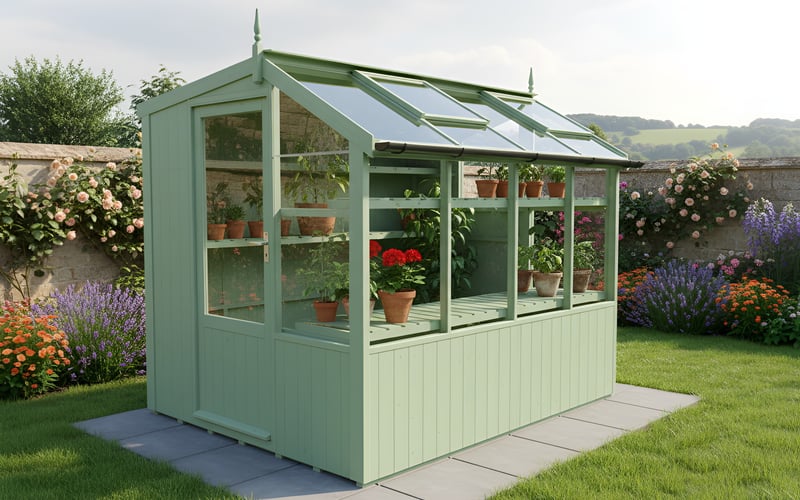
Shop the Swallow Jay Painted Potting Shed →
The Swallow Jay Painted range gives you the same ThermoWood construction with a factory-applied paint finish in your choice of colour. The paint adds an extra layer of weather protection - ideal if your potting shed sits in an exposed position.
What to Grow in a Potting Shed in November and December
Winter growing in a potting shed is where ThermoWood earns its premium. The insulated timber walls hold warmth from weak winter sun long after dark, keeping the interior above freezing on all but the coldest nights.
Winter crops that thrive:
- Winter lettuce - 'Arctic King' and 'Winter Gem' crop right through to March
- Spinach - sow in October for winter picking. Cut-and-come-again keeps producing
- Lamb's lettuce (corn salad) - one of the hardiest winter salads
- Radishes - fast-growing winter varieties mature in 4-5 weeks. Our winter radish growing guide covers the best varieties
- Forced rhubarb - cover crowns with a bucket under the staging for early pink stems
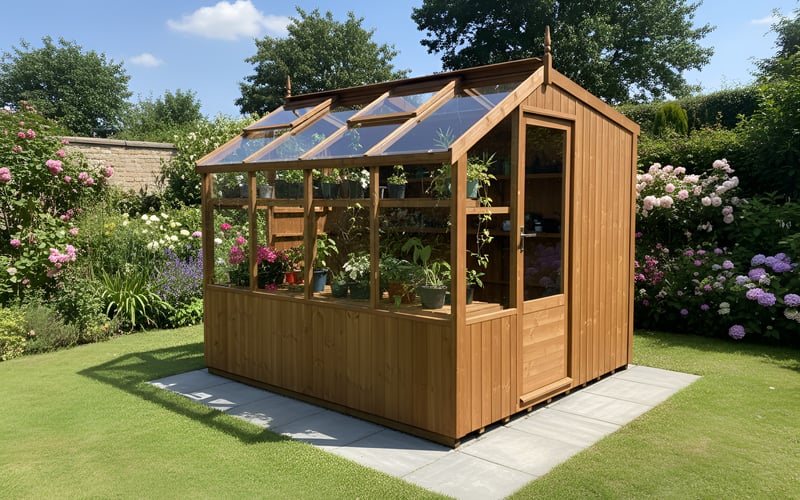
Shop the Swallow Rook 8x8 Potting Shed →
If overnight temperatures regularly drop below -5°C in your area, a small heater makes winter growing reliable. The Eden 2KW Heater keeps a potting shed above 5°C even in a hard frost - warm enough for winter salads and overwintering tender plants. Read our guide to running electricity to a greenhouse if you need to wire up a power supply.
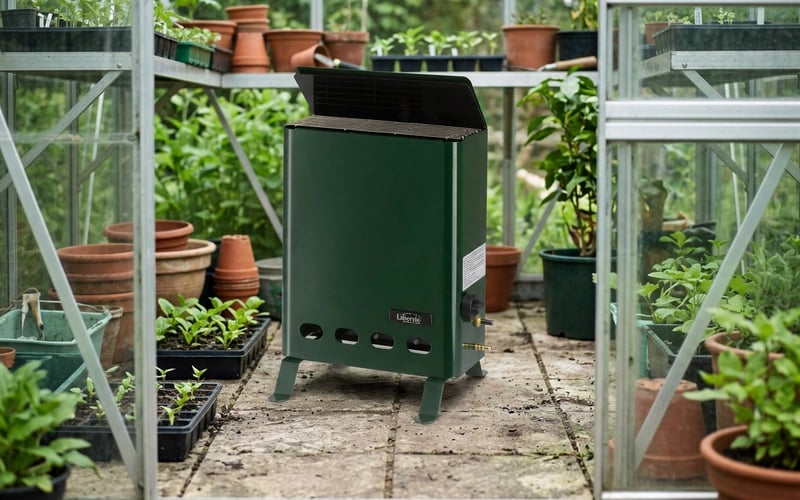
Shop the Eden 2KW Greenhouse Heater →
Thermowood vs pressure-treated timber: which potting shed lasts longer?
Every Swallow potting shed uses ThermoWood - timber heat-treated to 215°C in a controlled kiln process. This changes the wood at a cellular level, making it resistant to rot, insect damage, and moisture absorption.
| Feature | ThermoWood (Swallow) | Pressure-Treated Softwood |
|---|---|---|
| Rot resistance | Class 2 durability (25+ years) | Class 3-4 (10-15 years with retreating) |
| Insulation | 25% lower thermal conductivity | Standard conductivity |
| Maintenance | None required - naturally weather-resistant | Re-treat with preservative every 2-3 years |
| Warping | Minimal - heat treatment stabilises timber | Common as timber dries out |
| Chemical treatment | None - heat only | Copper-based preservatives |
| Winter temperature | 3-5°C warmer than outside | 1-2°C warmer than outside |
| Best for growing | Year-round including winter salads | Spring to autumn only without heating |
The ThermoWood advantage is most obvious in winter. That 3-5°C temperature margin means your potting shed stays above freezing on nights when a standard shed drops below zero. For anyone serious about year-round growing, it's the single most important specification.
Our potting shed vs greenhouse comparison guide breaks down the full differences if you're still deciding between the two.
How to get the most from your potting shed staging
Every Swallow potting shed includes slatted timber staging on both sides. This is more than just a shelf - it's your primary growing surface.
Staging tips from experience:
- Use the glazed side for light-hungry crops - tomato seedlings, peppers, herbs, and anything that needs maximum sun
- Use the timber side for shade-tolerant plants - ferns, overwintering dormant plants, and crops that bolt in too much heat
- Add a heated propagator mat to one section of staging for winter seed starting
- Keep the space under the staging for storing pots, compost bags, and forcing rhubarb in darkness
- Line one staging level with capillary matting for self-watering when you're away
For layout ideas and storage solutions, read our potting shed ideas and layout guide which covers workspace organisation in detail.
Choosing the right size potting shed for growing
The right size depends on what you want to grow and how many plants you're raising.
| Model | Size | Best For | Price From |
|---|---|---|---|
| Swallow Jay 6x6 | 6ft x 6ft | Seed starting, herbs, small collections of tender plants | £3,307 |
| Swallow Jay 6x8 | 6ft x 8ft | Most growers - enough space for tomatoes, peppers, and propagation | £3,751 |
| Swallow Rook 8x8 | 8ft x 8ft | Year-round growing with room for grow bags on the floor | £4,606 |
| Swallow Rook 8x10 | 8ft x 10ft | Serious growers - full crop rotation with dedicated propagation area | £5,185 |
| Swallow Jay Painted | 6ft x 8ft | Same growing space as the Jay with a factory-applied paint finish | £4,220 |
Remember: you only pay a 20% deposit when you order a Swallow potting shed. You don't pay the balance until after Swallow's factory-trained installers have finished the build in your garden. That payment model means you can see the quality of the construction before committing to the full price.
Not sure whether a potting shed or a full greenhouse is right for your garden? Our guide to choosing the right size greenhouse helps you work out the space you need.
Frequently asked questions
What is the best thing to grow in a potting shed?
Tomatoes, herbs, and salad leaves are the best crops for a potting shed. The glazed side provides enough light for fruiting crops like tomatoes, peppers, and cucumbers from May to October. The built-in staging gives you a warm, sheltered surface for year-round herb growing. In winter, switch to cold-hardy salads like winter lettuce, lamb's lettuce, and spinach - the ThermoWood insulation keeps temperatures above freezing without heating on most nights.
Can you grow tomatoes in a potting shed?
Yes, potting sheds are excellent for growing tomatoes. Plant cordon varieties in grow bags or large pots on the glazed side from mid-May. The glass panel provides full sun while the timber side reduces temperature swings that cause blossom drop. Expect 8-12 trusses per plant in a good season. Start seeds on a heated propagator mat in late January for the earliest harvest.
How warm does a potting shed stay in winter?
A ThermoWood potting shed stays 3-5°C warmer than outside temperatures. Swallow's heat-treated timber has 25% lower thermal conductivity than standard softwood, trapping warmth from winter sun. On a -3°C night, the interior typically holds at 0-2°C without heating. Adding a 2KW electric heater keeps the shed above 5°C even in prolonged frost, enough for winter salads and overwintering tender plants.
Do potting sheds need a base?
Yes, every potting shed needs a solid, level base. Swallow recommends a concrete slab or paving slabs on a compacted hardcore sub-base. The base must be perfectly level and match the exact footprint dimensions. Our greenhouse flooring guide covers all the base options with detailed how-to instructions. Swallow's factory-trained installers check the base on arrival and won't build on an uneven surface.
How much does a potting shed cost?
Swallow ThermoWood potting sheds start from £3,307 including free UK delivery and professional installation. The Swallow Jay 6x8 costs from £3,751, the Rook 8x8 from £4,606, and the larger Rook 8x10 from £5,185. You pay just a 20% deposit at order and don't pay the remaining balance until after installation is complete. For full pricing details, see our greenhouse cost guide.
Do I need planning permission for a potting shed?
Most potting sheds don't need planning permission under permitted development rights. The structure must be single-storey, under 2.5m high within 2m of a boundary, and cover less than 50% of the garden area. It cannot be in front of the principal elevation of the house. Our planning permission guide covers all the rules and exceptions including conservation areas and listed buildings.