How to Grow Poinsettias in a Greenhouse UK
Poinsettias (Euphorbia pulcherrima) re-flower reliably in UK greenhouses when given 14 hours of uninterrupted darkness daily from late September to early December and kept at 13-15C overnight. Most poinsettias sold at Christmas are discarded in January, but a greenhouse-grown plant can be kept for 5-10 years with annual pruning, feeding, and short-day light treatment. The coloured 'petals' are actually modified leaves called bracts that change colour in response to shortening daylight hours, not temperature alone. A heated greenhouse with blackout capability produces Christmas-ready poinsettias by the first week of December.
Key takeaways
- Poinsettias need 14 hours of total darkness daily from late September to colour up for Christmas. Even a brief flash of light at night resets the process.
- Keep at 13-15C overnight and 18-22C during the day. Below 13C causes leaf drop. Above 22C delays bract colouring.
- Water only when the top 2cm of compost is dry. Overwatering is the number one killer. Let the pot drain completely after each watering.
- Cut back hard in April to 10-15cm. The plant regrows vigorously with fresh stems that will carry next year's bracts.
- Feed fortnightly from May to September with liquid tomato feed. Stop feeding when you start the short-day treatment.
- White sap is mildly irritant. Wear gloves when pruning. The sap can cause skin irritation in sensitive people.
Matt's note
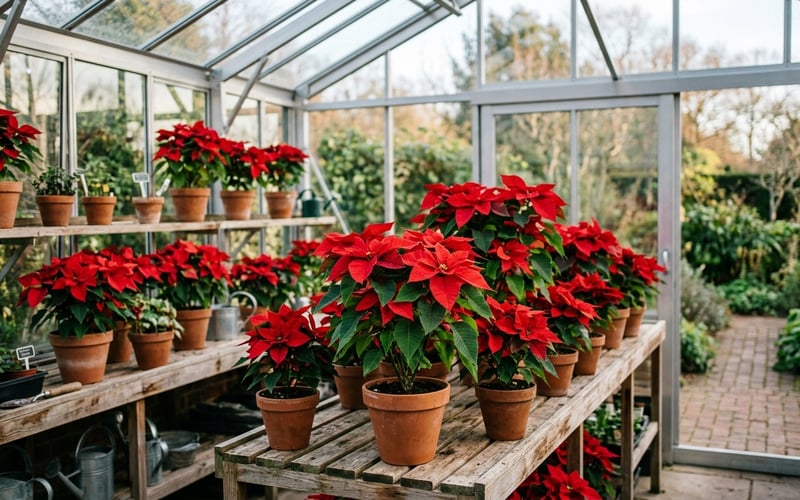
I have kept the same two poinsettia plants going for seven years now. They live in my greenhouse from April to November and come indoors for the Christmas display. The trick everyone misses is the blackout. You need 14 hours of complete darkness every single night from late September. I use a large cardboard box over each plant at 5pm and remove it at 7am. Miss one night and the bracts stay green. It is fiddly, but the reward is a 90cm poinsettia covered in red bracts that cost nothing compared to buying new plants each year at £8-15 a time.
Why grow poinsettias in a greenhouse?
Most people buy poinsettias in December and bin them in January. A greenhouse lets you keep the plant year-round and re-flower it for Christmas annually. The greenhouse provides three things a windowsill cannot: consistent warmth without draughts, controlled light for the blackout period, and space for the plant to grow to its full potential.
A greenhouse-grown poinsettia reaches 60-90cm tall and 50-70cm wide after 2-3 years. Compare that to the compact 30cm plant from the supermarket. The bracts are larger, more numerous, and the plant develops a woody trunk that adds character. Commercial growers use chemical growth regulators to keep plants small. In a greenhouse, you get the natural form.
Poinsettia varieties for UK greenhouses
The classic red poinsettia is the most popular, but several colour varieties grow well in UK greenhouses. All require the same care regime.
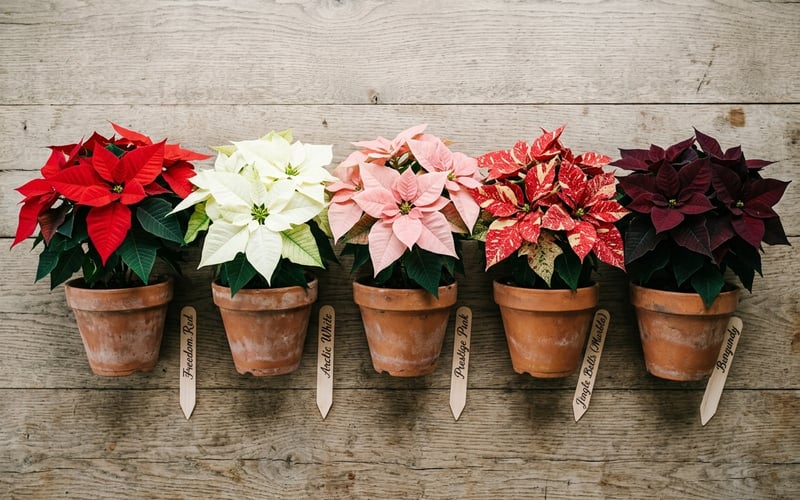
| Variety | Bract colour | Vigour | Notes |
|---|---|---|---|
| Prestige Red (Matt's Pick) | Classic bright red | Strong | Most reliable re-flowerer. Compact habit. |
| Arctic White | Pure white/cream | Moderate | Elegant. Needs slightly warmer nights (15C). |
| Ice Punch | Red with white centre | Strong | Bicolour bracts. Very showy. |
| Jingle Bells | Red speckled with pink | Moderate | Marble effect. Unique. |
| Burgundy | Deep wine red | Strong | Dark dramatic colour. Vigorous grower. |
| Pink Peppermint | Pink with darker pink veins | Moderate | Soft pastel effect. |
Temperature management: the critical factor
Temperature is the most important factor in poinsettia care, more so than light or water. Get the temperature wrong and the plant drops its leaves, fails to colour, or dies outright.
Growing season (May-September): 18-24C during the day. Standard unheated greenhouse conditions suit poinsettias perfectly in summer. Open vents above 24C to prevent heat stress. Our ventilation guide covers automatic temperature control in detail.
Colouring period (October-December): 13-15C overnight is essential for bract colour development. Daytime temperature can reach 18-20C. Below 13C at night causes leaf drop and bract damage. Above 18C at night delays colouring by up to 3 weeks.
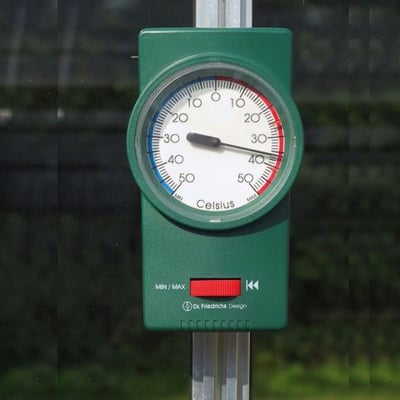
Shop Vitavia Max-Min Thermometer £30 →
Winter display (December-March): Keep above 13C. Poinsettias are tropical plants (native to Mexico) and suffer below 10C. In a heated greenhouse, set the thermostat to 13C minimum. Cold draughts from vents or doors cause rapid leaf drop, even if the overall temperature is correct.
Matt's installation tip: avoid cold draughts
When I fit greenhouses for customers who grow poinsettias, I always check the door seals and louvre vent closures. A 2mm gap in a louvre vent lets cold air pour in directly onto the staging where poinsettias sit. An automatic vent opener with a proper seal, like the Elite model at £59, closes fully at night and prevents the cold draughts that cause overnight leaf drop. It is worth the investment if you are serious about keeping poinsettias year-round.
The short-day treatment: how to make poinsettias turn red
This is the step that separates successful poinsettia growers from everyone else. Poinsettia bracts change colour in response to long nights, not cold weather or reduced watering. The plant needs 14 hours of complete, uninterrupted darkness every night for 8-10 weeks.
When to start: Late September (around 25th September). Count 10 weeks forward to early December. This gives you Christmas-ready bracts by the first week of December.
How to do it: At 5pm, cover each poinsettia with a large cardboard box, black bin bag over a wire frame, or move the plant into a dark cupboard. At 7am, uncover the plant. The darkness must be total. Even a brief flash of light from a torch, security light, or streetlight through the greenhouse glass resets the process.
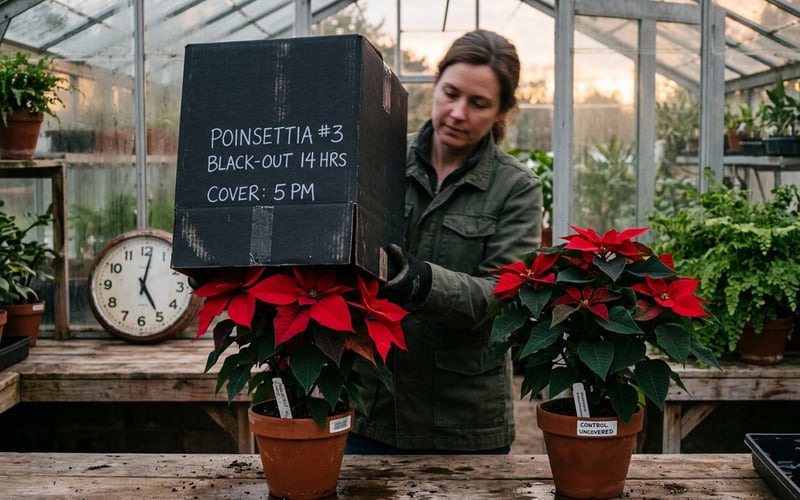
During the 10 hours of daylight (7am-5pm), the plant needs as much bright light as possible. South-facing greenhouse glass is ideal. Do not shade the greenhouse during the blackout period or the bracts will be pale.
What happens: After 2-3 weeks, the uppermost leaves begin to show colour at their edges. By week 6, the bracts are half-coloured. By week 10, the bracts are fully coloured and the tiny yellow flowers (cyathia) appear in the centre. Once full colour is achieved, you can stop the blackout treatment.
Annual care calendar
| Month | Task | Temperature |
|---|---|---|
| January-March | Keep in warm greenhouse or indoors. Water sparingly. Enjoy the display. | Min 13C |
| April | Prune hard: cut all stems to 10-15cm. Reduce watering for 2 weeks. | 15-20C |
| May | New growth appears. Repot into next size pot with fresh compost. Start feeding. | 18-24C |
| June-August | Grow in bright greenhouse. Feed fortnightly. Pinch tips for bushier growth. | 18-24C |
| September (late) | Stop feeding. Begin short-day blackout treatment (14 hours dark daily). | 13-15C night |
| October-November | Continue blackout daily. Bracts begin to colour. Water carefully. | 13-15C night |
| December | Stop blackout when bracts fully coloured. Display and enjoy. | Min 13C |
Watering: less is more
Overwatering kills more poinsettias than any other cause. The roots are sensitive to sitting in wet compost and rot quickly. Water only when the top 2cm of compost feels dry to the touch.
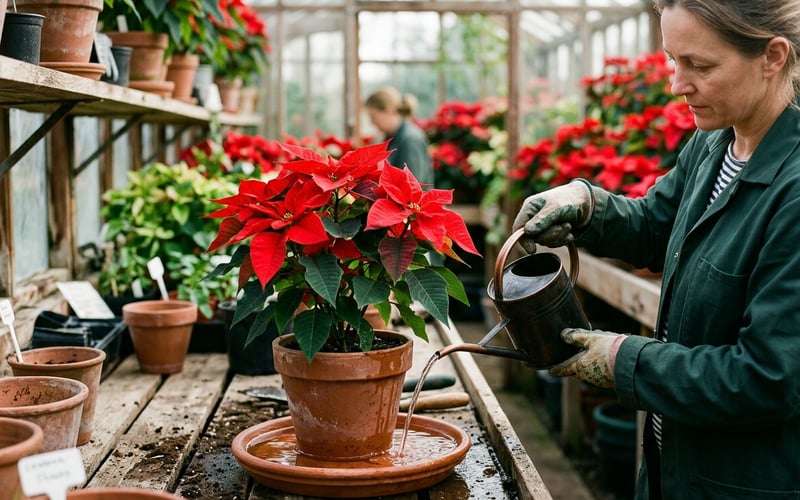
Water thoroughly until it runs from the drainage holes, then empty the saucer after 30 minutes. Never leave pots standing in water. In summer (May-August), this means watering every 3-4 days. In winter (November-March), every 7-10 days. During the blackout period, reduce watering slightly as the plant's growth slows.
Use room-temperature water. Cold water from an outside tap can shock the roots and cause leaf drop. Fill your watering can the night before and leave it in the greenhouse to reach ambient temperature. Read our common greenhouse growing mistakes guide for more on watering technique.
Pruning and repotting
Annual pruning in April is essential. Without it, the plant becomes leggy and top-heavy with small, sparse bracts. Hard pruning encourages the bushy, multi-stemmed growth that produces the best Christmas display.
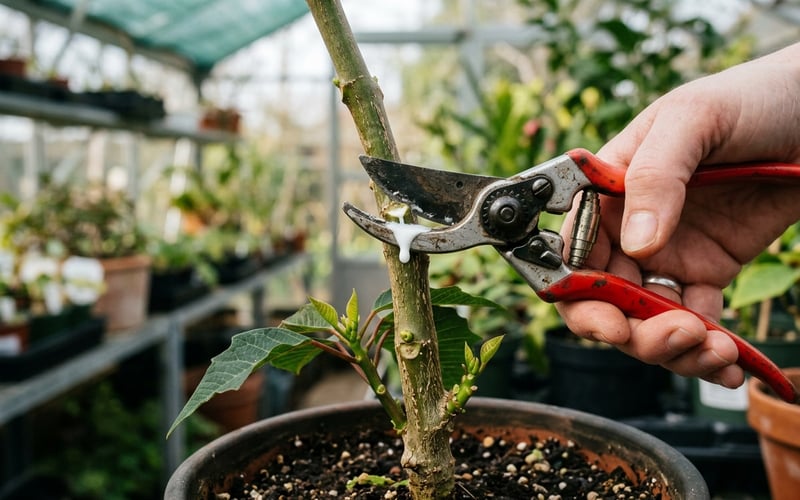
In April, cut every stem back to 10-15cm above soil level. The plant looks drastic but will push 4-6 new shoots from each cut stem within 3-4 weeks. Wear gloves when pruning. Poinsettia stems exude white latex sap that irritates skin in some people. Dip cut ends in cold water to stop the sap flow.
Repot at the same time into a pot one size larger (e.g., 15cm to 18cm). Use multipurpose compost mixed with 20% perlite for drainage. Do not use peat-free compost with coir as the sole ingredient. Coir retains too much moisture for poinsettia roots.
In June, pinch out the growing tips of each new stem to encourage branching. Each pinched stem produces 2-3 side shoots, which each carry bracts in December. More stems equals more bracts.
Common problems and solutions
Leaf drop (green leaves falling): Almost always caused by cold draughts, overwatering, or sudden temperature changes. Check door seals, vent closures, and watering frequency. Move away from draughty positions.
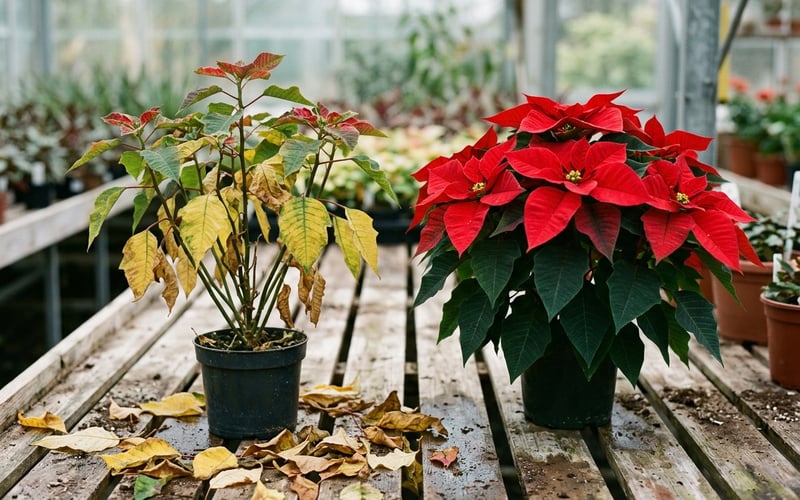
Bracts not colouring: Light interruption during the blackout period. Even 5 minutes of light at night resets the process. Check for security lights, streetlights, or greenhouse lighting leaking through the blackout cover.
Pale or small bracts: Insufficient daylight during the 10-hour light period. Clean greenhouse glass. Remove any shading. Position on the sunniest staging shelf.
Wilting despite moist soil: Root rot from overwatering. Remove from pot, trim rotted roots (brown and mushy), repot in fresh dry compost. Do not water for 5 days.
White flies on leaves: Poinsettias are magnets for whitefly. Hang yellow sticky traps near the plant from May onwards. Introduce Encarsia formosa biological control in June if numbers build.
Matt's tip: the cardboard box method
Forget fancy blackout systems. A large cardboard box from a washing machine or fridge works perfectly for short-day treatment. Cut the bottom off so it sits over the plant like a dome. Place it over the poinsettia at 5pm, remove at 7am. The cardboard insulates slightly too, which helps maintain the 13-15C overnight temperature. I have used the same two boxes for five years running. Free, effective, and foolproof.
Keeping poinsettias for multiple years
A well-managed greenhouse poinsettia lives 5-10 years or more. The plant develops a woody trunk and becomes more impressive each year. The key is the annual cycle: enjoy through winter, prune hard in April, grow strongly through summer, blackout from late September, and colour up for Christmas.
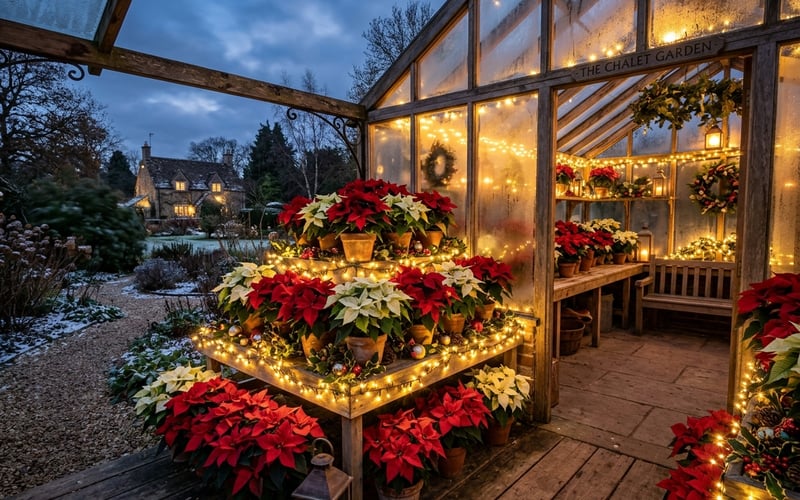
Each year, the plant doubles in size until it reaches its mature form at around 90cm tall and 70cm wide. A 5-year-old poinsettia in a 30cm pot with 15-20 coloured bracts is a genuine showpiece that you cannot buy in any shop. Our fruit and plant growing guide has more tips on long-term greenhouse plant care.
|
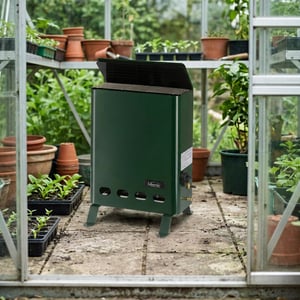
Matt's pick: keep poinsettias alive through winterBest For: Maintaining the 13C minimum overnight temperature poinsettias need Why I Recommend It: The Eden 2KW heater has a built-in thermostat. Set it to 13C and forget about it. It only fires when the temperature drops, so running costs are low: roughly £15-25 per month from October to March depending on your greenhouse size and insulation. Without a heater, poinsettias die in the first hard frost. Price: £140 |
Frequently asked questions
Can you keep a poinsettia alive after christmas?
Yes, poinsettias live 5-10 years with proper care. Keep above 13C through winter, prune to 10-15cm in April, grow in a bright greenhouse through summer, and start the 14-hour blackout treatment from late September. The same plant re-flowers every Christmas.
Why are my poinsettia leaves dropping?
Cold draughts or overwatering are the most common causes. Poinsettias are tropical plants that suffer below 13C. Check greenhouse door seals and vent closures. Water only when the top 2cm of compost is dry. Never leave pots standing in water.
How do you make a poinsettia turn red again?
Give the plant 14 hours of total darkness every night for 8-10 weeks. Start in late September. Cover with a cardboard box from 5pm to 7am daily. Even a brief flash of light during the dark period resets the colouring process. Maintain 13-15C overnight.
What temperature do poinsettias need in a greenhouse?
13-15C overnight and 18-22C during the day. Below 13C causes leaf drop and bract damage. Above 22C during the colouring period delays bract development. Use a min-max thermometer to monitor overnight temperatures.
When should you prune a poinsettia?
Prune hard in April, cutting all stems to 10-15cm. The plant regrows with 4-6 new shoots per cut stem within 3-4 weeks. Pinch growing tips in June for bushier growth. Wear gloves because the white latex sap irritates skin.
Are poinsettias poisonous?
Mildly irritant but not dangerously toxic. The white latex sap can cause skin irritation and mild stomach upset if ingested. They are not the deadly poison that popular myth suggests. Wear gloves when pruning. Keep away from pets who might chew leaves.
Can poinsettias survive in an unheated greenhouse?
No, they need minimum 13C and will die in the first frost. Poinsettias are native to Mexico and have zero frost tolerance. An unheated UK greenhouse drops below 0C on most winter nights. A thermostat-controlled heater set to 13C is essential for overwintering.