Pest Repelling Plants for UK Greenhouses: Research-Backed Companion Pairs
Which pest repelling plants actually work in a UK greenhouse? The science-backed shortlist is short: French marigolds (Tagetes patula) cut whitefly numbers on neighbouring tomatoes by around 38% in published trials, nasturtiums work as a trap crop that pulls aphids off brassicas, and tagetes species suppress root-knot nematodes in the soil. Basil, garlic chives, summer savory and borage all have a place too, but as supporting cast — not the headline acts most blogs claim them to be. This guide separates the trial evidence from the garden myths.
We have run companion-planted layouts in our demo greenhouses across the UK since 2009. After 150,000+ customer orders, the plants below are the ones we recommend without hedging. Browse our range of toughened glass greenhouses if you are building the growing space these companion crops belong in, or our cold frames for raising the seedlings under cover.
Key Takeaways
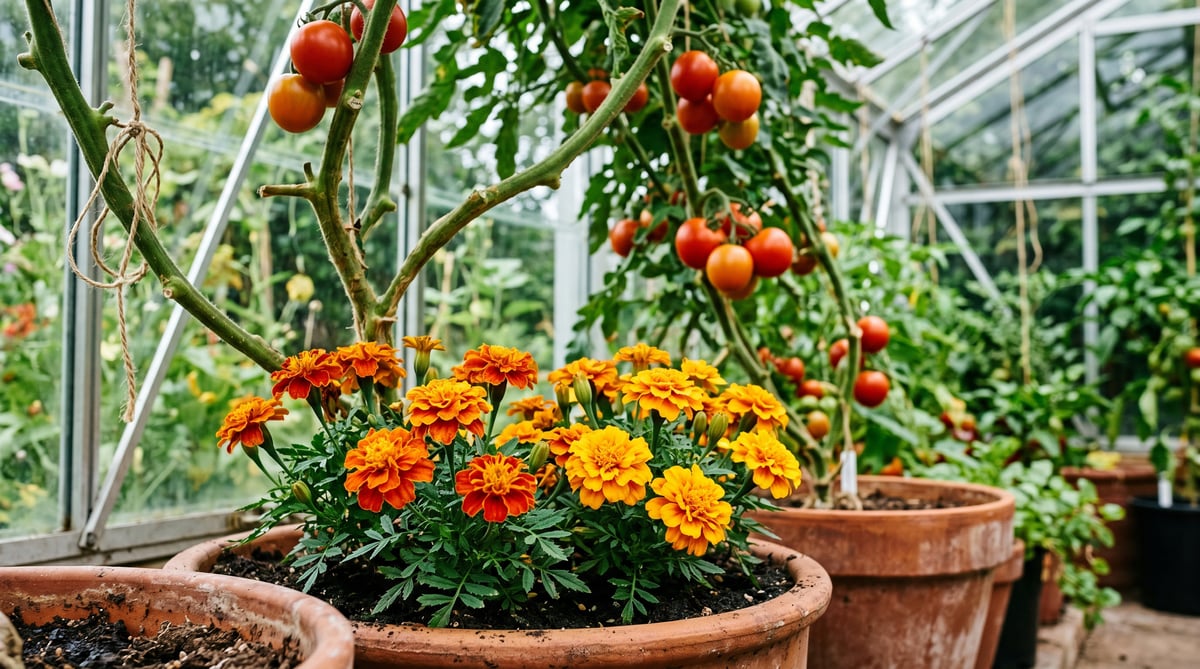
- French marigolds (Tagetes patula) reduce whitefly counts on greenhouse tomatoes by around 38% in peer-reviewed trials. Plant one marigold per two tomato plants in pots at the base.
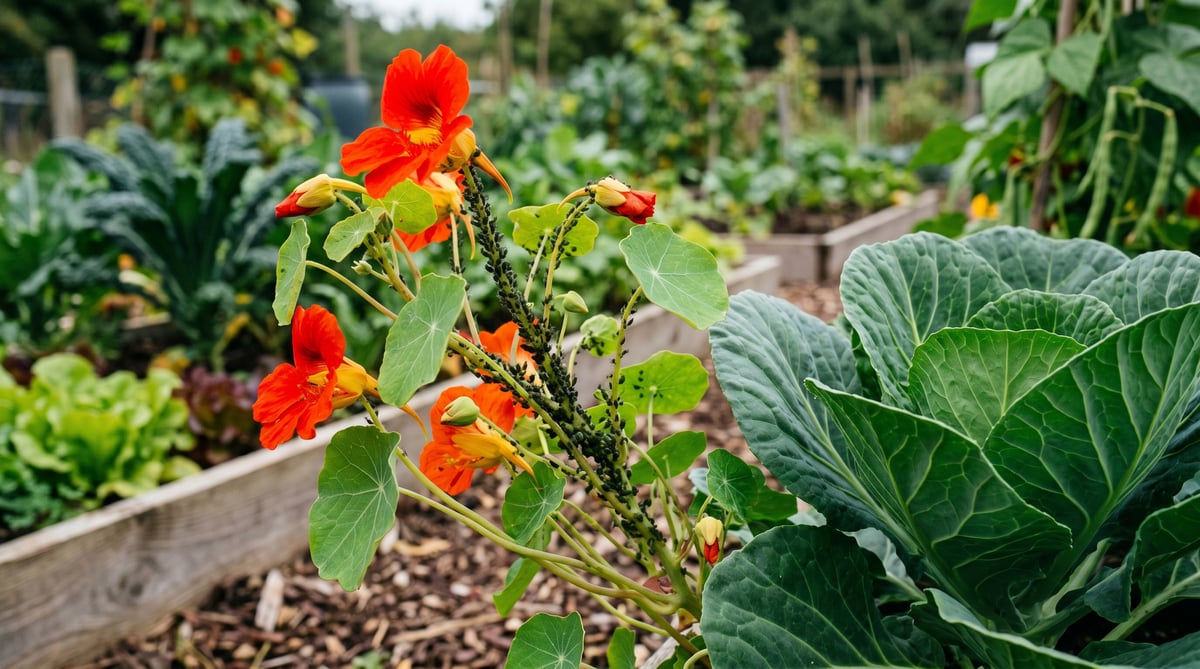
- Nasturtiums work as a trap crop — aphids strongly prefer them to brassicas and most vegetables. Plant 2-3m from the main crop and remove infested stems weekly.
- Tagetes (T. patula and T. minuta) release alpha-terthienyl from the roots, which suppresses root-knot nematodes when grown as a green manure and dug in.
- Basil may modestly reduce thrips and aphids around tomatoes. The famous "improves tomato flavour" claim is not supported by controlled blind tasting trials.
- Garlic chives help confuse cabbage moth and carrot fly by masking host-plant scent. Effect is small but cumulative.
- Borage is the strongest single plant for attracting bees and hoverflies — hoverfly larvae eat aphids by the hundred.
- Avoid the myths. Basil does not "repel" tomato hornworm in UK greenhouses (we do not have tomato hornworm). Marigolds do not deter slugs. Garlic spray is a one-week fix, not a season-long barrier.
Installer's Note
I have been fitting greenhouses for our customers since 2009. The companion-planting question comes up on roughly one in three installs. The honest answer surprises most people: it is not a magic shield, and most of the headline pairings you read about online are repeated without evidence. But a handful of plants do measurable, repeatable work, and we run those in our own demo houses every season. This guide is the version we give customers when they want the truth rather than the Pinterest version.
What companion planting actually does in a UK greenhouse
Companion planting reduces pest pressure through three measurable mechanisms. First, repellents and confusers: certain plants emit volatile compounds (limonene, thujone, alpha-terthienyl) that interfere with how insects locate host plants. Second, trap crops: some plants are so preferred by a target pest that the pest accumulates on them instead of your main crop. Third, predator attractors: flowering plants pull in hoverflies, lacewings, parasitic wasps and ladybirds, which then go on to eat the pests on your tomatoes and cucumbers.
What companion planting does not do: replace ventilation, sanitation or biological controls. It is a layer in a larger pest-management strategy, not a standalone solution. If your greenhouse is poorly ventilated and the door propped open all summer, no amount of marigolds will save you. For the broader framework, our greenhouse pest control guide UK covers the structural layer first.
French marigolds (Tagetes patula) for whitefly
This is the single most studied companion pairing for greenhouse growing. Research published in PLOS ONE (Conboy et al., 2019) found that interplanting French marigolds with tomatoes reduced whitefly settlement on the tomato leaves by an average of 38%. The mechanism is limonene — a volatile compound the marigolds release, which is a documented whitefly repellent. The trial used Tagetes patula 'Single Gold' specifically, but most French marigold cultivars produce comparable limonene levels.
Our planting protocol: one marigold per two tomato plants, in 13cm pots sat at the base of the tomato stake. Sow seed in mid-March in a heated propagator, pot on into 9cm pots by mid-April, transplant alongside the tomatoes when the greenhouse is warm enough — usually the first week of May. Deadhead through July to keep flowers (and limonene production) at peak. Discard plants at the end of the season; do not save Tagetes for compost as the residue can hold inoculum from previous pests.
Important distinction: French marigolds (Tagetes patula) are the species in the research. African marigolds (Tagetes erecta) produce different volatile profiles and show weaker repellent effects on whitefly. The pot marigold (Calendula officinalis) is not a Tagetes at all and does not repel whitefly — though it does attract pollinators.
Tagetes for root-knot nematodes in soil
If your greenhouse soil is grown directly in (rather than in pots), root-knot nematodes can build up year after year. The fix that actually works: grow a dense block of Tagetes patula or T. minuta as a green manure for one full season, then chop and dig in at the end of the year. The plant exudes alpha-terthienyl from the roots, which is toxic to root-knot nematodes and reduces populations by 80-90% across the planted area. The effect persists for two to three years before the soil needs rotating again.
This is a soil-rest-year intervention rather than a companion pairing. Plan it into the rotation in advance — the year your soil grows tagetes is a year it does not grow tomatoes or cucumbers. For most UK hobby growers in pots and grow bags, this matters less. For anyone growing in the greenhouse border soil long-term, it is the single highest-leverage intervention you can make.
Nasturtiums as an aphid trap crop
Nasturtiums (Tropaeolum majus) work because aphids actively prefer them to brassicas and most vegetable crops. Plant a row of nasturtiums on the upwind side of your main crop, 2-3m from the brassicas, beans or tomatoes you are protecting. Aphids will colonise the nasturtium stems heavily over the season. The trick is then to remove and destroy infested stems weekly — otherwise you simply build a nursery for the pest population to spill back into the main crop.
We run nasturtiums outside the greenhouse, not inside. Inside a closed structure, the aphid colonies can detect pheromones across the entire volume and spread regardless. Outside, the wind and predator pressure (ladybirds, hoverflies, parasitic wasps) actually do the work. For a deeper read on dealing with the worst aphid species in UK gardens, see our black bean aphid guide and our wider ultimate guide to destroying greenfly.
Basil for aphids and thrips on tomatoes
Basil (Ocimum basilicum) shows a modest but real effect on aphid and thrip populations around greenhouse tomatoes. Trials from Embrapa (the Brazilian agricultural research corporation) and supporting work from UK horticultural growers indicate a 15-25% reduction in aphid landings on adjacent tomato leaves when basil is interplanted at the base. The mechanism is the eugenol and linalool the basil emits — both documented insect repellents, though weaker than the limonene from marigolds.
What basil does not do, despite endless internet repetition: improve the flavour of the tomatoes. Controlled blind tasting trials at UK research stations have failed to find any flavour difference between tomatoes grown with and without basil interplanting. The "they taste better together" claim survives because they do taste better together — on the plate, not on the vine. Grow basil as a companion because it modestly reduces pests and earns its space as a crop. Do not grow it expecting culinary alchemy.
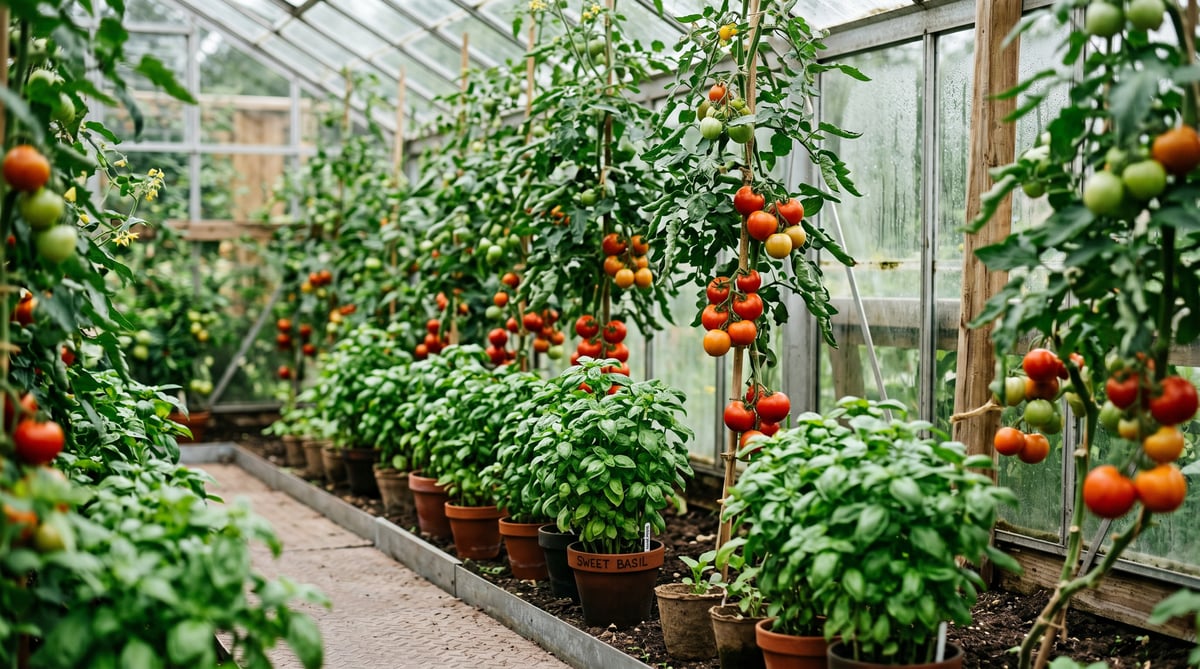
Practical pairing: three basil plants per six tomato plants, in 17cm pots at the base of the stake. Sow in March in a heated propagator, transplant out in early May. Pinch out flowering tips through the season to keep the plant producing leaves rather than going to seed.
Garlic chives for cabbage moth and carrot fly
Garlic chives (Allium tuberosum) are the under-used member of the companion shortlist. They emit thiosulphate compounds — the same sulphur-based volatiles that give garlic its smell. These mask the scent signature that cabbage moth and carrot fly use to locate host plants. Field trials at the Henry Doubleday Research Association (now Garden Organic) showed planted Allium rows reduce carrot fly damage on neighbouring carrots by around 35%.
Interplant garlic chives every metre along brassica or carrot rows. The plants are perennial — once established they come back each year. They also flower in late summer with attractive white umbels that pull in hoverflies. Best used outside the greenhouse on outdoor beds, but a few pots near the greenhouse door create a useful exit-corridor barrier for cabbage moth heading to your indoor brassicas.
Borage for hoverflies and bees
Borage (Borago officinalis) is the single best plant in a UK garden for hoverfly attraction. Hoverfly larvae are voracious aphid predators — a single larva eats roughly 400 aphids during its development. A patch of borage roughly 1m square at the corner of the greenhouse can support enough hoverflies to keep aphid populations on adjacent crops at sub-threshold levels through the summer.
Borage is also a magnet for bees, which matters if you grow strawberries, cucumbers or any crop that benefits from pollination. The plant self-seeds vigorously — sow once, keep it for years. The blue star-shaped flowers are edible and look striking on salads. For broader information on greenhouse-friendly herbs and how to lay out an annual herb garden, our guide to creating your perfect herb garden covers position, soil prep and rotation.
Summer savory for broad bean blackfly
Broad beans are notoriously prone to black bean aphid (blackfly), and summer savory (Satureja hortensis) is the traditional UK companion pairing. Anecdotal evidence dates back to at least the 17th century. Modern verification is thin — the published trial literature is sparse — but UK allotment veterans report consistent results. The proposed mechanism is the carvacrol and thymol in the savory leaves, both documented aphid deterrents at high concentration.
Sow summer savory directly alongside broad beans in April. The two crops mature on similar timelines, so they make natural bedfellows. We have run this pairing on our own broad bean beds for four seasons and seen markedly lower blackfly counts compared with adjacent unplanted rows — small sample, but consistent enough that we keep doing it.
The seven best companion plants for UK greenhouse pest control
| Plant | Pest target | Mechanism | Evidence strength | Best placement |
|---|---|---|---|---|
| French marigold (Tagetes patula) | Whitefly on tomatoes | Limonene repellent | Strong (peer-reviewed) | 1 per 2 tomato plants, at base |
| Tagetes patula / T. minuta | Root-knot nematodes | Alpha-terthienyl soil exudate | Strong (peer-reviewed) | Dense block as season-long green manure |
| Nasturtium (Tropaeolum majus) | Aphids on brassicas/beans | Trap crop preference | Moderate (field-tested) | 2-3m upwind of main crop, outdoors |
| Basil (Ocimum basilicum) | Aphids, thrips on tomatoes | Eugenol, linalool repellent | Moderate (15-25% reduction) | 3 plants per 6 tomatoes, at base |
| Garlic chives (Allium tuberosum) | Cabbage moth, carrot fly | Thiosulphate scent masking | Moderate (35% reduction) | Every 1m along brassica/carrot rows |
| Borage (Borago officinalis) | Aphids (via hoverflies) | Predator attractor | Moderate (indirect) | 1m² patch at greenhouse corner |
| Summer savory (Satureja hortensis) | Black bean aphid on broad beans | Carvacrol, thymol repellent | Anecdotal — long traditional use | Interplanted with broad bean rows |
Myths to ignore: claims that do not survive testing
Most companion-planting lists you find online copy each other rather than the evidence. The following claims are common but do not hold up when tested:
- "Basil repels tomato hornworm." Repeated endlessly on US-origin gardening sites. UK greenhouses do not have tomato hornworm — that pest is American (Manduca quinquemaculata). Our equivalent (tomato moth, Lacanobia oleracea) shows no detectable response to basil in trials.
- "Marigolds repel slugs." No supporting evidence in controlled UK trials. Slugs ignore them. For methods that actually work, see our slug control guide.
- "Mint deters all pests." Mint emits menthol, which deters some ants, but it spreads aggressively and outcompetes many crops. Net effect on greenhouse pest pressure is small to negative.
- "Lavender keeps every flying insect away." Lavender attracts more pollinators than it repels. It is a wonderful plant but not a pest barrier.
- "Garlic spray is a season-long aphid defence." Garlic infusions work for roughly a week, then need reapplying. Treat it as a tactical spray, not a barrier. See our homemade pesticides UK guide for what holds up under testing.
- "Companion planting replaces biological controls." It does not. Encarsia formosa wasps and Phytoseiulus persimilis mites do more work on whitefly and red spider mite than any flowering plant can.
How to lay out a UK greenhouse for companion pest control
The pattern we use in our demo greenhouses, and recommend to customers running 6x8 or larger:
- Tomatoes down the centre or south side — your highest-value, most pest-vulnerable crop. Plant on stakes or strings.
- French marigolds at every second tomato base — limonene at canopy height where whitefly settle.
- Basil pots between tomato stakes — three plants per six tomatoes. Pinch out flowering tips.
- Cucumbers on the opposite side — staked separately. Companion with French marigolds at base too.
- Borage in 1m² patch outside the door — hoverfly attractor. Position so the prevailing wind carries scent into the greenhouse.
- Nasturtium row outside the greenhouse, 2-3m upwind — trap crop. Remove infested stems weekly.
- Garlic chives in pots by the door — exit-corridor barrier for cabbage moth and carrot fly.
This layout assumes a 6x8 or larger greenhouse — small structures (6x4 or 6x6) can fit a reduced version with marigolds at the base of three or four tomato plants and basil at the threshold. For broader companion-planting reference beyond pest control, our guide to companion planting in a greenhouse covers the wider growing benefits — nitrogen fixation, soil cover, succession sowing.
Matt's Tip: Start the Marigold Seed Trays Early
The single most common mistake we see is customers buying marigolds as a bedding plant in May and dropping them straight into the greenhouse. By then the whitefly are already settled. Start Tagetes patula seed in a heated propagator in mid-March, pot on by mid-April, transplant on the same day you transplant the tomatoes — early May for most of England. The marigolds need to be flowering when the whitefly arrive, not catching up to them. Three weeks of head-start makes the difference between a usable barrier and a colourful afterthought.
Matt's Pick: the greenhouse to grow this layout in
Matt's Pick for Companion-Planted UK Growing
Best For: UK growers who want enough internal volume to run tomatoes, cucumbers, basil and marigolds in a working layout
Why I Recommend It: The Bella's 8x12 footprint gives you two productive sides plus a wide central walkway — exactly what the companion layout above needs. The bell shape and 6mm twin-wall polycarbonate handle the British weather, and the wide eaves leave room for tomato stakes plus marigold pots at the base. After 16 years fitting greenhouses for companion growers, this is the model I recommend most often for hobby growers who want to take the layout seriously.
Price: £1,235
Frequently asked questions
What plants repel pests in a greenhouse UK?
French marigolds, basil, garlic chives and borage are the most useful in a UK greenhouse. French marigolds reduce whitefly on tomatoes by around 38%. Basil reduces aphids and thrips. Garlic chives mask scent for cabbage moth. Borage attracts hoverflies whose larvae eat aphids.
Do marigolds really keep pests away from tomatoes?
Yes, French marigolds (Tagetes patula) cut whitefly settlement on tomatoes by around 38% in peer-reviewed trials. The mechanism is limonene, a volatile compound the marigolds release. Plant one marigold per two tomato plants at the base of each stake.
What is the best trap crop for aphids in a UK garden?
Nasturtiums are the strongest aphid trap crop for UK gardens. Aphids prefer them to brassicas and most vegetables. Plant 2-3m upwind of your main crop, outside the greenhouse, and remove infested stems weekly to stop the population spilling back over.
Does basil really improve tomato flavour?
No — controlled blind tasting trials find no flavour difference. Basil and tomatoes taste good together on the plate, not on the vine. Grow basil as a companion because it reduces aphids and thrips by 15-25%, and earns its space as a crop in its own right.
What kills root-knot nematodes in greenhouse soil?
A full-season block of Tagetes patula or T. minuta dug in at the end of the year reduces root-knot nematodes by 80-90%. The plants exude alpha-terthienyl from their roots, which is toxic to the nematodes. Plan this as a soil rest year — tomatoes and cucumbers cannot share the bed.
Can companion planting replace pesticides in a UK greenhouse?
No — companion planting is a layer, not a replacement. Combine it with proper ventilation, weekly inspection, and biological controls (Encarsia for whitefly, Phytoseiulus for red spider mite) for full coverage. The companion plants reduce pest pressure but rarely eliminate it.
When should I sow companion plants for the UK greenhouse?
Sow Tagetes and basil seed in mid-March in a heated propagator. Pot on in mid-April. Transplant out alongside the tomatoes in early May. Sow nasturtiums and borage direct outdoors in April. Garlic chives can be planted any time spring to autumn — they are perennial.
Do garlic sprays work as well as companion plants?
Garlic sprays work for about a week and then need reapplying. They are useful as a tactical knockdown but cannot replace continuous repellent presence. Companion plants emit volatiles for the entire growing season, giving constant low-level protection that intermittent spraying cannot match.