Your First Year With a Greenhouse: UK Month-by-Month Guide
Your first year with a greenhouse is a chance to learn what grows well in your own garden. This UK month-by-month guide gives you a starting routine for sowing, watering, ventilation and winter care. Use the months as reminders, not deadlines: local weather, heating and your chosen crops decide when to act. A few well-tended plants are a better start than a packed greenhouse.
You do not need to begin in January. Start with the season you are in, get the structure ready and choose a manageable first crop. Keep a few notes as you go; they will be more useful next year than someone else's exact sowing date.
Key Takeaways
- Start small. Choose crops you enjoy eating and leave enough room to reach them at their mature size.
- Sow tender crops only when you can provide warmth and good light after germination. There is no 25 January deadline.
- Check both heat and ventilation. A sunny afternoon and a cold night can present different problems on the same day.
- Treat harvest totals as something to discover, not a promise. Variety, plant numbers, light and care all affect the result.
- Expect to learn as you go. Note what worked, what struggled and what you would change next time.
- Keep the greenhouse tidy during the season and clean it between crops. This helps reduce pest and disease carry-over.
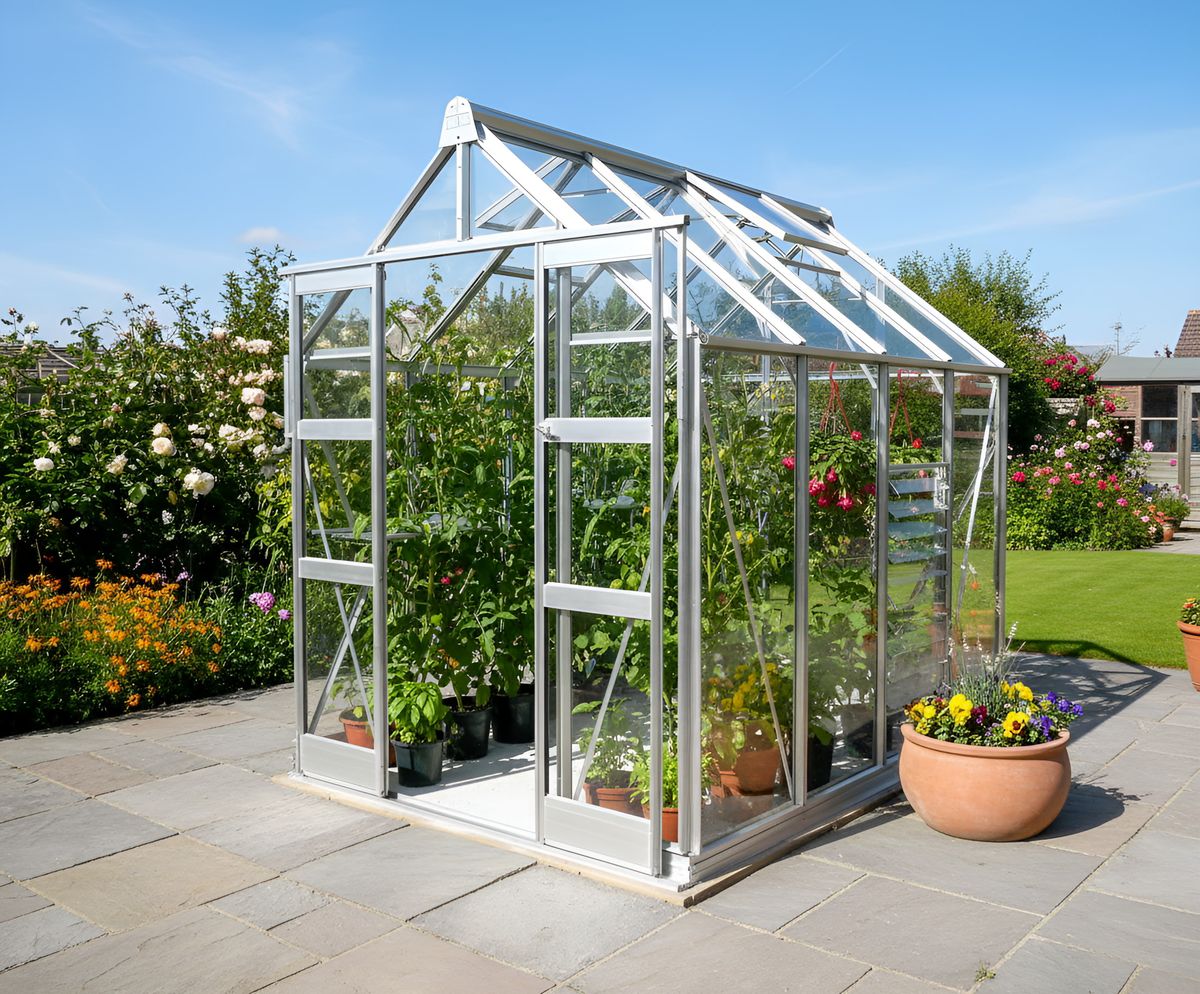
View Elite Titan 6x8 Greenhouse - Toughened Glazing
Expert Tip
Make a quick greenhouse check part of your day. Look at the temperature, feel the compost and glance under leaves. You do not need to water or feed every time. Noticing a dry pot or a stuck vent early is the useful habit.
January: site, plan, sow the slow stuff
Use January for planning, checking equipment and choosing crops. If your greenhouse is not yet installed, concentrate on the site and base. There is no need to rush into sowing while the growing space is unfinished.
Follow the greenhouse manufacturer's base instructions and allow any concrete to cure as specified. Think about drainage, access and nearby shade. Our foundation guide explains the main options. Do not choose a door direction without considering the actual garden.
Some slow-growing chilli varieties benefit from an early indoor start, but there is no universal January deadline. Follow the seed packet and plan where seedlings will live afterwards. Early sowing needs warmth and enough light; otherwise waiting or buying young plants later is sensible.
Choose a short list of crops you actually want. A couple of tomato plants can be more useful than several trays of varieties you cannot house. Leave space for potting on and for an occasional new plant that catches your eye.
February: heat mats, propagators, and the first big sowing
February can suit some early sowings if you have a warm, bright place for the seedlings afterwards. For greenhouse tomatoes, late February to mid-March is a common indoor sowing window. Beginners without suitable conditions need not rush; young plants bought later are another option.
A heat mat warms compost, not the whole greenhouse. Once seedlings emerge, their leaves and stems also need safe air temperatures. A mat does not make a 2C night suitable for tender seedlings. Check the propagator's instructions and the temperature around the plants, not just beneath their pots.
Clean pots and staging before they fill up. Hardy salad sowings may suit a cool greenhouse if the variety instructions allow it. Label trays with the crop and date, and sow small batches so you have room to pot them on.
For the full month-by-month checklist beyond the greenhouse, our February gardening jobs guide covers the wider garden. Pair it with the seed germination temperature reference for exact target temperatures by crop.
March: pricking out, ventilation, and the first warm day trap
A greenhouse can heat up quickly in spring sunshine while the night remains cold. Check the thermometer and open vents as conditions require. Do not use a fixed clock time: a cloudy northern garden and a sheltered sunny one will behave differently.
Automatic vent openers can help, but check compatibility and adjustment. Make sure the window opens freely and closes properly. They do not replace checks during extreme weather. Our vent opener guide covers fitting and adjustment.
Prick out suitable seedlings once they are large enough to handle, usually when true leaves appear. Hold a seed leaf rather than the delicate stem and ease the roots out carefully. Pot into suitable compost, water gently and check moisture afterwards. Do not leave them unchecked for a fixed four days.
The wider garden is also waking up. The March gardening jobs checklist covers what to do outdoors while your greenhouse seedlings are establishing.
April: hardening off, the longest job
April often brings a busy bench, but the plants may be at very different stages depending on sowing date and warmth. Pot on when needed and start hardening off suitable outdoor plants. Tender crops must still be protected from frost.
Harden plants off gradually over roughly one to two weeks. Begin with sheltered daytime spells outdoors and increase exposure as conditions allow. Bring tender plants back under protection at night until temperatures are suitable. Hardening off helps adjustment; it does not make a tomato frost-hardy.
Move greenhouse tomatoes into their final position when the space is warm enough, not automatically in April's third week. In an unheated greenhouse this may be later. Follow the variety's spacing and support guidance. Only cordon tomatoes need routine side-shoot removal. Our April jobs guide covers the wider garden.
May: peak sowing, first feeding, first pest scan
May is a good time to check whether your greenhouse is ready for tender summer crops. Wait for suitable temperatures before planting cucumbers, peppers or aubergines. They will not all be ready on the same date. Keep checking moisture and ventilation as leaf growth increases.
For tomatoes, start the appropriate feeding routine as the crop begins fruiting and follow the fertiliser label. Fresh compost may already contain feed. Extra fertiliser is not a shortcut to an earlier harvest, and homemade dilution schedules can underfeed or overfeed plants.
Inspect young growth and leaf undersides for pests. Look closely rather than brushing leaves at random; identify what you find before treating it. Companion planting can be an extra part of your approach, but it does not guarantee protection. Our companion planting guide explains the limits.
Ventilation and suitable shading are the first checks when the greenhouse overheats. Damping down may help in hot, dry conditions, but it is not a fixed daily requirement. Avoid wet walkways, electrical equipment and persistently damp foliage. Do not chase one humidity setting for every crop.
June: the greenhouse hits full speed
As summer growth increases, give yourself room to work. Tie in climbing plants gently, move overcrowded pots and check where shade falls. Later sowings may still be establishing while earlier plants begin cropping; both are normal.
Use vents and doors to release excess heat where it is safe to do so. Add suitable shading when the plants and weather call for it, then adjust it as conditions change. Shade is not a substitute for ventilation, and leaving heavy shade in place unnecessarily reduces light.
Check pots more often as plants grow. Drip irrigation can make watering easier, but test every outlet and adjust the amount to the plants. Before a weekend away, run the setup for several days and check the compost yourself. Arrange someone to check it if possible.
Check cordon tomato side shoots regularly and tie in growth before it becomes tangled. Bush tomatoes are different, so keep the variety label. See our June jobs guide for the wider garden.
July: first harvest, biggest mistakes
Enjoy the first harvest whenever it arrives. Ripening depends on sowing date, variety and conditions, so July is a guide rather than a deadline. Pick cucumbers at the size recommended for their variety and keep an eye on fruit hidden behind leaves.
A dark sunken patch at the flower end of a tomato may be blossom end rot. It involves poor calcium supply to the fruit, often linked to uneven watering rather than too little calcium in the soil. Aim for steady moisture and good root conditions; a timer alone does not diagnose or solve it.
Pick regularly, using clean snips where needed rather than pulling on stems. Check the whole plant, including the fruit behind the pot or near the path. Harvesting little and often helps you spot damaged fruit and other problems early.
Use sticky traps to monitor flying pests, not as proof that an infestation is controlled. Encarsia formosa can help with greenhouse whitefly when conditions suit it. Ask the supplier about temperature, timing and pesticide compatibility. It is not a guaranteed three-week clearance treatment.
August: holidays, heat, and the second-half plan
Before a holiday, ask someone to check the greenhouse and show them what each crop needs. Label any plants with unusual care requirements. Leave clear instructions for ventilation and watering, and make sure the water supply is accessible.
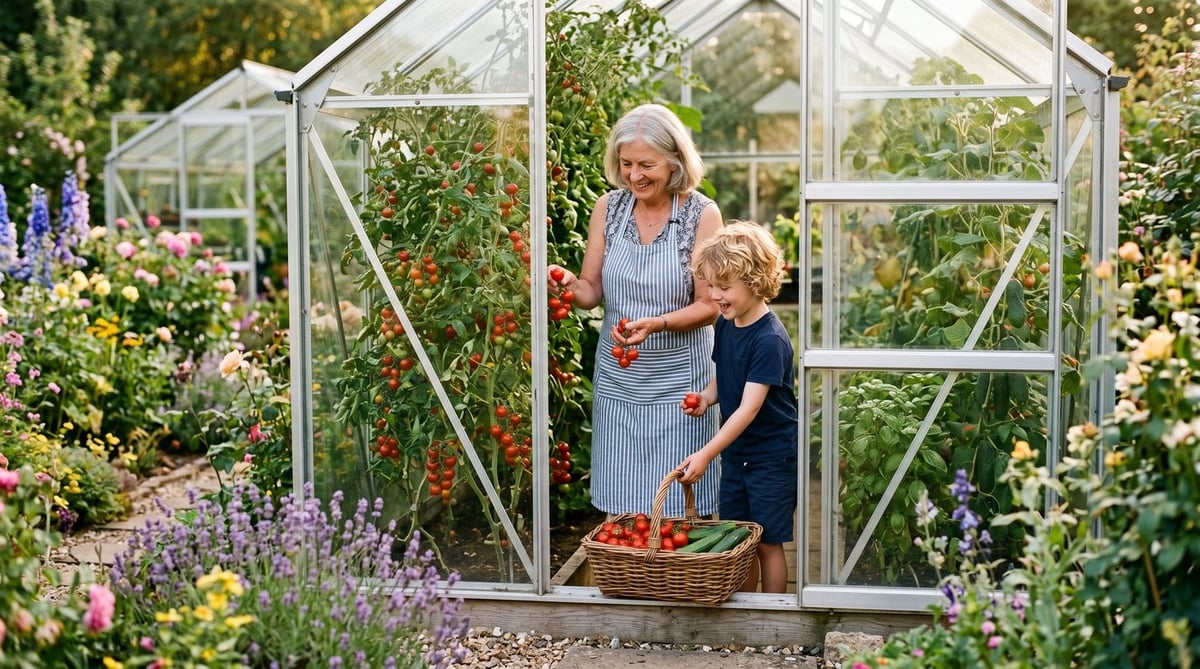
Test timers and automatic vents before you leave. Check batteries, water supply, blocked emitters and whether water reaches the whole root area. Automation helps with routine tasks, but a leak, heatwave or stuck vent still needs a person to notice it.
If you want an autumn crop, look for salad varieties suitable for late sowing. Use small batches and follow packet timings. Clear space as summer crops finish, rather than squeezing new seedlings into deep shade beneath them.
For a first season, concentrate on ripening the tomatoes already growing rather than starting another late crop. Later tomato plants may run out of warmth and light before producing useful fruit.
September: insulation prep, last harvests
Watch local forecasts as nights cool. First frosts vary greatly across the UK and between gardens. Decide which tender plants need bringing indoors or reliable heating before a cold spell arrives.
Keep harvesting and remove damaged material. Manage tomato tops and remaining trusses according to the season and available warmth. Do not cut chillies back by a third expecting a sweeter second autumn crop. Let useful existing fruit ripen while conditions allow.
Fit insulation when it suits your winter plan, not automatically in September. It can reduce heat loss but also reduces light. It cannot guarantee a warmer minimum or halve every heating bill. Leave access to vents and check the actual overnight temperature.
Clean the glazing before fitting insulation so you are not covering trapped dirt. Use a method suitable for the frame and glazing, with safe access. There is no need to attach a precise light-loss percentage to make this a worthwhile job.
October: the deep clean
Clean between crops when you can work without damaging plants you are keeping. October may suit a summer-crop greenhouse; a year-round growing space may need a section-by-section approach. Hygiene reduces carry-over but cannot stop every pest returning.
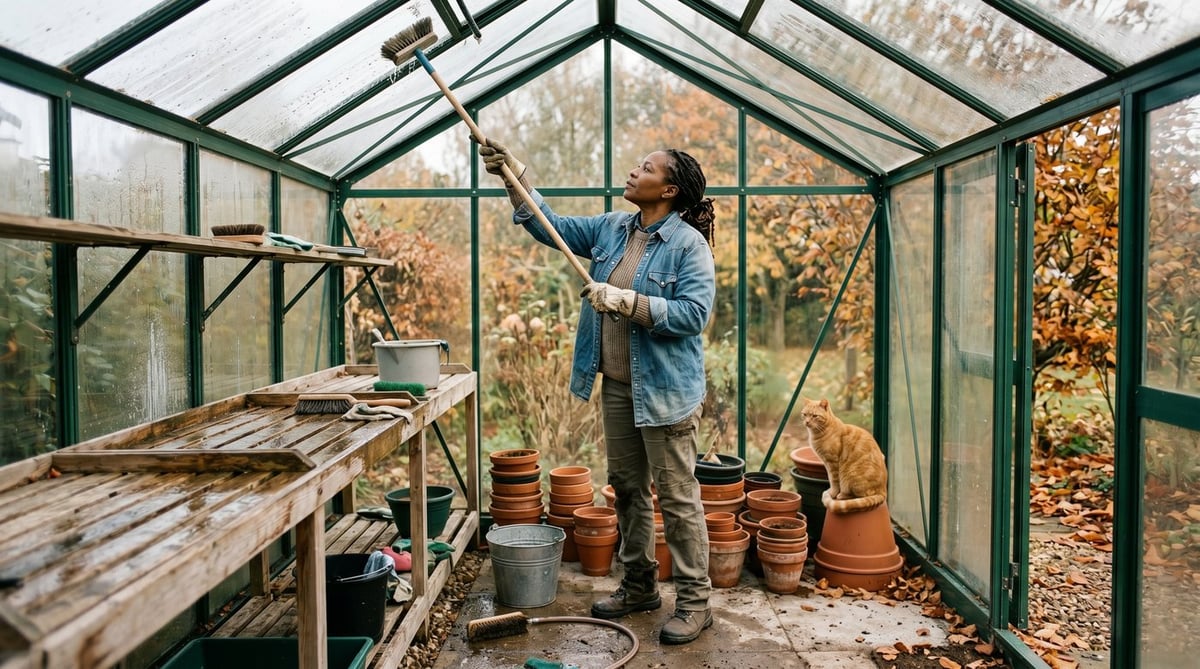
Remove spent plants and separate diseased material from healthy waste. Wash pots and trays and clean staging and glazing with suitable products. Follow disinfectant labels if you use them, including plant safety and rinsing directions. Let equipment dry before storage.
Check for damaged glazing, loose fittings, door problems and blocked gutters. Use the correct replacement parts rather than improvising around broken glass. Our seasonal maintenance checklist covers the structure.
Review soil borders after clearing the crop. Add suitable organic matter where needed, but do not automatically remove 15cm of soil or apply nitrogen in autumn. Recurring root problems may need diagnosis and a different crop or growing method.
November: heater fit, winter sowings, dormancy
Choose heating only if the plants need it, and have it ready before cold weather. A 2kW fan heater is not a tubular heater; these are different products. Use equipment suitable for greenhouse conditions and a safe electrical supply. Our heating costs guide explains running-cost calculations.
An unheated greenhouse can still freeze. It may suit hardy winter crops chosen for your conditions, while tender plants need suitable protection or another home. Bubble insulation reduces heat loss; it does not make the building frost-free. Check temperatures where the plants stand.
Late sowing options depend on the variety and available light. Choose hardy crops recommended for autumn or winter under cover. Growth will be slower now, and leaving some space empty for cleaning and storage is perfectly useful.
December: ventilation, monitoring, planning
Check for condensation, mould and stale damp conditions. Ventilate during suitable weather without exposing tender plants to freezing draughts. There is no universal thirty-minute opening rule, particularly when it is below freezing outside.
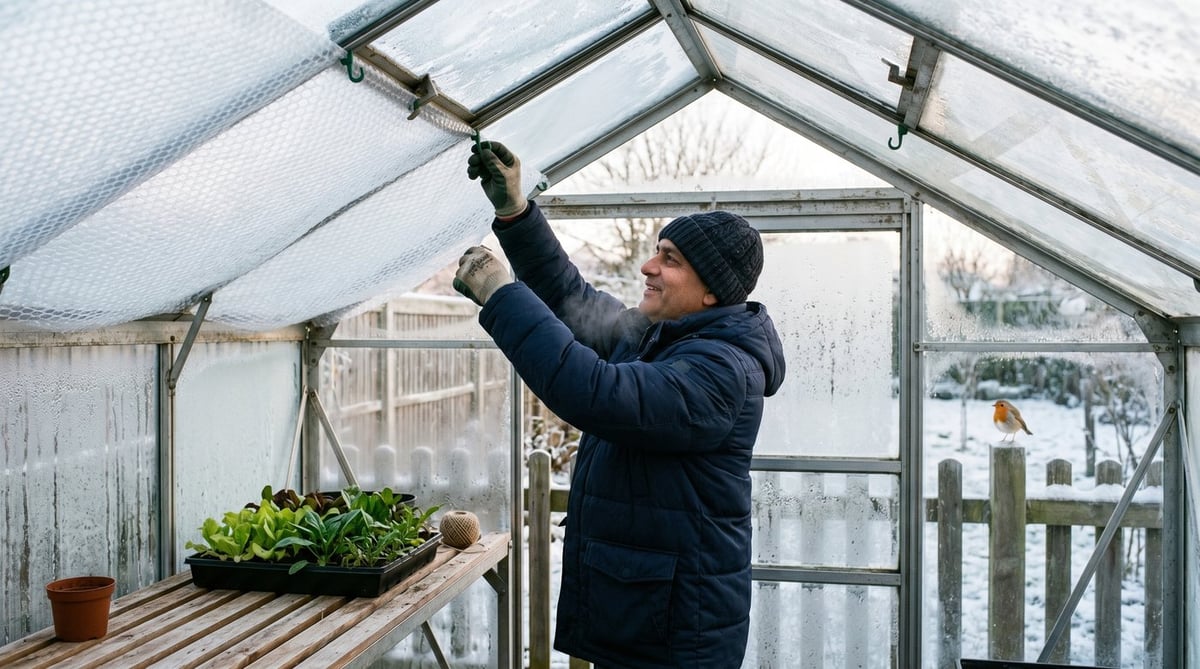
Check recorded minimum temperatures through cold spells. Match any heater setting to the crop, allowing for cold spots and thermostat accuracy. Fleece gives limited extra protection; it is not a guarantee for tender plants during prolonged frost.
Make a few notes before you forget the season: what tasted good, what took too much work and what you would grow again. Then choose two or three changes for next year. You do not need a spreadsheet to learn from the first season.
Year-one greenhouse calendar at a glance
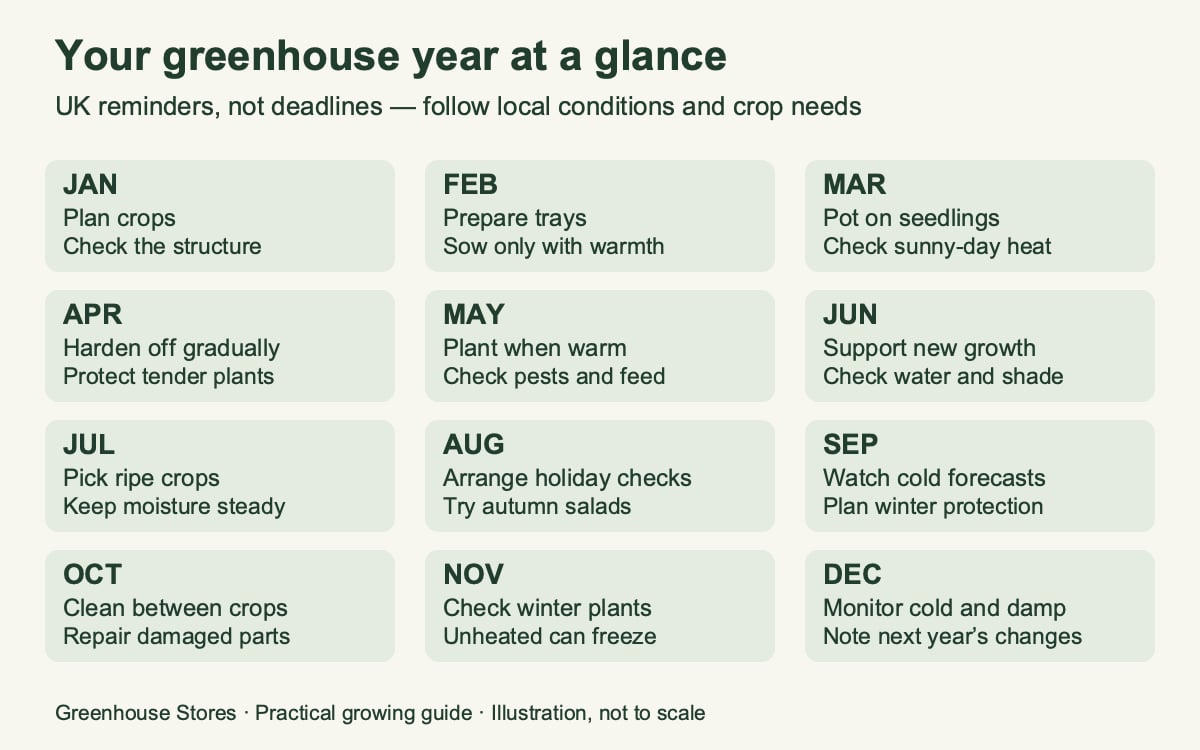
| Month | Main greenhouse jobs | Year-one beginner watch-out |
|---|---|---|
| January | Plan crops; check the structure and equipment | Only sow early tender crops if you can keep seedlings warm and bright |
| February | Prepare trays; consider suitable early sowings | A heat mat does not protect leaves from cold air |
| March | Pot on ready seedlings; check ventilation | Sunny days can overheat a greenhouse while nights remain cold |
| April | Harden off suitable plants; check space for summer crops | Plant tender crops by conditions, not a calendar deadline |
| May | Plant when warm enough; inspect growth and pests | Follow crop and fertiliser instructions |
| June | Support plants; check water and shade | Test irrigation before relying on it |
| July | Harvest as crops ripen; monitor pests | Keep watering steady without leaving roots waterlogged |
| August | Arrange holiday checks; consider autumn salads | Automation still needs testing and a backup |
| September | Harvest; watch forecasts; plan winter protection | First frost dates vary between gardens |
| October | Clean between crops; inspect the structure | Clear diseased debris and use suitable replacement parts |
| November | Check winter accommodation for each crop | An unheated greenhouse can freeze |
| December | Check temperatures and damp; note next year's changes | Ventilate without chilling tender plants |
Expert Tip: keep a one-line-a-week paper diary
Keep a notebook somewhere dry with a pen beside it. Record a sowing date, a cold night or the first ripe tomato when you notice it. Those small notes will help you judge next year's timing in your own greenhouse.
An example greenhouse to compare
Useful for: gardeners considering a 6x8 greenhouse with room for a mixed seasonal crop and staging.
The Elite Titan 6x8 is one option to compare with your available space and budget. Check the internal layout, access and base requirements before choosing. Toughened glass is safety glazing, not football-proof glazing. Keep ball games and other impact risks away from any greenhouse.
Price: £1,669
Five common first-year problems to avoid
These are worth checking when a crop struggles. They are not proof that you have failed or that you need more equipment.
1. Watering without checking. Feel the compost and assess the plant first. Small seedlings and large fruiting plants need different amounts.
2. Ignoring temperature changes. Watch both daytime heat and overnight cold. Ventilate when appropriate and protect tender plants when needed.
3. Moving plants outdoors too abruptly. Harden them off gradually and keep tender crops protected until conditions are suitable.
4. Guessing with feed. Follow the crop advice and product label. More fertiliser is not always better.
5. Leaving problems for next year. Clear spent crops, identify recurring pests and repair damaged parts while you have access.
Frequently asked questions
What should I do in my first month with a greenhouse?
Check the structure, access and growing conditions, then choose a manageable seasonal crop. You can start in any month. Tender sowings need warmth and light after germination, not just a heat mat.
How long does it take a new greenhouse to start paying for itself?
There is no reliable payback date for a greenhouse. Costs and harvests vary with the building, heating, crops and how you use it. Choose it for growing food and plants you enjoy, not a promised financial return.
Do I need a heater in my first year?
Only if your crops need temperatures you cannot otherwise maintain. An unheated greenhouse can freeze, even with bubble insulation. Bring tender plants indoors or provide suitable reliable heating when necessary.
What is the easiest thing to grow in a new greenhouse?
Choose a few crops suited to your season and available conditions. Suitable salad varieties and a small number of tomato plants are approachable choices. Tomatoes and basil still need warmth and regular attention.
How often should I water my greenhouse plants?
Check moisture regularly and water according to the plant and growing medium. Large summer crops may need frequent watering; cool winter pots often need much less. Avoid both prolonged dryness and waterlogging.
What size greenhouse should a beginner buy?
Choose a size that fits your garden, crops and working space. Sketch mature plants, staging and a clear path before ordering. A 6x8 can be useful, but smaller greenhouses are not automatically outgrown within a year. Our setup checklist helps with planning.
When can I start using my greenhouse after installation?
Use it once installation is complete and the base meets its curing requirements. Choose plants suited to the temperatures inside. Tender plants need appropriate conditions, whatever month the greenhouse went up.
Related articles
- How to Set Up a New Greenhouse: First-Time Owner's Checklist
- Greenhouse Foundation Types: Complete Base Comparison Guide UK
- Greenhouse Aftercare: Seasonal UK Maintenance Checklist
- Seed Germination Temperatures: The Complete UK Reference Table
- How Much Does It Cost to Heat a Greenhouse? UK Running Costs 2026
If you need help choosing equipment, browse greenhouse accessories or ask our team to check compatibility before ordering.