Winter Greenhouse Care: UK Guide
A well-maintained greenhouse keeps plants alive through the coldest British winters. Dirty glass blocks up to 40% of available light. Horticultural bubble wrap cuts heat loss by 50% and costs under £30. A thermostat-controlled 2.4kW heater keeps a 6×8ft greenhouse frost-free on the coldest nights. This guide covers every winter task we recommend after 16 years of fitting greenhouses across the UK.
Key Takeaways
- Clean glass first — dirty glazing blocks up to 40% of winter light your plants need.
- Insulate with bubble wrap — horticultural grade with 20mm bubbles reduces heat loss by up to 50%.
- Use a thermostat-controlled heater — it only runs when needed, cutting bills by 60% vs running constantly.
- Ventilate on mild days — stale air causes mould, botrytis, and damping off even in winter.
- Water in the morning only — wet foliage overnight invites fungal disease in cold conditions.
- Monitor with a min/max thermometer — track overnight lows to fine-tune your heating setup.
Installer's Note
I have looked after greenhouses through 16 British winters. The biggest mistake I see is neglecting preparation until the first frost hits. By then, cracked panes and failed seals have already cost you heat. I start winter prep in October every year. A clean greenhouse with sound glazing and basic insulation handles most UK winters without drama. Add a decent electric heater and you can grow right through to spring.
How do I prepare my greenhouse for winter?
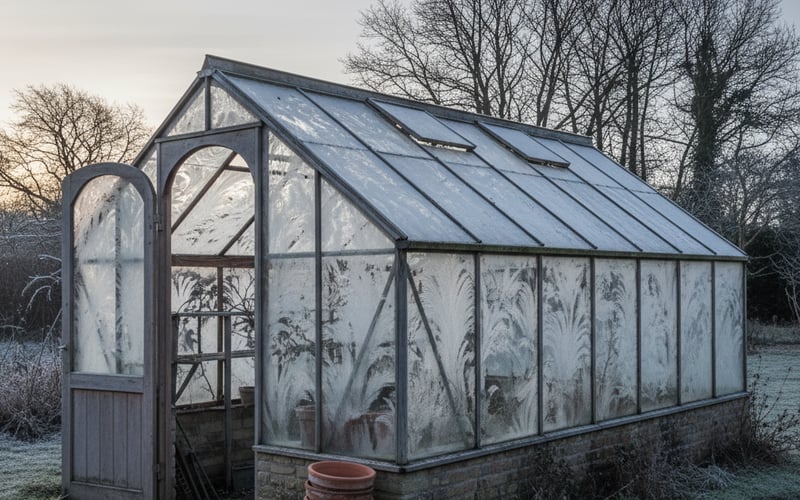
Preparation starts in late October. The goal is a clean, sealed, light-filled structure before the cold arrives. Every hour spent now saves trouble in December and January.
Clean the glass inside and out
Dirty glass is the silent killer of winter crops. Algae, grime, and dust build up over summer. By autumn, light transmission can drop by 40%. In winter, when daylight hours are already short, your plants cannot afford to lose any more.
Wash the outside with a hosepipe brush and soapy water. Work from the roof downward. Inside, spray every pane with diluted Jeyes Fluid at a 1:20 ratio. Scrub the aluminium glazing bars with an old toothbrush. Algae hides in the channels and breeds pests.
Our step-by-step guide to cleaning greenhouse glass covers the full method. You will find it linked at the bottom of this article.
Check seals and replace broken panes
Walk around the greenhouse and press every pane gently. Loose glass rattles in winter winds and lets cold air pour in. Re-seat any loose panes with fresh glazing clips. Replace cracked or broken panels before fitting insulation.
Check the door seal and every vent seal for gaps. Self-adhesive foam draught strip costs under £5 from any hardware shop. Apply it to door frames, vent frames, and any base gaps. Draughts are invisible but they strip heat from a greenhouse constantly.
Service automatic vent openers
Automatic vent openers use wax cylinders that expand with heat. After a full summer of use, some lose their range. Test each opener by warming it gently. Replace any that fail to open fully. You still need vents working in winter for air circulation.
How do I insulate a greenhouse for winter?
Insulation is the single most cost-effective winter upgrade. A bare glass greenhouse loses heat almost as fast as a heater can produce it. One layer of bubble wrap changes that completely.
Choosing the right bubble wrap
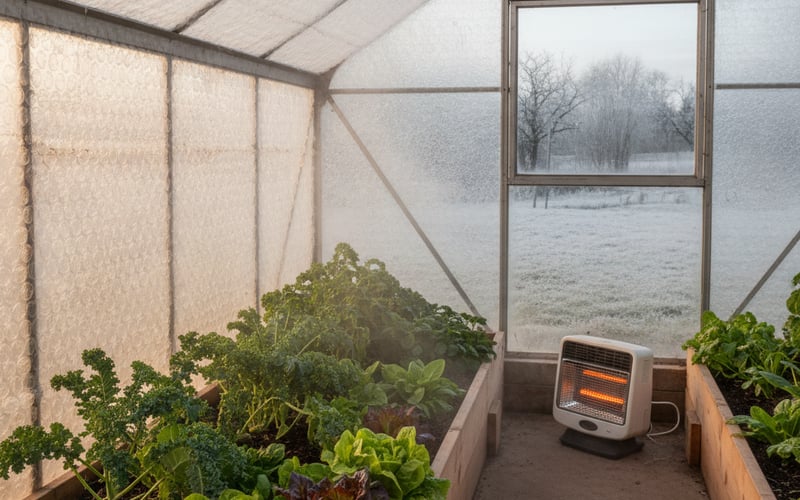
Use horticultural bubble wrap with large 20mm bubbles. This is UV-stabilised and lasts three to five seasons. Standard packaging bubble wrap degrades within months. The larger bubbles trap more insulating air and let more light through.
A 6×8ft greenhouse needs roughly 20–25 square metres. Expect to pay £20–£30 for enough to cover the full interior. That investment pays for itself within weeks through lower heating bills.
How to fit bubble wrap
Start at the ridge and work down each roof slope. Cut pieces with 50mm overlap on every edge. For aluminium greenhouses, use glazing bar clips that snap into the frame channels. Press each clip in, then tuck the bubble wrap edge under it.
Work down the side walls after the roof. Keep the bubble side facing the glass. This traps the maximum amount of insulating air. Cut carefully around vents so they still open freely.
For wooden greenhouses, use drawing pins or a staple gun. Timber frames are easier to work with and naturally retain more heat than aluminium. The wood itself acts as an insulating layer.
Quick Tip: Reduce Your Heated Volume
If you only overwinter a few plants, drape a bubble wrap curtain across the greenhouse. Heat only the smaller section. This halves your energy costs and keeps the warm zone tighter around your plants.
What are the best heating options for a winter greenhouse?
After insulating, choose a heater that matches your greenhouse size and power supply. I have fitted hundreds of heating systems over the years. Here is what works.
Electric fan heaters with thermostat
Electric fan heaters are the most popular choice. They blow warm air across the greenhouse and prevent cold spots at floor level. A built-in thermostat switches the heater on and off automatically. This saves money compared to a heater running non-stop.
A 2–2.4kW fan heater handles most greenhouses up to 8×10ft. For a well-insulated 6×8ft greenhouse, running costs sit around £30–£50 per month through midwinter. Without insulation, that figure jumps to £60–£80.
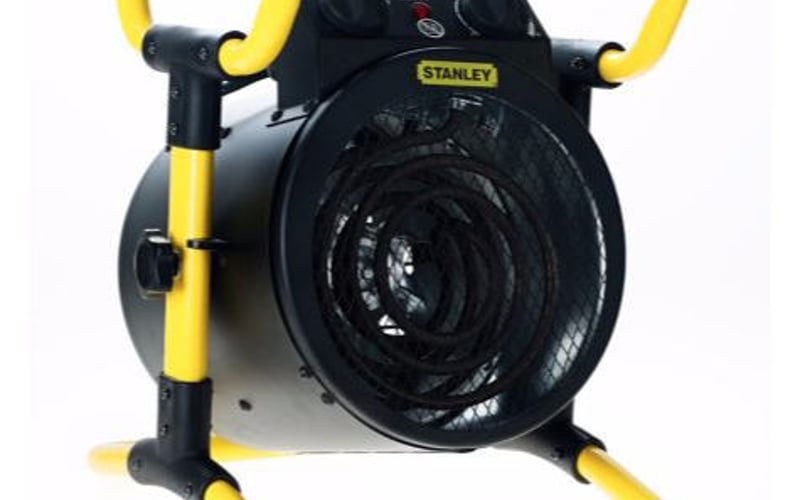
Browse our full range of greenhouse heaters to find the right size for your setup.
Gas heaters (propane and butane)
Gas heaters suit greenhouses without mains electricity. They run on bottled propane or butane and produce strong, consistent heat. A 3–4kW gas heater handles greenhouses up to 10×12ft.
The main drawback is moisture. Gas combustion releases water vapour. This causes heavy condensation on the glass. You must leave a roof vent slightly open when running a gas heater. Factor in the cost of gas bottle refills too.
Paraffin heaters
Paraffin heaters are portable and affordable. They cost £1–£2 per night to run. They work well as backup heating during power cuts. However, they produce fumes and moisture. Ventilation is not optional with paraffin.
For more off-grid options, read our guide to heating a greenhouse without electricity. It is linked in the related articles below.
Matt's Tip: Always Insulate Before You Buy a Heater
I tell every customer the same thing. Spend £25 on bubble wrap before you spend £100 on a heater. A well-insulated 6×8ft greenhouse needs only a 2kW heater. Without insulation, you need 2.5kW or more. That difference costs £20–£30 extra per month all winter. Insulate first, then size your heater to the insulated space. You will save hundreds over a single season.
|
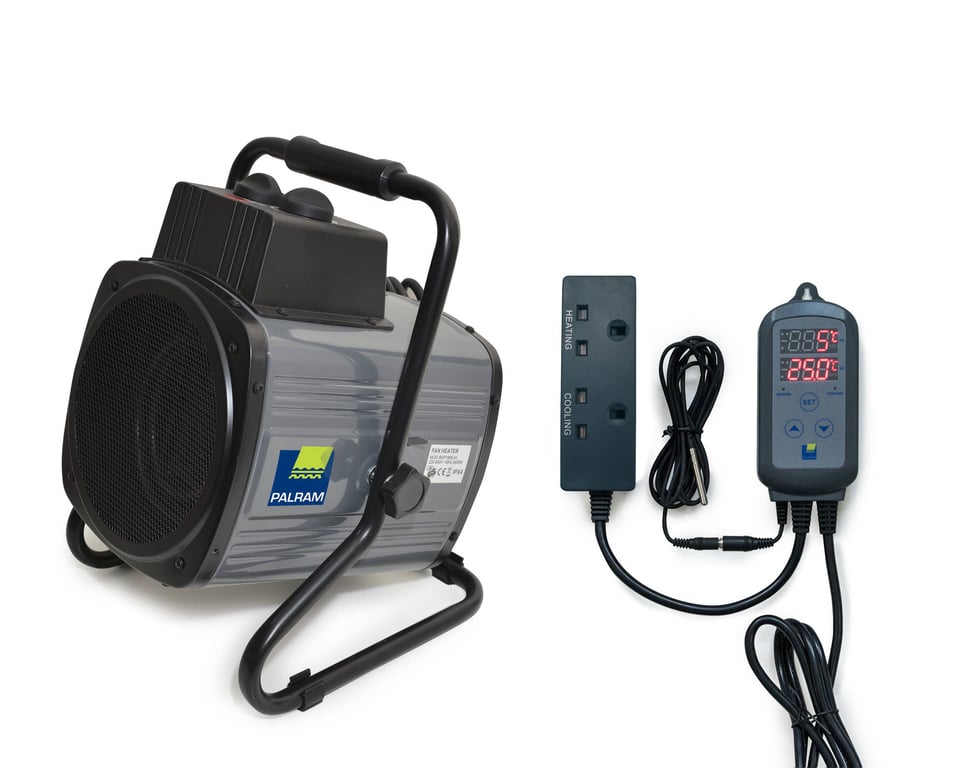
Matt's Pick for Winter Greenhouse HeatingBest For: Frost protection in greenhouses up to 8×10ft with thermostat control Why I Recommend It: I fit these regularly because the built-in thermostat keeps the temperature steady without wasting electricity. At 2.4kW it handles even larger greenhouses and only runs when the temperature drops below your set point. Reliable, safe, and easy to position. Price: £199 |
What can I grow in a greenhouse in winter?
A frost-free greenhouse opens up plenty of growing options. Even an unheated but insulated greenhouse extends the range of crops you can harvest through the cold months.
Hardy vegetables
Kale, spinach, and Swiss chard thrive in a cold greenhouse. They tolerate temperatures down to –5°C with some fleece protection. Winter lettuce varieties like 'Arctic King' and 'Winter Gem' crop well from November to March.
Radishes grow fast even in low light. Sow them in shallow trays every three weeks for a continuous supply. Spring onions and pak choi also do well in unheated conditions.
Herbs
Parsley, coriander, and chives survive happily in a greenhouse through winter. They grow slowly but stay alive and usable. Pot them near the door for easy picking. Mint dies back but regrows vigorously in spring if kept frost-free.
Overwintering tender plants
Citrus trees, pelargoniums, fuchsias, and dahlias all need frost-free storage. Keep them at 3–5°C through winter. Water sparingly — just enough to stop the compost drying out completely. These plants are worth far more than the cost of heating.
Our detailed guide to winter greenhouse growing covers crop timings and varieties. It is linked in the related articles below.
Why is ventilation still important in winter?
Closing every vent and sealing the greenhouse tight seems logical. It is also a mistake. Stale, humid air causes more damage than cold air in most cases.
Condensation builds up overnight as temperatures drop. Without airflow, moisture sits on leaves and stems. This creates ideal conditions for botrytis (grey mould), damping off, and mildew. These fungal diseases spread fast in still, damp air.
Open at least one roof vent on mild winter days. Even a 20mm gap makes a difference. Close vents again by mid-afternoon before temperatures fall. Automatic vent openers handle this perfectly if they are working properly.
Our guide to greenhouse humidity management covers this topic in full. It is linked in the related articles below.
How should I water my greenhouse in winter?
Overwatering kills more greenhouse plants in winter than cold does. Roots sit in wet compost that never dries out. Root rot follows quickly. Reduce watering frequency to once a week or less.
Always water in the morning. This gives foliage time to dry before temperatures drop at night. Wet leaves overnight are an invitation for fungal disease. Use a watering can rather than a hose for better control.
Check each plant individually. Some need almost no water in winter. Others, like winter salads, still need regular moisture. Push your finger into the compost. If it feels damp 2cm below the surface, do not water.
How do I protect plants from frost inside the greenhouse?
Even in a heated greenhouse, cold snaps can catch you out. A power cut on the coldest night of the year is every grower's nightmare. Layers of protection give your plants the best chance.
Horticultural fleece draped over tender plants adds 2–3°C of frost protection. Keep a roll in the greenhouse at all times. Drape it over plants when hard frost is forecast and remove it in the morning.
Mini cloches and cold frames inside the greenhouse create a double layer of protection. A cloche over a tray of seedlings inside an insulated greenhouse gives three layers of defence against frost.
A min/max thermometer is a simple but powerful tool. Check it every morning to see the overnight low. If your greenhouse regularly drops below 0°C, your insulation or heating needs attention. Digital versions with remote sensors let you check from inside the house.
Matt's Winter Warning
Never use an unflued gas or paraffin heater in a sealed greenhouse. These heaters consume oxygen and produce carbon monoxide, carbon dioxide, and water vapour. Without ventilation, moisture levels spike and plant health suffers. Always leave a vent cracked open when using any combustion heater. I have seen greenhouses with 100% condensation coverage from sealed gas heating. The plants drowned before they froze.
Frequently asked questions
When should I start preparing my greenhouse for winter?
Start in late October before the first hard frosts. Clean the glass, check all seals, and replace any cracked panes. Fit bubble wrap insulation by early November. This gives your greenhouse the best chance of maintaining warmth once temperatures drop below freezing in December.
How much does it cost to heat a greenhouse in winter?
Electric heating costs £30–£80 per month in winter. The exact amount depends on greenhouse size, insulation, and your electricity tariff. A well-insulated 6×8ft greenhouse with a 2.4kW thermostat-controlled heater costs roughly £35–£50 per month. Without insulation, expect £60–£80.
Can I keep a greenhouse frost-free without a heater?
Bubble wrap insulation alone keeps temperatures 4–5°C above outside. On most UK winter nights, that is enough to prevent frost. During severe cold snaps below –5°C, insulation alone may not be sufficient. Add horticultural fleece over tender plants for extra protection on the coldest nights.
Should I leave greenhouse vents open in winter?
Yes, open at least one roof vent on mild days. Stale air causes condensation, mould, and fungal diseases like botrytis. Even a small gap allows fresh air to circulate. Close vents by mid-afternoon before temperatures drop. Automatic vent openers handle this without you needing to be there.
What temperature should I keep my greenhouse at in winter?
Keep it between 3°C and 7°C for frost protection. Most overwintering plants survive at 3–5°C. Set your thermostat to 5°C as a safe baseline. Only raise it to 15–18°C if you are germinating seeds. Higher temperatures cost significantly more and are unnecessary for dormant plants.
How often should I water greenhouse plants in winter?
Water once a week or less, always in the morning. Overwatering causes root rot in cold, slow-drying compost. Check each plant individually by pushing your finger 2cm into the compost. If it feels damp, leave it alone. Winter salads need more water than dormant overwintering plants.