10 Gardening Tips for Winter
With the winter months upon us you may feel a familiar emptiness creeping in. There will soon be a season of no gardening — but that's a story British gardeners tell themselves and not a fact. Winter is the most productive season of the year if you plan it right. From mid-November to late February there are 10 substantive jobs that keep the garden ticking, set up spring properly, and protect what you've already grown. Heated greenhouses extend the season; insulation cuts heating bills 30-40%; pruning fruit trees and roses while dormant gives a stronger spring break. Here's how to do all ten properly, with the kit you'll need.
Matt W — Greenhouse Stores adviser, working with customers since 2012. The advice in this guide is what we tell customers when they pick up their winter kit at the warehouse: how to use it, what it actually saves them, and which jobs are worth the cold hands. Updated for 2026.
Key Takeaways
- Heat & insulate first. Bubble plastic plus a 2kW heater turns an unheated greenhouse from -8°C in February to a frost-free +5°C overnight.
- Prune fruit trees and roses in dormancy. November to February is the only window. Healing is faster, disease pressure lower, and shape easier to read without leaves.
- Cold frames extend the season. A 6x2 frame holds salads from November through March without heating — just glass and free solar gain.
- Monitor temperature with a min/max thermometer. £30 of kit tells you what your greenhouse actually does at 4am, not what you assumed.
- Test stored seeds before spring. Germination drops 50% after 3 years on the shelf. A 10-seed paper-towel test in February saves a wasted sowing in March.
- Force flowering branches indoors. Forsythia, quince, pussy willow, flowering cherry — cut, vase, change water every 4 days, blooms in 3 weeks.
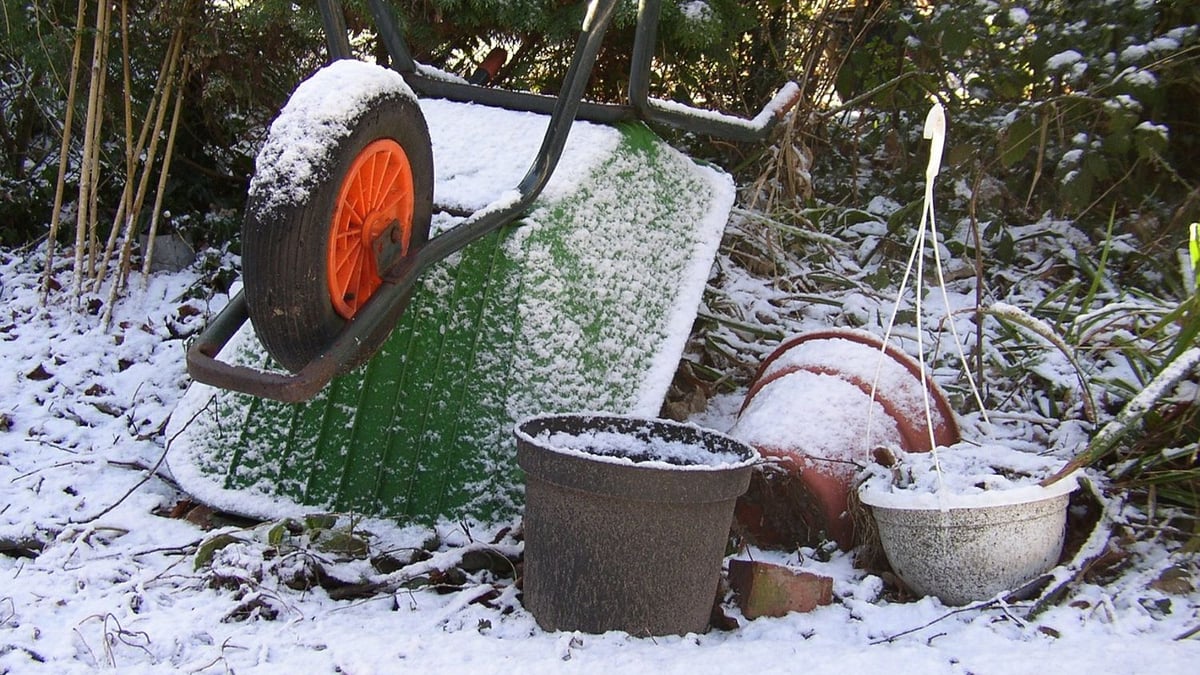
Expert Tip
The mistake most gardeners make in winter is treating it as the off season. It isn't. The work you do between November and February sets up the next nine months of growing. Skip the pruning and the apple yield drops. Skip the insulation and the heating bill is £180 instead of £110. Skip the seed test and you sow blanks in March. Half an hour a week on the right job through winter saves a fortnight of catch-up work in spring.
1. Clear snow and ice from the greenhouse roof
Snow is heavier than people think and greenhouse glass is more brittle than people remember. A 5cm layer of wet snow on a 6x4 greenhouse roof weighs around 35kg — well within design tolerance for an Elite or Vitavia frame, but stressing the glass joints if it sits there for three days during a thaw-freeze cycle. The solution is simple: clear the roof gently with a soft broom every time fresh snow exceeds 5cm.
Ice on the panes is different and more damaging. The expansion of freezing water inside any micro-crack will widen it. Don't crack ice with a metal scraper — use a plastic snow rake or wait for it to melt. The same rule goes for the greenhouse door tracks: keep them clear so the door slides freely, otherwise you'll force them and damage the runners.
For the broader month-by-month protocol on greenhouse winter care, see our UK Winter Greenhouse Care Guide.
2. Insulate the greenhouse with bubble plastic
Bubble plastic insulation cuts heat loss by 40-50% on a single-glazed greenhouse. That's the difference between a heated greenhouse running at £6 a week through January or £3.50. Over a 12-week heated period, insulation pays for itself in the first winter. The work is straightforward: a roll of horticultural bubble plastic, lining hooks clipped into the glazing bars, and an afternoon's labour to clip the sheets up against the inside of the glass.
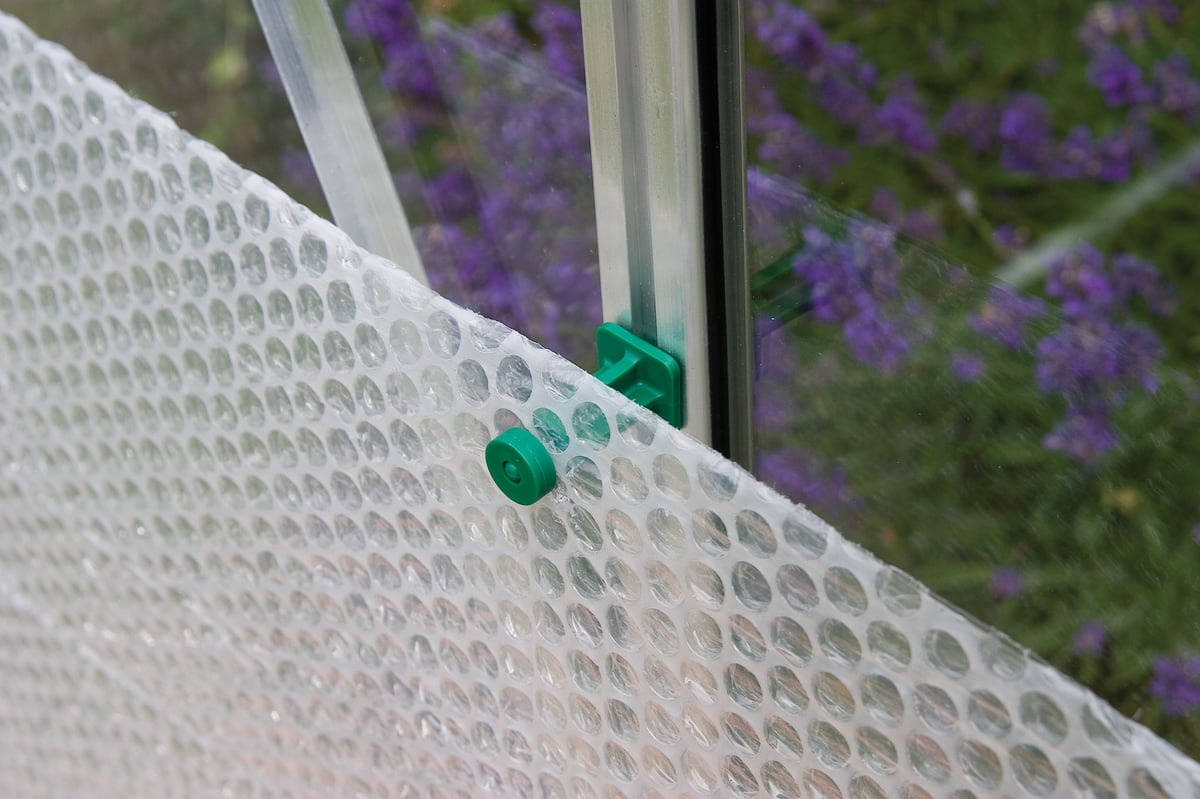
Use horticultural-grade bubble plastic, not packing-grade. Horticultural bubble has UV stabilisers (it lasts 4-5 years rather than 1), thicker walls (less prone to popping in cold), and the bubble pattern is sized for greenhouse glazing bars. Packing bubble works for one season then disintegrates. The Elite kit above includes 30 lining hooks — you'll need around 12-15 hooks per side of a typical 8x6 greenhouse, so the kit covers two sides plus the roof.
Browse the full Greenhouse Insulation range for bubble plastic in larger rolls, lining clips, spacers and shading-clip kits.
3. Add a heater for tender plants and overwintering crops
An unheated greenhouse in January will hit -8°C overnight. A 2kW heater with a thermostat keeps it frost-free at +5°C. That's the threshold that lets you overwinter pelargoniums, fuchsias, citrus trees and bay; raise sweet peas; and keep winter lettuce alive instead of slumped. Heaters are the single highest-impact piece of kit for winter greenhouse use.
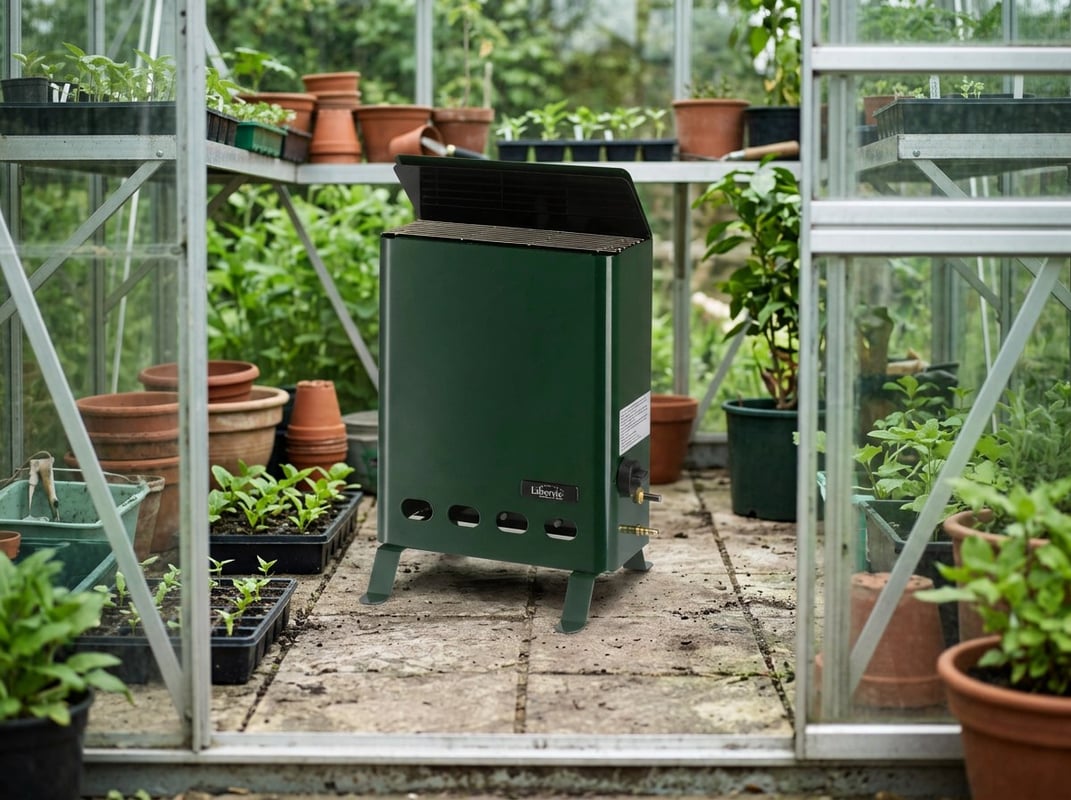
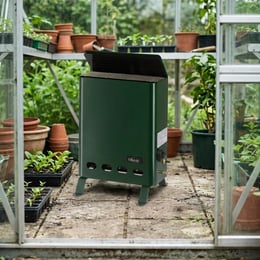
Size the heater to the greenhouse. As a rule: 1kW per 4-6m³ of internal volume for frost protection (+5°C minimum), 1kW per 3m³ for active growing temperatures (+10°C minimum). The Eden 2KW pictured above suits 6x6 to 8x6 greenhouses for frost protection. For a 10x8 or 12x8 you'll want the larger Eden Pro 4.2kW.
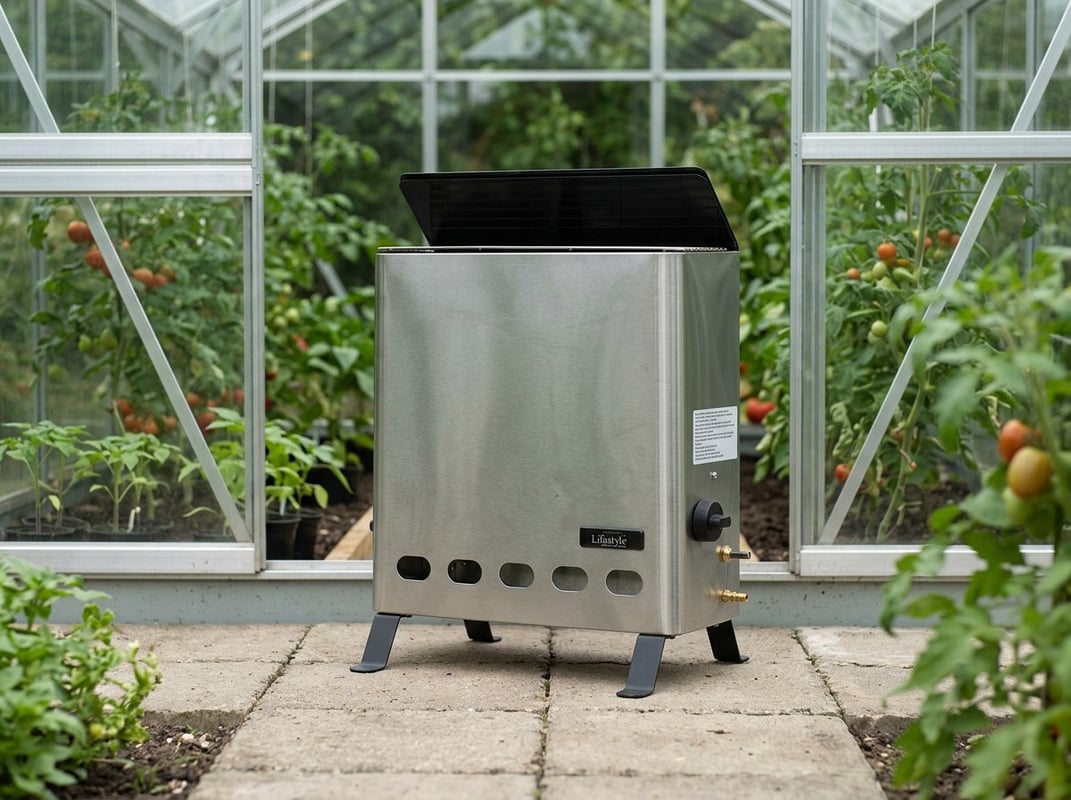
Heaters with thermostats cost more upfront but cut running bills by 30-40% — they only fire when temperature drops below the set point, rather than running continuously. For full running-cost numbers across electric, gas and paraffin, see our breakdown on UK greenhouse heating costs in 2026. For why insulation matters before you turn the heater on, our piece on whether greenhouses stay warm in winter walks through the physics in plain language.
Browse the full Greenhouse Heaters range for electric, gas and paraffin options across all common greenhouse sizes.
4. Use a cold frame for hardy crops
A cold frame is the cheapest way to extend the growing season at both ends. No heater, no electricity, just glass over a low wooden or aluminium box. Solar gain through the day takes the inside to 8-15°C even in January; thermal mass holds it 3-5°C above outside ambient overnight. That's enough to keep winter salads (lamb's lettuce, mizuna, winter purslane), spring brassicas and hardy herbs going right through the cold months.
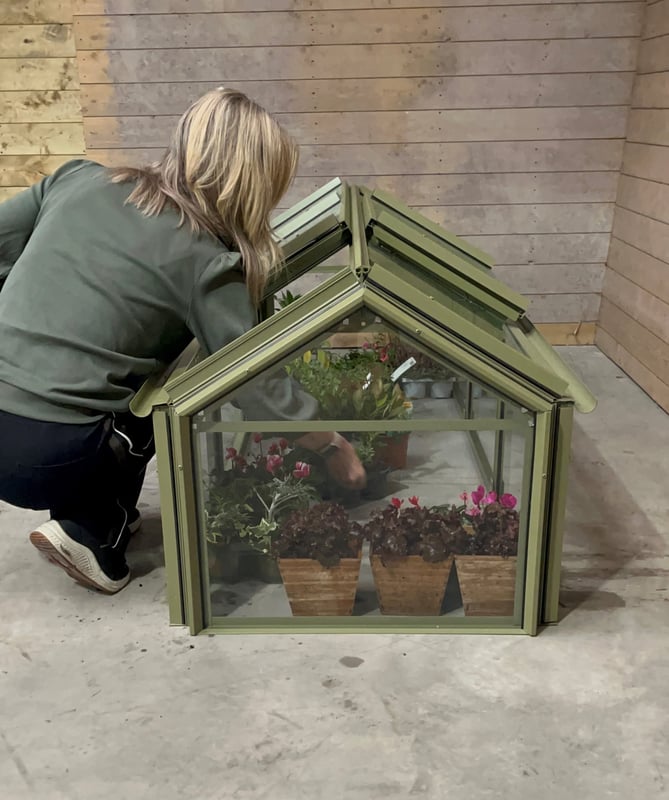
The Elite Min E Lite 6x2 is the cold frame size most UK gardens want. 1.8m long by 60cm deep, internal height tapering from 50cm at the back to 35cm at the front, twin-walled polycarbonate roof on a powder-coated aluminium frame. It runs along the south-facing side of a path or wall and holds enough crops to feed a household through January and February without using a single watt of electricity.
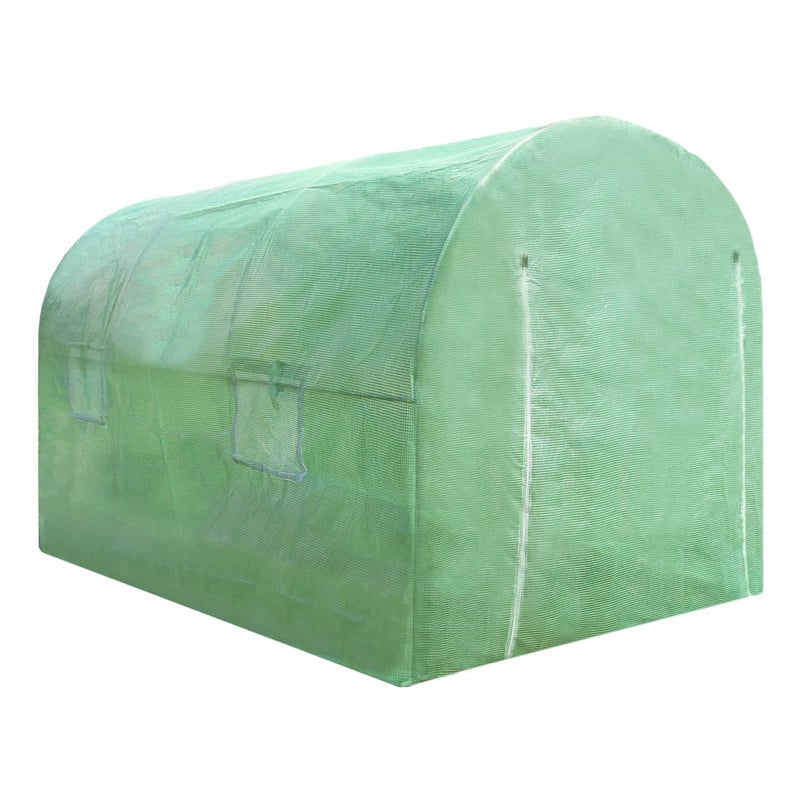
If you're more ambitious — raising spring brassicas and overwintering tender shrubs — a polytunnel gives you walk-in space at a similar price point to a four-frame run of cold frames.
For what to actually grow under cover through winter, see our companion guides on what to grow in the greenhouse in winter and what to grow from seed over winter.
5. Monitor temperature with a min/max thermometer
You can't manage what you don't measure. A £30 max-min thermometer in the greenhouse tells you what's actually happening at 4am — the lowest temperature each night and the highest peak each day. Without one, you're guessing whether your insulation is working, whether the heater is sized right, and whether your overwintering plants are actually safe.
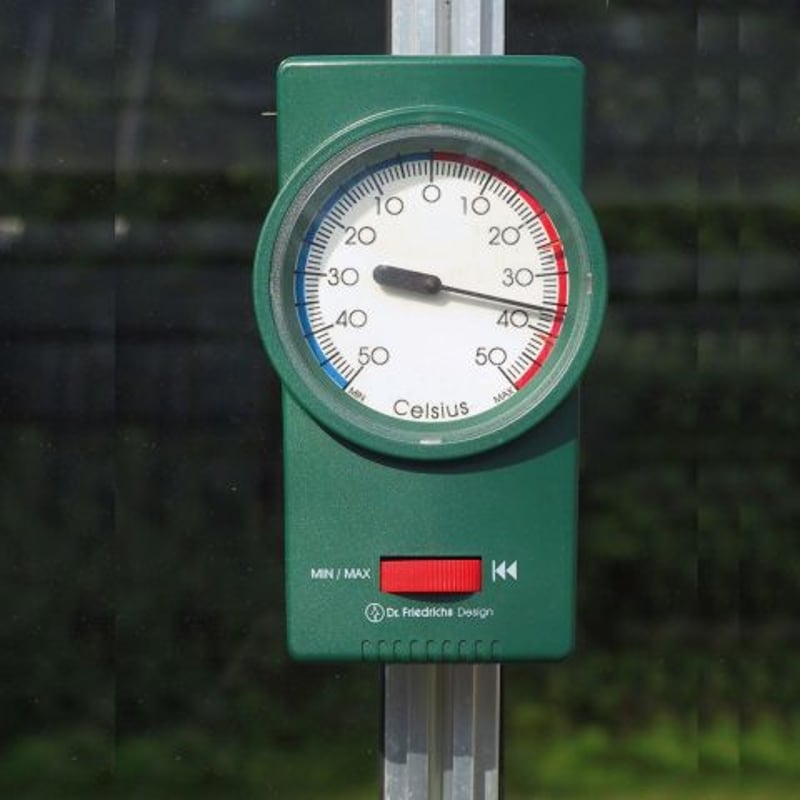
The Vitavia Max Min Thermometer is the model we recommend most often — analog dial, no batteries, mechanical reset button. A digital version with a backlit screen needs batteries replaced every 6-9 months in cold conditions; the mechanical version we've run in our showroom greenhouses for over a decade and they still work. Mount it at plant height on the north-facing wall, out of direct sun, and read it every morning. Patterns emerge after a fortnight that change how you set the heater thermostat.
6. Prune fruit trees and roses while dormant
November to late February is the only window for pruning apple trees, pear trees and most rose varieties. Outside this dormant period, fresh wounds bleed sap, attract aphids, and heal slowly. In dormancy the tree shuts vascular activity down, the wound seals before infection, and the structure of the bare framework is far easier to read without leaves obscuring it.
The classical apple-pruning rule is to remove the three D's first — dead, diseased, damaged — then thin crossing branches, then shorten this year's growth on the leaders by about a third. The same logic applies to pears with slightly less aggressive thinning. Roses get cut back harder — floribundas to 30cm, hybrid teas to 20cm, climbers to remove only the spent flowering wood.
Don't prune stone fruit (cherries, plums, peaches) in winter — they're vulnerable to silver leaf disease through fresh winter cuts and need summer pruning instead. Don't prune flowering shrubs that bloom on old wood (forsythia, mock orange, weigela) in winter either; you'll cut off the next season's flowers.
7. Clean tools, pots and the greenhouse glass
Spring is too late to clean tools. Sap-stained secateurs, rust-pitted spades, mossy seed trays and grimy greenhouse glass all reduce next year's productivity. Glass alone makes a measurable difference: dirty greenhouse panes block 15-25% of incoming light, which is the difference between strong-stemmed seedlings in March and weak leggy ones.
The full clean is: tools wiped down with a dilute bleach solution (1:10) then oiled lightly; pots and seed trays scrubbed in warm soapy water with a stiff brush; greenhouse panes washed inside and out with a soft cloth and warm soapy water on a mild day; gravel paths topped up where they've thinned. Allow a full Saturday for the lot. None of it is technical work but it pays out in March and April.
For the seasonal maintenance checklist that goes alongside this, see our guide to seasonal greenhouse aftercare.
8. Plant winter crops and bare-root trees
Winter is the only window for bare-root trees and the cheapest window for hedging. Bare-root nursery stock — apple trees, pear trees, hedging plants, rose bushes — ships from November to March only. Nothing else is sold this way, and the price is typically 40-60% lower than container-grown equivalents. The plant goes in dormant, settles its roots into your soil through winter, and breaks bud in spring already established.
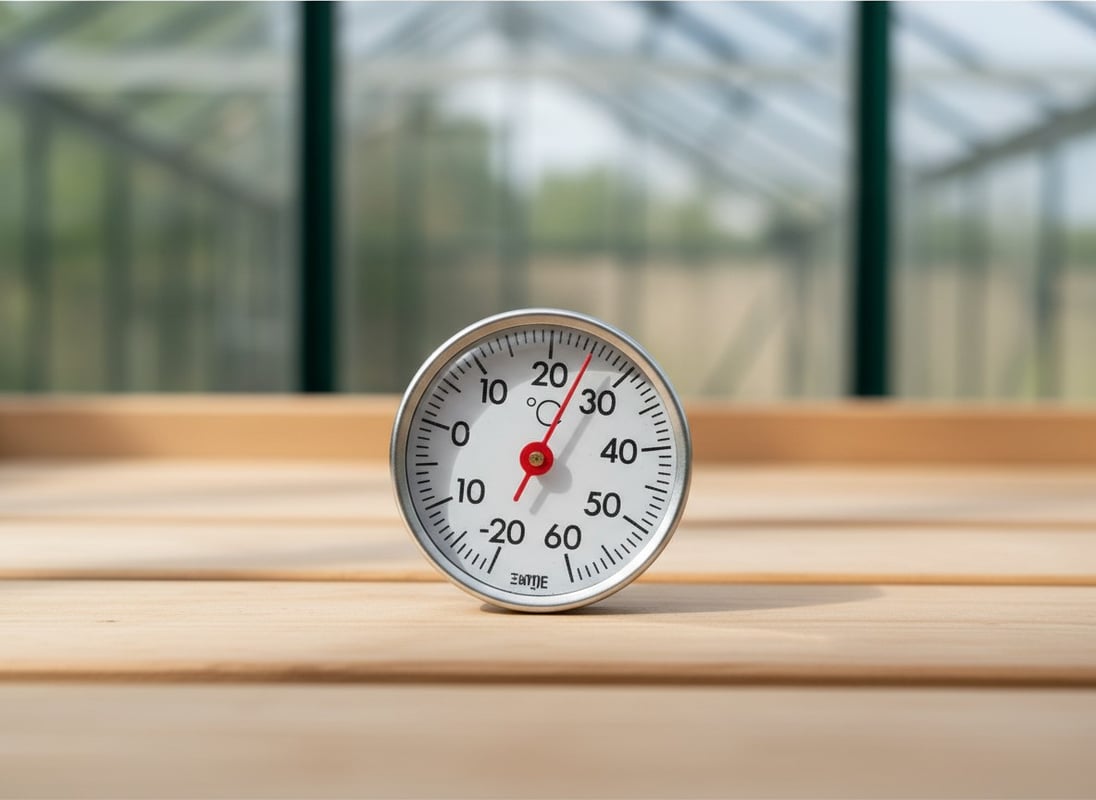
The rule for bare-root planting is: plant when the soil is workable and not frozen. A soil thermometer (above) lets you check — below 2°C and above 10°C are both wrong, between 4°C and 8°C is ideal. Most UK soils are in that band from late November through to mid-March, with a frozen window of two to four weeks somewhere in January.
For the full list of what to grow under cover this winter and the timing for each crop, see our guide to overwintering plants and protecting them from UK frosts.
9. Test old seeds before spring
Stored seed germination drops by roughly 50% after three years on the shelf. Vegetable seed packets bought in 2023 that you didn't finish are now half-dead, and the seedlings you do get will be weaker. The 10-seed paper towel test takes 5 minutes to set up and 10 days to read, and saves a wasted sowing in March.
Method: count out 10 seeds. Lay them on a damp (not wet) paper towel. Fold the towel, slide into a plastic bag, leave on top of a radiator at room temperature. Check at day 7, 10 and 14. If 7+ seeds have sprouted, sow normally. If 4-6 sprouted, double your sowing rate to compensate. If under 4, throw the packet and buy fresh.
The seeds that lose viability fastest are parsnips (1 year), onions and leeks (1-2 years), and parsley (1-2 years). The seeds that hold up best are tomatoes, peppers, brassicas and cucurbits (5-10 years if dry and cool). Brassicas and tomatoes from 2023 should still test fine; parsnips from 2023 will almost certainly fail.
10. Force flowering branches and bulbs indoors
Late winter is when you bring spring forward by 4-6 weeks indoors. Cut branches of forsythia, flowering quince, pussy willow, crabapple, pear, and flowering cherry once their buds have set (late January through February). Place stems in a vase of water, change the water every 4 days, and you'll see blooms indoors in around 3 weeks — well ahead of the same plants flowering outside.
The same trick works for paperwhites, hyacinths and amaryllis from bulbs. Pot up paperwhites in late November in a shallow tray of grit and water; they'll flower for Christmas. Hyacinth bulbs forced in glass jars (with a constriction at the neck holding the bulb above the water) flower from December onwards. Amaryllis bulbs go in pots and flower 6-8 weeks after potting.
Quick reference: kit list and timing
| Tip | Best time | Kit needed | Cost band |
|---|---|---|---|
| 1. Clear snow/ice | After every snowfall | Soft broom, plastic snow rake | £0-£25 |
| 2. Bubble plastic insulation | Late October to early November | Bubble roll + lining hooks | £79-£120 |
| 3. Heater + thermostat | Install November | 2kW or 4.2kW heater | £140-£249 |
| 4. Cold frame / polytunnel | Install autumn, use all winter | Aluminium cold frame or polytunnel | £249-£430 |
| 5. Min/max thermometer | Install November | Mechanical or digital | £24-£44 |
| 6. Prune fruit trees/roses | November-February | Sharp secateurs, loppers | £0 (kit owned) |
| 7. Clean tools/glass | Any mild winter day | Bleach, soft cloths, oil | £0-£15 |
| 8. Bare-root planting | November-March, soil 4-8°C | Spade, soil thermometer | £34-£100 |
| 9. Seed germination test | February | Paper towel, plastic bag | £0 |
| 10. Force branches/bulbs | Late January-February | Vases, paperwhite bulbs | £0-£15 |
Matt's Tip: Insulate before you heat
The single mistake we see most often is buying a bigger heater instead of insulating first. Bubble plastic costs £79 and cuts heat loss 40-50%. Bumping a 2kW heater to a 4.2kW heater costs £60 more upfront and adds 40% to running costs all winter. Insulate first; size the heater to the insulated greenhouse second. Over five winters that's hundreds of pounds saved without compromising plants.
Matt's Pick
|
Matt's Pick for Most UK GreenhousesBest For: A 6x6 to 8x6 greenhouse used for frost protection and overwintering tender plants Why I Recommend It: The Eden 2KW is the heater I tell most customers to start with. Built-in thermostat, IPX4 weatherproof rating, low-water cut-out for safety, and the running cost in a properly insulated 8x6 greenhouse is around £3.50-£5 a week through January. Pair it with bubble plastic insulation and you've spent £220 to keep your greenhouse frost-free all winter — less than the cost of replacing the plants you'd lose without it. Price: £140 |
Frequently Asked Questions
Should I close all greenhouse vents in winter?
No — close them mostly but leave one slightly cracked on mild dry days. Sealed greenhouses build up condensation, which encourages botrytis (grey mould) on overwintering plants. A 2-3cm gap on the leeward roof vent on still mild days lets damp air escape without dropping the temperature below frost-protection thresholds. Close fully when frost is forecast.
What temperature should I keep my greenhouse at in winter?
+5°C minimum for frost protection of pelargoniums, fuchsias and citrus; +10°C if you're actively growing. The lower threshold keeps tender plants alive in dormancy without breaking dormancy. The higher threshold lets winter salads and cuttings continue active growth. Going above +10°C wastes energy without producing better results — plants need a winter rest as much as the gardener does.
Is bubble plastic insulation worth it?
Yes — bubble plastic pays for itself in one winter on any heated greenhouse. A £79 roll cuts heat loss 40-50%, which translates to 30-40% off the heating bill. Over a 12-week heated period at typical UK winter rates, that's £30-£50 saved versus £79 spent. Year two onwards is pure saving. Use horticultural-grade bubble (UV stabilised) not packing-grade.
Can I prune apple trees in winter when it's frosty?
Yes — dormant pruning is what apple trees want, frost or no frost. The key window is November to late February before bud break. Hard frost on the day of pruning is fine; the tree is in full dormancy. Avoid pruning during a thaw when the wood is wet and bruising more easily, and avoid pruning stone fruit (cherries, plums) entirely in winter — they need summer pruning to dodge silver leaf disease.
What's the cheapest way to extend my growing season?
A cold frame — no electricity, no heating, just glass over a low frame. A 6x2 cold frame (around £299) holds winter salads alive from November to March on solar gain alone. The internal temperature averages 3-5°C above outside ambient overnight, and 8-15°C through the day even in January. For year-round use, pair with a small greenhouse rather than scaling up to a heated propagator.
Do I need to test seeds I bought last year?
No — seeds bought in the same calendar year as sowing rarely need testing. Most vegetable seeds keep 80-90% germination through the first 12 months of storage. Test only seeds 2+ years old, or any seed that's been kept in a damp shed or warm kitchen drawer (heat and damp halve viability faster than time alone). Parsnip, onion and leek seeds are exceptions — test these every spring even if bought the previous summer.
How heavy is snow on a greenhouse roof?
5cm of wet snow on a 6x4 greenhouse weighs about 35kg; 10cm weighs 70kg. Aluminium-frame greenhouses (Elite, Vitavia, Eden) are designed for this and well within tolerance. Wood-frame and polytunnel structures are more vulnerable. Clear with a soft broom or plastic snow rake when fresh snow exceeds 5cm, especially before a thaw-freeze cycle, which is when glass joints can fail.