Call : 0800 098 8877
Blog Help

£50 OFF Everything!

Use code BANK50 at checkout min order £899 (Everything)
Rated 4.7/5 Excellent (3,600+ Reviews)
Free UK Delivery
Nationwide Installation Service
Secure Shopping

How to Grow Herbs in a Greenhouse: Year-Round UK Guide

Written by Matt W on 17th Mar 2026 | Greenhouse and Growing Advice | 20+ Years Experience
7 Varieties Tested Basil to Rosemary Under Glass
Year-Round Harvests Sow March, Pick December
Staging Layout Herb Capacity by Greenhouse Size
16 Years Experience From Working Greenhouse Installers

Growing herbs in a greenhouse in the UK extends the harvest season to 12 months. Basil yields increase by up to 60% under glass compared to outdoor beds. A 6x4 greenhouse holds 20–30 herb pots on two-tier staging. Hardy rosemary, thyme, and sage survive unheated greenhouses down to −5°C. Tender basil and coriander need a minimum of 10°C. Start sowing in March and expect first harvests within 8–12 weeks.

Key Takeaways
  • 7 best greenhouse herbs: basil, coriander, parsley, chives, rosemary, thyme, and mint — each with specific cultivar recommendations
  • Month-by-month sowing calendar: when to sow, transplant, and harvest each herb under glass in UK conditions
  • Staging layout matters: sun-loving herbs on top shelves, shade-tolerant mint and parsley below
  • Winter herbs without heating: rosemary, thyme, sage, and parsley survive in an unheated greenhouse through most UK winters
  • Growing saves money: a single basil seed packet (£2.50) produces the equivalent of 40+ supermarket packs (£60+ at retail)
  • Ventilate daily above 25°C: open roof vents to prevent mildew and heat stress on soft-leaved herbs
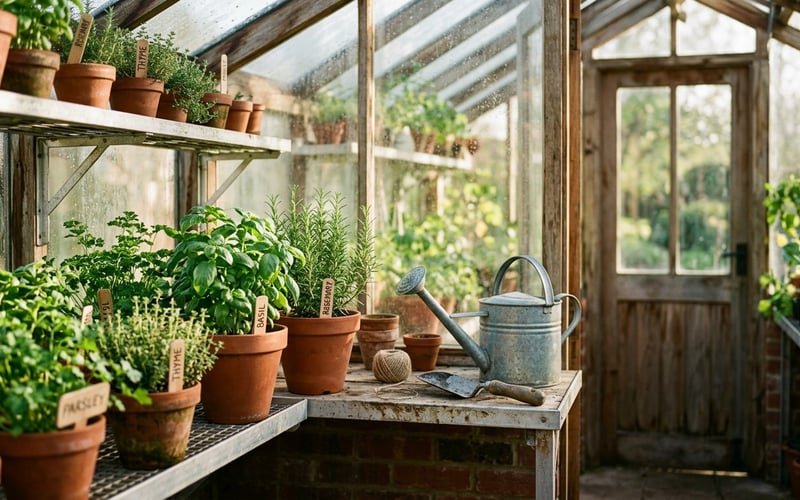
Growing herbs in a greenhouse UK with terracotta pots of basil rosemary and thyme on aluminium staging shelves
Installer's Note

In 16 years of fitting greenhouses across the UK, herbs are the crop I see most often on staging shelves. About a third of our customers tell us herbs were the reason they bought a greenhouse in the first place. The mistake most people make is cramming everything onto one shelf in full sun. Basil loves it, but mint and parsley scorch. We always recommend two-tier staging for herb growers. It gives you a sun shelf and a shade shelf in the same footprint. It doubles your growing capacity without taking up any more floor space.

Which herbs grow best in a UK greenhouse?

Seven herbs consistently outperform all others under glass in British conditions. We have trialled these in customers' greenhouses from Cornwall to the Scottish Borders. They deliver the heaviest harvests with the least fuss. Choosing the right cultivar matters. Not all varieties within a species perform equally under glass.

Basil (Ocimum basilicum) is the number one greenhouse herb. Grow 'Sweet Genovese' for pesto, 'Purple Ruffles' for salads, or Greek basil for compact pots on staging. Basil needs a minimum of 10°C and germinates best at 18–21°C. Under glass, a single plant produces continuously from June to October. Pinch out flower buds the moment they appear to keep leaf production going.

Coriander (Coriandrum sativum) bolts quickly in hot weather, which makes a greenhouse tricky unless you manage it. Choose a slow-bolt cultivar like 'Confetti' or 'Calypso' and sow every 3–4 weeks for continuous supply. Keep coriander on the lower, cooler shelf of your staging and water consistently. It germinates in 7–14 days at 15–20°C.

Parsley (Petroselinum crispum) is slow to germinate. Allow 14–21 days. Once established, it crops for 12 months or more in a greenhouse. 'Italian Giant' (flat-leaf) gives the best flavour for cooking. Curly 'Moss Curled' is hardier, tolerating temperatures down to −5°C. That makes it an excellent unheated greenhouse choice.

Chives (Allium schoenoprasum) are virtually indestructible. They thrive in any greenhouse position, tolerate shade, and come back year after year. Divide clumps every 2–3 years to keep them vigorous. Cut to 5cm above soil level when harvesting and they regrow within two weeks.

Rosemary (Salvia rosmarinus) is a Mediterranean perennial that loves the dry warmth of a greenhouse. 'Miss Jessopp's Upright' is the best variety for confined spaces because it grows vertically rather than sprawling. Rosemary needs sharp drainage — mix 30% horticultural grit into the compost. It survives unheated greenhouses through most UK winters and only needs protection below −10°C.

Thyme (Thymus vulgaris) is another Mediterranean tough plant that thrives under glass. Common thyme is the workhorse for cooking. Lemon thyme (T. citriodorus) adds a citrus note. Creeping thyme works as ground cover around the base of larger pots. All varieties prefer full sun, free-draining compost, and minimal watering — overwatering kills more thyme than frost ever will.

Mint (Mentha spicata) must always be grown in its own container. It spreads by underground runners and will take over shared beds within one season. Spearmint is the kitchen standard. Peppermint suits teas. Chocolate mint is a conversation starter. Place mint pots on the lower staging shelf where it gets indirect light. It prefers partial shade and damp conditions. That is the opposite of most greenhouse herbs.

Greenhouse herb comparison: at a glance

Herb Type Min Temp Sow Harvest Best Cultivar Position
Basil Tender annual 10°C Mar–May Jun–Oct Sweet Genovese Top shelf, full sun
Coriander Hardy annual 5°C Mar–Aug May–Oct Confetti (slow bolt) Lower shelf, cool
Parsley Hardy biennial −5°C Mar–Jul May–Mar Italian Giant Lower shelf, partial shade
Chives Hardy perennial −10°C Mar–Apr Apr–Nov Common chives Any position
Rosemary Hardy perennial −10°C Cuttings, spring Year-round Miss Jessopp's Upright Top shelf, full sun
Thyme Hardy perennial −10°C Mar–May Jun–Oct Common thyme Top shelf, full sun
Mint Hardy perennial −15°C Mar–Apr Apr–Oct Spearmint Lower shelf, shade OK

When should I sow herbs in a greenhouse?

Timing is everything with greenhouse herbs. Sow too early and seedlings sit in cold, damp compost and rot. Sow too late and you miss the peak growing window. This month-by-month calendar is based on an unheated greenhouse in the English Midlands (UK Hardiness Zone H4). If you heat your greenhouse above 10°C, you can start each herb 2–4 weeks earlier.

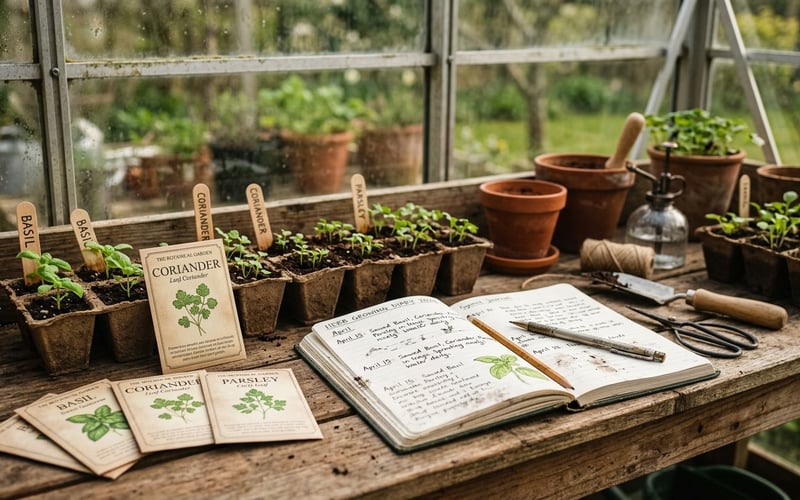
Growing herbs in a greenhouse sowing calendar with seed packets and seedling trays on a potting bench
Month Sow Transplant / Action Harvest
JanuaryOrder seed. Clean pots. Check stagingRosemary, thyme, parsley (overwintered)
FebruaryChives (heated propagator at 18°C)Prune woody rosemaryRosemary, thyme, parsley
MarchBasil, coriander, parsley, dillPot on autumn-sown parsleyRosemary, thyme, chives (early)
AprilBasil (second sowing), mint (division)Move seedlings to stagingParsley, chives, rosemary
MayCoriander (succession), basil, dillHarden off surplus for outdoor bedsAll herbs starting
JuneCoriander (succession)Pinch basil flower buds. Open all ventsFull harvest: all 7 herbs
JulyCoriander, parsley (autumn crop)Water daily. Ventilate. Shade if above 30°CFull harvest: all 7 herbs
AugustParsley, coriander (winter crop)Take rosemary, thyme, sage cuttingsFull harvest: all 7 herbs
SeptemberChervil, parsley (cold-hardy winter supply)Bring outdoor pots back into greenhouseBasil (last picks), all others
OctoberReduce watering. Close vents at nightParsley, rosemary, thyme, sage
NovemberInsulate with bubble wrap if neededRosemary, thyme, parsley
DecemberMinimal watering. Check for frost damageRosemary, thyme, parsley (sparingly)

The critical mistake is overwatering between October and February. In winter, a greenhouse stays damp. Mediterranean herbs like rosemary and thyme sit in wet compost and develop root rot. Water only when the top 2cm of compost feels dry to the touch. In January, that might mean watering once a fortnight.

What is the best greenhouse layout for herbs?

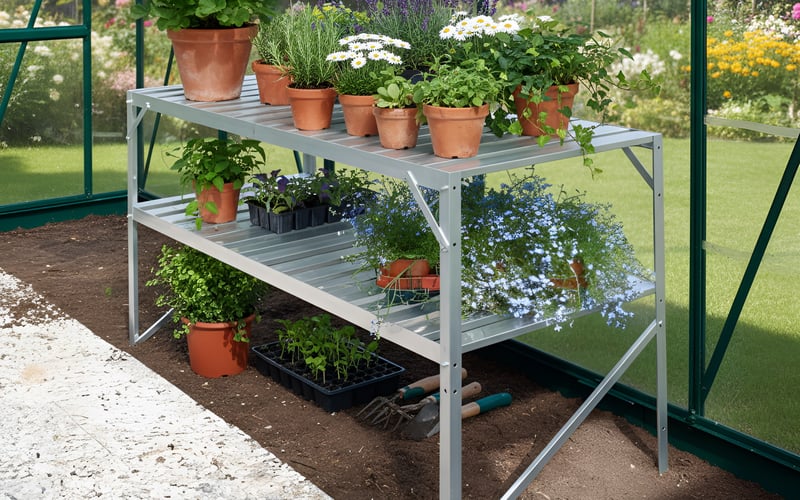
Two-tier staging is the single best investment for greenhouse herb growing. It doubles your usable shelf space and creates two distinct growing zones. The bright, warm top shelf suits sun-loving Mediterranean herbs. The cooler, shaded lower shelf suits mint, parsley, and coriander. This is how we recommend customers set up their greenhouse staging.

Growing herbs in a greenhouse staging layout with sun-loving herbs on top shelf and shade herbs below

Shop the Vitavia 2 Tier Staging →

Herb capacity by greenhouse size

Greenhouse Size Floor Area With 2-Tier Staging (1 side) With Staging Both Sides
6x4ft2.2m²20–25 pots35–40 pots
6x6ft3.3m²30–35 pots50–55 pots
6x8ft4.5m²40–45 pots65–70 pots
8x10ft7.4m²55–60 pots90–100 pots

Based on standard 12cm (5-inch) pots. Larger herbs like rosemary need 20–25cm pots, so count those as two standard spaces. A 6x4 greenhouse with staging on one side holds all seven herbs with room to spare.

Matt's Tip: Start Small, Expand Later

I tell every first-time greenhouse buyer the same thing: start with staging on one side only. Use the opposite side for tomatoes, peppers, or aubergines in grow bags on the floor. Herbs and tomatoes are brilliant greenhouse companions. Basil planted near tomatoes reduces whitefly through its volatile compounds. We have seen this work in hundreds of greenhouses. Read more in our companion planting guide.

Vitavia 2 Tier Silver Staging for growing herbs in a greenhouse

Matt's Pick for Greenhouse Herb Growing

Best For: herb growers who want two growing zones in one frame

Why I Recommend It: I have fitted hundreds of these. The slatted shelves let air circulate around pots. That airflow is critical for preventing root rot on rosemary and thyme. Folds flat in minutes if you need the space for something else.

Price: £99

View Product

How do you keep herbs alive in winter in a greenhouse?

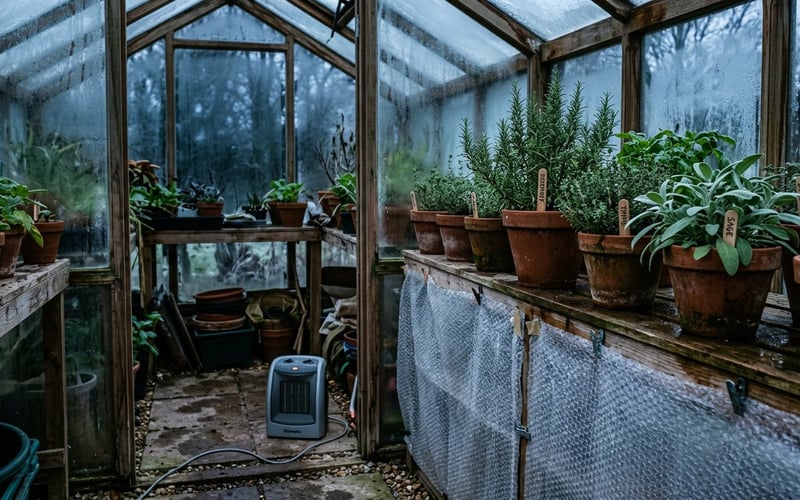
An unheated greenhouse stays 2–5°C warmer than outside air temperature. That is enough for rosemary, thyme, sage, chives, and parsley to survive most UK winters. The herbs that struggle are basil and coriander. Both need above 10°C to stay alive. That means supplementary heating or treating them as annuals and resowing in March. For detailed running costs, see our greenhouse heating costs guide.

Growing herbs in a greenhouse in winter with bubble wrap insulation and hardy herbs on staging

Winter protection methods ranked by effectiveness

Method Temperature Gain Cost Best For
Bubble wrap insulation+2–3°C£15–30Hardy herbs in unheated greenhouse
Horticultural fleece over pots+1–2°C£5–10Extra frost protection on coldest nights
Electric fan heater with thermostatMaintains 5–10°C£0.80–1.50/nightKeeping tender basil alive through winter
Heated propagatorMaintains 18–21°C (local)£0.10–0.20/dayStarting seeds in Feb/Mar before greenhouse warms up

The most common mistake is closing every vent and door. On mild winter days above 10°C, open a roof vent for an hour. Stagnant air causes grey mould (Botrytis) on soft herb leaves, particularly basil and parsley. Our ventilation guide covers this in detail. An automatic roof vent opener (£46) removes the guesswork. It opens and closes based on temperature without needing electricity.

How much does it cost to grow your own herbs?

Growing herbs in a greenhouse pays for itself within the first season. A single packet of basil seeds (approximately 200 seeds) costs £2.50 and produces the equivalent of 40–50 supermarket basil packs at £1.50 each. That is £60–75 worth of basil from a £2.50 investment. Multiply that across seven herbs and the savings are significant.

First-year cost vs. supermarket comparison

Item Greenhouse Growing Supermarket Equivalent
7 seed packets£15–20
Compost (40L bag)£6–8
20 terracotta pots (12cm)£15–20
2-tier staging£99 (one-off)
Weekly fresh herbs (year-round)£5–8/week (£260–416/year)
First-year total£135–150£260–416
Year 2 onwards£15–25 (seeds and compost only)£260–416

The staging and pots are a one-off cost. From year two, the only recurring expense is seed packets and a bag of compost. Perennial herbs like rosemary, thyme, chives, and mint come back year after year without resowing.

What pests attack herbs in a greenhouse?

Greenhouse herbs face fewer pests than outdoor crops, but the warm, sheltered environment does attract three main offenders. Catch them early and they are easy to manage. Leave them, and aphids especially can overwhelm soft-leaved herbs like basil within a fortnight.

Aphids (greenfly and blackfly) are the most common pest. They cluster on growing tips and undersides of leaves, sucking sap and excreting sticky honeydew. Check herbs twice a week from April onwards. A strong jet of water knocks most aphids off. For persistent infestations, introduce ladybird larvae or lacewing larvae as biological control. More options are in our greenhouse pest control guide.

Whitefly are tiny white-winged insects that rise in a cloud when you disturb a plant. They overwinter on plant debris left in the greenhouse. The best prevention is a thorough clean in autumn — remove all dead foliage and wipe down staging. The parasitic wasp Encarsia formosa is the gold standard biological control for whitefly under glass.

Slugs and snails sometimes find their way in through open doors. Raising herbs onto staging eliminates 90% of slug damage because they rarely climb aluminium legs. Copper tape around staging legs provides an additional barrier.

When and how should I harvest greenhouse herbs?

Harvest herbs in the morning after the dew dries but before the midday sun heats the greenhouse. Essential oil concentration peaks at this time, giving you the strongest flavour. Regular harvesting stimulates new growth — the more you pick, the more the plant produces.

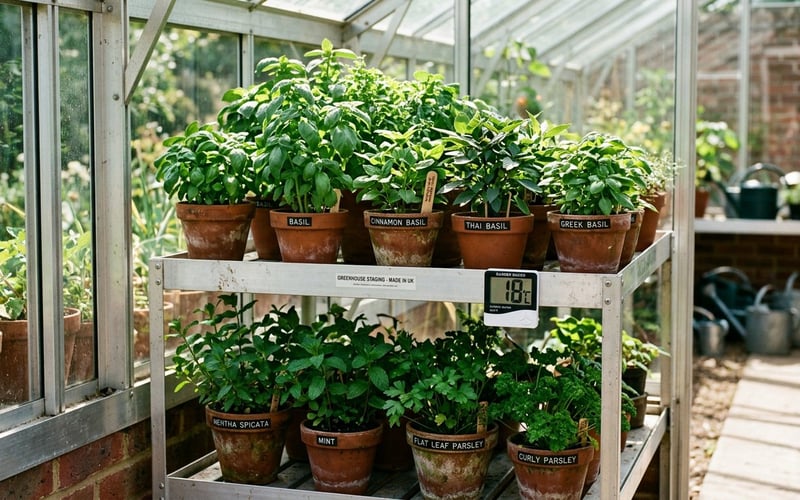
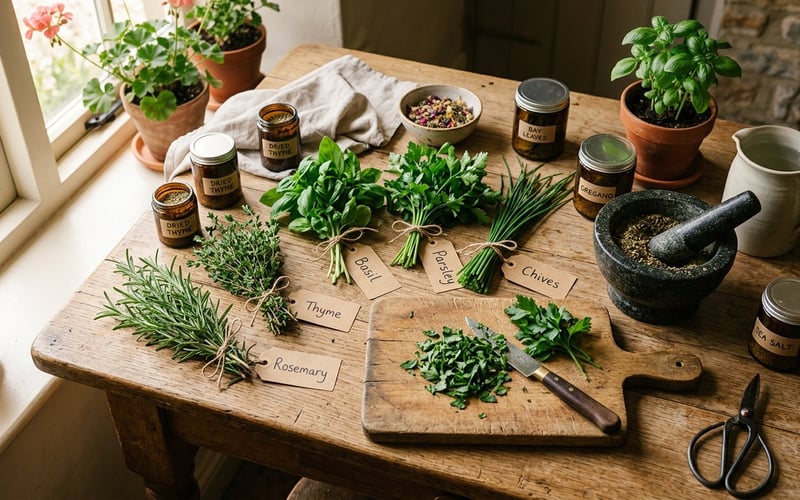
Freshly harvested greenhouse herbs including basil rosemary thyme and parsley on a kitchen table with drying bundles

Cut-and-come-again herbs (basil, parsley, coriander, chives): snip individual stems or leaves as needed. Never take more than a third of the plant at once. Basil should be cut above a leaf node to encourage branching.

Woody perennials (rosemary, thyme, sage): cut 10–15cm sprigs from the current season's growth. Avoid cutting into old, brown wood — it rarely regrows. Prune lightly after flowering to keep the plant compact.

Drying herbs in your greenhouse

A greenhouse is an excellent natural dehydrator. Tie herbs in small bundles of 4–6 stems. Hang them upside down from the greenhouse frame or a wire strung at ridge height. In summer, herbs dry in 3–5 days. In autumn, allow 7–10 days. Once crisp, strip the leaves and store in airtight glass jars away from direct light. Dried greenhouse herbs retain their flavour for 6–12 months.

Frequently asked questions

Can I grow herbs in an unheated greenhouse year round?

Hardy herbs survive year-round in an unheated UK greenhouse. Rosemary, thyme, sage, chives, and parsley tolerate temperatures down to −5°C or lower. Tender basil and coriander die below 5°C. Resow these each March or use a heated propagator to overwinter them.

What temperature do herbs need in a greenhouse?

Most herbs grow best between 15°C and 25°C. Basil has the highest minimum requirement at 10°C. Open vents when greenhouse temperatures exceed 25°C to prevent heat stress and bolting. A max-min thermometer (£30) helps you track overnight lows and daytime peaks.

How often should I water herbs in a greenhouse?

Water Mediterranean herbs (rosemary, thyme, sage) only when the top 2cm of compost feels dry. That might be twice a week in summer and once a fortnight in winter. Basil, parsley, and coriander prefer evenly moist compost and need watering every 1–2 days in summer. Always water at the base of the plant to avoid wetting the leaves, which promotes fungal disease.

What herbs should not be planted together in a greenhouse?

Mint must always be in its own container. It spreads by underground runners and chokes other herbs within one season. Fennel is allelopathic and inhibits growth in most neighbouring plants. Keep dill away from fennel because they cross-pollinate and produce bland-tasting offspring. Group Mediterranean herbs (rosemary, thyme, oregano, sage) together because they share the same watering and drainage needs.

What size greenhouse do I need for growing herbs?

A 6x4ft greenhouse is enough for a complete herb collection of all seven varieties on two-tier staging. For tomatoes, peppers, or salads alongside herbs, upgrade to a 6x8ft. That gives you herbs on one side and crops on the other. See our essential accessories guide for help kitting out a new greenhouse.

Is it cheaper to grow herbs or buy them?

Growing herbs in a greenhouse saves £200–350 per year compared to buying fresh-cut herbs from a supermarket. A single £2.50 seed packet produces the equivalent of £60–75 of supermarket basil. Perennial herbs like rosemary and thyme produce for 5+ years from one plant, costing pennies per harvest once established.

Related articles

Expertise Verified By: Matt W

As Co-Founder of Greenhouse Stores, Matt W has overseen more than 150,000 customer orders and brings 16 years of technical industry experience to every guide. He specialises in structural wind-loading analysis and manufacturer consultancy, ensuring that the advice you read is grounded in practical, hands-on testing rather than just marketing specs.

View Matt's Full Profile →

Need Help?

Ask us anything about delivery, installation, or our products.