Cold Frame Gardening UK: What to Grow and When to Plant
Cold frames extend the UK growing season by 6-8 weeks, letting you sow from February and harvest salads into December. Aluminium models with toughened glass start from £249 for a 4x2 Elite Min-E-Lite and go up to £659 for an 8x4 Access Coldframe with a 25-year warranty. Position south-facing against a wall for maximum warmth and wind protection.
Key Takeaways
- Start sowing 6-8 weeks earlier: A cold frame traps solar heat, keeping soil 5-10°C above outside temperature on sunny days. Sow hardy crops from February.
- Aluminium frames last decades: Toughened glass models carry 20-25 year warranties and need zero maintenance beyond an occasional wipe-down.
- Position south-facing against a wall: This captures maximum sunlight and the wall radiates stored heat back overnight, keeping frost at bay.
- Year-round salads: Lamb's lettuce, winter purslane, and mizuna crop through December under a cold frame. No heating required.
- Prices from £249 to £659: Seven models across three manufacturers, with free UK delivery on every one.
Installer's Note
We fit cold frames alongside full greenhouses on about a third of our installation jobs. Most customers don't realise how much growing potential a cold frame adds until they see one working through its first spring. For the money, a 4x4 aluminium cold frame is one of the best investments you can make in a kitchen garden. I've had mine for nine years and it still looks new.
What Is a Cold Frame and Why Do UK Gardeners Need One?
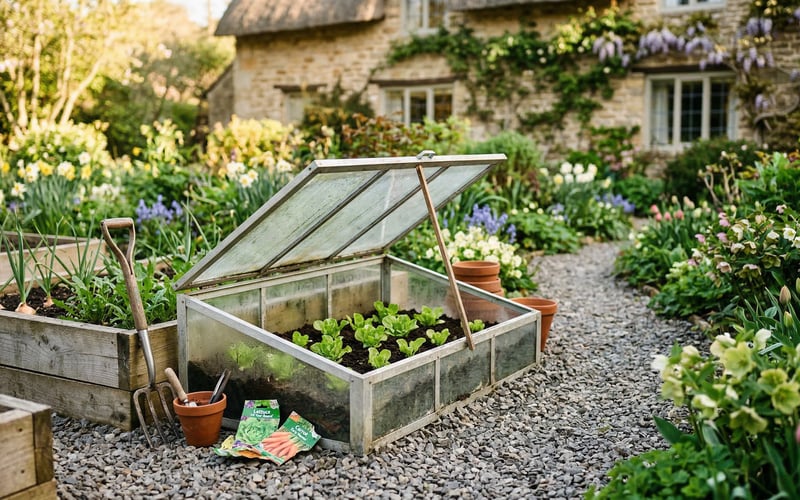
A cold frame is a low, box-shaped growing structure with a transparent hinged lid. It works like a miniature greenhouse, trapping solar heat during the day and releasing it slowly overnight. On a sunny March afternoon, the air inside a cold frame sits 5-10°C above the outside temperature. That difference is enough to germinate lettuce, spinach, and radish seeds weeks before you could sow them outdoors.
In the UK, late frosts regularly strike until mid-May across most regions, and return by October in northern counties. A cold frame bridges that gap. You get a 6-8 week head start in spring and can keep cropping hardy salads into December without any heating. The RHS recommends cold frames as essential kit for raising seeds and hardening off tender plants before they go into open ground.
Unlike a greenhouse, a cold frame needs no foundation, no planning permission, and takes 30 minutes to assemble straight from the box. Place it on soil, gravel, a patio, or even a balcony. The compact footprint means it fits gardens where a full greenhouse simply won't.
What Can You Grow in a Cold Frame Month by Month?
Cold frames support year-round growing in the UK. The table below shows what to sow, grow, and harvest each month. These timings work for most of England, Wales, and lowland Scotland. Add 2-3 weeks if you garden above 300m or in exposed northern areas.
| Month | What to Sow | What to Grow On / Protect |
|---|---|---|
| January | Early lettuce, broad beans (in modules) | Overwintered salads, spring cabbage |
| February | Radish, spinach, spring onions, peas | Early potatoes (in pots), hardy herbs |
| March | Beetroot, carrots, calabrese, leeks | Hardening off early greenhouse seedlings |
| April | French beans, courgettes, sweetcorn | Harden off tomatoes, peppers, aubergines |
| May | Cucumbers, squash, runner beans | Last hardening-off before planting out |
| June-August | Succession sow salads, herbs, endive | Melons, peppers, aubergines in warm spots |
| September | Winter lettuce, lamb's lettuce, pak choi | Ripen last tomatoes, dry onions and garlic |
| October | Overwintering broad beans, garlic cloves | Protect late salads and herbs from frost |
| November-December | — | Harvest winter salads, protect alpine plants |
For a detailed sowing calendar that covers both greenhouse and cold frame timings, see our seed sowing month-by-month guide.
Cold Frame vs Greenhouse: Which Do You Need?
A cold frame and a greenhouse serve different jobs. A greenhouse gives you standing headroom, space for tall crops like tomatoes and cucumbers, and the option to add heating. A cold frame sits at ground level and excels at three specific tasks: hardening off seedlings, overwintering tender plants, and growing low crops like salads and strawberries.
The best kitchen gardens use both. Start seeds in the greenhouse, move them to the cold frame to toughen up for a week, then plant out. This two-stage process produces stronger plants that cope better with wind, rain, and temperature swings.
| Feature | Cold Frame | Greenhouse |
|---|---|---|
| Cost | £249 – £659 | £400 – £5,000+ |
| Space needed | From 4ft x 2ft (0.7m²) | From 6ft x 4ft (2.2m²) |
| Assembly | 30-60 minutes, no base needed | Half day to full day, base required |
| Best for | Salads, seedlings, hardening off | Tomatoes, cucumbers, year-round growing |
| Heating | Not practical | Electric, gas, or paraffin options |
| Planning permission | Never needed | Rarely, but check if near a boundary |
If you're considering a greenhouse, our guide to what to grow in an unheated greenhouse covers month-by-month planting for structures without heating.
Which Cold Frame Should You Buy? 7 UK Models Compared
We stock seven aluminium cold frames from three manufacturers. All have toughened or polycarbonate glazing, free UK delivery, and warranties between 5 and 25 years. The table below compares every model we sell so you can pick the right size and budget.
| Model | Size | Glazing | Warranty | Price |
|---|---|---|---|---|
| Elite Min-E-Lite 4x2 | 1346mm x 712mm | 3mm toughened glass | 20 years | £249 |
| Elite Min-E-Lite 6x2 | 1924mm x 712mm | 3mm toughened glass | 20 years | £299 |
| Elite Min-E-Lite 8x2 | 2502mm x 712mm | 3mm toughened glass | 20 years | £359 |
| Access Aluminium 4x4 | 1210mm x 1210mm | 3mm toughened glass | 25 years | £439 |
| Access Aluminium 6x4 | 1830mm x 1210mm | 3mm toughened glass | 25 years | £579 |
| Access Aluminium 8x4 | 2440mm x 1210mm | 3mm toughened glass | 25 years | £659 |
| Palram Plant Inn 4x4 | 1160mm x 1160mm | Polycarbonate | 5 years | £329 |
Every model above is available to browse on our cold frames collection page, with full specifications and ordering.
|
Matt's Pick: Best All-Round Cold FrameBest For: Kitchen gardens, allotments, and anyone who wants a cold frame that'll last a lifetime Why I Recommend It: I've fitted dozens of Access cold frames over the years. The 4x4 gives you proper growing space — enough for two rows of lettuce and a row of seedling trays. The sliding panels are a better design than hinged lids because you can open them just a crack for ventilation without wind catching them. UK manufactured, 25-year warranty, 3mm toughened glass. It's the one I'd buy for my own garden. Price: £439 |
3 Cold Frames for 3 Different Gardens
Best for Small Patios and Balconies: Elite Min-E-Lite 4x2
Shop the Elite Min-E-Lite 4x2 Cold Frame →
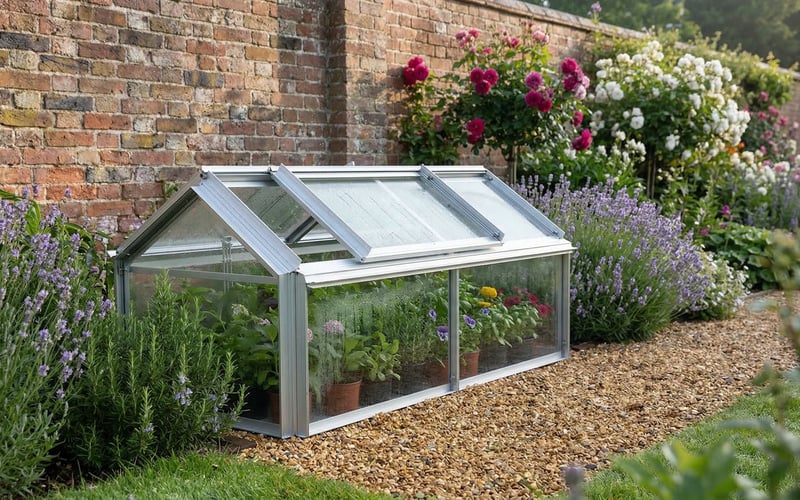
The Elite Min-E-Lite 4x2 is the most compact aluminium cold frame we sell, at just 712mm deep. It tucks against a wall, fits on a balcony, and takes up less floor space than a wheelie bin. Despite the small footprint, there's room for a full tray of module-raised seedlings or two rows of cut-and-come-again lettuce. The 20-year warranty on the aluminium frame means you'll get your money back many times over. Available in 10 powder-coated colours including black, olive, navy, and stone — so it blends with any garden style. Prices start from £249.
Best for Kitchen Gardens and Allotments: Access 4x4 Coldframe
Shop the Access 4x4 Coldframe →
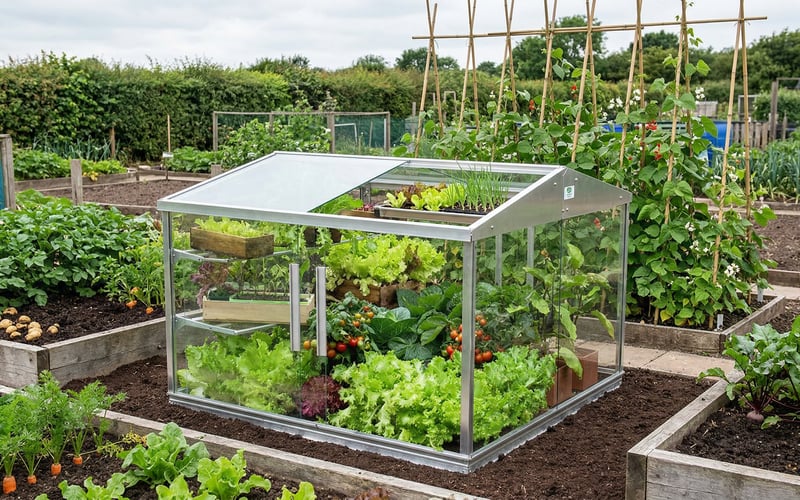
The Access 4x4 Coldframe gives you a full 1.46m² of protected growing space. That's enough for six lettuce plants, a row of radishes, and a tray of seedlings all at once. The sliding front and roof panels offer better ventilation control than hinged-lid designs — you can slide them open by just 20mm on cool spring mornings. UK manufactured from extruded aluminium with 3mm toughened safety glass. The roof panels are fully removable, so you can lift them off in summer and use the frame as a raised bed. Priced from £439 with a 25-year framework guarantee.
Best Raised Cold Frame for Accessibility: Palram Plant Inn 4x4
Palram Canopia Plant Inn 4x4 — raised waist-height design with polycarbonate lid and built-in storage shelf. £329 with free UK delivery.
Shop the Palram Plant Inn 4x4 →
The Palram Canopia Plant Inn stands at waist height, making it the best choice for anyone who struggles to bend down. Wheelchair users, gardeners with back problems, and schools all benefit from the raised design. The polycarbonate lid opens to five positions, and there's a storage compartment underneath for tools and pots. Internal water drainage channels excess rain away from your plants. It's lighter than the aluminium-and-glass models at just 22kg, so it's easy to reposition as the seasons change. Priced at £329 with a 5-year warranty and free delivery.
How to Position a Cold Frame for Best Results
Positioning decides how well your cold frame performs. Get it right and you'll gain those 6-8 extra weeks of growing. Get it wrong and you'll fight condensation, overheating, and poor germination. Follow these five rules:
- Face it south or south-west. The lid should slope towards the sun's path. In the UK, that means the back (tallest side) faces north and the front faces south. This maximises light hitting your plants at the low winter sun angle.
- Back it against a wall or fence. A south-facing brick wall absorbs heat during the day and radiates it back at night. This can add 2-3°C to the overnight minimum inside the frame — enough to protect young plants from a -2°C frost.
- Level the ground first. An uneven base means the lid won't seal properly. Gaps let cold air pour in and warm air escape. Lay the frame on paving slabs, compacted gravel, or levelled soil.
- Keep it sheltered from wind. Wind strips heat from the glass faster than anything else. A fence, hedge, or building on the north and east sides cuts wind speed and holds warmth in.
- Avoid tree shade. Even deciduous trees cast enough shade in spring to cut light levels by 40-60%. Your cold frame needs direct sunlight for at least 6 hours a day.
Matt's Tip: The Brick Trick
I keep two house bricks inside every cold frame I own. On sunny spring days, the bricks absorb heat. After sunset, they release it slowly and keep the air temperature inside 1-2°C higher than an empty frame. It's an old allotment trick that costs nothing and genuinely works. Dark-coloured bricks absorb more heat than light ones — reclaimed engineering bricks are ideal.
How to Ventilate a Cold Frame Without Killing Your Plants
Overheating is the single biggest cold frame mistake. On a sunny day in March, an unventilated cold frame can hit 35-40°C inside — hot enough to cook seedlings. The rule is simple: if the outside temperature is above 10°C and the sun is out, open the lid.
Here's how to manage ventilation through the year:
- January-February: Open the lid a crack (30-50mm) on sunny days above 8°C. Close by 3pm to trap warmth for the night.
- March-April: Prop fully open on warm days. Close if frost is forecast. This is prime hardening-off season — gradually increase the time the lid stays open.
- May-September: Remove the lid entirely on hot days, or leave propped open overnight in summer. Replace if heavy rain or hail is forecast.
- October-December: Return to the crack-open routine. Close fully on nights below -2°C. Add a layer of horticultural fleece over the plants for extra protection in hard frosts.
The Access cold frames have sliding panels that make fine-tuning ventilation much easier than hinged lids. You can slide them open by 10mm increments — useful on those unpredictable spring days when the temperature swings between 5°C and 15°C before lunch.
5 Common Cold Frame Mistakes (And How to Avoid Them)
After 16 years of fitting and using cold frames, we see the same mistakes every spring. Avoid these five and you'll get far better results from day one:
- Forgetting to ventilate. Temperatures above 30°C kill seedlings faster than frost. Open the lid every sunny day, no exceptions.
- Sowing too early. A cold frame isn't a heated propagator. Wait until February for the hardiest crops and March for most others. Soil temperature matters more than air temperature — use a soil thermometer and wait for 5°C minimum.
- Overwatering in winter. Cold, wet soil rots roots. Water sparingly from October to February. The frame should keep rain off, so only water when the top 20mm of soil is dry.
- Placing in shade. Even 3 hours of shade per day cuts growth rates by a third. Move the frame if a tree or building blocks the south side.
- Ignoring slugs. Cold frames are warm and moist — slug paradise. Check underneath the frame weekly and use copper tape around the base. Organic slug pellets work well inside a frame because rain doesn't wash them away.
For more on dealing with greenhouse and cold frame pests, our essential greenhouse growing tips for beginners covers pest prevention in detail.
Frequently Asked Questions
Do cold frames work in the UK winter?
Cold frames protect hardy crops down to around -5°C without heating. Lamb's lettuce, winter purslane, corn salad, and overwintered broad beans all thrive inside a cold frame through a typical UK winter. In severe frost below -5°C, add horticultural fleece over the plants for extra insulation. The frame won't keep tropical plants alive, but it'll protect anything rated to USDA zone 7 or hardier.
What is the best position for a cold frame?
South-facing against a wall gives the best results. The wall stores heat during the day and releases it at night, adding 2-3°C to overnight temperatures. Avoid positions under trees or on the north side of buildings. The frame needs at least 6 hours of direct sunlight daily for strong plant growth.
Can I use a cold frame instead of a greenhouse?
A cold frame replaces a greenhouse for low-growing crops and seedlings. You can sow seeds, harden off plants, grow salads, and overwinter herbs perfectly well. However, you can't grow tall crops like tomatoes, cucumbers, or climbing beans in a cold frame. If you only want salads and seedlings, a cold frame is all you need. If you want tomatoes too, consider both. See our guide on lean-to greenhouses for compact alternatives.
How do you stop a cold frame overheating?
Open the lid whenever outside temperature exceeds 10°C in sun. On warm spring days, the interior can reach 35-40°C within an hour. Prop the lid with a stick, brick, or purpose-made arm. Automatic vent openers (the same type used in greenhouses) fit most cold frames and open the lid when a set temperature is reached — useful if you're away during the day.
What is the difference between a cold frame and a cloche?
A cold frame is a permanent box with a lid; a cloche is a portable cover. Cloches (glass or plastic tunnels) protect individual rows of plants in the open ground. Cold frames are standalone growing spaces with their own soil or containers inside. Cold frames give better frost protection, last longer, and are easier to ventilate. Cloches are cheaper and more portable but offer less warmth.
Do I need a base for a cold frame?
Most aluminium cold frames sit directly on the ground without a base. Place them on level soil, compacted gravel, or paving slabs. The Access and Elite models include floor-fixing brackets if you want to secure the frame against wind. Unlike greenhouses, cold frames don't need concrete or steel foundations — their low profile and heavy glass keep them stable in normal conditions.
How much does a cold frame cost in the UK?
Aluminium cold frames with toughened glass cost between £249 and £659. The price depends on size and manufacturer. A compact 4x2 Elite Min-E-Lite starts at £249, while the largest 8x4 Access model with a 25-year warranty is £659. The Palram Plant Inn raised cold frame with polycarbonate glazing costs £329. All include free UK home delivery.