Growing Courgettes in a Greenhouse UK: Complete Guide
Growing courgettes in a greenhouse gives you a 3-4 week head start over outdoor sowing and extends the harvest well into October. After growing courgettes under glass for over a decade, we've learned that the key to a heavy crop is ventilation, pollination, and picking early. Two healthy plants in a 6x8 greenhouse produce 30-40 courgettes across the season - more than enough for a family of four. This guide covers everything from sowing to harvest, with specific advice on varieties, spacing, and pest control for UK greenhouse growing.
Key Takeaways
- Sow indoors: March to April in 9cm pots at 18-21°C. Seeds germinate in 5-7 days
- Plant out: Mid-May when night temperatures stay above 10°C. One plant per grow bag or 45-litre pot
- Spacing: 90cm between plants minimum - courgettes are much bigger than tomatoes under glass
- Pollination: Hand-pollinate female flowers with a paintbrush for reliable fruit set in enclosed greenhouses
- Harvest: Pick at 15-20cm every 2-3 days. Leaving fruits on the plant stops new ones forming
- Best varieties for greenhouses: 'Defender' F1, 'Black Beauty', 'Costata Romanesco', 'Patio Star' F1
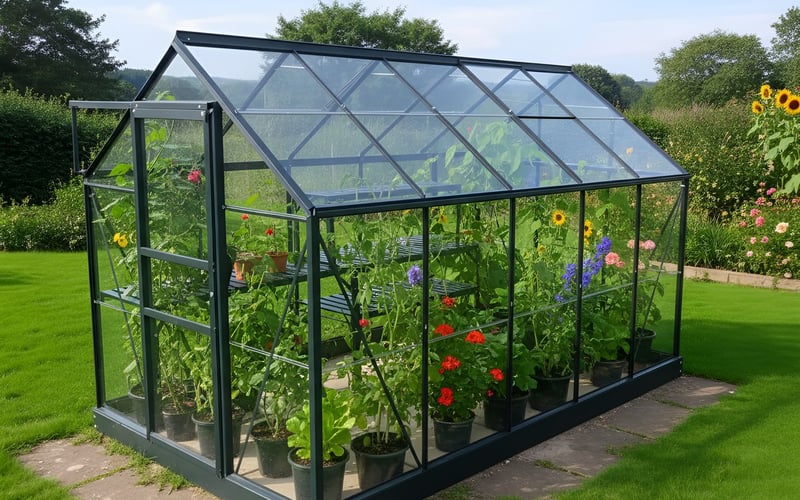
Shop the Vitavia Venus 6x10 Greenhouse →
Expert Tip
I've fitted greenhouses for customers who grow nothing but courgettes and squash. The single biggest mistake is underestimating how much space they need. A mature courgette plant spreads 60-90cm in every direction. Two plants fill the floor space of a 6x6 greenhouse. If you want courgettes alongside tomatoes and peppers, you need at least a 6x8 - and ideally a 6x10 like the Vitavia Venus above. Plan the layout before you sow, not after the plants take over.
When to sow courgettes in a greenhouse
Courgette seeds need consistent warmth to germinate. The soil temperature must reach 18°C before sowing - anything below 15°C and germination fails or takes 3-4 weeks instead of 5-7 days.
UK sowing timeline:
- Late March to mid-April: Sow seeds indoors on a heated propagator mat or warm windowsill
- April to early May: Grow seedlings on in the greenhouse at 15-18°C daytime
- Mid to late May: Plant into final positions once night temperatures stay above 10°C
- Late June onwards: Sow a second batch for succession cropping into autumn
Sow seeds individually in 9cm pots filled with multipurpose compost. Push each seed 2cm deep, pointed end down. Water once and place on a heated mat at 18-21°C. Seedlings emerge in 5-7 days.
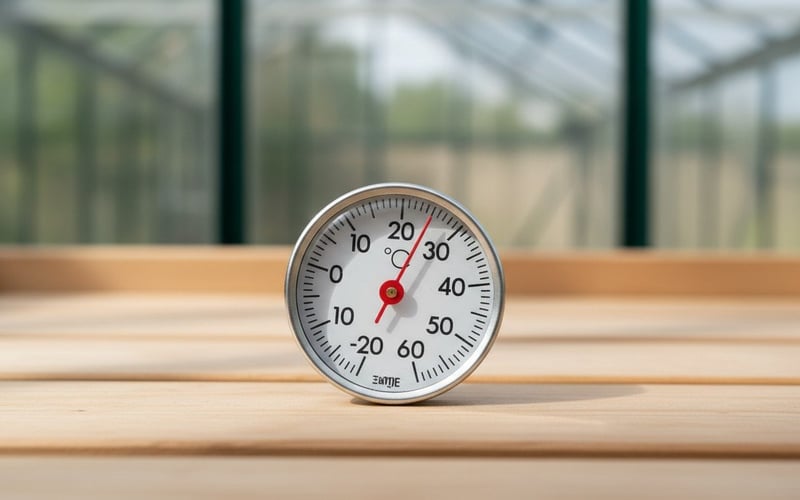
Shop the Vitavia Soil Thermometer →
A soil thermometer takes the guesswork out of sowing timing. Push it 5cm into the compost to check it's reached 18°C before planting seeds. Our propagation guide covers seed starting techniques in more detail.
Best courgette varieties for greenhouse growing
Not all courgette varieties suit greenhouse conditions. You want compact, disease-resistant plants with good powdery mildew tolerance - the warm, humid greenhouse environment encourages mildew if you pick the wrong variety.
| Variety | Type | Days to Harvest | Best For |
|---|---|---|---|
| Defender F1 | Dark green, cylindrical | 50-55 days | Best all-round greenhouse variety. Virus-resistant, heavy cropping |
| Black Beauty | Dark green, glossy | 50-60 days | Classic open-pollinated variety. Reliable and prolific |
| Costata Romanesco | Pale green, ribbed | 55-65 days | Italian heritage variety with superior flavour. Best picked young |
| Patio Star F1 | Dark green, compact plant | 45-50 days | Compact habit - ideal for smaller 6x6 greenhouses |
| Tromboncino | Pale green, climbing | 60-70 days | Climbing variety - train up greenhouse frame to save floor space |
| Gold Rush F1 | Bright yellow | 50-55 days | Yellow fruits stand out against green foliage. Good disease resistance |
'Defender' F1 is our top recommendation for greenhouse growing. It carries cucumber mosaic virus resistance, tolerates powdery mildew better than most, and produces 15-20 fruits per plant in a good season. For small greenhouses, 'Patio Star' F1 has a more compact growth habit that takes up less floor space.
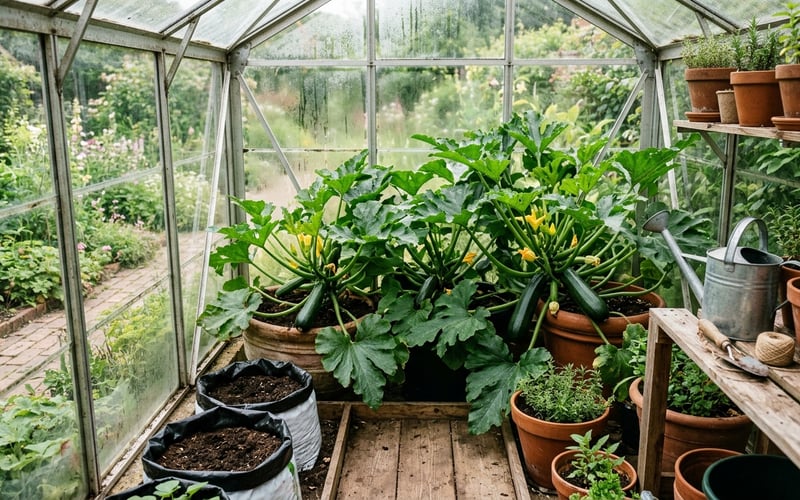
How to Grow Courgettes in a Greenhouse Step by Step
Step 1: start seeds on staging
Sow 2-3 seeds per 9cm pot in late March. Place pots on greenhouse staging at waist height where temperatures are warmest. If your greenhouse drops below 15°C at night in March, use a heated propagator mat underneath the pots.
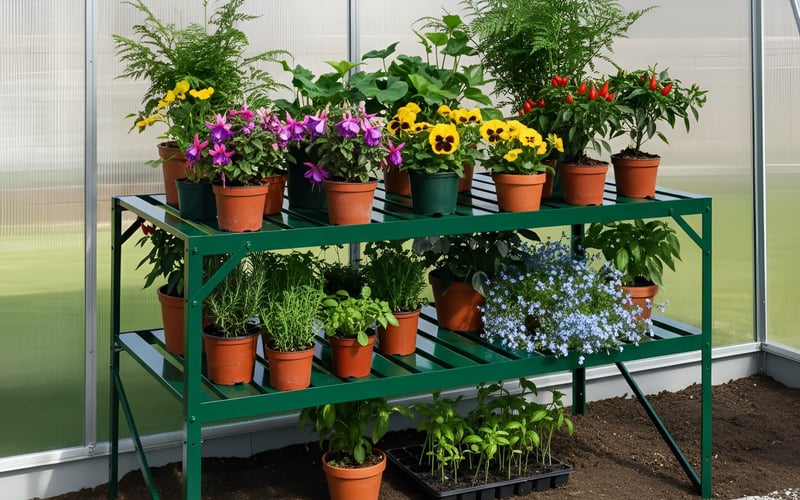
Shop the Vitavia 2 Tier Green Staging →
Once seedlings show their first true leaves (not the rounded seed leaves), thin to one strong seedling per pot. Keep the compost moist but not waterlogged. Courgette seedlings hate sitting in cold, wet soil.
Step 2: pot on and harden off
When roots fill the 9cm pot (usually 3-4 weeks after sowing), pot on into 1-litre pots. Continue growing in the greenhouse at 15-18°C. If you plan to plant outdoors later, start hardening off in early May by opening vents and doors during the day.
Step 3: plant into final positions
In mid-May (or when night temperatures stay reliably above 10°C), plant courgettes into their final growing positions:
- Grow bags: One plant per standard grow bag. Two plants per bag leads to root competition and smaller fruits
- Large pots: 45-litre minimum. Anything smaller restricts root growth and reduces yield
- Ground beds: If your greenhouse has soil borders, plant 90cm apart with the rootball level with the soil surface
Water each plant thoroughly after planting. Mulch around the base with straw or compost to retain moisture and suppress weeds.
Temperature, humidity, and ventilation for greenhouse courgettes
Courgettes grow fastest at 18-25°C. Above 30°C, flower drop increases and fruit development slows. Below 10°C, growth stops completely and the plant becomes susceptible to root rot.
Ventilation is critical. Courgettes produce large, fleshy leaves that transpire heavily, pushing greenhouse humidity above 80% on still days. High humidity plus warm temperatures equals powdery mildew - the number one disease problem for greenhouse courgettes.
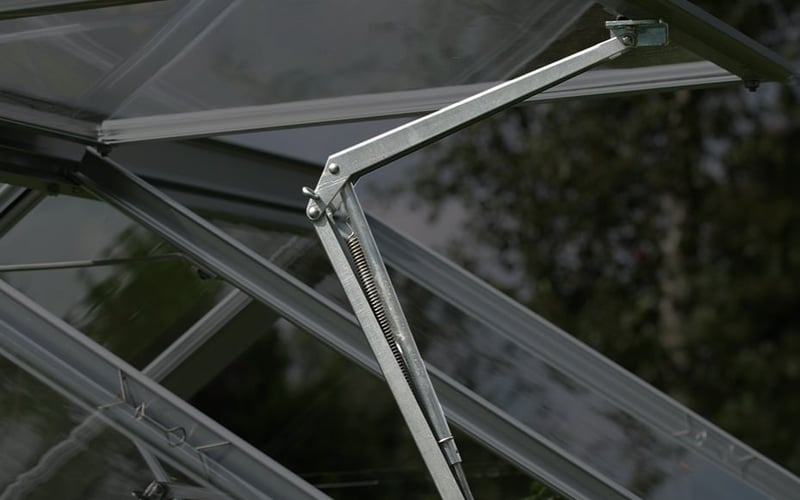
Shop the Vitavia Automatic Roof Vent Opener →
Fit an automatic vent opener to every roof vent. At £46, it's the cheapest insurance against overheating and mildew. The wax cylinder opens the vent at 15-20°C and closes it when the temperature drops. No electricity needed.
Ventilation rules for courgettes:
- Open roof vents and door from 20°C upwards
- Leave the door open all day from June to September
- Close vents at night if temperatures drop below 12°C
- Remove lower leaves to improve airflow around the base of the plant
Matt's Tip: The Leaf Removal Trick
Once a courgette plant has 6-8 large leaves, start removing the oldest two leaves at the base every week. This sounds drastic but it does three things: improves airflow (reducing mildew risk), lets light reach developing fruits, and redirects energy from leaf growth into fruit production. Cut the leaf stem cleanly with a sharp knife - don't tear it. I've seen this single technique double the harvest from greenhouse courgettes.
Watering and feeding courgettes under glass
Courgettes are thirsty plants. A mature plant in a grow bag drinks 3-5 litres of water per day in hot weather. Inconsistent watering causes blossom end rot - a brown, sunken patch on the bottom of the fruit.
Watering schedule:
- May to June: Water every other day, 2-3 litres per plant
- July to August: Water daily, 3-5 litres per plant in hot spells
- September onwards: Reduce to every other day as growth slows
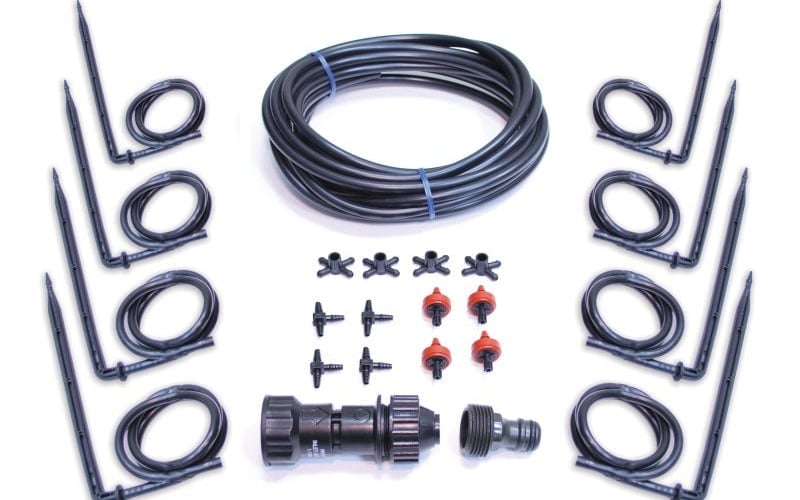
Shop the Palram Canopia Drip Irrigation Kit →
A drip irrigation kit takes the guesswork out of watering and ensures even moisture delivery to the roots. Our watering and irrigation guide covers the full range of options from manual to automatic systems.
Feeding: Start feeding with a high-potash tomato feed (like Tomorite) once the first flowers appear. Feed weekly at the dilution rate on the bottle. Switch to every 5 days once fruits start swelling. The potassium encourages fruit development over leaf growth.
Pollination: the key to a good courgette harvest
This is where greenhouse growing gets tricky. Courgettes have separate male and female flowers on the same plant. Outdoors, bees transfer pollen naturally. In an enclosed greenhouse, pollination often fails because insects can't access the flowers.
How to identify male and female flowers:
- Male flowers: Grow on a thin, straight stem. Appear first (usually 2-3 weeks before females)
- Female flowers: Have a small, swollen fruit behind the petals. This is the embryonic courgette
Hand pollination method:
- Pick a fully open male flower in the morning (before 10am for best pollen viability)
- Peel back the petals to expose the pollen-covered stamen
- Gently rub the stamen directly onto the stigma in the centre of each open female flower
- One male flower can pollinate 2-3 female flowers
Alternatively, use a small paintbrush to transfer pollen from male to female flowers. Do this every morning during the flowering period. If female flowers wither and drop without setting fruit, poor pollination is almost always the cause.
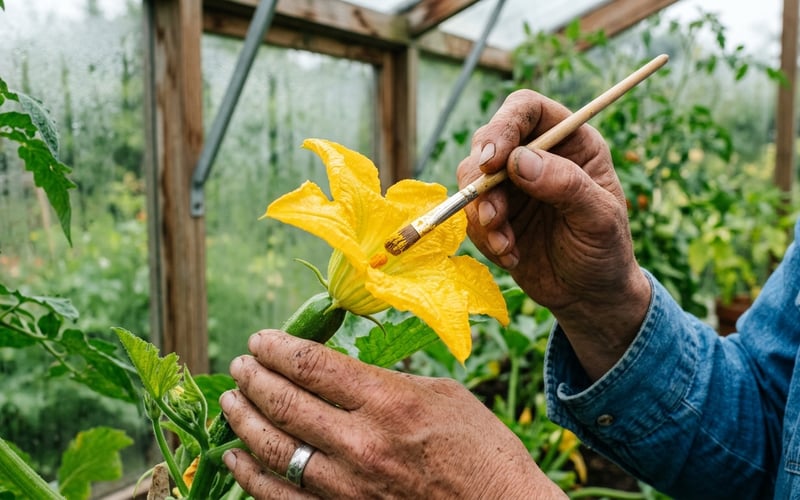
Leaving the greenhouse door open during the day helps too - it lets bees and hoverflies in to do the job naturally. Our cucumber growing guide covers the same pollination techniques since cucumbers face the same challenge under glass.
Common pests and diseases in greenhouse courgettes
Three main problems affect greenhouse-grown courgettes in the UK:
Powdery Mildew
White, powdery patches on upper leaf surfaces. The most common disease in greenhouse courgettes. Caused by warm, humid conditions with poor air movement. Prevention: remove lower leaves weekly, ventilate aggressively from June onwards, and avoid wetting the foliage when watering (water at the base, not overhead). 'Defender' F1 has the best mildew tolerance of the common varieties.
Aphids
Clusters of small green or black insects on shoot tips and flower buds. Squash them between finger and thumb at the first sign. For heavier infestations, introduce ladybird larvae or spray with diluted soft soap solution. Check plants weekly from May onwards.
Red spider mite
Tiny mites on leaf undersides causing yellow speckling. Thrives in hot, dry conditions - the opposite of what encourages mildew. Raise humidity by damping down the greenhouse floor with water on hot mornings. Introduce the predatory mite Phytoseiulus persimilis for biological control. Our pest control guide covers all these treatments in detail.
What size greenhouse do courgettes need?
Courgettes need more floor space than any other common greenhouse crop. A single plant spreads 60-90cm in diameter. Factor in path space and you need at least 1 square metre per plant.
| Greenhouse Size | Courgette Plants | Room for Other Crops? | Best For |
|---|---|---|---|
| 6x6 (3.8m²) | 2 plants max | No - courgettes fill the space | Dedicated courgette growing only |
| 6x8 (4.5m²) | 2-3 plants | Limited - maybe a few tomatoes | Courgettes plus one other crop |
| 6x10 (5.7m²) | 3-4 plants | Yes - half for courgettes, half for other crops | Mixed growing with good courgette yield |
| 8x10 (7.4m²) | 4-6 plants | Yes - plenty of room for a full crop rotation | Serious growers, succession planting |
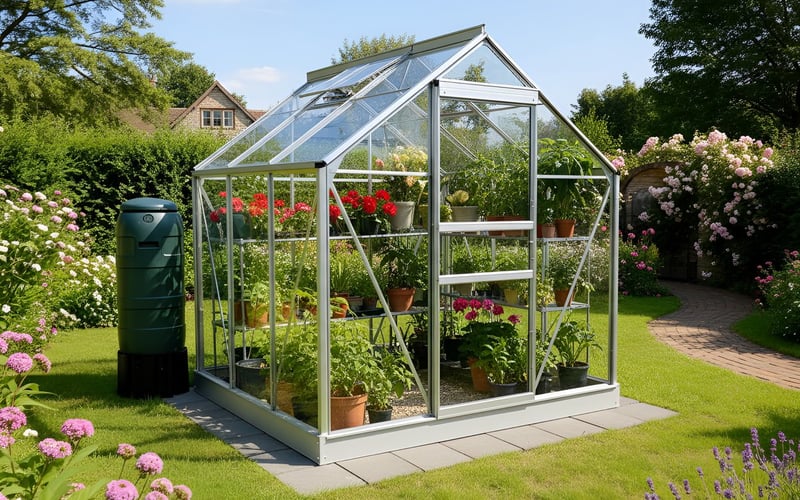
Shop the Vitavia Venus 6x6 Greenhouse →
The Vitavia Venus 6x6 at £459 is the minimum viable greenhouse for courgettes. You'll fit two plants with room to move around them. If you want courgettes alongside tomatoes and peppers, step up to the 6x10 or larger. Our common greenhouse mistakes guide covers overcrowding - the most frequent error we see with greenhouse vegetables.
Not sure which size suits your garden? Our aubergine growing guide covers another space-hungry crop that pairs well with courgettes in a larger greenhouse.
|
Matt's pick for growing courgettesBest For: Courgettes alongside tomatoes, peppers, and cucumbers in one greenhouse Why I Recommend It: The Phoenix 8x10 gives you 7.4m² of growing space with a premium black aluminium frame and toughened glass. Room for 4 courgette plants down one side with tomatoes and peppers on the other. The wider profile means better airflow between plants, which keeps mildew at bay. Price: £1,535 |
Harvesting courgettes and succession planting
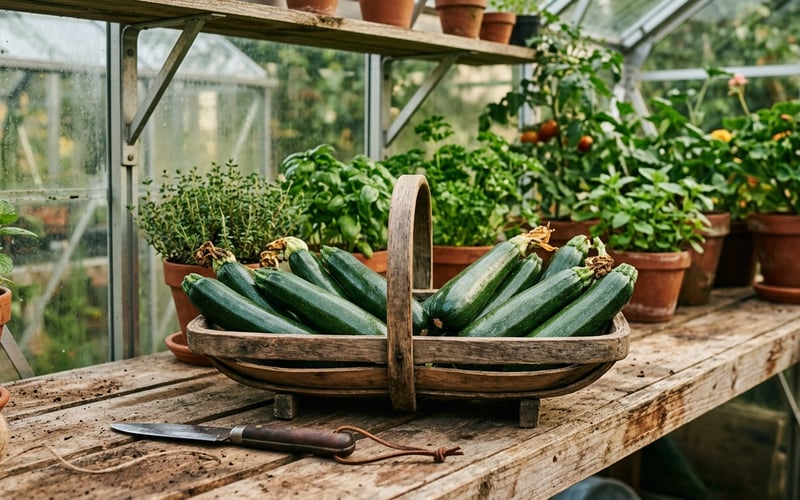
Pick courgettes at 15-20cm for the best flavour and texture. At this size, the skin is thin, the seeds are small, and the flesh is firm. Leave them longer and they turn into marrows - impressive to look at but watery and flavourless.
Harvesting rules:
- Check plants every 2-3 days in peak season. Courgettes grow fast in greenhouse warmth
- Cut the stem with a sharp knife 2cm above the fruit. Don't twist or pull
- Pick every fruit once it reaches 15cm, even if you don't need it. Leaving mature fruits on the plant signals it to stop producing
- Expect 15-20 fruits per plant across the season from a well-managed greenhouse plant
Succession planting: Sow a second batch of seeds in late June for planting out in July. These late plants crop from September into October, extending your harvest by 4-6 weeks. In a heated greenhouse, you can push the season even further.
The courgette flowers themselves are edible - stuff them with ricotta and herbs, then bake or deep-fry. Male flowers are best for eating since picking them doesn't reduce your fruit harvest (you only need one male flower to pollinate several females).
Companion planting for greenhouse courgettes
Certain plants grown alongside courgettes improve pollination, deter pests, or make better use of available space.
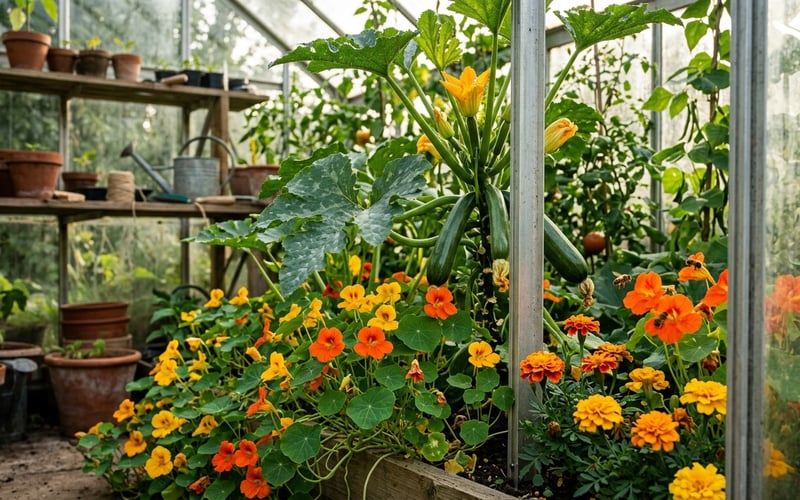
- Nasturtiums: Plant in pots nearby. They attract aphids away from courgettes (sacrificial trap crop) and bring pollinators into the greenhouse
- Basil: Grow on staging above the courgettes. The strong scent deters whitefly and aphids
- Marigolds (French): The roots exude chemicals that deter soil-dwelling nematodes. Plant one per grow bag alongside the courgette
- Beans: Fix nitrogen in the soil. Plant climbing beans on the opposite side of the greenhouse to add nitrogen that courgettes can access
Avoid planting courgettes near: potatoes (share blight-family diseases), fennel (inhibits growth of most vegetables), and other cucurbits like melons or cucumbers (compete for the same pollinators and share diseases).
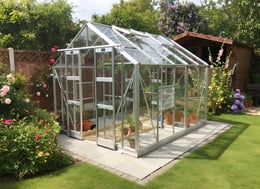
Matt's Pick for Growing Courgettes
Best For: growers who want room for sprawling courgettes alongside other crops.
Why I Recommend It: Courgettes take up space fast. The Belmont 8x10 gives you a proper run of border and staging, so a couple of plants will not crowd out your tomatoes. The Elite frame is heavy-gauge aluminium that lasts decades.
Price: £1,099
Frequently asked questions
Can you grow courgettes in a greenhouse?
Yes, greenhouses are excellent for growing courgettes in the UK. The warmth and shelter give you a 3-4 week head start over outdoor sowing and extend the harvest into October. The main challenges are space (each plant needs 1m²), pollination (hand-pollinate or leave the door open for bees), and ventilation (courgettes push humidity high, encouraging mildew). A 6x8 greenhouse fits 2-3 plants comfortably.
When should I plant courgettes in a greenhouse?
Sow courgette seeds indoors in late March to mid-April at 18-21°C. Plant seedlings into their final greenhouse positions in mid-May, once night temperatures stay reliably above 10°C. In southern England, this is typically mid-May. In northern England and Scotland, wait until late May or early June. A soil thermometer helps you judge the right time.
How many courgette plants can I fit in a greenhouse?
Allow 1 square metre per courgette plant, including path access. A 6x6 greenhouse fits 2 plants maximum. A 6x8 fits 2-3. A 6x10 fits 3-4 with room for other crops alongside. An 8x10 greenhouse gives you space for 4-6 plants with a full crop rotation. Overcrowding reduces airflow and increases disease pressure.
Why are my greenhouse courgettes not fruiting?
Poor pollination is the most common cause of courgettes not setting fruit. In an enclosed greenhouse, bees can't reach the flowers. Hand-pollinate by rubbing pollen from male flowers (thin stems, no swelling behind petals) directly onto the stigma of female flowers (small fruit visible behind petals). Do this every morning during flowering. Other causes: temperatures above 30°C (causes flower drop), overwatering, or nitrogen-heavy feeding that encourages leaves over fruit.
Do courgettes need full sun in a greenhouse?
Yes, courgettes need at least 6 hours of direct sunlight per day. Position them on the sunniest side of the greenhouse, away from shade cast by staging or taller plants. South-facing greenhouses are ideal. In a north-facing greenhouse, courgettes will grow but produce fewer fruits. Avoid shading from adjacent buildings, fences, or trees.
What is the best courgette variety for a greenhouse?
'Defender' F1 is the best all-round courgette variety for greenhouse growing. It carries cucumber mosaic virus resistance, tolerates powdery mildew well, and produces 15-20 fruits per plant. For small greenhouses, choose 'Patio Star' F1 which has a more compact habit. For flavour, 'Costata Romanesco' is the gourmet choice with its nutty, firm flesh.