Lean-To Greenhouse Guide: Buying, Positioning and What to Grow
Choosing a lean-to greenhouse starts with the wall and the space around it. Measure the available length, projection and fixing height, then check sunlight, access and the base. This guide helps you work through those practical decisions. The model examples show different layouts, while the main range page lets you compare current sizes, glazing choices and prices.
Looking for models and prices?
Browse our full range of lean-to greenhouses for the current selection. Use this guide to check which type will suit your wall and growing plans.
Key takeaways
- Use the model's dimension drawing, not its nominal size, to plan the base and wall space.
- Check sunlight through the day. A convenient wall is not always the best growing position.
- Leave room for the door, staging, watering and plants at their mature size.
- A sheltered wall does not make an unheated greenhouse frost-free.
- Confirm wall suitability and planning requirements before ordering.
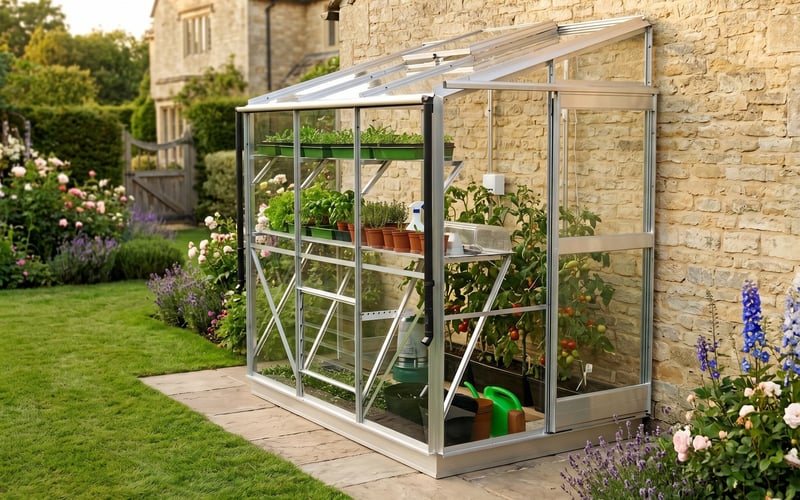
View the Elite Windsor 4x6 with 3mm horticultural glazing: £479
Installer's Note
Check the whole fixing area, not just the ground. Windows, pipes, gutters and roof overhangs can clash with the frame. Send photographs and measurements if anything is unclear before you order. A suitable wall and correctly prepared base matter more than squeezing in the largest nominal size.
How much wall and floor space do you need?
Measure along the wall, out into the garden and up to the fixing height. Product names use nominal sizes; the actual frame dimensions can be larger. Compare the drawing with your space before preparing a base.
Mark the outline on the ground. Add the door opening, a comfortable working route and the pots or staging you want. A plant that fits in a small pot in April may block access by August.
A shallow growhouse can suit trays and small pots tended from outside. A walk-in model gives you working space inside. Neither is automatically better: decide how you will reach and care for the plants.
Which wall and position will work?
Choose by the sunlight that actually reaches the site. A south-facing wall can provide plenty of light, but may need careful summer ventilation and shading. East-facing positions receive morning sun and can suit some gardens. Check shadows from buildings, fences and trees.
A heavily shaded north-facing wall offers fewer options for sun-loving crops. It may still suit a limited range of shade-tolerant plants. Decide what you want to grow before accepting a shaded position.
Masonry can store daytime warmth, but the benefit varies with sunshine, wall construction and weather. There is no guaranteed overnight temperature advantage. A lean-to can still freeze without heat. Our greenhouse positioning guide explains the wider site checks.
Prefer a timber frame? Our wooden greenhouses include Norhage lean-tos; check each model's wall requirements and dimensions before choosing.
Five model examples to help plan your space
These examples illustrate different footprints and glazing choices. They are not a best-seller ranking or a replacement for the full range. Check the linked specification and dimension drawing for the exact variant before ordering.
Elite Windsor 4x6 with 3mm horticultural glazing
A compact walk-in example with horticultural glazing. Check its actual projection and door position against a narrow patio or side space.
View the Elite Windsor 4x6 with 3mm horticultural glazing: £479
Elite Kensington 6x8 with 3mm toughened glazing
A deeper walk-in example with toughened glazing. Mark out staging and mature plant positions before assuming the extra space will suit your layout.
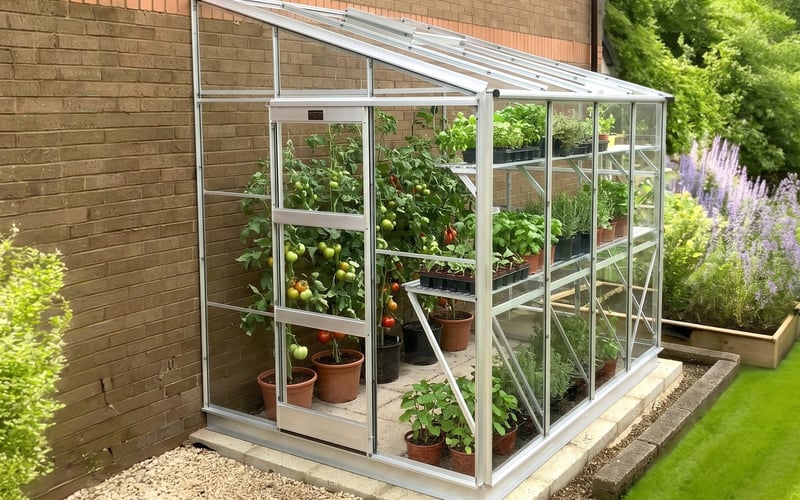
View the Elite Kensington 6x8 with 3mm toughened glazing: £1,379
Elite Titan K800 8x10 with toughened glazing
A larger toughened-glass example for a wider growing area. Check wall height and the full base drawing as carefully as floor space.
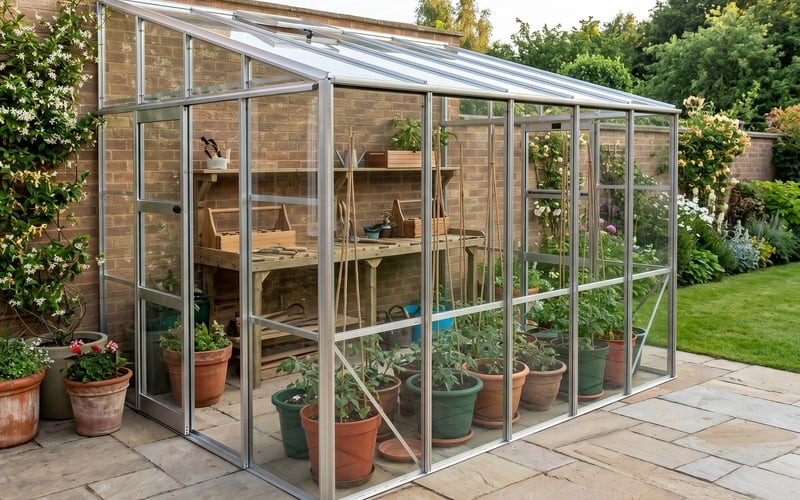
View the Elite Titan K800 8x10 with toughened glazing: £2,329
Vitavia 2x4 Green IDA 900 with horticultural glass
A shallow, green-finished example with horticultural glass. Consider it for smaller pots and trays rather than treating it as a full working room.
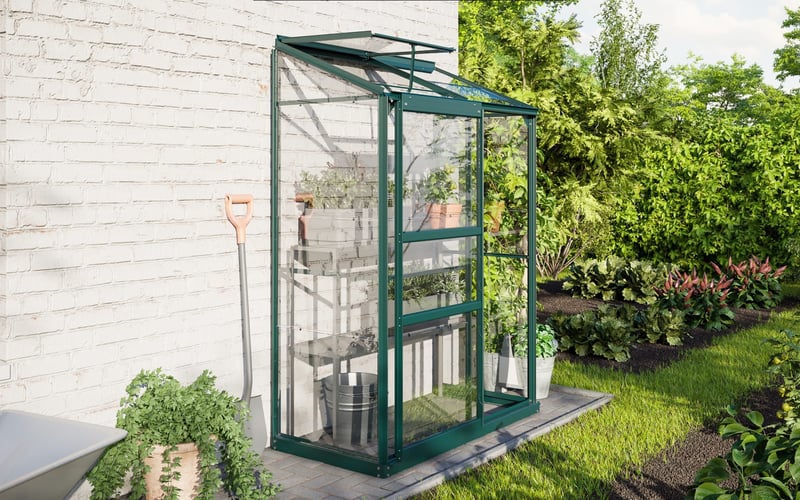
View the Vitavia 2x4 Green IDA 900 with horticultural glass: £289
Vitavia 4x8 Green IDA 3300 with toughened glass
A green-finished example with toughened glass and more floor area than the IDA 900. Compare the door access and usable growing space with your plans.
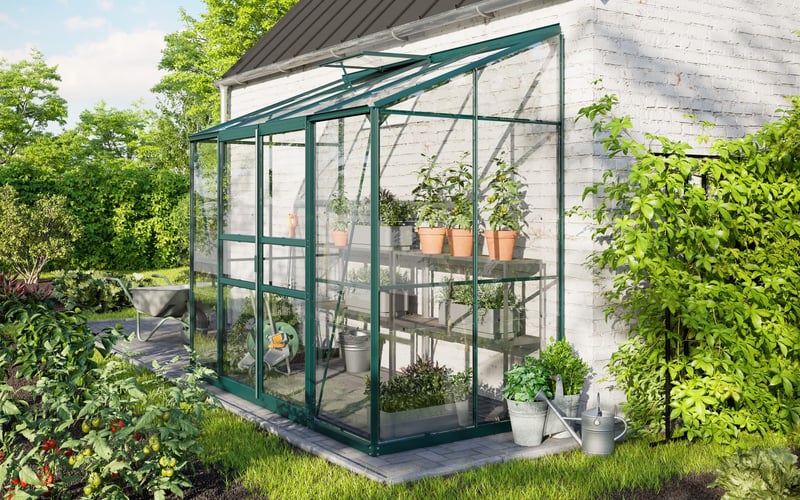
View the Vitavia 4x8 Green IDA 3300 with toughened glass: £594
How should you prepare the wall and base?
The wall must suit the chosen model's fixing requirements. Check for loose masonry, damaged render and obstructions. Do not assume a fence, shed or clad wall can take the fixings and loads. Get model-specific advice where the wall construction is uncertain.
Use a straightedge and level to identify unevenness. There is no universal 10mm allowance for every model. Our uneven-wall fitting guide explains the issues to discuss before installation.
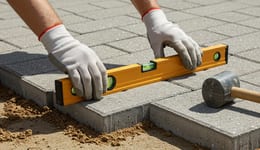
Prepare a firm, level base to the manufacturer's drawing. Check squareness and drainage before the frame arrives. See our greenhouse foundation comparison for the main base options.
Installer's Note: plan services early
Plan water collection and access before filling the greenhouse with plants. If you need power for heating or propagation, ask a qualified electrician about a suitable outdoor supply. Do not plan permanent greenhouse electrics around an ordinary extension lead through a window.
Does a lean-to greenhouse need planning permission?
The answer depends on the property, location and how the structure is attached. Do not assume every lean-to falls under the rules for a detached outbuilding. A structure attached to a house may need assessment under extension or conservatory rules.
Check with your local planning authority before ordering if the position is uncertain. Listed buildings, designated areas and other restrictions need particular care. Rules differ across the UK. The Planning Portal's lean-to advice explains why the structure's use and form matter.
What can you grow in the space?
Match crops to the light, height and warmth available. Tomatoes and cucumbers need room for mature growth and easy watering. Salads and herbs can suit smaller growing areas, with the choice depending on light and season.
Plan ventilation and crop spacing rather than packing every surface with pots. A wall blocks light from one side, so keep tall plants from shading everything else. Our ventilation guide covers summer temperature control.
For overwintering, check each plant's minimum temperature. Citrus and pelargoniums are not guaranteed to survive an unheated lean-to. Use a thermometer and suitable protection. The heating cost guide helps with planning any supplementary heat.
Before you choose a model
- Record the clear wall length, projection and fixing height.
- Check where doors open and how you will reach plants.
- Confirm the wall and base meet the model's instructions.
- Compare glazing and any optional base or accessories.
- Resolve planning and electrical questions before installation.
Once those checks are clear, compare lean-to greenhouse models and current prices on our main range page.
Frequently asked questions
Which measurements should I take before ordering?
Measure wall length, available projection and clear fixing height. Check these against the exact model drawing. Allow for obstructions, the door and working access.
Does a lean-to need a south-facing wall?
No, but its actual sunlight must suit the plants you want. Check shading throughout the day. A sunny position needs ventilation; a shaded one limits crop choice.
Will the wall keep my greenhouse frost-free?
No, an unheated lean-to can still freeze. Stored wall warmth varies with the site and weather. Protect tender plants according to their needs.
Can I fix a lean-to to my shed or fence?
Only use a supporting structure approved for the chosen model. Ordinary fences and shed cladding should not be assumed suitable. Ask about the actual construction before ordering.
Where can I compare the full lean-to range?
Use our main lean-to greenhouses collection for current models and prices. The examples above explain practical differences. The collection provides the wider choice of sizes and glazing options.