Growing Vegetables in a Greenhouse All Year Round
A UK greenhouse produces crops in every month of the year. Lettuce and salad leaves grow from February to November without heating. Tomatoes crop from June to October. Winter salads like lamb's lettuce and rocket grow through December with no heat needed. The seasonal planting table below gives exact sowing dates, crop varieties, and key tasks for each quarter.
Key Takeaways
- Year-round harvests are realistic: Pick fresh produce in all 12 months, even in an unheated greenhouse.
- Size matters: A 6×8ft greenhouse is the minimum for year-round growing. An 8×10ft gives you room for summer crops and a dedicated winter salad bed.
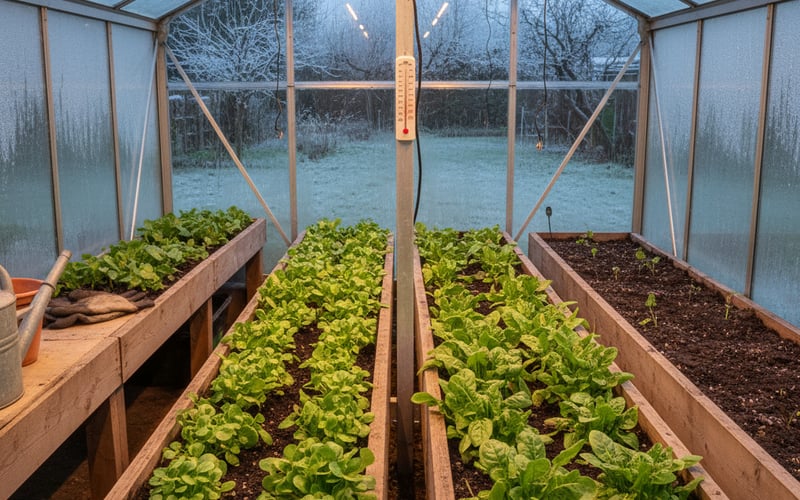
- Winter growing needs no heating: Hardy salads (lamb's lettuce, winter purslane, rocket) tolerate temperatures down to -5°C under glass.
- Crop rotation prevents soil problems: Swap crop families between beds each year to stop disease building up in greenhouse soil.
- Ventilation is as important as heating: Poor airflow causes more crop losses than cold. Open vents daily from March to October.
- Succession sowing fills gaps: Sow a short row of salad leaves every 3 weeks from February for a continuous supply.
Installer's Note
I have fitted over 500 greenhouses across the UK. The ones that stay productive all year share three things. Good ventilation, at least 6×8ft of floor space, and planned sowing dates. I regularly visit customers in January who are picking lamb's lettuce and mizuna from unheated greenhouses. It is not difficult. You just need to know which crops suit each season.
Why grow vegetables in a greenhouse year-round?
A greenhouse extends the UK growing season by 8 to 12 weeks at each end. That means you can sow in February rather than April and harvest into November rather than September. For many crops the difference is dramatic.
Consider the economics. A family of four spends roughly £60 per month on salad, tomatoes, cucumbers, and herbs. A productive greenhouse cuts that bill by half. Over a year, that is £360 back in your pocket. The beginners guide to greenhouse growing covers the basics if you are just starting out.
Protection from wind, rain, and hail matters more than most people realise. Outdoor tomatoes in the UK average 4kg per plant. Greenhouse tomatoes average 8kg per plant. The difference comes down to warmth, shelter, and a longer fruiting window.
You also gain access to crops that rarely succeed outdoors in the UK. Aubergines, peppers, chillies, and melons all need sustained warmth that only a greenhouse provides. These crops thrive from May to October under glass with no supplementary heating.
Choosing a greenhouse for year-round growing
Size is the most important decision. A 6×8ft greenhouse is the minimum for year-round growing. It gives you roughly 4.5m² of growing space. That is enough for six tomato plants in summer and two raised beds of winter salads.
An 8×10ft greenhouse is the ideal size. You get 7.4m² of floor space. That is enough for dedicated summer and winter zones. Grow tomatoes on one side and staging on the other. A winter salad bed fits at the far end.
Glazing type affects heat retention. Toughened glass holds heat better than horticultural glass and is safer if you have children or pets. Polycarbonate panels offer good insulation but reduce light transmission by around 10%. For year-round growing, I recommend toughened glass. Browse our full range of greenhouses to compare sizes and glazing options.
Ventilation is critical. Every greenhouse needs at least one roof vent and one louvre vent. For year-round growing, fit automatic vent openers. They cost around £25 each and react to temperature changes even when you are not there. Without them, a sunny spring day can push temperatures above 35°C and scorch young seedlings.
A potting shed alongside your greenhouse gives you a frost-free workspace for seed sowing. This combination works far better than doing everything inside the greenhouse itself.
| |
| Matt's Pick for Year-Round Growing | |
| Best For | Year-round vegetable growing in a mid-size garden |
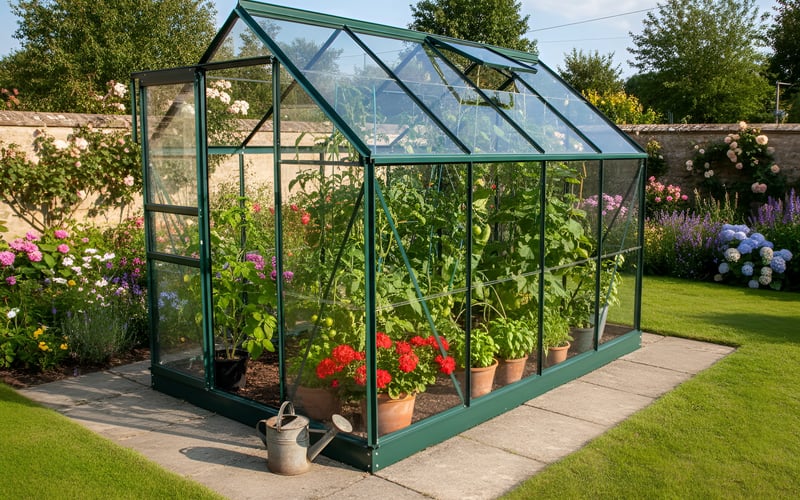
| Why I Recommend It | I have fitted dozens of Venus 5000 greenhouses and they hold heat well through winter. The toughened glass is safer and more insulating than horticultural glass. At 8×6ft you get room for tomatoes, staging, and a winter salad bed. The integral gutter collects rainwater for summer watering. |
| Price | £649 |
| View Vitavia Venus 5000 8x6 Green | |
What to grow each season
The table below gives you specific sowing dates for each quarter. These timings suit most of the UK. If you are in Scotland or northern England, push spring sowing dates back by two weeks.
| Season | Sow Dates | Crops | Key Tasks |
|---|---|---|---|
| Spring (Mar–May) | Tomatoes: mid-March Cucumbers: early April Peppers: late February Salads: every 3 weeks from February |
Tomatoes, peppers, cucumbers, radishes, lettuce, spinach, spring onions, broad beans (started Jan) | Harden off seedlings for outdoor planting. Increase ventilation as temperatures rise. Begin liquid feeding tomatoes once flowers set. |
| Summer (Jun–Aug) | Aubergines: already growing from April sowing French beans: June Autumn salads: late July Kale: July |
Tomatoes, cucumbers, aubergines, chillies, melons, basil, climbing French beans | Ventilate daily. Damp down paths on hot afternoons. Remove tomato side shoots weekly. Harvest regularly to encourage more fruit. |
| Autumn (Sep–Nov) | Winter lettuce: September Pak choi: September Lamb's lettuce: October Spinach: September |
Winter lettuce, pak choi, lamb's lettuce, rocket, chard, perpetual spinach, coriander | Clear spent summer crops. Clean glass inside and out. Insulate with bubble wrap from late October. Reduce watering frequency. |
| Winter (Dec–Feb) | Early broad beans: January Early peas: February First lettuce: late February Onion sets: February |
Lamb's lettuce, winter purslane, mizuna, mibuna, claytonia, microgreens, forced rhubarb | Check insulation. Water sparingly on mild mornings only. Start planning spring sowings. Order seeds in January. |
The trick to a productive greenhouse is succession sowing. Sow a short row of salad leaves every three weeks from late February. By the time you finish one batch, the next is ready. This gives you fresh salad for ten months of the year without any heating.
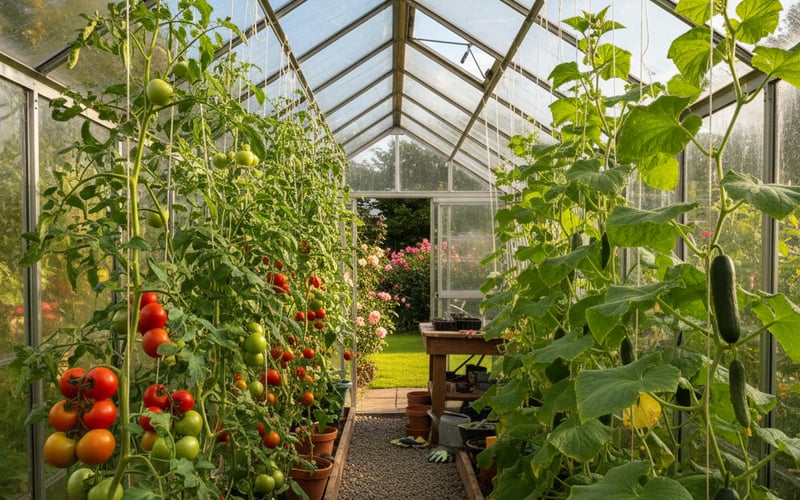
Temperature control through the year
Temperature management is the single biggest factor in year-round greenhouse success. Get it right and crops thrive. Get it wrong and you lose plants to heat stress in summer or frost damage in winter.
| Crop Type | Ideal Day Temp | Ideal Night Temp | Minimum Tolerated |
|---|---|---|---|
| Cool-season crops (lettuce, spinach, peas) | 15–20°C | 10–12°C | -5°C (with fleece) |
| Warm-season crops (tomatoes, peppers, cucumbers) | 21–27°C | 15–18°C | 10°C |
| Hardy winter salads (lamb's lettuce, mizuna) | 8–15°C | 2–8°C | -8°C |
Winter (December to February): An unheated greenhouse stays 5–8°C warmer than outside on a still night. That is enough for hardy salads. For tender crops in winter, a 2kW electric heater set to 5°C does the job. Expect to spend around £40–£60 per month on electricity. Read our guide to heating your greenhouse for detailed options.
Spring (March to May): This is the danger zone. Temperatures swing from near freezing at night to 30°C on a sunny afternoon. Automatic vent openers are essential. Bubble wrap insulation can stay up until late April. Remove it once night temperatures stay above 5°C consistently.
Summer (June to August): Overheating kills more greenhouse crops than cold ever does. Open all vents and doors on warm days. Damp down paths with water on hot afternoons to raise humidity and lower air temperature. Shade paint or temporary shade netting reduces temperatures by 5–10°C.
Autumn (September to November): Close vents earlier in the afternoon to trap residual warmth. Start insulating your greenhouse with bubble wrap from late October. Clean the glass inside and out to maximise light levels as days shorten.
Matt's Tip: The Two-Zone Trick
In larger greenhouses, I divide the space into a heated zone and an unheated zone using a bubble wrap curtain. The heated end stays at 5°C for tender overwintering plants. The unheated end grows hardy winter salads that handle frost down to -5°C. This halves your heating bill while keeping both zones productive. I use this setup in my own 8×10ft greenhouse every winter.
Pest control through the seasons
A warm, sheltered greenhouse is perfect for plants. Unfortunately, pests agree. The good news is that most greenhouse pests are easy to manage if you catch them early and act fast.
| Pest | Peak Season | Signs | Organic Control |
|---|---|---|---|
| Aphids (greenfly, blackfly) | April–September | Curled leaves, sticky honeydew on foliage | Squash small colonies by hand. Introduce ladybird larvae. Spray with diluted soft soap. |
| Whitefly | May–October | Tiny white flies under leaves, sooty mould | Yellow sticky traps near plant tops. Introduce Encarsia formosa parasitic wasps in May. |
| Red spider mite | June–September | Fine webbing, pale stippled leaves | Mist leaves regularly. Raise humidity by damping down. Introduce Phytoseiulus predatory mites. |
| Slugs and snails | March–November | Irregular holes in leaves, slime trails | Copper tape around staging legs. Beer traps sunk into soil. Night-time torch patrols. |
| Vine weevil | September–May (larvae) | Notched leaf edges, wilting from root damage | Apply nematode biological control (Steinernema kraussei) in September. Check compost for white C-shaped grubs. |
Prevention beats cure every time. Check plants weekly. Remove dead leaves and spent crops promptly. Keep the area around the greenhouse clear of weeds and debris where pests overwinter. A thorough end-of-season clean makes a real difference. Our guide to cleaning your greenhouse covers the full process.
Soil health and crop rotation
Greenhouse soil works harder than outdoor soil. You are cropping the same small area intensively, year after year. Without proper management, nutrients deplete and soil-borne diseases build up.
Follow a simple three-year rotation. Year one: fruiting crops (tomatoes, peppers, cucumbers). Year two: leafy crops (salads, spinach, chard). Year three: root crops and legumes (carrots, broad beans, peas). Then repeat. This breaks pest and disease cycles.
Each autumn, remove the top 5cm of soil from your greenhouse beds and replace it with fresh compost. This sounds drastic but it removes overwintering pest eggs and disease spores. Top-dress with well-rotted farmyard manure in early spring. Fork it in lightly before planting.
If you grow in grow bags or large containers instead of ground beds, the rotation problem disappears. Start with fresh compost each season. Grow bags cost around £3–£5 each and support two tomato plants or three pepper plants.
Test your soil pH every spring. Most greenhouse vegetables prefer pH 6.0–7.0. Greenhouse soil tends to become more acidic over time from repeated watering and feeding. A handful of garden lime per square metre corrects this if needed.
Frequently asked questions
Can I grow vegetables all year round in a greenhouse?
Yes, a UK greenhouse produces harvestable crops in all 12 months. Hardy salads like lamb's lettuce, mizuna, and winter purslane grow through December and January without heating. Summer crops (tomatoes, cucumbers, peppers) run from May to October. Succession sowing of salad leaves fills the gaps between seasons.
What vegetables grow best in a greenhouse?
Tomatoes, cucumbers, and peppers are the top three greenhouse crops. They produce far higher yields under glass than outdoors in the UK. Lettuce and salad leaves are the easiest year-round option. Aubergines, chillies, and melons are worth growing if you have the space and warmth during summer.
Can you grow tomatoes all year round in a greenhouse?
No, UK greenhouses lack the light levels for winter tomato production. Tomatoes need 8–10 hours of strong sunlight daily. From November to February, UK daylight is too weak and too short. You would need supplementary grow lights and heating, which costs around £80–£100 per month. It is far more practical to grow tomatoes from March to October and switch to winter salads.
What can I grow in an unheated greenhouse in winter?
Lamb's lettuce, rocket, mizuna, claytonia, and winter purslane all grow unheated. These crops tolerate temperatures down to -5°C under glass. Sow them in September and October for winter harvests. Spring cabbage, overwintering broad beans, and garlic also do well in an unheated greenhouse through winter.
How do I keep my greenhouse productive in winter?
Sow winter-hardy salad varieties in September and October. Clean the glass to maximise light. Insulate with bubble wrap from late October. Water sparingly, only on mild mornings. Use horticultural fleece as a second layer of protection on the coldest nights. Even without heating, these steps keep a greenhouse producing food through the darkest months.
Is it cheaper to grow your own vegetables in a greenhouse?
Yes, a productive greenhouse saves £200–£400 per year on vegetables. Tomatoes alone yield 30–50kg from a 6×8ft greenhouse. That is worth roughly £100–£175 at supermarket prices. Salad leaves, herbs, and cucumbers add further savings. The main costs are seeds (£20–£30 per year), compost (£30–£50), and heating if you choose to heat through winter.