Greenhouse Seed Sowing: UK Month-by-Month Guide
Greenhouse seed sowing gives you a sheltered start, but the right date depends on the crop and growing conditions. Hardy vegetables can start in an unheated greenhouse when conditions suit them. Tender crops need warmth for germination and a bright, protected place afterwards. Use this month-by-month calendar as a starting point, then check your seed packet and local weather before sowing.
Key Takeaways
- Early tender sowings need warmth and light. A heated propagator alone does not provide a suitable place to grow seedlings on.
- Hardy crops can start earlier under cover. Check conditions rather than assuming every greenhouse is ready in March.
- Check compost temperature. A sunny afternoon air reading can hide a cold seed tray.
- Make room for potting on. Trays take up much more space once seedlings move into individual pots.
- Bottom heat can help warmth-loving seeds germinate. Follow the crop instructions rather than one universal setting.
- Harden off plants gradually before outdoor planting. Tender plants still need protection from frost.
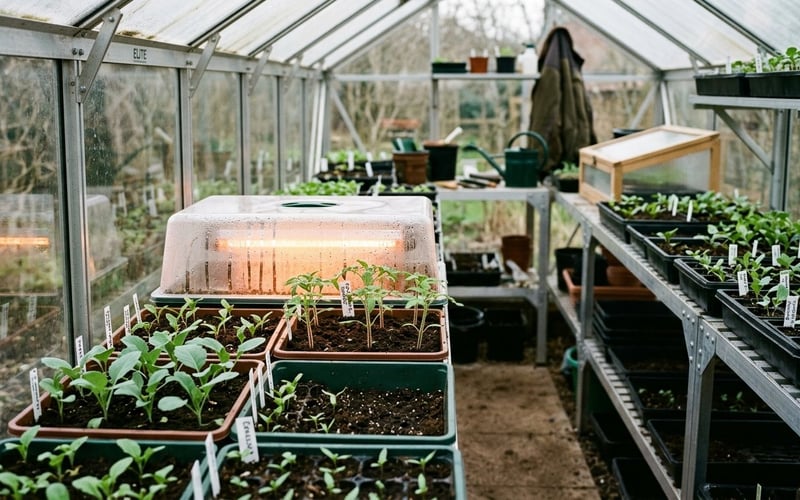
Expert Tip
Think one step beyond germination. Where will the seedlings live once they need more space and light? If that space is still cold, waiting a few weeks can be the better choice. A crowded early batch is not a head start if it becomes weak and stretched.
January: heated propagator only
January sowing is optional. Slow-growing chillies may benefit from an early start if you can provide suitable warmth and good light. An unheated greenhouse alone is not enough for tender seedlings.
Check the variety packet for germination temperature and timing. Keep seedlings protected after they emerge. For many home growers, later tomato sowing is easier than managing large plants through winter.
Running costs depend on wattage, hours of heating and your tariff. Our greenhouse heating cost guide explains how to estimate them.
February: start of the main season
February can suit peppers and aubergines with a heated propagator and a bright growing-on space. Start hardy crops under cover only when their conditions are suitable. Bubble wrap slows heat loss but does not make an unheated greenhouse frost-free.
Once seedlings emerge, improve ventilation and remove the propagator cover as appropriate for the crop. Do not leave a crowded tray sealed until most plants have true leaves. Read our greenhouse insulation guide for practical protection.
March: unheated greenhouse opens
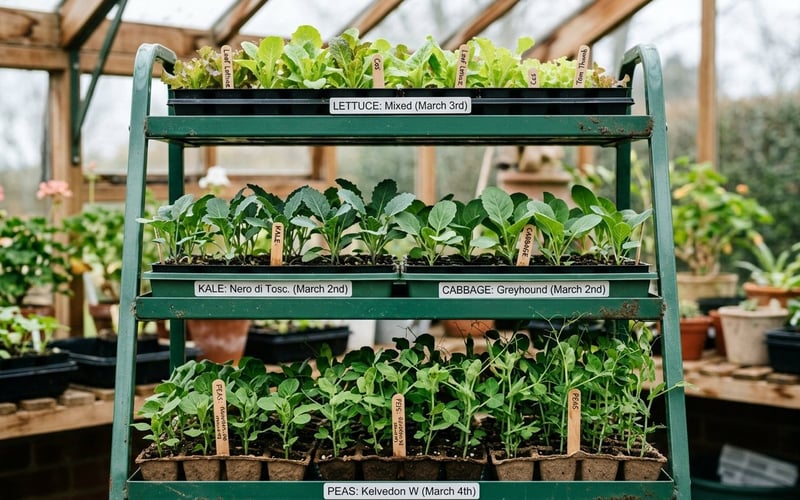
March often offers better light for sowing. Lettuce, brassicas, peas and broad beans are useful hardy candidates. Follow packet timings and check the actual compost conditions; a cold spring may mean waiting.
Pot on earlier seedlings when they need more root space. Keep tender plants warm enough at night after taking them off propagation heat. Moving them onto an unheated bench too soon can check their growth.
April: transition to outdoor hardening
April is a useful time to begin hardening off hardy plants. Expose them gradually to outdoor conditions. Keep tender plants protected until frost risk has passed and nights suit the crop.
Sow courgettes, squashes and beans close enough to planting time that they do not outgrow their pots. Use individual pots or suitable modules. Tender annuals still need the warmth stated on the packet.
May: last indoor sowings, first plantings out
Use local frost forecasts rather than a fixed national planting date. Tender plants may need protection well into May or later. Harden them off before moving outdoors.
Final seed sowing for: sweetcorn (sow direct into final pots), cucumbers and melons for greenhouse borders, late lettuce, and French beans for succession. First tomatoes planted in ring culture or grow bags. See our greenhouse tomato guide for the full growing calendar.
June to August: succession sowing only
Peak summer greenhouse use shifts from propagation to fruiting crops. Seed sowing drops to succession work: salad leaves every 2-3 weeks, coriander, dwarf French beans, and autumn/winter brassicas started in July for October planting.
Watch for overheating in summer seed trays. Lettuce and other cool-season crops may germinate poorly in hot compost. A bright, cooler spot or shaded coldframe can be more useful than a heated propagator.
September to December: winter sowings
Late summer and early autumn are useful for sowing winter salads. Choose winter varieties and give them time to establish before light levels fall. Timing depends on your region and the variety.
Suitable autumn varieties of broad beans and hardy peas can be started under cover. In November and December, growth slows sharply. Focus on established plants, clean trays and next season rather than forcing an unnecessary sowing.
Expert Tip: measure the compost
A compost thermometer helps when a tray feels cold despite warm greenhouse air. The Vitavia Soil Thermometer costs £34. Compare the reading with the packet instructions rather than aiming for the same temperature for every crop.
Monthly sowing reference table
| Period | Possible sowings | Before you start |
|---|---|---|
| January | Slow-growing chillies, with suitable heat and light | Have a warm growing-on space ready |
| February | Peppers and aubergines; suitable hardy crops | Check packet timings and compost temperature |
| March | Tomatoes; lettuce, brassicas, peas and broad beans | Protect tender seedlings at night |
| April | Courgettes, squashes, beans and tender annuals | Match sowing to the intended planting date |
| May | Cucumbers and succession salads | Wait for suitable nights before planting tender crops |
| June–August | Succession salads and autumn crops | Avoid overheating seed trays |
| September–October | Winter salads and suitable autumn beans or peas | Sow early enough for establishment |
| November–December | Only crops suited to your protected conditions | Expect slow growth in low light |
Matt's Pick: the kit that transforms seed sowing capacity
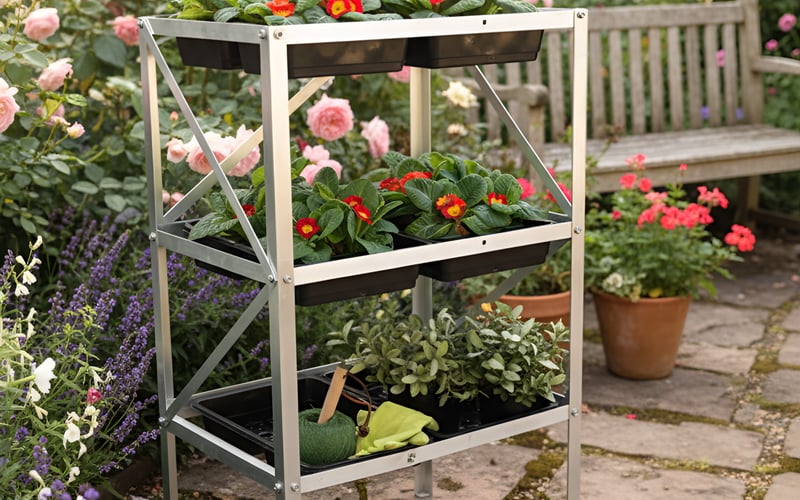
View the Elite 3 Tier 6 Seed Tray Frame
| Seed-tray storage | Practical point |
|---|---|
| Elite 3 Tier 6 Seed Tray Frame | Holds six seed trays. Check shelf clearance and light as seedlings grow. |
| Use | Organise trays without blocking access or placing seedlings in deep shade. |
| Price | £98 |
| Product | View the Elite 3 Tier 6 Seed Tray Frame |
How greenhouse sowing compares to windowsill and outdoor
| Sowing place | Useful for | Watch out for |
|---|---|---|
| Bright indoor windowsill | Small early batches | Low light and cold overnight glass |
| Unheated greenhouse | Hardy crops when conditions suit | Frost and daytime overheating |
| Heated propagator | Seeds needing warmth | Seedlings need growing-on space afterwards |
| Outdoors | Crops suited to direct sowing | Weather, soil conditions and pests |
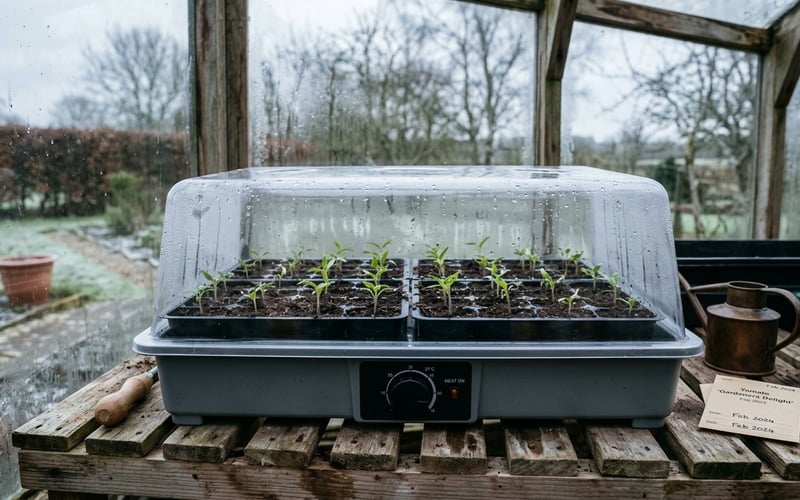
Follow the seed packet for sowing depth, temperature and any special treatment.
Frequently asked questions
When can I start sowing seeds in an unheated greenhouse?
Start hardy crops when local conditions and the seed instructions are suitable. Late winter or spring can work, depending on the crop. An unheated greenhouse can still freeze at night.
What soil temperature do seeds need to germinate?
Germination temperatures vary by crop and variety. Use the seed packet instructions and measure the compost. Warmth-loving crops and cool-season salads do not share one ideal setting.
Do I need a propagator or just a heated greenhouse?
A heated propagator warms a smaller space than a greenhouse. It can be useful for tender seeds. You still need suitable light and temperature for the seedlings afterwards. Running costs depend on its power use and your tariff.
Can I sow tomatoes in January in a greenhouse?
Yes, if you can provide warmth and enough light afterwards. A propagator may start the seeds, but the plants will need protected growing-on space. Later sowing is often simpler at home.
How do I harden off greenhouse seedlings?
Introduce outdoor conditions gradually, usually over about two weeks. Start with sheltered daytime spells and bring tender plants back under cover at night. Extend exposure as conditions allow. Hardening off does not make tender plants frost-proof.
What is the biggest seed sowing mistake UK growers make?
Sowing before you have suitable conditions for the seedlings is a common mistake. Check warmth, light and potting-on space before opening the packet. Waiting is often better than nursing a weak early batch.
How many seed trays fit in a 6x8 greenhouse?
Capacity depends on the staging, tray dimensions and space needed for access. Measure your shelves before buying. Leave room between plants and allow for larger pots after pricking out.