How Does a Greenhouse Work? Explained
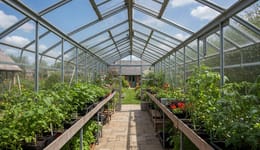
A greenhouse traps sunlight through glass or polycarbonate panels to create a warm growing environment. Inside temperatures typically sit 10-15°C above outside air on a sunny day. This extends the UK growing season by 4-6 weeks at each end. Heat-loving crops like tomatoes, peppers, and aubergines fruit reliably inside. Ventilation is the single most important factor. Without adequate roof vents, internal temperatures can exceed 40°C in summer and kill plants within hours.
Key Takeaways
- The greenhouse effect: Sunlight passes through glass and converts to infrared heat on contact with surfaces inside. The glass traps that heat.
- Temperature gain: An unheated greenhouse sits 10-15°C above outside air on a sunny day and 2-5°C above at night.
- Ventilation is critical: Every greenhouse needs at least one roof vent per 2m of length. Auto vent openers cost under £25 and prevent overheating.
- Thermal mass stores heat: Water barrels, stone paths, and soil absorb heat during the day and release it at night. Position them along the back wall.
- Season extension: Start seeds 4-6 weeks earlier and harvest 4-6 weeks later than outdoors. A heated greenhouse grows crops year-round.
Installer's Note
We have fitted over 500 greenhouses across the UK since 2012. The most common problem we see is poor ventilation. Customers buy a greenhouse, fill it with plants, and wonder why everything wilts by July. A greenhouse without enough vents is an oven. We always recommend at least two roof vents and one louvre vent as a minimum for a 6x8 structure. Get this right and everything else follows.
What is a greenhouse?
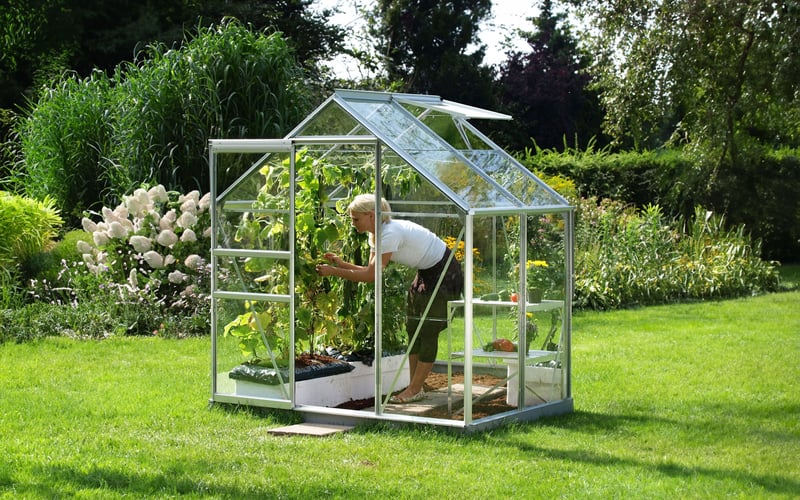
A greenhouse is a structure with walls and roof made from glass or polycarbonate. It creates a controlled growing space that stays warmer than the outside air. The transparent panels let sunlight in and trap the heat it generates.
UK gardeners use greenhouses to grow crops that need warmer conditions than our climate provides. Tomatoes, peppers, aubergines, cucumbers, and melons all produce reliably inside a greenhouse. They struggle outdoors in most parts of the UK.
Greenhouses also protect plants from wind, heavy rain, and frost. This makes them useful year-round. In spring you start seeds early. In summer you grow warm-season crops. In autumn you extend the harvest. In winter you overwinter tender plants and force early bulbs.
How does the greenhouse effect work?
The greenhouse effect is straightforward. Sunlight passes through the glass panels and hits the surfaces inside. Soil, pots, staging, and paths absorb this light energy and convert it to infrared radiation (heat).
Here is the key part. Glass is transparent to visible light but blocks most infrared radiation. So the heat cannot escape back through the glass the way it came in. It builds up inside the structure.
Without wind to carry this heat away, the enclosed space warms up quickly. On a sunny February morning we regularly measure 20°C inside a greenhouse when it is only 5°C outside. That 15°C difference is enough to germinate most seeds.
The glazing material matters. Glass transmits around 90% of light and traps heat well. Polycarbonate (twin-wall) transmits less light but insulates better because of the air gap between layers. We compare both glazing types in detail in our glass vs polycarbonate guide.

|
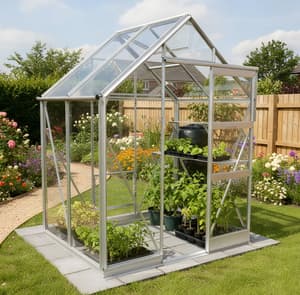
Matt's Pick for beginnersBest For: First-time greenhouse owners wanting a reliable 8x6 growing space Why I Recommend It: I have fitted hundreds of Venus 5000s. The 8x6 is the sweet spot for most gardens - big enough for a serious tomato crop but small enough to heat affordably in winter. Price: £509 |
Temperature management through the day
A greenhouse follows a predictable temperature cycle every day. Understanding this cycle is the foundation of successful growing.
Morning (6am-10am): The sun hits the glass and temperatures climb quickly. A cold greenhouse at dawn can reach 18-20°C within two hours of direct sun. This is when seeds germinate and young plants put on the most growth.
Midday (10am-2pm): Temperatures peak. In summer an unventilated greenhouse can hit 40-50°C. This kills most plants. Open roof vents and the door by mid-morning on warm days. Target an internal temperature of 25-28°C for most crops.
Afternoon (2pm-6pm): Temperatures start to drop as the sun moves. Close vents gradually from late afternoon. You want to lock some warmth inside before the evening.
Night: The stored heat radiates from surfaces inside the greenhouse. An unheated greenhouse stays 2-5°C above outside air overnight. Materials with high thermal mass (water, stone, soil) release heat slowly and keep temperatures more stable.
What are greenhouses used for in the UK?
The UK growing season runs from roughly late April to mid-September outdoors. A greenhouse extends that to March through November without any heating. Add a small heater and you can grow year-round.
The main uses are:
- Starting seeds early: Sow tomatoes, peppers, and courgettes in February or March instead of April.
- Growing heat-loving crops: Tomatoes, cucumbers, aubergines, and chillies produce far better under glass. See our guide to growing tomatoes in a greenhouse.
- Extending the autumn harvest: French beans and salad leaves keep producing well into November.
- Overwintering tender plants: Fuchsias, pelargoniums, and citrus trees survive behind glass when frost would kill them outdoors.
- Propagation: Take cuttings and grow them on in a warm, sheltered environment all year.
Ventilation: the most important factor
Every greenhouse problem we see on site traces back to poor ventilation. Overheating, fungal disease, leggy growth, and blossom drop all result from inadequate airflow.
There are three types of greenhouse ventilation:
Roof vents: Hot air rises, so roof vents are the most effective. A 6x8 greenhouse needs at least two. They release the hottest air from the ridge and draw cooler air in through the door or louvres below.
Louvre vents: Fitted low in the side wall, these let cooler air enter at plant level. The combination of low intake and high exhaust creates natural convection. One louvre vent per side wall is the minimum.
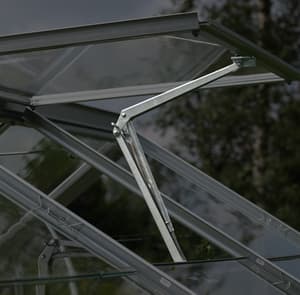
Auto vent openers: These wax-cylinder devices open vents automatically when the temperature rises above a set point (usually 15-20°C). They close again as it cools. They need no power and cost under £25 each. We fit them on every greenhouse we install.
Matt's Tip: Auto Vent Openers Save Crops
I have lost count of the customers who killed a greenhouse full of tomatoes. They forgot to open the vents before work. One sunny morning is all it takes. Auto vent openers are the best £25 you will spend on your greenhouse. I fit them as standard on every installation. They react to temperature, not you remembering. On a hot day they open fully within 20 minutes. No wiring, no batteries, no fuss.
Temperature guide by crop
Different plants need different temperatures. This table shows the minimum temperature each crop group needs to grow well.
| Temperature (°C) | Suitable Plants | Growing Notes | Seasonal Tips |
|---|---|---|---|
| 10°C | Lettuce, spinach, kale, Swiss chard | Hardy salads for autumn and winter | Protect with fleece on the coldest nights |
| 15°C | Carrots, peas, brassicas, spring onions | Spring sowing under glass | Good air circulation prevents damping off |
| 20°C | Tomatoes, peppers, aubergines | Core UK greenhouse crops | Water in the morning to reduce humidity |
| 25°C | Cucumbers, melons, squash | Need consistent warmth and moisture | Shade netting helps in peak summer |
| 30°C | Chillies, basil, globe artichokes | Thrive in the hottest greenhouse spots | Mist for humidity and ventilate well |
Types of greenhouse
The right greenhouse depends on your space, budget, and what you want to grow. Here are the main types we sell and fit.
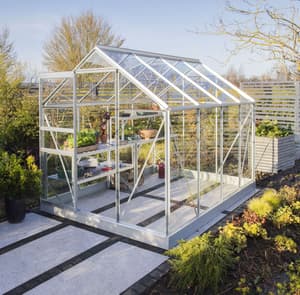
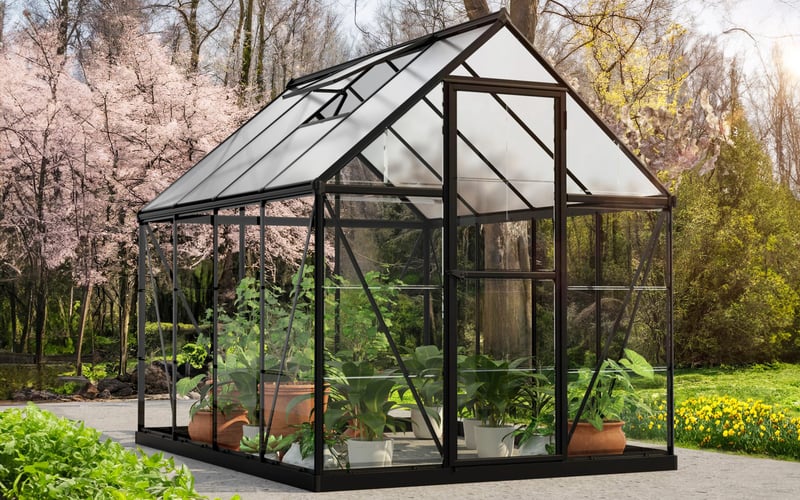
Freestanding greenhouses: The most popular choice. These stand on their own base in the garden. Sizes range from 4x6ft up to 8x14ft and beyond. A 6x8ft model suits most gardeners. Check our greenhouse buying guide for help choosing a size.
Lean-to greenhouses: These attach to a house wall, garage, or boundary wall. A lean-to greenhouse benefits from heat radiating off the building. This keeps it warmer at night and reduces heating costs. Good for smaller gardens where space along a wall is the only option.
Mini greenhouses: Ideal for patios, balconies, and small courtyards. Mini greenhouses stand against a wall and hold 2-4 shelves of seed trays or small pots. Not big enough for tall crops like tomatoes but perfect for starting seeds and growing herbs.
Cold frames: Low-profile structures that sit on the ground. Cold frames are used for hardening off seedlings before planting out. They also extend the salad season through autumn and winter. Think of them as a greenhouse for plants that do not need standing height.
Keeping a greenhouse warm in winter
An unheated greenhouse protects against wind and rain but offers limited frost protection. On a clear, still night, the temperature inside can drop to within 1-2°C of outside air. That is often not enough for tender plants.
Here is how to keep temperatures up without spending a fortune:
Bubble wrap insulation: Line the inside of the glass with bubble wrap insulation. Use the large-bubble horticultural type, not packing bubble wrap. Fix it to the glazing bars with clips. This creates an insulating air gap and can raise the minimum temperature by 2-3°C.
Greenhouse heaters: A small electric greenhouse heater with a thermostat is the most reliable option. A 2kW fan heater keeps a 6x8 greenhouse frost-free and costs roughly £0.50-0.80 per night to run. For off-grid setups, see our guide to heating without electricity.
Thermal mass: Place water-filled containers (painted dark) along the back wall. They absorb heat during the day and release it slowly at night. Six 2-litre bottles filled with water and placed along a shelf make a noticeable difference.
Fleece and thermal screens: Drape horticultural fleece directly over tender plants on the coldest nights. For larger greenhouses, a thermal screen drawn horizontally at gutter height reduces the volume of air you need to heat.
Check that your greenhouse is in good condition before winter. Gaps in glazing, cracked panes, or a poorly sealed door let cold air in. Any heat you add gets wasted. Our guide to wind damage covers how to check seals and replace broken panes.
Frequently asked questions
How do greenhouses stay warm at night?
Greenhouses retain heat through thermal mass and insulation. During the day, soil, water containers, paving, and staging absorb solar energy. After sunset, these materials release stored heat slowly into the air. An unheated greenhouse typically stays 2-5°C above outside air overnight. Adding bubble wrap insulation increases this by another 2-3°C. On very cold nights, a thermostat-controlled heater maintains a safe minimum temperature.
What is the best way to ventilate a greenhouse?
Use a combination of roof vents and low-level louvre vents. Hot air rises and escapes through the roof vents. Cooler air is drawn in through the louvres. This natural convection keeps air moving without fans or power. Open vents in the morning as temperatures rise. Close them gradually in the late afternoon to retain warmth. Auto vent openers handle this automatically for under £25 each.
How do you prevent a greenhouse from overheating?
Open vents early and fit shade netting before summer arrives. A greenhouse can reach 40-50°C on a sunny day with closed vents. Open the door and all vents by mid-morning on warm days. Fit 40-50% shade netting over the roof from May to September. Damp down paths with water in the afternoon to cool the air through evaporation. Auto vent openers are the best insurance against forgetting to open up.
Do greenhouses work in winter?
Yes, greenhouses provide frost protection and extend the growing season into winter. An unheated greenhouse keeps out wind and rain. It holds temperatures a few degrees above outside air. This is enough for hardy salads, overwintering onion sets, and protecting tender plants from the worst frosts. Add a heater and bubble wrap insulation for growing through the coldest months.
What temperature should a greenhouse be?
Target 18-25°C for most common greenhouse crops. Tomatoes and peppers grow best at 20-25°C during the day and above 12°C at night. Salad leaves tolerate 10-15°C. Cucumbers and melons prefer 22-28°C. Use a max-min thermometer to track the daily range. Adjust ventilation and heating based on what you are growing.
Do I need a heater for my greenhouse?
Not always, but a heater extends what you can grow significantly. An unheated greenhouse extends the season by 4-6 weeks at each end of summer. A frost-free greenhouse (kept above 2°C) lets you overwinter tender plants safely. A warm greenhouse (kept above 12°C) allows year-round growing of most crops. A 2kW electric fan heater with a thermostat is the most practical option for most UK gardeners.