Greenhouse Ventilation Guide: Vents, Fans and Preventing Overheating
Ventilate a greenhouse before heat builds up: open suitable roof vents, provide lower air inlets and monitor the temperature where plants grow. Automatic openers help when you are away, but they respond gradually and cannot guarantee a safe maximum. If ventilation alone is insufficient, add suitable shading and check watering. In winter, exchange damp air during milder spells while protecting plants from cold.
Key Takeaways
- Measure the temperature rather than relying on how warm the garden feels.
- Roof vents and lower openings do different jobs.
- An opener must match the vent's weight, mounting points and movement.
- Keep shutters, netting and plants from blocking airflow.
- Adjust ventilation to weather and crops throughout the year.
Installer's Note
Before fitting an automatic opener, check that the vent moves freely by hand. A stiff hinge or misaligned vent needs correcting first. After installation, watch a complete opening and closing cycle and compare it with the thermometer reading.
Why does a greenhouse overheat?
Sunlight warms the plants, floor and other surfaces inside. With the greenhouse closed, that heat cannot escape as easily through air movement. A cool spring day outside can still become too warm under glass.
Different crops tolerate different conditions. Prolonged heat, dry roots and direct sun can all contribute to wilting or damage. A single number is not a universal temperature at which every plant dies or every tomato flower becomes sterile.
Read the thermometer at plant height, away from direct sun, and inspect the plants. If the recorded maximum keeps climbing, act earlier the following day.
How much ventilation does a greenhouse need?
The size and position of openings matter more than a fixed number of vents. For larger glasshouses, ridge ventilation equal to 20% of floor area is a useful starting point; small greenhouses may need proportionally more. That is ridge ventilation guidance, not a rule that doors and louvres can simply be added together to satisfy.
For illustration, 20% of a 4.5m² floor area is 0.9m². It does not tell you that any particular two roof vents achieve that opening. Check your model's vent dimensions and how far they open.
In a small greenhouse, doors and side vents help, and shading may still be needed.
Where should air enter and leave?
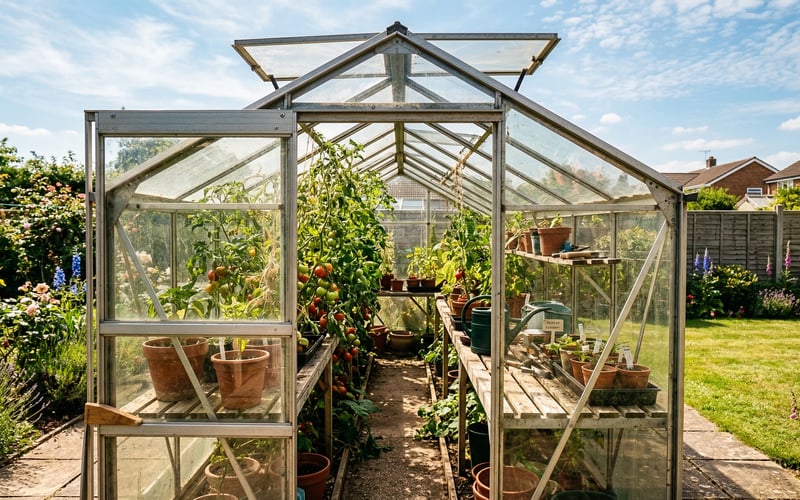
High roof vents release warm air; lower openings let replacement air enter. Keep a clear route between them. A louvre hidden behind dense foliage cannot work as effectively as an unobstructed one.
Use the vent positions available for the greenhouse model. Do not alter structural bars or remove glazing to improvise ventilation without manufacturer advice. Check weather precautions for doors and roof openings before strong winds.
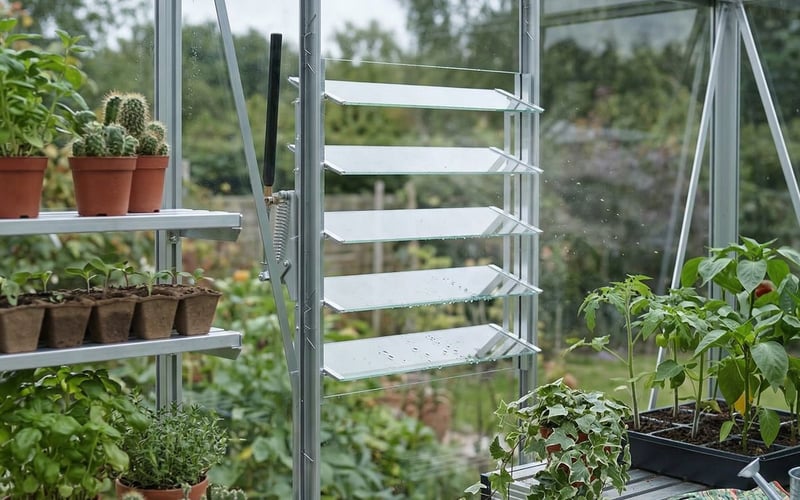
Vitavia 5 Blade Louvre Window (Silver) costs £59. Match the size, glazing and frame compatibility before replacing a side panel.
How do automatic vent openers work?
A heat-sensitive cylinder moves the opener as the greenhouse warms and cools. The opening range, lift and fitting arrangement depend on the model. Read its instructions rather than assuming all wax-cylinder openers share the same settings.
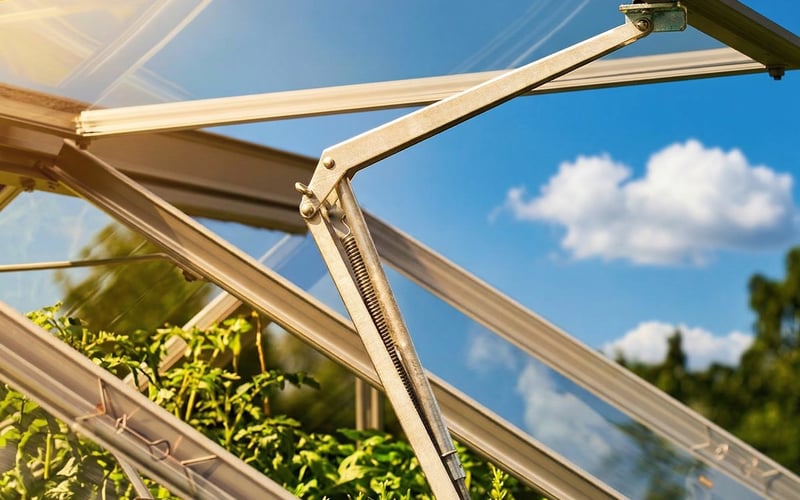
Vitavia Automatic Roof Vent Opener costs £46 and is specified for Vitavia greenhouses. It operates a roof vent. A louvre requires its own suitable mechanism, such as the Vitavia Automatic Louvre Opener at £49.
Automatic openers take time to respond. During hot spells you may also need manual ventilation or shading. Inspect fixings and follow the maker's maintenance and winter-storage advice.
Matt's Tip: Check storm instructions before bad weather
Follow the greenhouse and opener manuals for securing vents before a storm. Do this while access is safe. Do not force a connected opener closed or assume every cylinder has the same quick-release arrangement.
Do you need a fan?
A circulation fan moves air around the greenhouse. An extractor exchanges air with outside. They have different jobs, so a small desk fan is not a substitute for adequate ventilation.
For a hobby greenhouse, improve the natural air route first. If a fan is useful, choose equipment suitable for the damp environment and follow its mounting and electrical instructions. Keep cables clear of water and walkways. Specialist advice is worthwhile before sizing an extraction system.
When should you open the vents?
| Conditions | Useful action | Check afterwards |
|---|---|---|
| Sunny spring morning | Ventilate before heat builds | Young plants and the day's maximum |
| Hot summer spell | Use roof and lower openings; add shade if needed | Compost moisture, wilting and vent clearance |
| Cool autumn weather | Ventilate during milder periods | Leaves drying before night |
| Winter dry spell | Allow a controlled air exchange | Minimum temperature for overwintered plants |
Close or reduce openings as conditions require. Frost protection and storm safety still matter. Our unheated-greenhouse winter advice helps explain the limits of stored daytime warmth.
Does damping down help cool a greenhouse?
Wetting suitable hard floor surfaces can cool the air as the water evaporates. It also raises humidity, so it is most useful in hot, dry conditions where the plants benefit.
Avoid puddles, slippery paths and water near electrical equipment. Reduce or stop when the greenhouse stays damp, especially towards evening. Do not treat it as a guaranteed temperature reduction or a cure for established spider mites.
Our humidity guide explains when adding moisture helps and when ventilation should take priority. Check our grey-mould advice if leaves stay wet or mould appears.
What should you buy first?
A thermometer tells you whether your current setup is working. Elite ETI Digital Thermometer costs £44 and records current, maximum and minimum temperatures. It does not measure humidity.
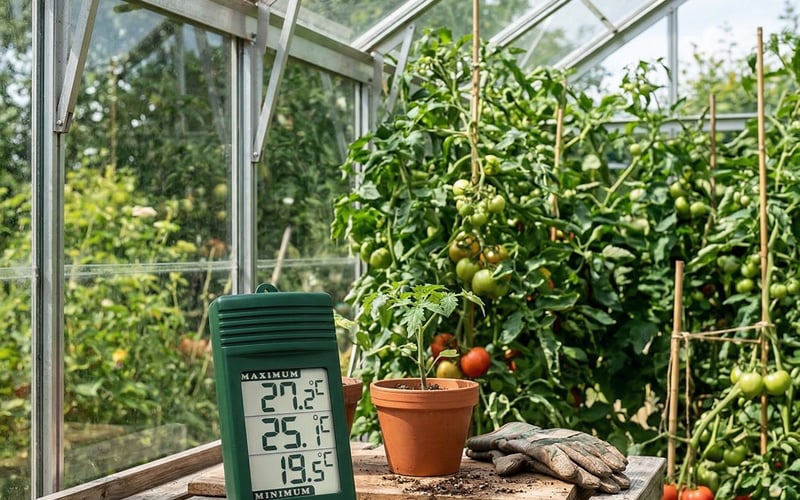
Shop the Elite ETI Digital Thermometer
Then choose compatible openers or extra vents for a diagnosed need. The Bayliss MK7 Automatic Roof Vent Opener costs £89; check its mounting and lifting specification against your vent.
Browse ventilation accessories and monitoring equipment, or use our accessories guide to decide what can wait. Recheck conditions after fitting anything: the plant-level temperature is the useful result.
Frequently asked questions
Should I leave the greenhouse door open in summer?
Open it when conditions require more airflow and it is safe. Check overnight temperatures, wind and access by animals before leaving it open overnight.
Do automatic vents guarantee plants will not overheat?
No, they help ventilation but cannot guarantee a safe maximum temperature. Check thermometer readings and add manual ventilation or appropriate shading when required.
How many vents does a 6x8 greenhouse need?
Check the area and position of openings on the actual model. Roof vents, door access, side inlets and local conditions all matter. A fixed vent count can be misleading.
What temperature is too hot for greenhouse plants?
The limit depends on the crop, moisture and duration of heat. Monitor for rising temperatures, wilting and scorch, and ventilate before plants become stressed.
Does a fan replace greenhouse vents?
No, a circulation fan moves air without necessarily exchanging it outside. Improve the natural air route first and use greenhouse-suitable equipment if a fan is needed.
Should I ventilate a greenhouse in winter?
Yes, during suitable spells while protecting plants from damaging cold. Adjust openings to the weather and plant requirements, and reduce persistent dampness and leaf wetness.