Greenhouse Staging and Shelving Guide: What to Buy and How to Set Up
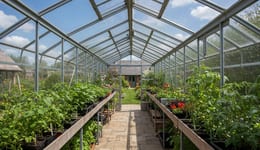
Greenhouse staging gives you a raised surface for seedlings, potting and smaller plants. Shelving adds storage above it, but too much can shade crops below. Start with the space your plants will need in summer, then choose a bench that leaves a comfortable path. Check its actual dimensions, fixing method and load rating before ordering; greenhouse size alone does not tell you whether it fits.
Key Takeaways
- Start with staging on one side if you also grow tomatoes or cucumbers.
- Freestanding benches need enough clear floor space; attached shelves need compatible fixings.
- Keep heavy compost bags low and distribute loads across the bench.
- Aluminium needs little upkeep, while timber and coated steel need different care.
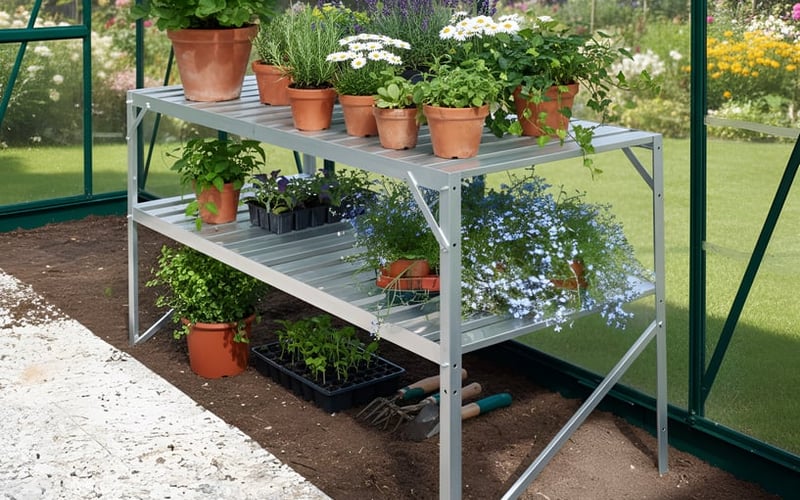
Shop the Vitavia 2 Tier Silver Staging
Installer's Note
Mark the proposed bench footprint on the floor before assembling it. Walk through carrying a watering can, then check the door and vents. That quick check is more useful than filling every spare centimetre with shelving.
What is the difference between staging and shelving?
Staging is a bench; shelving provides additional raised storage or growing space. A slatted bench suits pots and seed trays because water can drain through. For loose compost, use a potting tray on top so it does not fall between the slats.
Higher shelves suit light trays and small pots. They also cast shade, and plants near the roof can overheat. Check the temperature where seedlings actually sit before treating an upper shelf as a warmer propagation area.
You may need only a single bench. Our guide to useful greenhouse accessories helps you decide which additions suit your growing plans.

Shop the Palram Canopia 2 Tier Staging
What height should greenhouse staging be?
Choose a working height that lets you pot comfortably without hunching your shoulders or bending for long periods. Try a table and kitchen worktop at home with an empty pot before you buy.
The current Vitavia two-tier bench is 750mm high. The Palram Canopia two-tier unit is 850mm high. These are product dimensions, not a rule about the height every gardener needs.
Matt's Tip: Try the whole task
Check where your elbows sit while filling a pot, then try reaching the back of the bench. A comfortable front edge is little help if the rear pots are out of reach. For seated work, check knee room as well as height.
Aluminium, timber or steel staging?
Aluminium is a practical low-maintenance choice for a damp greenhouse. It does not rot, but still needs cleaning and occasional checks of joints and fixings. Wash off fertiliser spills and clear algae before surfaces become slippery.
Timber can work well when it is suitable for damp conditions and looked after. Its lifespan depends on the timber, treatment, construction and how often it stays wet. There is no honest universal rule that every wooden bench fails after a few years.
Coated steel provides useful storage strength. Check damaged coatings for rust and keep shelf boards within their care instructions. A steel frame does not make every shelf surface suitable for repeated soaking.

Shop the Bulldog 4 Tier Greenhouse Staging
How much weight can greenhouse staging hold?
Use the rating supplied for the exact bench and its assembled configuration. Check whether a quoted figure is for one shelf, the whole unit, or an evenly distributed load. Those descriptions are not interchangeable.
Wet compost and terracotta pots become heavy quickly. Put the heaviest items low, spread pots over the supports, and avoid concentrating weight at the centre. Never stand or sit on staging unless the manufacturer specifically permits it.
If the instructions do not give a clear rating, ask before loading the bench with compost sacks. Guessing a capacity from the material or brand is not reliable.
Freestanding or attached staging: which fits?
Freestanding staging rests on its own legs, so the greenhouse brand is less important than the available space. Measure around diagonal braces, low eaves, door tracks and any pipes. Check that you can carry the assembled unit through the door.
Attached shelves and cantilever staging depend on the frame and fixing system. Match the accessory to the greenhouse model, not simply to a similar-looking glazing bar. Folding designs also need clear space to move and should be emptied before folding.

Shop the Vitavia Silver Folding Staging
How should you plan a greenhouse staging layout?
Start with one side if you want tall summer crops as well as seedlings. The seedlings that fit neatly on a bench in March can become full-height tomatoes by June. Leave their final pots or growbags in the plan.
Use the greenhouse's internal width, subtract each bench depth, then check the remaining aisle. For example, two 500mm-deep benches inside a 1800mm clear width leave 800mm between them. Pots, projecting leaves and door fittings reduce that usable gap.
For wheelchair access, check the user's turning space, reach and actual chair dimensions. A nominal aisle width alone cannot establish accessibility. Our greenhouse size guide explains the wider layout choices.
Which staging should you buy?
These examples show how footprint and working height change between models. Compare those details before price.
| Model | Width × depth × height | Useful for | Current price |
|---|---|---|---|
| Vitavia 2 Tier Silver Staging | 1200 × 500 × 750mm | A raised work surface with storage below | £99 |
| Palram Canopia 2 Tier Staging | 800 × 400 × 850mm | A narrower polypropylene unit | £79 |
| Bulldog 4 Tier Greenhouse Staging | 800 × 300 × 1600mm | Adjustable storage for pots and equipment | £89 |
Browse the staging and shelving range for the fixing details of each option. Keep a useful existing bench if it fits the job; an upgrade should solve a specific problem.

What should stay off your greenhouse shelves?
Keep heavy sacks, large filled containers and anything unstable off high shelves. Store sharp tools securely, and keep hoses and cables clear of the route through the greenhouse.
A lower shelf can hold empty pots while seedlings use the brighter top surface. Check underneath trays for pooled water and pests. Our seed-starting guide covers looking after those young plants once the bench is ready.

Shop the Elite 3 Tier 6 Seed Tray Frame
Frequently asked questions
Do I need staging in my greenhouse?
Only if it helps with the plants and tasks you plan. Seedlings and potting benefit from raised workspace; tall crops in floor-level containers may need little staging.
Should staging go on one side or both?
Start with one side when you also need floor space for tall crops. Measure the remaining path and allow for mature foliage before adding another bench.
Is aluminium or wooden staging better?
Aluminium usually needs less maintenance; suitable timber can also work well. Compare construction, drainage, treatment needs and the actual load rating rather than assuming a fixed lifespan.
How much weight can staging hold?
Check the rating for the exact product and configuration. Confirm whether it means each shelf or the whole unit, and whether the load must be evenly distributed.
Does any staging fit any greenhouse?
Freestanding staging fits only when its footprint and access suit the space. Attached shelves and cantilever benches also need compatible frame fixings.
Related articles
- wood vs aluminium comparison
- greenhouse sizing guide
- accessories guide
- Lean-to greenhouse guide: buying, positioning and what to grow
- A Greenhouse Grower's Guide to Cucumbers