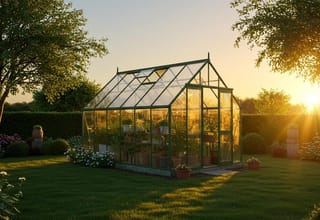
Lean-To & House-Attached Greenhouse Planning UK
A freestanding greenhouse is an outbuilding under Permitted Development Class E. Fix one to your house and the rules change: it becomes an extension under Class A. After fitting lean-to greenhouses against terraced, semi and detached homes for many years, we keep most builds permission-free by staying under 3m projection, 4m height and 50 percent garden cover. A south or south-west wall shares the most warmth.
Key Takeaways
- Attached changes the category. A lean-to fixed to the house is judged as an extension (Class A), not an outbuilding (Class E).
- Projection limit is 3m or 4m. Single-storey rear builds can extend 3m beyond the original wall on a terrace or semi, 4m on a detached house.
- Height caps at 4m, or 3m near a boundary. Within 2m of any boundary the eaves must stay under 2.5m.
- The 50 percent rule still bites. All extensions and outbuildings together must not cover more than half the land around the original house.
- The Party Wall Act 1996 is separate from planning. Building on the boundary or digging footings near it means serving notice on your neighbour.
- A south or south-west wall runs 2 to 4C warmer at night because the brickwork stores and releases the day's heat.
Browse all lean-to greenhouses →
Installer's Note
From our work with Greenhouse Stores customers since 2012, the most common mistake we see is treating an attached build like a freestanding one. People read that greenhouses rarely need permission, bolt a 3.5m lean-to to the back of a semi within a metre of the fence, and only later learn it broke two Permitted Development limits at once. The frame was fine. The paperwork was not. One customer near Reading had to take 600mm off the depth of a finished build because the original plan ignored the 3m rule. We now measure the rear wall and the boundary before we price any attached job.
Do you need planning permission for a lean-to greenhouse?
Most lean-to greenhouses do not need planning permission, but the rules are stricter than for a freestanding one. The moment a greenhouse is physically fixed to your house it stops being an outbuilding and counts as a house extension. That single change moves you from Permitted Development Class E, which covers outbuildings, to Class A, which covers extensions. The size you are allowed shrinks.
This catches people out. A 2.4m by 3.6m aluminium greenhouse standing on its own in the garden is almost always permitted development. Bolt the same structure to the rear wall and it is now measured as a single-storey rear extension, with its own projection and height limits. Our general greenhouse planning permission guide covers freestanding houses. This article is about the attached case, which is the one most owners get wrong.
Lean-to vs detached: why attached greenhouses follow different rules
A detached greenhouse is judged as an outbuilding. The main tests are height, with a 2.5m cap if any part sits within 2m of a boundary, position behind the principal elevation, and the rule that it must not cover more than half the garden.
An attached lean-to is judged as an extension. The tests are projection beyond the original rear wall, total height, eaves height near a boundary, and materials that match the house. It also draws on the same 50 percent allowance that any extension uses, so a previous conservatory or kitchen extension leaves you with less room than you think. This is the single biggest reason an attached greenhouse needs a closer look than a freestanding one.

|
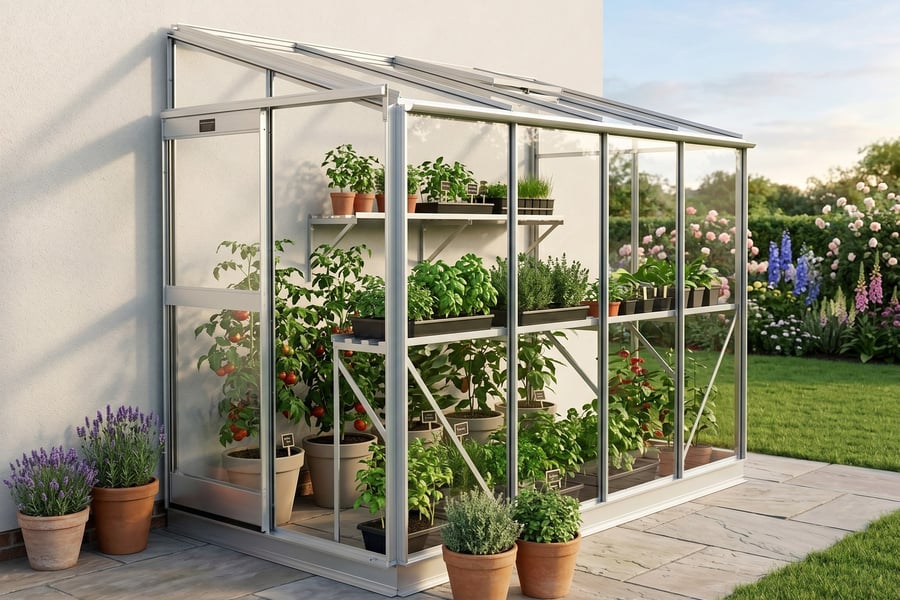
Matt's Pick for a Terrace or SemiBest For: a standard house wall run where you want a permission-friendly depth Why I Recommend It: the 4ft (1.2m) depth keeps you well under the 3m projection limit, so it stays permitted development on most terraces and semis. The 3mm toughened glazing is the one I fit near paths and children, and the slim aluminium frame flashes cleanly into brickwork. Price: £799 |
How big can a lean-to greenhouse be without planning permission?
Under standard Permitted Development in England, a single-storey rear extension, which is how an attached lean-to is measured, must not break any of these limits:
- Project more than 3m beyond the original rear wall on a terraced or semi-detached house, or 4m on a detached house.
- Exceed 4m in total height.
- Exceed 3m in height, or 2.5m at the eaves, if any part sits within 2m of a boundary.
- Cover more than 50 percent of the land around the original house. Sheds, earlier extensions and hard standing all count.
- Sit forward of the principal elevation, so no lean-to on the front of the house facing a road.
A larger projection, up to 6m on an attached house or 8m on a detached one, is possible under the Larger Home Extension prior-approval route. The council notifies your neighbours before agreeing it. That is a separate application, not automatic permitted development.
These figures are for England. Wales, Scotland and Northern Ireland set their own limits. In Wales, for example, an outbuilding within 2m of the house cannot exceed 1.5m. Always confirm with your local planning authority before ordering, because conservation areas, listed buildings and Article 4 directions remove permitted development rights entirely.
Matt's Installation Tip
Measure from the original rear wall, not from a later extension. The 3m projection is measured from the house as it was first built, or as it stood in 1948 if that is later. We have seen owners measure from the back of a 1990s kitchen extension, add a 3m lean-to, and unknowingly project 5m from the original wall. That needs full planning permission. If your house has been extended before, find the original footprint first.
The Party Wall Act and your boundary
Planning permission and the Party Wall Act 1996 are two separate things. You can be fully within permitted development and still owe your neighbour a Party Wall notice.
The Act applies when you build on or at the boundary line, or when you dig foundations near it. If your lean-to footing sits within 3m of your neighbour's structure and goes deeper than their foundations, you must serve notice. The notice period runs from one to two months depending on the work, so build it into your timeline. A simple paving-slab base set back from the boundary usually avoids it. A poured concrete footing on the line usually does not.
Best wall and aspect for a house-attached greenhouse
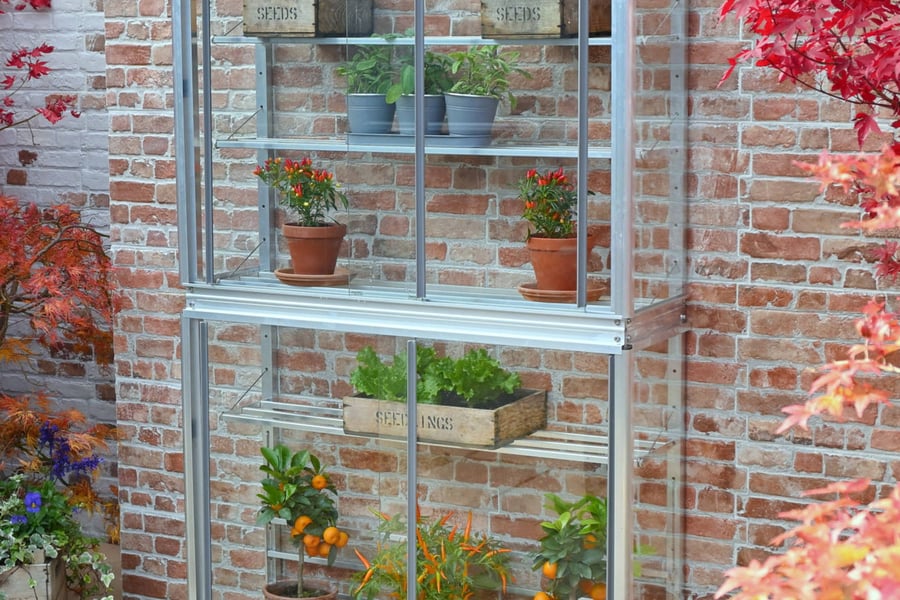
A house-attached greenhouse only works as well as the wall you fix it to. South and south-west walls are the prize. They catch sun from late morning to dusk and give the earliest spring growth. A south-east wall warms fast in the morning but cools by mid-afternoon. North walls stay cold and are best kept for a shade house or storage lean-to, not tender crops.
The bonus of attaching to the house is heat sharing. The house wall acts as a storage heater, soaking up daytime warmth and releasing it overnight. An attached lean-to typically runs 2 to 4C warmer at night than a freestanding greenhouse of the same size. That can be the difference between overwintering pelargoniums and losing them. If you are weighing up where to build, our guide to the best position for a greenhouse covers sun, shade and shelter in more detail.
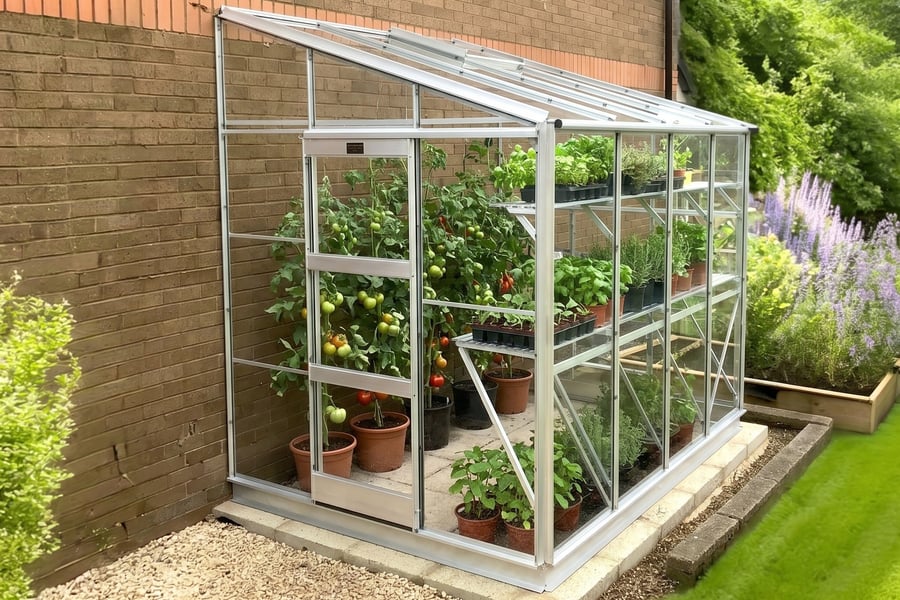
Fixing a lean-to to the house: flashing, cavity ties and damp
The join between the lean-to and the house is where every leak starts. The ridge of the lean-to must be sealed to the house wall with lead or proprietary flashing, dressed into a chase or tucked under existing render. Never just silicone it onto the brick face, because that joint fails within a season.
If you are drilling into a cavity wall, use the right fixings and seal each hole, because every penetration is a potential damp bridge. Keep the lean-to gutter clear of the house damp-proof course. Most damp complaints we are called back to are not the greenhouse leaking. They are rainwater bouncing off the lean-to roof onto an unprotected wall. Our guide to fixing a lean-to on an uneven wall walks through the packing and sealing step by step.
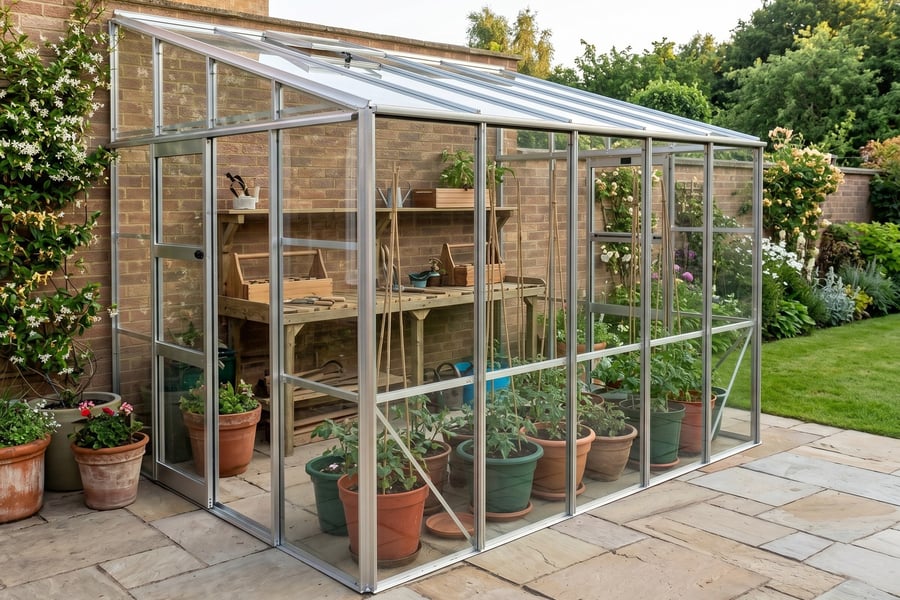
Browse greenhouse accessories →
Matt's Tip: Get the base dead level first
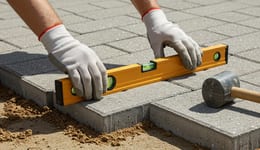
An attached lean-to is fixed along one whole side, so any twist in the base shows up at the house joint. We always lay the base perfectly level and square to the wall before a single glazing bar goes up. A 5mm fall across a 2.4m base is enough to leave a gap at the flashing that no amount of sealant will close. Spend the time on the base and the rest of the build follows it.
Practical sizes for terraced, semi and detached homes
The right size depends on how much rear space you have and where the boundary sits. Here is the rule of thumb we use when quoting attached builds.
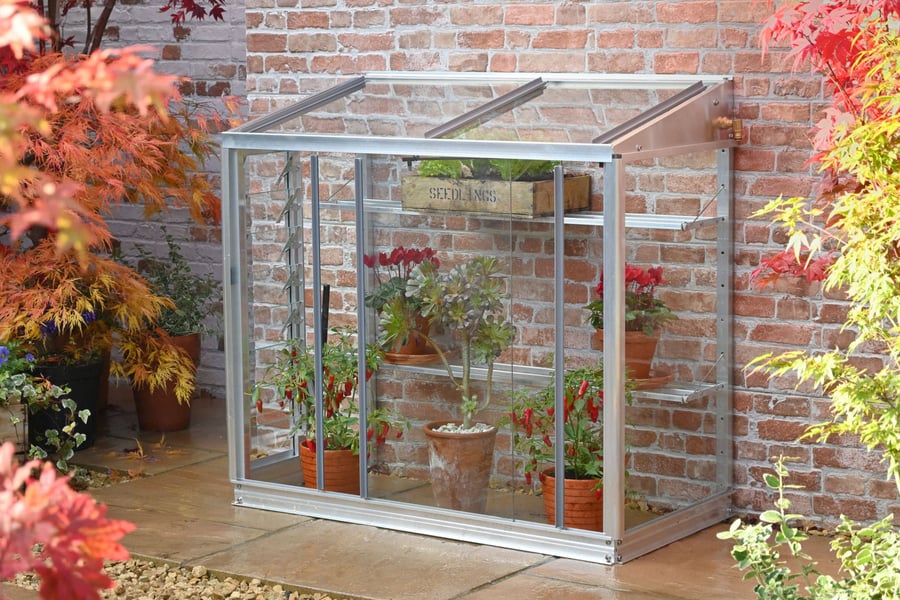
| House type | Typical rear space | Sensible lean-to depth | Planning note | Matt's verdict |
|---|---|---|---|---|
| Mid-terrace | Narrow, boundary close on both sides | 1.2 to 1.5m deep | Watch the 2.5m eaves cap within 2m of the fence | Go tall and narrow. A 2ft to 4ft width fits most yards. |
| Semi-detached | One open side, one boundary | 1.5 to 2.4m deep | 3m projection limit; keep the open side off the boundary | The sweet spot for an attached house. Plenty of choice. |
| Detached | Open on both sides | 2.4 to 3m deep | 4m projection allowed; most builds sit well within it | Room for a walk-in lean-to with staging both sides. |
| Bungalow | Often generous, low eaves | 2.4m deep | Low house eaves can limit ridge height | Check the gutter height before you choose the model. |
Conservatories vs lean-to greenhouses: the legal difference
A conservatory and a lean-to greenhouse can look similar but are treated differently in two ways. A conservatory is heated living space, so it usually falls under building regulations unless it is under 30 square metres, at ground level, separated from the house by external-quality doors, and heated independently. A lean-to greenhouse is horticultural, unheated or lightly heated, and is normally exempt from building regulations on the same 30 square metre test.
Both are measured as extensions for planning. So a lean-to greenhouse gets the easier building-regulations treatment of a greenhouse but the stricter planning treatment of an extension. That mix is exactly why people get it wrong. If you want a true garden room rather than a growing space, our garden room planning permission guide sets out the living-space rules.
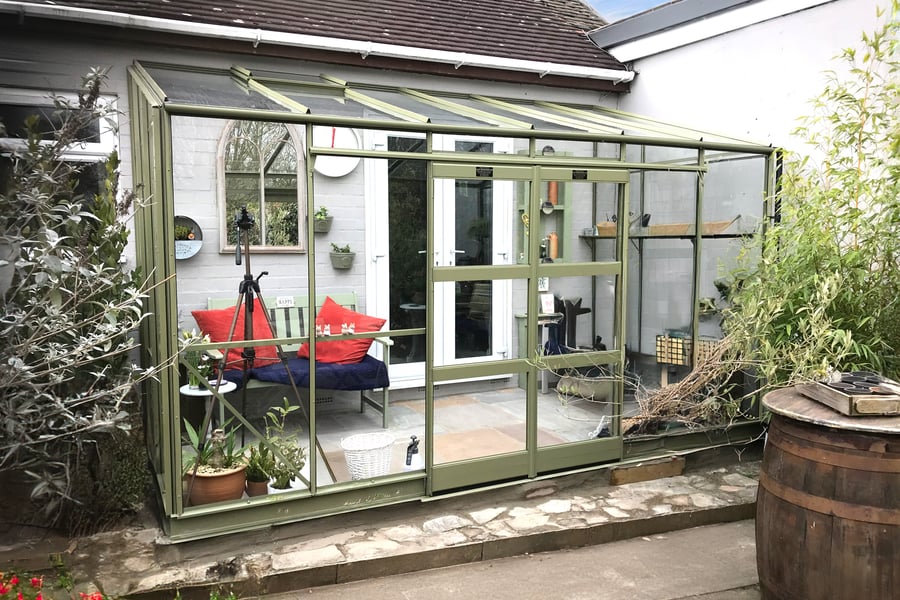
Building regulations: when they apply
Most lean-to greenhouses are exempt from building regulations because they are unheated, under 30 square metres and separate in use from the living space. You move into building-regulations territory if you heat it from the house central heating, knock through into a habitable room, or exceed 30 square metres of floor area. If in doubt, a quick call to building control costs nothing and saves a retrofit later.
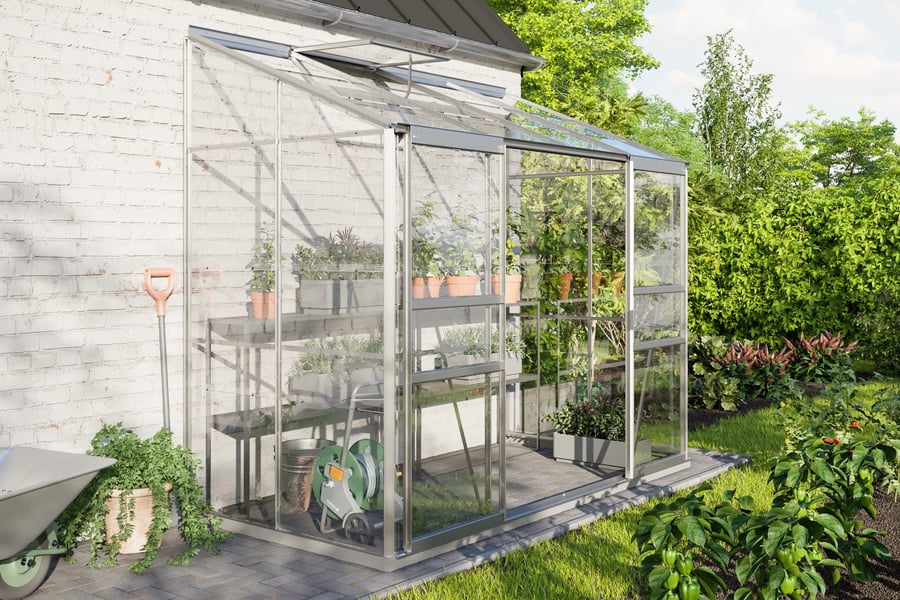
Popular lean-to greenhouses for an attached build
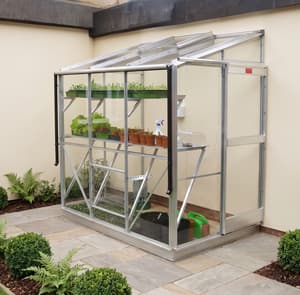
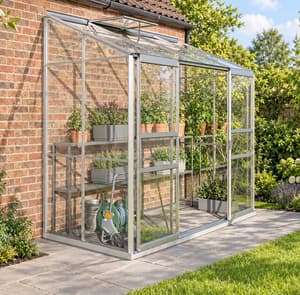
Lean-to greenhouses compared
Here is how a few of our most popular attached models stack up for different homes. All prices update live.
| Model | Key spec | Price | Matt's verdict |
|---|---|---|---|
| Elite Windsor 4x8 (Matt's Pick) | 1.2m deep, 3mm toughened glass | £799 | Best all-rounder for a terrace or semi. |
| Vitavia IDA 3300 4x8 | 1.2m deep, horticultural glass | £449 | The cheapest way into a proper lean-to. |
| Elite Kensington 6x8 | 1.9m deep, walk-in width | £799 | When you want room to work inside. |
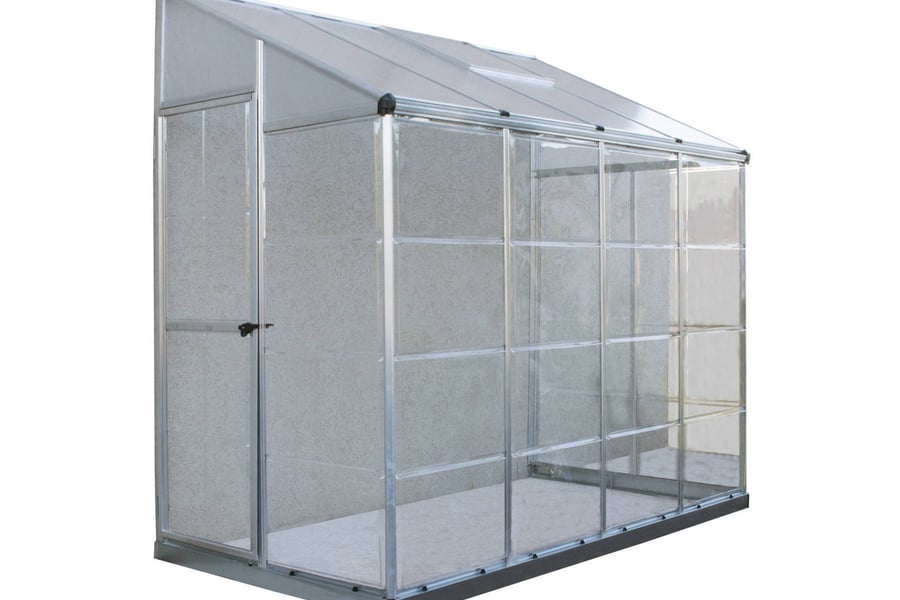
| Palram Canopia 8x4 | Clear polycarbonate, shatter-resistant | £679 | Safe glazing near a busy path or play area. |
| Access Westminster 1x3 | Compact, UK-made, toughened glass | £488 | Tiny yards, courtyards and balconies. |
"An attached greenhouse asks more of the install than a freestanding one, because it has to marry up to the house and shed water at the joint. I would rather fit a slightly smaller lean-to that sits dead level and flashes cleanly into the wall than cram in an oversized one that fights the brickwork. Get the base and the flashing right and a lean-to outlasts the house extension next to it."
- Matt W, Greenhouse Stores
Frequently asked questions
Do I need planning permission for a lean-to greenhouse?
Usually no, if it stays within Class A extension limits. Keep it under 3m deep on a terrace or semi, under 4m tall, and behind the house. Conservation areas and listed buildings are the main exceptions.
Is a greenhouse attached to the house permitted development?
Yes, as a single-storey rear extension within the size limits. Attaching it to the house moves it from outbuilding rules to extension rules, so the projection and height caps apply.
How close to the boundary can I build a lean-to greenhouse?
You can build up to the boundary, but height is capped. Within 2m of a boundary the eaves must stay under 2.5m. Building on the line can also trigger a Party Wall notice.
Does a lean-to greenhouse need building regulations approval?
Not if it is unheated and under 30 square metres. It usually qualifies as an exempt greenhouse. Heating it from the house mains or exceeding 30 square metres can change that.
What is the best wall for a lean-to greenhouse?
A south or south-west facing wall gives the most light and warmth. The brickwork stores daytime heat and releases it overnight, so the house runs 2 to 4C warmer than a freestanding greenhouse.
Do I need a Party Wall agreement for a lean-to greenhouse?
Only if you build on the boundary or dig footings near your neighbour's. A paving-slab base set back from the line usually avoids it. A concrete footing on the boundary usually does not.
Can I put a lean-to greenhouse on the front of my house?
No, permitted development does not allow extensions forward of the principal elevation. A front-facing lean-to needs full planning permission from your local authority.
Related articles
- Lean-To Greenhouse Guide: Buying, Positioning and What to Grow
- Greenhouse Roof Shapes UK: Apex, Lean-To, Orangery and Dwarf Wall Compared
- Greenhouse Foundation Types: Complete Base Comparison Guide UK
- Greenhouse Glazing Options: Glass, Toughened or Polycarbonate
- Garden Rooms UK: The Ultimate Buyers Guide to Garden Rooms