Greenhouse Replacement Glass: A UK Reglazing Guide
To order greenhouse replacement glass, identify the model, pane position, glass type and fixing system first. Use the manufacturer's glazing plan whenever possible. A common-looking opening does not guarantee a standard pane fits, and toughened glass cannot be cut after manufacture. For missing instructions or damaged overhead panes, ask the supplier or a glazier to confirm the size and safe replacement method.
Key Takeaways
- Start with the glazing plan and pane reference, not a guessed standard size.
- W or spring clips retain panes against the frame; overlap clips support overlapping panes.
- Do not apply a universal 2–3mm deduction to every frame opening.
- Replacement material must suit the frame, seals and fixing system.
- Arrange help for large, unstable or overhead glass.
Installer's Note
Send a clear photograph of the complete greenhouse, the affected bay and its fixings when asking about spares. Include any model label or instruction booklet. Those details help us distinguish a missing pane from a problem with the frame or glazing supports.
How is greenhouse glass held in place?
The retaining system depends on the greenhouse model and glazing option. It can include clips, capping, rubber seals, support pieces or manufacturer-specified sealant. Check the instructions before releasing anything.
- W-shaped wire clips and spring clips hold glass against a glazing bar. They are forms of retaining clip.
- Z-shaped or other overlap clips support the overlap between shorter panes. They do not simply replace the retaining clips.
- Bar capping holds glazing along the bars. Its profile and fastening method depend on the range.
- Glazing rubber and support blocks cushion or locate the pane. Replace with the specified profile when worn or missing.
Wire clips, spring clips and overlap clips serve different purposes. Identify the existing fixing and confirm compatibility with your model before ordering.

Elite Spring Clips 50 pieces: £26. These are retaining clips; they have a different job from the overlap clips below.

Elite Overlap Clips 50 pieces: £23. Check the glazing plan for the required overlap and position.
How do you measure for replacement glass?
The safest starting point is the manufacturer's glazing schedule. It specifies the pane rather than only the visible opening, which may be smaller than the glass sitting behind the frame edges.
- Find the model, size and glazing option. Mark which roof, side or gable pane needs replacing.
- Read its pane reference and dimensions from the glazing plan.
- If the plan is missing, photograph the opening and contact the supplier. An intact matching pane can help confirm dimensions when safely accessible.
- Record width, height, thickness and any shape or cut-outs. Record overlap arrangements separately.
- Ask the supplier to confirm any fitting clearance or expansion allowance before ordering.
Do not measure just the daylight gap and subtract a fixed amount. Channels, seals, overlaps and plastic-panel expansion allowances vary. Do not remove sound roof glass simply to measure it.
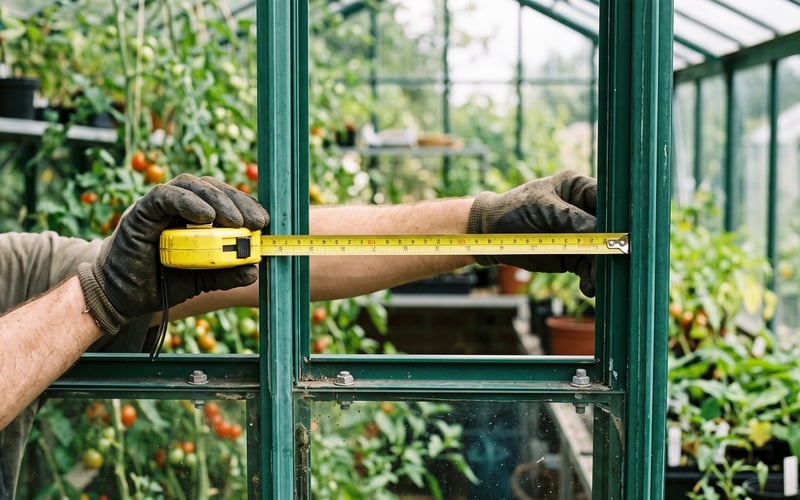
The frame opening helps identify the bay; the manufacturer's pane dimensions determine the order size.
Is greenhouse glass a standard size?
610mm is a common pane dimension, but it is not a guarantee of fit. Pane height, thickness, shape and overlap vary even within one brand. Full-length toughened glazing can use a different schedule from overlapping horticultural glass in the same model.
Curved-eave, dwarf-wall, lean-to and older timber greenhouses need particular care. A local glazier may be able to supply a cut-to-size horticultural pane. Toughened glass must be ordered at its final size because it cannot be trimmed afterwards.
Glass, acrylic or polycarbonate?
Replace like for like unless the manufacturer confirms a suitable conversion. Changing a panel's material or thickness may also mean changing its supports and retaining system.
| Material | Useful distinction | What to check |
|---|---|---|
| Horticultural glass | Clear glazing that can break into sharp shards | Specified thickness and pane size |
| Toughened safety glass | Breaks into smaller fragments, which can still injure | Final dimensions before manufacture and approved fixings |
| Acrylic | A separate plastic material, not polycarbonate | Exact application, thickness and expansion allowance |
| Twin-wall polycarbonate | Lightweight panels with insulating air spaces | Thickness, UV-facing side, flute direction and edge treatment |
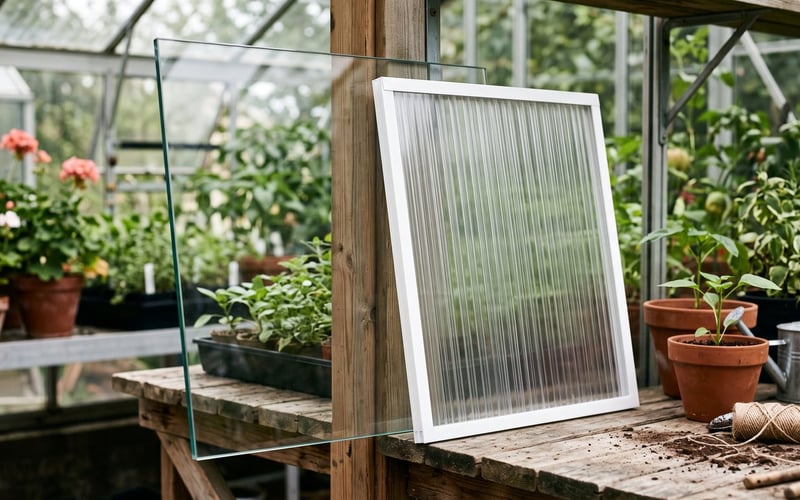
Our glass and polycarbonate comparison explains the buying trade-offs. A glazing change alone cannot repair a distorted frame or unsuitable base.
What about the 610mm acrylic replacement pack?
The Replacement Greenhouse Acrylic Panels 610mm x 610mm (5x panel Pack) contains five 610 × 610mm panels at £89. The current product description specifies 2mm acrylic and names particular Vitavia applications.
Confirm the exact pane position with us before ordering. It is not a universal replacement for every 610mm glass pane, and acrylic should not be described as toughened glass or twin-wall polycarbonate.
How do you replace a pane safely?
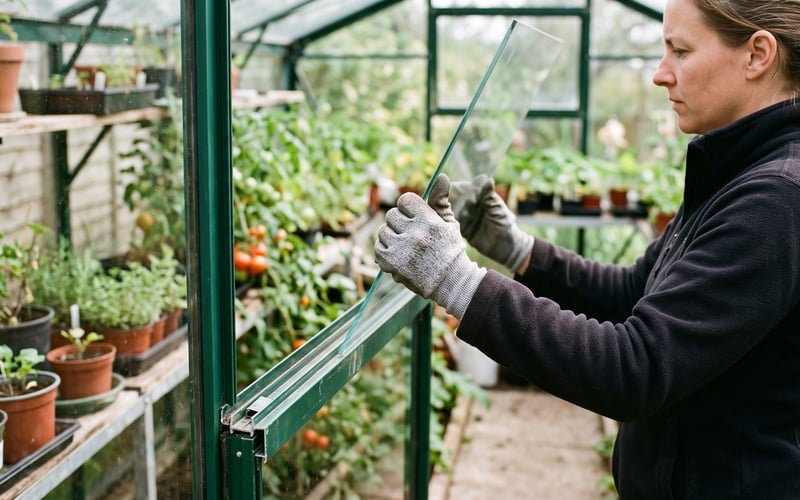
Follow the model's glazing sequence and arrange safe access first. There is no single roof-first or bottom-first sequence suitable for every repair. Overlapping glass may be supported by adjacent panes, so removing a clip can affect more than the damaged panel.
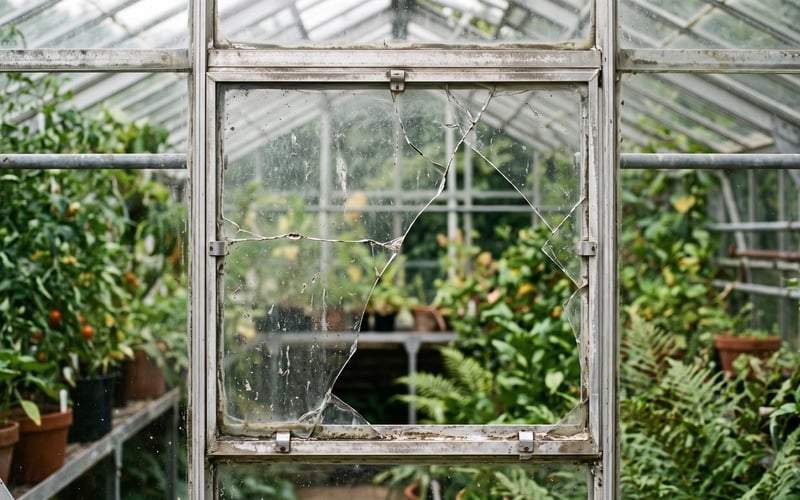
- Keep children and pets away. Work in calm weather with cut-resistant gloves, eye protection, covered arms and sturdy footwear.
- Do not stand beneath loose glass, climb on the greenhouse or lean a ladder against glazing.
- Clear the working area and get help handling large panes. Use a professional for unsafe or inaccessible roof work.
- Support the pane before releasing its fixings, following the instructions.
- Remove fragments, inspect the frame and fit the specified seals or supports. Never force glass into a tight opening.
- Refit the correct number and type of clips or capping, then inspect from a safe position.
Follow the written instructions for your greenhouse model. Contact us if you need help identifying a replacement fitting.
Matt's Tip: Clean up beyond the broken bay
Fragments can travel into nearby pots and gravel. Check the whole area before letting anyone back in. Put glass in a rigid, secure container and follow your council's disposal instructions; do not leave sharp fragments loose in a bag.
When is a full reglaze worth considering?
A full reglaze may make sense when several panes need replacement or you want a manufacturer-supported change in glazing. Get a quote for the complete system, including seals, clips and labour where needed.
First investigate repeated breakages. A twisted base, damaged bar or missing support can crack replacement glass too. Our wind-damage guide and door-repair guide help identify related frame and access problems.
Browse replacement parts and greenhouse accessories with the model details to hand. Keep the sound parts of a greenhouse where repair is practical.
Frequently asked questions
What size is greenhouse replacement glass?
Pane sizes depend on the model, position and glazing option. A 610mm dimension is common, but use the glazing schedule or supplier confirmation before ordering.
How do I measure replacement glass?
Start with the manufacturer’s glazing schedule and pane reference. If it is missing, ask the supplier or glazier how to measure that frame. Do not use a universal clearance deduction.
Are W clips and Z clips the same?
No, retaining clips and overlap clips have different jobs. W-shaped wire clips usually retain glass against the bar; overlap clips support overlapping panes. Use the specified parts.
Can I replace glass with polycarbonate?
Only when the frame and fixing system accept the proposed panels. Check thickness, support, expansion allowance and installation requirements with the manufacturer before changing material.
Can toughened greenhouse glass be cut?
No, toughened glass must be ordered at its finished dimensions. Cutting or drilling it after manufacture causes breakage. Confirm the shape and size before placing the order.
Is toughened glass harmless if it breaks?
No, its smaller fragments can still cause injury. It is safer than ordinary glass that forms long shards, but handling and overhead breakage still require care.