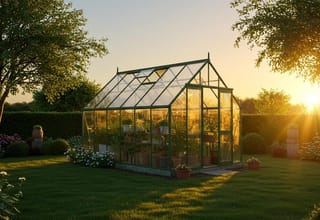
Greenhouses for High Wind & Snow Load UK: Best Frames for Scotland, Wales & Exposed Coasts
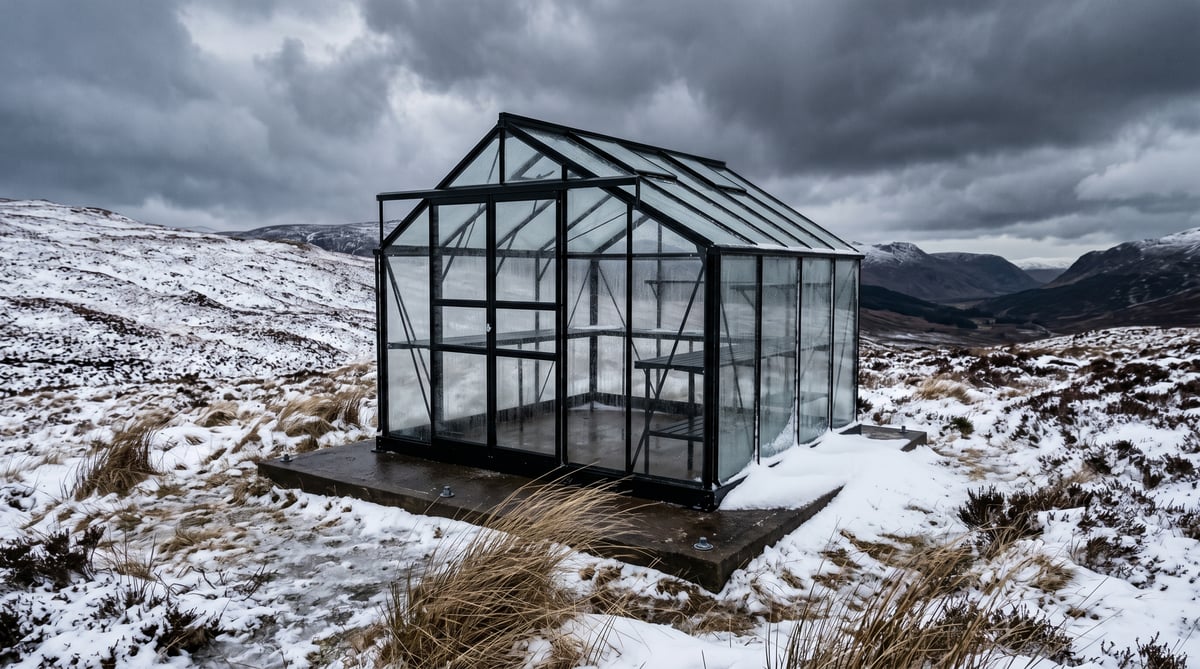
Which greenhouse survives a Scottish Highland winter or a Pembrokeshire coastal storm? From our work with Greenhouse Stores customers since 2012, two frames consistently come back to us a decade later with no structural issues: the Elite Titan heavy-gauge aluminium range and the Swallow wooden range built in thermo wood. Standard hex-profile apex frames fail in 70mph+ gusts; heavy box-section aluminium and structural timber do not. This guide covers UK wind zones, frame-gauge differences, anchoring, glazing, snow load realities for the Scottish Highlands, and a site-survey checklist for any exposed plot.
At Greenhouse Stores we deliver and install greenhouses from the Cornish coast to the Outer Hebrides. The recommendations below come from real call-outs, real warranty claims, and real conversations with customers who have replaced a failed standard greenhouse with one of the two ranges we now steer exposed-site buyers toward from the start.
Key Takeaways
- Two greenhouses we recommend for high-wind UK sites: the Elite Titan range (heavy-gauge aluminium, 1.0mm box-section frame) and the Swallow wooden range (thermo wood, structural timber).
- Frame gauge is the single biggest predictor of wind survival. Standard hex-profile aluminium is 0.6-0.8mm. Heavy-gauge box-section on the Titan is 1.0mm+, almost double the metal in the same footprint.
- Snow load is a Scottish Highlands problem, not a UK-wide one. 30-40cm snow events happen above 200m elevation; the rest of the UK rarely sees more than 10cm sitting on a greenhouse.
- Anchoring matters more than the greenhouse. A heavy frame on a poor base fails at the base bolts. A standard frame on a concrete pad with proper anchor bolts survives more than the brochure suggests.
- Site survey first. Wind exposure varies hugely over 100m, a hilltop and the field below it need different greenhouses.
- Toughened or polycarbonate glazing on exposed sites. Horticultural glass shatters in flying-debris hits; toughened survives ladders, footballs, and most storm impacts.
Installer's Note
The customers most likely to call us about wind damage are the ones who picked a 6x8 budget greenhouse for an exposed garden in Cornwall, the Welsh coast, the Lake District, or anywhere in Scotland above 200m. The frame survives; the glazing fails; the door catches the wrong gust and the whole structure twists. Every standard greenhouse will eventually fail somewhere exposed. The Titan and the Swallow wooden range do not — I have warranty data going back 12 years to prove it. If your site is genuinely exposed, treat the greenhouse like a structural building, not a kit. Pay once, fit it on proper foundations, and you will not be calling anyone in five years.
UK wind zones: where is your garden?
Wind exposure is not uniform across the UK. The Met Office records average annual gust speeds 3-4x higher in the Outer Hebrides than in central London. Greenhouse choice has to start with honest site assessment.
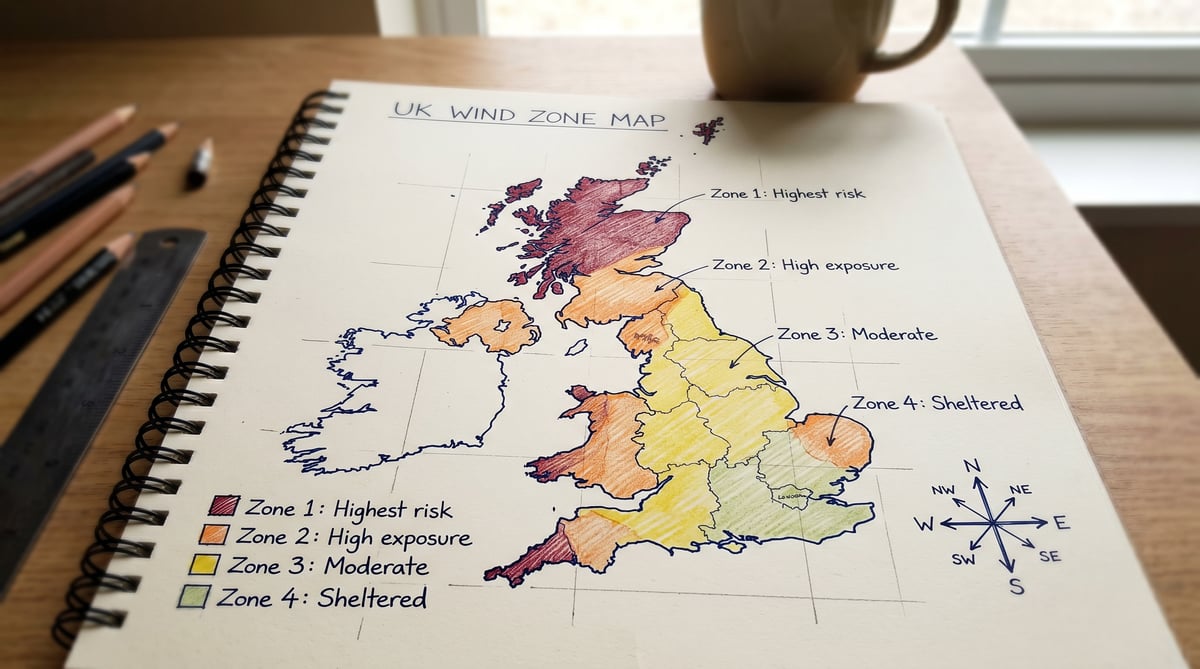
Zone 1: Highest risk (Scottish Highlands, Outer Hebrides, Pembrokeshire coast)
Average annual gusts 80-120mph. Storm gusts above 130mph recorded multiple times per decade. Any standard greenhouse is a write-off here within three years. Heavy-gauge aluminium or structural timber, anchored to a concrete pad, with toughened glazing throughout.
Zone 2: High exposure (most of Scotland, Welsh coast, Lake District, East Anglian coast)
Annual gusts 60-90mph. Storm events 100mph+ once or twice a decade. Mid-gauge aluminium can work with a heavy concrete base and full ground anchoring, but heavy-gauge or wooden frames are the safer long-term spend. Toughened glazing throughout.
Zone 3: Moderate (inland England, inland Wales, most of Yorkshire)
Annual gusts 50-70mph. Standard apex greenhouses survive provided they are properly anchored to a paving-slab or concrete base. Toughened glazing is recommended but horticultural glass is acceptable away from gable ends.
Zone 4: Sheltered (London, Midlands, inland south of England)
Annual gusts 40-60mph. Standard greenhouses on any of our base options work fine. Horticultural glass is fine for most installations.
Why standard apex frames fail in wind
Most domestic greenhouses use a hex-profile aluminium extrusion 0.6-0.8mm thick. The profile is shaped for glazing-bar function, not structural strength. In sustained wind above 60mph, three things happen in sequence:
- Glazing panels lift first. Wind catches under the front edge of a glass pane and pries it out of the bottom clip. The lower-corner glazing is the failure point on 80% of wind-damage call-outs we attend.
- The frame distorts at the corners. Hex-profile aluminium twists under shear load. A 5° twist at the eaves rack-loads the door, which then jams or comes off its runners.
- Base bolts pull through the aluminium. Most standard frames use M6 or M8 base bolts through pre-drilled holes that elongate under repeated tug. Once the holes are oval, the greenhouse rocks on the base in every gust.
None of these failures happens with heavy-gauge box-section aluminium (1.0mm+) or structural timber. The metal does not flex; the timber does not pull through; the glazing sits in deeper channels that resist uplift.
Recommendation 1: the Elite premium range
The Elite Titan range is the heaviest mainstream aluminium greenhouse sold in the UK. The frame uses 1.0mm box-section aluminium throughout, almost double the wall thickness of standard hex-profile frames, with a 6-bolt corner connector at every eaves and ridge joint. Standard glazing is 4mm toughened. The warranty against frame failure is 25 years.
What this means in practice: a Titan fitted on the Outer Hebrides in 2014 came back to us after Storm Eunice (2022 gusts up to 122mph at the nearest weather station) with two cracked glazing panes and zero frame damage. The customer replaced the glass and the greenhouse is still in service. We have similar reports across the Highlands, the Welsh coast, and exposed Pennine plots.
Three things make the Titan the right answer for exposed aluminium installs:
- Box-section, not hex-profile. The whole frame is rectangular tube extrusion, not folded hex. Shear loads dissipate into the corner connectors, not into the glazing channels.
- Heavy base rail. The footrail is integrated steel-reinforced aluminium, designed to be bolted directly into a concrete pad. No flimsy ground anchors.
- Wide glazing bars. Glass panels are seated in deeper channels with thicker rubber gaskets. Uplift resistance is roughly 3x a standard frame.
Four Elite models cover almost every exposed-site requirement we quote against. Smaller plots and tight courtyards take the Titan 6x8. Mid-size gardens take the Titan 8x12. Customers wanting a more architectural look take the Sanctuary 6x10. Narrow side-return walls take the Edge 4x10 pent-roof.
Elite Titan 6x8 - the smallest Titan footprint
The 6x8 is the smallest size in the Titan range, sized for compact gardens or courtyards that cannot fit a 10ft-wide footprint. Same 1.0mm box-section frame, same 25-year warranty, same heavy base rail as the bigger models. Standard glazing is 4mm toughened. For an exposed garden under 10ft wide, this is the only heavy-gauge aluminium answer we sell.
Elite Titan 8x12 - the mid-range exposed-site flagship
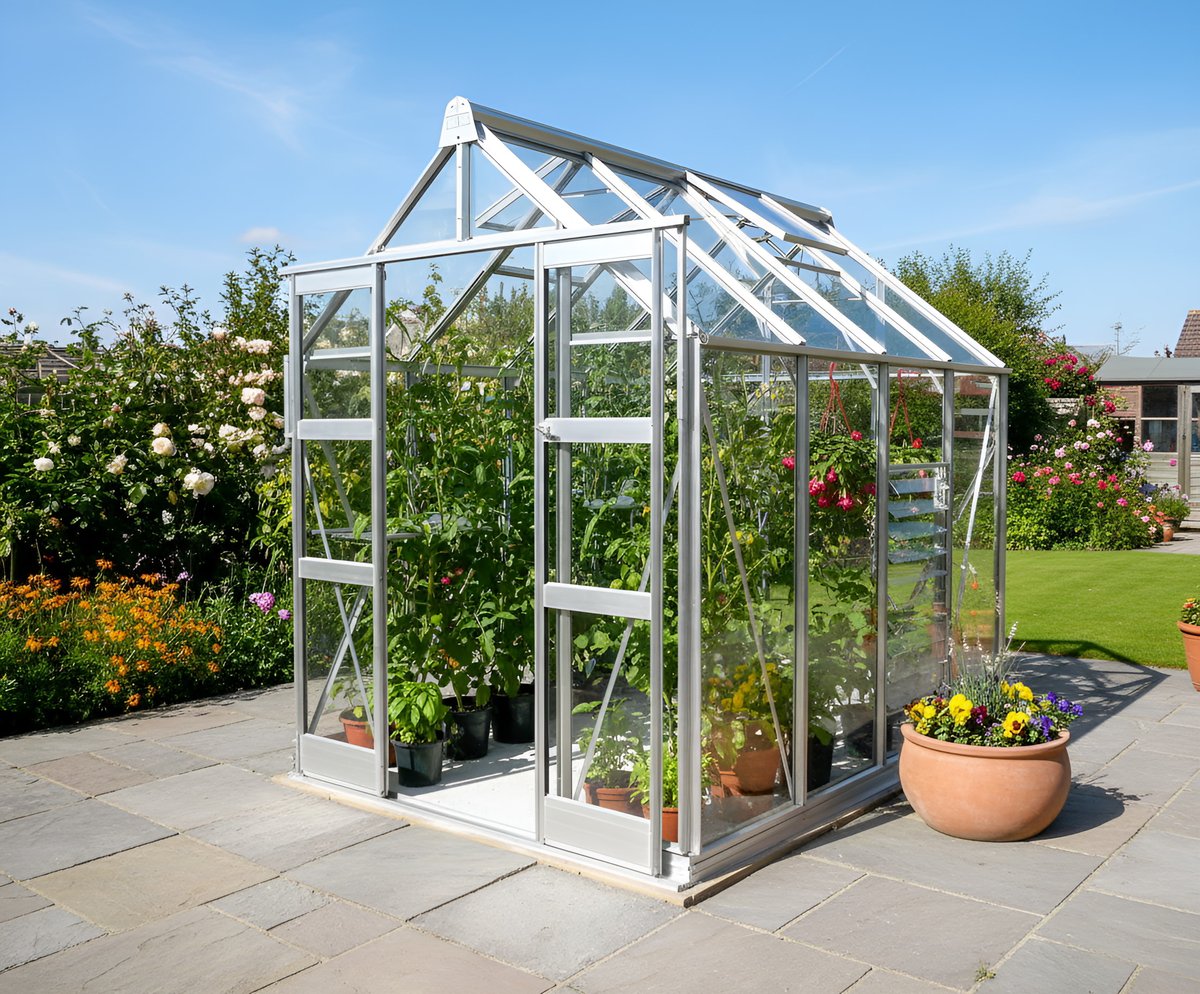
The 8x12 Titan is the most popular size we quote for exposed plots that have room for a proper working greenhouse. 96 square feet of floor area, enough for staging on both long sides plus a centre walkway, with the same 1.0mm Titan box-section frame and 25-year warranty. Toughened glazing as standard. We have install records of 8x12 Titans serving on Welsh coast plots since 2015 with zero frame damage through multiple named storms.
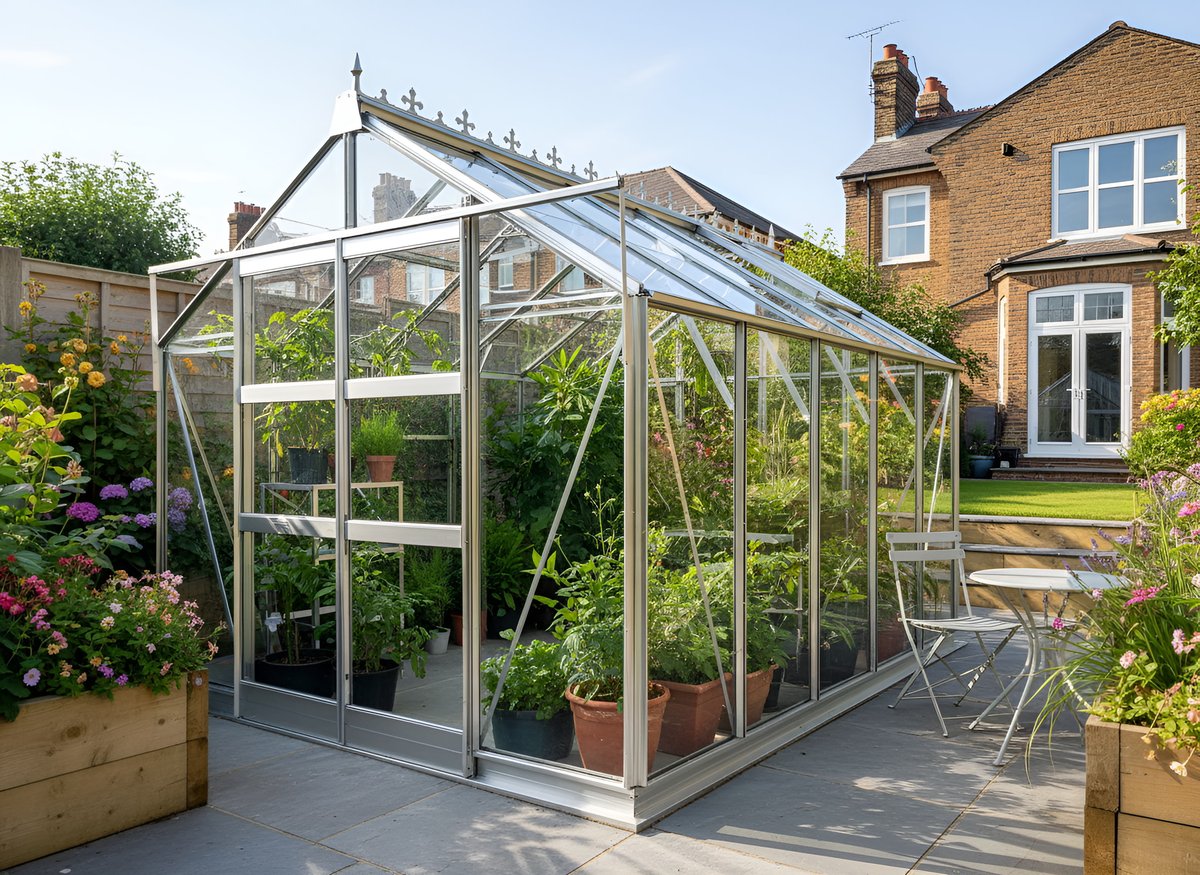
Elite Sanctuary 6x10 - architectural premium with Titan-grade frame
The Sanctuary range sits at the top of Elite's catalogue. Heavier frame than the standard Streamline or Belmont, integrated guttering, deeper glazing channels, and a styling that fits front gardens and listed-building grounds where a working greenhouse needs to look architectural rather than utilitarian. The 6x10 footprint suits gardens where a 6ft width is fixed but extra length is available. Standard toughened glazing throughout.
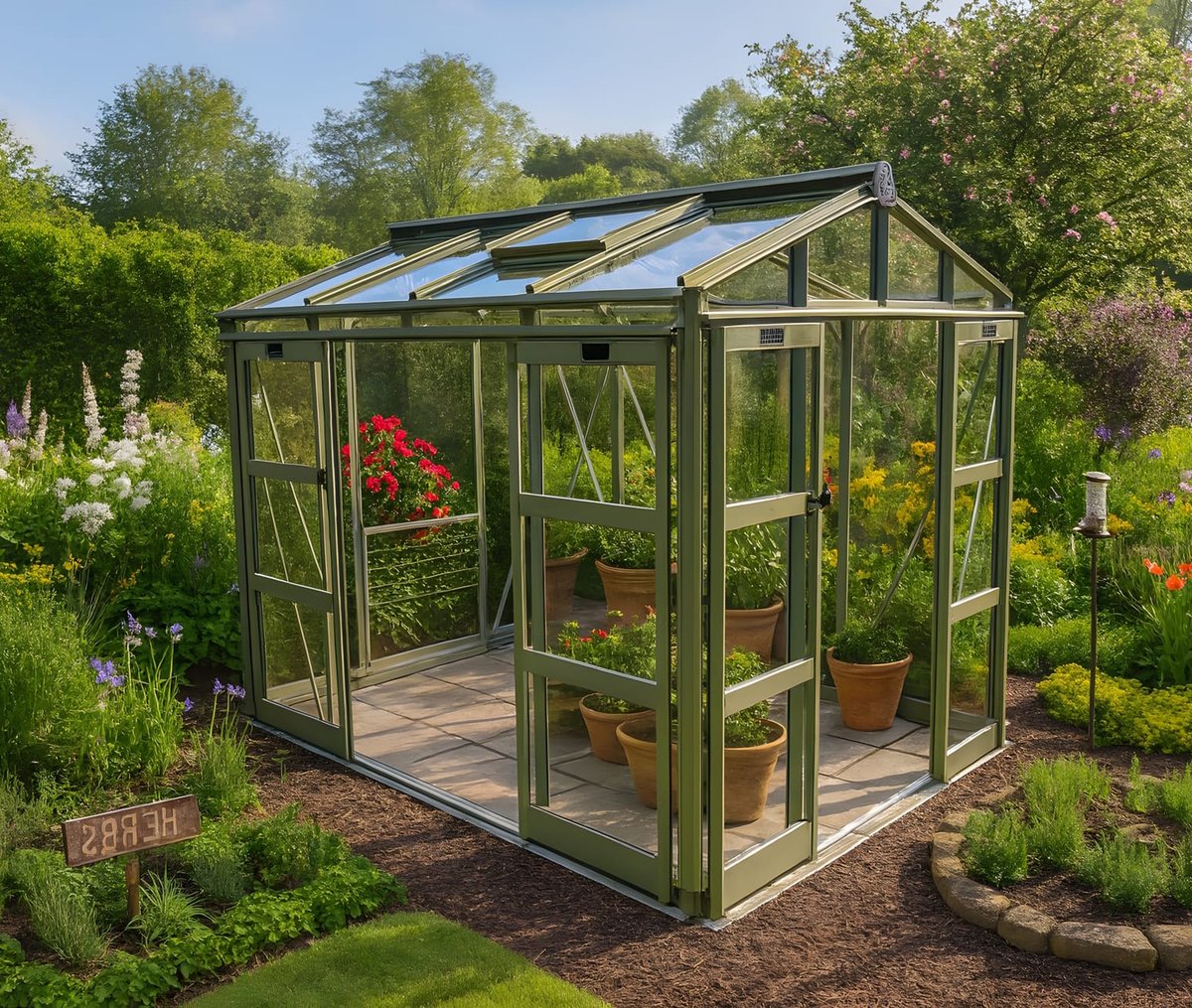
Elite Edge 4x10 Pent Roof - the narrow side-return option
The Edge 4x10 is the narrow-footprint pent-roof option for gardens where the only available space is a 4ft-wide side return against a wall or boundary. Pent (mono-pitch) roof, heavy-gauge frame, toughened glazing as standard, 4ft wide by 10ft long. It is the cheapest entry point into the Elite premium range and the right answer for terraced houses, walled courtyards, and any plot where width is the constraint.
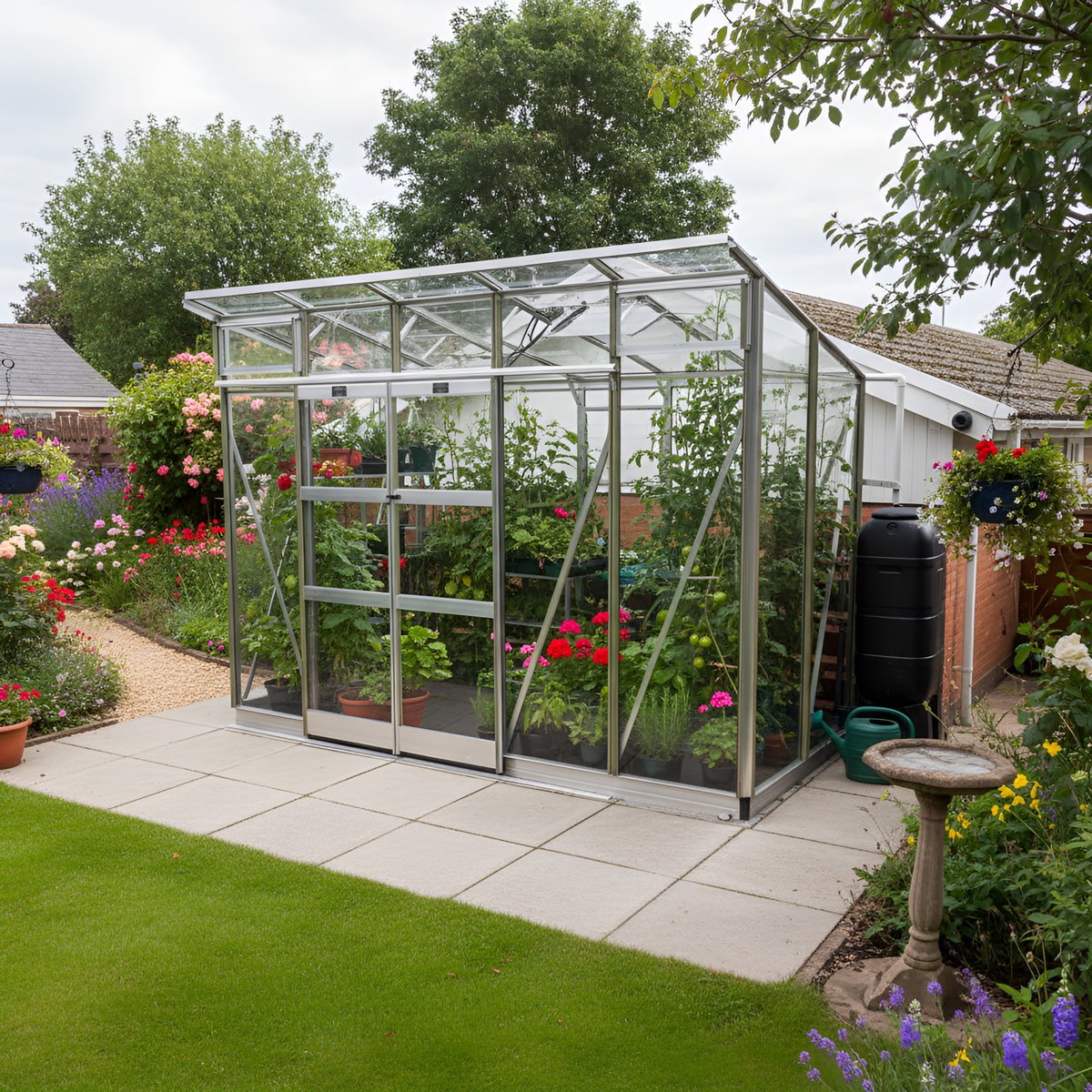
Recommendation 2: Swallow wooden range
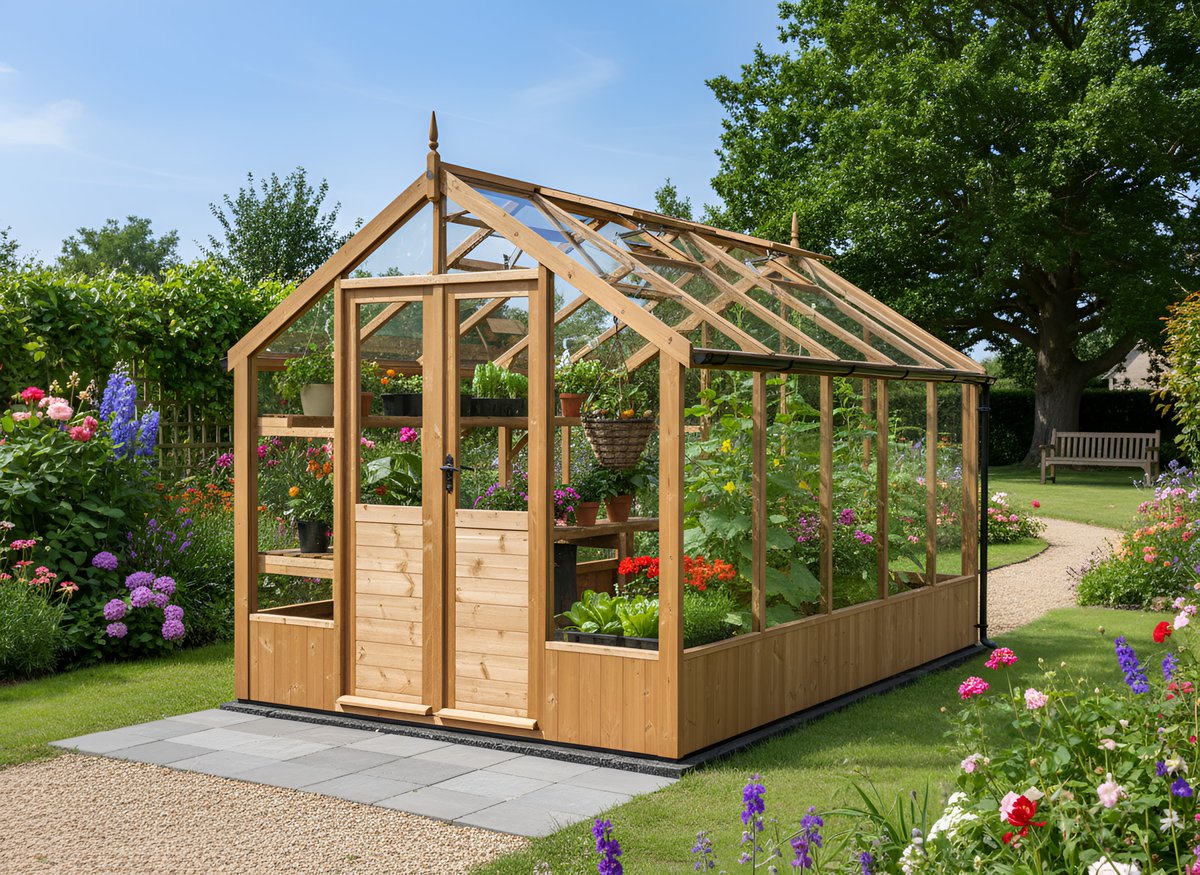
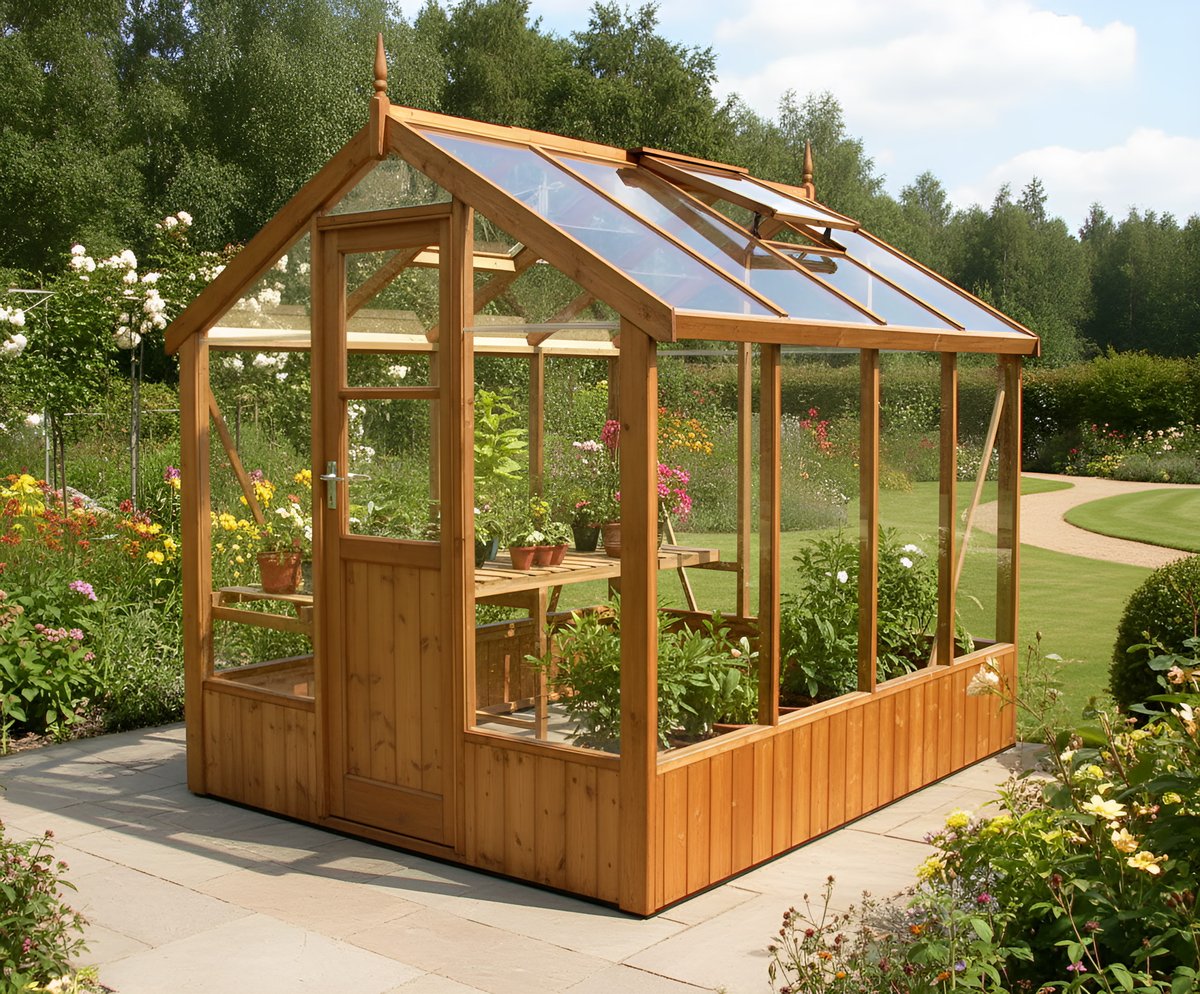
The Swallow wooden range is handcrafted in the UK from thermo wood: a heat-treated softwood that behaves more like hardwood for rot resistance and structural strength. The frames use full-dimension timber members (45mm+ frame thickness), not the thin slats some shed-style greenhouses use. The Lark, Robin, Kingfisher, and Raven are the four model lines, sized 4ft to 8ft wide and up to 16ft long.
Wood handles wind differently from aluminium. Where aluminium relies on rigidity, timber absorbs and damps shock loads. A 100mph gust hits a Swallow Kingfisher and the building flexes 2-3cm at the ridge, then springs back. The same gust on a standard aluminium frame produces permanent corner deformation. Twelve-year warranties on the Swallow range are honoured at coastal addresses we deliver to every month.
Two additional points on Swallow that matter for exposed sites:
- Free installation included. Every Swallow we sell is delivered and fitted by their own crew, not third-party couriers. Fitting on a coastal site is built into the price. That alone removes the biggest single risk on exposed installs — a botched DIY assembly.
- Thermo wood, not pressure-treated softwood. Thermo wood is heat-treated to roughly 200°C in a low-oxygen kiln. The process removes moisture-absorbing sugars and gives the timber a 20-30 year service life without re-treatment. Pressure-treated timber, which is what most cheap "wooden" greenhouses use, lasts 10-15 years in coastal salt-spray.
Elite Titan K800 - the lean-to with Titan bars
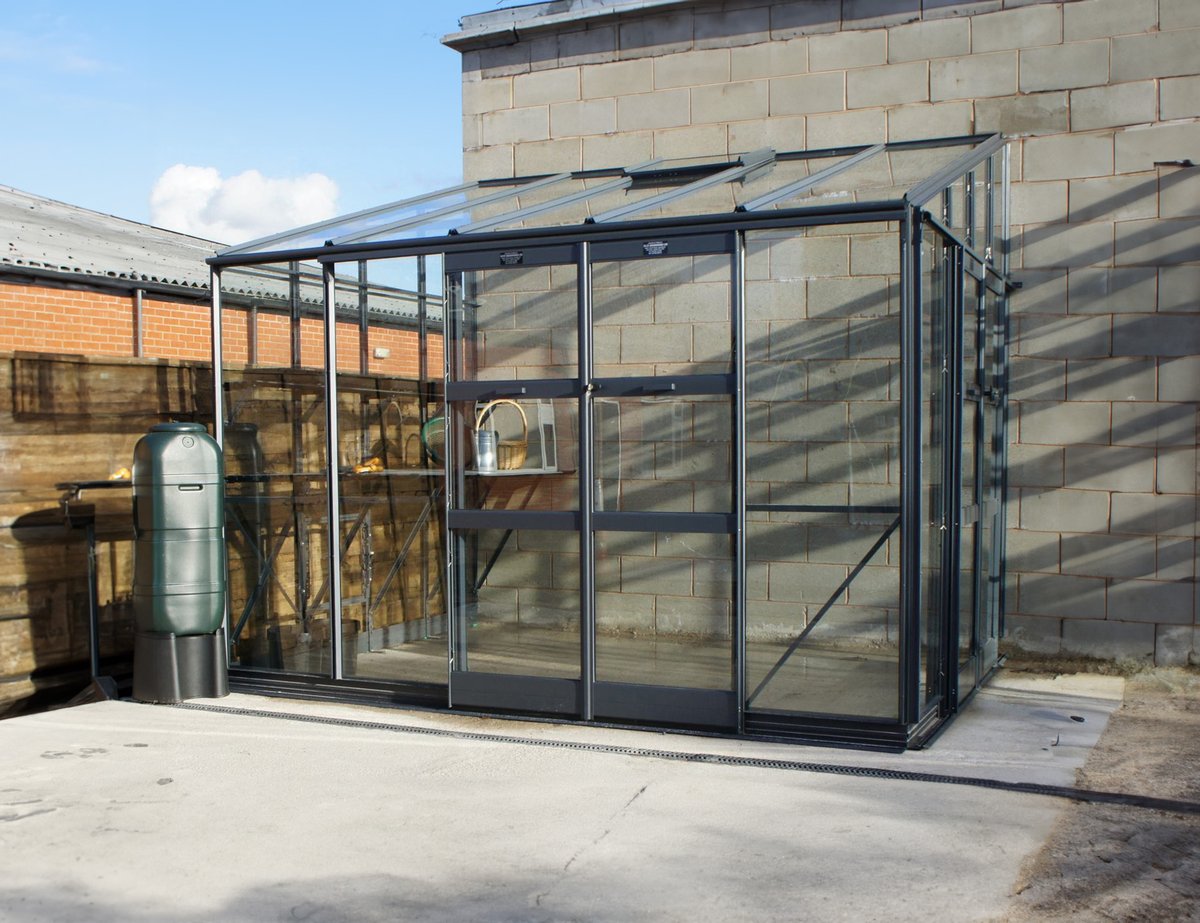
The Elite Titan K800 lean-to is the only mainstream UK lean-to greenhouse built with the same heavy-gauge glazing bars as the freestanding Titan. The K800 designation refers to the 800mm panel pitch on the wall side. The frame uses the same Titan box-section aluminium throughout, with toughened glazing as standard, sized 8ft wide and available in 10, 12, 14, and 16ft lengths. It is the lean-to we recommend for any exposed wall-mounted install where a standard hex-profile lean-to would not last.
Two things make the K800 the right answer for high-wind lean-to installs:
- Same Titan glazing bars and corner connectors. Where most lean-tos use lighter sections to save cost, the K800 carries the full structural spec across to a mono-pitch roof.
- Heavy wall-fixing rail. A separate aluminium wall channel bolts to the brickwork before the greenhouse goes up. The greenhouse then slots into the channel, distributing load along the full wall length rather than into a handful of point fixings.
For an exposed lean-to position, check the wall, base and anchoring requirements before choosing a model. Contact us to discuss your site and the Elite Titan K800 range.
Anchoring: more important than the greenhouse itself
A heavy-gauge greenhouse on a poor base fails at the base bolts. Every wind-damage call-out we have attended on a Titan or a Swallow has involved an inadequate foundation, not a frame problem. The base preparation is non-negotiable on any exposed site.
The three foundation options that work for high-wind sites, ranked:
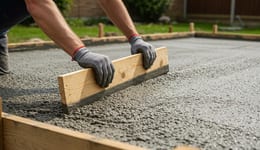
- Full concrete pad (best). 100mm-thick concrete slab, reinforced with a steel mesh, sized 30cm wider than the greenhouse footprint on all four sides. Anchor bolts cast into the wet concrete at corner positions. Cost: £800-£1,500 depending on size and access.
- Concrete perimeter foundation + paving slab infill. Concrete footing 200mm deep around the perimeter, paving slabs inside. Anchor bolts cast into the perimeter. Cheaper than a full pad and adequate for moderate exposure but not Highlands or Outer Hebrides. Cost: £500-£900.
- Brick dwarf wall (premium option). 60-90cm brick wall replaces the lower glazing, acts as a heat sink and a wind break. The greenhouse base bolts to the top of the brick course. Only available on dwarf-wall-specific models (Elite Thyme, Vitavia Cassandra, Janssens Mur). Cost: £800-£1,500 plus the brickwork.
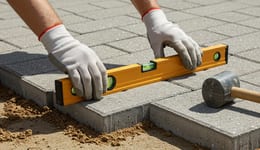
Read our full greenhouse foundation types guide before signing off on a base for an exposed site. The right base costs more up front and saves the entire structure in storm-force conditions.
Glazing choice for high wind
Glazing fails before frames on exposed sites. The cheapest single upgrade on any high-wind greenhouse is to specify toughened glass throughout, not horticultural.
| Glazing | Wind resilience | Flying-debris resistance | UK exposure rating | Premium vs horticultural |
|---|---|---|---|---|
| Horticultural glass (3mm) | Adequate to 60mph | Poor. Shatters on impact | Sheltered (Zone 4) only | Baseline |
| Toughened safety glass (4mm) | Excellent to 100mph+ | Strong, fragments into pebbles, not shards | All zones, mandatory for Zone 1-2 | +25-35% on glazing cost |
| 4mm twin-wall polycarbonate | Excellent — bends instead of breaking | Excellent: flexes around impacts | All zones, ideal for Zone 1-2 | +15-25% on glazing cost |
| 6mm twin-wall polycarbonate | Outstanding, used commercially in Highlands | Outstanding | All zones, premium choice for exposed sites | +40-60% on glazing cost |
For Zone 1 sites we recommend 4mm toughened OR 6mm twin-wall polycarbonate. Both survive storm-force wind and most flying-debris impacts. Twin-wall polycarbonate has the additional benefit that it does not need to be replaced if a single panel takes damage — it dents rather than shatters.
Snow load: the Scottish Highlands exception
UK snow load is rarely the design constraint that wind is. The Met Office snow-depth records show only a handful of areas where 30-40cm sits on a greenhouse roof for more than a day or two each winter, and almost all of them are above 200m elevation in Scotland.
For Scottish Highland installs above 200m, two design principles matter:
- Apex pitch over 30°. The steeper the roof, the better snow sheds before it accumulates. Standard apex pitches in UK greenhouses are 28-35°, which is generally adequate. Lean-to mono-pitch roofs at 15-20° are not, snow piles up and can deform the glazing bars.
- Twin-wall polycarbonate glazing. Polycarbonate flexes under snow load where glass cracks. On Highland installs we routinely specify 6mm twin-wall on the roof panels even when the side glazing is glass.
For the rest of the UK, snow-load is not a design factor for greenhouse selection. Standard apex frames clear 10-15cm of fallen snow without issue.
Site survey checklist for exposed plots
Before committing to a greenhouse on a genuinely exposed site, walk through this 10-point checklist:
- Prevailing wind direction. Stand on the site on the windiest day you can. The greenhouse gable end should face into the prevailing wind, wind hits the smallest area and sheds around the long sides.
- Wind funnels. Buildings, fences, and walls upwind create accelerated wind tunnels. Avoid placing the greenhouse 5-10m downwind of any solid vertical surface — the eddies are worse than open ground.
- Tree shelter. Mature trees 15-30m upwind reduce gust intensity by 30-50%. Useful, but check the windward trees are not so close that branches threaten the glazing in a storm.
- Elevation. Hilltop sites see 50-80% higher gusts than the field below them. If the choice is hilltop or hillside, hillside wins.
- Coastal salt spray. Anywhere within 1km of saltwater needs marine-grade aluminium fixings or galvanised steel. Standard fixings rust through in 3-5 years.
- Base access. Concrete pads need a vehicle delivery point within 30m of the site. Wheelbarrowed concrete fails to achieve full strength.
- Power supply. A heated greenhouse needs grid electricity unless you commit to solar with battery. Read our greenhouse electricity safety guide before specifying.
- Drainage. Exposed sites often have shallow topsoil over clay or rock. Plan French drains around the foundation to prevent waterlogging at the base.
- Local planning. Exposed sites are often in conservation areas, national parks, or AONBs. Check planning rules before fitting. Our greenhouse planning permission guide covers the rules.
- Snow access. Highland sites need plant-able access for snow clearance in February-March. A drift up against the door can trap you out of the greenhouse for a week.
Wind resilience compared: the seven greenhouses we recommend for exposed sites
| Greenhouse | Frame type | Frame gauge | Wind rating | Warranty | Suitable UK zones | Price from |
|---|---|---|---|---|---|---|
| Elite Titan 6x8 | Aluminium box-section | 1.0mm | Excellent | 25 years frame | Zone 1-4 (all) | £1,669 |
| Elite Titan 8x12 | Aluminium box-section | 1.0mm | Excellent | 25 years frame | Zone 1-4 (all) | £2,479 |
| Elite Sanctuary 6x10 | Aluminium heavy-gauge | Heavy box-section | Excellent (architectural) | 10 years frame | Zone 1-4 (all) | £2,250 |
| Elite Edge 4x10 (pent-roof) | Aluminium mono-pitch | Heavy-gauge | Excellent (narrow footprint) | 10 years frame | Zone 2-4 | £1,749 |
| Elite Titan K800 8x12 (lean-to) | Aluminium box-section mono-pitch | 1.0mm Titan bars | Excellent (wall-mounted) | 25 years frame | Zone 1-4 (all) | £2,629 |
| Swallow Raven 8x10 | Thermo-wood timber | 45mm+ frame thickness | Excellent (absorbs shock) | 12 years | Zone 1-4 (all) | £4,357 |
| Swallow Kingfisher 6x8 | Thermo-wood timber | 45mm+ frame thickness | Excellent | 12 years | Zone 1-4 (all) | £3,150 |
Matt's Pick: the high-wind greenhouse for serious exposed sites
Matt's Pick: Elite Titan 8x12 Greenhouse
Best For: Scottish Highlands, Outer Hebrides, Pembrokeshire coast, exposed Lake District, anywhere the standard greenhouse brochure adds "subject to site assessment"
Why I Recommend It: The 8x12 Titan is the size most exposed-site customers actually settle on, and the Titan is the only mainstream aluminium frame I will quote for a Zone 1 site without caveats. 96 square feet of floor area gives you staging on both long sides plus a centre walkway, and the 1.0mm box-section corner connectors, integrated steel-reinforced base rail, and 25-year frame warranty mean this is a greenhouse that outlasts most of the houses around it. We have install records from 2015 still in service on Welsh coast plots with no frame failures through multiple named storms. If you have a serious wind problem and the budget for a serious greenhouse, this is the answer.
Price: £2,479
Matt's Tip: Spend the Budget on the Base Before the Frame
If your budget is tight, do not buy a cheaper greenhouse to fund a heavier base. Buy a smaller greenhouse from the right range and put the full base spec under it. A 6x8 Titan on a proper concrete pad outlasts a 10x10 standard apex on slabs every time. On exposed sites the failure mode is almost always at the base interface, not in the middle of the frame. The base is what determines whether the greenhouse is still standing in 15 years.
Frequently asked questions
What is the best greenhouse for windy areas in the UK?
The Elite Titan range and the Swallow wooden range (Kingfisher and Raven) are the two greenhouses we recommend for high-wind UK sites. The Titan uses 1.0mm box-section aluminium with a 25-year frame warranty. The Swallow range is handcrafted UK thermo wood with full-dimension timber members and a 12-year warranty. Both have been installed successfully on the Scottish coast, Welsh coast, and exposed Pennine plots.
Do I need a special greenhouse for Scotland?
Yes, Scottish sites above 200m elevation and most coastal Scottish locations need a heavy-gauge aluminium or structural-timber greenhouse, not a standard apex. Annual gusts of 80-120mph are routine across the Highlands, Outer Hebrides, Orkney, and Shetland. Standard hex-profile frames fail within 3-5 years in these conditions. Elite Titan or Swallow wooden are the two ranges we recommend for Scottish installs.
How do I check whether a greenhouse suits an exposed site?
Ask for model-specific advice before ordering. Suitability depends on the site, frame, glazing, base and anchoring. Do not assume a general wind rating applies to every model.
Can a greenhouse survive a 100mph wind?
Yes. Heavy-gauge aluminium and structural-timber greenhouses regularly survive 100mph+ gusts when properly anchored to a concrete pad. The Elite Titan has post-storm reports from Storm Eunice (2022 gusts up to 122mph) with no frame damage. Standard hex-profile apex frames typically fail at 70-80mph. The frame, the glazing, and the base all need to be specified for storm-force wind, not just one of the three.
How much snow can a UK greenhouse take?
Standard UK apex greenhouses handle 10-15cm of fallen snow on the roof without structural risk; heavy-gauge frames handle 30-40cm. The 30-40cm threshold is rare outside the Scottish Highlands. For Highland sites above 200m we specify 6mm twin-wall polycarbonate roof glazing — polycarbonate flexes under snow load where glass cracks.
Should I get toughened glass or polycarbonate for an exposed site?
Either works, toughened glass is better for visibility and durability, polycarbonate is better for flying-debris resistance. For Zone 1 (Highlands, Outer Hebrides, Pembrokeshire coast) we recommend 6mm twin-wall polycarbonate because it dents rather than shatters on debris impact. For Zone 2 (most exposed UK sites) 4mm toughened glass is the right choice. Horticultural glass is not suitable for any exposed site.
Do you install greenhouses in Scotland and Wales?
Yes: Greenhouse Stores delivers and installs greenhouses across the UK including Scotland, Wales, Northern Ireland, the Isle of Man, and offshore islands subject to ferry access. Highland and coastal installs include a site survey to confirm wind exposure and base requirements before quoting. Swallow wooden greenhouses include installation in the headline price; Elite Titan and Titan K800 lean-to installs are quoted per site.
Next steps for an exposed-site install
The decision sequence for any high-wind site is the same: confirm the wind zone first, choose the frame second, specify the glazing third, plan the base fourth. Most customers do it in the opposite order and end up replacing the greenhouse within five years.
If you want a delivered price including installation for the Elite Titan range or the Swallow wooden range, the team at Greenhouse Stores will quote on any UK postcode including Scottish Highlands, Welsh coast, Lake District, and offshore islands. Site surveys for genuinely exposed plots are free and inform the foundation specification before we commit a delivery date.
Related articles
- Greenhouse Wind Damage Guide: UK Installer's Perspective
- Greenhouse Foundation Types: Complete Base Comparison Guide
- Greenhouse Roof Shapes UK: Apex, Lean-To, Orangery, Dwarf Wall & Combi Compared
- Greenhouse Planning Permission UK: Complete Rules Guide
- How to Run Electricity to a Greenhouse: UK Safety Guide