Twin-Wall vs Single-Wall Polycarbonate Greenhouse UK: Installer Comparison
Twin-wall polycarbonate usually makes sense when warmth and year-round use matter more than maximum light. Clear single-wall polycarbonate lets in more light and costs less, which can suit a sheltered greenhouse used from spring to autumn. The right choice depends on the published panel specification, the greenhouse frame and how exposed the site is.
This guide explains the practical differences without relying on undocumented tests. Figures vary by manufacturer and product, so check the specification on the greenhouse you are considering rather than assuming every 4mm or 6mm panel performs identically. You can also browse our current polycarbonate greenhouse range by size and brand.
At a glance
- Warmth: Twin-wall panels contain an air space, so they normally lose heat more slowly than a clear single sheet.
- Light: Clear single-wall glazing generally has higher light transmission. Twin-wall glazing diffuses more of the incoming light.
- Strength: Polycarbonate resists impacts and does not shatter like glass, but lightweight panels still need a securely anchored frame.
- Appearance: Single-wall glazing looks clearer. Twin-wall panels have visible ribs and a translucent finish.
What is the difference between the two panel types?
Single-wall glazing is one clear sheet of polycarbonate. It is thin and light, with an appearance closer to glass than a multi-wall panel. Twin-wall glazing has two outer skins joined by internal ribs. The channels between them trap air and reduce heat transfer through the panel.
The construction affects more than insulation. Clear single-wall glazing gives a sharper view through the greenhouse and allows more direct light to reach plants. Twin-wall glazing softens and spreads the light. Its ribbed structure also makes the panel more rigid, although the finished greenhouse still relies on its frame, glazing fixings and base for stability.
Some greenhouses combine the two. The Palram Canopia Hybrid uses clear side panels and a twin-wall roof. That layout keeps the sides transparent while using a more insulating panel above. If you are still deciding between polycarbonate and glass, start with our glass versus polycarbonate guide.
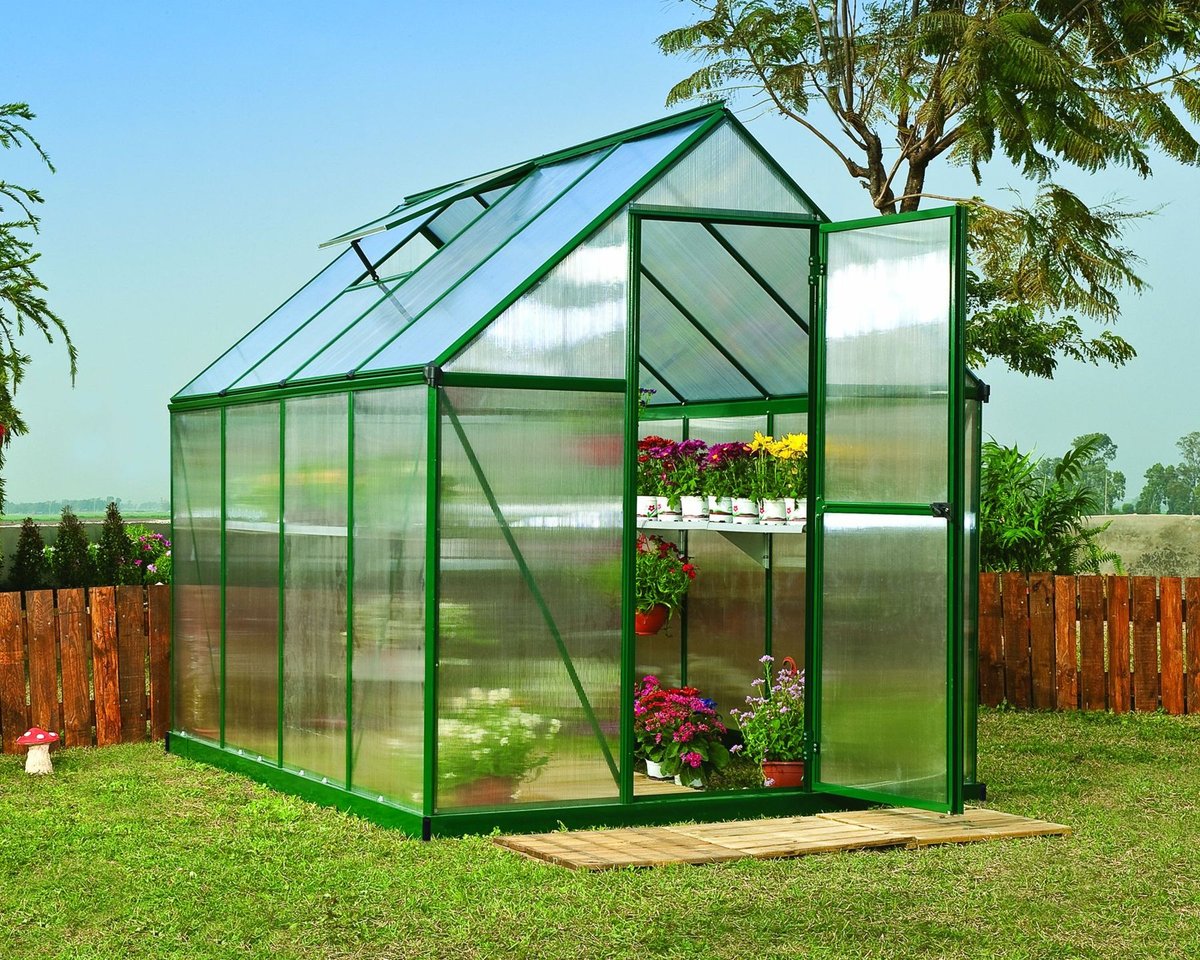
Compare U-values, not broad warmth claims
A U-value describes the rate of heat transfer through a material. A lower figure indicates better insulation. This is the most useful published figure when comparing panels, but only when the measurements use the same units and test method.
Panel thickness is not the whole story. Sheet construction, number of walls and manufacturer can all affect the result. Heat also escapes through gaps around doors, vents, glazing bars and the base. A panel U-value should not be presented as a guaranteed overnight temperature for the complete greenhouse.
If winter heating is planned, compare the exact glazing data listed by each manufacturer and give equal attention to draughts and ventilation. A well-fitted twin-wall greenhouse will usually be easier to heat than a similar single-wall model. It will not, however, remain frost-free without enough heat during cold weather. Our winter greenhouse guide explains the wider heat-loss picture.
How much light does each panel let through?
Clear single-wall polycarbonate normally provides higher visible-light transmission than twin-wall glazing. Twin-wall panels have two skins and internal ribs, so some light is scattered as it passes through. This creates a more diffuse light inside the greenhouse.
Higher transmission is useful on a shaded plot or where crops need strong light. Diffuse light has its own advantages because it reaches plants from a wider range of angles and produces fewer sharp shadows. Neither glazing type can compensate for a greenhouse placed beneath dense trees or on the permanently shaded side of a building.
Use the percentage stated on the product page or manufacturer datasheet. Marketing phrases do not tell you the light-transmission figure, panel thickness or U-value.

Impact resistance and wind are separate issues
Polycarbonate flexes under impact instead of breaking into sharp pieces. That makes it a practical option for family gardens, schools and sites where flying debris is a concern. Twin-wall sheets are more rigid than a thin single sheet, though the precise impact rating depends on the panel.
Wind resistance is determined by the complete greenhouse, not the glazing material alone. Polycarbonate panels are much lighter than glass. If the base, frame or glazing clips are loose, wind can get beneath a panel and pull it from the frame. A thicker sheet does not make poor anchoring safe.
Check the manufacturer's wind rating where one is published. Follow its instructions for the base, anchors and glazing system, and inspect the fixings after severe weather. An exposed coastal plot needs a different specification from an enclosed town garden. For further preparation advice, see our greenhouse wind-damage guide.
How long will the glazing last?
Lifespan depends on the panel grade, UV protection, orientation, exposure and maintenance. Quality greenhouse polycarbonate has a UV-protected face that must point outwards. The protective film and installation instructions identify the correct side. Fitting a panel backwards can cause it to degrade sooner.
Twin-wall sheets also need the correct end treatment. The channels should be closed as the manufacturer directs so that dirt, insects and excess moisture do not collect inside. Avoid abrasive cleaners on either type of panel. Warm water, a mild detergent and a soft cloth are safer choices.
Do not use a generic lifespan range as a warranty. Check the written cover supplied with the model, including exclusions for storm damage, incorrect assembly and discolouration. Replacement-panel availability is also worth checking before purchase.
Which option costs more?
At comparable sizes, a twin-wall model often costs more than a clear single-wall model. The gap is not fixed because the frame, doors, vents, colour and included base can differ. Compare complete greenhouses rather than dividing the ticket price by panel thickness.
Running cost matters only if the greenhouse will be heated. Better-insulating glazing reduces one route of heat loss, yet electricity use will still depend on the target temperature, outside weather, greenhouse area and air leakage. Be cautious of a claimed payback period unless it includes those inputs.
For an unheated greenhouse used between spring and autumn, the lower purchase price and higher light transmission of single-wall glazing may be more valuable. For propagation, overwintering or regular cold-weather use, twin-wall panels are usually the more suitable starting point.
Current ranges by glazing type
Palram Canopia Harmony
The Harmony uses clear polycarbonate panels. It suits buyers who want transparency, high light transmission and glazing that does not shatter. Sizes, colours and specifications vary, so check the individual model before ordering.
Palram Canopia Hybrid
The Hybrid combines clear side panels with a twin-wall roof. It sits between a fully clear greenhouse and a full twin-wall model. Consider it when you want clear views through the sides without using the same panel construction across the roof.
Palram Canopia Mythos
The Mythos uses twin-wall polycarbonate throughout. It is a straightforward option for buyers who value diffuse light and improved insulation over a completely clear view through the panels.
Vitavia polycarbonate models
Polycarbonate variants are available across several Vitavia ranges, including selected Venus, Apollo, Orion, Jupiter, Phoenix and Neptune models. Availability changes by size and finish. Models with similar names may offer different glazing choices, so confirm the wording on the exact product.
Elite polycarbonate models
Relevant Elite models use thicker twin-wall polycarbonate with substantial aluminium frames. They sit at a higher price point than entry-level Palram and Vitavia options. Compare the stated panel, base and anchoring specification rather than choosing on thickness alone.
A short buying checklist
- Check the exact panel construction and thickness.
- Compare published light-transmission and U-value figures.
- Read the warranty and note what storm cover excludes.
- Make sure the greenhouse can be anchored securely at your site.
- Look at replacement-panel availability and cost.
- Choose clear single-wall for maximum light and visibility.
- Choose twin-wall when insulation and diffuse light are more important.
Frequently asked questions
Is twin-wall polycarbonate worth the extra cost?
It can be worthwhile for a greenhouse used in colder months or with heating. For seasonal, unheated use, clear single-wall glazing may offer better value.
How thick should greenhouse polycarbonate be?
Use a thickness approved for the specific greenhouse frame. Common twin-wall options include 4mm and 6mm, but thickness alone does not describe the whole panel.
Does twin-wall polycarbonate provide enough light for tomatoes?
It can, provided the greenhouse has a sunny position. Check the panel's published light transmission and avoid unnecessary shade around the structure.
Will single-wall polycarbonate survive a UK winter?
A suitable single-wall greenhouse can remain outside all year when assembled and anchored correctly. Exposure, frame strength and fixings matter as much as the panel.
Why does polycarbonate become cloudy?
UV exposure, surface damage, incorrect installation and ageing can reduce clarity. Fit the UV-protected face outwards and follow the maker's cleaning instructions.
Can single-wall panels be replaced with twin-wall panels?
Only when the manufacturer confirms the frame and glazing channels accept the thicker panel. Do not assume sheets are interchangeable.
Which type is better in hail?
Both resist impact better than breakable glazing. Twin-wall panels are more rigid, but the relevant product rating should guide the decision.