Wooden Greenhouse Guide UK: ThermoWood, Timber & Maintenance
From our work with Greenhouse Stores customers since 2012, we rate ThermoWood as the timber to buy. It carries a 12-year frame warranty, an expected 50-year life, and holds overnight heat better than aluminium. Expect to pay roughly £2,669 to £12,070 fitted, with installation included free on every Swallow model.
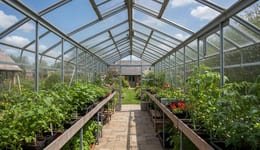
A wooden greenhouse is a long-term decision. The frame outlives most of the plants you will grow in it. This guide explains the timber types, the real costs, the maintenance, and the five Swallow models we install most often. It is written from the van and the install site, not from a brochure. For the full range, browse our wooden greenhouses collection.
Key takeaways
- ThermoWood beats softwood and treated timber. Heat-treating to around 212°C removes the sugars that rot and insects feed on. Swallow expects a 50-year frame life.
- Timber holds heat better than metal. On monitored installs we see a wooden house sitting 2-3°C warmer than an aluminium one at dawn in March.
- Budget £2,600 to £13,000 fitted. Every Swallow price already includes free installation by their own teams.
- Maintenance is one job a year. A coat of clear preserver inside and out keeps the 12-year warranty valid.
- Lead time is 8-12 weeks. Each greenhouse is hand-built to order once your base is confirmed ready.
Installer's Note
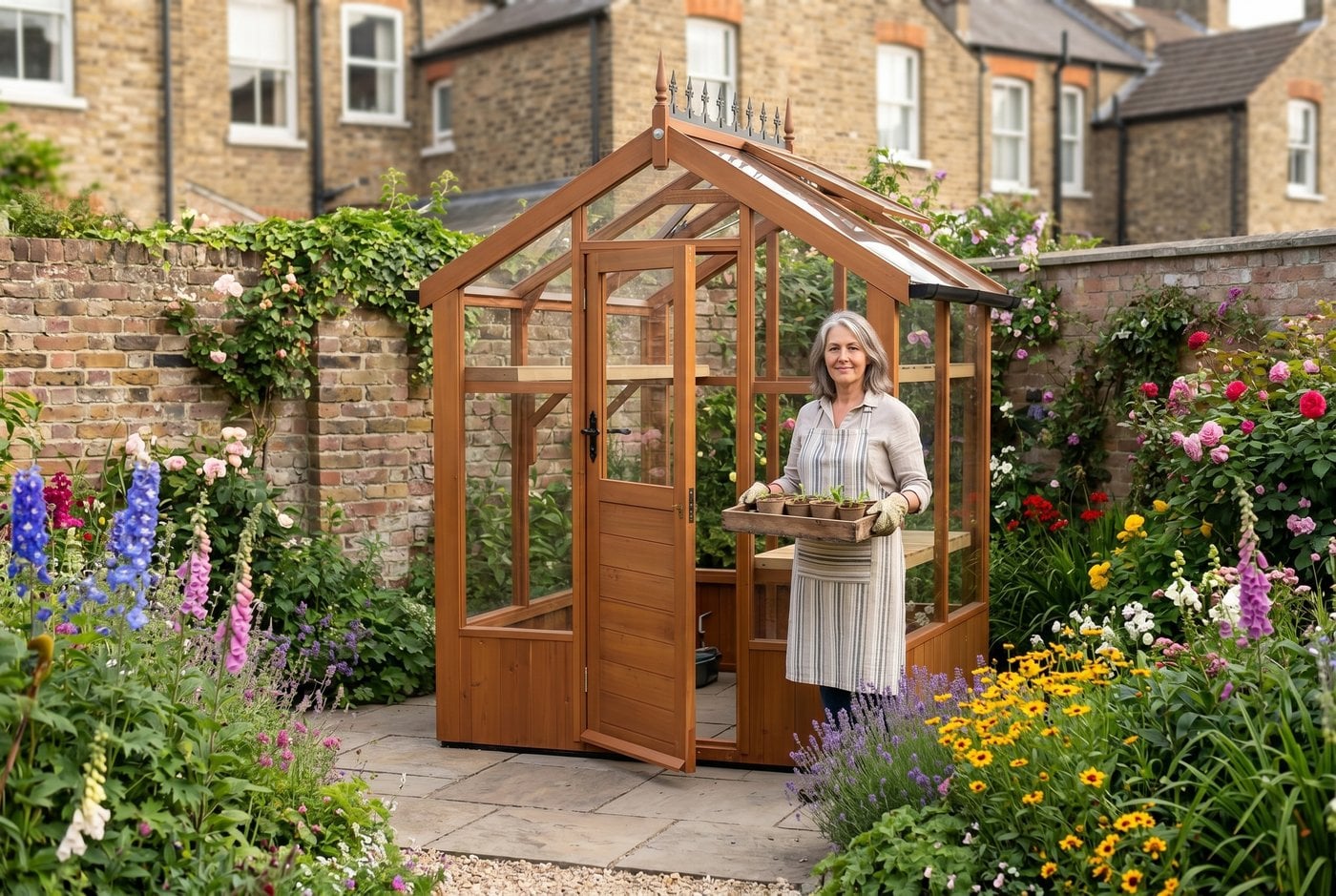
From our work with Greenhouse Stores customers since 2012, I have never gone back to replace a ThermoWood frame for rot under warranty. We have re-glazed a few after footballs and storms. We have swapped autovent pistons. The timber itself just keeps going. The owners who get the longest life are the ones who give the wood ten minutes with a brush each spring. That is the whole maintenance job.
Why choose a wooden greenhouse over aluminium?
A wooden greenhouse holds heat better, feels warmer to work in, and suits a traditional garden in a way aluminium cannot. Timber is a natural insulator. Aluminium conducts heat straight out through the frame on a cold night. On installs where we have left a logger in both types over the same week, the wooden house held roughly 2-3°C more overnight in early spring. That can be the difference between a frost-free bench and a tray of dead seedlings.
There is a strength point too. A Swallow frame uses solid 45mm timber sections. Glass sits in routed grooves and is sealed with silicone, not clipped behind thin metal bars. Nothing rattles in the wind. The trade-off is honest: timber is heavier, costs more up front, and needs a yearly coat of preserver. Aluminium asks for almost nothing. If you want to weigh the frame materials on lifespan alone, our guide on how long a greenhouse lasts by material and brand sets out the numbers.
What is ThermoWood, and why does it matter?
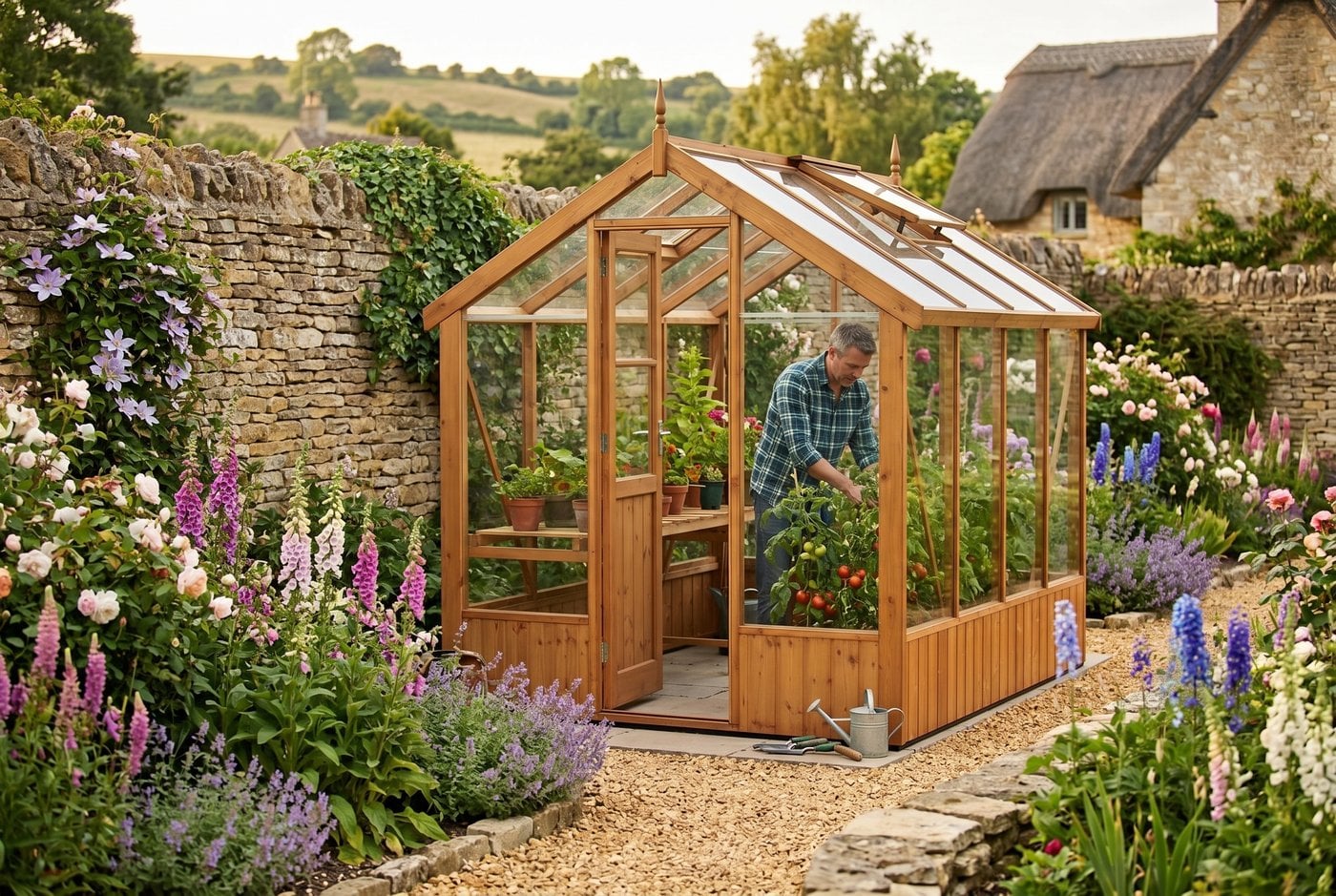
ThermoWood is timber baked to around 212°C in a low-oxygen kiln, which drives out the moisture and sugars that rot and insects need. The wood comes out darker, lighter in weight, and far more stable. It barely swells or shrinks with the seasons. That stability is the real prize. A door that fits in January still fits in July. We have stopped seeing the sticking doors and dropped frames that plagued cheaper softwood houses a decade ago.
Swallow build every greenhouse from Scandinavian redwood pine treated this way. The frame carries a 12-year warranty against rot, decay and insect attack, and Swallow quote an expected life of 50 years. The damp barrier matters as much as the timber. Every model gets a 20-25mm black PVC strip screwed to the base, so rising damp from the slab never reaches the wood. That detail is why the frames last.
Heat treatment also keeps the timber light. A Robin frame is easy for two fitters to carry through a side passage. Access still needs planning, though. The smaller Robin and Lark models need 1727mm of clear access height. The bigger Raven and Mallard need 2672mm and no right-angle turns. We check this before every order.

|
Matt's Pick for most gardenersBest For: growers who want the popular 6ft width with room to spread out. Why I Recommend It: the 6x8 is our best-seller, but the extra two feet of the 6x10 is the size I fit most in serious growers' gardens. Two roof autovents, full-length staging, and a frame I have never seen rot. Price: £3,397 |
ThermoWood vs softwood vs pressure-treated timber
For a greenhouse, ThermoWood is the only timber we recommend; softwood rots and pressure-treated frames still move. The three are not close on a structure that lives outdoors and stays damp inside. Here is how they compare on the points that decide longevity.
| Timber type | How it is made | Rot resistance | Stability | Typical frame life |
|---|---|---|---|---|
| ThermoWood | Baked to ~212°C, no chemicals | Very high, sugars removed | Excellent, barely moves | Up to 50 years |
| Pressure-treated softwood | Preservative forced in under pressure | Good for a few years | Fair, swells and shrinks | 15-25 years |
| Untreated softwood | Sawn deal, painted at best | Poor, needs constant care | Poor, warps and sticks | 10-15 years |
| Western red cedar | Naturally oily timber | High, but softens with age | Good | 20-30 years |
Cedar earns a mention because it is the timber people assume a quality wooden greenhouse uses. It is good wood. It is also soft, so screws can pull and the surface marks easily. Swallow do not use cedar. They use heat-treated redwood pine, which is harder and more stable. So please do not call a Swallow frame cedar; it is thermo-treated timber, and that is the better material here.
How much do wooden greenhouses cost in the UK?
A fitted Swallow wooden greenhouse runs from around £2,669 for the compact Robin to over £12,070 for the largest Mallard. That price already includes free installation by Swallow's own teams. A like-for-like aluminium greenhouse costs less up front, often half as much. You are paying for the timber, the toughened glass, the autovents, and the fitting. For a wider view across all materials, our UK greenhouse cost guide breaks down every price band.
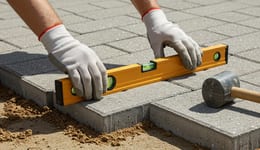
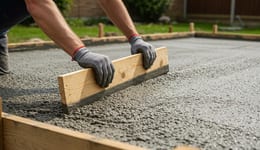
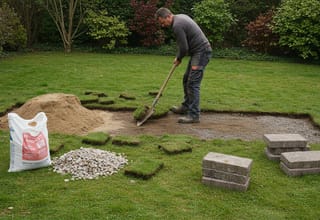
The cost people forget is the base. A wooden greenhouse needs a firm, level foundation, and that is a separate job. We see three options. A perimeter base of 50mm paving slabs is the most common and the most forgiving. A full slab pad costs more but gives you a clean floor. A concrete pad is the priciest. Budget £300 to £800 for a base depending on size and ground. Get this right and the frame sits true for life. Our greenhouse base comparison guide walks through each type.
Matt's Installation Tip
Why 50mm paving slabs beat a solid concrete pad on most sites: they flex with ground movement and will not crack the base frame. We have seen concrete pads lift 3-4mm in a hard frost, enough to twist a frame and jam a door. Slabs settle with the ground and the timber stays square. Lay them on a compacted sub-base, check level across the diagonals, and the install goes smoothly.
How to maintain a wooden greenhouse
Maintaining a wooden greenhouse is one job a year: a coat of clear wood preserver inside and out. Do it on a dry day in spring or early autumn. Brush the timber clean first, then apply the preserver Swallow recommend. This keeps the 12-year warranty valid and stops the wood greying. A painted finish needs the same care, with a re-coat of the matching paint every two to three years where the weather hits hardest.
The other jobs are quick. Wash the glass twice a year so the plants get full light. Clear the autovent track of grit so the piston runs free. Check the silicone bead along the glazing grooves and top it up if it shrinks. That is the lot. A wooden greenhouse asks for more than aluminium, but the work is light and the payback is decades of service. Our seasonal greenhouse maintenance checklist sets out the full year.
Matt's Tip: Treat the wood before you fill it
Give the frame its first coat of preserver in the first dry week after we leave, before the staging fills with pots and trays. It is far easier to reach every joint with an empty house. Once the bench is loaded you will skip the awkward corners, and those are the spots that grey first. Ten minutes early saves a fiddly job later.
Which wooden greenhouse size is right for you?
Match the size to your space and your access, not just your plant list. The Robin 5x4 suits a patio or a small town garden, at 1728mm wide with a single door. The Kingfisher 6x8 is the popular family size, wide enough for staging down one side and a growing bed on the other. The Raven 8x10 adds double doors at 2660mm wide, so a wheelbarrow rolls straight in. If you want the look of an orangery, the T-shaped Mallard gives a porch entrance, guttering all round, and a copper roof valley. It is the showpiece of the range.
Think about doors and growing beds early. Single doors save space; double doors earn their keep if you barrow compost in and out. If storage matters as much as growing, a combi model splits the building into glass and shed. Our guide to greenhouse combi sheds covers that layout. And if your plot is exposed, read our notes on greenhouses for high wind and snow load before you choose a size.
Painted or natural ThermoWood: which finish?
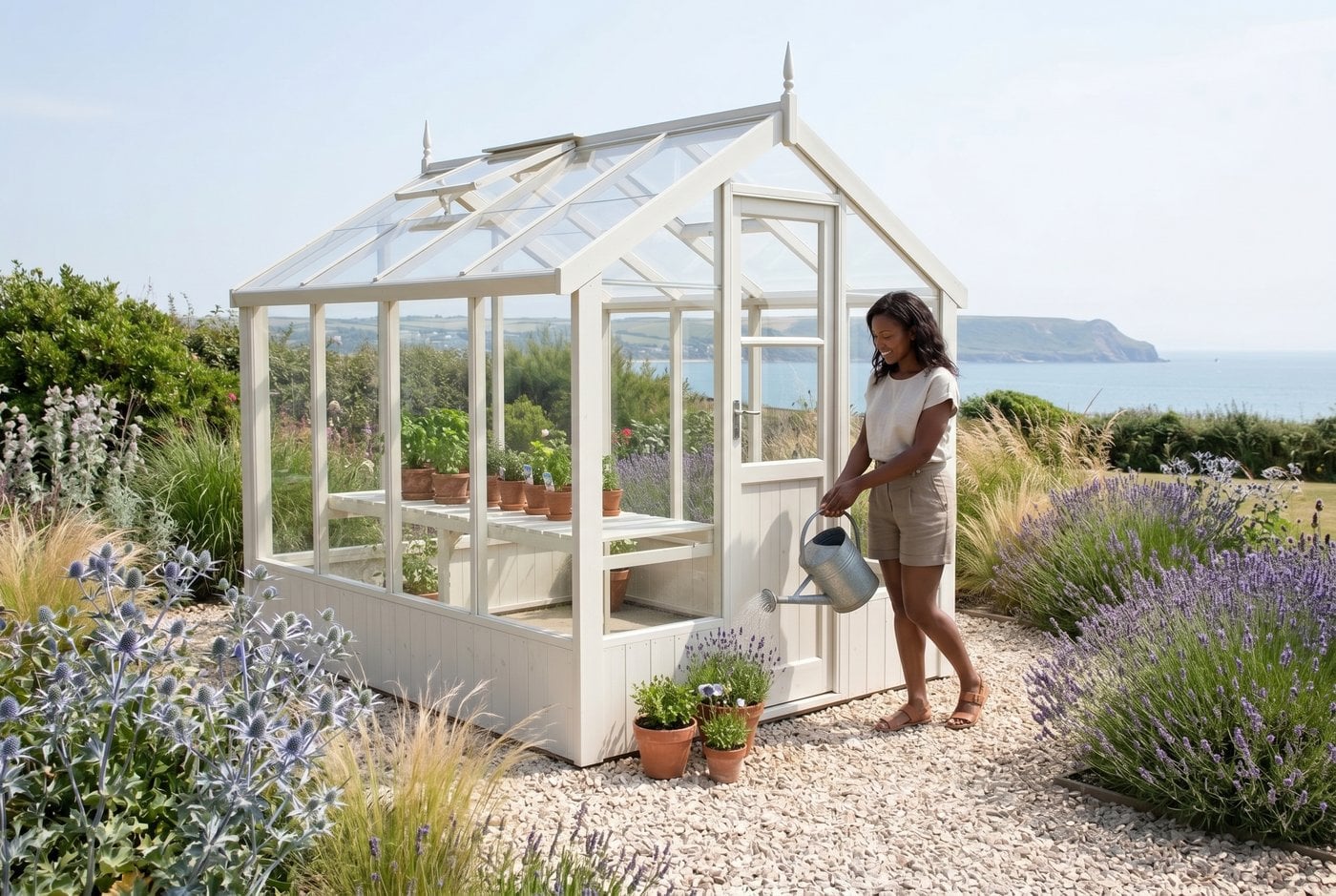
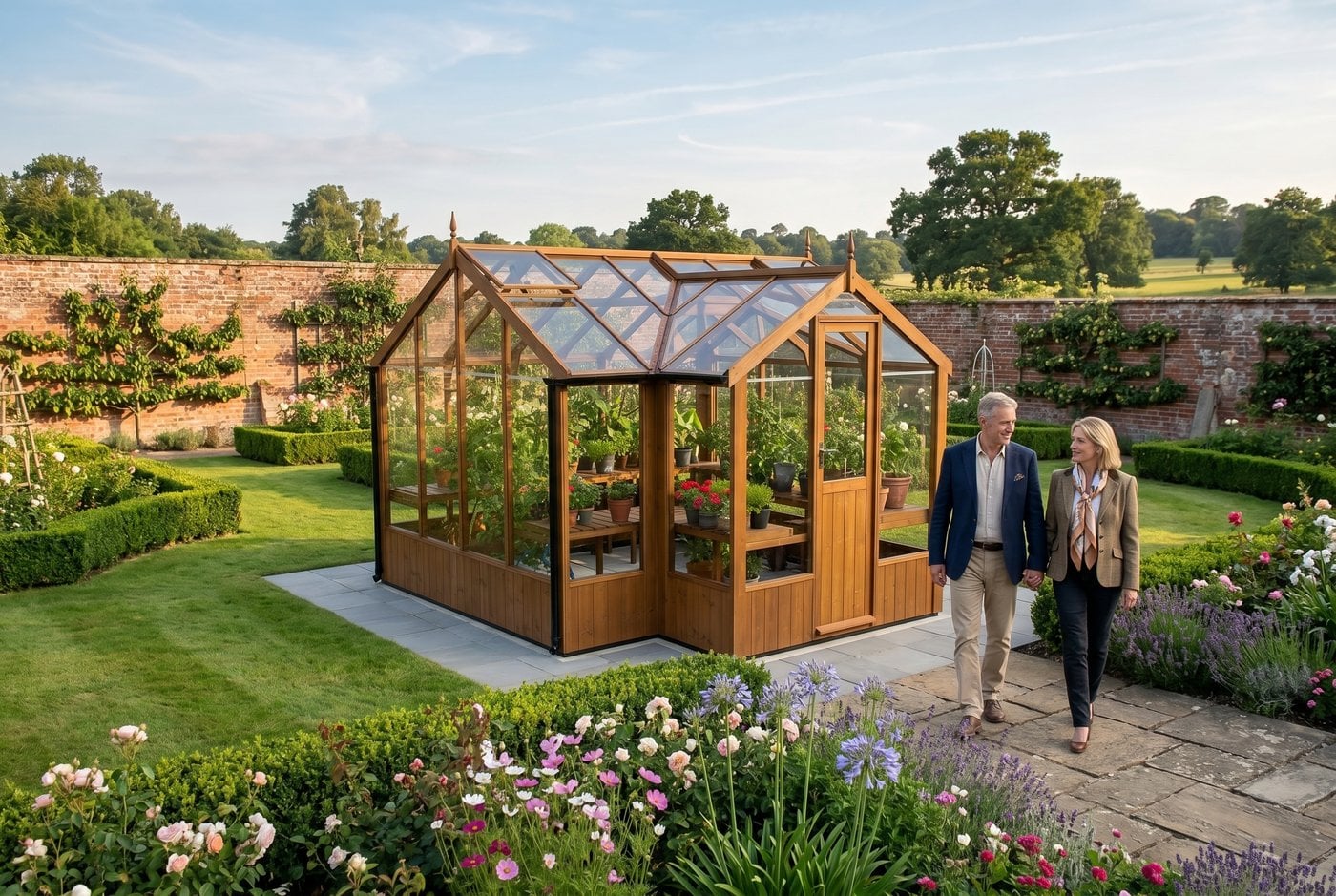
Natural ThermoWood gives a warm honey tone that weathers gently; a painted finish gives a colour that lifts the whole garden. Both start from the same heat-treated frame, so durability is equal. The choice is about looks and upkeep. Swallow spray their painted models in the factory before delivery, so the coat is even and reaches every joint. The range covers eight shades, from Summer Green and Robin's Egg Blue to Stone, Navy and classic white.
A natural frame needs a clear preserver once a year. A painted frame needs the same preserver inside, plus a re-coat of the matching colour every two to three years on the weather side. We fit a lot of painted Robins and Kingfishers on coastal plots, where a pale frame looks right against the sky. Inland, in a walled garden, the natural timber often suits the brick better. Neither is wrong. Order the painted version from the factory rather than painting a natural frame yourself; the sprayed coat lasts far longer than a brushed one.
Five mistakes we see with wooden greenhouses
Most problems with a wooden greenhouse start with the base or the first year of care, not the timber. From our work with Greenhouse Stores customers since 2012, the same five issues come up. Avoid them and the frame will outlast you.
- Skipping the first coat of preserver. Owners wait a season, the wood greys, and the warranty paperwork is at risk. Treat it in the first dry week.
- An out-of-square base. If the slabs are not level across the diagonals, the door never sits right. Check before we arrive.
- Blocking the autovents. Pots stacked on the staging can foul the vent arm. The house overheats and seedlings cook.
- Wrong access planning. A Raven needs 2672mm of clear height to reach the site. Measure the gate and side passage first.
- Ignoring the silicone. The bead along the glazing grooves shrinks over years. Top it up before a pane works loose.
None of these are timber faults. They are setup and habit. Our list of common greenhouse growing mistakes covers the planting side once the building is sorted.
Swallow wooden greenhouse range compared
Every model below is hand-built from ThermoWood, glazed with 3mm toughened safety glass, fitted with Bayliss autovents, and installed free. Prices are live and include fitting.
| Model | Width & doors | Fitted price | Best for | Matt's verdict |
|---|---|---|---|---|
| Robin 5x4 | 1728mm, single door | £2,669 | Patios, small gardens | The neatest way into a real wooden house. |
| Kingfisher 6x8 | 2035mm, single door | £3,150 | Family growing | Our best-seller for good reason. |
| Kingfisher 6x10 ⭐ Matt's Pick | 2035mm, single door | £3,397 | Serious growers | The size I fit most. Best balance of space and cost. |
| Raven 8x10 | 2660mm, double doors | £4,357 | Barrow access, big crops | Double doors change how you work in it. |
| Kingfisher 6x8 Painted | 2035mm, single door | £3,745 | A colour finish | Factory-sprayed in eight shades. Looks superb. |
| Mallard 8x11 T-shape | 2660mm, porch entrance | £8,847 | A garden showpiece | Orangery looks with guttering and a copper valley. |
"We chose to install Swallow over every other wooden greenhouse because of one detail: the ThermoWood frame and the 20mm damp barrier on the base. Over the years, I have not replaced a frame for rot. The doors still fit. That is what a 50-year timber and a 12-year warranty actually look like on the ground."
— Matt W, Greenhouse Stores
Frequently asked questions
Are wooden greenhouses better than aluminium?
Wooden greenhouses hold heat better and suit traditional gardens. They cost more and need a yearly coat of preserver. Aluminium is cheaper and almost maintenance-free. Choose timber for warmth, looks and longevity; choose aluminium for budget and zero upkeep.
How long does a wooden greenhouse last?
A ThermoWood greenhouse lasts around 50 years with basic care. Swallow back the frame and base with a 12-year warranty against rot, decay and insect attack. Cheaper softwood frames last 10 to 25 years. Annual treatment is what decides the real lifespan.
Do I need to treat a ThermoWood greenhouse?
Yes, once a year with a clear wood preserver inside and out. ThermoWood resists rot far better than softwood, but the coating stops the timber greying and keeps the warranty valid. The job takes about ten minutes per metre of frame on a dry day.
How much does a wooden greenhouse cost in the UK?
Fitted Swallow models run from around £2,669 to over £12,070. Every price includes free installation. Budget a further £300 to £800 for the base, which is a separate job and not included in the greenhouse price.
What base does a wooden greenhouse need?
A firm, level base sized to the model's minimum dimensions. A perimeter of 50mm paving slabs is the most common and forgiving choice. A full slab or concrete pad works too. The base must be ready and confirmed before Swallow build and deliver.
How long does delivery and installation take?
Around 8 to 12 weeks from the date you confirm your base is ready. Each greenhouse is hand-built to order, then delivered and installed by Swallow's own teams. You pay a deposit on order and the balance to the fitters on completion.
Related articles
- Greenhouse roof shapes compared: apex, lean-to, orangery and more
- 12 best contemporary and modern greenhouse styles in the UK
- Best mini greenhouses UK: compact growing for small spaces
- Greenhouse flooring options: gravel, slabs, concrete or soil?
- Greenhouse ROI: does a greenhouse save you money on food?