Greenhouse Tomato Flower Drop: Why Heat Stops Fruit Set
Greenhouse tomatoes drop their flowers when heat wrecks the pollen. AHDB puts 30C as the point where fruit set falls away in most cultivars, but the bigger culprit is night temperature: above roughly 21C, pollen suffers even after a reasonable day. The cruel part is the timing. The damage is done in the bud about nine days before the flower opens, so the trusses failing today were lost last week. From our work with Greenhouse Stores customers since 2012, here is what helps and what does not.
Key Takeaways
- Fruit set starts failing above 30C. Around 40C for three hours on two consecutive days, it fails outright.
- Nights matter more than days. Above 21C at night fruit set suffers, and above 24C pollen tube growth is blocked.
- Pollen is damaged roughly nine days before the flower opens, during meiosis in the bud. You cannot see it coming.
- In one trial at 32C days with 26C nights, buds produced half the pollen and germinating grains fell about thirteen-fold.
- Tapping trusses works, but only for pollen transfer. It cannot resurrect pollen the heat has already killed.
- Misting is not supported by evidence and can backfire: above 80% humidity pollen clumps and will not shed.
- Expect two to three weeks after the heat breaks before trusses set properly again.
Browse Greenhouse Growing Accessories →
Expert Tip
The phone call I get in a hot July is always the same. Loads of flowers, no tomatoes, and what should I feed them. The answer is nothing: feeding a plant that cannot set fruit just grows more leaf you will have to cut off. What has happened is that the pollen inside those flowers was cooked before the flower even opened. I spent years telling people to shade in June and being told June was lovely, thanks. June was lovely. That is the point. The greenhouse was 38C at four in the afternoon while everyone was enjoying the garden.
Why do greenhouse tomato flowers drop in hot weather?
Because the pollen is dead, and a flower that cannot be pollinated is dropped by the plant on purpose.
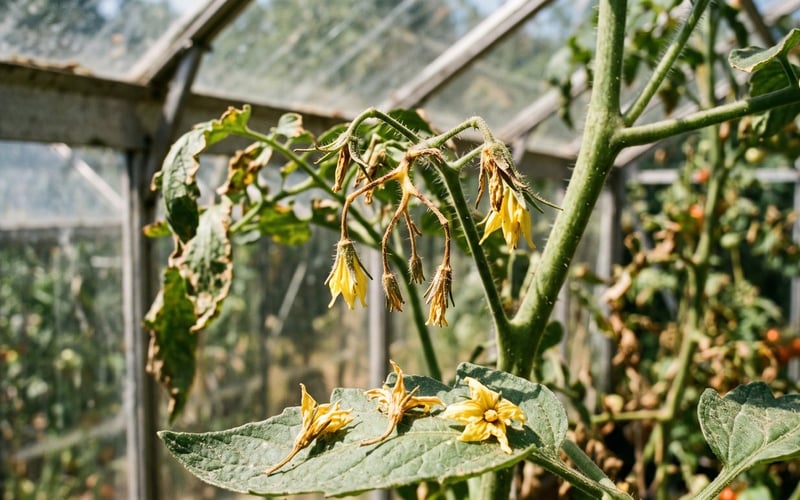
Look closely at a truss that is failing and you will see the mechanism. Just below each flower there is a joint, and it develops a swollen yellow patch before the flower comes away. That is the abscission zone. The plant is not sick. It is cutting its losses on a flower it knows will not set, and reclaiming the resources.
What kills the pollen is heat during its formation. This is the part almost nobody explains, and it changes what you can do about it.
Your flowers are dropping because of last week's weather
Pollen is made long before you see the flower. The critical window is around nine days before the flower opens, when the pollen mother cells go through meiosis inside a bud you would barely notice. Research puts the sensitive period at roughly nine to five days before the flower opens: temperatures of 35C or more for even two to four hours in that window damage the process.
AHDB, the UK's protected-cropping body, ran trials at 32C days against a 20C control, both with 18C nights. Flowers exposed between thirteen and seven days before opening showed significant reductions in seed count. Their finding is worth noting precisely: it was down to reduced pollen production rather than reduced pollen viability. The plant simply made less pollen.
The numbers from a separate study are stark. Plants run at 32C days with 26C nights produced buds with only half the number of pollen grains. Germinated pollen grains fell around thirteen-fold against the control. Viable grains dropped by two-thirds while non-viable grains rose nearly fourfold. The cause was a failure of the normal starch build-up in the anther walls: pollen needs that sugar reserve to germinate, and heat prevents it being laid down. Starved pollen cannot do its job.
Note the temperatures in that trial. Thirty-two degrees by day is a warm British summer afternoon, not a disaster. It was the 26C nights that did the damage.
Matt's Tip: Buy a Max-Min Thermometer Before You Buy Anything Else
Almost everyone knows roughly how hot their greenhouse gets in the afternoon, because they are standing in it. Almost nobody knows what it does at two in the morning, because they are asleep. That is the number that decides your crop. A max-min thermometer costs £30 and it will tell you in one night whether your problem is the day or the night. In a heatwave I would rather a customer spent thirty pounds finding out than three hundred guessing.
What temperature is too hot for tomatoes to set fruit?
There is no single cliff, which is why you will find different numbers quoted everywhere. It is a gradient, and being honest about that is more useful than picking a headline figure.
| Temperature | Effect on fruit set | When it applies | Matt's verdict |
|---|---|---|---|
| 16-27C day | Ideal. Pollen sheds and germinates normally | Day | The band you are aiming for |
| Above 21C night | Fruit set suffers | Night | The one people miss |
| Above 24C night | Pollen tube growth blocked outright | Night | Vent overnight, no excuses |
| Above 30C day | Fruit set falls away in most cultivars (AHDB) | Day | Shade and vent from here |
| 35C+ for 2-4 hours | Damages pollen formation in the bud | Day, 9-5 days before flowering | The invisible damage |
| ~40C for 3 hours, two days running | Fruit set fails | Day | Crop is gone for a fortnight |
| Below 13C night | Blossom drop as well | Night | Cold snaps do it too |
Two things follow from that table. First, the useful working number for a UK greenhouse is 30C by day and 21C by night. Second, cold does it too: a chilly night either side of a heat spike causes drop for entirely different reasons, which is why British growers can lose flowers in a week that felt fine.
Does misting or tapping the trusses actually help?
One of these is well evidenced. The other is not, and it is repeated constantly.
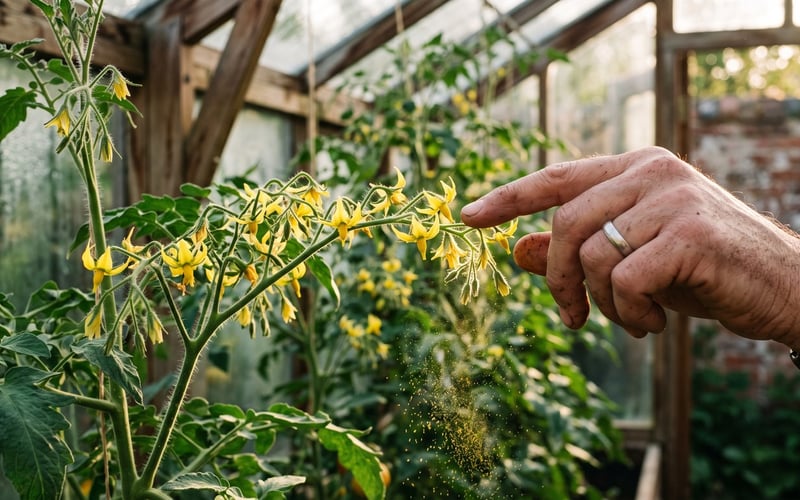
Tapping and vibrating trusses works. A greenhouse trial vibrating trusses against an unvibrated control measured yields up 87.4% for a five-second buzz, 70.6% for one second and 67.7% for three seconds, averaging around 75%. The differences between durations were not statistically significant, which is the useful bit: even a one-second flick does the job. Go along the open flowers every other day, morning is best, and give each truss a sharp tap or a two-second buzz.
Be careful how you read that 75% though. The control was a sealed glasshouse with no wind and no bees. A hobby greenhouse with the door open all summer already gets partial pollination from moving air, so your real uplift will be a good deal smaller. It is still free and takes two minutes.
The critical caveat: tapping solves a transfer problem, not a viability problem. If the pollen is heat-sterilised, shaking the truss just moves dead pollen around. During a genuine heat spike it will not save you. It earns its keep either side of one.
Misting is not supported. I know it gets recommended everywhere. I cannot find good evidence for it, and the physiology argues against it. Pollen needs to shed freely and stick to the stigma. The workable humidity band is roughly 40-70%. Too dry and pollen desiccates. Above about 80% it goes sticky and clumps and will not shed at all. Misting a greenhouse that is already humid pushes you straight into the clumping zone, and hands botrytis an invitation on top. If your air is genuinely bone dry, damping the floor down is the better tool: it lifts humidity gently and drops the temperature at the same time, which misting the plants does not.
There is no chemical rescue either. No growth regulator will induce normal fruit development at high temperature. Anyone selling you one for this is selling you a bottle.
See All Greenhouse Tomato Problems →
How to get tomatoes setting again after a heat spike
Everything that works is about temperature, and most of it is about the night.
- Leave the roof vents open overnight. This is the single highest-value change in a heatwave and it costs nothing. If the house cannot get below 21C at night, the pollen forming right now is already compromised.
- Shade before you think you need to. Shading is a preventative. Putting it up after the flowers drop protects a truss that is nine days away, not the one you are looking at.
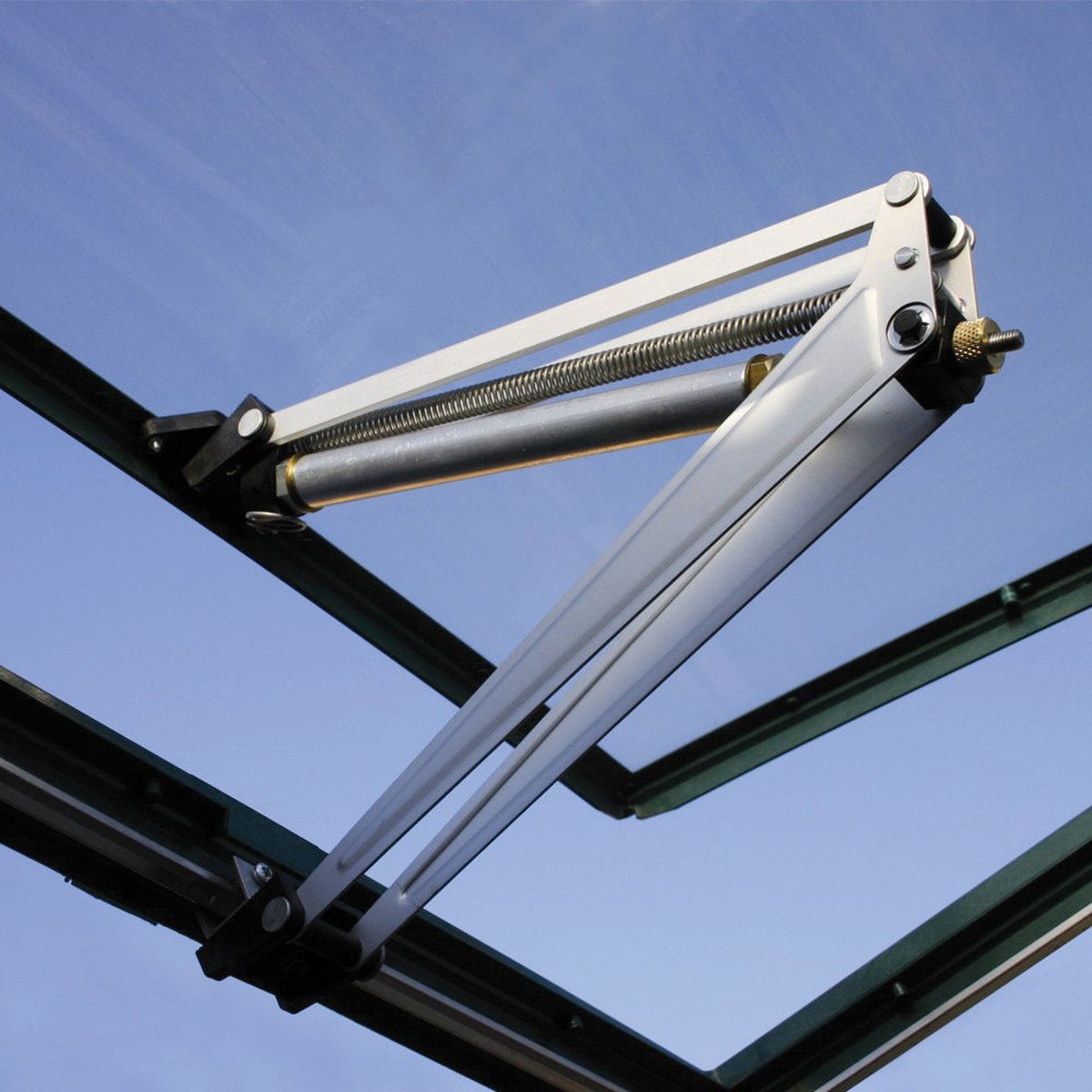
- Fit an automatic vent opener. The greenhouse spikes at two in the afternoon, which is exactly when nobody is home. A wax cylinder opener needs no power and no thought.
- Tap the trusses every other morning, once the worst heat has passed.
- Do not feed harder. A plant that cannot set fruit does not need more nitrogen. You will get a jungle and no tomatoes.
- Keep watering steady. Heat plus erratic water also causes blossom end rot, and a plant fighting two problems fights neither well.
For the full cooling sequence, work through our greenhouse cooling guide, and compare the shading options in the greenhouse shading guide. If you are fitting an opener yourself, the auto vent opener installation guide covers the travel adjustment that most people get wrong.
|
Matt's Pick for Saving a Heat-Struck CropBest For: anyone who is out at work when the greenhouse hits its afternoon peak Why I Recommend It: it works on the day you are not there, which is the day that costs you the crop. The wax cylinder starts lifting at around 15 to 25C and needs no power at all. I have fitted these on hundreds of houses and the failure rate is close to nothing. When one does fail it is the cylinder, and that is a ten minute swap rather than a new unit. Price: £55 |
Matt's Installation Tip
If you leave vents open overnight, check the stays. An open roof vent is a lever, and a squally night will slam it. On Elite and Vitavia houses the vent stay drops into a peg, and if it is sitting in the shallowest notch it will lift out in a gust and take the pane with it. Drop it into the deepest notch you can live with, or fit an autovent and let the cylinder hold it. I have replaced a lot of roof glass that was broken by the vent above it, not by the weather.
How long before my tomatoes set fruit again?
Longer than you would like, and here is why the honest answer is two to three weeks.
The pollen damage happens nine days before the flower opens. So on the day the heat finally breaks, there are already a week or more of compromised buds queued up behind it, and they will open and drop regardless of how pleasant the weather has turned. There is nothing to be done about them. Nothing you buy will fix a flower that was sterilised in the bud a week ago.
The good news is that the sterility is transient, not permanent. Short heat stress causes a temporary window of male sterility, and the plant recovers. Reckon on two to three weeks from the end of the spike before trusses set properly again, and a matching gap in your harvest six to eight weeks after that.
If the truss is setting the odd fruit rather than none, that is a good sign: partial pollination means partial viability, and those fruit may come through slightly misshapen but perfectly edible.
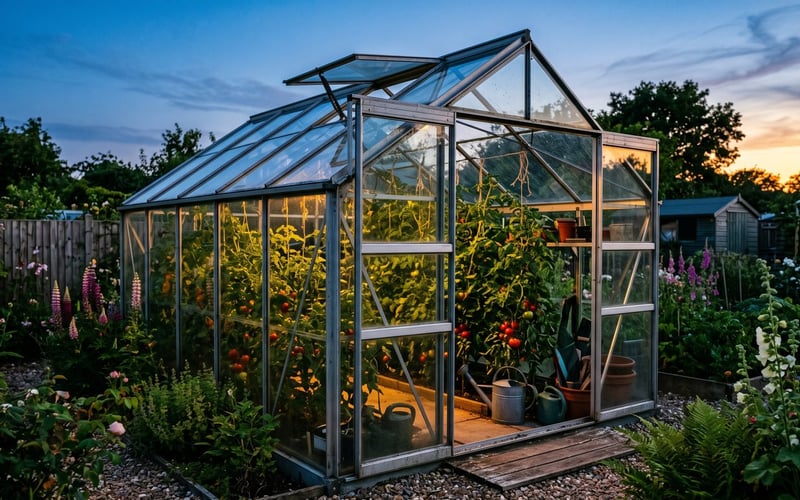
Shop the Elite Automatic Louvre Vent Opener →
"I will not sell someone a fan to fix flower drop. A fan moves 38C air around a 38C greenhouse and makes the owner feel proactive. The second roof vent and the louvre below it cost less and actually shift the heat out of the building, because that is a chimney and a fan is not. Since Greenhouse Stores began in 2012, the houses that never ring me in July are the ones with two roof vents, a low louvre and an autovent on each. That is the whole trick and it is not a clever one."
— Matt W, Greenhouse Stores
Frequently asked questions
Why are my greenhouse tomato flowers falling off?
Heat has killed the pollen, so the plant sheds the flower. A tomato drops any flower it cannot pollinate, using an abscission zone at the joint below the bloom. Look for a swollen yellow patch there. Fruit set falls away above 30C by day, and above 21C at night.
At what temperature do tomatoes stop setting fruit?
Fruit set falls away above 30C, according to AHDB. It is a gradient rather than a cliff. Around 40C for three hours on two consecutive days causes outright failure. Night temperature matters more: above 21C fruit set suffers, and above 24C pollen tube growth stops entirely.
Do hot nights really matter more than hot days?
Yes. Night temperature is the stronger driver of flower drop. One trial at 32C days with 26C nights halved pollen production, and germinating grains fell about thirteen-fold. Thirty-two degrees is an ordinary warm afternoon. The 26C nights caused the damage, which is why overnight venting matters so much.
Does misting tomato flowers help them set?
No, and it can make things worse. There is no good evidence for misting. Pollen sheds best between roughly 40% and 70% humidity. Above 80% it clumps and will not leave the anther, and wet foliage invites botrytis. Damping down the floor is the better move, since it also lowers temperature.
Should I tap or shake my tomato trusses?
Yes, every other morning while flowers are open. A greenhouse trial found truss vibration raised yield by around 75% against an unvibrated control, and even a one-second flick worked. Note the control was a sealed house with no airflow, so expect less. It cannot revive pollen already killed by heat.
How long until my tomatoes set fruit again after a heatwave?
Reckon on two to three weeks after the heat breaks. Pollen is damaged about nine days before a flower opens, so a queue of compromised buds keeps dropping after the weather improves. The sterility is temporary and plants do recover. Expect a matching gap in the harvest six to eight weeks later.
Will feeding my tomatoes stop the flowers dropping?
No. Feeding does not fix heat-damaged pollen. A plant that cannot set fruit will put extra nitrogen into leaf growth instead, giving you a jungle and no tomatoes. Fix the temperature first. Keep feeding steady and only onto moist compost.