Using Grow Bags in a Greenhouse: Tomatoes, Watering & Setup
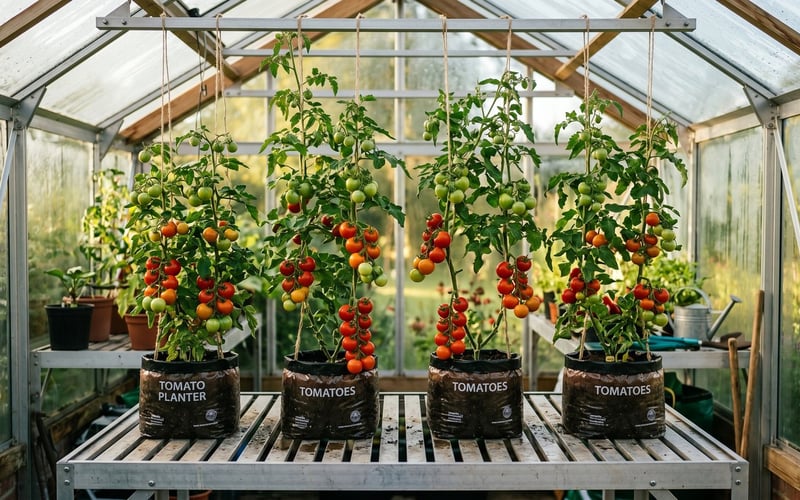
Grow bags suit greenhouse tomatoes, peppers, cucumbers and aubergines, but plant two tomatoes per bag, not three. A standard 33-litre bag holds little water, so a heavy crop can need watering twice a day in summer. A drip kit from £45 fixes that. Stand bags on staging to lift roots off a cold floor and feed weekly with high-potash tomato food once the first truss sets.
Key Takeaways
- Two tomato plants per bag gives bigger trusses than the three most bag labels suggest.
- A standard grow bag holds about 33 to 40 litres of compost and very little water reserve.
- On a hot, sealed greenhouse day a busy bag can need watering twice, morning and evening.
- A drip irrigation kit turns that daily chore into a five-minute job and stops blossom end rot.
- Start high-potash feeding once the first truss sets, roughly weekly, then twice weekly in high summer.
- Grow bags work for tomatoes, peppers, cucumbers and aubergines. They fail for carrots, parsnips and maincrop potatoes.
Shop greenhouse staging for grow bags →
Expert Tip
From our work with Greenhouse Stores customers since 2012, the question I field most in July is why grow-bag tomatoes wilt by mid-afternoon. It is almost never disease. It is water. A bag is a shallow tray of compost in a plastic sleeve, and inside a sealed greenhouse it dries far faster than the same bag would outdoors. Get the watering right and grow bags are the cleanest, lowest-effort way to crop tomatoes under glass.
Are grow bags good for greenhouse tomatoes?
Yes, grow bags are a reliable way to grow tomatoes in a greenhouse. They skip the soil-borne disease that builds up in border beds. They warm quickly in spring, and you can lift a finished bag straight out at the end of the season. For most home growers that beats digging out and replacing border soil every year.
The trade-off is volume. A border bed gives roots free run. A grow bag gives them a fixed pocket of compost, so it dries out and runs short of food faster. None of that is a deal-breaker. It just means watering and feeding need a little planning, which is what most of this guide covers. For the wider picture on cropping under glass, our guide to growing tomatoes in a greenhouse sets out the full season.
How many tomato plants per grow bag?
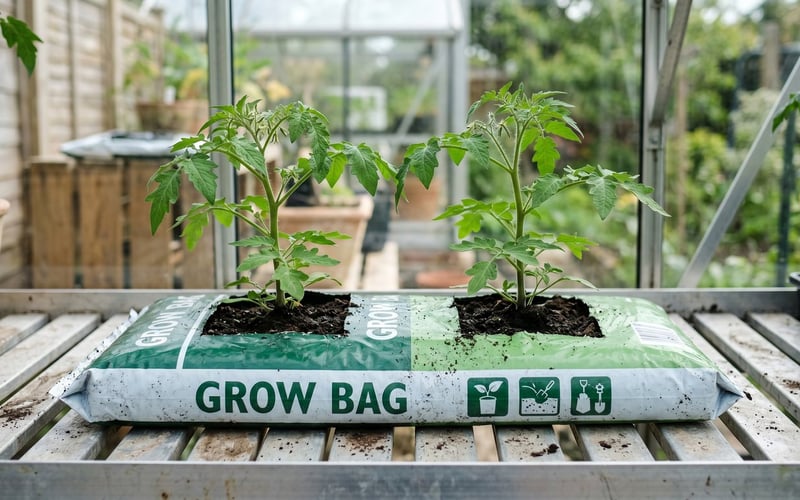
Most grow bags carry a label saying three plants. Plant two instead. Two tomato plants in a standard bag share more compost, more water and more food each. The result is stronger trusses and fewer problems through August, when three crowded plants start competing.
The numbers are simple. A typical grow bag holds 33 to 40 litres of compost. Split three ways, each tomato gets around 11 to 13 litres of root run. Split two ways, each gets 16 to 20 litres. That extra room is the difference between a plant that sulks in a heatwave and one that keeps setting fruit. Cucumbers and aubergines are hungrier still, so stick to two per bag, or even one for a vigorous cucumber.
Browse greenhouse growing accessories →
|
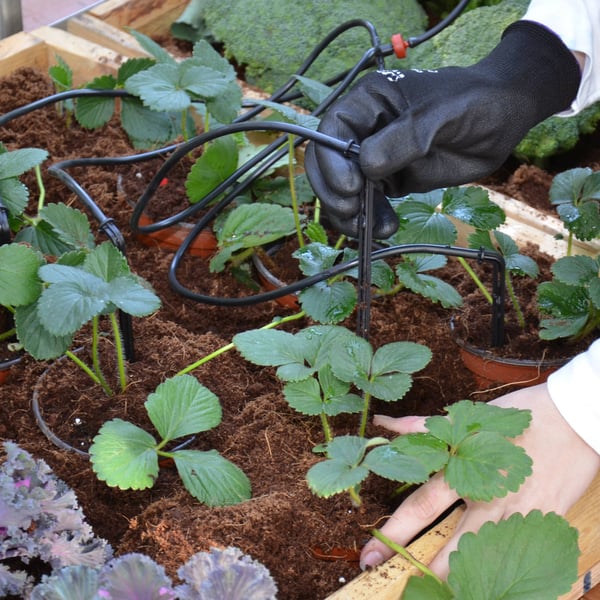
Matt's Pick for Grow-Bag WateringBest For: Anyone running four or more grow bags who cannot water twice a day. Why I Recommend It: This is the single accessory that saves grow-bag tomatoes. I have watched customers fight blossom end rot for weeks, then fit a drip line and never see it again. Steady water means steady calcium uptake. A timer on the tap and you can leave the greenhouse for a weekend in July without losing the crop. Price: £45 |
The watering problem, and how to beat it
This is where grow bags catch people out. A bag holds barely two litres of available water once the compost is wet. Inside a closed greenhouse on a still, sunny day the air can reach 40C, and three thirsty tomato plants will pull that reserve down by early afternoon. Miss a watering and the plants wilt. Do it twice in a week and you invite blossom end rot, the sunken brown patch on the base of the fruit caused by irregular calcium uptake.
Hand watering works if you are there morning and evening. Most people are not. Three reliable fixes, in order of cost:
- Grow-bag trays or saucers: a tray under each bag holds run-off and gives the roots a small buffer. Cheap, and it halves how often you reach for the can.
- Capillary matting on staging: stand bags on matting fed from a reservoir and the compost wicks up water as it needs it. Tidy and quiet.
- A drip irrigation kit: the proper answer. One dripper per bag, fed from the mains or a butt, ideally on a timer. Set it and the watering looks after itself.
For the full rundown of systems and timers, see our greenhouse watering and irrigation guide. Whatever route you pick, water little and often rather than flooding a dry bag once a day.
Matt's Installation Tip
Cut the drainage slits in the base of the bag, not big square holes. A grow bag is designed to hold a shallow reservoir of water in its base, which is exactly what tomatoes want. Two or three short slits per planting pocket let excess drain while keeping that reserve. Slice the whole underside out and you throw away the bag's one advantage over a pot.
Feeding grow bags through the season
Grow bags come with enough food for four to six weeks. After that the plants are running on what you add. Start feeding once the first truss has set fruit the size of a pea. Use a high-potash tomato feed, the same one used for hanging baskets, mixed at the strength on the bottle.
Feed weekly to begin with. By July, when plants are carrying several trusses in the heat, step up to twice a week. Yellowing lower leaves usually mean the plant is short of nitrogen and food, not water. A weak, frequent feed beats an occasional strong dose, which can scorch roots in a confined bag. The same routine suits peppers grown under glass, though they want slightly less water than tomatoes.
Grow bags vs pots vs border soil
Each method has a place. Grow bags are clean and low-cost. Large pots give more root room and reuse for years. Border soil grows the biggest plants but carries disease risk over time. Here is how they compare for a greenhouse tomato crop.
| Method | Root volume | Watering need | Cost per season | Matt's verdict |
|---|---|---|---|---|
| Grow bag (2 plants) | 16-20 litres each | High, daily in summer | Low, £4-6 per bag | Best all-round choice with a drip kit fitted |
| Grow bag (3 plants) | 11-13 litres each | Very high, twice daily | Low | Overcrowded, avoid unless space is tight |
| Large pot (30cm+) | 20-30 litres each | Moderate | Medium, reusable | Great for one strong plant, easy to move |
| Border soil | Unlimited | Lower, deeper roots | Low after setup | Biggest plants, but rotate or sterilise yearly |
If you only take one figure from that table, take the root volume. More compost per plant is the simplest way to grow steadier tomatoes, which is why two plants per bag wins.
The best grow-bag setup for a greenhouse
A grow bag sitting on a cold concrete or paved floor loses heat to the ground and is awkward to tend. The setup that works best lifts the bag onto staging at waist height. The roots stay warmer, you water without bending double, and air moves freely around the plants.
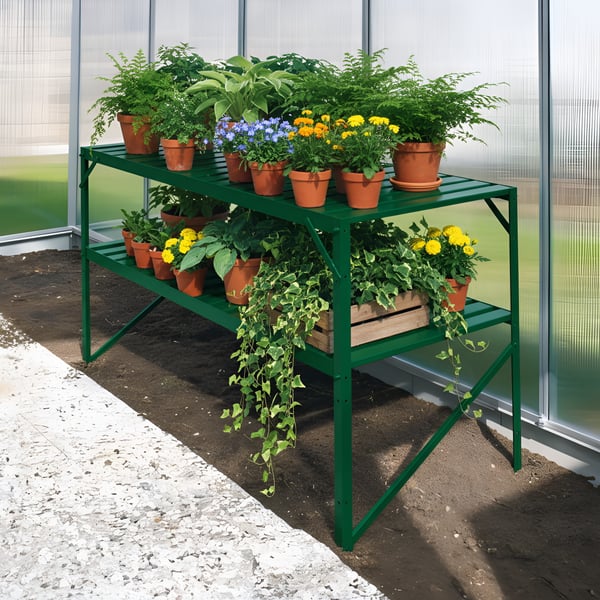
Shop the Vitavia 2 Tier Green Staging →
To add depth, growers fit grow-bag pots, bottomless rings that sit in the bag and take a tall plant. This is the old ring culture idea, and it still works for tomatoes and cucumbers that want more root room than the bag alone gives. Our guide to modern ring culture with grow bags walks through the method step by step.
Shop greenhouse tomato houses →
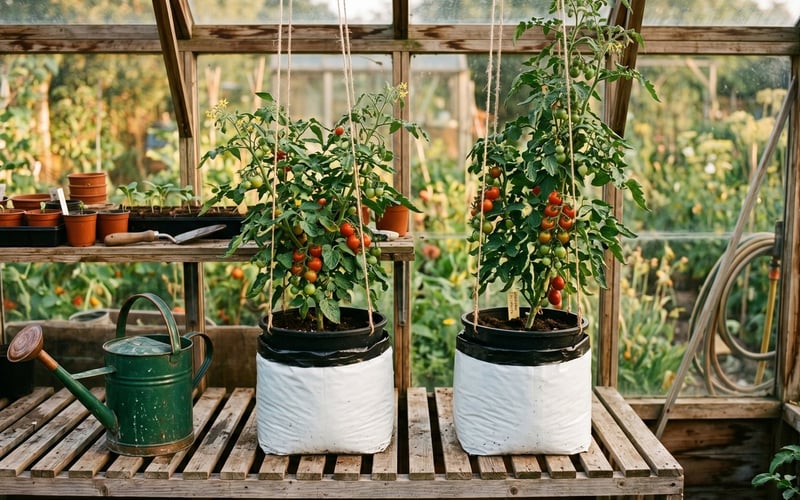
Whatever stands your bags up, support the plants properly. Tall tomatoes in a light bag will topple, so tie them to overhead strings or canes early. Our step-by-step on stringing and supporting tomatoes covers the knots and timing.
Matt's Tip: Group your bags
Stand grow bags shoulder to shoulder in a single block rather than spreading them along the bench. Grouped bags shade each other's compost, hold humidity, and are far quicker to water with one drip line looped across the row. I learned this watching a customer's tidy single row dry out twice as fast as her neighbour's huddled block of the same plants.
Best crops for grow bags, and what to avoid
Grow bags reward warm-season fruiting crops that you harvest above the bag. They struggle with anything that needs deep, undisturbed root room or that you dig up at the end.
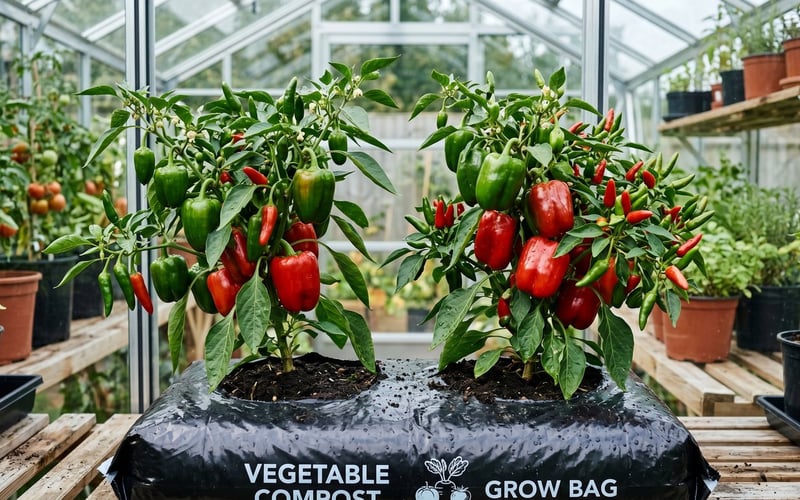
Grow these in bags: tomatoes, sweet and chilli peppers, cucumbers, aubergines, courgettes and basil. These all crop heavily from a shallow, rich pocket of compost and love the greenhouse heat. For more ideas under glass, see our ranked list of fruit to grow in a greenhouse.
Avoid in bags: carrots, parsnips and other long root crops need depth a bag cannot give. Maincrop potatoes want far more volume. Brassicas grow too large and top-heavy. These belong in the border or a deep tub.
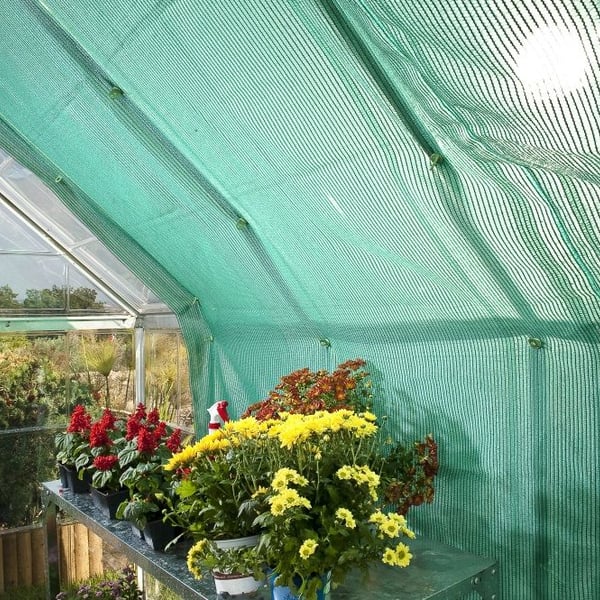
One word on heat. The same closed greenhouse that ripens tomatoes early will cook them if it climbs past 30C for long. Grow bags dry fastest exactly when the house is hottest, so shading and ventilation matter as much as watering.
Shop the Palram Canopia Shade Kit →
Open the vents and door early on warm mornings, and fit shading from June to August. An automatic vent opener at £59 does the job while you are at work. Our greenhouse ventilation guide explains how much airflow a crop of bags really needs. A £34 soil thermometer pushed into a bag is a cheap way to see how hot the root zone gets.
Reusing and refreshing grow bags
A grow bag has done its real work after one tomato season. The compost is spent and the structure has broken down. Do not plant a second hungry crop straight into the same bag and expect the same yield.
At the end of the season, tip the used compost onto a border or a raised bed as a soil improver. It still holds fibre and some nutrients, just not enough to carry another crop of tomatoes. If money is tight you can reuse a bag once for a light feeder such as salad leaves, topped up with fresh compost and a slow-release feed. For tomatoes, peppers or cucumbers next year, start with a fresh bag. The few pounds it costs is the cheapest insurance in the greenhouse.
Grow bags are one of many small kit choices that make a greenhouse easier to run. Our guide to essential greenhouse accessories covers the rest, and the variety you pick matters too, so browse our best greenhouse tomato varieties before you sow. Whatever you grow, you will find the trays, staging and watering kit to support it across the range at Greenhouse Stores.
"Grow bags only let you down on water, never on yield. Fit a drip line, stand the bags on staging off the cold floor, and plant two tomatoes per bag instead of three. Do that and a grow-bag crop matches anything from the border, with none of the disease build-up. I have set this up in hundreds of customers' greenhouses and it is the routine that keeps them coming back for more bags every spring."
— Matt W, Greenhouse Stores
Frequently asked questions
How many tomato plants should I put in a grow bag? Two plants per standard bag is best. The label often says three, but two share more compost, water and food, giving stronger trusses and fewer problems in high summer.
How often do I water tomato grow bags in a greenhouse? Once or twice a day in summer. A busy bag in a hot, closed greenhouse can need watering both morning and evening, which is why a drip kit on a timer pays for itself.
Why do my grow-bag tomatoes get blossom end rot? Irregular watering is the usual cause. The dark sunken patch comes from patchy calcium uptake when a bag dries out and is then flooded, so keep moisture steady.
Can I reuse a grow bag next year? Not for a second hungry crop. The compost is spent after one tomato season, so empty it onto a border and start fresh, or reuse once for light salad leaves with added feed.
Do grow bags need to sit on staging? It helps a lot. Lifting bags off a cold floor keeps roots warmer, makes watering easier on your back, and improves airflow around the plants to cut disease.
What can I not grow in a grow bag? Avoid deep root crops and large plants. Carrots, parsnips, maincrop potatoes and brassicas all want more depth or volume than a bag gives, so keep them in the border.