Greenhouse Tomato Problems & Troubleshooting: UK Guide
Most greenhouse tomato problems come from heat and uneven watering, not disease. Blossom end rot, splitting and greenback all follow temperature swings above 30C and erratic moisture. Fix the growing conditions first: vent early, shade from June, and water little and often. Pollen fails to set above 30C, so airflow matters as much as feeding. This UK guide diagnoses each symptom, names the cause, and gives the greenhouse-specific fix from our work since 2012.
Key Takeaways
- Heat and watering cause most faults. Sealed greenhouses hit 40C in summer, which is where the trouble starts.
- Blossom end rot is a watering fault, not a disease. Keep moisture steady and it stops.
- Pollen sets poorly above 30C. Flowers dropping without fruit usually means the house is too hot.
- Splitting and greenback follow heat spikes and irregular water, so vent and shade early.
- Blight needs airflow and dry leaves. A ventilated greenhouse is far less prone than an outdoor plot.
- Whitefly thrive in still, warm air. Good ventilation and yellow traps keep numbers down.
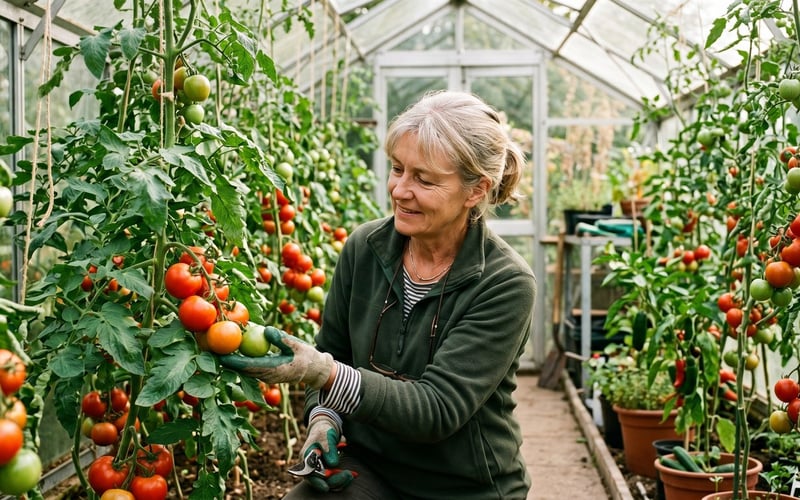
Shop greenhouse accessories that prevent tomato problems →
Expert Tip
From our work with Greenhouse Stores customers since 2012, I can tell you most "my tomatoes are sick" calls are not about pests or disease at all. They are about temperature and water. A greenhouse that hits 42C at midday and then cools to 12C overnight puts the plants under stress no spray will fix. Sort the venting, shading and watering, and three quarters of the problems on this page never appear. The rest are easy to spot once you know the symptom.
Why greenhouse tomatoes develop problems
A greenhouse grows tomatoes faster than an outdoor plot, but it also concentrates the things that go wrong. The same glass that traps warmth in spring can push the air past 40C on a still July day. Tomatoes stop setting fruit, the skins toughen, and stressed plants shrug off water unevenly.
Three greenhouse conditions sit behind nearly every fault on this page. Heat, because a sealed house overheats fast. Watering, because pots and grow bags dry out far quicker under glass. Air movement, because still, humid air invites disease and pests. Get those three right and you have fixed the cause, not just the symptom. Our guide to growing tomatoes in a greenhouse covers the full season, and the common greenhouse growing mistakes guide shows where most people slip up.
Greenhouse tomato problems: symptom, cause and fix
Use this table to match what you are seeing to the likely cause and the action that fixes it. Each problem is covered in detail below.
| Symptom | Likely cause | Greenhouse fix |
|---|---|---|
| Sunken brown patch on fruit base | Blossom end rot, from irregular watering and calcium | Water little and often, mulch, fit a drip kit |
| Skins split or crack | Heavy watering after a dry, hot spell | Keep moisture even, shade and vent to cut heat spikes |
| Hard yellow-green shoulders | Greenback, from too much heat and sun on the truss | Shade from June, feed high-potash, pick blight-free varieties |
| Patchy, blotchy ripening | Heat above 30C blocking the red pigment | Ventilate hard, shade, keep day temperature under 27C |
| Flowers drop, no fruit sets | Air too hot or dry for pollen, above 30C | Vent early, damp down, tap trusses to aid pollination |
| Leaves curl or roll upward | Heat and water stress, often harmless | Improve airflow and shading, check watering is steady |
| Brown blotches on leaves and fruit | Tomato blight, a fungal disease | Increase airflow, keep leaves dry, remove affected plants |
| Tiny white flies under leaves | Whitefly, thriving in still warm air | Ventilate, hang yellow sticky traps, encourage predators |
|
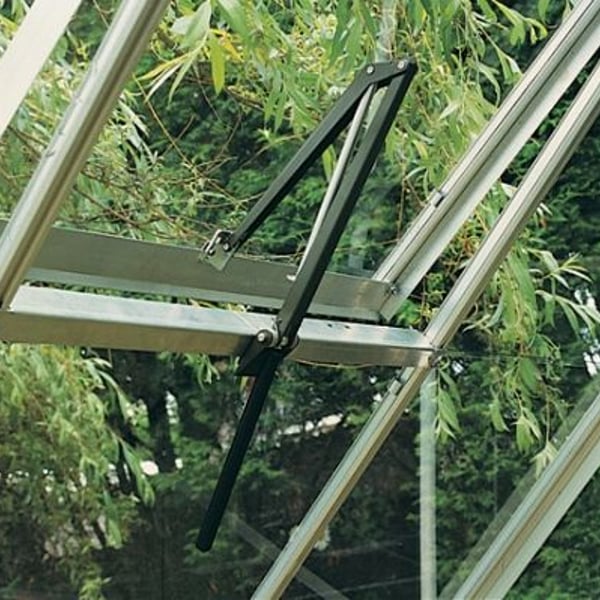
Matt's Pick for Stopping Heat DamageBest For: Anyone whose tomatoes drop flowers or scorch while they are out at work. Why I Recommend It: An automatic vent opener is the single best fix for heat-driven tomato problems. It opens the roof vent on a wax piston when the house warms, with no power and no timer. I fit these on most installs because the morning heat spike, the one that wrecks fruit set, happens long before most people get to the greenhouse. Price: £59 |
Blossom end rot: the sunken brown base
Blossom end rot shows as a dark, sunken, leathery patch on the bottom of the fruit. It looks like disease but it is not. It is a calcium fault, and the calcium is almost always there in the compost. The plant cannot move it to the fruit when watering swings between bone dry and soaking. That is also why calcium sprays do not work: a trial of five calcium preparations raised fruit calcium by nothing at all. Our full guide explains why blossom end rot sprays fail and what to do instead.
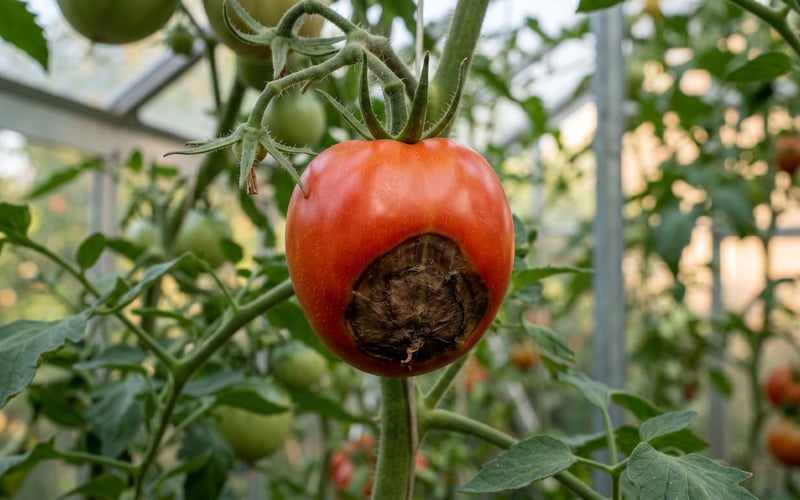
The fix is steady moisture. Water little and often rather than flooding a dry plant once a day. Mulch the surface of pots and grow bags to slow drying. In a hot greenhouse a heavy crop can need water twice a day, which is why an automatic system helps. Our greenhouse watering guide sets out the options, and if you grow in bags the same rule runs through our guide to growing tomatoes in grow bags.
Matt's Installation Tip
Fit shading and an auto vent before you change anything else. People reach for calcium spray and fancy feeds when the real problem is a house cooking at 40C by 11am. Shade paint or netting drops the peak by several degrees, and a roof vent that opens itself holds it there. Cut the temperature swing and blossom end rot, splitting and greenback all ease off together, because they share the same root cause.
Fruit splitting and cracking
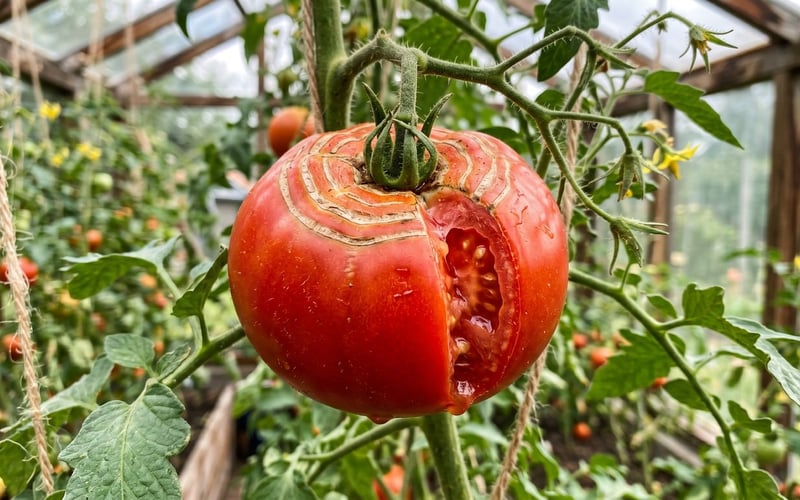
Split skins come from a sudden growth surge. The plant gets dry in the heat, then takes up a big drink, and the inside swells faster than the skin can stretch. You see rings of cracks around the shoulder or splits down the side.
Shop greenhouse soil thermometers →
Even watering is the answer again. Do not let pots or bags dry right out before you water. Shade and ventilate to stop the daily heat spike that drives the dry-then-flood cycle. Some thin-skinned varieties split more easily than others, so if it happens every year, switch to a tougher type. Our pick of best greenhouse tomato varieties flags the reliable performers.
Greenback and blotchy ripening
Greenback leaves a hard, yellow-green patch on the shoulder of the fruit that never ripens. Blotchy ripening gives uneven blocks of green, yellow and red. Both are heat and light problems, not disease.
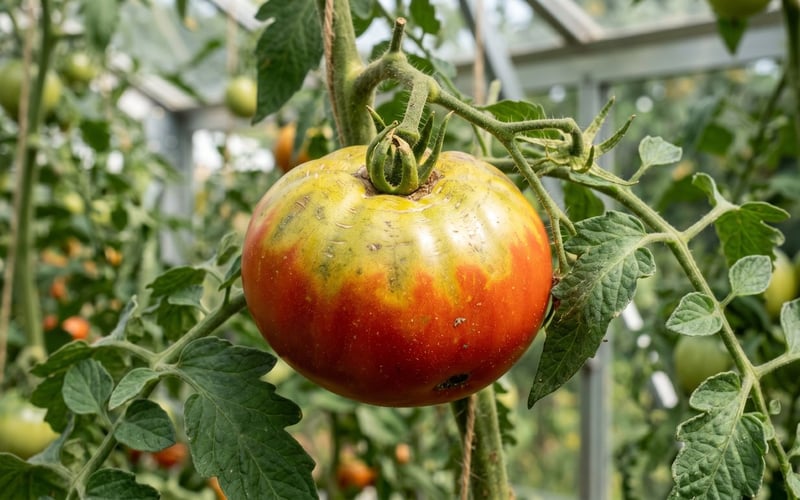
Lycopene, the pigment that turns tomatoes red, stops forming above about 30C. A truss sitting in full midday sun behind glass simply gets too hot to colour evenly. Shade the house from June, keep daytime temperatures under 27C where you can, and feed a high-potash tomato food to support ripening. Do not strip too many leaves around the trusses, because a little shade from the plant's own foliage protects the fruit.
Flowers but no fruit: poor fruit set
Trusses full of flowers that drop without setting fruit is one of the most common greenhouse tomato problems. The usual cause is heat. AHDB put 30C as the point where fruit set falls away in most cultivars, and nights above 21C do more damage than hot afternoons. Pollen also needs the air between roughly 40 and 70 percent humidity: too dry and it desiccates, above 80 percent it clumps and will not shed. The catch is timing, because the damage is done in the bud about nine days before the flower opens. We cover the temperatures, the recovery time and why misting does not help in our guide to greenhouse tomato flower drop.
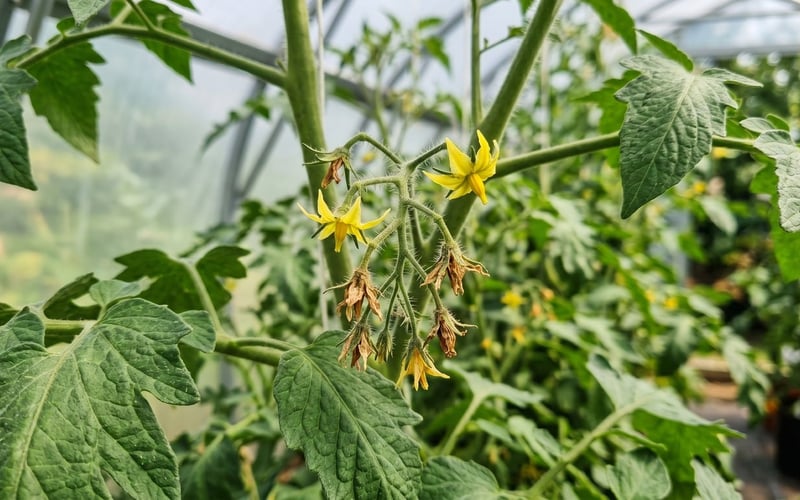
Cool the house and lift the humidity. Open vents and the door early on warm mornings. Damp down by splashing water on the floor and staging, which cools the air and raises moisture. Tap the flower trusses gently around midday to shake pollen loose, or run a small fan. Good airflow is so central to fruit set that our greenhouse ventilation guide is worth reading in full.
Matt's Tip: Watch the morning, not the afternoon
Most growers vent at lunchtime when they notice the heat. By then the damage to fruit set is done. The danger window is mid-morning, when a closed house climbs fastest. I tell customers to leave a roof vent cracked overnight in summer and let an automatic opener take over from there. A soil thermometer in the border at £34 shows you just how hot the root zone really gets.
Leaf curl and leaf roll
Leaves curling or rolling upward looks alarming but is usually harmless. It is the plant's response to heat and water stress, a way of cutting the surface exposed to fierce sun. If the plant is otherwise green and cropping, leave it alone.
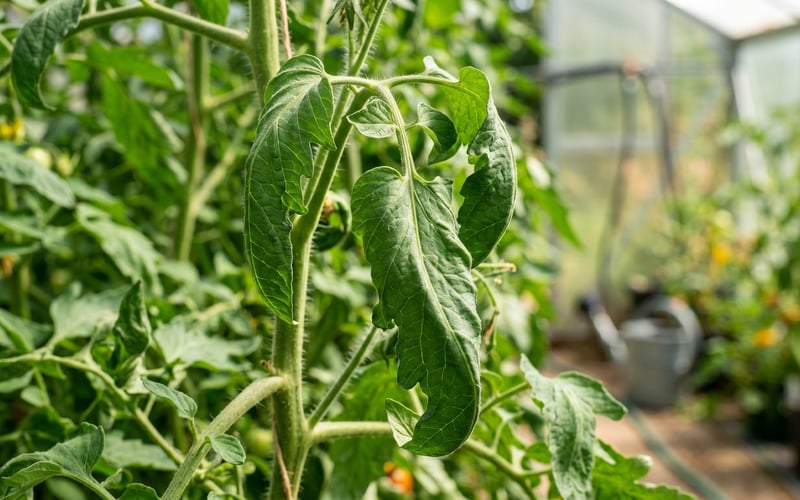
Persistent, severe curling with distorted growth can point to other causes, such as weedkiller drift from a neighbouring garden or, rarely, a virus. Rule out the simple things first. Improve airflow and shading, check the watering is steady, and the leaves usually relax. Keeping plants well supported also helps air move through the canopy, which our guide to stringing and supporting tomatoes walks through.
Tomato blight under glass
Blight is a fungal disease that spreads in warm, wet, still conditions. It shows as brown blotches on leaves and stems, then sunken dark patches on the fruit that quickly rot. A greenhouse actually protects against it, because you control the wet leaves and the airflow that blight needs.
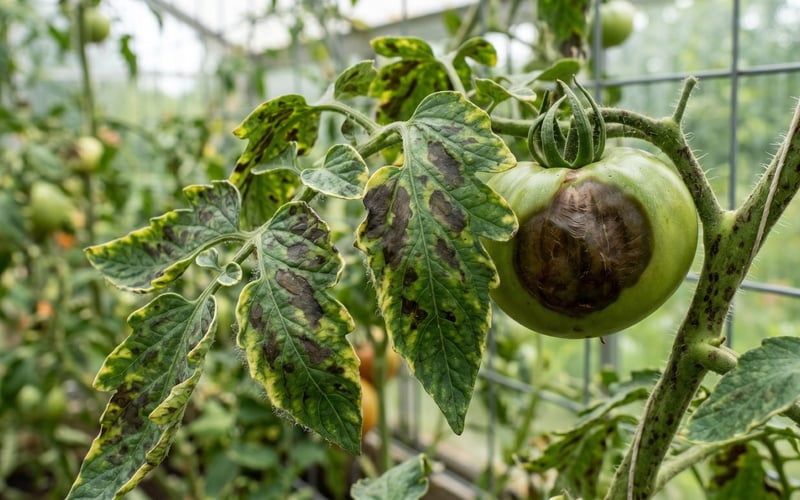
Keep the foliage dry by watering the soil, not the plant. Ventilate hard to keep air moving and humidity down. Space plants so they are not touching, and remove the lower leaves to lift the canopy off the ground. If a plant is badly hit, take it out to protect the rest. Choosing blight-resistant varieties gives you a head start before the season begins.
Whitefly and other greenhouse pests
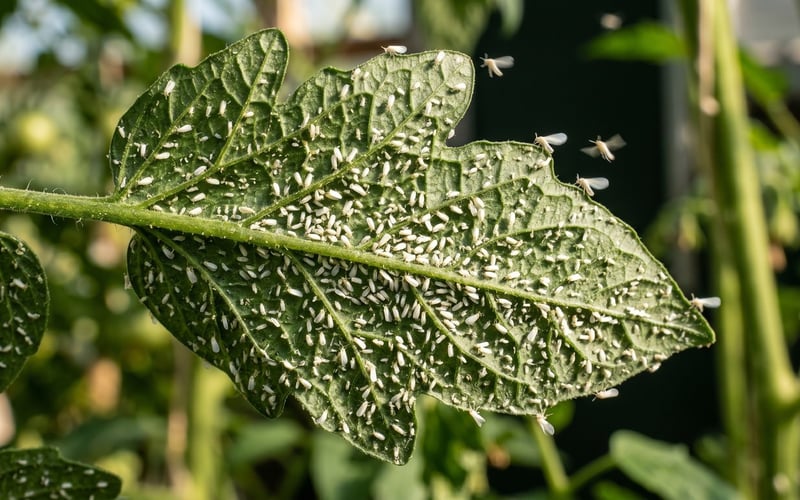
Whitefly are tiny white insects that lift off in a cloud when you brush the plants. They thrive in the still, warm air of a closed greenhouse and weaken plants by sucking sap. Aphids and red spider mite like the same conditions, though red spider mite is the one that really runs away from you in a heatwave: it goes from egg to adult in about a week at 30C. If your leaves have a fine pale speckling, read our guide to red spider mite in a heatwave before you buy any predators.
Shop greenhouse insect netting →
Ventilation is the first defence, because moving air discourages all three. Hang yellow sticky traps to catch the adults and monitor numbers. Biological controls, such as the parasitic wasp Encarsia for whitefly, work well in the enclosed space of a greenhouse. For the full pest rundown see our greenhouse pest control guide, and companion planting can help keep numbers down too.
Steady water from a drip kit at £45, a shade kit at £55 and a louvre vent opener at £59 together remove the three conditions behind most of these problems. For the wider kit list, browse shading your greenhouse and the full range at Greenhouse Stores.
Preventing greenhouse tomato problems
Most of this page comes down to one idea: a steady, well-aired greenhouse grows healthy tomatoes. Build the routine below and you head off the faults before they start, rather than chasing each one with a different remedy.
- Hold the temperature down. Aim for a daytime peak under 27C. Open vents and the door early, shade from June to August, and let an automatic vent opener catch the morning spike.
- Water little and often. Never let pots or grow bags dry right out and then flood them. A drip kit on a timer keeps moisture even and stops blossom end rot and splitting.
- Keep air moving. Through draughts from opposite vents cut humidity, which holds back blight and whitefly. A small fan helps on still days.
- Feed for fruit. Switch to a high-potash tomato feed once the first truss sets, weekly at first, then twice weekly in high summer.
- Damp down in heat. Splash water on the floor on hot mornings to cool the air and lift humidity, which improves pollination.
- Inspect weekly. Turn a few leaves to check for whitefly and catch any problem early, while it is still one plant and not the whole house.
None of this needs much kit or money. A vent opener, a shade kit and a drip line cost less than a single failed crop, and they work while you are out. That is the difference between fighting symptoms all summer and picking clean fruit from July to October.
"Nine times out of ten, a sick-looking greenhouse tomato is a stressed one, not a diseased one. Hold the house under 27C with shading and an auto vent, water little and often, and keep the air moving. Do that and blossom end rot, splitting, greenback and poor fruit set all fade at once. I have walked hundreds of customers through exactly this, and the fix is nearly always in the greenhouse conditions, not a bottle."
— Matt W, Greenhouse Stores
Frequently asked questions
Why are my greenhouse tomatoes not setting fruit? The air is too hot for pollen. AHDB put fruit set falling away above 30C, and nights above 21C hurt more, so vent overnight and shade early.
What causes the brown patch on the bottom of my tomatoes? That is blossom end rot from uneven watering. The plant cannot move calcium to the fruit when the compost swings between dry and wet, so keep moisture steady.
Why do my greenhouse tomatoes keep splitting? They are taking up water too fast after drying out. A hot spell followed by heavy watering swells the fruit quicker than the skin can stretch, so water evenly.
How do I stop my greenhouse getting too hot for tomatoes? Shade, ventilate and automate. Fit shade netting or paint from June, open roof and side vents, and use an automatic vent opener to catch the morning heat spike.
Can I get tomato blight in a greenhouse? Yes, but it is far less likely than outdoors. Blight needs wet leaves and still air, so water the soil only and ventilate hard to keep the foliage dry.
How do I get rid of whitefly on greenhouse tomatoes? Ventilate well and hang yellow sticky traps. Moving air discourages them, and biological controls like Encarsia wasps work well in an enclosed greenhouse.