Pinching Out Tomatoes: When to Snap, When to Stop
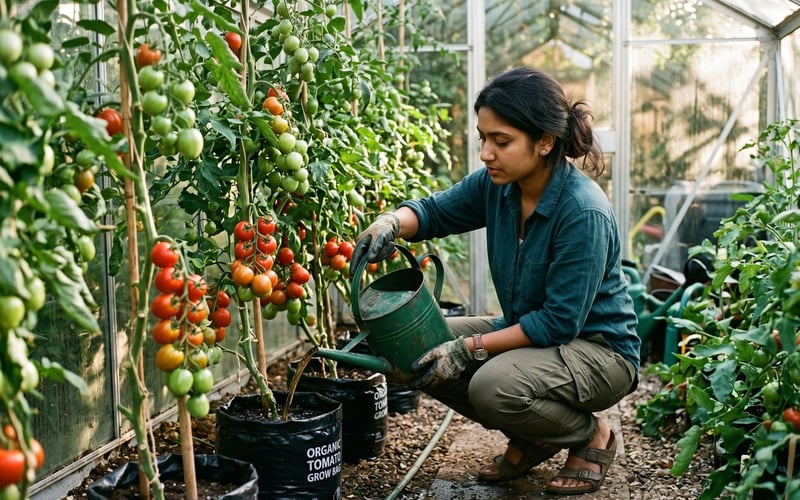
Pinching out tomatoes means snapping off the side shoots in the V between the main stem and each leaf. Only cordon (indeterminate) varieties need it. Bush (determinate) types do not. Do it weekly, train the single stem up a string, then stop the plant after six or seven trusses. From our work with Greenhouse Stores customers since 2012, this is the routine our team trusts for a long, heavy crop.
Key Takeaways
- A side shoot grows in the 45-degree axil between the main stem and a leaf. Pinch it out while it is under 5cm.
- Check plants once a week. An unpinched cordon can throw 8 to 10 side shoots in a fortnight.
- Cordon types need pinching; bush types do not. Identify which you have before you start.
- Stop the leader after 6 to 7 trusses. In most UK greenhouses that is mid to late August.
- Strip leaves below the lowest ripening truss to lift airflow and cut grey mould risk.
- A cordon needs a string or cane running to the ridge, plus a feed every week once fruit sets.
Shop tomato supports and ties →
Expert Tip
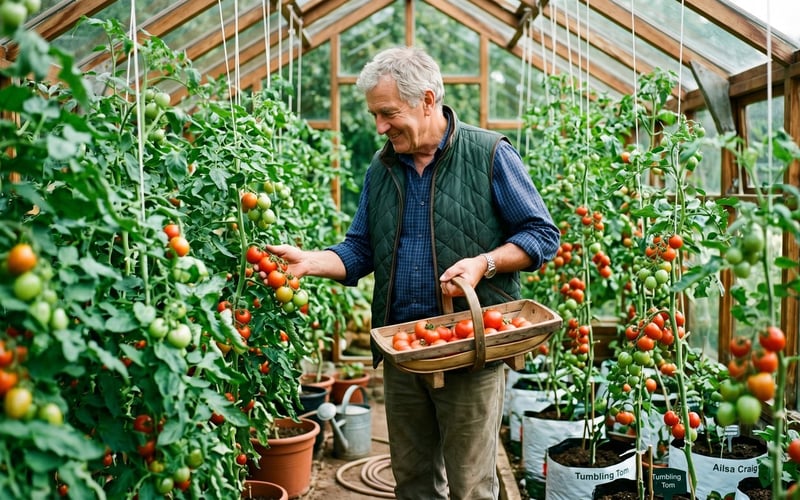
I have set up greenhouses for tomato growers across the UK for many years. The single biggest crop killer I see is not pests or feed. It is plants left to bush out. One unpinched cordon turns into a tangle of stems, the air stops moving, and fruit splits or rots. On a customer's Elite in Norfolk last July, we trained six cordons up strings to the 2.4m ridge. They cropped to head height with no disease. The plants next door, left wild, gave half the fruit. Pinching out is the cheapest job in the greenhouse and the one that pays back most.
What is a tomato side shoot, and how do you spot it?
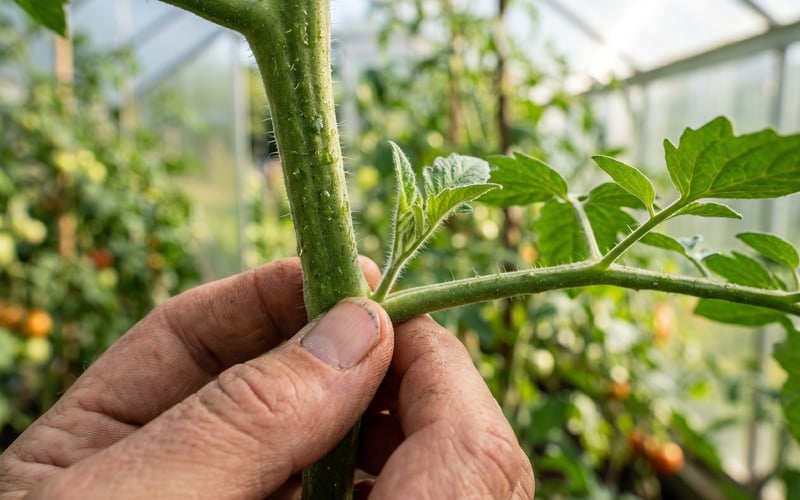
A side shoot is a new stem that grows in the joint between the main stem and a leaf. Gardeners call this joint the leaf axil. The shoot points up and out at roughly 45 degrees. Left alone, it grows into a full second stem with its own leaves, flowers and fruit.
Do not confuse a side shoot with a flower truss. A truss grows straight off the main stem, not from a leaf joint, and carries flowers then fruit. The side shoot always sits in the angle above a leaf. Once you have spotted one, you will see them on every leaf joint up the plant.
Catch them small. A shoot under 5cm snaps out clean with finger and thumb. Leave it a fortnight and you are cutting a thick stem, which wounds the plant and invites disease.
Cordon or bush? Decide before you pinch
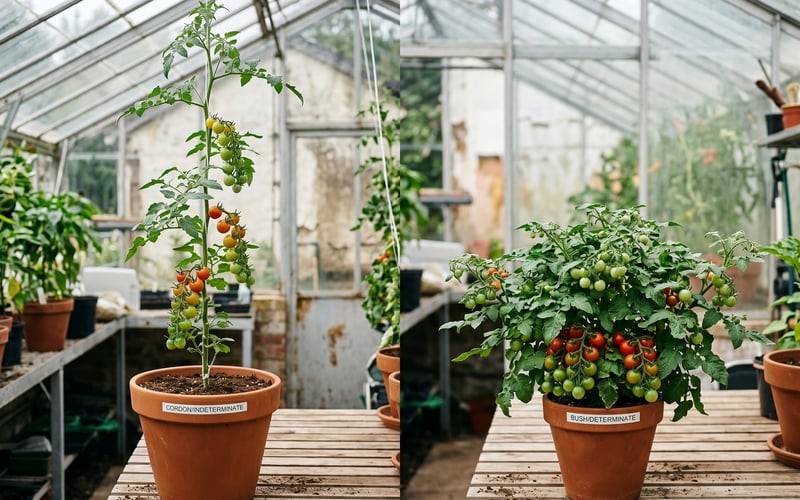
This is the step most people skip, and it matters. Pinching out only applies to cordon tomatoes, also sold as indeterminate. These grow one tall stem and keep going until you stop them. Bush tomatoes, sold as determinate, grow low and wide, then stop themselves. If you pinch out a bush type, you remove the fruit-bearing stems and cut your crop.
Check the seed packet or plant label first. If it says cordon, indeterminate or vine, you pinch. If it says bush, determinate, dwarf or trailing, you leave it alone. When growing the best greenhouse tomato varieties, most reliable greenhouse types such as Shirley, Ailsa Craig and Sungold are cordons.
| Feature | Cordon (indeterminate) | Bush (determinate) |
|---|---|---|
| Growth habit | One tall stem, keeps growing | Low and spreading, stops itself |
| Side shoots | Remove every week | Leave them, no pinching |
| Support needed | String or cane to the ridge | Little or none |
| Best place to grow | Border soil, grow bags, large pots | Pots, troughs, hanging baskets |
| Cropping pattern | Long season, truss after truss | One big flush over a few weeks |
| Typical varieties | Shirley, Ailsa Craig, Sungold, Gardener's Delight | Tumbling Tom, Maskotka, Red Alert |
| Matt's verdict | Best for greenhouse height and yield | Handy for pots and patio edges |
How to pinch out tomato side shoots, step by step
The job takes two minutes per plant once a week. Work in the morning when stems are firm and any wound dries fast in the day's warmth.
- Find the shoots. Run your eye up the main stem and check every leaf joint for a new shoot.
- Pinch the small ones. Hold the soft shoot between finger and thumb and bend it sideways until it snaps.
- Cut the thick ones. If a shoot is over 10cm, use clean snips so you do not tear the stem.
- Work top to bottom. Do not strip the growing tip, which is the leader you want to keep.
- Clear the debris. Take shoots out of the greenhouse so they do not harbour mould.
Go round every week through the season. Miss a fortnight in warm weather and the shoots turn woody. That is when growers reach for tools and risk spreading disease between plants. For the wider routine, our guide to growing tomatoes in a greenhouse covers watering, potting on and ripening alongside pinching.
|
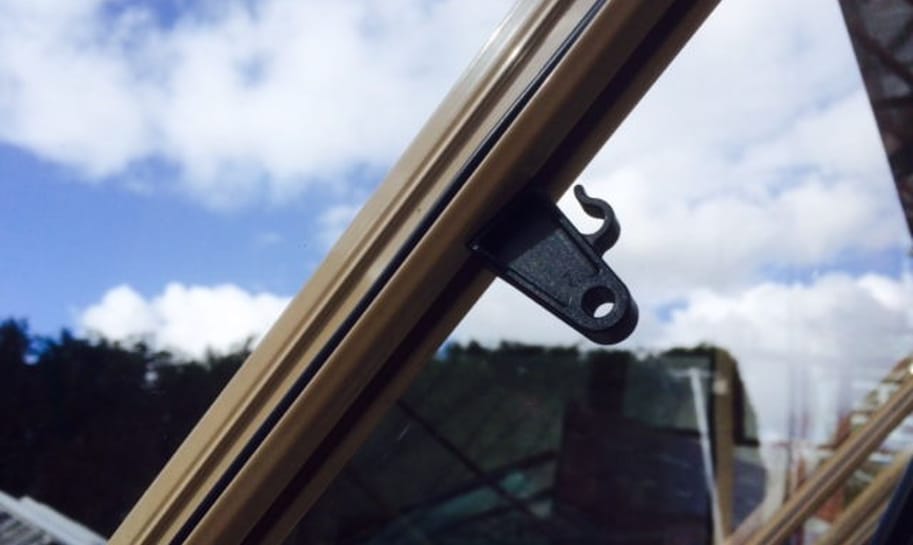
Matt's Pick for cordon trainingBest For: running support string from the base of each cordon up to the greenhouse ridge Why I Recommend It: I clip these to the glazing bar and tie soft twine to each eye. They hold a full truss-laden cordon without pulling free, which canes alone rarely manage at 2m. Price: £28 |
Training a cordon up to the greenhouse ridge
A cordon carries a heavy load by August. It needs support from day one. The two common methods are a tall cane or a length of soft twine run to the roof.
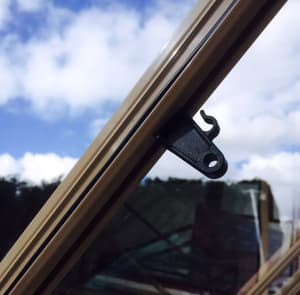
String is what we fit most. Clip a tying eye to the glazing bar above the plant. Tie twine to it, then loop the loose end loosely under the lowest leaves. As the plant grows, twist the stem gently round the string every few days. The string takes the weight and keeps the stem off the ground. For a full walk-through, see our guide on how to string and support tomatoes.
We grow many cordons in pots stood on greenhouse staging. It lifts the rootball off a cold floor and puts the lower trusses at working height. Staging also keeps air moving under the pots, which border-grown plants miss.
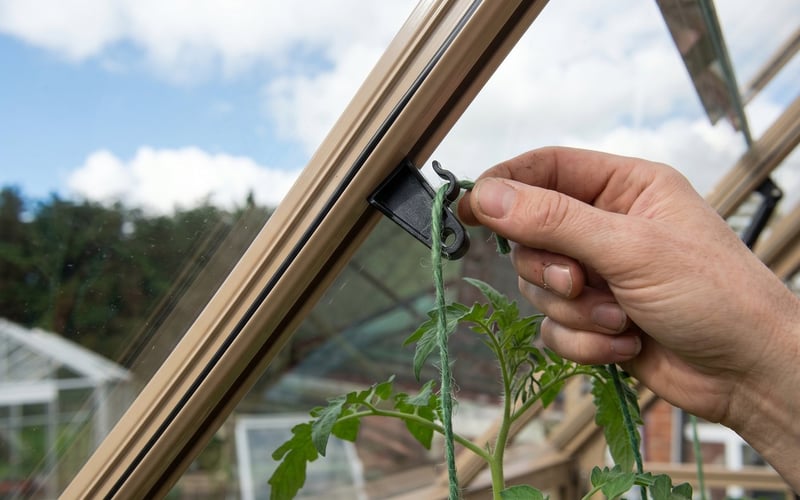
Soft twine tied to a glazing-bar eye carries the cordon without cutting into the stem.
Matt's Installation Tip
Leave slack in the string at the base. Tie it loosely below the lowest leaf, not tight around the stem. A tomato stem thickens fast. A tight tie strangles it and cuts the flow of water to the trusses above. I leave a loop wide enough for two fingers. Then I twist the plant round the string rather than tying every joint.
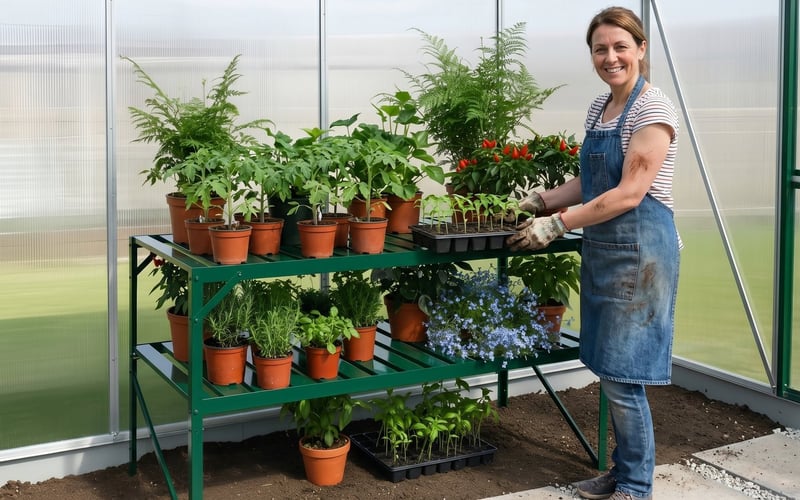
Shop the Vitavia 2 Tier Green Staging →
When to stop (top) a cordon tomato
Stopping means pinching out the growing tip at the top of the plant. You do it so the plant stops climbing. The energy then pours into the fruit already set, not new flowers that will never ripen.
Count the trusses. In a UK greenhouse, stop the plant once it has set six or seven good trusses. Pinch out the leader two leaves above the top truss. For most growers that falls in mid to late August. After that point, late flowers rarely ripen before the light fades and temperatures drop below 10C at night.
If your plant has hit the ridge before it has seven trusses, stop it anyway. There is no gain in a stem bent along the roof. Knowing when to plant tomatoes in spring sets how many trusses you can ripen by autumn.
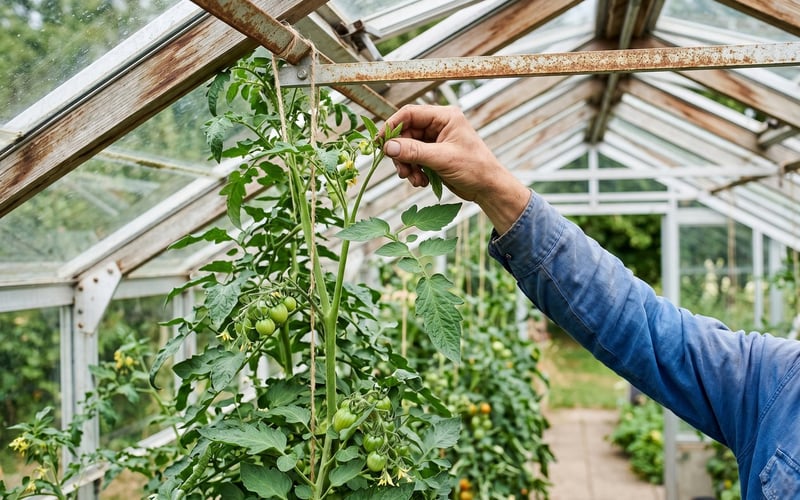
Matt's Tip: count two leaves, then stop
Always leave two leaves above the final truss before you pinch the tip. Those leaves feed the top fruit and shade it from scorch on hot glass. I learned this the hard way one summer. I topped plants flush to the truss and watched the top tomatoes turn yellow and hard in the sun.
Removing lower leaves and de-leafing for airflow
De-leafing is the partner job to pinching out. As the lowest truss ripens, strip the leaves below it. This opens the base of the plant so air moves freely and sun reaches the fruit.
Take off a few leaves a week, not the lot in one go. Snap each leaf down and sideways, or cut it close to the stem. Stop level with the lowest truss still carrying green fruit. Never strip leaves above ripening trusses, as the plant needs them to feed the crop.
Good airflow is the best defence against grey mould and blight in a damp greenhouse. Pair de-leafing with open vents on warm days. Our greenhouse ventilation guide shows how much vent area a tomato house really needs.
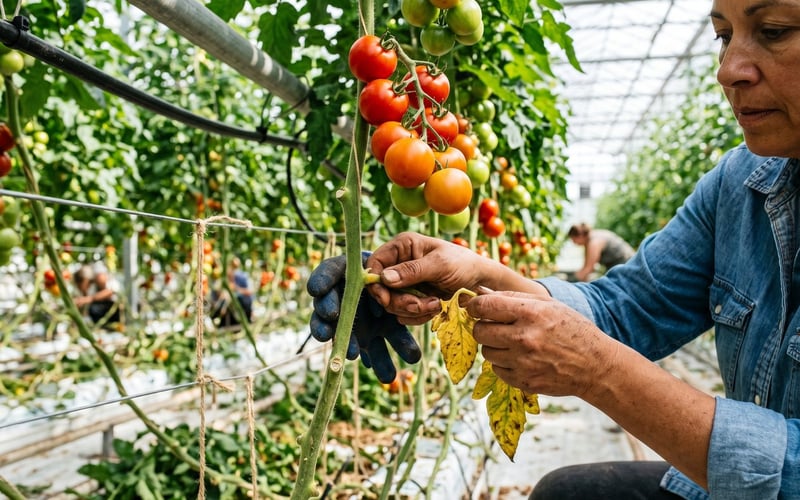
Feeding once the trusses set
Pinching, training and feeding work together. A cordon you have kept to one stem can carry its full load only if you feed it well. Start a high-potassium tomato feed once the first truss has set fruit the size of a pea.
Feed weekly at first. Move to twice a week in the heat of July and August when plants drink fast. Water little and often so the soil never swings from bone dry to soaked. That swing is the main cause of blossom end rot and split skins. If problems still show up, our guide to common tomato problems names the cause behind each symptom.
The team at Greenhouse Stores has watched thousands of crops come and go. Steady feeding on a pinched, well-trained plant beats heavy feeding on a tangled one every time.
The kit we use to train cordons
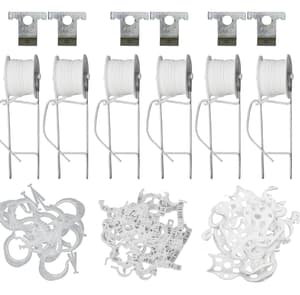
You need very little to grow a clean cordon: support string or canes, a few ties, and somewhere firm to stand your pots. These are the items we reach for most.

"We have set up tomato houses for many years, and the growers with the heaviest crops all do the same three things: pinch weekly, train to one stem, and feed once the fruit sets. The kit is cheap. The discipline is what pays."
- Matt W, Greenhouse Stores
Frequently asked questions
What does pinching out tomatoes mean?
It means removing the side shoots that grow in each leaf joint. These shoots sprout in the angle between the main stem and a leaf. Removing them keeps a cordon plant to a single stem, so its energy goes into fruit rather than extra foliage.
Do you pinch out side shoots on bush tomatoes?
No, leave bush tomatoes alone. Bush and trailing types are determinate. They fruit on their side stems and stop growing by themselves. Pinching them out cuts your crop, so only pinch cordon (indeterminate) plants.
How often should I remove tomato side shoots?
Check and pinch once a week through the season. Side shoots grow fast in warm weather, so a weekly pass keeps them small and easy to snap out. Skip a fortnight and you face thick, woody stems that wound the plant when cut.
When should I stop my tomato plants?
Stop a cordon after it sets six or seven trusses. Pinch out the growing tip two leaves above the top truss. In most UK greenhouses this falls in mid to late August, before falling light stops late fruit ripening.
Should I remove the lower leaves from tomato plants?
Yes, strip leaves below the lowest ripening truss. This lifts airflow at the base and lets sun reach the fruit. Remove a few each week and never take leaves from above trusses that still carry green fruit.
How many trusses should a greenhouse tomato have?
Aim for six or seven trusses on a cordon in a UK greenhouse. A heated greenhouse with early planting can ripen eight. Beyond that, late trusses set fruit too slowly to colour up before autumn.