How to Get Rid of Fungus Gnats in a Greenhouse
Fungus gnats, also called sciarid flies, are the tiny black flies that rise from your seed trays when you water. The 3mm adults are harmless. Their larvae are not. They live in the top 2 to 3cm of wet compost and chew seedling roots. The fix is simple and free: let the compost surface dry, bottom-water, and move more air with a vent. We clear these from greenhouses every propagation season.
Key takeaways
- Fungus gnats and sciarid flies are the same insect. The 3mm adults are a nuisance; the larvae in wet compost do the real harm to seedlings.
- Letting the top 2 to 3cm of compost dry out is the single best control. The larvae cannot survive without constant moisture.
- Bottom-water and top-dress pots with grit to break the damp surface where the females lay eggs.
- Yellow sticky traps catch the adults and biological nematodes kill the larvae. Both work best alongside drier compost.
- Warm, still, humid air lets them breed fast. A louvre vent and an auto vent opener move air and dry the surface, so they stop coming back.

Fungus gnats lift in a cloud from wet seed compost the moment you water. The adults you see are the symptom; the larvae below the surface are the problem.
Expert Tip
We see the same picture every March. A customer rings about clouds of tiny flies over the seed trays. Nine times out of ten the capillary matting is soaking wet and the vents are shut. From our work with Greenhouse Stores customers since 2012, the growers who let the surface dry and add a louvre vent never see a second wave. The flies are a symptom of wet, still air, not bad luck.
What are fungus gnats (sciarid fly)?
Fungus gnats are small dark flies from the Sciaridae family, so gardeners also call them sciarid flies. The adults are 2 to 4mm long, grey-black, with long legs and a weak, drifting flight. You see them run across the compost and lift off when you water.
They love a greenhouse in spring. Warm air, damp seed compost and still conditions are exactly what they want. They breed in the rich, wet organic matter that seedlings and cuttings sit in. A propagator lid makes it warmer and stiller, which speeds them up.
The adults are the part you notice. The larvae are the part that matters. Both are covered below, but the larvae are why you act, not the flies bumping into your face.
Are fungus gnats harmful to plants?
The adult flies do no direct damage, but the larvae feed on seedling roots and root hairs. A healthy mature plant shrugs them off. Seedlings, cuttings and young transplants do not. The larvae rasp the fine roots, and the plant wilts, stalls or keels over.
The larvae also spread fungal problems. They move through wet compost carrying spores, and they open wounds that let in rots like pythium. That link to damping off is why they hit propagation hardest. Our greenhouse propagation guide covers healthy seed-raising from the start.
Look for the larvae in the top 2 to 3cm of compost. They are translucent white, up to 8mm long, with a shiny black head. If seedlings collapse and you find these, gnats are the cause.

The damaging stage: translucent larvae with shiny black heads, feeding in the top few centimetres of wet compost, with an adult fly nearby.
Fungus gnat lifecycle
| Stage | Length | Where | What it does | Duration (warm greenhouse) |
|---|---|---|---|---|
| Egg | Under 0.3mm | Damp compost surface | Laid in batches of up to 200 | 3 to 6 days |
| Larva (the damaging stage) | Up to 8mm | Top 2 to 3cm of compost | Eats fungi, algae and seedling roots | 10 to 14 days |
| Pupa | 3mm | In the compost | Transforms, no feeding | 3 to 7 days |
| Adult | 2 to 4mm | Flying over pots | Lays the next batch of eggs | About 7 days |
The whole cycle runs in three to four weeks, faster in a heated propagator. That is why an untreated infestation snowballs. Break the cycle at the larva stage and the swarm collapses.

Matt's Pick for airflow that dries them out
Best For: Moving warm, still air so the compost surface dries and gnats stop laying.
Why I Recommend It: The Bayliss XL is the strongest wax opener we fit. It cracks the roof vent open at around 15C and lifts heavy vents others cannot. More air means a drier surface and far fewer gnats.
Price: £67
How to get rid of fungus gnats in a greenhouse
Attack the larvae in the compost first, then mop up the adults. Killing flies alone is a losing game, because the next batch is already hatching underground. Work through these steps together for a fast result.
- Let the top 2 to 3cm dry out. Water less often and more deeply. Dry surface compost kills eggs and larvae within days.
- Water from below. Stand pots in a tray and let them drink up. The surface stays dry and unattractive to egg-laying females.
- Top-dress with grit or vermiculite. A 1cm layer of horticultural grit, sharp sand or vermiculite blocks the surface and dries fast.
- Hang yellow sticky traps. They catch the weak-flying adults and show you if numbers are falling. Lay a few flat on the compost too.
- Drench with Steinernema feltiae nematodes. These microscopic worms hunt the larvae in the compost and are safe on food crops.
- Use a BTI drench. Bacillus thuringiensis israelensis, sold as mosquito bits, kills larvae when watered in.
- Clear standing water and algae. Wet matting, drip trays and algae on the glass all feed larvae.
Do not reach for a fogger or a fly spray. It kills a few adults and misses every larva. The compost is the battlefield, not the air. For the wider pest picture, our greenhouse pest control guide ranks the safe options.

A yellow sticky trap set among the seedlings catches the weak-flying adults and shows you at a glance whether numbers are falling.
Matt's Installation Tip
Capillary matting is the hidden cause we find most. Kept sopping wet, it becomes a gnat nursery under every pot. Wring it out or switch to bottom-watering by hand in spring. Let the matting dry fully once a week. A soil thermometer poked into the compost tells you how wet and warm it really is, which is usually wetter than growers think.
Fungus gnat control methods compared
| Method | Targets | Speed | Best for | Matt's verdict |
|---|---|---|---|---|
| Drying the surface (Matt's Pick approach) | Eggs and larvae | 3 to 7 days | Every greenhouse | Free, fast, fixes the cause |
| Yellow sticky traps | Adults | Immediate | Monitoring and knockdown | Essential, but only half the job |
| Nematodes (S. feltiae) | Larvae | 1 to 2 weeks | Heavy infestations | The biological heavy hitter |
| Grit or vermiculite top-dressing | Egg-laying | Prevents new eggs | Seed trays and pots | Cheap and very effective |
| Airflow: louvre and auto vents | Breeding conditions | Ongoing | Long-term prevention | Stops the next outbreak |
| Fly spray or fogger | A few adults | Minutes | Almost nothing | Skip it, misses the larvae |
Airflow: the greenhouse-specific fix competitors miss
Fungus gnats breed fastest in warm, still, humid air, so moving air is a control in itself. A stuffy, closed greenhouse holds moisture at the compost surface all day. Open it up and that surface dries, which is exactly what the larvae cannot survive.
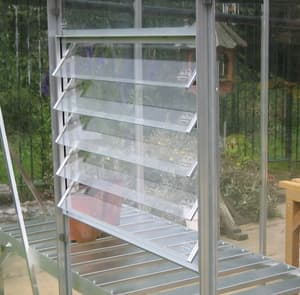
A side louvre vent pulls cool air in at bench level, right where the trays sit. A roof vent lets warm, damp air escape. Together they set up a through-draught that keeps the surface dry. Our greenhouse ventilation guide shows how to size vents to your greenhouse.

Shop the Elite 5 Blade Louvre Vent →
A louvre vent from £119 gives you that low-level airflow on demand. Add an automatic opener and it manages itself while you are at work. The team at Greenhouse Stores can match a vent to your frame if you are not sure which fits.
Matt's Tip: Fit an auto opener before propagation season
Gnats explode in the exact weeks you are raising seedlings and cannot watch the vents all day. An automatic opener cracks the vent at around 15C and closes it as the greenhouse cools. Steady airflow through March and April is the difference between a clean bench and a gnat cloud. Browse the auto vents and openers range to match your model.
How to stop fungus gnats coming back
Prevention is watering discipline plus airflow, kept up all season. Once the compost dries between waterings and the air moves, gnats have nowhere to breed. Make these habits and you will not fight them again.
Water for the plant, not the clock. Check the compost with a finger or a probe before you reach for the can. A measured watering routine beats a daily soak every time. Keep the greenhouse tidy, clear fallen leaves, and empty drip trays.

Shop the Vitavia Soil Thermometer →
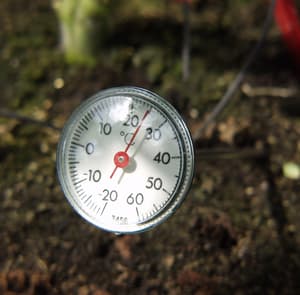
Start clean too. Fresh, sealed compost rarely carries gnats; old open bags left damp in the greenhouse often do. A soil thermometer from £34 helps you read the compost before it turns into a nursery. Quarantine new plants for a week and watch for flies before they join the others.
Ready to shut the door on them? Fit airflow and water with a plan. Browse the full auto vents and openers range or read our list of the propagation kit that keeps seedlings healthy. A tidy, airy greenhouse is a gnat-free greenhouse, and the team at Greenhouse Stores is here if you need a hand choosing.

"Every fungus gnat job we get called to comes down to the same two things: soaking compost and shut vents. We fit a louvre and an auto opener, tell the customer to let the surface dry, and the flies are gone in a fortnight. You do not need chemicals. You need air moving and a drier bench. That is the whole secret."
— Matt W, Greenhouse Stores
Frequently asked questions
What are the tiny black flies in my greenhouse? They are fungus gnats, also called sciarid flies. The 3mm adults breed in wet compost, and their larvae feed on seedling roots.
Are fungus gnats harmful to plants? The adults are harmless, but the larvae damage seedlings. They eat root hairs in the top few centimetres of wet compost and can spread root rots.
How do I get rid of fungus gnats fast? Let the compost surface dry out. Larvae need constant moisture, so drying the top 2 to 3cm kills them within days, backed by sticky traps for adults.
Do fungus gnats go away on their own? Rarely, while the compost stays wet. They breed every three to four weeks, so an untreated tray only gets worse until you dry it out.
Does better ventilation stop fungus gnats? Yes, it helps a lot. Moving air dries the compost surface and lowers humidity, which removes the damp conditions the larvae depend on.
Will fungus gnats spread to my house plants? Yes, they can. Adults fly to any moist pot, so treat greenhouse and indoor plants together and let every pot dry between waterings.