May Gardening Jobs: What to Do in the Garden and Greenhouse
May is the crossover month for UK gardens. The last frost date falls around May 15th for England and Wales, later in Scotland. Plant out tender crops like tomatoes, courgettes and runner beans after mid-May. Pinch out tomato side shoots when they reach 2cm. Fit an automatic vent opener before greenhouse temperatures exceed 25°C. Apply the Chelsea chop to late-flowering perennials to stagger bloom times.
Key Takeaways
- Plant out tender crops after May 15th. Tomatoes, peppers, courgettes and runner beans go outside once the last frost has passed.
- Fit automatic vent openers now. Greenhouse temperatures hit 30°C on sunny May days and plants wilt within an hour.
- Pinch out tomato side shoots weekly. Remove shoots at 2cm using finger and thumb to channel energy into fruit.
- Apply the Chelsea chop in late May. Cut late-flowering perennials back by a third for bushier plants and staggered flowering.
- Start regular lawn mowing. Mow weekly but never remove more than a third of blade height in one cut.
- Mulch beds with 5cm of compost. Retains moisture, suppresses weeds and feeds the soil through summer.
Installer's Note
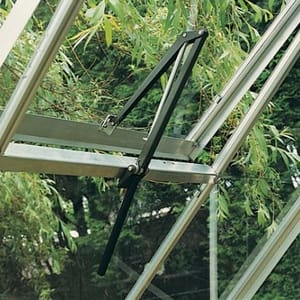
We fit more auto vent openers in May than any other month. Once temperatures hit 25°C under glass, young plants can wilt within an hour if the vents are shut. A piston opener reacts to heat and lifts the roof vent without you being there. At £59, it is the cheapest insurance you can buy for your greenhouse crops.
What are the main May gardening jobs in the UK?
May splits cleanly into two halves for most UK gardens. The first two weeks focus on hardening off, direct sowing hardy crops and finishing spring tidy-up. After May 15th the last frost passes for most of England and Wales, so tender crops move outside.
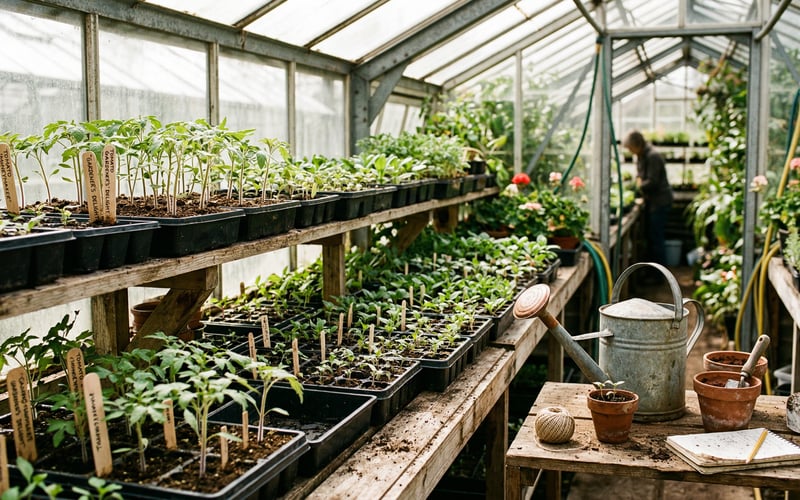
Greenhouse work peaks this month. Tomatoes planted in April need weekly side-shoot removal, daily watering and ventilation from 7am. Peppers and aubergines benefit from misting on warm afternoons to help flowers set fruit. Sowing continues for sweetcorn, squash and pumpkins started in individual pots.
Outdoor beds get regular attention too. Mulch goes down around established perennials, spring bulbs get deadheaded and supports go in before plants need them. For more greenhouse-specific tasks through the year, see our guide to growing vegetables year-round.
When is it safe to plant out tomatoes and tender crops?
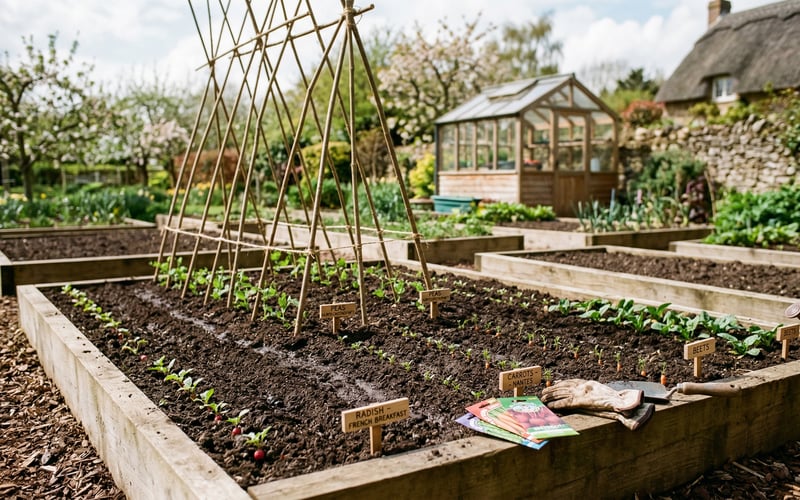
Plant out tender crops after May 15th in southern and central England, after May 20th in the Midlands, and after late May in Scotland and northern England. These dates follow the average last frost date for each region based on Met Office data.
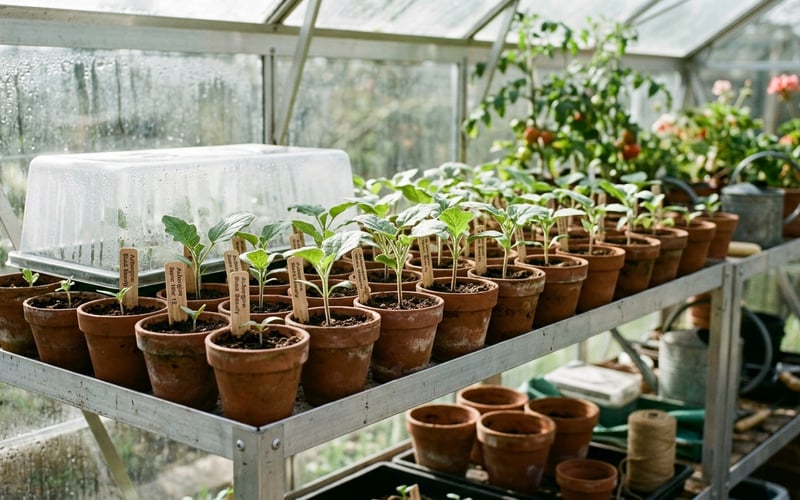
Harden off plants first. Place trays outside during the day for a week, bringing them in each night. Then leave them out overnight in a sheltered spot for three more nights before final planting. Skipping this stage causes leaf scorch and stunts growth for weeks.
Water plants an hour before transplanting. Dig a hole twice the width of the rootball, firm soil around roots and water the plant in with a full watering can. Tomatoes benefit from planting deep with the lowest leaves removed; they grow roots along the buried stem.
Shop potting sheds for seedling work →
How do I pinch out tomato side shoots?
Check cordon tomatoes every three days from mid-May onwards. Side shoots appear in the 45-degree angle between the main stem and a leaf. Snap them off when they reach 2-3cm using finger and thumb, pinching sideways rather than pulling.
Bush or determinate varieties do not need side-shooting. Read the seed packet first: cordons have one main stem, bush types sprawl. Indoor cordons in a greenhouse need tying to a cane or string every fortnight as they extend, while outdoor cordons need a stout cane 180cm tall.
Remove shoots in the morning when stems are turgid. The wound closes within an hour in dry weather but can weep sap if the plant is stressed. Avoid pinching wet plants; moisture on the wound invites grey mould. For a deep-dive on training tomatoes properly, read our tomato stringing guide.

Matt's Tip: Pinch Out on Tuesday and Friday
I pinch my tomatoes every Tuesday and Friday morning as part of my greenhouse routine. Leave it a week and the side shoots reach 5cm; then you need secateurs and you risk tearing the main stem. Two minutes, twice a week, keeps a five-plant row under control all summer.
What greenhouse tasks matter most in May?
Ventilation becomes the single most important greenhouse job from mid-May onwards. Open roof vents and doors by 7am on sunny days and close them again by 7pm to retain warmth overnight. An automatic vent opener handles this for you when plans change.
Damp down the greenhouse floor on hot afternoons. Tip a watering can along the concrete or slabs; the evaporation drops the air temperature by 3-5°C and raises humidity, which tomatoes and cucumbers love. Avoid wetting the foliage directly.
Sow sweetcorn, squash, pumpkins and courgettes in 9cm pots on heated staging. These heat-lovers germinate in a week at 18-21°C and need individual pots because they hate root disturbance. Harden them off in late May ready for planting in early June.

How do I stop my greenhouse overheating?
Three tools keep May greenhouse temperatures under 30°C: roof vents, side louvres and shade netting. Most gardeners only use the first. A louvre vent in the gable end doubles the airflow and costs around £50 to retrofit.
Add shade netting once May temperatures regularly exceed 28°C under glass. Green woven netting with 40-50% shade rating clips to the inside of the roof and blocks enough light to cool the space without slowing growth. Take it down in September.
Fit a maximum-minimum thermometer on the north wall, away from direct sun. Check it morning and evening for a week in mid-May; if the max reading hits 32°C before noon, you need more ventilation or shade.

Which flowers and bulbs need attention in May?
Deadhead tulips and daffodils as soon as the flowers fade, but leave the foliage untouched for six weeks. The leaves feed next year's bulb; cutting them early weakens the display. Tie daffodil leaves in a loose knot only if they look really messy.
Plant out summer bedding after May 15th: petunias, geraniums, begonias, busy lizzies and nasturtiums. Space them 20-25cm apart in pots or beds enriched with peat-free multipurpose compost. Water the plants an hour before and after planting.
Stake tall perennials now. Delphiniums, dahlias and peonies all need support before they reach 30cm tall; going in later means bending the stems around canes and breaking growing tips. Use natural jute twine so ties rot away rather than strangling stems.

What vegetables should I sow and plant in May?
Direct sow beans, peas, carrots, beetroot, radish, Swiss chard, spinach and salad leaves from early May. Soil temperature should be at least 10°C; a soil thermometer costs £15 and saves guesswork. Sow in drills 1-2cm deep and water after sowing only if the soil is dry.
Earth up potatoes every fortnight as shoots reach 20cm. Draw soil from between rows up around the stems, leaving only the top leaves exposed. This produces more tubers and stops developing potatoes going green in sunlight.
Plant out brassicas (cabbage, calabrese, kale, Brussels sprouts) from early May. Fit brassica collars at the base of each plant to stop cabbage root fly laying eggs against the stem. Cover the whole row with fine mesh to deter butterflies later.
Shop Vitavia staging extensions →
How do I protect strawberries and soft fruit in May?
Net strawberries the moment the fruit starts turning white. Blackbirds and pigeons strip a bed in a morning; 1cm mesh netting on hoops keeps them out. Tuck the edges under bricks so birds cannot crawl underneath.
Slip straw or woven fibre mats under developing berries. This keeps the fruit off damp soil, cuts slug damage and stops grey mould spreading. Tuck the straw around the crown without burying the plant.
Thin apples and pears at golf-ball size. Remove the king fruit (the largest in each cluster) and leave two fruits per cluster spaced 10-15cm apart. This gives bigger, tastier fruit and prevents biennial bearing where trees skip a year.

What is the Chelsea chop and which plants need it?
The Chelsea chop is a late-May pruning technique that cuts late-flowering perennials back by a third. It delays flowering by two to three weeks but produces bushier plants with more flower heads. Named after the Chelsea Flower Show week in late May.
Apply it to asters, heleniums, sedums (Hylotelephium), phlox, rudbeckia and echinacea. Cut one clump at full height and a second by a third to stagger flowering across six to eight weeks. Skip tall perennials that bloom before July, as the chop removes next flower buds.
Use sharp secateurs and cut just above a leaf node. The plant branches below the cut within a fortnight. Feed with liquid seaweed a week later to support the regrowth.
How should I care for my lawn in May?
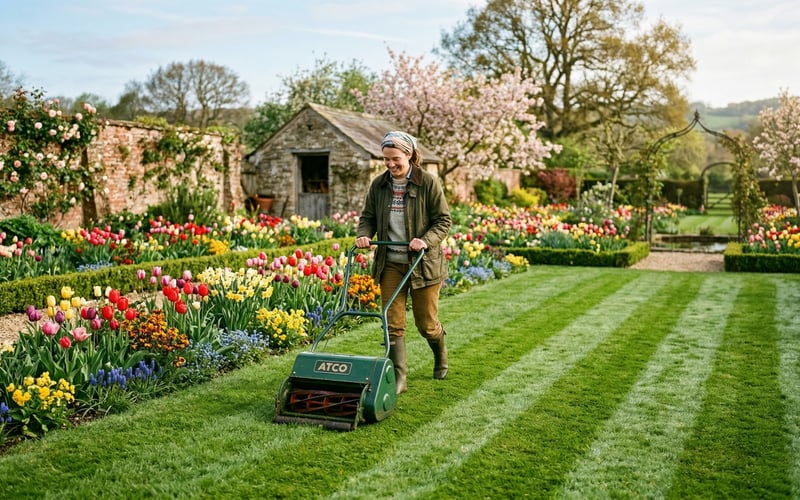
Mow weekly from early May onwards. Raise the blade to 30-40mm in the first cuts and only lower it to 25mm once growth is steady. Never remove more than a third of blade height in one mow; short cuts stress the grass and invite weeds.
Edge the borders every fortnight. A long-handled edging iron or half-moon cutter gives the garden a sharp finish that makes everything else look tidier. Collect the clippings and compost them in thin layers mixed with brown waste.
Apply a spring lawn feed if the grass looks yellow or thin. Choose a balanced NPK product rather than pure nitrogen; the latter pushes soft growth that falls to disease. Water thoroughly afterwards if no rain is forecast within 48 hours.
Comparison: May greenhouse jobs by week
| Week | Sowing | Planting out | Maintenance |
|---|---|---|---|
| Week 1 (1-7 May) | Sweetcorn, squash, pumpkins in 9cm pots | Hardy herbs, onion sets, second-early potatoes | Check auto vent, start weekly mowing |
| Week 2 (8-14 May) | French beans, cucumbers under glass | Hardy annuals, lettuce, chard | Deadhead tulips, stake delphiniums |
| Week 3 (15-21 May) | Runner beans direct outside | Tomatoes, peppers (south of England) | Earth up potatoes, mulch beds |
| Week 4 (22-31 May) | Courgettes, French beans outside | Summer bedding, aubergines, basil | Chelsea chop, net strawberries |
|
Matt's Pick for May VentilationBest For: Hands-off temperature control when you cannot be in the greenhouse to open vents Why I Recommend It: This is the single most important accessory for any greenhouse. The wax-filled piston expands as it warms and lifts the roof vent automatically, then closes as it cools. I have fitted hundreds of these and they save more plants than any other product we sell. Price: £59 |
May gardening tools and workspace
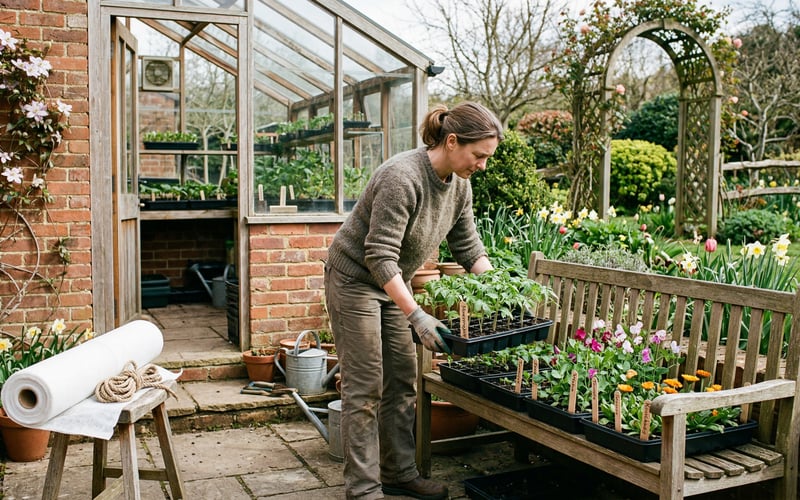
A sturdy potting bench saves hours in May. Mixing compost, pricking out seedlings and cleaning pots all go faster at waist height rather than bent over a flagstone. The Elite Potting Bench at £179 suits most UK gardens with its galvanised top and storage shelf.
Short of greenhouse space? A mini greenhouse on wheels works as mobile hardening-off space. Roll it out on dry days, back to a sheltered corner overnight. The 2x3 Access Mini Greenhouse on Wheels at £799 takes two seed trays plus a row of pots.
Keep a maximum-minimum thermometer, a spray mister, twine, bamboo canes, secateurs and a soft brush near the bench. Handling everything in one spot stops the constant back-and-forth that makes May feel overwhelming.

Frequently asked questions
What is the most important May gardening task?
Fit an automatic vent opener before temperatures exceed 25°C. On a sunny May day the greenhouse can hit 35°C by 10am, scorching young plants. Consistent watering and mulching come second, but vent failure is the single biggest cause of lost seedlings in May.
Is it too late to plant potatoes in May?
No, second-early and maincrop potatoes planted in early May still give a full harvest. Plant tubers 15cm deep with 30cm spacing and earth up regularly as shoots emerge. Water during dry spells once tubers start forming in late June.
Can I still prune shrubs in May?
Yes, but only spring-flowering shrubs that have finished blooming. Forsythia, flowering currant and early clematis all benefit from a prune immediately after the flowers fade. Avoid cutting summer-flowering shrubs now, as you will remove developing buds.
What vegetables can I direct-sow in May?
Beans, peas, carrots, beetroot, radish, salad leaves, spinach and chard all go straight in the ground in May. Courgettes, squash and sweetcorn can be direct-sown from May 20th once frost risk has passed in most regions.
How do I prevent greenhouse overheating in May?
Open vents and doors by 7am daily and fit an automatic roof vent opener. Add 40-50% shade netting once temperatures regularly exceed 28°C. Damp the floor down on hot afternoons to drop the air temperature by 3-5°C.
When is the last frost date in the UK?
The average last frost falls around May 15th in southern England and May 25th in Scotland. Coastal areas get their last frost a week or two earlier than inland regions. Check your Met Office local forecast before planting tender crops.
How often should I water greenhouse plants in May?
Water once daily in the morning from mid-May onwards, twice on hot days. Tomatoes, cucumbers and peppers in grow bags or pots dry out fast in a warm greenhouse. Stick a finger 2cm into the compost; if it feels dry, water.
What pests attack plants in May?
Aphids, slugs, lily beetle and cabbage root fly are the main May pests. Check the underside of new growth weekly for aphids and rub them off with a gloved hand. Use wool slug pellets or copper tape around tender seedlings.