ThermoWood vs Pressure-Treated Timber: Which Lasts Longer in Garden Buildings?
ThermoWood outlasts pressure-treated timber by 10-15 years in garden building applications, based on our experience installing both types for many years across the UK. Heat treatment at 215°C permanently changes the cell structure of the wood, reducing moisture absorption by up to 40% and eliminating the sugars and resins that fungi feed on. Pressure treatment forces chemical preservative into softwood under vacuum, giving 10-15 years of rot resistance that diminishes as the preservative leaches out. For potting sheds and wooden greenhouses, the difference shows after year 7 when pressure-treated timber starts checking and greying while ThermoWood holds its shape.
Key Takeaways
- ThermoWood is heated to 215°C in oxygen-free kilns, permanently altering its cellular structure with zero chemicals
- Pressure-treated timber uses tanalith preservative forced in under vacuum - effective for 10-15 years before it leaches out
- ThermoWood shows 40% less dimensional movement (swelling/shrinking) than untreated softwood, meaning fewer gaps and less warping
- Over 25 years, ThermoWood costs roughly £147 per year vs £88 per year for pressure-treated - but the pressure-treated shed will need replacing at year 15
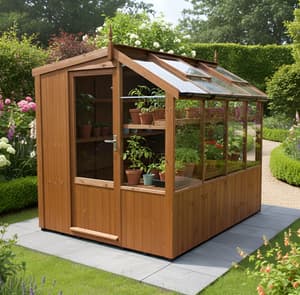
- We have installed Swallow ThermoWood greenhouses since 2012 that still look structurally perfect - the oldest pressure-treated sheds from the same year are showing serious deterioration
Installer's Note
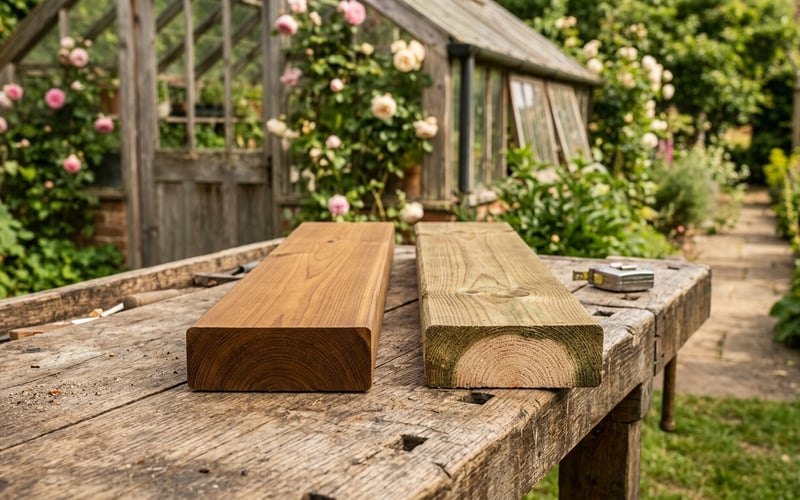
I have been building and installing wooden garden buildings since 2012, and I have watched both ThermoWood and pressure-treated timber age in real time across hundreds of installations. The difference after 10 years is not subtle. The ThermoWood structures keep their shape, their joints stay tight, and the timber still feels solid when you tap it. Pressure-treated buildings from the same era often have soft spots at the base, gaps where panels have shrunk, and that unmistakable grey-green look of timber that is losing its fight with the British weather. This article is based on what I have actually seen, not manufacturer claims.
What is ThermoWood and how is it made?
ThermoWood is softwood (usually Scandinavian spruce or pine) that has been heated to 185-215°C in oxygen-free kilns for 24-72 hours. The process was developed in Finland in the 1990s by VTT Technical Research Centre and is now used across Europe for cladding, decking and high-end garden buildings.
The heat treatment works by breaking down the hemicellulose in the wood's cell walls. Hemicellulose is the component that absorbs moisture and provides food for decay fungi. By destroying it, you get timber that physically cannot absorb water the way untreated wood does. The cell walls become permanently rigid, which is why ThermoWood swells and shrinks up to 40% less than the same species before treatment.
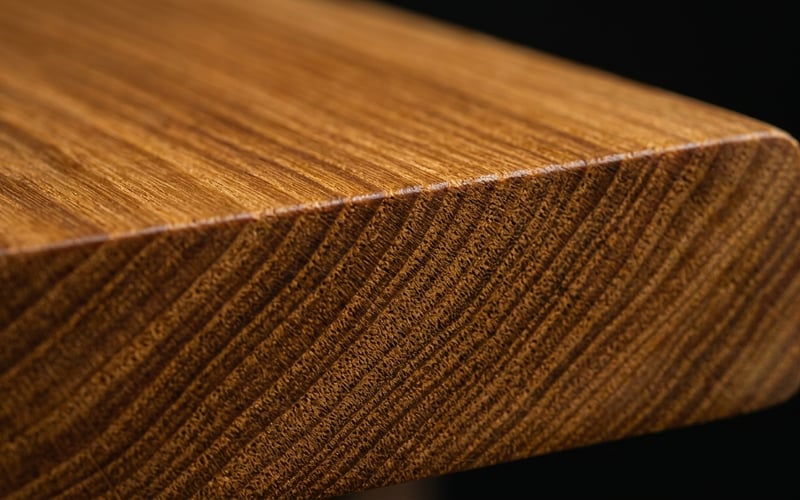
The process also caramelises natural sugars in the wood, producing that distinctive honey-brown colour that goes all the way through the cross-section. This is not a surface stain - you can cut a piece of ThermoWood in half and the colour is uniform throughout. Every Swallow greenhouse and potting shed we sell uses ThermoWood treated to Class D (Durability), which is the highest heat treatment grade at 212-215°C.
What is pressure-treated timber?
Pressure-treated timber is softwood that has been placed in a sealed cylinder where chemical preservative is forced into the wood under vacuum and pressure. The most common treatment in the UK is tanalith (copper-based), which gives timber its characteristic green tinge when fresh. Some newer treatments use micro-emulsified copper, which leaves the wood a lighter brown colour.
The chemical preservative sits within the outer 6-15 mm of the timber (the sapwood absorbs it readily, the heartwood does not). This creates a protective shell against fungal decay and insect attack. When fresh, the protection is excellent. However, the preservative gradually leaches out through rain exposure and UV degradation over 10-15 years, particularly on horizontal surfaces and end grain where water pools.
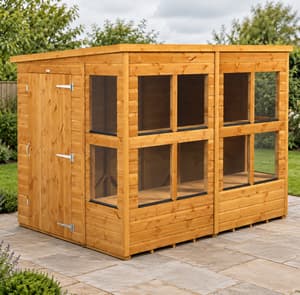
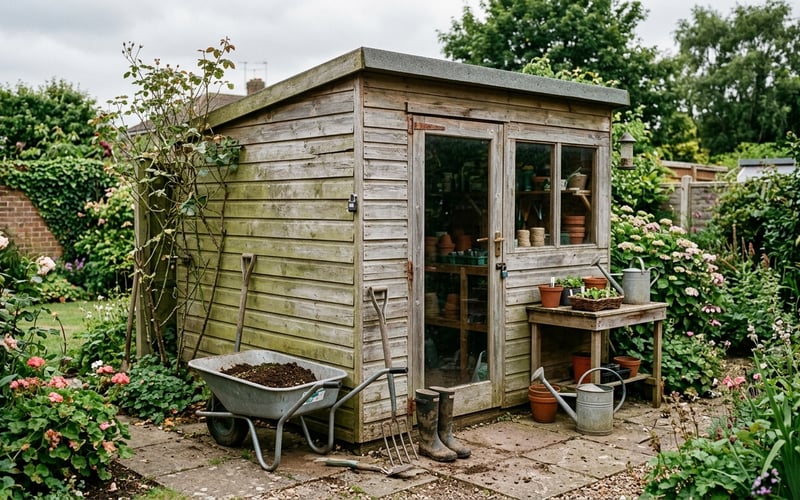
Most budget potting sheds and garden buildings use pressure-treated timber because it costs roughly 40-60% less than ThermoWood. The treatment adds about 15-20% to the cost of untreated softwood, making it the most cost-effective rot protection for garden buildings that will last 10-15 years.
Shop Pressure-Treated Potting Sheds from £654 →
ThermoWood vs pressure-treated timber: the key differences
The fundamental difference is chemistry vs physics. Pressure treatment adds chemicals to protect wood from the outside in. ThermoWood changes the wood itself from the inside out. Both approaches work, but they work differently and for different lengths of time.
| Property | ThermoWood (Class D) | Pressure-Treated (Tanalith) | Winner |
|---|---|---|---|
| Rot resistance | 25-30+ years (permanent cell change) | 10-15 years (diminishes as chemicals leach) | ThermoWood |
| Dimensional stability | 40% less movement than untreated | Same as untreated softwood | ThermoWood |
| Chemical content | None - heat only | Copper-based preservative | ThermoWood |
| Colour | Honey-brown throughout | Green when fresh, greys to silver | Preference |
| Weight | 10-15% lighter than untreated | 15-20% heavier than untreated | ThermoWood |
| Insulation (thermal) | 20-25% better than untreated | Same as untreated softwood | ThermoWood |
| Brittleness | Slightly more brittle (careful nailing needed) | Same as untreated softwood | Pressure-treated |
| Maintenance | Oil every 2-3 years to keep colour | Stain/preservative every 1-2 years | ThermoWood |
| End-of-life disposal | Can be composted or burned | Classified waste (chemicals) - special disposal | ThermoWood |
| Upfront cost (potting shed) | £3,300-£4,000 (Swallow Jay) | £900-£2,000 (Power range) | Pressure-treated |
|
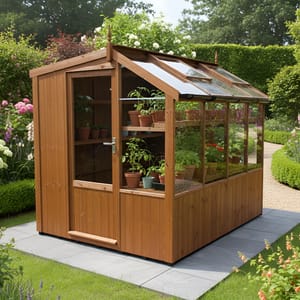
Matt's pick: best thermowood potting shedBest For: Serious gardeners who want a potting shed that outlasts them Why I Recommend It: The Swallow Jay is the only ThermoWood potting shed we sell. Built in Lincolnshire using Scandinavian spruce heat-treated to 215°C, it comes with a proper potting bench, slatted staging and toughened safety glass. I have installed dozens of these and never had a warranty claim. The 6x8 is the sweet spot for most gardens - enough room for a bench, storage and still space to move around. Price: From £3,307 |
How long does ThermoWood last compared to pressure-treated?
ThermoWood lasts 25-30+ years in ground-contact applications and indefinitely when kept off the ground. Pressure-treated timber lasts 10-15 years in the same conditions, with the first signs of deterioration typically appearing at year 7-10.
The longevity difference comes down to what happens when the treatment stops working. With pressure-treated timber, the preservative slowly leaches out through rain and UV exposure. Once the outer shell of preserved wood is compromised, the untreated core is exposed to fungal spores. Rot then progresses rapidly from the outside in. We see this most often at the base of sheds where timber sits closest to damp ground.
ThermoWood does not have this problem because the treatment is permanent. You cannot wash heat out of wood. The modified cell structure remains intact for the life of the timber. The only degradation is surface weathering - the honey-brown colour fades to silver-grey over 2-3 years if untreated - but this is purely cosmetic and does not affect structural integrity.
Shop Swallow Kingfisher Greenhouses from £2,958 →
Matt's Tip: The Base Test
Want to know if your existing timber shed is still sound? Push a flat-head screwdriver into the bottom rail where it meets the base. If it goes in more than 3 mm with moderate pressure, the timber is softening and rot has started. On a ThermoWood building, the screwdriver should bounce off. On a 10-year-old pressure-treated shed, you will often get 5-6 mm of penetration before hitting solid wood. I do this check on every site visit - it tells you more about the building's future than any visual inspection.
Does thermowood need maintaining?
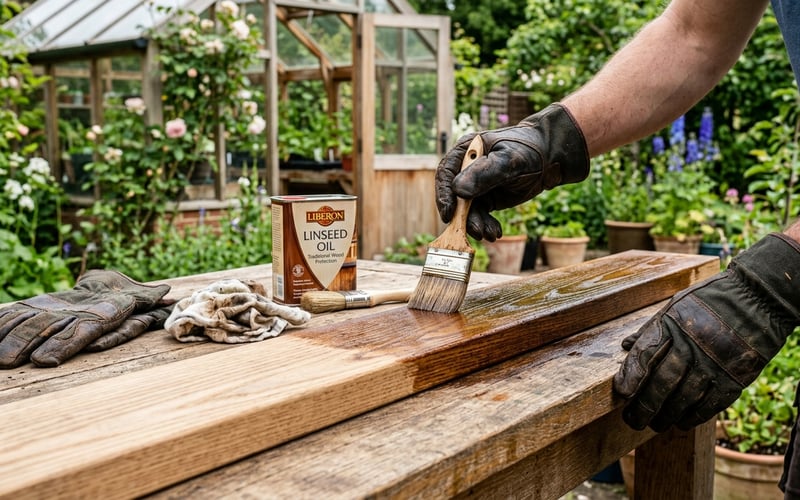
ThermoWood needs oiling every 2-3 years if you want to keep the honey-brown colour. If you do nothing, it will weather to an even silver-grey over 18-24 months. This greying is purely aesthetic - it does not affect the rot resistance or structural performance of the wood.
Many of our customers actually prefer the silver-grey look. It has a Scandinavian, weathered appearance that suits contemporary gardens. If you want to maintain the original colour, a coat of UV-protective wood oil (Osmo UV Protection Oil or similar) every 2-3 years does the job. Application takes about 2 hours for a standard potting shed and the oil soaks in within 30 minutes.
By contrast, pressure-treated timber needs retreating with wood preservative or stain every 1-2 years to maintain its protective layer. Miss a treatment cycle and moisture gets into the unprotected wood, accelerating decay. Over a 25-year period, you will spend roughly 30-40 hours maintaining a pressure-treated shed vs 16-20 hours for ThermoWood.
Cost per year: which timber is actually cheaper?
Pressure-treated timber is cheaper upfront but costs more per year when you factor in replacement. Here is the real maths, based on our selling prices and typical maintenance costs:
| Cost Factor | ThermoWood (Swallow Jay 6x8) | Pressure-Treated (Power 6x8) |
|---|---|---|
| Purchase price | £3,751 | £1,044 |
| Expected lifespan | 25+ years | 12-15 years |
| Maintenance (annual avg) | £25 (oil every 2-3 yrs) | £35 (preservative yearly) |
| 25-year maintenance total | £250 | £875 (inc. 2nd shed purchase) |
| Replacement at year 15 | £0 | ~£1,200 (inflation-adjusted) |
| Total 25-year cost | ~£4,000 | ~£3,300 |
| Cost per year | ~£160/yr | ~£132/yr (but two sheds) |
The pressure-treated option still works out slightly cheaper per year, but you will build, maintain and dispose of two sheds instead of one. If your time has any value at all, the ThermoWood wins. And that calculation does not account for the waste - a pressure-treated shed cannot go in your garden bonfire or compost heap. It is classified chemical waste and needs specialist disposal.
Matt's Installation Tip
If you are building on a budget and choosing pressure-treated timber, spend the extra £30-50 on a DPC (damp-proof course) membrane between the base and the bottom rail. Cut a strip of Visqueen DPM to width and staple it to the underside of the floor joists before they go down. This single step adds 3-5 years to the life of a pressure-treated shed by stopping rising damp from the concrete base. I do this on every pressure-treated installation and it makes a measurable difference.
Which should you choose for a potting shed?
Choose ThermoWood if you want a potting shed that lasts 25+ years with minimal maintenance. Choose pressure-treated if you need a working space on a budget and accept that you may need to replace it in 12-15 years.
For a serious gardener who will use their potting shed year-round, ThermoWood is the better investment. The dimensional stability means doors and windows keep working properly as the seasons change. The better thermal insulation keeps the interior a few degrees warmer in winter. And the absence of chemicals means you can safely store seed trays and compost directly against the walls without any concerns about leaching.
For an allotment shed, a secondary storage building, or a first potting shed where you are still working out what you need, pressure-treated timber does the job well. The Power range we stock starts at £654 for a 4ft wide apex model - that is a lot of potting shed for the money. Read our potting shed layout and storage guide for ideas on setting up either type.
Shop Swallow Jay ThermoWood Potting Sheds from £3,307 →
ThermoWood in wooden greenhouses: why Swallow chose it
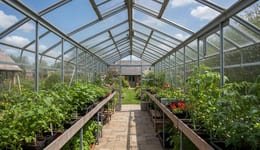
Swallow Greenhouses switched to ThermoWood in 2009 because their pressure-treated frames were warping and causing glazing seal failures. The dimensional stability of ThermoWood solved the problem. When a greenhouse frame swells or shrinks with seasonal moisture changes, the glass panes lose their seal and leak. With ThermoWood, the frame stays within 1-2 mm of its original dimensions year-round.
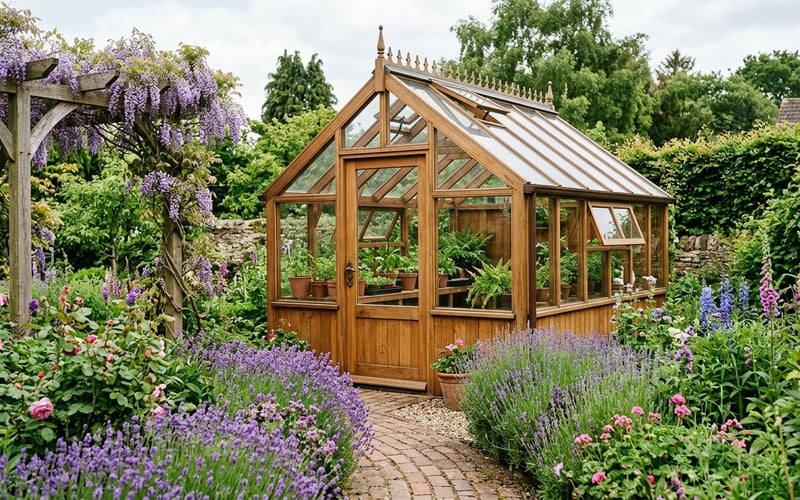
Every Swallow greenhouse we sell - from the Kingfisher to the Raven and Eagle - uses Scandinavian spruce ThermoWood. The frames carry a 10-year timber warranty, though in practice we expect them to last 30+ years. The oldest Swallow ThermoWood installations we maintain are more than a decade old and still structurally perfect.
If you are weighing up a wooden greenhouse against an aluminium one, the timber treatment is the single most important factor. A ThermoWood greenhouse will match aluminium for longevity. A pressure-treated wooden greenhouse will not. Read our potting shed vs greenhouse comparison if you are deciding between the two.
Why We Stock Swallow
"We started selling Swallow back in 2012 when they were one of the only UK makers using ThermoWood. Fourteen years later, we still have not had a single frame replacement due to rot. Not one. I cannot say the same about any pressure-treated wooden greenhouse range we have sold. The Swallow factory is in Louth, Lincolnshire, and we visit them regularly. The timber arrives from Finland already heat-treated, and they machine it in-house. The quality control is as good as anything in the garden building industry."
- Matt W, Greenhouse Stores
Environmental impact: which is greener?
ThermoWood has a significantly lower environmental impact than pressure-treated timber. The heat treatment process uses only heat and steam from the kiln's own energy cycle. No chemicals are added and none need disposing of. At end of life, ThermoWood can be composted, chipped for mulch, or burned in a wood burner without releasing toxic fumes.
Pressure-treated timber contains copper-based preservatives that classify it as hazardous waste at end of life. It cannot legally be burned in domestic settings (the fumes contain heavy metals), and it should not go into garden compost or general waste. Disposal typically costs £15-30 at a household waste recycling centre, and some refuse to accept large quantities.
If environmental credentials matter to you, ThermoWood is the clear choice. The Finnish ThermoWood Association requires member mills to source timber from sustainably managed forests (PEFC or FSC certified). Swallow uses PEFC-certified Scandinavian spruce for all their garden buildings.
Frequently asked questions
Is ThermoWood stronger than pressure-treated timber?
ThermoWood is slightly more brittle but equally strong in structural use. The heat treatment reduces bending strength by about 10-15%, but compressive strength remains the same. In practice, this means you need to pre-drill screw holes to avoid splitting, but the timber performs identically in a framed garden building. Every Swallow greenhouse and potting shed is engineered to account for this.
Can you paint thermowood?
Yes, ThermoWood takes paint, stain and oil finishes well. The lower moisture content actually improves paint adhesion compared to pressure-treated timber. Swallow offer a painted potting shed range in several colours through our potting shed collection. If you paint it yourself, use a microporous exterior paint that allows moisture vapour to pass through.
Does thermowood smell?
Fresh ThermoWood has a mild toasted or caramel scent that fades within weeks. This is from the caramelised sugars produced during heat treatment. It is completely non-toxic. Pressure-treated timber has a distinct chemical smell when fresh that can linger for 3-6 months, particularly in enclosed spaces like potting sheds.
How can you tell if timber is ThermoWood or pressure-treated?
Cut the timber in half: ThermoWood is brown all the way through. Pressure-treated timber shows a green or brown outer zone (6-15 mm deep) with untreated pale wood in the centre. ThermoWood is also noticeably lighter in weight and has a slightly hollow sound when tapped. Genuine ThermoWood carries a branded end-stamp from a licensed mill.
Will ThermoWood crack or split?
Surface checking (small surface cracks) can occur but does not affect durability. ThermoWood develops fine surface checks as it adjusts to outdoor humidity, typically in the first 6-12 months. These are cosmetic and do not penetrate deeply enough to compromise the timber's rot resistance. Applying wood oil during the first year minimises checking significantly.
Is pressure-treated timber safe for growing food?
Modern tanalised timber (post-2004) uses copper-based preservatives considered low-risk for food growing. The older CCA (chromated copper arsenate) treatment was banned for domestic use in 2004. Current tanalith formulations are approved for use in garden settings, though some organic growers prefer to line raised beds with plastic membrane as a precaution. ThermoWood has no chemicals at all, making it the safest option for potting sheds where seeds and seedlings are stored.
Can I convert a pressure-treated shed to last longer?
Yes, regular treatment and base improvements can extend life by 3-5 years. Apply a quality wood preservative every 12-18 months, paying particular attention to end grain and horizontal surfaces. Ensure the base has good drainage and airflow underneath. Replace any softening bottom rails with new pressure-treated timber before rot spreads to the frame. Read our concrete shed base guide for proper base construction.
Related articles
- What to Grow in a Potting Shed: Month-by-Month UK Guide
- Potting Shed Ideas: Layout and Storage Tips
- Potting Shed vs Greenhouse: Which to Buy
- How to Build a Concrete Shed Base: Complete DIY Guide
- How to Choose a Garden Shed