When to Plant Tomatoes in an Unheated Greenhouse: UK Guide 2026
Sow tomato seeds indoors in mid-March at 21-27°C. Transplant seedlings into an unheated greenhouse from late April once nights hold above 10°C. The UK unheated growing season runs April to October, giving 8-12 weeks more harvest than outdoors. Reliable varieties include Gardener's Delight, Sungold, and Moneymaker. Use water barrels for thermal mass and fleece on cold nights to protect plants without heating costs.
Sow tomato seeds indoors in mid-March at 21-27°C. Transplant seedlings into an unheated greenhouse from late April once nights hold above 10°C. The UK unheated growing season runs April to October, giving 8-12 weeks more harvest than outdoors. Reliable varieties include Gardener's Delight, Sungold, and Moneymaker. Use water barrels for thermal mass and fleece on cold nights to protect plants without heating costs.
Key Takeaways
- Sow mid-March: Start seeds indoors on a warm windowsill or heated propagator at 21-27°C for germination in 7-14 days.
- Transplant late April: Move hardened-off seedlings into the unheated greenhouse once night temperatures stay above 10°C consistently.
- Choose proven varieties: Gardener's Delight, Sungold, and Moneymaker all crop well without heating in UK greenhouses.
- Manage temperature free: Water barrels absorb daytime heat and release it at night. Fleece and bubble wrap protect plants on cold evenings.
- Feed from first truss: Start liquid tomato feed once the first flower truss sets fruit. Water at the base every 2-3 days in summer.

Installer's Note
We have fitted over 4,000 greenhouses since 2008. Tomato growing is the single most popular reason customers buy a greenhouse. After 16 years of seeing what works, I know one thing for certain. Timing the transplant date is the difference between 5 kg and 15 kg per plant. Rush it by two weeks and a single late frost kills the lot. Wait too long and you lose six weeks of fruiting. The advice in this guide comes from real conversations with customers who grow successfully year after year.
When should I sow tomato seeds indoors?
Sow tomato seeds indoors in mid-March for the best results in an unheated greenhouse. Tomato seeds need a soil temperature of 21-27°C to germinate. At this range, expect seedlings to appear in 7-14 days. A south-facing windowsill works well. A heated propagator set to 22°C gives more consistent results and speeds germination to 5-7 days.
Fill 7 cm pots or seed trays with seed compost. Sow two seeds per pot at 6 mm depth. Water gently from below to avoid disturbing the seeds. Cover pots with cling film or a propagator lid to hold moisture. Remove the cover as soon as seedlings emerge.
Once seedlings show their first true leaves, pot them on into 9 cm pots. Keep them on the windowsill with at least 12 hours of light daily. Turn pots every two days to prevent seedlings leaning towards the light. If stems grow taller than 15 cm before April, they are getting leggy. This usually means they need more light or slightly cooler temperatures around 18°C.
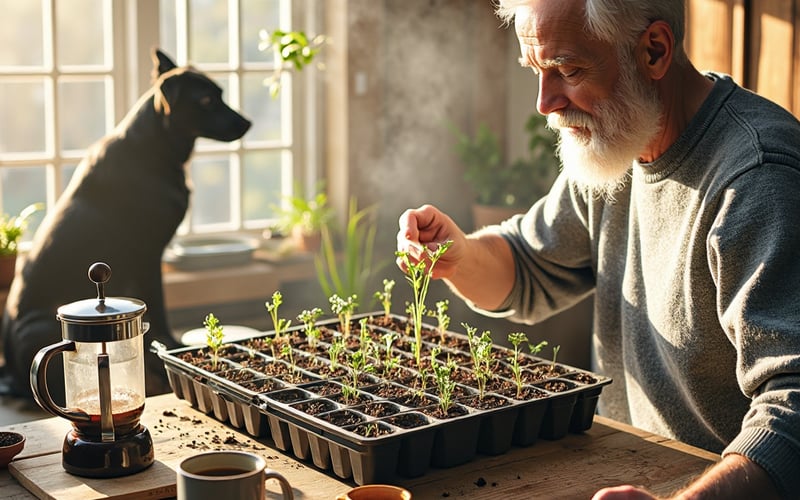
When to transplant tomatoes into an unheated greenhouse
Move tomato seedlings into your unheated greenhouse from late April to early May. The critical threshold is night temperatures staying above 10°C for at least five consecutive nights. Below 10°C, tomato growth stalls. Below 5°C, cell damage begins. A min-max thermometer inside the greenhouse costs under £10 and takes the guesswork out of timing.
Harden off seedlings for 7-10 days before the move. Start by placing pots outside in a sheltered spot for two hours on day one. Add an extra hour each day. By day seven, leave them out all day and bring them in at night. By day ten, leave them in the unheated greenhouse overnight. This gradual transition toughens cell walls and prevents transplant shock.
Northern England and Scotland may need to wait until mid-May. Southern counties can sometimes transplant from mid-April in mild years. Check your local last frost date and add two weeks as a safety margin. When we install greenhouses in spring, we advise keeping fleece on hand for the first fortnight. One unexpected cold night can undo weeks of careful growing seeds in a greenhouse.
Best tomato varieties for unheated greenhouses
Gardener's Delight, Sungold, and Moneymaker are the three most reliable varieties for unheated UK greenhouses. They tolerate cooler nights better than heat-loving beefsteaks. They also ripen faster, which matters when you have a shorter growing window without supplemental heating.
| Variety | Type | Fruit Size | Days to Harvest | Best For |
|---|---|---|---|---|
| Gardener's Delight | Cordon (cherry) | 15-20 g | 65-70 days | Sweetness and reliable cropping |
| Sungold F1 | Cordon (cherry) | 15-20 g | 57-65 days | Earliest harvest, intensely sweet |
| Moneymaker | Cordon (medium) | 80-100 g | 70-80 days | Classic salad tomato, heavy cropper |
| Ailsa Craig | Cordon (medium) | 70-90 g | 72-80 days | Old Scottish variety, cold-tolerant |
| Tumbling Tom | Bush (cherry) | 15-25 g | 60-70 days | Hanging baskets, no staking needed |
Cordon varieties need side-shooting and staking. Remove side shoots when they reach 2-3 cm. Bush varieties like Tumbling Tom grow without support and suit greenhouse staging shelves or hanging baskets. For a 6x6 greenhouse, you can comfortably grow 8-10 cordon plants or 12-14 bush plants. Read our full guide on growing tomatoes in a greenhouse for detailed variety comparisons.
Month-by-month growing calendar for unheated greenhouses
This calendar covers the full tomato season from sowing to final harvest in an unheated UK greenhouse. Timings are based on central England. Adjust by two weeks either way for Scotland or the south coast.
| Month | Action | Temperature Target |
|---|---|---|
| Mid-March | Sow seeds indoors in propagator or windowsill | 21-27°C (soil) |
| Late March | Pot on seedlings to 9 cm pots when true leaves show | 18-22°C (air) |
| Early April | Begin hardening off outdoors for 2 hours daily | 12-15°C (day) |
| Late April | Transplant to greenhouse if nights above 10°C | 10°C+ (night min) |
| May | Stake cordon plants, remove first side shoots | 15-25°C (day) |
| June | First trusses set — start liquid tomato feed weekly | 21-27°C (day) |
| July | First harvest begins. Pinch out growing tip above 5th truss | 21-29°C (day) |
| August | Peak harvest. Water every 1-2 days. Ventilate daily | 21-29°C (day) |
| September | Remove lower leaves to speed ripening of remaining fruit | 15-22°C (day) |
| October | Pick remaining green tomatoes. Ripen on a windowsill indoors | 10-15°C (day) |
Matt's Tip: Getting Extra Weeks of Harvest
I pinch out the growing tip of cordon tomatoes above the fifth truss in late July. In an unheated greenhouse, you will not ripen more than five trusses before autumn. Removing the tip redirects energy into ripening the fruit you already have. I learned this after years of watching sixth and seventh trusses stay green until November. Trust me on this one.
How to manage temperature without heating
Water barrels, bubble wrap, and fleece keep an unheated greenhouse warm enough for tomatoes without any running costs. A 200-litre water barrel absorbs heat during the day and releases it slowly at night. Two barrels in a 6x8 greenhouse can raise the overnight minimum by 3-4°C. Paint barrels black to increase heat absorption.
Bubble wrap insulation on the inside walls reduces heat loss by up to 50%. Use large-bubble horticultural grade, not small packing bubbles. Secure it with clips to the glazing bars. Apply it in late March before transplanting and remove it in June when overheating becomes the bigger risk.
On cold nights below 5°C, drape horticultural fleece directly over the plants. Fleece provides 2-3°C of frost protection. Remove it each morning to let light reach the leaves. Good greenhouse ventilation matters just as much in spring. On sunny April days, an unventilated greenhouse can hit 40°C by midday. Open roof vents when interior temperatures pass 25°C. Automatic vent openers cost from £46 and respond to temperature changes without electricity.
Common mistakes when growing tomatoes in an unheated greenhouse
Planting too early is the most common mistake and the most damaging. Transplanting before mid-April in most of the UK exposes seedlings to nights below 10°C. Growth stalls completely at these temperatures. A single night at 2-3°C kills young tomato plants outright.
- Overwatering in spring: Wet, cold roots invite root rot. Water sparingly until plants are actively growing in May. Let the top 2 cm of compost dry out between waterings.
- Not ventilating enough: Tomato plants need air movement to prevent fungal diseases like botrytis (grey mould). Open vents or the door on any day above 15°C.
- Letting plants get leggy: Seedlings stretched by poor light never recover their strength. Provide 12-16 hours of light daily during the indoor phase.
- Skipping the hardening off: Moving seedlings from a warm house directly into a greenhouse causes transplant shock. Leaves wilt, growth stops for two weeks, and you lose valuable fruiting time.
- Planting too late: Starting seeds in May gives tomatoes only 12-14 weeks before autumn. You need 18-20 weeks from sowing to final harvest for a full crop.
Check our tomato growing tips for more practical advice on avoiding these problems. Spacing matters too. Cordon tomatoes need 45 cm between plants. Overcrowding reduces air circulation and encourages disease.
How to feed and water tomatoes in an unheated greenhouse
Start feeding with liquid tomato fertiliser once the first flower truss sets fruit, typically in June. Before that point, the compost provides enough nutrients. Overfeeding young plants produces leaf growth at the expense of flowers. Use a high-potassium tomato feed (NPK ratio around 4-5-8) diluted to the manufacturer's instructions.
Feed once a week through June and July. Increase to twice weekly during peak fruiting in August. Always water before feeding. Applying fertiliser to dry compost burns roots. Water at the base of the plant, not over the leaves. Wet foliage in a warm greenhouse creates ideal conditions for blight and mould.
Watering frequency changes through the season. In April and May, water every 3-4 days. In June, every 2-3 days. In July and August at peak growth, water daily in hot weather. A 30 cm pot needs 2-3 litres per watering. Inconsistent watering causes blossom end rot, the brown leathery patch on the bottom of the fruit. This is a calcium uptake problem triggered by irregular water supply, not a lack of calcium in the soil.
|
Matt's Pick for Growing TomatoesBest For: Unheated tomato growing with room for 8-12 cordon plants Why I Recommend It: The 6x6 Venus gives enough height for tall cordon varieties. The opening roof vent lets excess heat escape on summer days. The 12-year frame guarantee outlasts years of tomato growing. We have sold over 3,000 Venus greenhouses since 2012 and it is our most popular model for tomato growers. Price: £449 |
Frequently asked questions
When can I put tomato plants in an unheated greenhouse?
Move tomatoes into an unheated greenhouse from late April. Wait until night temperatures stay above 10°C for five consecutive nights. Use a min-max thermometer to check. In northern England and Scotland, mid-May is safer. Always harden off seedlings for 7-10 days before the permanent move. Keep fleece ready for any unexpected cold snaps in the first fortnight.
Can I grow tomatoes in an unheated greenhouse year-round?
No, the UK growing season runs April to October without heating. Winter temperatures in an unheated greenhouse regularly drop below 5°C. Tomatoes stop growing below 10°C and die below 2°C. You can extend the season by two weeks at each end using fleece, water barrels, and bubble wrap insulation. For year-round growing, you would need a heated greenhouse maintaining at least 15°C overnight.
What temperature do tomato seeds need to germinate?
Tomato seeds germinate best at 21-27°C soil temperature. Below 10°C, germination fails entirely. At 15°C, seeds take 3-4 weeks to sprout. At 24°C, expect seedlings in 5-7 days. A heated propagator set to 22°C gives the most reliable results. Sow indoors in March rather than directly in the unheated greenhouse. Greenhouse soil temperatures rarely reach 21°C before May.
How often should I water tomatoes in a greenhouse?
Water greenhouse tomatoes every 2-3 days in summer, daily in heatwaves. In spring, water every 3-4 days. Check by pushing a finger 2 cm into the compost. If dry, water thoroughly until liquid drains from the pot base. Water at soil level, never over the leaves. Inconsistent watering causes blossom end rot, the brown patch on fruit bottoms. A 30 cm pot needs 2-3 litres per watering in midsummer.
Do I need to pollinate tomatoes in a greenhouse?
Greenhouse tomatoes benefit from manual pollination to set fruit reliably. Outdoors, wind and bees handle pollination. Inside a greenhouse, still air means pollen stays on the anthers. Tap each flower truss gently once daily around midday when pollen is driest. A battery-operated toothbrush vibrated against the stem also works well. Open vents and the door on warm days to encourage pollinating insects inside.
What is the best size greenhouse for growing tomatoes?
A 6x6 or 6x8 greenhouse gives enough space for 8-14 cordon tomato plants. Smaller 6x4 models hold only 4-6 plants and overheat quickly due to low air volume. The extra 2 feet in a 6x8 gives room for a water barrel and a potting bench. Browse our range of 6x6 greenhouses for models suitable for tomato growing.
Should I use a propagator to start tomato seeds?
A heated propagator is the single best investment for starting tomato seeds. It maintains a consistent 22°C soil temperature regardless of room temperature fluctuations. Seeds germinate in 5-7 days instead of 14-21 on a cold windowsill. Basic electric propagators cost £15-30 and last for years. They also work for starting peppers, aubergines, and cucumbers. You recoup the cost in one season from the improved germination rate alone.