Top 10 tomato growing tips for UK pots and greenhouses
Updated
Grow tomatoes successfully by choosing the right variety, giving plants plenty of light and keeping their compost evenly moist. These ten tomato growing tips cover pots, indoor seedlings and greenhouse crops in the UK. Use one plant per 30-45cm pot, support cordon varieties early and start tomato feed when fruits begin swelling. Check plants regularly, then harvest each tomato when fully coloured.
Key takeaways
- Choose bush tomatoes for compact spaces, or cordons for growing upwards with support.
- Sow indoors in spring; outdoor tomatoes need frost-free conditions before planting out.
- Give each tomato a 30-45cm pot with drainage holes and fresh peat-free compost.
- Water the compost steadily and feed according to the tomato fertiliser's instructions.
- Remove cordon side shoots, leave bush shoots, and ventilate greenhouses on warm days.
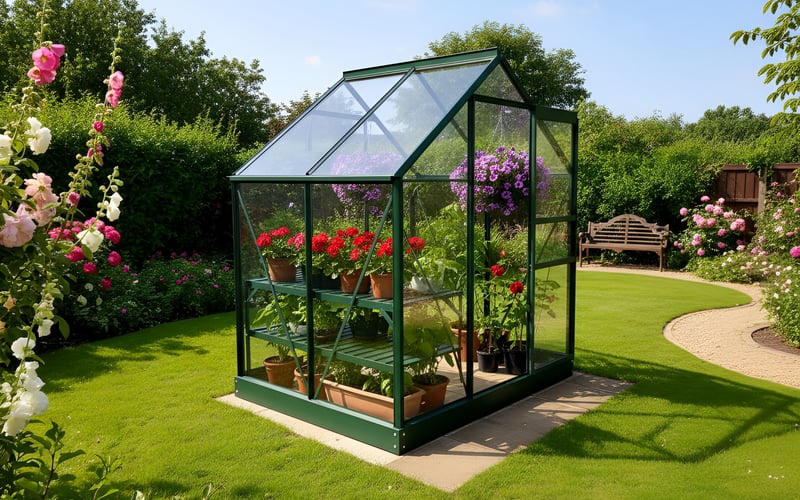
View and buy the Vitavia 6x4 Green Venus 2500 Greenhouse
Current price: £519
Expert tip: read the plant label before pruning
Bush and cordon tomatoes need different care. Removing every side shoot from a bush plant also removes useful fruit-bearing growth. Check the label first, then follow the matching advice below.
1. Growing tomatoes for beginners: choose bush or cordon varieties
Choose a tomato variety that fits your space and the way you want to grow.
Bush tomatoes, also called determinate tomatoes, stay relatively compact. They suit patio containers and need little pruning. Trailing varieties work well in hanging baskets. Support branches if a heavy crop starts pulling them down.
Cordon tomatoes, also called indeterminate tomatoes, grow tall and need canes or strings. Train them around one main stem and remove unwanted side shoots. They make good use of greenhouse height.
Small-fruited tomatoes are a manageable starting point. 'Sungold' is an orange cherry cordon; 'Gold Nugget' is a compact yellow bush variety. Check whether your chosen variety suits outdoor growing or needs greenhouse protection.
Fruit colour alone does not tell you whether a plant is bush or cordon. Keep its label throughout the season.
2. Tomato growing tips indoors: start seedlings with enough light
Start tomato seeds somewhere warm, then give seedlings bright light as soon as they appear.
For greenhouse crops, sow from late February to mid-March. For outdoor crops, late March to early April is usually suitable. Seeds need around 18°C to germinate. A warm windowsill or heated propagator helps, but warmth alone cannot replace light.
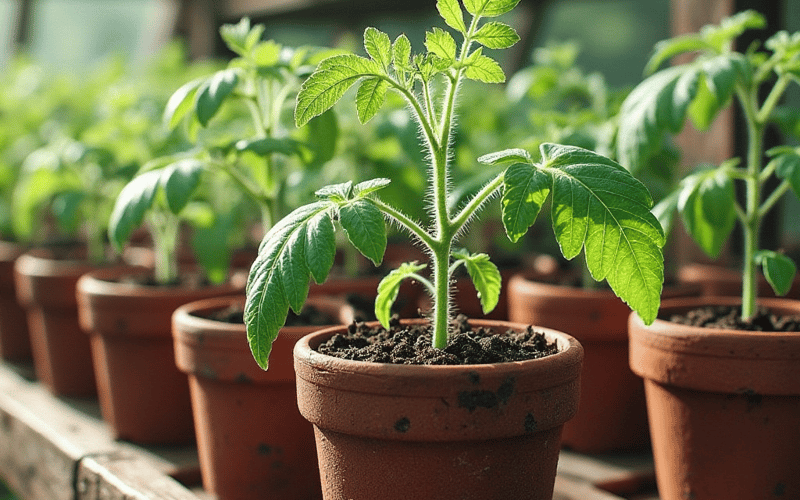
Remove the cover after germination and use your brightest windowsill. A suitable grow light helps where daylight is limited. Move seedlings into individual pots once they have a couple of true leaves. These appear after the first, simpler seed leaves.
Keep roots moist and pot on when plants outgrow their containers. Buying healthy young plants in spring is also fine.
The RHS tomato growing guide explains sowing and seedling care in more detail.
Tomato growing season UK: when to sow, plant and harvest
UK tomato growing runs from spring sowing to summer and autumn harvests.
| Stage | Usual timing | What to check |
|---|---|---|
| Sow for a greenhouse | Late February to mid-March | Warm germination and enough light afterwards |
| Sow for outdoors | Late March to early April | Time to grow sturdy plants before planting out |
| Plant outside | Often late May or June | Local frost risk has passed; harden plants off first |
| Harvest | Mid-summer into autumn | Variety, weather and fruit colour |
Greenhouse planting depends on overnight temperatures and whether heating is available. An unheated greenhouse can still become cold overnight.
Our greenhouse tomato planting guide explains how to judge the conditions.
3. Growing tomatoes in a greenhouse: choose a sunny position
Tomatoes need a bright growing position with shelter and room for their mature leaves.
Outdoors, choose a sunny spot protected from strong winds. Under glass, avoid packing plants behind dense staging or other tall crops. Leave room to reach the compost, tie stems and pick fruit.
A walk-in greenhouse gives you working space around your plants. A tomato greenhouse offers a smaller growing enclosure where garden space is limited. Check its height against your chosen variety and leave access to the opening panels.
The 4x4 Access Double Tomato Greenhouse is a stocked option with toughened glass. Its compact enclosure suits a different layout from the walk-in Vitavia model above.
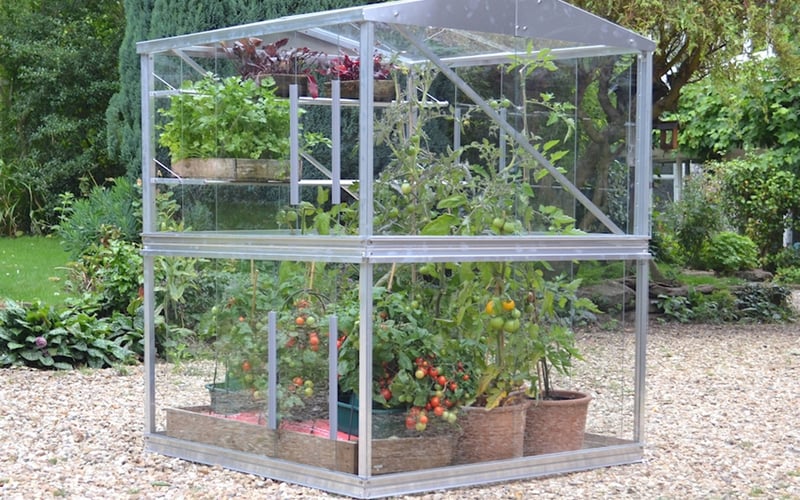
View and buy the 4x4 Access Double Tomato Greenhouse
Current price: £629
Browse our aluminium greenhouses if you need room for tomatoes alongside other crops.
4. How to grow tomatoes in pots: give roots enough room
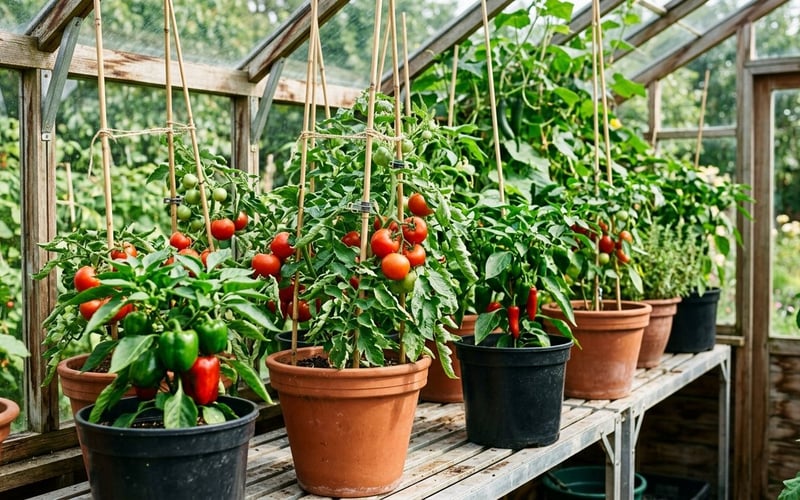
Plant one tomato in a 30-45cm pot with drainage holes and fresh peat-free compost.
A large pot holds moisture better than a small nursery pot. Choose peat-free multipurpose or loam-based compost intended for container growing. Keep drainage holes clear, and avoid leaving roots standing in water.
Water the young plant before moving it. Plant ordinary, ungrafted tomatoes deeper than their nursery level, with the lowest leaves above the compost. The buried stem can form extra roots. Keep the graft join above compost if your plant is grafted.
Insert the cane during planting, before roots spread through the container. Put tall cordons somewhere sheltered, as leafy plants can become top-heavy.
Growing bags also work. Our guide to greenhouse growing bags covers their setup and watering.
5. Watering tomato plants: keep compost evenly moist
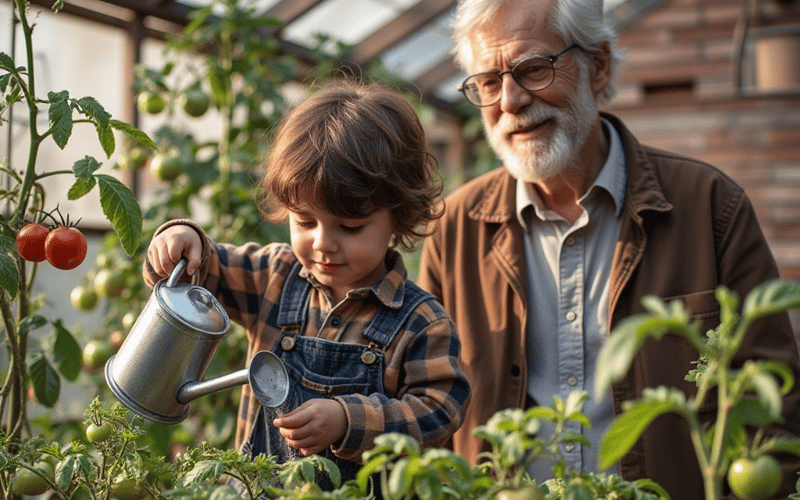
Water tomatoes regularly so their compost stays moist without becoming waterlogged.
Check pots each day during warm weather. Feel the compost rather than watering by the calendar. A small plant on a cool day needs less water than a fruiting plant in summer.
Apply water slowly at compost level, allowing it to soak through the root zone. Check that excess water can drain away. Avoid repeatedly letting pots become bone dry before soaking them.
Containers may need daily watering in hot weather, sometimes another check later in the day. Rainfall may miss pots inside a greenhouse completely.
Uneven moisture can contribute to fruit splitting and blossom end rot. Check the roots and drainage before assuming wilted leaves need more water.
6. Feeding tomatoes: support growth without overfeeding
Start high-potassium tomato feed when the first fruits begin to swell.
Follow the product's dilution and feeding instructions. Different formulations have different schedules, so a stronger mix is not a shortcut. Fresh potting compost often contains starter nutrients; check the bag before adding extra feed to young plants.
Keep feeding separate from your daily moisture checks. Tomato feed does not replace water, and dry roots need attention first.
How to make tomato plants grow faster
Improve light, root space and growing conditions before adding more fertiliser.
Check whether a slow plant has filled its pot, become chilled or spent too long in shade. Move cramped plants into suitable containers and protect them from cold. Excess nitrogen encourages leafy growth and can delay fruiting.
For an earlier first crop, choose a small-fruited variety next season. Sowing very early without enough light often produces weak seedlings.
7. Supporting and pinching out tomatoes: prune the right shoots
Support cordon tomatoes early and remove small side shoots from the leaf joints.
Tie the main stem loosely to a cane as it grows. Leave enough space for the stem to thicken. With greenhouse strings, gently guide the stem around its support rather than letting fruiting branches carry the weight.
A side shoot grows in the angle between the main stem and a leaf stalk. Pinch it out while small. Leave flower trusses in place: these carry the yellow flowers and developing fruit.
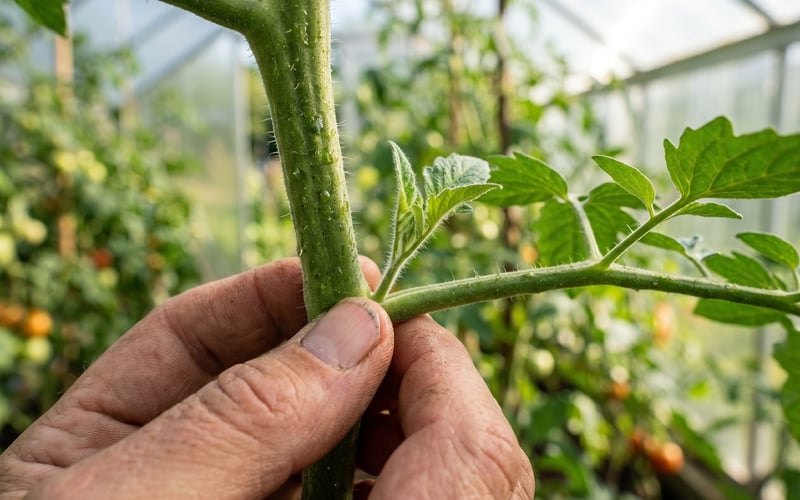
Check for new shoots while watering. Bush and trailing varieties usually keep their side shoots; do not prune them into cordons.
Our tomato support guide explains cane and string methods.
8. Greenhouse tomato growing tips: ventilate and help pollination
Open greenhouse vents on warm days to release heat and maintain air movement.
A sunny greenhouse can heat up quickly, even when the garden feels comfortable. Check a thermometer near plant height. Use shading during strong sunshine when ventilation alone cannot control heat, while keeping plants as bright as possible.
Tomato flowers can pollinate themselves. Gently tapping an open flower truss helps release pollen within the flower. This can help sheltered greenhouse crops with little natural movement.
If flowers drop without setting fruit, check temperature and watering first. Extra fertiliser will not correct poor growing conditions.
Leave gaps between plants rather than filling every corner. You need airflow and access as well as growing space.
9. Problems with growing tomatoes in a greenhouse: spot the cause
Inspect leaves and fruit regularly, then match the symptom to the likely growing problem.
A short check while watering catches small problems before they spread. Look under leaves for pests and clear fallen foliage.
| Symptom | Possible cause | First action |
|---|---|---|
| Dark patch at the blossom end | Blossom end rot, often linked to uneven moisture | Keep root-zone moisture steady; check drainage |
| Split fruit | Sudden changes in water uptake | Avoid repeated drying and heavy soaking |
| Flowers fall without fruit | Temperature stress or poor pollination conditions | Check heat, watering and ventilation |
| Yellow leaves | Several causes, including root stress or nutrient problems | Check compost moisture and roots before feeding more |
| White insects fly when leaves move | Possible greenhouse whitefly | Inspect leaf undersides and identify the pest |
These checks narrow the possibilities; yellow leaves alone cannot identify a single deficiency. Our tomato troubleshooting guide gives more detail.
10. Harvesting tomatoes: pick ripe fruit and finish the season
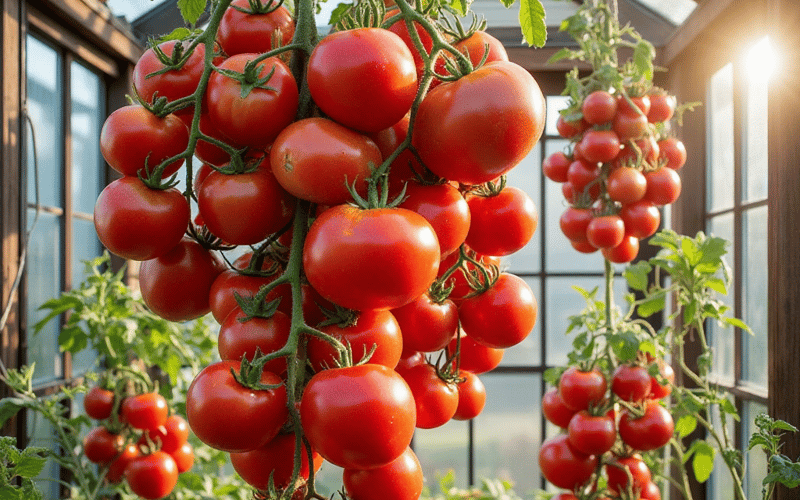
Pick each tomato when it reaches its variety's full colour and feels ripe.
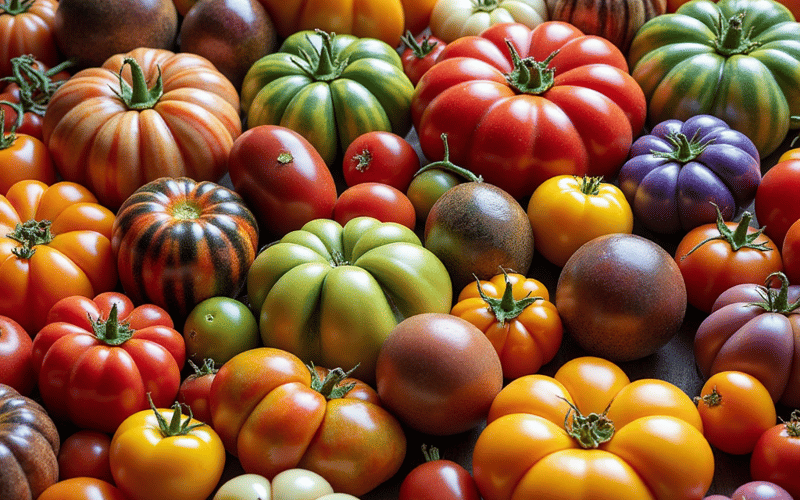
Yellow and orange varieties stay yellow or orange when ready. Check plants every few days, and pick gently with the stalk attached where possible. Smaller cherry tomatoes generally ripen before large beefsteaks.
Later in the season, stop tall cordons so existing fruit has time to develop. Remove the growing tip above the final truss, leaving two leaves above it. Choose the timing for your growing space and remaining warm weather.
Before frost, pick sound, mature green tomatoes and bring them indoors. Keep them somewhere warm to ripen, checking regularly. A nearby ripe banana can encourage ripening. Discard rotting fruit and keep the rest dry.
Start with a few plants you can reach easily. Regular attention makes the jobs manageable and helps you enjoy the harvest.
Frequently asked questions about growing tomatoes
What are the easiest tomatoes to grow for beginners?
Small-fruited bush tomatoes are a straightforward starting point. They need less pruning than cordons and suit containers. Choose a variety labelled for your growing position, especially if planting outdoors.
What size pot does a tomato plant need?
Use one tomato plant per 30-45cm pot with drainage holes. Fill it with suitable peat-free compost. Larger containers hold moisture better, but still need regular checks during hot weather.
Can you grow tomatoes indoors all year?
Year-round indoor tomatoes need enough light, warmth and space to fruit. A winter windowsill usually provides insufficient light. Starting seedlings indoors in spring is easier than producing a full winter crop.
How often should you water tomatoes in pots?
Check daily in warm weather and water when the compost needs it. Keep moisture steady and drainage clear. Avoid a fixed schedule regardless of plant size, weather or how wet the compost feels.
When should you start feeding tomato plants?
Start tomato feed when the first fruits begin to swell. Follow the fertiliser's label for dilution and frequency. Check your compost's starter nutrients before giving extra feed to young plants.
Should you remove side shoots from all tomato plants?
Remove cordon side shoots, but usually leave bush and trailing varieties unpruned. Side shoots emerge between the main stem and a leaf stalk. Check the plant label before pinching anything out.
Why do tomato plants flower but produce no tomatoes?
Temperature stress and poor pollination conditions can prevent fruit setting. Check greenhouse heat, ventilation and watering. Gently tap open flower trusses to help pollen transfer. Feeding more will not correct heat stress.
How do you prevent blossom end rot in tomatoes?
Keep root-zone moisture steady and avoid waterlogging. Blossom end rot involves inadequate calcium reaching the developing fruit. Water uptake matters, so adding calcium alone may not solve the problem.