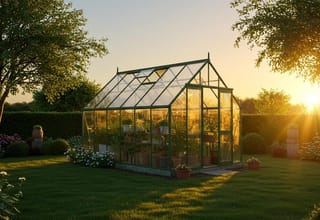
Small Greenhouse Ideas: What to Grow and How to Maximise Space
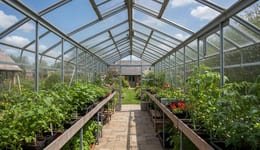
A small greenhouse measuring 6x4ft or 4x6ft fits gardens as narrow as 1.8 metres wide and grows tomatoes, herbs, chillies, and salads 12 months a year. Two-tier staging doubles usable shelf space without losing floor area. The best small greenhouses start from £330 for polycarbonate models and £395 for horticultural glass. After fitting hundreds of compact greenhouses across the UK, the layout matters more than the size. Get the staging, ventilation, and crop plan right and a 6x4 outperforms a poorly organised 8x6.
Key takeaways
- Best small greenhouse: the Vitavia Venus 2500 6x4 (from £395) is our top pick for first-time growers with limited garden space
- Vertical staging doubles capacity: two-tier aluminium staging holds 20-30 pots in a 6x4 footprint without blocking the door
- Year-round growing: tomatoes (June, Oct), salads (Mar, Nov), herbs (all year), chillies (May, Oct) in an unheated small greenhouse
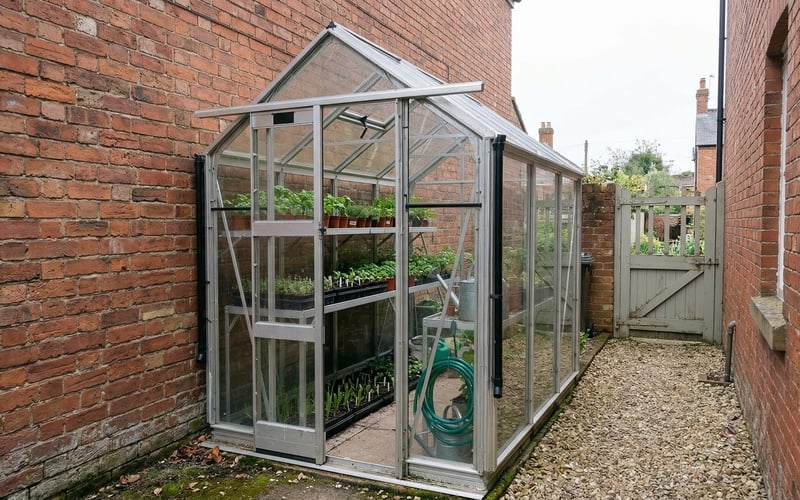
- Lean-to models save width: the Elite Easygrow 2x4 lean-to fits paths as narrow as 600mm and uses house wall heat overnight
- Budget range: polycarbonate from £330, horticultural glass from £395, toughened safety glass from £474
- Layout rule: keep the centre path clear, staging down both long sides, tallest plants at the back against the north wall
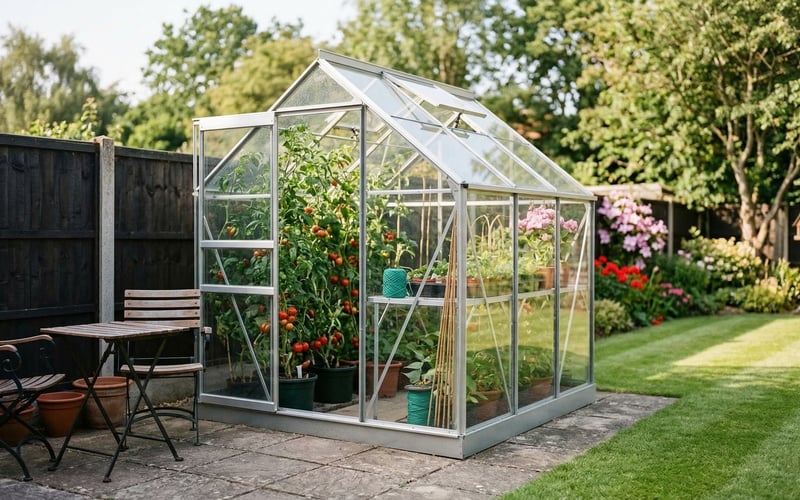
Shop the Vitavia Venus 2500 6x4 →
Installer's note
From our work with Greenhouse Stores customers since 2012, small models outsell everything else. About 60% of the greenhouses we install are 6x4 or 4x6 feet. The customers who get the best results are the ones who plan the layout before they plant a single seed. I have seen 6x4 greenhouses producing more tomatoes than neglected 10x8 structures. The secret is vertical growing with proper staging. A £75 folding staging unit is the single best investment after the greenhouse itself.
What can you grow in a small greenhouse?
A 6x4 greenhouse grows more crops than most people expect. The controlled environment extends the UK growing season by 8-12 weeks at each end, and some crops produce all year without any heating. The key is matching crops to the space available and planning successions so the greenhouse never sits empty.
Tomatoes are the number one greenhouse crop in the UK. Two cordon tomato plants fit comfortably in a 6x4 greenhouse, growing vertically to use overhead space. Sow in February under heat, transplant in April, and harvest from June to October. A single cordon plant in a greenhouse produces 3-5kg of fruit. Varieties like 'Sungold' and 'Gardener's Delight' are reliable in compact spaces.
Herbs thrive on staging shelves. A two-tier staging unit in a 6x4 greenhouse holds 20-30 herb pots. Basil, coriander, parsley, and chives grow on the top shelf in direct light. Mint and parsley tolerate the shadier lower shelf. Read our full guide to growing herbs in a greenhouse for month-by-month sowing schedules.
Chillies and peppers need the warmth a greenhouse provides. UK outdoor summers rarely reach the 25-30°C that peppers prefer. Under glass, they fruit reliably from May to October. Compact varieties like 'Apache' and 'Basket of Fire' suit hanging baskets fixed to the greenhouse frame, saving bench space entirely.
Salad leaves fill the gaps between main crops. Lettuce, rocket, and spinach germinate in 7-10 days and reach harvest size in 4-6 weeks. Sow in modules on staging and transplant into growbags on the floor once tomatoes finish in late October. Winter salads keep producing in an unheated greenhouse through to March.
| Crop | Sow | Harvest | Space Needed | Yield per Plant |
|---|---|---|---|---|
| Tomatoes (cordon) | Feb, Mar | Jun, Oct | 2 plants per 6x4 | 3-5kg |
| Chillies | Jan, Mar | May, Oct | Hanging basket or staging | 50-100 fruits |
| Basil | Mar, Jun | May, Oct | 15cm pot on staging | Continuous picking |
| Lettuce | Mar, Sep | Apr, Nov | Growbag or trough | 1 head per 20cm |
| Cucumbers | Apr, May | Jul, Sep | 1 plant per 6x4 | 20-30 fruits |
| Aubergines | Feb, Mar | Jul, Oct | 1 plant per 60cm pot | 4-6 fruits |
| Winter salad | Sep, Oct | Nov, Mar | Growbag on floor | Weekly picks |
Which small greenhouse is best for a UK garden?
The best small greenhouse for most UK gardeners is the Vitavia Venus 2500 6x4. It has been our best-selling compact model for over a decade. The aluminium frame needs zero maintenance, the door slides rather than swinging outward (saving path space), and it comes in silver, green, and black. Horticultural glass versions start from £395. Toughened safety glass versions start from £474 and are worth the upgrade if children or pets use the garden.
For very narrow spaces, the Elite Compact 4x6 fits spaces just 1.3 metres wide. It runs 6ft deep along a fence or wall. At £619 for horticultural glass, it is a premium choice, but the build quality is exceptional. We have fitted Elite Compacts in Victorian terrace side passages, between garages, and along boundary walls where nothing else fits.
Budget-conscious growers should consider the Palram Mythos 6x4 at £397. Twin-wall polycarbonate panels are lighter, safer, and provide better insulation than single-glazed glass. The trade-off is less light transmission (83% vs 90% for glass) and a tendency to discolour after 8-10 years. For growing tomatoes and herbs, the difference is negligible.
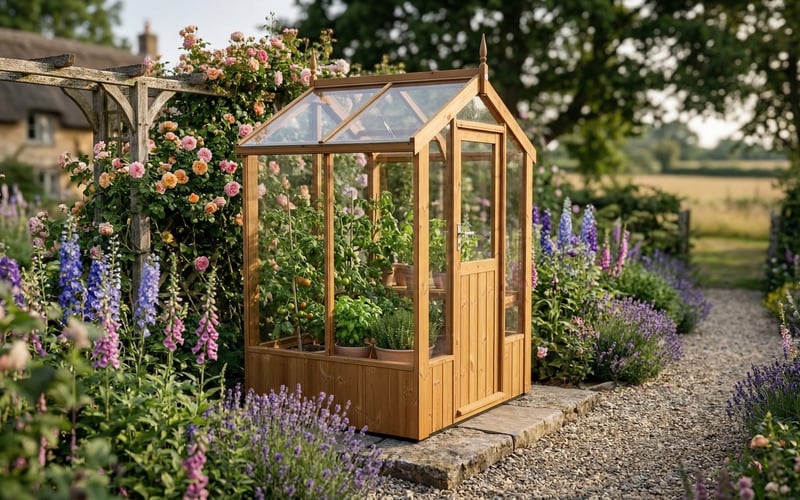
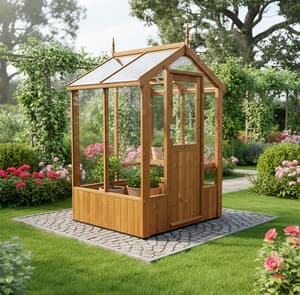
For a premium wooden option, the Swallow Lark 4x4 is handcrafted in the UK from ThermoWood timber. ThermoWood is heat-treated to resist rot without chemical preservatives, and Swallow backs it with a 12-year warranty. The Lark measures 1760mm wide and 1320mm deep, making it one of the smallest freestanding greenhouses available. At £2,575 it is a significant investment, but it includes free professional installation and looks striking in cottage and traditional gardens. The timber frame retains heat better than aluminium overnight, which gives tender seedlings and herbs an extra buffer against spring frosts.
| Model | Footprint | Width | Ridge Height | Glazing | Price From | Matt's Verdict |
|---|---|---|---|---|---|---|
| Vitavia Venus 2500 6x4 ★ | 6ft x 4ft | 1930mm | 1950mm | Hort / Tough | £395 | Best all-rounder. Top pick. |
| Elite Compact 4x6 | 4ft x 6ft | 1270mm | 1930mm | Hort / Tough | £619 | Best for narrow spaces |
| Swallow Lark 4x4 | 4ft x 4ft | 1760mm | 2672mm | ThermoWood / Glass | £2,575 | Best wooden greenhouse |
| Palram Mythos 6x4 | 6ft x 4ft | 1850mm | 2090mm | Polycarbonate | £397 | Best budget option |
| Palram Harmony 6x4 | 6ft x 4ft | 1850mm | 2090mm | Polycarbonate | £402 | Good mid-range alternative |
| Elite Windsor 4x6 Lean-to | 4ft x 6ft | 1270mm | Varies | Hort / Tough | £479 | Best lean-to for walls |
| Elite Easygrow 2x4 Lean-to | 2ft x 4ft | 620mm | Varies | Hort / Tough | £380 | Smallest lean-to available |
|
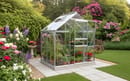
Matt's pick for small greenhousesBest For: First-time growers and small gardens under 20sqm Why I Recommend It: I have installed more Venus 2500s than any other greenhouse over many years of working with customers. The sliding door saves 60cm of path space compared to hinged models. The integral gutter channels rainwater into a butt. Every customer I have checked back with after 5+ years still has the original frame in perfect condition. Price: From £395 |
How do you maximise space in a small greenhouse?
Vertical growing is the single biggest space multiplier in a small greenhouse. Staging shelves, hanging baskets, and overhead string supports turn a 6x4 floor into three usable growing levels. The goal is to fill every cubic metre, not just the floor.
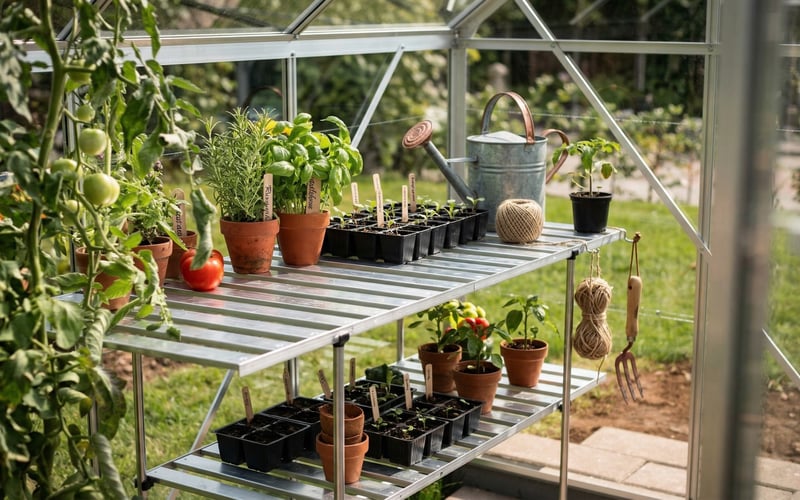
Two-tier staging is essential. Run a full-length staging bench down one side of the greenhouse. The top shelf gets direct sunlight for tomato seedlings, herbs, and chillies. The lower shelf suits shade-tolerant crops like parsley, mint, and overwintering plug plants. Our staging and shelving guide covers the full setup.
Folding staging solves the summer dilemma. In spring, you need maximum bench space for seed trays. By June, tomatoes and cucumbers need floor space for growbags. Folding staging like the Vitavia Silver Folding Staging (£75) folds flat against the frame in seconds. You get full staging in March and full floor space by June without removing anything.
Shop Vitavia Greenhouse Staging →
Hanging baskets use dead space above head height. Fix 3-4 hanging baskets to the greenhouse ridge bar using S-hooks. Trailing tomatoes ('Tumbling Tom'), strawberries, and compact chillies grow brilliantly in baskets. Each basket adds 0.1sqm of growing space with zero floor impact.
String training is how professional growers maximise vertical space. Tie garden twine from the base of each tomato plant to a hook on the ridge bar. Wind the main stem around the string as it grows. This eliminates the need for canes and keeps every plant upright within a 30cm column of space.
Matt's tip: the 60/40 layout
After fitting hundreds of small greenhouses, I always recommend the 60/40 layout. Staging down one long side (60% of the width) and a clear path plus growing space on the other side (40%). This gives you bench space for pots and seed trays on one side, with floor space for two growbags of tomatoes on the other. The door end stays clear for access. The far end gets a shelf or potting bench. It sounds simple but nine out of ten growers who follow this layout tell me they harvest more than they expected from such a small space.
What is the best layout for a 6x4 greenhouse?
The best 6x4 layout runs staging along the full length of the east-facing side. Position the greenhouse with the door facing south or south-east. The east side gets morning sun, which warms the staging and dries overnight condensation. The west side stays clear for floor-level growbags.
Here is the layout that works best in practice:
- East side (full length): Two-tier staging with herbs, seedlings, and small pots
- West side (floor): Two standard growbags for tomatoes or cucumbers, string-trained vertically
- Far end (north): A single shelf at waist height for propagation trays or overwintering plants
- Door end (south): Keep completely clear for access and airflow
- Overhead: 3-4 hanging baskets on the ridge bar for trailing crops
This layout uses all three growing levels (floor, bench, overhead) and keeps the central path clear for watering and harvesting. If you are setting up a new greenhouse for the first time, read our first-time owner's checklist before planting anything.
Matt's installation tip
Always check the door opening direction before you position staging. On the Venus 2500, the sliding door opens from right to left. If you put staging on the left side, the door handle hits the staging frame when fully open. I have had to reorganise staging on at least 20 installs because the customer planned the layout without checking the door. Measure the door swing arc and mark it on the floor with tape before you fix any staging brackets.
Are lean-to greenhouses good for small gardens?
Lean-to greenhouses are the best option when garden width is under 2 metres. They bolt to a south-facing house wall, fence, or garage wall. The wall provides thermal mass that stores heat during the day and releases it overnight, reducing frost risk by 3-5°C compared to a freestanding greenhouse of the same size.
The Elite Easygrow 2x4 lean-to fits spaces just 620mm wide. It holds a single tier of staging and 8-10 herb pots. At £380, it costs more per square foot than a freestanding model, but it produces year-round herbs in a space that would otherwise grow nothing.
The Elite Windsor 4x6 lean-to (£479) is the step-up. It provides genuine growing space for tomatoes, cucumbers, and staging shelves. The aluminium frame bolts to a masonry wall with supplied brackets. Avoid timber-framed walls. The weight of the greenhouse and glazing needs solid brick or block behind it.
Lean-to greenhouses also work brilliantly as cold frames for hardening off seedlings before they go outdoors. Start seeds on a heated mat indoors, move them to the lean-to at 4-6 weeks old, then transplant outdoors 2-3 weeks later. The lean-to becomes a halfway house that prevents transplant shock.
How much does a small greenhouse cost to run?
An unheated small greenhouse costs nothing to run beyond the purchase price. The crops listed in this guide (tomatoes, herbs, chillies, salads) all grow in an unheated greenhouse through the UK growing season. Heating is only needed if you want to overwinter tender plants or start seeds before March.
If you do heat, a 6x4 greenhouse costs £15-25 per month on a small electric fan heater set to a 5°C frost-protection thermostat. Paraffin heaters cost less to buy but produce moisture that encourages mould. For a full breakdown, see our guide to greenhouse heating costs.
Ventilation is free and essential. Open the roof vent whenever internal temperatures exceed 25°C. On a sunny April day, a closed 6x4 greenhouse can hit 40°C inside, which scorches seedlings and kills tomato pollen. Automatic vent openers (£20-35) are worth fitting on every small greenhouse. They open and close without electricity using a wax cylinder that expands with heat.
Watering takes 5-10 minutes daily in summer. A small greenhouse needs 5-8 litres of water per day at peak season. Connect a water butt to the greenhouse gutter and use a watering can. Drip irrigation kits (£25-40) automate this entirely. See our watering and irrigation guide for setup instructions.
Our Most Popular Small Greenhouses and Staging
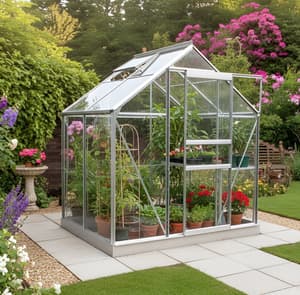
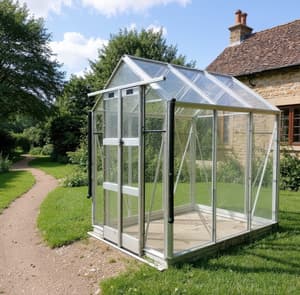
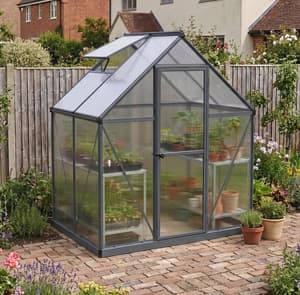
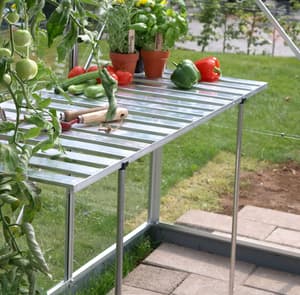
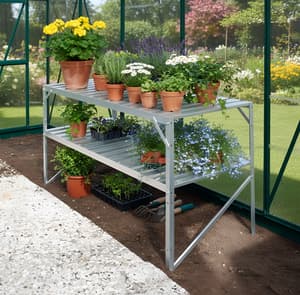
"The Venus 2500 is the greenhouse I recommend more than any other for small gardens. I have fitted them in courtyards, side passages, allotments, and back gardens no bigger than a parking space. The aluminium frame never rusts, the sliding door never jams, and the integral base sits level on 50mm paving slabs without any concrete. From our work with Greenhouse Stores customers since 2012, the Venus is the one I would put in my own garden."
, Matt W, Greenhouse Stores
Frequently asked questions
What is the best size for a small greenhouse?
A 6x4ft greenhouse is the best small size for most UK gardens. It provides enough floor area for two tomato growbags, a full-length staging bench, and a clear central path for access. A 6x4 greenhouse measures roughly 1.9m x 1.3m internally. Anything smaller limits crop variety, and 6x4 models like the Vitavia Venus 2500 (from £395) offer the best balance of growing space, affordability, and ease of assembly. Check out our full small greenhouses collection for all available sizes.
Can you grow tomatoes in a small greenhouse?
Yes, a 6x4 greenhouse comfortably grows two cordon tomato plants. String-train the main stems vertically to the ridge bar to maximise height. Each plant produces 3-5kg of fruit from June to October in an unheated greenhouse. Use standard growbags on the floor and pinch out side shoots weekly to keep growth vertical and productive.
Do I need a base for a small greenhouse?
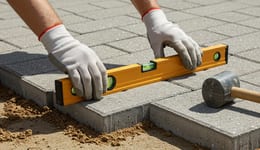
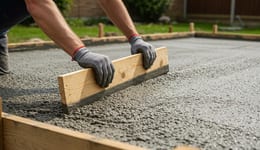
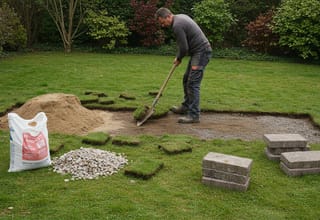
Yes, every greenhouse needs a level base. Paving slabs (50mm thick, laid on compacted sand) are the easiest and most forgiving option. A slab base flexes with ground movement, unlike a concrete pad which can crack in frost heave and jam the door frame. For full base options, read our greenhouse flooring guide.
How do you heat a small greenhouse cheaply?
A 2kW electric fan heater on a frost-protection thermostat costs £15-25 per month. Set the thermostat to 5°C to prevent frost damage without running the heater continuously. Bubble wrap insulation on the inside of the glass reduces heat loss by up to 50% and costs under £10 for a 6x4 greenhouse. Many growers run small greenhouses unheated from March to November with no issues.
What should I put on greenhouse staging shelves?
Top shelf: sun-loving herbs, seedlings, and chillies. Bottom shelf: shade-tolerant parsley and mint. Two-tier staging organises crops by light needs. Keep watering cans and tools under the bottom shelf. Seed trays go on the top shelf from February to April, then swap for herb pots and chilli plants once seedlings are transplanted into growbags. Folding staging (£75) lets you reclaim the space in summer when floor crops take over.
Is a polycarbonate or glass greenhouse better for a small garden?
Glass lets in more light (90% vs 83%) but polycarbonate is lighter, safer, and warmer. Horticultural glass greenhouses produce slightly better crops due to higher light transmission. Polycarbonate models are better if the greenhouse is near a play area, a boundary wall where balls may hit, or in an exposed location where wind-driven debris is a risk. Toughened safety glass (from £474 for a 6x4) gives the best of both: full light and shatter resistance.
Can I put a greenhouse on decking?
No, standard timber decking is not strong enough to support a glazed greenhouse. Greenhouse frames exert concentrated loads at each upright. Decking boards flex under this weight and the frame goes out of square, which cracks glazing panels. The only exception is reinforced composite decking with structural joists at 300mm centres, but paving slabs remain the recommended base for every manufacturer we stock.