Year-Round Salad Growing in a Greenhouse: UK Guide
You can grow salad in a UK greenhouse every month of the year by matching the leaf to the season. Sow cool-season leaves (lettuce, rocket, mizuna, mustard) from March to September, switch to hardy winter salads (lamb's lettuce, claytonia, land cress) for October to February, and sow a fresh tray every 2-3 weeks. A heated propagator costs around £30 and brings the first cut forward by six weeks.
Key takeaways
- Twelve-month supply: Cool-season leaves run March to September, winter-hardy leaves October to February. There is no month you cannot pick something.
- Succession is the whole game: Sow a half-tray every 2-3 weeks. One big sowing gives you a glut then six weeks of nothing.
- Winter salads need no heat: Lamb's lettuce, claytonia and land cress survive to -15C under glass. An unheated greenhouse keeps them growing slowly all winter.
- A propagator pulls spring forward: A £30 heated propagator germinates leaves at 18-20C in February, six weeks ahead of an unheated bench.
- Cut-and-come-again doubles output: Take only the outer third of each plant. One sowing then crops for 6-8 weeks instead of a single pick.
- A cold frame extends both ends: Elite cold frames from £249 harden off spring seedlings and overwinter the hardiest leaves outside the main house.
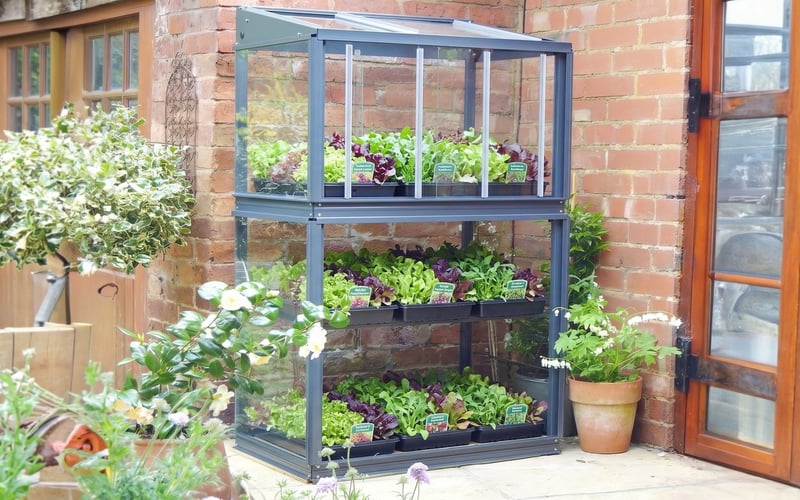
Shop the 2x3 Access City Growhouse →
Expert Tip
I have grown salad in my own 8x6 Elite greenhouse for many years, and I pick leaves in every single month, January included. The mistake I see most often when we fit a greenhouse is one huge sowing in April. The customer gets 40 lettuces in June and bare soil by August. I run a 12-tray rotation instead. A fresh half-tray goes in every fortnight from February to September, then the winter-hardy leaves take over. It costs the same in seed but it feeds two of us all year.
Can you grow salad all year round in a UK greenhouse?
Yes. A UK greenhouse grows salad in all twelve months if you change the leaf to suit the season. The trick is not heat. It is choosing cool-season leaves for spring and autumn, then hardy winter leaves for the dark months. An unheated greenhouse sits 5-8C warmer than outside at night and 15-20C warmer on a sunny winter day. That gap keeps slow growth ticking over from November to February and gives a 4-6 week head start in spring.
Salad splits into two groups. Cool-season leaves (lettuce, rocket, mizuna, mustard greens, pak choi, spinach) grow fastest at 10-18C and bolt above 24C. Hardy winter leaves (lamb's lettuce, claytonia, land cress, winter purslane) shrug off hard frost and keep producing at near-freezing temperatures. Run both groups in turn and the bench is never empty. Our unheated greenhouse growing guide covers the wider crop list for the same no-heat setup.
The best salad leaves for year-round greenhouse growing
The best year-round salad mix pairs fast cool-season leaves with frost-hardy winter leaves. Cool-season types crop in 4-6 weeks and carry spring through to autumn. Winter types are slower but survive the cold that would kill lettuce. Growing a spread of both means a steady cut whatever the month.
For spring and autumn, rocket is the workhorse. It germinates in three days and gives a first cut in four weeks. Mizuna and mustard greens add pepper and bulk, and both regrow hard after cutting. Pak choi and leaf lettuce fill the basket. For the deep cold, lamb's lettuce (also sold as corn salad or mache) is unbeatable. It survives to -15C and the mild, nutty leaves never turn bitter. Claytonia and land cress are nearly as tough. For the lettuce side of the mix, our growing lettuce in a greenhouse guide lists the best varieties for each season.
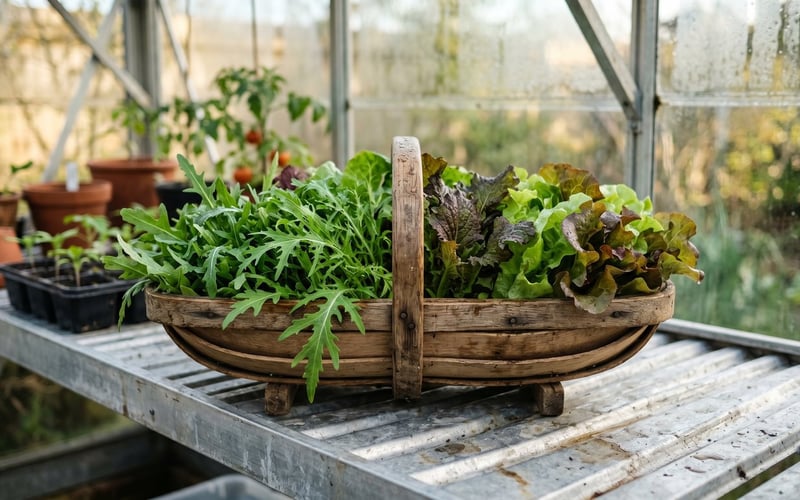
How successive sowing keeps salad coming every week
Sow a short row or half a tray every 2-3 weeks rather than one big batch. This is the single habit that separates a steady salad supply from a feast-and-famine glut. Each sowing matures in turn, so as one tray is cut down the next is ready. Stop sowing for a month and you get a month-long gap six weeks later.
In practice I keep a simple rotation going. A half-tray of rocket and a half-tray of mixed leaves go in together, then two to three weeks later the next pair follows. From March to September I never skip a fortnight. The leaves get cut while young and tender, which also dodges the bolting that ruins overgrown lettuce. For the full sowing schedule across every crop, see our month-by-month seed sowing calendar.
A multi-tier seed tray frame makes the rotation easy to manage. New sowings sit on the top shelf where it is warmest, established trays below. The Elite 3 Tier 9 Seed Tray Frame at £119 holds nine standard trays in the footprint of one, which is exactly what a fortnightly sowing habit needs.
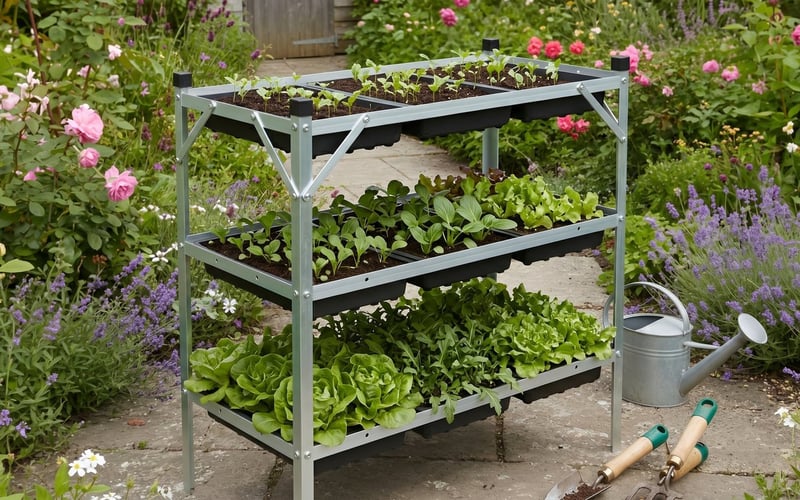
Shop the Elite 3 Tier Seed Tray Frame →

|
Matt's Pick for winter salad growingBest For: Overwintering hardy salad leaves outside the main greenhouse Why I Recommend It: I keep lamb's lettuce and claytonia going in one of these all winter. The 6x2 holds four standard trays, the aluminium frame will not rot, and the twin roof lids lift for venting on mild days so the leaves never sit damp. Mine is on its eighth winter. Price: £299 |
Starting early salads with a heated propagator
A heated propagator germinates salad leaves at 18-20C in February, six weeks before an unheated bench manages it. Most salad seed germinates slowly below 8C and barely at all near freezing. A small electric propagator gives the steady warmth the seed needs without heating the whole greenhouse. You move the seedlings out onto the cold bench once they have their first true leaves.
This is the cheapest way to pull the season forward. A windowsill propagator costs around £30 and uses a few pence of electricity a day. I start the first rocket, mizuna and lettuce in mine in mid-February, prick them out in March, and we are cutting leaves by early April. Without it, the same sowing on a cold bench sulks until the soil warms. For more on getting seed moving under glass, read our guide to sowing seeds in a greenhouse.
Matt's Installation Tip
Do not leave a heated propagator running on a sunny spring day with the lid shut. I have seen bench temperatures hit 40C inside a closed propagator by midday in March, which cooks the seedlings you just germinated. Prop the lid open once seeds are up, and move trays off the heat as soon as the first true leaves show. The propagator is for germination, not for growing on.
Overwintering winter salads in a cold frame
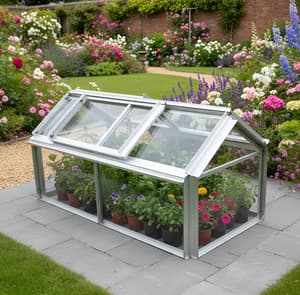
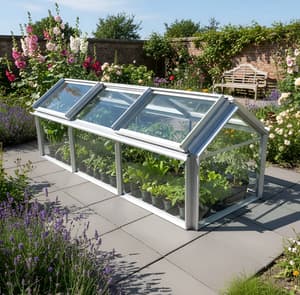
A cold frame extends salad growing at both ends of the year and overwinters the hardiest leaves. It is a sealed, low box that traps solar heat and blocks wind. In spring it hardens off propagator-raised seedlings before they go into the open garden. In winter it shelters lamb's lettuce and claytonia outside the main greenhouse, freeing your bench space for other crops.
We have fitted cold frames for hundreds of customers, and the ones who use them through winter get the most out of them. A cold frame sits 4-6C warmer than open ground and stops the wind chill that flattens seedlings. Lift the lid on mild days to vent, close it at night. The leaves grow slowly but they stay alive and clean. Pair a cold frame with the main house and you double your hardy growing space for the price of a single panel of glass.
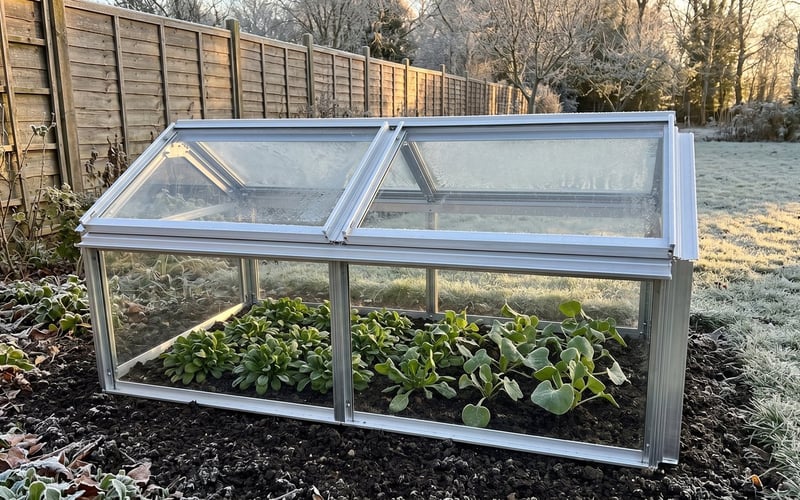
Shop the Elite Min E Lite 4x2 Cold Frame →
A raised cold frame brings the growing height up to waist level, which suits anyone who finds bending hard. The Palram Canopia Plant Inn 4x4 Raised Cold Frame at £344 holds a deep bed of compost on legs, so you can sow and cut a full salad crop without kneeling. Browse the full range on our cold frames page.
Cold frames for year-round salad leaves
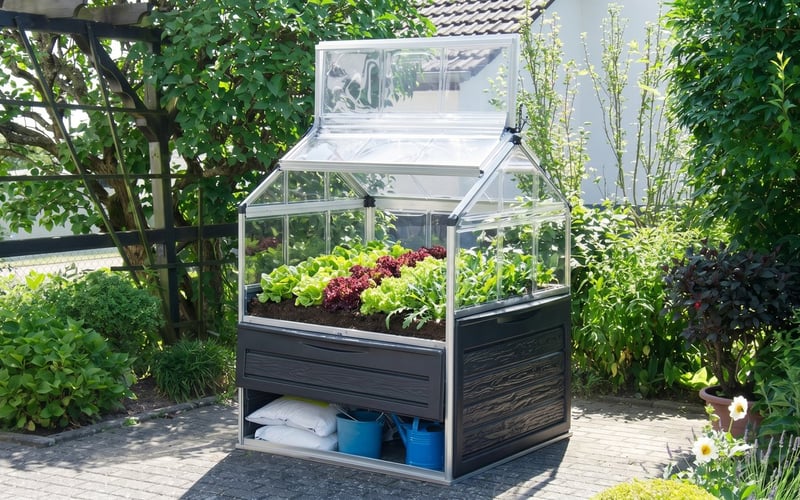
Shop the Palram Plant Inn Raised Cold Frame →
Cut-and-come-again: the technique that doubles your harvest
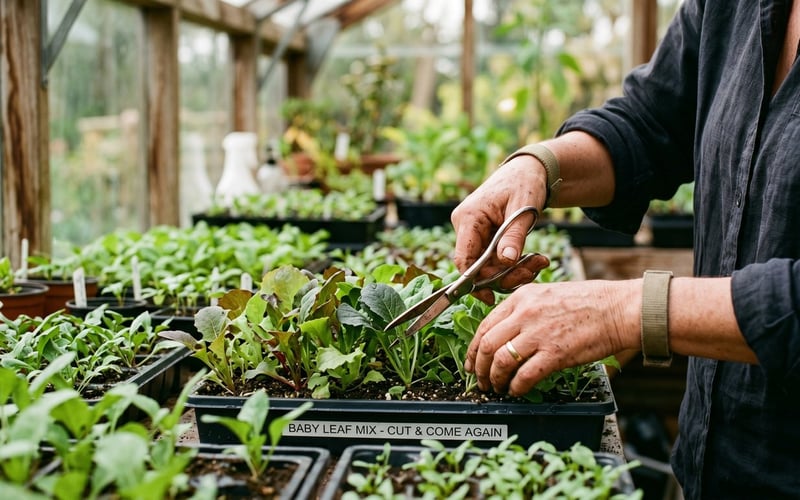
Cut only the outer third of each plant and leave the growing centre intact. Done this way, a single sowing crops for 6-8 weeks instead of giving one pick. The plant pushes out fresh leaves from the middle while you eat the outer ones. It is the most productive way to grow salad in a small space, and it cuts your seed bill too.
The one rule is restraint. Never take more than a third of the plant at once. Strip it bare and recovery stalls for a fortnight. I run a pair of scissors along the outer leaves about 3cm above the crown, then water and feed. In summer a rocket plant gives me eight cuts before it tires. In winter, growth is slower, so I pick every 2-3 weeks rather than weekly. Companion crops slot in around the salad too. See our companion planting guide for what grows happily alongside leaves.
Browse Greenhouse Accessories →
Matt's Tip: Sow microgreens to bridge the gap
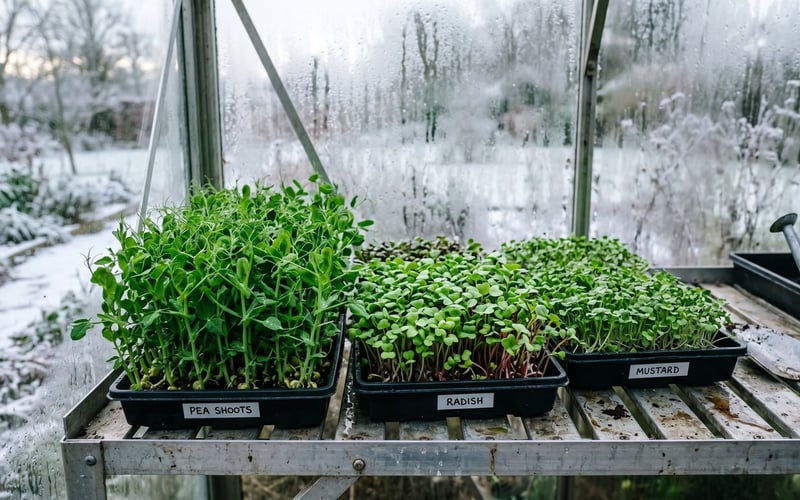
When a winter cold snap stalls everything, I fall back on microgreens and pea shoots. They grow on a windowsill tray inside the greenhouse and crop in 10-14 days even in low light. Radish, mustard and pea are the fastest. They give me something fresh and green to cut when the main salad leaves are barely moving in December. A single tray of pea shoots refills three or four times before it gives up.
Year-round salad sowing calendar
This calendar shows what to sow each month for an unbroken salad supply under glass. Timings are for a typical UK greenhouse. Shift them a fortnight later in Scotland and the far north, a fortnight earlier on the south coast.
| Month | Sow under glass | Harvest | Notes |
|---|---|---|---|
| January | Microgreens, pea shoots | Lamb's lettuce, claytonia, land cress, mizuna | Slowest month. Pick lightly, water only on mild mornings. |
| February | Lettuce, rocket, mizuna (heated propagator) | Winter leaves, first microgreens | Propagator at 18-20C brings the first cut forward six weeks. |
| March | Rocket, lettuce, mustard, spinach, pak choi | Overwintered leaves, propagator sowings | Growth jumps. Start the fortnightly rotation now. |
| April-May | Rocket, mizuna, lettuce, mustard (every 2-3 weeks) | February-March sowings | Harden off in a cold frame. Ventilate above 20C. |
| June-August | Bolt-resistant rocket, Lollo Rossa, mizuna | Continuous cut-and-come-again | Shade and vent heavily. Sow in the evening, keep compost moist. |
| September ★ | Lamb's lettuce, claytonia, land cress, mizuna, winter spinach | Summer leaves finishing | The key winter sowing. Miss it and there is no winter crop. |
| October | Last claytonia, microgreens | First cuts of winter leaves | Fit fleece or move trays to a cold frame for the cold. |
| November-December | Microgreens, pea shoots | Lamb's lettuce, claytonia, land cress, mizuna | Pick every 2-3 weeks. Vent briefly on dry days to beat mould. |
★ September is the single most important sowing month for winter salad.
Salad leaf comparison: which to grow when
| Leaf | Type | Days to first cut | Survives to | Best season | Matt's verdict |
|---|---|---|---|---|---|
| Rocket | Cool-season | 25-30 | -5C | Mar-Oct | Fastest leaf. Eight cuts a plant in summer. |
| Mizuna | Both | 30-40 | -4C | Year-round | Mild young, peppery old. Regrows hard. |
| Mustard greens | Cool-season | 30-40 | -6C | Mar-Nov | Adds heat to a mix. Bolts fast in summer. |
| Lamb's lettuce ★ | Winter-hardy | 50-60 | -15C | Oct-Mar | The hardiest leaf. Never bitter. My winter staple. |
| Claytonia | Winter-hardy | 50-60 | -15C | Nov-Apr | Mild, self-seeds freely. Tough as old boots. |
| Land cress | Winter-hardy | 50-55 | -12C | Oct-Apr | Peppery like watercress. Grows in shade. |
| Pea shoots | Quick crop | 14-21 | -2C | All year | Fastest bridge crop for a winter gap. |
★ Matt's Pick for year-round greenhouse salad.
"From our work with Greenhouse Stores customers since 2012, I have learned that year-round salad is about timing, not heating. The September sowing of lamb's lettuce and claytonia is what carries us through January. Pair the main house with a cold frame and a cheap propagator and you have fresh leaves on the table for the cost of a few seed packets."
— Matt W, Greenhouse Stores
Frequently asked questions
Can you grow salad in a greenhouse in winter without heating?
Yes, with hardy winter leaves like lamb's lettuce and claytonia. These survive to -15C under glass and keep producing through the coldest months. An unheated greenhouse stays 5-8C warmer than outside at night, which is enough. Sow them in September so they bulk up before the short days stall growth in November.
How often should you sow salad for a continuous supply?
Sow a half-tray every 2-3 weeks from March to September. This succession schedule prevents the common glut-then-gap pattern. Each sowing matures as the last is cut down, so the bench is never empty. In winter, growth is too slow to need new sowings, so switch to harvesting the hardy leaves you sowed in autumn.
What is the fastest salad leaf to grow in a greenhouse?
Rocket is the fastest, ready to cut in 25-30 days. Microgreens and pea shoots are faster still at 10-14 days but give smaller leaves. Rocket germinates in three days at greenhouse temperatures and regrows hard after each cut. It is the leaf I sow most because it fills a basket quickly in spring and autumn.
Do I need a heated propagator for greenhouse salad?
No, but it brings the first spring cut forward by about six weeks. Salad seed germinates poorly below 8C, so a cold February bench is slow. A £30 propagator holds 18-20C and gets leaves up fast. Move seedlings off the heat once their first true leaves show, then grow them on at greenhouse temperature.
Why is my greenhouse salad bitter?
Bitter leaves are caused by heat stress and irregular watering. Most cool-season salads turn bitter above 24C or when left to grow too large. Ventilate when the greenhouse hits 20C, water consistently, and cut leaves young. Picking in the cool of the morning gives the sweetest crop. Cut-and-come-again harvesting also keeps leaves tender.
What salad can I grow in a cold frame?
A cold frame grows the same hardy leaves, and hardens off spring seedlings. Lamb's lettuce, claytonia, land cress and winter mizuna all overwinter in a cold frame outside the main house. It runs 4-6C warmer than open ground. Lift the lid on mild days to vent, and close it at night against frost.
Related articles
- What to Grow in an Unheated Greenhouse: Month by Month UK Guide
- Growing Lettuce in a Greenhouse: UK Guide to Year-Round Harvests
- Seed Sowing Month by Month: UK Guide
- Growing Vegetables in a Greenhouse All Year Round
- What Can I Grow in the Greenhouse in Winter?
For more on choosing the right structure for year-round growing, the team at Greenhouse Stores are always happy to help. Everything in this guide is grown and tested by the Greenhouse Stores team across our own greenhouses and cold frames.