Greenhouse Glazing Options: Glass, Toughened or Polycarbonate
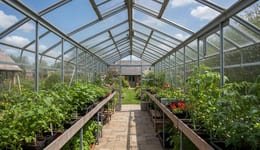
Greenhouse glazing comes down to three real choices: horticultural glass, toughened glass or twin-wall polycarbonate. Glass gives the most light at about 90 percent and the clearest view. Toughened glass adds safety. Polycarbonate is near-unbreakable and holds up to 40 percent more heat. From our work with Greenhouse Stores customers since 2012, here is how to pick the right one for your garden.
Key Takeaways
- Horticultural glass is the budget classic. About 90 percent light, lowest cost, but it shatters into sharp shards if broken.
- Toughened glass is five times stronger and breaks into small blunt granules. The safe choice near children, paths and play areas.
- Twin-wall polycarbonate is near-unbreakable and the warmest option, cutting heat loss by up to 40 percent versus single glass.
- Polycarbonate diffuses light for even growth and less leaf scorch, but transmits a little less, around 80 percent.
- For exposed, coastal or family gardens we fit toughened glass or polycarbonate, never standard horticultural glass.
- A single broken pane wipes out your insulation. Reglaze quickly, and check whether your model uses clips or bar capping first.
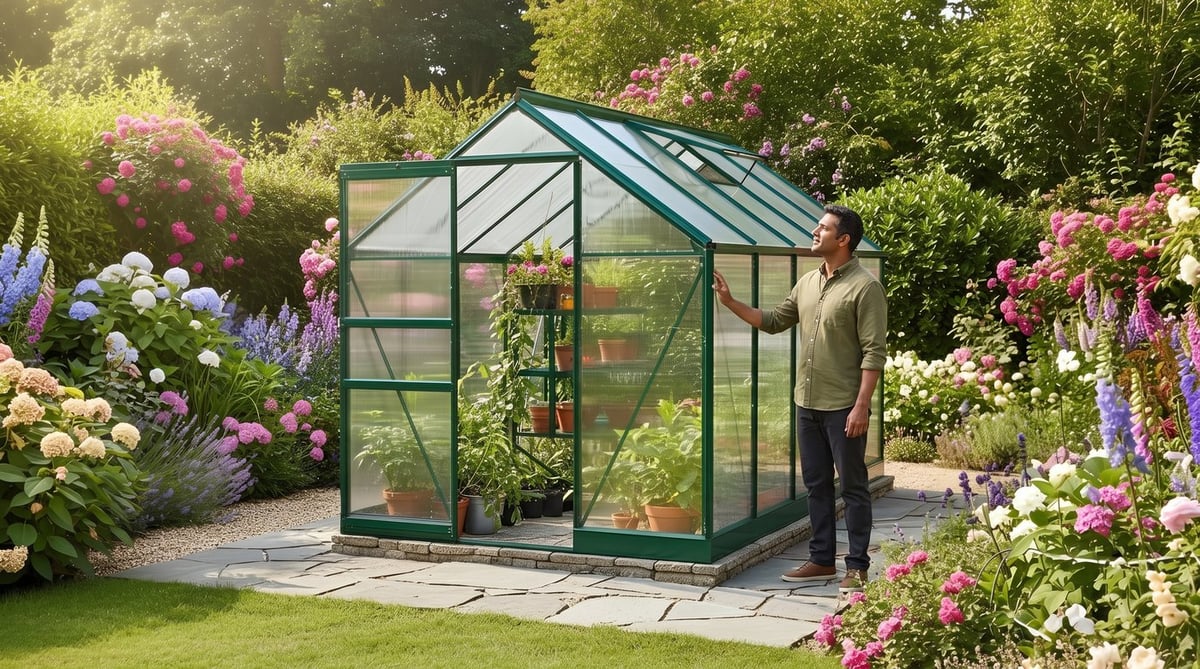
Shop the Vitavia Apollo Polycarbonate Greenhouse →
Installer's Note
The glazing question comes up on nearly every order, and the right answer depends on the garden, not the brochure. I fitted a horticultural glass house for a customer in a sheltered Kent garden last spring, and it has been perfect. The same week I talked a family in an exposed Pembrokeshire plot out of glass and into 4mm polycarbonate. Their old greenhouse had lost six panes in two winters. From our work with Greenhouse Stores customers since 2012, I can tell you which panes fail first: standard glass on windy sites, every time. Match the glazing to the wind, the children and the budget, in that order.
The three greenhouse glazing options explained
Three materials cover almost every greenhouse sold in the UK. Each has a clear strength. Horticultural glass is the traditional, low-cost choice with the best light. Toughened glass is the safe upgrade. Twin-wall polycarbonate is the tough, warm, near-unbreakable option. Acrylic exists at the premium end but is rare, so the real decision is between these three.
Light transmission, safety, insulation and cost pull in different directions. No single glazing wins on all four. The trick is knowing which one matters most for your site. Our guide to glass vs polycarbonate greenhouses goes deeper on that head-to-head.
Horticultural glass: the budget classic
Horticultural glass gives the most light for the lowest price. It is 3mm float glass that transmits about 90 percent of available light, which crops love. It stays clear for decades and never yellows. It is also the cheapest glazing, which is why most entry-level greenhouses ship with it.
The catch is safety. Horticultural glass is not toughened, so a knock shatters it into long, sharp shards. It also slides in loose panes held by clips, which can lift in high wind. We fit it happily on sheltered sites with no children nearby. On an exposed or family plot, we steer customers elsewhere.
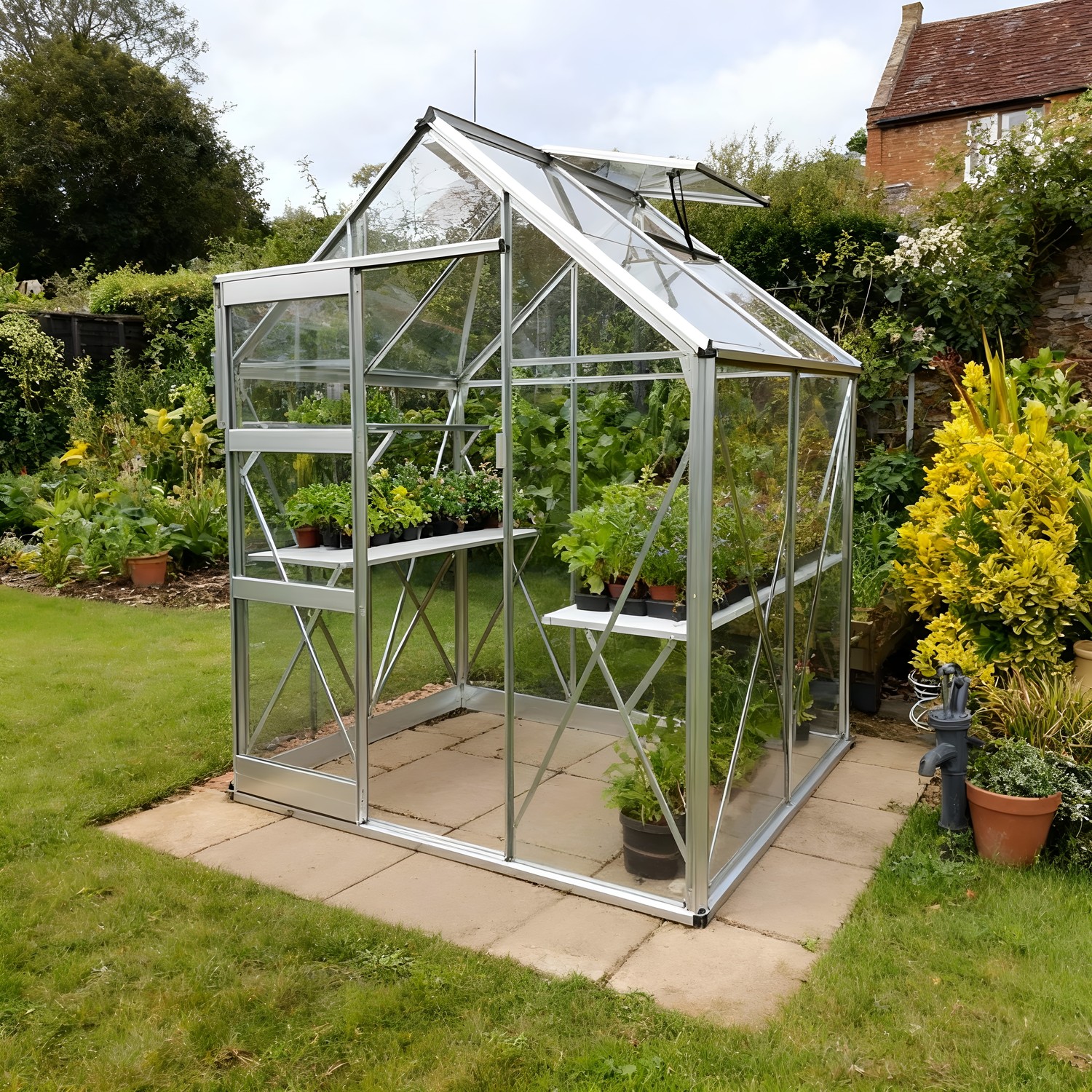
Shop the Elite Horticultural Glass Greenhouse →
Toughened glass: the safe upgrade
Toughened glass gives you the clarity of glass with none of the shard risk. It is heat-treated to be about five times stronger than horticultural glass. When it does break, it crumbles into small, blunt granules instead of dagger-like shards. That is why building regulations call for it near doors and at low level in homes.
Light transmission stays high at around 90 percent, so your crops lose nothing. It costs more than horticultural glass, usually a few hundred pounds across a whole house. For any garden with children, pets, a patio or footpath nearby, we think that is money well spent. It is the glazing we fit most often.
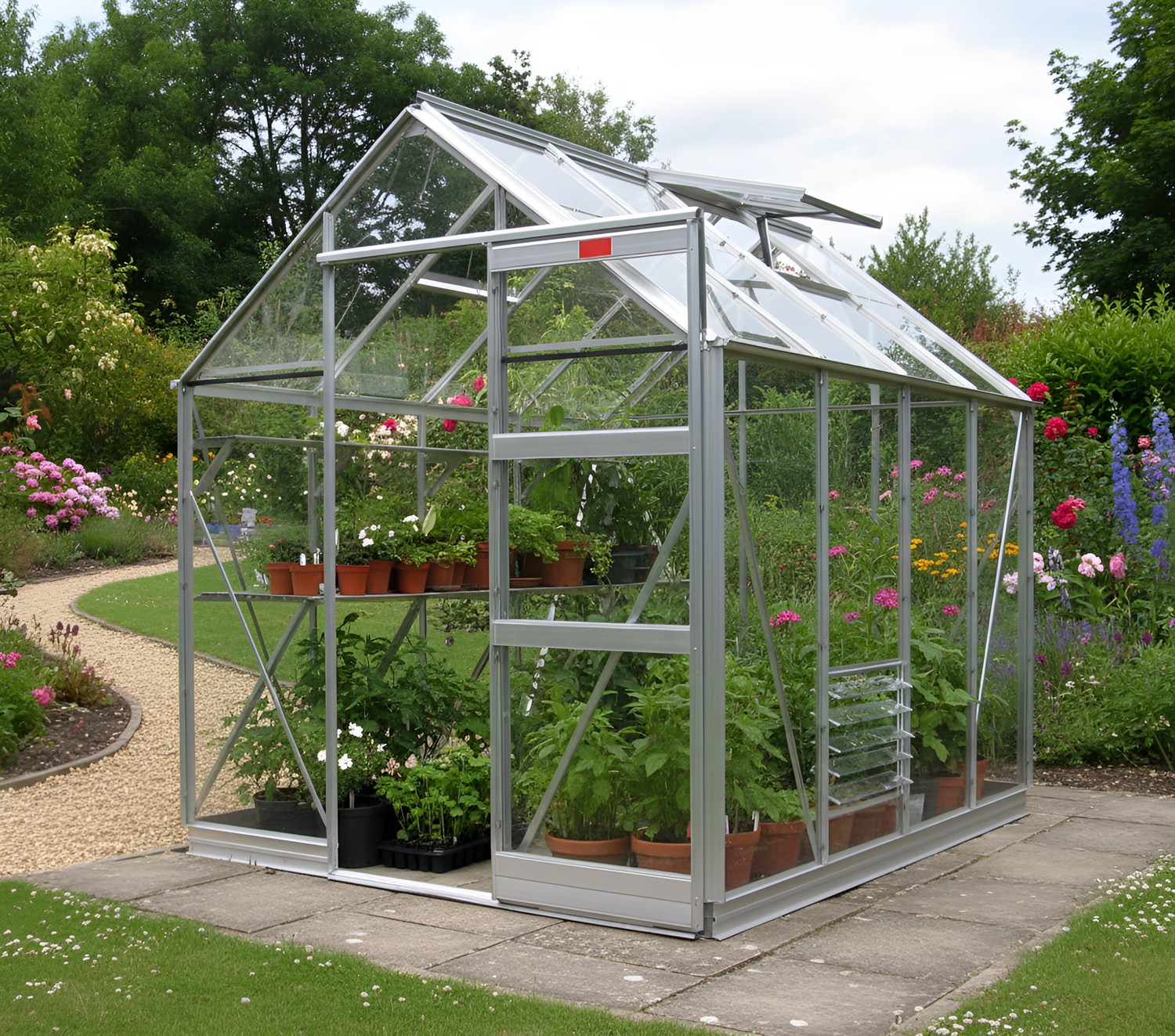
Shop the Elite Toughened Glass Greenhouse →
This is the glazing we fit most for families. When a stray football finds the pane, toughened glass crumbles into blunt granules instead of shards, so it is safe around children and pets playing nearby.
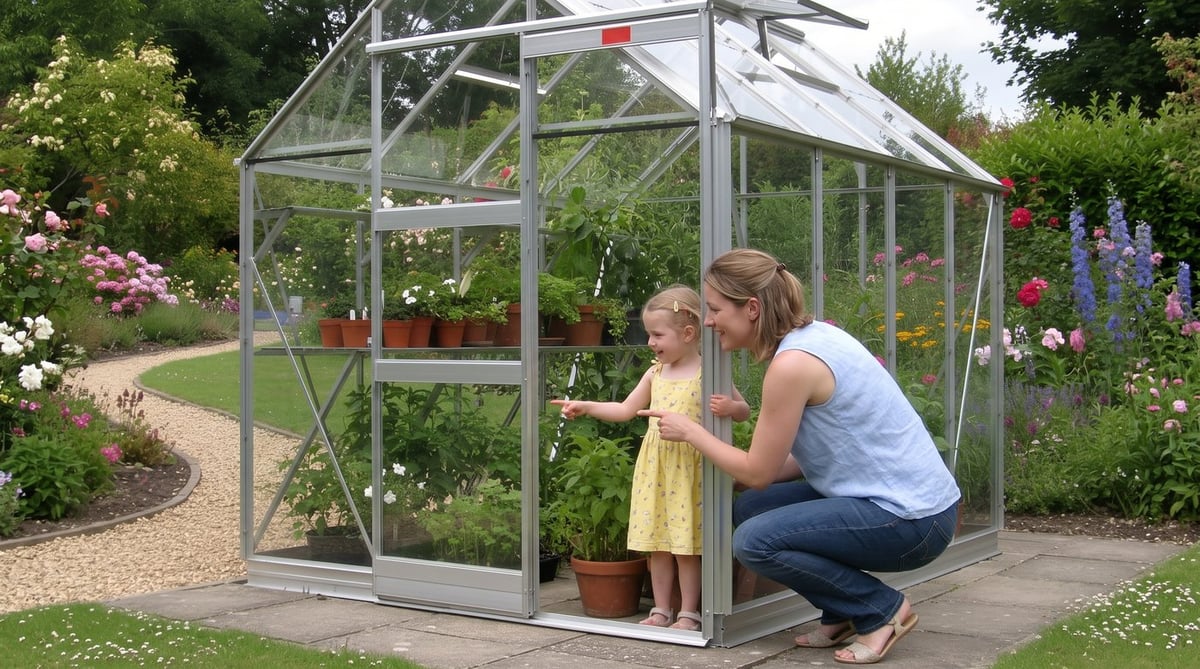
View the family-safe Elite toughened greenhouse →
|
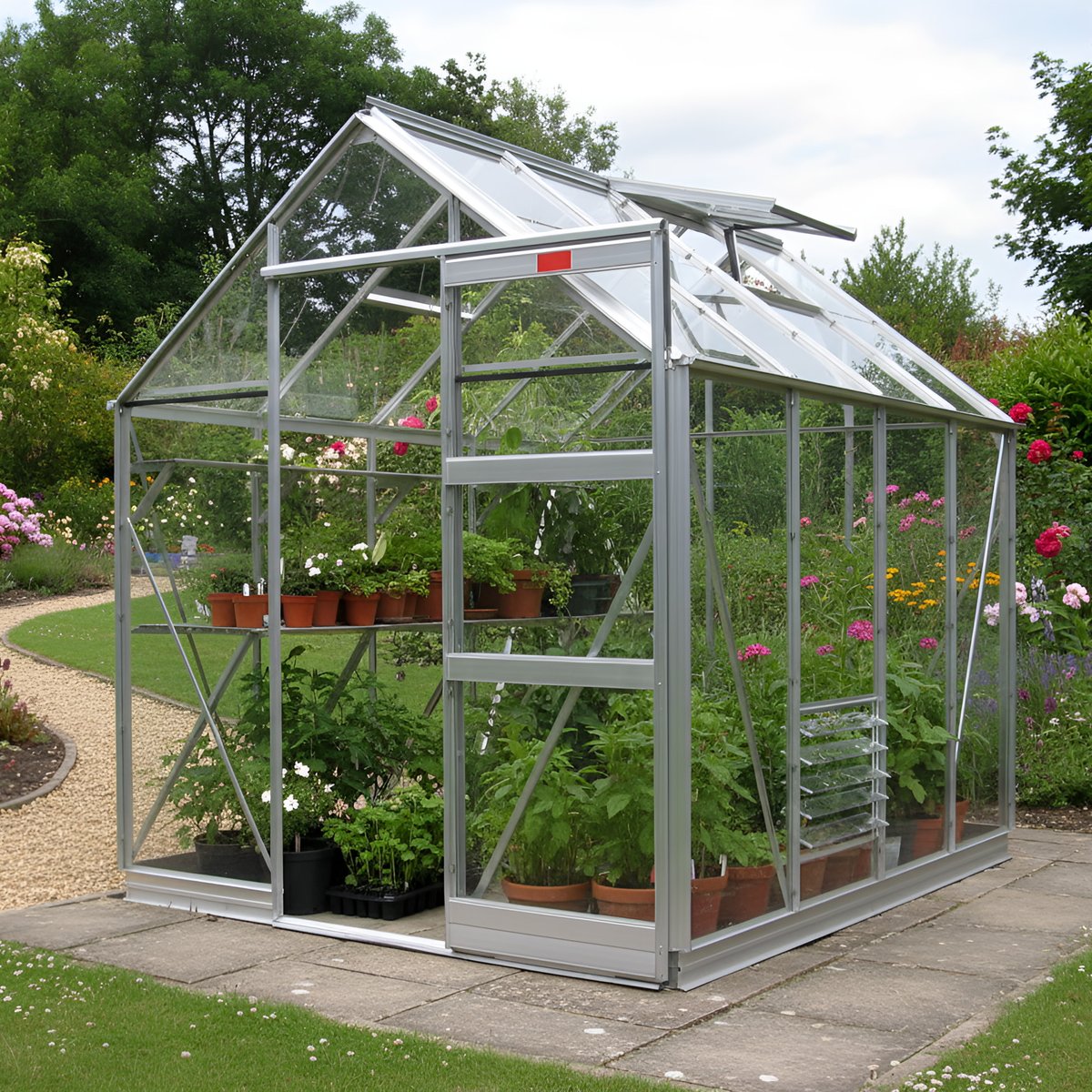
Matt's Pick for Most GardensBest For: family gardens that want full light without the shard risk of standard glass Why I Recommend It: Toughened glass is the sweet spot I fit most. You keep the 90 percent light and clear view of glass, but if a football finds it, the pane crumbles to harmless granules instead of shards. The Elite High Eave frame is heavy-gauge aluminium, so the whole house stands up to UK weather. Price: £1,339 |
Twin-wall polycarbonate: tough and warm
Polycarbonate is the option to beat for toughness and warmth. It is a twin-wall or multi-wall plastic sheet with air gaps inside, which makes it near-unbreakable and a far better insulator than single glass. A 4mm twin-wall sheet cuts heat loss by up to 40 percent, so the greenhouse holds warmth longer on cold nights.
It also diffuses light rather than letting it straight through. Transmission is a little lower at around 80 percent, but the scattered light reaches all parts of the plant and reduces leaf scorch in summer. The trade-offs are that it can scratch, may yellow slightly after 10 to 15 years, and must be clipped in properly or a gust can lift a panel. Thicker 6mm and 10mm sheets insulate even better. Our twin-wall vs single-wall polycarbonate comparison breaks down the thicknesses.
Matt's Installation Tip
Fit polycarbonate sheets the right way up. One face carries a UV-protective coating, marked by a printed film. That film must face outward to the sky, or the sheet yellows years early. I have been called to houses that clouded over in three summers, and every time the panels had gone in upside down. Check the label before you clip a single sheet.
Greenhouse glazing compared
Here is how the three options stack up on the figures that matter. Read it against your own site: light for crops, safety for the household, warmth for the bill, and toughness for the weather.
| Glazing | Light | Safety and toughness | From | Matt's verdict |
|---|---|---|---|---|
| Horticultural glass | ~90%, clear | Shatters into shards | Lowest cost | Sheltered, budget, no children. The classic. |
| Toughened glass (Matt's Pick) | ~90%, clear | Breaks to blunt granules | £1,339 | My default. Full light, family-safe. |
| 4mm twin-wall polycarbonate | ~80%, diffused | Near-unbreakable, warm | £1,020 | Windy, coastal or family plots. Best insulation. |
| 6mm / 10mm polycarbonate | ~80%, diffused | Toughest, warmest | £1,650 | Cold sites and year-round growing. |
Greenhouses by glazing: toughened glass and polycarbonate
Which glazing should you choose?
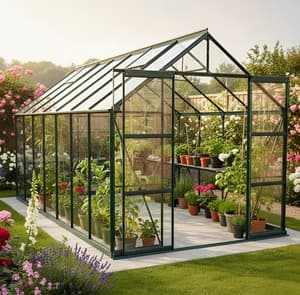
Pick the glazing by your site, then your budget. For a sheltered garden with no children, horticultural glass gives the most light for the least money. For most family gardens, toughened glass is the safe all-rounder we recommend first. For exposed, coastal or windy plots, and for anyone growing through winter, twin-wall polycarbonate is the tough, warm answer.
If you are weighing up the whole purchase, our greenhouse cost guide shows how glazing changes the price, and our greenhouse size guide helps you settle on the footprint first. Browse the ranges by glazing on our toughened glass greenhouses and polycarbonate greenhouses pages.
Replacing broken or lost glazing
A broken pane is a quick fix once you know your fitting. First work out how your greenhouse holds its glazing: spring clips, W-clips or aluminium bar capping. Each brand differs, and the clip type decides how you slot a new pane in. Measure the gap precisely, because panes vary by a few millimetres between models.
You can usually replace like for like, or upgrade a broken horticultural pane to toughened glass or polycarbonate at the same time. Always wear gloves and clear every shard before refitting. If wind keeps breaking the same panes, that is a sign to switch glazing or check the frame. Our greenhouse wind damage guide covers storm-proofing the whole structure.
Matt's Tip: Carry two spare clips, not spare glass
Glazing clips go brittle and ping off long before the glass fails. I keep a handful of spare clips in the greenhouse drawer so a windy night never leaves a pane rattling loose. They cost pennies and save a cracked pane. Spare glass is harder to store safely, so I rely on quick reglazing instead.
"From our work with Greenhouse Stores customers since 2012, I have learned that glazing is a safety choice as much as a growing one. Full light is lovely, but I will not sell a family with young children a house full of plain horticultural glass. Toughened glass and polycarbonate exist for a reason, and I fit them far more often than the cheaper option."
- Matt W, Greenhouse Stores
Frequently asked questions
What is the best glazing for a greenhouse?
Toughened glass suits most gardens. It keeps the full 90 percent light of glass but breaks safely into blunt granules. On exposed or windy sites, twin-wall polycarbonate is tougher and warmer.
Is glass or polycarbonate better for a greenhouse?
Glass gives more light, polycarbonate gives more warmth and strength. Choose glass for clarity in a sheltered spot. Choose polycarbonate for windy, coastal or family gardens where breakage matters.
What is the difference between horticultural and toughened glass?
Toughened glass is about five times stronger. Both let in roughly 90 percent light. Horticultural glass shatters into sharp shards, while toughened glass crumbles into safe granules.
Does polycarbonate let in less light than glass?
Yes, around 80 percent versus 90 for glass. But polycarbonate diffuses that light evenly across the plant, which reduces leaf scorch and can suit many crops better.
Can I replace a broken greenhouse pane myself?
Yes, once you know your clip or capping system. Measure the gap, wear gloves, clear all shards, and slot in a matching pane. You can upgrade to toughened glass at the same time.
Which glazing is safest for children?
Toughened glass or polycarbonate, never plain horticultural glass. Toughened glass breaks into blunt pieces and polycarbonate barely breaks at all, so both remove the shard risk.