Vine Weevil Under Glass: Spot It Before Roots Go
Vine weevil adults are 9mm dull-black beetles that cut irregular notches from leaf edges. Their 10mm, C-shaped, legless grubs cause worse damage by eating roots in greenhouse pots. Check suspect rootballs from September to March. Treat active grubs with the correct nematode species when moist compost stays within its stated 5–20°C or 12–20°C working range.
A vine weevil can walk into a greenhouse, but it usually arrives inside a pot. The first warning may be one chewed leaf. The real damage sits below the compost.
Key takeaways
- Adults measure about 9mm. Look for a broad snout, pear-shaped body and dull-yellow flecks.
- Grubs reach 10mm. They are creamy white, C-shaped and completely legless.
- Leaf notches are an alarm. Root loss causes the serious wilting and collapse.
- August and early September are prime treatment months. Grubs are young and compost is usually warm.
- Temperature decides the nematode. Steinernema species work from 5–20°C; Heterorhabditis needs 12–20°C.
- Greenhouse Stores stocks no nematode controls today. Buy the right live species from a biological-control supplier.
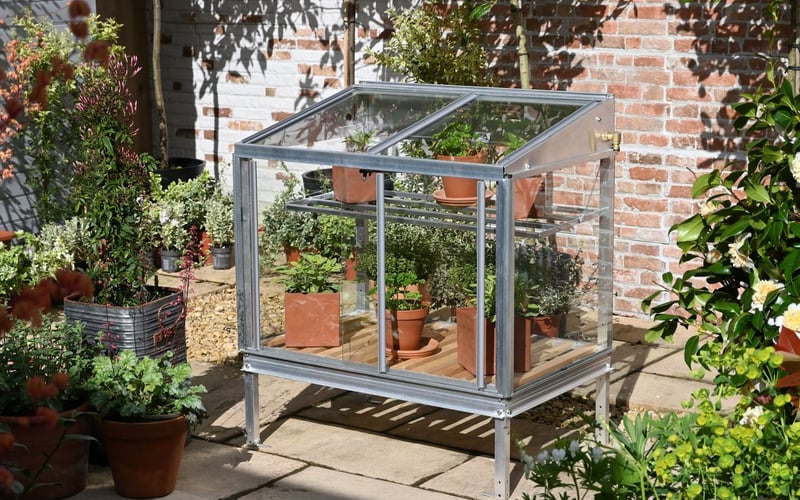
View the 1x3 Access Herb House Mini Greenhouse
Expert Tip
When I suspect vine weevil, I start with the pot below a freshly notched plant. I lift it away from neighbouring pots. Then I inspect the top 30mm of compost and ease out the rootball. A 10mm white grub with no legs settles the diagnosis. Our live catalogue check on 5th August 2026 found zero nematode controls. That is why this guide gives temperatures before products.
What does a vine weevil look like?
Adult vine weevils and their grubs look completely different. Gardeners often spot the damage before either life stage.
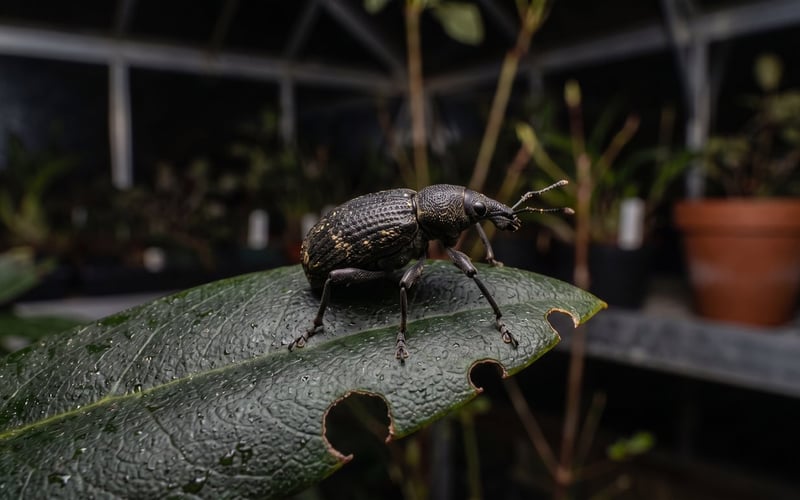
The adult is a slow, flightless beetle about 9mm long. Its body looks pear-shaped from above. The surface is dull black with small dirty-yellow marks. A short, broad snout separates it from many greenhouse beetles. Adults hide during daylight and climb plants after dark.
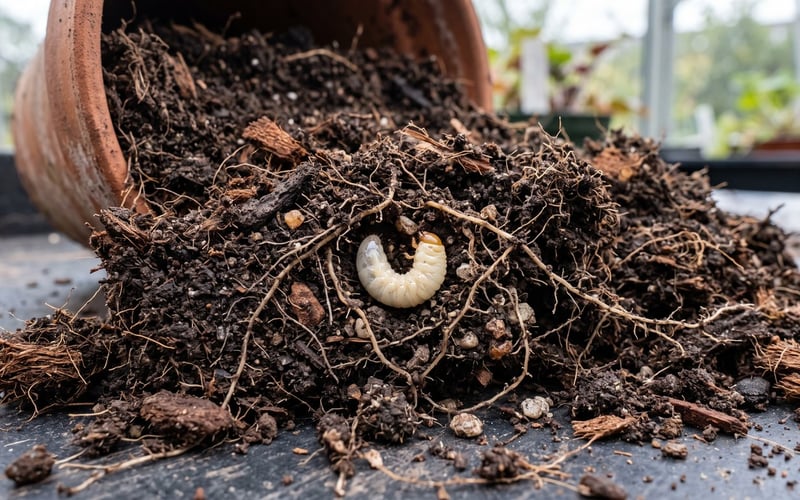
The grub is creamy white, plump and curved into a clear C shape. It has a light-brown head and no legs. Mature grubs reach roughly 10mm. They sit among roots rather than on leaves. Do not confuse round fertiliser pellets with eggs. Vine weevil eggs are brown and smaller than 1mm.
| Feature | Adult vine weevil | Vine weevil grub |
|---|---|---|
| Size | About 9mm | Up to 10mm |
| Colour | Dull black with yellowish flecks | Creamy white with a brown head |
| Shape | Pear-shaped with a broad snout | C-shaped and legless |
| Where found | Leaves, walls, pots and staging | Compost, roots and stem bases |
| Active period | Spring to late summer | Summer to spring |
| Main damage | Notched leaf margins | Eaten roots and collapsed plants |
How do you spot vine weevil damage under glass?
The earliest visible sign is a series of irregular bites around a leaf margin. They often resemble small scallops.
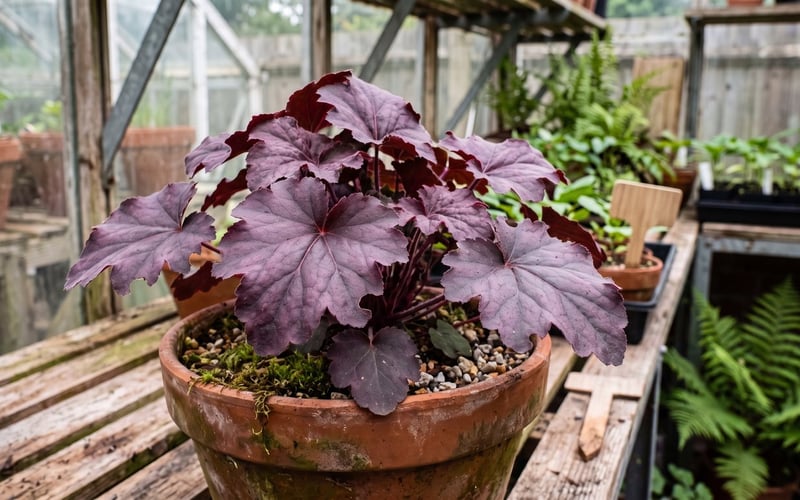
Check thick-leaved plants first. Heuchera, cyclamen, primula, euonymus, strawberry and young yew are useful warning plants. Inspect both high and low shelves. Adults climb well and hide beneath pots during daylight.
Leaf damage alone rarely kills a strong plant. It does tell you that egg-laying females may be nearby. Every UK vine weevil adult is female. One adult can lay several hundred eggs without mating. That makes a single beetle worth finding.
Root damage appears later. Affected plants wilt despite damp compost. Growth slows, leaves yellow, or the crown becomes loose. Give a suspect plant a gentle tug. A badly eaten root system may lift out with little resistance.
For wider pest checks, use our greenhouse pest control guide. It covers aphids, whitefly, red spider mite and other common problems.
Are vine weevil grubs or adults more damaging?
Grubs cause the serious losses because they remove roots while the plant still appears salvageable. Adults mostly spoil leaf edges.
Young grubs start with fine roots. Larger larvae attack thicker roots, tubers and the base of soft stems. Cyclamen and begonia can suffer boring damage. Cacti and succulents may be eaten at the stem base. Woody plants can lose the outer tissue around larger roots.
The danger period runs mainly from September to March. Grubs grow below the surface while greenhouse plants use less water. Wilting can therefore appear late. A plant may collapse when brighter spring weather increases demand.
Never diagnose from wilting alone. Waterlogging, frost, root rot and missed watering can look similar. Tip out one suspect pot over a clean tray. Search around the outer rootball and crown. Finding the legless brown-headed grub confirms the cause.
How does vine weevil get into a greenhouse?
Infested container plants are the usual route into a greenhouse. Adults can also crawl through doors, vents and base gaps.
A bought plant may contain eggs too small to see. It may instead carry young grubs among dense roots. An overwintered patio pot can bring the same problem indoors. Reused compost and unwashed pots move larvae between plants.
Quarantine new plants for two weeks when practical. Keep them together on a washable tray. Check leaves after dark and inspect drainage holes. Do not place new pots directly above valuable collections. A falling adult can colonise the shelf below.
Clean staging removes hiding places, but cleanliness cannot guarantee exclusion. Adults rest under pots and ledges during daylight. Our greenhouse cleaning guide explains how to wash frames, floors and staging safely.

View the 2x3 Access City Growhouse in Anthracite Grey
How do you stop vine weevil in pots?
Isolate the pot, remove visible grubs and replace infested compost before treating the remaining collection. Work over a clean sheet.
- Move the suspect plant away from every other container.
- Tip out the rootball and collect every visible grub.
- Discard badly infested compost with household waste.
- Trim dead roots with clean secateurs.
- Wash the pot, saucer and nearby staging.
- Repot into fresh peat-free compost.
- Check adjacent pots and apply nematodes when temperatures suit.
Do not add infested compost to a cool home heap. Surviving grubs may return with finished compost. A well-managed hot system may work, but most domestic heaps do not hold an even lethal temperature.
Matt's Installation Tip
Keep pots on removable saucers rather than directly on gravel. You can lift each plant, inspect underneath and wash the contact area.
When should you apply vine weevil nematodes?
Apply nematodes when active grubs are present and the compost matches the species' temperature range. Warm, moist conditions matter.
August and early September provide the strongest general window. Eggs have produced young grubs, while compost remains warm. Smaller grubs are easier targets. Spring treatment can work when surviving larvae become active and temperatures recover.
Greenhouse pots may offer extra treatment windows. Measure the compost, not the air beside the door. A sunny greenhouse can show 18°C air while a shaded pot stays below 10°C. Use a clean probe thermometer at 50mm depth.
| Period | Likely stage | Temperature check | Action |
|---|---|---|---|
| March–April | Large overwintered grubs | Use Steinernema only above 5°C | Treat confirmed infestations, then recheck roots |
| May–July | Pupae and adults | Compost is often warm enough | Catch adults; larval treatment may have few targets |
| August–early September | Eggs and young grubs | 5–20°C or 12–20°C | Best general nematode window |
| Late September–October | Growing grubs | Check every pot before application | Use the cool-active species when needed |
| November–February | Overwintering grubs | Many pots fall below 5°C | Remove grubs manually or wait for suitable temperatures |
Matt's Tip: Trust the thermometer
I check compost at 50mm depth before mixing a live treatment. The packet range matters more than the calendar or greenhouse air temperature.
Which nematode species controls vine weevil?
Several beneficial nematode species infect vine weevil larvae. Each product states a working temperature and target life stage.
RHS guidance lists Steinernema kraussei, Steinernema feltiae, Heterorhabditis megidis and Heterorhabditis bacteriophora. Steinernema products generally work at 5–20°C. Heterorhabditis products generally need 12–20°C. Follow the supplied label when it differs.
Nematodes are living organisms, not a preventative tonic. Apply them only where a specific problem exists. They perform poorly in dry compost, waterlogged media and heavy soil. Open peat-free potting mixes can work well when evenly moist.
Our catalogue contained no nematode biological controls during this article's 5th August 2026 stock check. We therefore cannot link a stocked treatment. Buy a fresh, correctly stored pack from a specialist biological-control supplier.

How do you apply nematodes in a greenhouse?
Water the compost first, mix the pack exactly as directed, and distribute the solution evenly. Keep the root zone moist afterwards.
Use the complete pack within its stated time. Remove fine filters that could trap the organisms. A coarse watering-can rose gives even coverage without high pressure. Stir the stock solution between refills because the contents can settle.
Apply during a dull evening or shade the pots. Strong ultraviolet light shortens survival on exposed surfaces. Water onto the compost, not the foliage. Treat every pot in the affected group because small grubs remain easy to miss.
Keep compost moist for the period stated on the pack. Do not leave pots standing in water. Nematodes need a thin water film to move, but roots still need oxygen. Recheck a sample rootball after the stated treatment period.
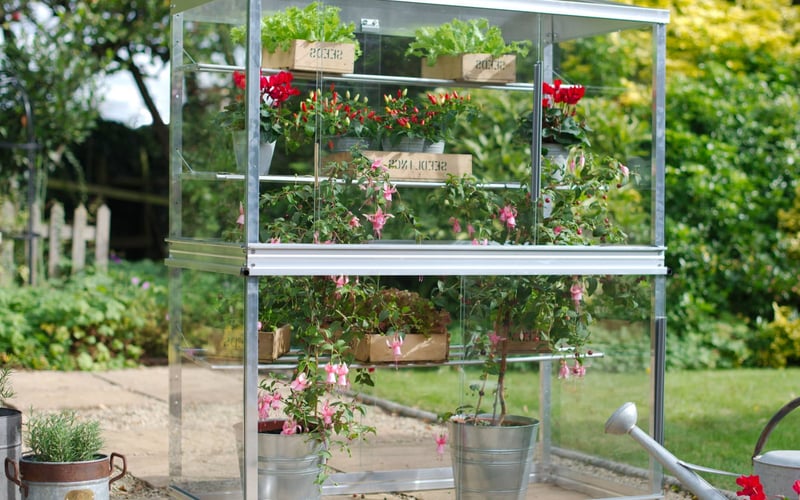
View the 2x4 Access Growhouse Mini Greenhouse
How do you catch adult vine weevils?
Search after dark with a torch because adults feed at night and hide by day. Start one hour after dusk.
Look beneath pots, saucers and staging lips. Check greenhouse walls close to damaged plants. Pick off adults and drop them into a lidded container. Alternatively, shake a sturdy plant over white paper or an upturned umbrella.
Sticky barriers around pot stands can intercept climbing adults. Position them where they cannot catch birds, small mammals or useful insects. Replace dirty barriers before dust makes them ineffective.
Adult trapping reduces egg laying, but it does not remove grubs already feeding. Combine night searches with root checks. The approach works especially well from spring through late summer. Our research-backed companion planting guide explains where plants help and where claims exceed evidence.
How do you prevent vine weevil returning?
Prevention depends on inspection, separation and repeat checks. No greenhouse material makes a pot immune to vine weevil.
- Quarantine incoming container plants for 14 days.
- Inspect leaf margins weekly from April through September.
- Check beneath pots during every watering round.
- Wash reused pots and saucers before repotting.
- Never share loose compost between suspect and clean plants.
- Keep plant debris away from staging feet and wall edges.
- Record each affected pot and recheck it after treatment.
Overwintered collections deserve a root check before spring growth. Move only clean plants into a propagation area. Our guide to overwintering plants under glass covers spacing, frost protection and watering.

|
Matt's Pick for accessible pot checksBest for: Small collections needing regular inspection. Why I recommend it: The opening front and two shelves put every pot within easy reach. The 3ft by 2ft footprint also keeps a quarantine group separate. Price: £249 |
Are greenhouse borders safer than pots?
Greenhouse borders can contain vine weevil, but severe losses are more common in containers. A pot concentrates grubs beside a limited root system.
Open soil gives roots more room to escape local feeding. Predatory ground beetles and other wildlife can also reach the larvae. Heavy infestations still damage strawberries, primulas, sedums and young woody plants.
Inspect border edges near pot staging and overwintering areas. Adults cannot fly, yet they crawl well across floors and walls. Do not empty infested pot compost into a greenhouse border. Remove it from the growing area.
Raised beds sit between the two systems. They hold more compost than pots but remain enclosed. Check plant crowns and soil near the sides. Our greenhouse raised-bed guide covers drainage, soil depth and access.
Which greenhouse layout makes vine weevil checks easier?
A good layout exposes pot bases, keeps groups separate and leaves enough room for torch checks. Access matters more than greenhouse size.
| Model | Container access | Live price | Matt's verdict |
|---|---|---|---|
| 1x3 Access Herb House | Raised shelf and removable pots | £391 | Best compact inspection station |
| 2x3 Access City Growhouse | Two enclosed shelf levels | £799 | Useful for separating plant groups |
| 2x4 Access Growhouse | Wide front access across four feet | £554 | Best for a larger pot collection |
| 3x2 Hardwood Mini Greenhouse | Opening front and two shelves | £249 | Matt's pick for routine checks |
Browse the wider mini greenhouse collection for container growing if these four footprints do not suit your space. A structure helps organisation. It does not prevent an infested plant arriving.
"I choose staging that lets me see every saucer and pot base. Hidden corners cost time when one notched leaf appears."
- Matt W, Greenhouse Stores
What should you do this week?
Start with a torch check tonight, then inspect the rootball below any freshly notched plant. Keep the task small and repeatable.
Mark suspect pots with the date. Photograph the leaf edge before removing damage. That record shows whether new feeding appears. Remove adults immediately. Repot plants containing grubs and measure compost temperature before ordering nematodes.
Check the same group again after seven days. Continue weekly until four checks find no fresh notches or adults. Root inspections can damage plants, so sample only suspect pots after treatment.
The useful sequence is simple: identify the life stage, contain the pot, match treatment to temperature, then verify the result. That catches vine weevil while valuable roots remain.
Frequently asked questions
Can vine weevil live inside a greenhouse?
Yes, vine weevil thrives in greenhouse pots and protected borders. Adults hide beneath staging, while grubs feed unseen through autumn and winter.
What do vine weevil grubs look like?
They are 10mm, creamy-white, C-shaped grubs with brown heads and no legs. Find them among roots, near crowns or inside damaged tubers.
Do nematodes kill adult vine weevils?
Most watering treatments target grubs, not adult beetles. Specialist adult traps use a different nematode system during summer. Follow the product label.
What is the best month for vine weevil nematodes?
August and early September provide the best general treatment window. Young grubs are present and greenhouse compost usually remains warm enough.
Can a plant recover after vine weevil damage?
Yes, plants with surviving roots can recover after grubs are removed. Repot them, trim dead roots and reduce top growth only when necessary.
Does changing compost remove vine weevil?
Fresh compost helps, but missed eggs or grubs can restart the infestation. Wash the pot, inspect roots and monitor neighbouring containers.