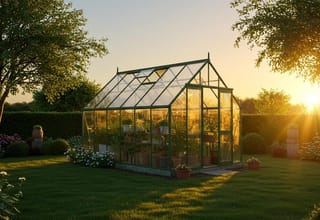
Greenhouse Glossary: 40 UK Gardening Terms Explained
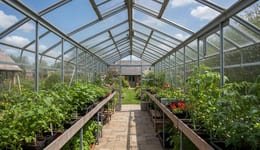
A greenhouse is a glazed structure that traps the sun's heat to grow plants in a warmer, sheltered space. The name comes from the green plants grown inside, not the colour. This glossary explains 40 of the terms UK growers and buyers meet most, from eaves height and toughened glass to damping down and hardening off. From our work with Greenhouse Stores customers since 2012, these are the words customers ask us to translate.
Key Takeaways
- A greenhouse traps solar heat through glazing to create a warmer growing space, often 7 to 10C above the outside air.
- Buying terms matter most: eaves height, glazing type, dwarf wall and base decide which model suits your garden.
- Three jobs sound alike but differ: hardening off (toughening seedlings), damping down (cooling by wetting the floor) and pricking out (moving seedlings on).
- An autovent opens your roof vent with no power, using a wax cylinder that expands in the heat.
- Glazing is a choice of three: horticultural glass, toughened glass or twin-wall polycarbonate.
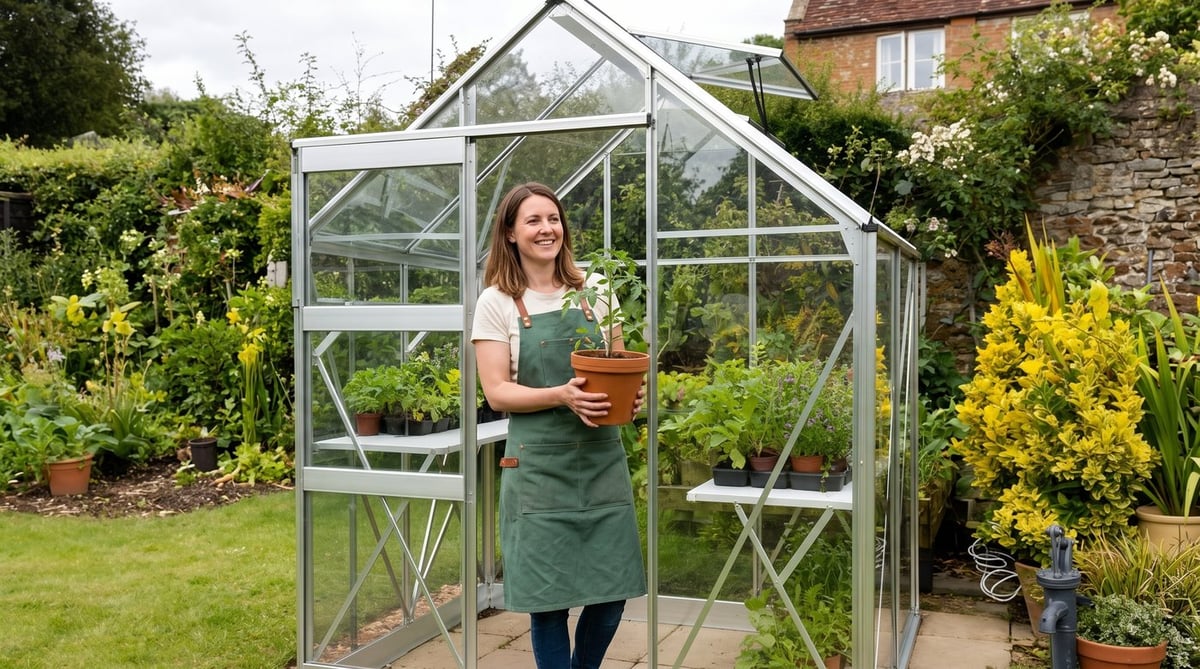
Browse small starter greenhouses →
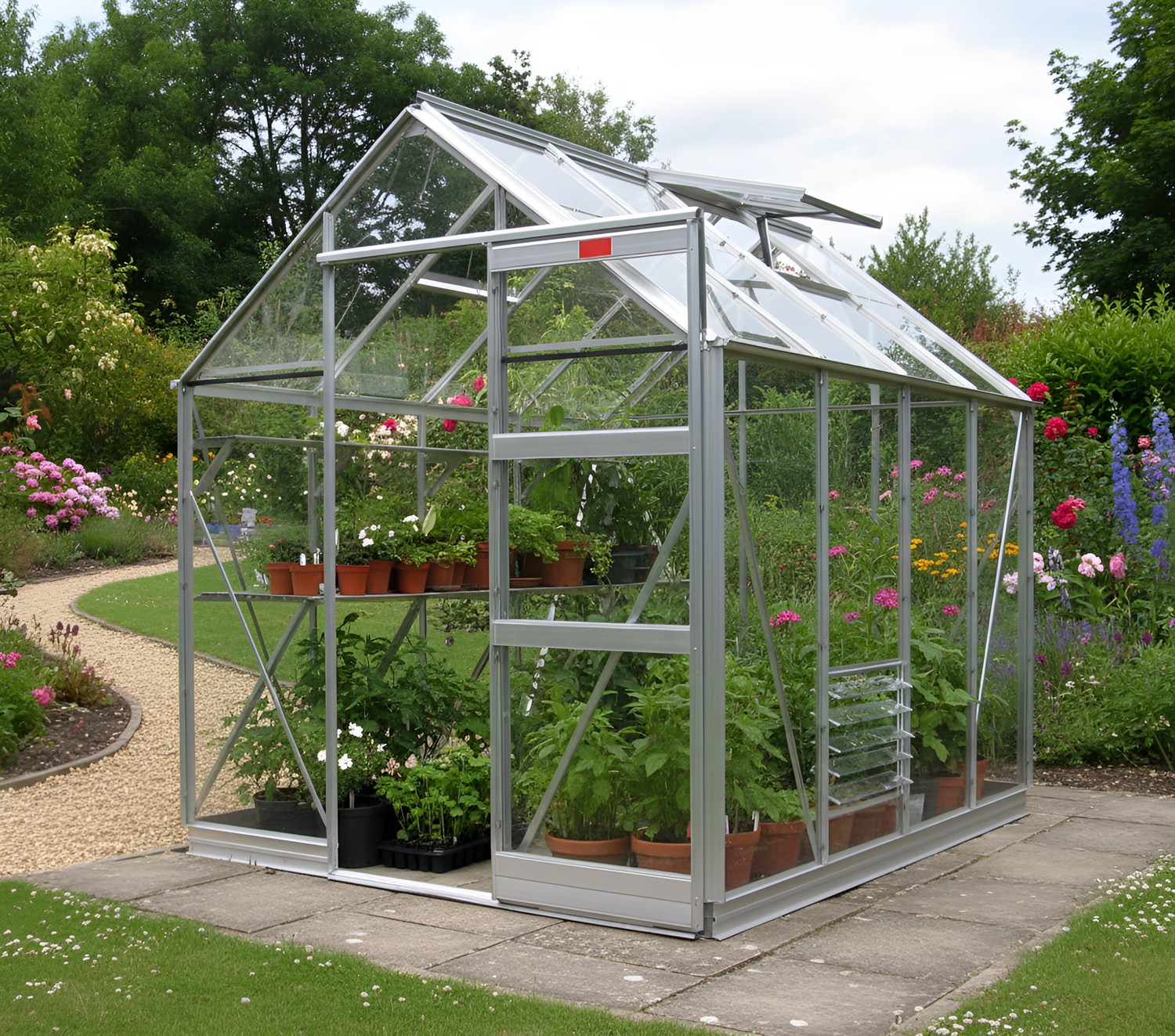
Shop the Elite High Eave Greenhouse →
Expert Tip
I spend half of every site visit translating. A customer asks for "the bit at the top that opens" and means a roof vent, or worries their seedlings are "leggy" without knowing the word. Over the years, I have learned that the jargon puts people off more than the gardening does. Get the words straight and the rest follows. This glossary is the one I wish I could hand to every new greenhouse owner on delivery day.
Greenhouse types and structure
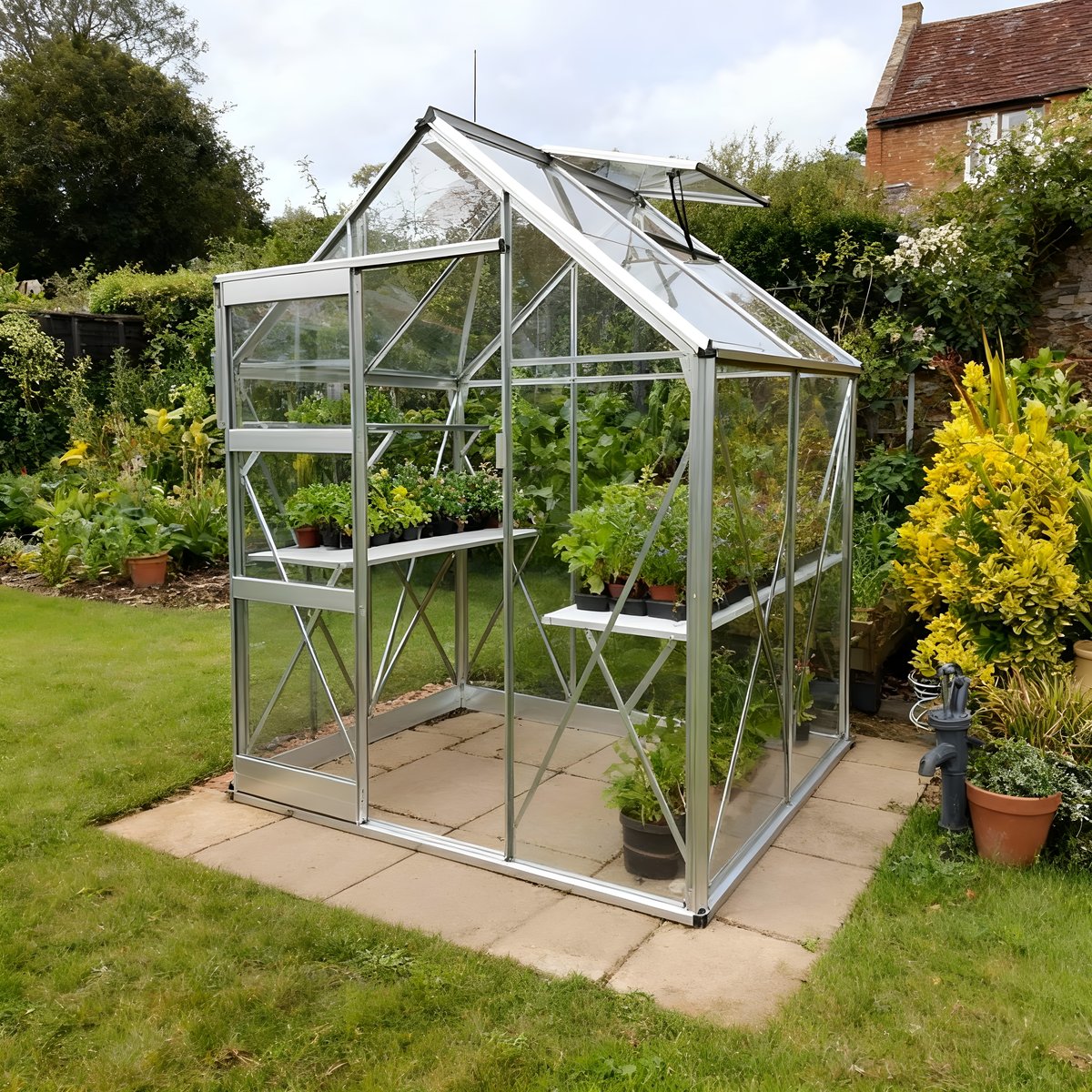
Apex (or gable): The classic greenhouse shape with a pitched roof rising to a central ridge. The most common style in UK gardens.
Lean-to: A greenhouse with one wall against a house or boundary wall, saving space and borrowing warmth. See our lean-to greenhouse guide for the detail.
Dwarf wall: A low brick base, usually two to three feet high, with glazing above. It adds insulation, wind resistance and a traditional look.
Orangery: A taller greenhouse with a lantern roof, part glasshouse and part garden room.
Mini greenhouse: A compact, often lean-to unit for a patio or balcony, ideal for seedlings and a few pots.
Walk-in greenhouse: Any house tall and wide enough to stand and work inside, as opposed to a reach-in mini.
Polytunnel: A tunnel of polythene over steel hoops. Cheaper and bigger than glass, but shorter-lived. Our greenhouse vs polytunnel comparison weighs them up.
Cold frame: A low, glazed box at ground level for hardening off and protecting low crops. More on this in our cold frame gardening guide.
Cloche: A small, movable cover, like a mini tunnel or bell, that shelters individual plants or a row.
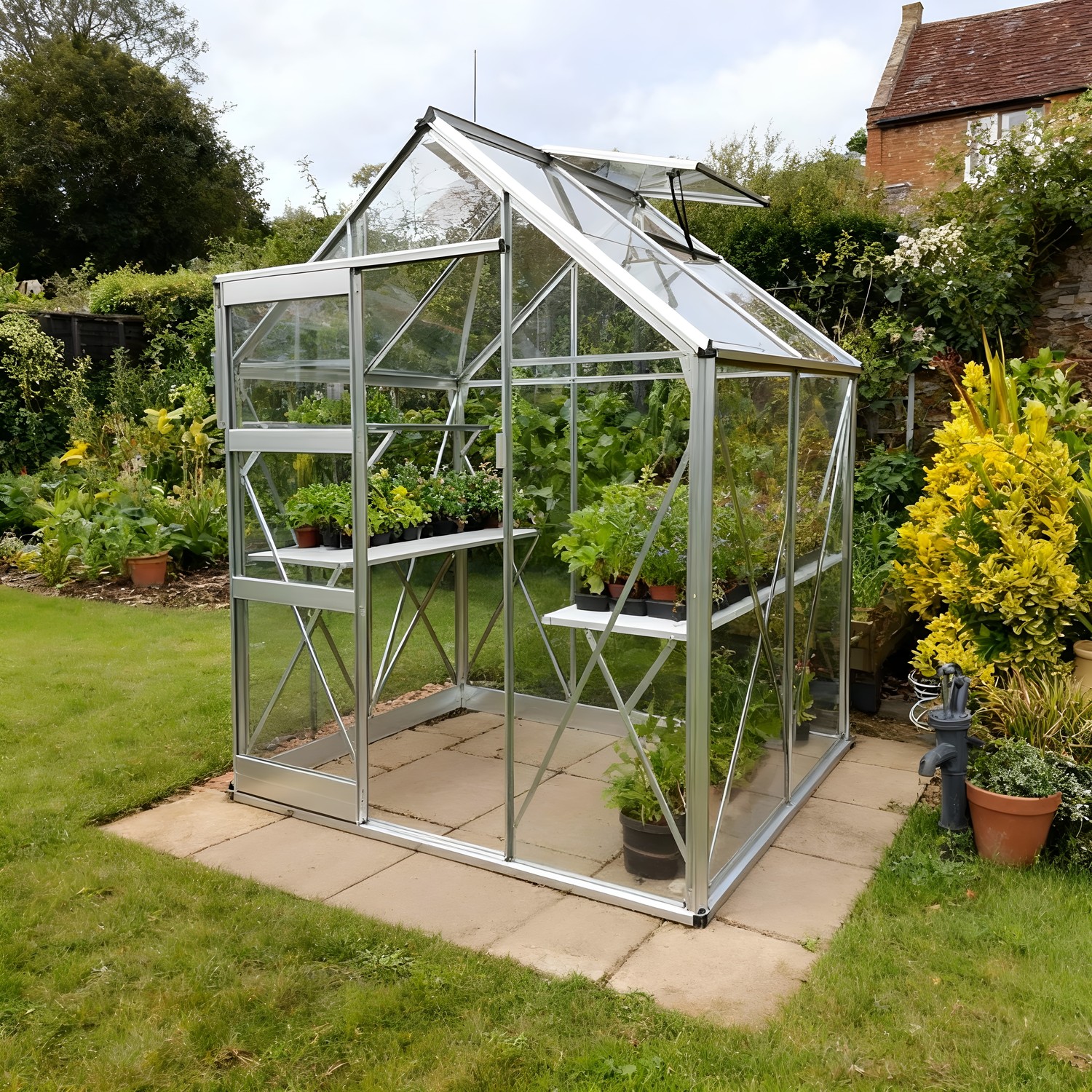
Shop the Elite 6x4 Greenhouse →
Frame and fitting terms
Eaves height: The height of the side wall where it meets the roof. Taller eaves mean more headroom and growing space at the edges.
Ridge: The horizontal line at the very top of an apex roof.
Glazing bar: The aluminium or timber rail that holds the panes in place.
Gable: The triangular end wall of an apex greenhouse, where the door usually sits. The range of styles is set out in our greenhouse roof shapes guide.
Finial and cresting: Decorative tops and roof trim on traditional and Victorian greenhouses.
Capping (bar capping): A strip that clamps panes onto the glazing bars, used instead of clips on some models.
Base or plinth: The foundation the greenhouse sits on, from a steel base kit to a brick plinth or concrete pad.
Integral gutter: A built-in channel along the eaves that collects rainwater, often feeding a water butt.
|
Matt's Pick for a First GreenhouseBest For: beginners who want a proper walk-in house without a huge footprint Why I Recommend It: A 6x4 is the size I fit most for first-timers. The Elite High Eave gives real headroom from its raised eaves, the heavy-gauge aluminium frame lasts decades, and it is small enough for a modest garden but big enough for tomatoes and staging. Price: £929 |
Glazing and climate terms
Horticultural glass: Standard 3mm float glass. Cheapest, lets in about 90 percent light, but shatters into shards.
Toughened glass: Heat-treated glass about five times stronger, which breaks into safe blunt granules.
Polycarbonate: A tough twin-wall or multi-wall plastic that insulates well and barely breaks. Our greenhouse glazing options guide compares all three.
U-value: A measure of heat loss. Lower is better. Twin-wall polycarbonate has a lower U-value than single glass, so it holds heat longer.
Light transmission: The percentage of available light a glazing lets through. Glass is around 90 percent, polycarbonate around 80 but diffused.
Greenhouse effect: Sunlight passes through the glazing and warms the inside, but the heat cannot easily escape, so the air heats up.
Solar gain: The heat a greenhouse collects from sunlight. Useful in spring, a problem in a heatwave.
Damping down: Wetting the floor and staging on hot days so evaporation cools the air by 4 to 6C. Covered in our greenhouse cooling guide.
Ventilation and accessory terms
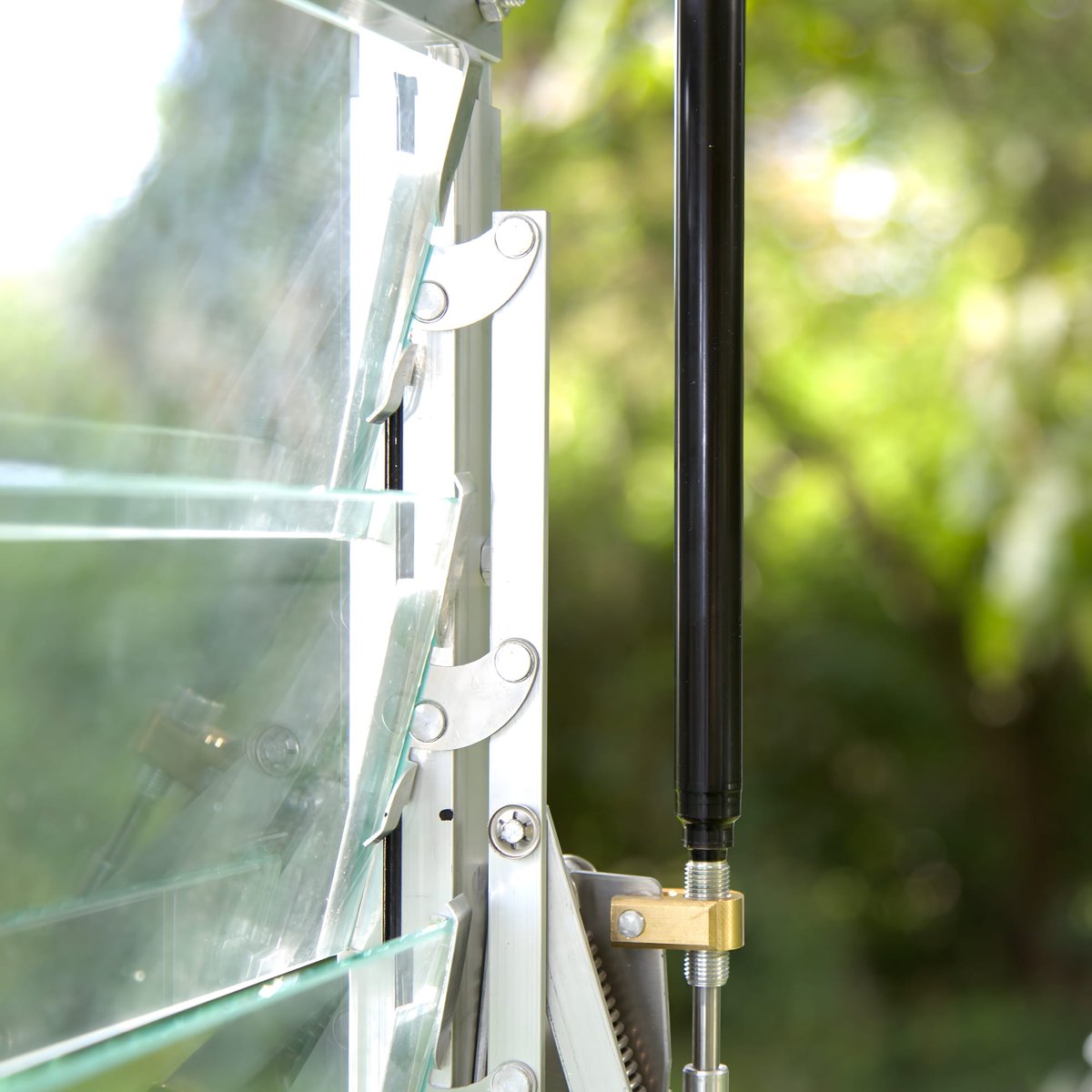
Autovent (automatic vent opener): A wax-cylinder arm that opens a roof vent as the house warms, with no electricity. The full fitting is in our greenhouse ventilation guide.
Louvre vent: A set of angled blades low on the gable that lets cool air in at floor level to drive airflow.
Staging: Greenhouse benching for pots and seed trays, usually at waist height.
Capillary matting: An absorbent mat that wicks water up to pots, a simple self-watering system for holidays.
Propagator: A covered, sometimes heated tray that holds warmth and humidity for germinating seeds.
Ring culture: Growing tomatoes in bottomless pots set on gravel, watering the gravel and feeding the pot separately.
Shop the Elite Automatic Vent Opener →
Growing and plant-care terms
Hardening off: Gradually acclimatising indoor-raised seedlings to outdoor conditions over 7 to 14 days. The method is in our hardening off guide.
Pricking out: Lifting tiny seedlings from a tray and replanting them into individual pots.
Potting on: Moving a plant into a larger pot as it outgrows the old one.
Bolting: When a plant runs to flower and seed early, often from heat stress, turning leaves bitter.
Blanching: Excluding light from a crop such as celery or chicory to keep the stems pale and tender.
Overwintering: Protecting tender plants through winter under cover so they survive to the next year.
Frost-tender: A plant that a frost will kill, so it needs protection below about 5C.
Hardy and half-hardy: Hardy plants survive UK winters outdoors. Half-hardy plants need shelter from frost.
Companion planting: Growing certain plants together so one helps another, for example marigolds to deter whitefly.
Hot bed: A bed of fresh manure under soil that gives off gentle heat as it rots, warming early crops.
Common greenhouse pests
Red spider mite: A tiny mite that thrives in hot, dry air and webs the undersides of leaves. Damping down deters it.
Whitefly: Small white flies that cluster under leaves and weaken plants by feeding on sap.
Sciarid fly (fungus gnat): Small black flies around damp compost, whose larvae nibble roots and seedlings.
Damping off: A fungal disease that collapses seedlings at the base, caused by overwatering and poor airflow.
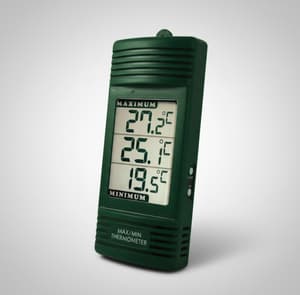
Greenhouse starter kit: house, autovent and thermometer
Matt's Tip: Learn five words before you buy
If you are shopping for a greenhouse, get to grips with eaves height, glazing type, base, autovent and staging before you order. Those five decide whether the house fits your garden, your budget and your back. Everything else you can pick up as you grow. I would rather a customer asks me what eaves height means than regrets a low house they cannot stand up in.
"From our work with Greenhouse Stores customers since 2012, the biggest barrier I see is not skill, it is jargon. People think gardening under glass is complicated because the words are. It is not. Once you know that damping down just means splashing the floor, and hardening off just means a slow introduction to the outdoors, the confidence follows. Plain words grow better gardeners."
- Matt W, Greenhouse Stores
Ready to kit out a new house? Browse our full range of greenhouse accessories for the staging, vents and propagators above.
Frequently asked questions
What is a greenhouse?
A greenhouse is a glazed structure that traps the sun's heat to grow plants. The glazing lets sunlight in but slows heat escaping, creating a warm, sheltered space for crops.
Why are greenhouses called greenhouses?
They are named for the green plants grown inside, not the colour. The glass house keeps plants green and growing when it is too cold outdoors.
What is the difference between a greenhouse and a polytunnel?
A greenhouse uses rigid glazing, a polytunnel uses polythene over hoops. Glass lasts longer and looks neater. Polytunnels are cheaper and cover more ground.
What does hardening off mean?
It means slowly acclimatising indoor seedlings to outdoor conditions. Move them out by day and in at night over 7 to 14 days before planting out.
What is damping down a greenhouse?
It means wetting the floor so evaporation cools the air. Done on hot mornings, it drops the temperature 4 to 6C and lifts humidity.
What is an autovent?
An autovent opens a roof vent automatically with no power. A wax cylinder inside expands as the greenhouse warms and pushes the vent open.