Hydroponics in a Greenhouse: A UK Beginner's Introduction
Greenhouse hydroponics means growing plants in nutrient-rich water instead of soil, inside the controlled climate of a glass or polycarbonate greenhouse. A greenhouse suits hydroponics because it adds light and shelter that a windowsill cannot. Beginners get fast, clean crops of lettuce, herbs and tomatoes. A starter NFT or Kratky system costs £150 to £400 and grows salad in four to five weeks.
Key Takeaways
- A greenhouse beats indoors for hydroponics: glass passes 80-90% of daylight, so you grow without paying for as much artificial light.
- Five systems suit beginners: Kratky and deep water culture are cheapest, NFT and ebb-and-flow scale up, drip handles tall crops.
- Best first crops: lettuce, basil, spinach and pak choi crop in 4-6 weeks; tomatoes and cucumbers follow once you have the basics.
- Two numbers run the system: keep nutrient strength at EC 1.2-2.4 and pH between 5.5 and 6.5 for almost every crop.
- Budget realistically: a first setup costs £150-£400; a planted soil border costs less but crops slower and dirtier.
- Climate still matters: hold the greenhouse between 18°C and 24°C and ventilate hard in summer or roots cook.
Expert Tip
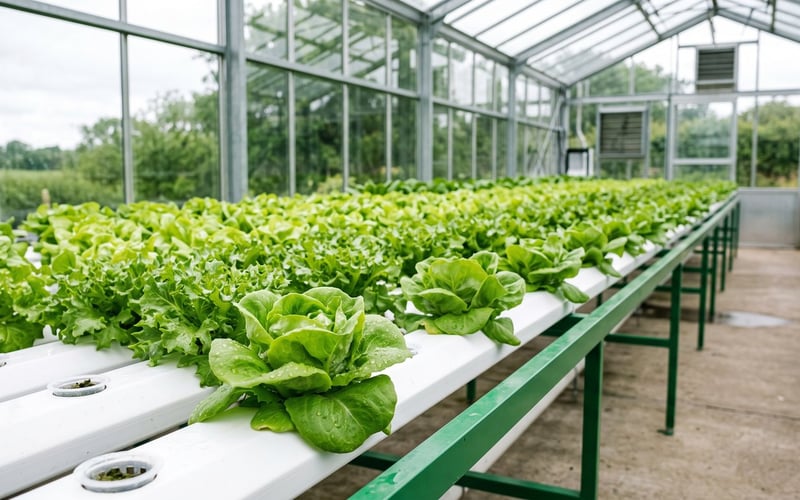
Over many years of fitting greenhouses, I have watched hydroponics go from a niche hobby to a regular question at handover. Last spring we set up a demo NFT bench in an 8x6 Vitavia Venus to show customers how it works. Four channels held 36 lettuce heads in a footprint of barely one square metre. The first cut came 33 days after we dropped the seedlings in. No digging, no slug damage, no watering can. The lesson I pass on is simple: start small, master the water, then scale up. People who buy a huge kit on day one usually give up. People who grow one tray of lettuce first rarely stop.
Why a greenhouse is the best place for hydroponics
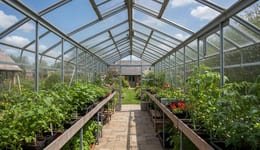
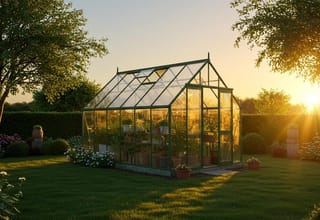
Hydroponics needs three things: light, a stable temperature and clean water. A greenhouse delivers the first two far better than a kitchen or a spare room. The glass or polycarbonate skin passes most of the daylight a plant needs, then traps warmth to extend the season at both ends.
Light is the deciding factor. Toughened horticultural glass lets through 80-90% of available daylight. Twin-wall polycarbonate passes a little less but spreads the light more evenly. Either way, a greenhouse gives leafy crops enough natural light from March to October that you can run a system with little or no electricity. Grow indoors and you pay for every photon.
The second win is climate. A greenhouse holds heat overnight and warms fast on sunny mornings. That steadier temperature keeps roots active and nutrient uptake high. The team at Greenhouse Stores has fitted thousands of growing houses across the UK, and the same models that suit soil growing suit hydroponics just as well.
There is a catch. The warmth that helps in April becomes a problem in July. Nutrient solution above 24°C holds less oxygen, and warm roots invite root rot. Good ventilation and light shading fix this, which is why climate control matters as much as the system you choose.
How does hydroponics actually work?
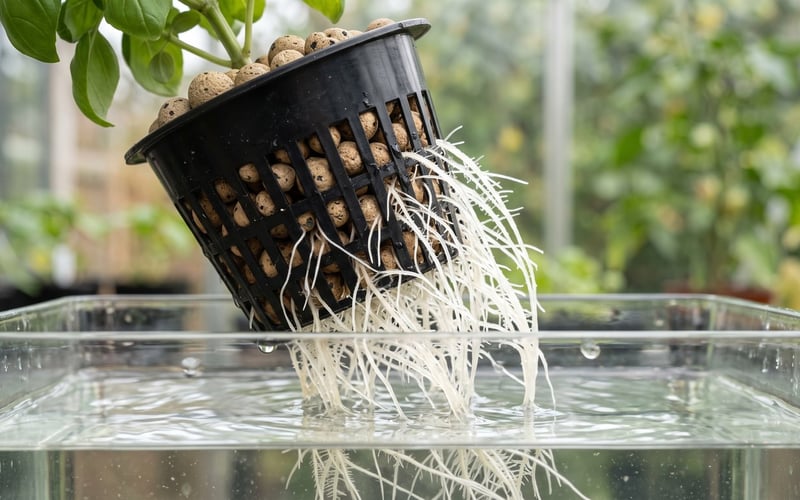
Hydroponics feeds plants a measured solution of water and dissolved minerals straight to the roots. There is no soil to hold nutrients, so you supply them yourself. The roots sit in an inert material such as clay pebbles, rockwool or coir, or hang bare in oxygenated water.
Browse the hydroponics and irrigation range →
Because you control the food, plants never hunt for nutrients. They put that saved energy into growth. A hydroponic lettuce reaches cutting size in 4-5 weeks, against 7-9 weeks in soil. Water use drops too. A recirculating system reuses its solution, so it sips a fraction of the water a soil border drinks.
Three things keep roots healthy: oxygen, the right nutrient strength and the right pH. Get those three correct and the plant does the rest. Get them wrong and growth stalls within days. We cover the numbers further down, but none of it is hard once you own a cheap meter.
Matt's Installation Tip
Set your system up dead level. I cannot stress this enough on NFT and ebb-and-flow benches. A channel that drops even 5mm across its length pools water at one end and starves the other. We always lay a spirit level across the staging before a single seedling goes in. Pack thin shims under the legs until the bubble sits central. A level bench is the difference between even rows and a tray of stragglers.
Five hydroponic systems for beginners
Five systems cover almost everything a UK grower needs. Each suits a different budget and crop. Start with the simplest, then move up as you learn.
Kratky method. The cheapest entry point. Plants sit in net pots over a sealed tub of nutrient solution. As they drink, the water level drops and exposes more root to air. No pump, no power, no moving parts. Perfect for a first tub of lettuce or herbs on the staging.
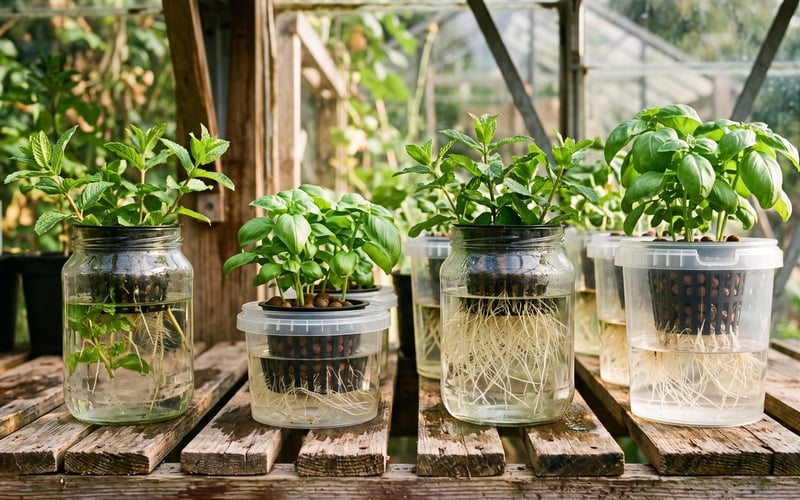
Deep water culture (DWC). Roots hang in a tank of solution kept oxygen-rich by an air pump and air stone. Cheap, forgiving and fast. Leafy crops love it. The only running cost is a small aquarium air pump.
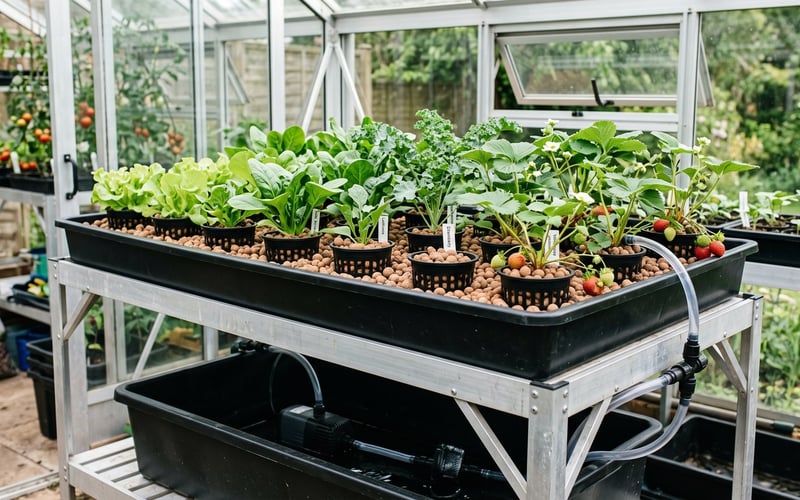
Nutrient film technique (NFT). A thin film of solution flows down sloped channels past the roots and recirculates. It uses little water and grows tidy rows of salad and herbs. This is the classic greenhouse salad system and the one we used in the Venus demo.
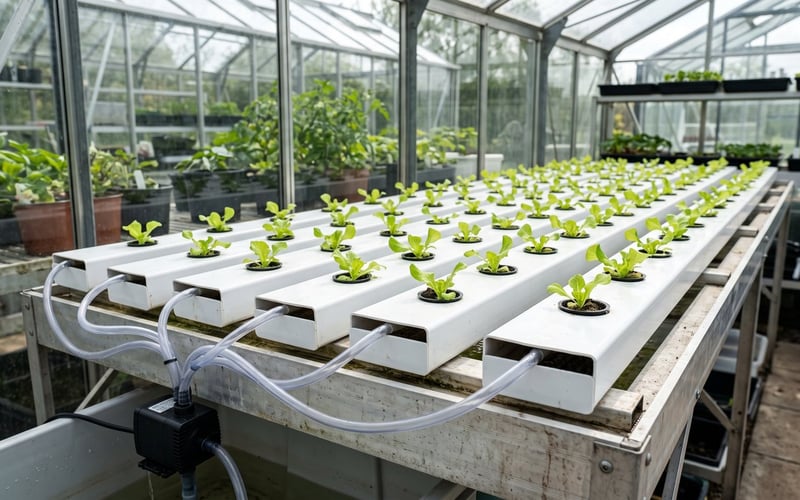
Ebb and flow (flood and drain). A tray of pots floods with solution on a timer, then drains back to a reservoir. The flood-and-drain cycle pulls fresh air to the roots each time it empties. It handles bigger plants in pots of clay pebbles and sits neatly on a sturdy bench.
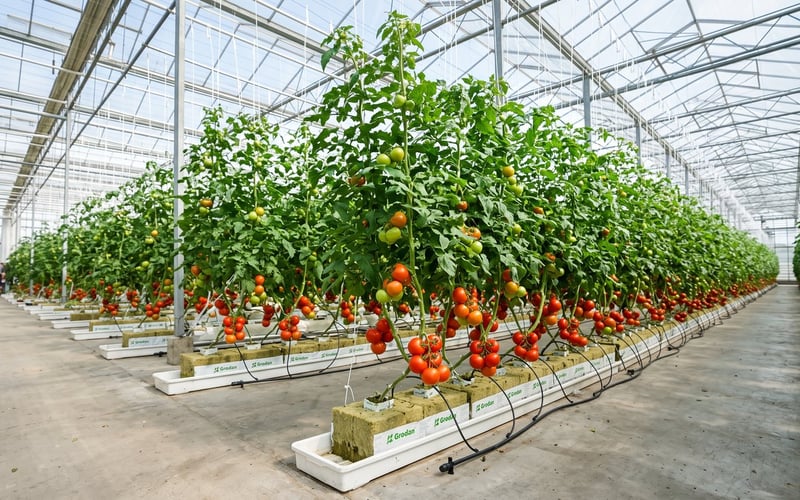
Drip system. Solution drips onto each plant from a feed line on a timer. Drip rigs suit tall, hungry crops like tomatoes, peppers and cucumbers grown in rockwool slabs or coir bags. This is how most commercial greenhouse tomatoes are grown.
|
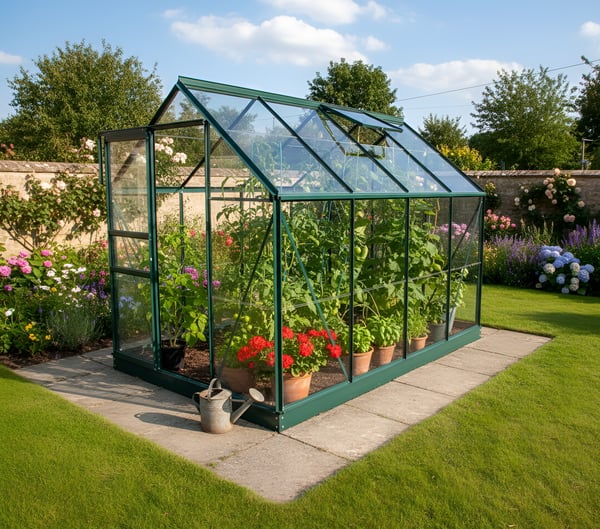
Matt's Pick for first-time greenhouse hydroponicsBest For: Beginners who want a bright, well-built greenhouse to house an NFT or ebb-and-flow system. Why I Recommend It: The 3mm toughened glass provides strong light, the 1930mm width takes a standard staging run, and the roof vent supports summer airflow. It is a practical first greenhouse for an NFT or ebb-and-flow setup. Price: £649 |
Which system should a beginner pick?
Start with Kratky or DWC if you only want salad and herbs. Both are cheap and hard to kill. Move to NFT once you want neat rows and higher numbers. Choose a drip system only when you are ready for tomatoes or cucumbers. The table below sets the five side by side.
| System | Starter Cost | Power Needed | Best Crops | Matt's Verdict |
|---|---|---|---|---|
| Kratky | £15-£40 | None | Lettuce, herbs | The easiest first try. One tub, no pump, no excuses |
| Deep water culture | £40-£90 | Air pump only | Leafy salads, basil | Fast and forgiving. My pick for quick wins |
| NFT | £150-£400 | Water pump | Salad rows, herbs | The greenhouse salad workhorse. Best all-rounder |
| Ebb and flow | £120-£300 | Pump and timer | Potted veg, strawberries | Great for bigger plants in clay pebbles |
| Drip | £100-£350 | Pump and timer | Tomatoes, cucumbers, peppers | The route to a serious tomato crop |
The best crops to grow hydroponically in the UK
Some crops thrive in water culture and some fight it. Beginners should chase the easy wins first. Leafy greens are the gateway crop because they grow fast, need little feeding and forgive small mistakes.
Lettuce and leafy salad. The number one beginner crop. Loose-leaf and butterhead types crop in 4-5 weeks at EC 1.2-1.8. Sow every fortnight for a steady supply.
Herbs. Basil, mint, coriander and parsley all suit DWC and NFT. Basil in particular loves the warmth of a greenhouse and crops for months from one planting.
Spinach, pak choi and chard. Quick, hardy and happy at lower temperatures. Good for early spring and autumn slots when the greenhouse is cooler.
Tomatoes. The classic step-up crop, grown on a drip system in rockwool or coir. They need stronger feed at EC 2.0-3.5 and firm support. Our guide to growing tomatoes in a greenhouse covers the climate and training that hydroponic plants still need.
Cucumbers. Vigorous, thirsty and ideal for drip culture once you have a season behind you. The same vertical training applies as in soil, so our greenhouse cucumber guide still applies to a hydroponic crop.
Matt's Tip: Match the crop to the season
Do not start with tomatoes in your first spring. I see it every year. New growers buy a drip kit, sow tomatoes in March, and lose the lot to cold roots before May. Grow lettuce and basil first while the weather is unreliable. Save the tomatoes for a settled spell from late May, once your greenhouse holds 18°C overnight. Learn the water on a forgiving crop, then push your luck.
Nutrients, EC and pH: the numbers that matter
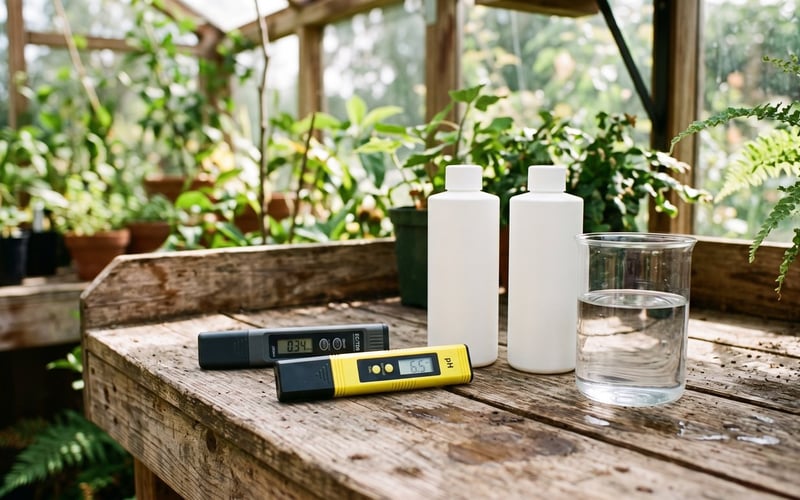
This is the part beginners fear, and it is the easiest to master. Two cheap meters and two numbers run the whole system. Buy an EC meter and a pH meter for around £25 the pair.
EC, or electrical conductivity, measures nutrient strength. Pure water reads near zero. As you add nutrients, the EC rises. Leafy crops want EC 1.2-1.8. Fruiting crops like tomatoes want EC 2.0-3.5. Too weak and growth slows. Too strong and you scorch the roots.
pH controls whether plants can absorb the food. Hydroponic crops want pH 5.5-6.5. Outside that band, nutrients lock out even when the solution is full of them. Tap water across much of the UK runs hard at pH 7.5-8.0, so you adjust it down with a few drops of pH Down.
Shop nutrients, meters and kit →
Use a two-part or three-part nutrient made for hydroponics, not a soil feed. Mix to the bottle's rate, check the EC, then check the pH and correct it. Top the reservoir up with plain water as the level drops, and change the whole solution every 10-14 days. That is the entire routine.
Water quality feeds into this. If you collect rainwater, it starts soft and clean, which makes pH easy to hold. Our greenhouse watering and irrigation guide covers rainwater capture and storage that pairs neatly with a hydroponic reservoir.
| Crop | Target EC | Target pH | Time to First Crop |
|---|---|---|---|
| Lettuce and leafy salad | 1.2-1.8 | 5.5-6.5 | 4-5 weeks |
| Basil and soft herbs | 1.0-1.6 | 5.5-6.5 | 3-4 weeks |
| Spinach and pak choi | 1.8-2.3 | 6.0-6.5 | 4-6 weeks |
| Tomatoes | 2.0-3.5 | 5.5-6.5 | 10-14 weeks |
| Cucumbers | 1.8-2.5 | 5.5-6.0 | 8-11 weeks |
What a hydroponic greenhouse costs to set up
A first hydroponic setup is cheaper than people expect. The greenhouse is the big spend, and most growers already own one. The system itself is modest.
A Kratky tub of lettuce costs under £30 all in: a tub, net pots, clay pebbles, nutrient and seeds. A small DWC kit runs £40-£90 with an air pump. A four-channel NFT bench, the kind we set up in the Venus, costs £150-£400 depending on size and pump. Add £25 for meters and £20-£40 for a bottle of two-part nutrient that lasts a season.
Running costs are low. An NFT water pump draws a few watts and a DWC air pump even less. The hidden cost most guides skip is solution changes: budget around £3-£5 of nutrient per reservoir change, every two weeks. Over a salad season that is still less than the price of the lettuce you would have bought.
Staging, lights and water: kitting out your greenhouse
Three pieces of kit turn a greenhouse into a working hydroponic space: staging to hold the system, light for the dark months, and a steady water supply.
Staging. Hydroponic systems are heavy when full. A four-channel NFT bench with running solution weighs more than it looks. Aluminium staging gives a level, rot-proof, watertight surface that shrugs off spills. The Vitavia 2 Tier Silver Staging at £99 holds a starter system and stores nutrient underneath. Our greenhouse staging and shelving guide walks through sizing and layout.
Grow lights. From November to February, UK daylight is too weak for fast growth even under glass. An LED grow light keeps salad moving through winter. You do not need a wall of them: one efficient LED bar over a salad bench is enough for leafy crops.
Browse grow lights and LED bars →
Water and climate. Keep a water butt or reservoir close to the bench so you are not carrying cans. Then watch the temperature. The single biggest beginner error is letting a sealed summer greenhouse cook the solution. Open vents, fit a louvre, and shade the glass on hot days. Avoiding that mistake sits near the top of our common greenhouse growing mistakes guide.
Shop the Vitavia 8x6 Venus 5000 →
"A basic hydroponic setup needs a reservoir, pump, channels and a reliable pH and EC meter. Keep the reservoir topped up, check both readings each week and maintain good airflow around the crop."
— Matt W, Greenhouse Stores
Frequently asked questions
Can you do hydroponics in a normal greenhouse?
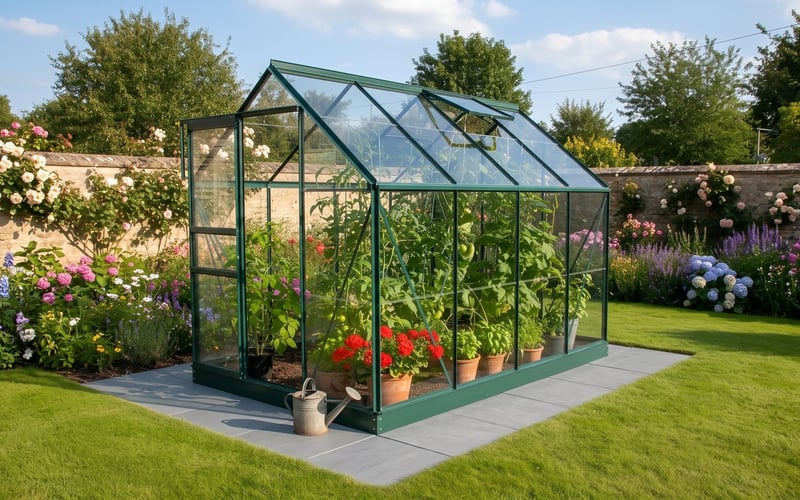
Yes, any standard greenhouse suits hydroponics with no modification. The glass or polycarbonate provides the light and shelter the system needs. You add staging to hold the kit, a reservoir for the solution, and ventilation to keep summer roots cool. An 8x6 aluminium greenhouse is plenty for a beginner salad bench.
Is hydroponics worth it for a beginner?
Yes, if you start small with salad or herbs. A Kratky tub or DWC kit costs under £90 and grows lettuce in 4-5 weeks with almost no effort. Hydroponics gives faster, cleaner crops than soil and uses less water. Beginners who scale up too fast are the ones who give up, so grow one tray first.
What is the easiest hydroponic system to start with?
The Kratky method is the easiest hydroponic system for beginners. Plants sit in net pots over a sealed tub of nutrient solution with no pump or power. You mix the solution once and harvest weeks later. It is ideal for a first crop of lettuce or herbs on greenhouse staging.
What can I grow hydroponically in a UK greenhouse?
Lettuce, herbs, spinach, pak choi, tomatoes and cucumbers all grow well. Leafy crops are the easiest and fastest, cropping in 4-6 weeks. Tomatoes and cucumbers are the step-up crops, grown on drip systems once you have mastered the basics. Match the crop to the season for the best results.
How much does a hydroponic greenhouse setup cost?
A starter system costs £150-£400, plus the greenhouse itself. A simple Kratky tub costs under £30, while a recirculating NFT bench runs £150-£400. Add around £25 for EC and pH meters and £20-£40 for a season of nutrient. Running costs are low because the pumps draw very little power.
What EC and pH should hydroponic plants be kept at?
Keep pH between 5.5 and 6.5 and EC between 1.2 and 3.5. Leafy salads want EC 1.2-1.8 and fruiting crops like tomatoes want EC 2.0-3.5. The pH band stays the same for almost every crop. Check both weekly with cheap meters and correct the pH down if your tap water is hard.