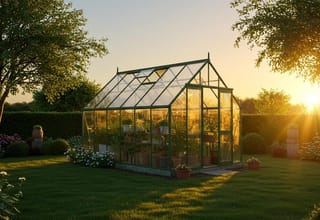
Year-Round Rose Growing in a Greenhouse UK
You cannot force roses to flower 365 days a year, even under glass, because they need a cold dormant rest of 200 to 800 chilling hours. What a greenhouse does give you is a longer, cleaner season: blooms 3 to 4 weeks earlier, perfect cut stems out of the rain, and far less blackspot. From our work with Greenhouse Stores customers since 2012, here is how to do it without feeding red spider mite.
Key Takeaways
- "Year-round" means season extension, not forcing. Roses need a winter dormancy of roughly 200 to 800 chilling hours below 7C.
- Glass brings blooms forward 3 to 4 weeks and pushes the last flowers later into autumn.
- Blackspot almost vanishes under cover because the leaves stay dry. Powdery mildew and red spider mite take its place.
- Red spider mite is the number-one pest under glass. It doubles every 3 to 5 days above 25C in dry air.
- Hold 50 to 70 percent humidity and keep vents working. That deters both mite and mildew at once.
- Best types under glass: Hybrid Teas for cut stems, David Austin English roses for scent, patio roses for small houses.
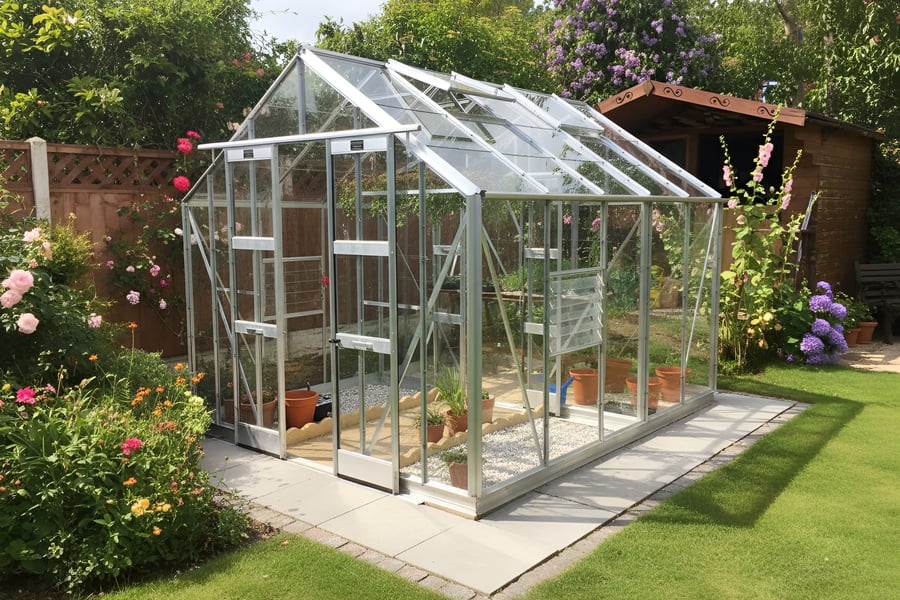
Browse all Elite greenhouses →
Expert Tip
I started growing roses under glass to win the village show, and the first year taught me the hard lesson. I kept the house warm and shut through winter to "protect" the plants, and by March they were leggy, pale and crawling with red spider mite. Roses are not tomatoes. They want a cold, airy rest, then a gentle wake-up. Now I let mine sit near freezing through December, prune in late January, and bring the heat up slowly. The blooms come three weeks before the garden roses and the stems are flawless.
Can you really grow roses in a greenhouse all year?
Not in the way some sites promise. Roses are hardy deciduous shrubs that need a cold rest to flower well. Most Hybrid Teas need at least 200 to 300 hours below about 7C each winter. Old garden roses can need 500 to 800. Keep them warm and growing through December and they exhaust themselves, bloom poorly and become a pest magnet.
So treat "year-round" as a longer season, not a year of non-stop flowers. A greenhouse lets you start roses into growth weeks before the open garden, protect the blooms from wind and rain, and stretch cutting into autumn. The plants still rest in winter. They just rest somewhere frost-free and dry, which suits tender and exhibition varieties that sulk outdoors. Our complete guide to roses covers the basics of pruning and feeding that apply under glass too.
Best roses to grow under glass
The roses that reward greenhouse growing are the ones that struggle outdoors: scented exhibition types, early cut flowers and tender varieties. Climbers earn their place by using the roof height. Here is how the main groups compare under cover.
| Rose type | Try these varieties | Habit under glass | Matt's verdict |
|---|---|---|---|
| Hybrid Tea | 'Fragrant Cloud', 'Peace' | Upright, long single stems | The best for cut flowers and the show bench. |
| David Austin English | 'Gertrude Jekyll', 'Olivia Rose Austin' | Repeat-flowering shrubs, heavy scent | My pick for fragrance and repeat bloom. |
| Climbing and rambling | 'New Dawn', 'Climbing Iceberg' | Train along the roof and back wall | Uses dead space, but watch airflow. |
| Patio and miniature | 'Sweet Dream', 'Top Marks' | Compact, happy in pots | Best for small houses and staging. |
| Floribunda | 'Iceberg', 'Mum in a Million' | Bushy, many blooms per stem | Reliable colour right through the season. |

|
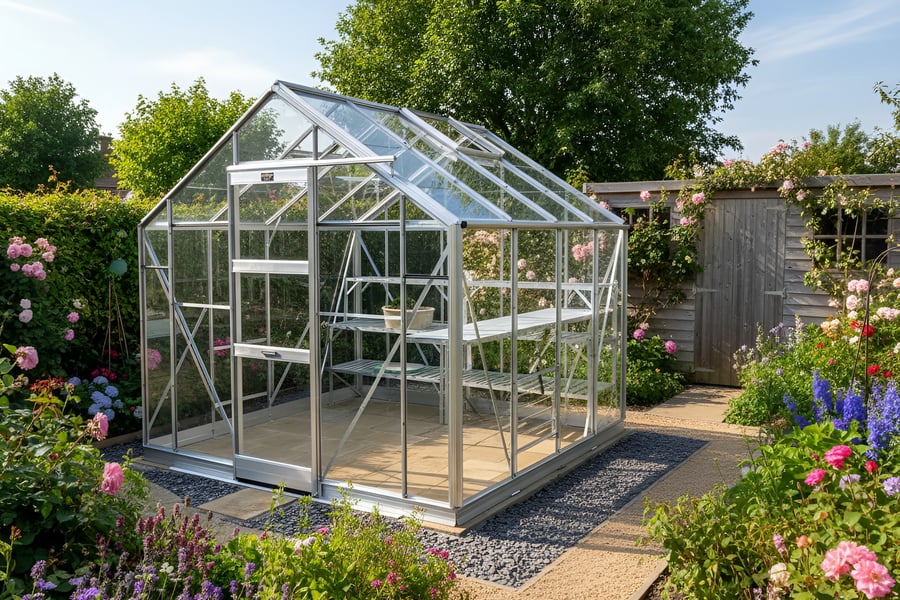
Matt's Pick for Growing RosesBest For: standards, climbers and a dedicated cut-flower bench Why I Recommend It: roses need headroom and air. The Belmont's high eaves let me train climbers under the roof and stand tall standards without crowding, while the large roof vents shift the humid air that mildew and spider mite love. The toughened glass takes a knock from a cane or a ladder without shattering. Price: £1,339 |
Heated vs unheated rose growing
You can grow roses under glass with no heat at all. An unheated greenhouse still brings blooms forward by two to three weeks and keeps the rain off, which is most of the benefit. The plants rest naturally through a cold winter and wake when the spring sun warms the house.
A little heat buys you more control. Holding the house frost-free, around 3 to 5C in the depths of winter, protects tender varieties and stops pots freezing solid. Lift it gently to 10C as the buds swell and you bring the first flowers earlier still. There is no need to chase tropical warmth. Roses flower fine at 15 to 20C, and pushing past that just invites soft growth and pests. Before you buy a heater, our guide to greenhouse heating running costs shows what frost protection actually costs to run.
The winter rest: chilling and dormancy
Dormancy is not a problem to solve, it is a stage to manage. From late autumn, let the house run cold. A spell near 0 to 3C through December gives the plants the chilling they need. Move potted roses to the coldest corner, ease off the watering and stop feeding. Leaves will drop. That is normal and welcome.
Prune in late January, cutting back to a healthy outward-facing bud above the graft union. Only then start to lift the temperature and watering. Bring it up slowly, a few degrees at a time, so the plant wakes in step with the lengthening days rather than racing ahead into weak, sappy growth. Rush the wake-up and you trade a few early flowers for a season of pests.
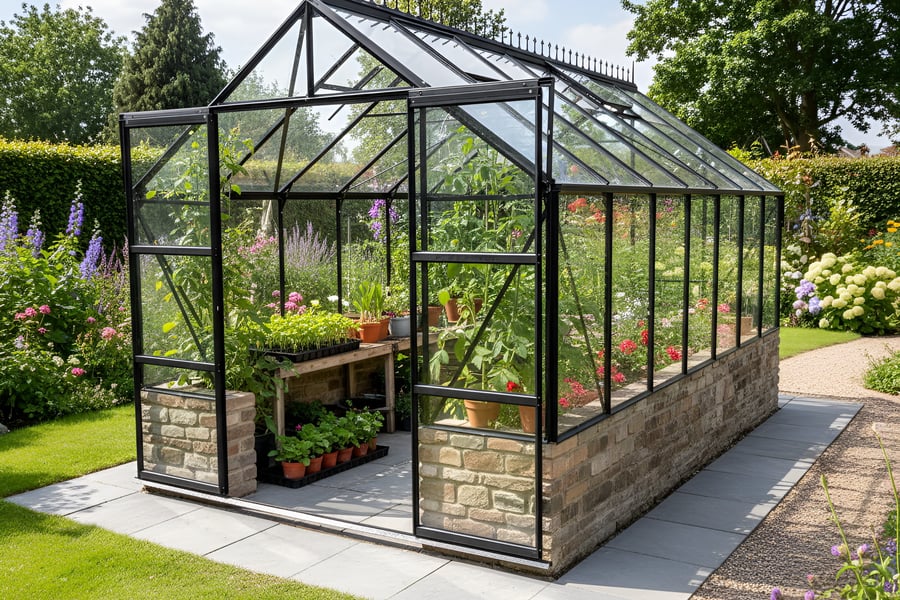
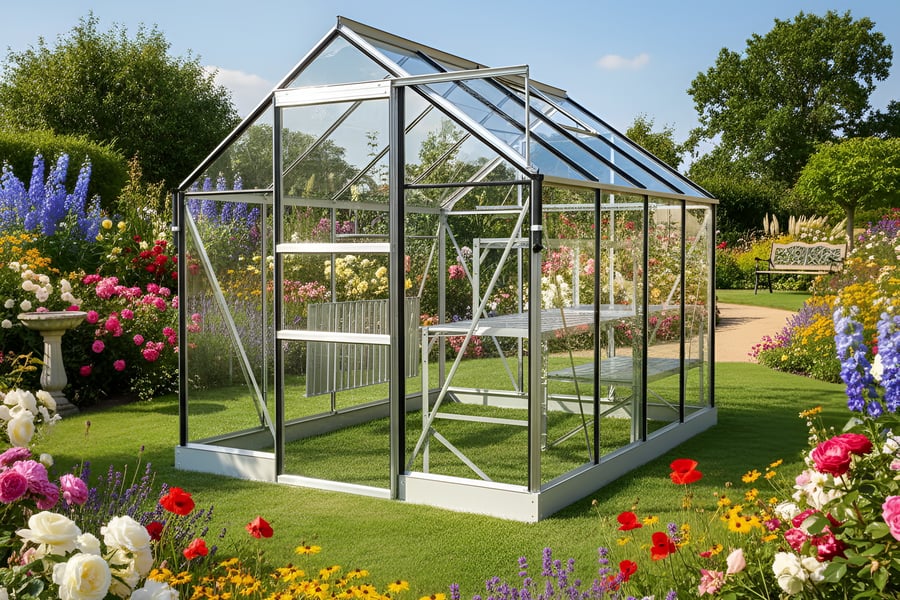
Browse all Vitavia greenhouses →
Matt's Installation Tip
Stand winter rose pots on feet or battens, never flat on a cold concrete floor. A pot sitting in a puddle freezes from the base and the roots die while the top looks fine. I raise mine 20mm on pot feet so meltwater drains away and air moves underneath. It is the cheapest bit of frost protection in the greenhouse and the one most people skip.
Watering, feeding and humidity under glass
Roses under glass dry out faster than you expect, especially in pots on an open bench. Water in the morning so the foliage dries by dusk, and aim at the compost, not the leaves. Wet leaves overnight are an open door to mildew. Through the growing season feed every two weeks with a high-potash rose or tomato feed to push flower over leaf.
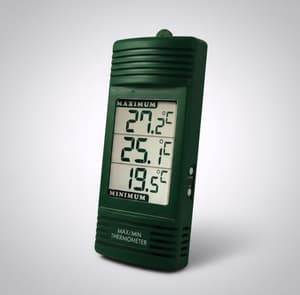
Humidity is the lever that keeps pests and disease in check. Aim for 50 to 70 percent. That band is too dry for powdery mildew to take hold yet not so dry that red spider mite races away. Damping down the floor on hot mornings lifts the humidity and cools the air at the same time. A consistent supply matters in a heatwave, so our greenhouse watering guide is worth a read if you are away in the week.
Pests and diseases under glass: red spider mite and powdery mildew
Cover changes the pest list. Blackspot, the curse of the outdoor rose, almost disappears because the leaves stay dry. In its place come two warm, dry-air problems: red spider mite and powdery mildew.
Red spider mite is the big one. The two-spotted mite (Tetranychus urticae) is barely visible, but its fine webbing and the pale stippling on the leaves give it away. It thrives in hot, dry air and the population doubles every 3 to 5 days above 25C. Keep the air moving and the humidity up, and at the first sign introduce the predatory mite Phytoseiulus persimilis, which clears an infestation for about £8 to £15 a go when caught early. Powdery mildew, a white dusty coating on young leaves and buds, follows stress and stagnant air. Better airflow and steady watering fix most of it. Our greenhouse cooling guide explains how shade and damping down hold the conditions that keep both at bay.

Matt's Tip: Catch spider mite with a white sheet
Tap a rose stem over a sheet of white paper on a warm afternoon. If you see tiny specks crawling, that is red spider mite and you have caught it early. I check weekly from May. Order predators the same day you spot them, because a week's delay above 25C can mean ten times the population by the time they arrive.
Cut-flower roses: timing your harvest
The reason to grow roses under glass is the cut flower: long, clean stems with no rain spots and a vase life the open garden cannot match. Cut in the cool of early morning when the bloom is at the just-opening stage, with one or two petals starting to unfurl. Use clean, sharp secateurs and cut to an outward-facing leaf so the next stem grows clear.
Plunge the stems straight into a bucket of cool water and leave them somewhere shaded for an hour before arranging. Cut too tight and the bud never opens. Cut too far open and the petals shatter in a day. With a frost-free house you can be cutting from late April, weeks ahead of the garden, right through to the first hard frosts of autumn.

Premium greenhouses for roses compared
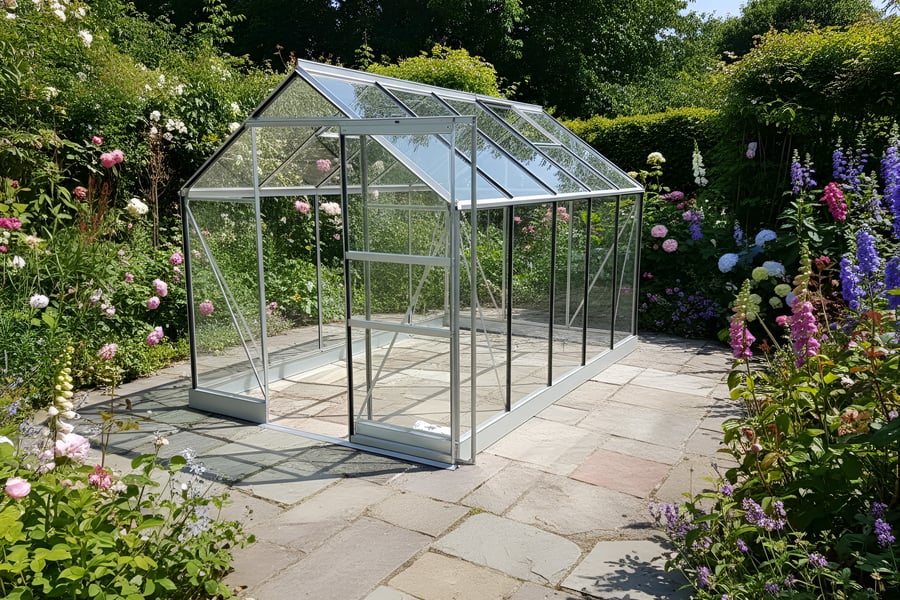
Roses want headroom, light and strong ventilation, which is where a premium frame earns its keep. Climbers in particular need the roof space to spread. Here is how our pick of houses compares for rose growing. All prices update live.
| Greenhouse | Key spec | Price | Matt's verdict |
|---|---|---|---|
| Elite Belmont 8x10 (Matt's Pick) | High eaves, wide span, toughened glass | £1,339 | Best for standards, climbers and a cutting bench. |
| Elite Belmont 8x8 | Premium frame, smaller plot | £1,189 | Premium quality where space is tighter. |
| Vitavia Apollo 8x6 5000 | High ridge, strong value | £754 | The best value route into rose growing. |
| Vitavia Apollo 6x10 6200 | Long run for a dedicated bed | £829 | Room for a full cut-flower row. |
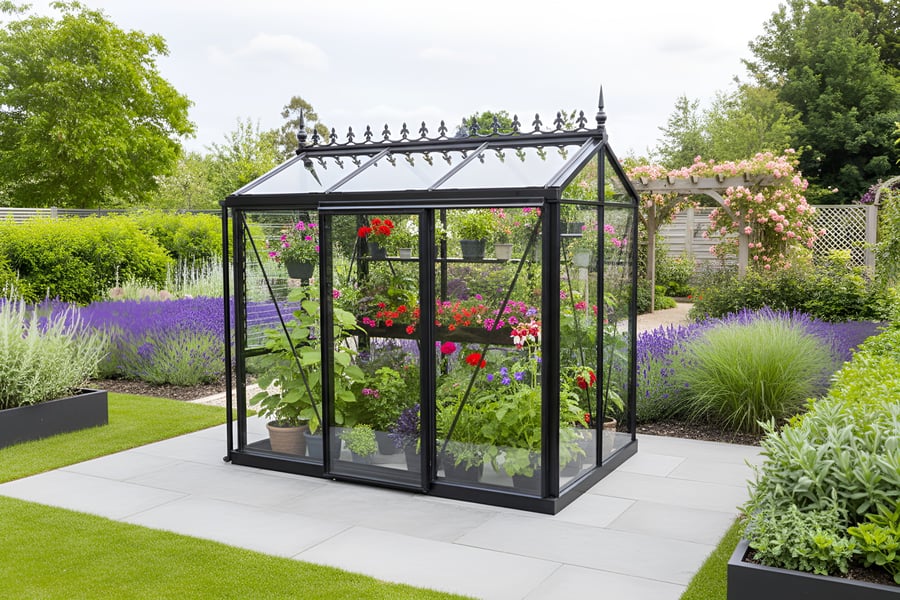
| Janssens Helios Urban 5x8 | Tall Belgian glasshouse, black frame | £2,680 | A showpiece house for the collector. |
"The growers who fail with roses under glass nearly always make the same mistake: they keep the house too warm and too shut. Roses are tough, hardy plants that want a cold rest and a stiff breeze, not a sauna. Give them a frost-free winter, big vents and morning water at the roots, and they reward you with the cleanest blooms you will ever cut. That is why I steer rose growers to a high-eaved, well-vented house every time."
- Matt W, Greenhouse Stores
Frequently asked questions
Can you grow roses in a greenhouse all year round?
Not non-stop, because roses need a cold winter rest. A greenhouse extends the season at both ends and protects the blooms, but the plants still go dormant for a few weeks each winter.
What roses grow best in a greenhouse?
Hybrid Teas for cutting and David Austin English roses for scent. Patio and miniature roses suit small houses, while climbers use the roof height if airflow is good.
Do roses in a greenhouse need a cold period?
Yes, most need 200 to 800 chilling hours below about 7C. Let the house run cold through December so the plants rest, then warm it gently in late January.
Why do my greenhouse roses get red spider mite?
Hot, dry, still air lets the mite breed fast. Keep humidity at 50 to 70 percent, ventilate well, and introduce predatory mites at the first sign of stippling.
How warm should a greenhouse be for roses?
Frost-free in winter, 15 to 20C in growth. Around 3 to 5C protects tender types in winter. There is no need for tropical heat, which only causes soft, pest-prone growth.
When can I cut roses from a heated greenhouse?
From late April, weeks ahead of the open garden. Cut in the cool of the morning at the just-opening stage for the longest vase life.