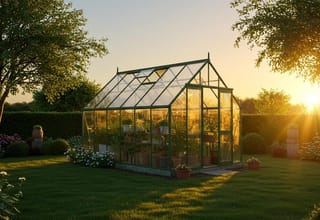
Container Gardening in a Greenhouse: A UK Grower's Guide
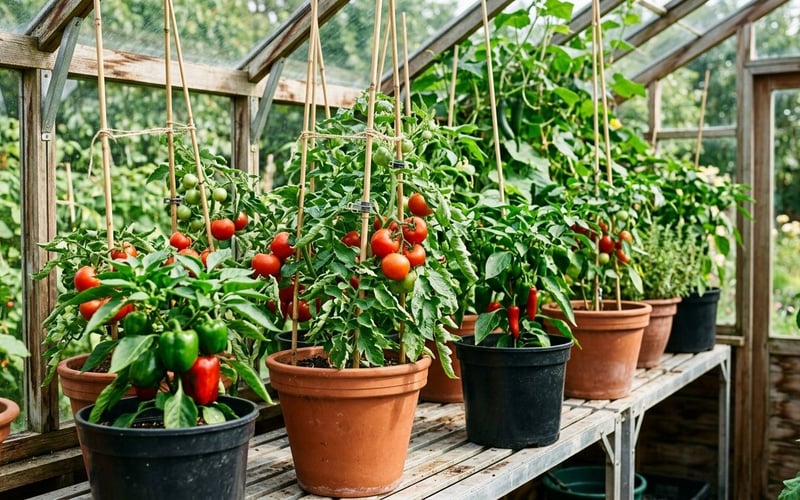
Container gardening in a greenhouse means growing in pots instead of border soil. Match the pot to the crop: tomatoes want 30 litres or more, courgettes 25 litres, peppers 15 litres. A big pot in a sealed greenhouse dries fast, so a busy 30-litre tomato pot can need 2.5 litres of water on a 30°C day. A gravity-fed self-watering system from £59 fixes that. Feed weekly with high-potash food once flowering starts.
Key Takeaways
- Size the pot to the crop: 30 litres plus for tomatoes, 25 for courgettes, 15 for peppers and aubergines.
- A large pot under glass can lose 2 to 3 litres of water a day in July, far more than the same pot outdoors.
- John Innes No 3 holds water and food better than peat-free multipurpose for long-season crops in big pots.
- A self-watering pot or gravity system turns twice-daily watering into a weekly top-up and stops blossom end rot.
- Pots need drainage holes and pot feet, not a layer of crocks. Never leave a pot standing in a saucer of water.
- A container-only greenhouse suits renters, paved bases and disease-prone ground. Everything sits on staging and moves with you.
Shop greenhouse watering systems →
Expert Tip
From our work with Greenhouse Stores customers since 2012, our fitters have handed over thousands of greenhouses across the UK. More and more customers now grow entirely in pots, not border beds. Renters want a setup they can take with them. Others have paved bases or soil that carries disease. The single problem they all hit is water. A pot under glass dries far faster than most people expect. Get the pot size and the watering right, and containers are the cleanest, most flexible way to crop under glass.
Why grow in containers inside a greenhouse?
Containers give you control that border soil cannot. You choose the compost, so a hungry tomato and a light-feeding herb each get the right mix. You move pots to chase warmth in spring and shade in high summer. At the end of the season you lift a spent pot straight out, with none of the digging that border beds need every year.
Border soil in a greenhouse also builds up disease. Grow tomatoes in the same bed for three seasons and problems like foot rot and root nematodes creep in. Fresh compost in a pot sidesteps that. For a small greenhouse, containers are often the only sensible route, and our guide to small greenhouse ideas shows how to fit the most into a compact frame.
The one trade-off is water. A pot holds a fixed pocket of compost, and inside a sealed greenhouse that pocket heats up and dries out quickly. The rest of this guide is really about staying ahead of that.
What size pot for each crop?
Pot size is the decision that makes or breaks container growing. Too small and the plant runs short of water and food, sulks in a heatwave and crops poorly. The rule is simple: match the litres to the crop, and always round up rather than down.
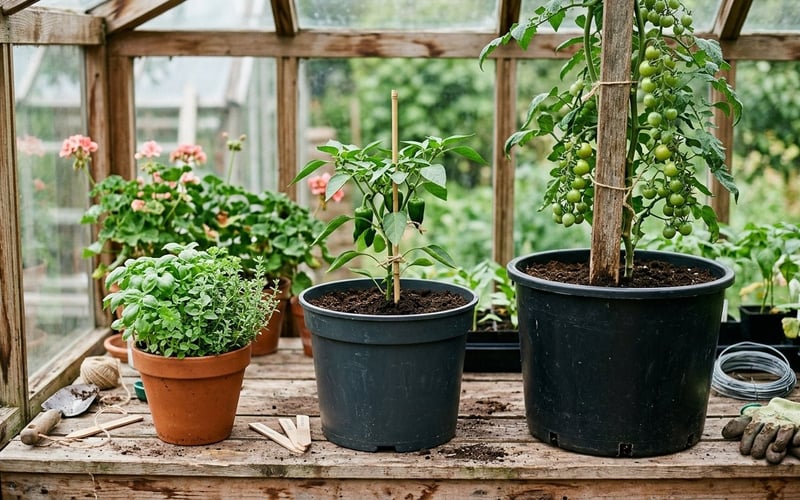
A litre figure matters more than the pot width printed on the label. As a rough guide, a 30-litre pot is around 40cm across the top. Tomatoes, cucumbers and courgettes are greedy and need the big pots. Peppers, chillies and aubergines cope in less. Herbs and salad leaves are happy in small pots and troughs.
Browse planters and raised beds →
| Crop | Minimum pot size | Pot width (approx) | Plants per pot | Peak summer watering |
|---|---|---|---|---|
| Tomatoes | 30 litres | 40cm | 1 | 2 to 3 litres a day |
| Cucumbers | 25 litres | 35cm | 1 | 2 to 3 litres a day |
| Courgettes | 25 litres | 35cm | 1 | 2 litres a day |
| Aubergines | 15 litres | 30cm | 1 | 1 to 2 litres a day |
| Peppers and chillies | 15 litres | 30cm | 1 | 1 litre a day |
| Dwarf French beans | 20 litres | 32cm | 3 to 4 | 1 to 2 litres a day |
| Salad leaves | 10 litre trough | trough | sow thinly | 0.5 litre a day |
| Herbs (basil, coriander) | 3 to 5 litres | 18cm | 1 to 2 | 0.3 litre a day |
| Strawberries | 3 litres each | 15cm | 1 | 0.3 litre a day |
Peppers reward a slightly snug pot with earlier fruit, so 15 litres is genuinely enough. Our guide to growing peppers in a greenhouse goes into variety choice and feeding. Tomatoes are the opposite: give them the biggest pot you can lift. For the full season under glass, see growing tomatoes in a greenhouse.
Which compost: John Innes No 3 or peat-free multipurpose?
For long-season crops in big pots, John Innes No 3 wins. It is a loam-based compost, so it carries real soil in the mix. That loam holds water and nutrients far longer than a light peat-free multipurpose, and it gives a tall tomato plant the weight to stay stable in a large pot.
Peat-free multipurpose compost still has a place. It is lighter to carry, cheaper by the bag, and fine for fast crops like salad, herbs and dwarf beans that finish before they exhaust it. The drawback is that it dries out faster and runs short of food within about six weeks, so feeding starts sooner.
Our fitters mix the two for the best of both. Around 70 percent John Innes No 3 to 30 percent peat-free multipurpose gives a big pot that holds water like loam but is not back-breaking to move. For a 30-litre tomato pot that mix keeps the plant fed for weeks before liquid feeding needs to take over.
Matt's Installation Tip
Skip the old advice about a layer of crocks or gravel in the pot base. Trials by the RHS show it does not improve drainage. It actually raises the waterlogged zone up into the roots. Fill the whole pot with compost, make sure the drainage holes are clear, and stand the pot on feet so water escapes freely.
How often do greenhouse containers need watering?
More often than you think. A pot inside a greenhouse sits in still, warm air with no rain and no cool ground to draw from. On a bright July day the air under glass can pass 35°C. A 30-litre tomato pot in full leaf can lose 2 to 3 litres in a single day, and a small herb pot can dry out by lunchtime.
The test is your finger, not the clock. Push a finger 3 to 4cm into the compost. If it is dry at the tip, water until it runs from the base. Water in the morning so the plant is charged for the heat of the day, and again in the evening during a heatwave. Erratic watering is the main cause of blossom end rot in tomatoes and split fruit in peppers, because the plant cannot move calcium when it dries and floods in turns.

|
Matt's Pick for Automatic Container WateringBest For: Potted plants grouped on a flat-bottomed tray. Why I Recommend It: The power-free AQUAvalve5 feeds the tray from a reservoir as plants use the water. It suits busy weeks and holidays without needing mains water or electricity. Price: £35 |
Self-watering pots and systems for containers
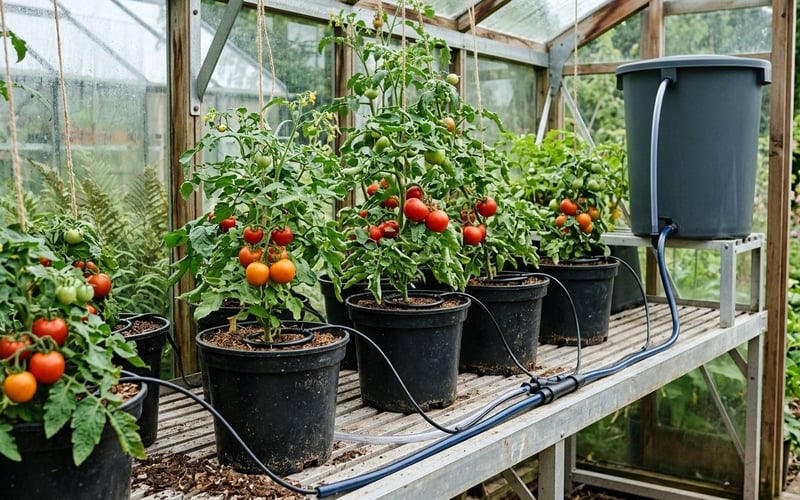
Self-watering is the biggest single upgrade for greenhouse container growing. Instead of a saucer, a self-watering pot holds a water reservoir in its base. The compost draws water up by capillary action as the plant needs it, so the roots stay evenly moist between top-ups.
Gravity systems take this further across several pots at once. A raised reservoir feeds a valve in each pot, floods it, then waits for the plant to use that water before refilling. There is no pump and no power, which suits an unheated greenhouse with no socket. For a current power-free setup, the AutoPot easy2GO Kit feeds potted plants grouped on a flat-bottomed tray. Browse the full range on our greenhouse irrigation page.
Shop self-watering greenhouse systems →
Matt's Tip: Lift Pots Off The Floor
Stand pots on staging, not on the greenhouse floor. A cold concrete or paved base chills the compost in spring and slows early growth. Staging lifts the roots into warmer air, makes watering and picking easier on your back, and keeps slugs from climbing straight in. Our greenhouse staging guide covers how to set it up.
How to feed container crops
Fresh compost feeds a plant for about six weeks. After that the pot runs short, and container crops depend on you for food. Start a liquid feed once fruiting crops set their first flowers, then keep it going through the season.
Use a high-potash feed for anything that fruits: tomatoes, peppers, cucumbers, aubergines and courgettes. Potash drives flower and fruit rather than leaf. Feed weekly at first, then twice weekly at the height of summer when the plants are drinking hard. Leafy crops and herbs want the opposite, a balanced or higher-nitrogen feed for soft growth, and far less of it. Always feed a moist pot, never a bone-dry one, or you risk scorching the roots.
Setting up a container-only greenhouse
A container-only greenhouse has no border beds at all. Every plant grows in a pot, and the whole floor can be paved, slabbed or gravelled. This is the setup we fit most often now for renters and for anyone whose ground is poor or contaminated. Nothing is planted into the earth, so the entire growing system moves house with you.
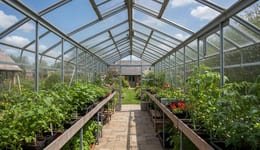
Plan it around staging down both sides at bench height, with the biggest pots on the floor beneath for tomatoes and cucumbers. A paved base stays clean, drains well and gives self-watering reservoirs a level footing. Even the smallest frame works this way, and a mini greenhouse or lean-to can crop heavily with nothing but pots. To grow more in the same footprint, our vertical greenhouse gardening guide shows how to use the height.
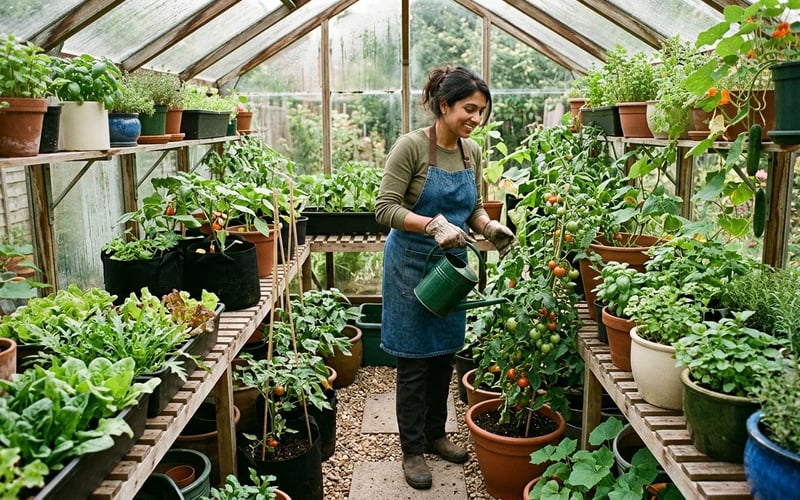
Shop mini and lean-to greenhouses →
Herbs and salad slot neatly into a container-only setup because they crop fast in small pots and troughs. A small planter at £75 holds a mix of basil, coriander and parsley within reach of the door. Our guide to growing herbs in a greenhouse sets out a year-round plan. Grow bags are a close cousin of container growing, and our grow bag guide compares the two.
Whichever route you take, containers make a greenhouse productive from the first season, with no soil to prepare and no digging at the end. Every good setup starts with the right frame, and the team at Greenhouse Stores can help you match a greenhouse to a container growing plan.
"Container growing lives or dies on water. Since Greenhouse Stores began in 2012, we have seen more container crops lost to erratic watering than to any pest or disease. The fix is not effort, it is a gravity self-watering system and a pot big enough to hold a buffer. Get those two right and a beginner can crop tomatoes as well as an allotment veteran."
— Matt W, Greenhouse Stores
Frequently asked questions
What size pot do I need for greenhouse tomatoes?
Use a pot of at least 30 litres for one tomato plant. That is about 40cm across the top. A bigger pot holds more water and food, so the plant copes far better through a July heatwave and crops for longer.
How often should I water containers in a greenhouse?
Check daily in summer and water when the compost is dry 3cm down. A 30-litre tomato pot can need 2 to 3 litres a day in hot weather, sometimes morning and evening. A self-watering system reduces this to a weekly top-up.
Is John Innes or peat-free compost better for pots?
John Innes No 3 is better for long-season crops in big pots. The loam holds water and food longer. Peat-free multipurpose suits fast crops like salad and herbs. Mixing 70 percent John Innes with 30 percent peat-free gives a good all-rounder.
Do greenhouse pots need drainage holes and crocks?
Pots need clear drainage holes but not crocks. RHS trials show a layer of crocks does not aid drainage and can raise the wet zone into the roots. Fill with compost throughout and stand the pot on feet.
Can I run a greenhouse with only containers and no beds?
Yes, a container-only greenhouse works well and suits renters. Every plant grows in a pot on staging or a paved floor. Nothing is planted into the ground, so the whole setup moves with you and avoids soil-borne disease.
What is the best low-effort way to water many pots?
A gravity-fed self-watering system is the lowest-effort option. It feeds several pots from one raised reservoir with no pump or power. It floods each pot, lets it drain, then refills only when the roots have drunk it.