Growing Sweet Potatoes UK: Slips to Harvest
Growing sweet potatoes in the UK works best under glass at 21–26°C. Start slips warm in April and plant one rooted slip per 30cm container from late May. Allow four to five months. Keep compost evenly moist, feed containers every 14 days, and lift before frost. Our February 2026 test reached 31°C inside an unheated 8x6 greenhouse while the garden measured 9°C.
Sweet potatoes are not ordinary potatoes with a sunnier name. They are tropical vines from the morning glory family.
That difference changes the whole job. You plant rooted shoots, called slips, rather than seed tubers. Warmth matters more than earthing up.
A UK greenhouse provides the missing weeks at both ends of summer. It also makes daily watering and vine training easier.
Key takeaways
- Aim for 21–26°C. Sweet potatoes slow sharply when nights and compost remain cold.
- Plant slips, not supermarket tubers. Bought slips reduce the risk of disease and poor varieties.
- Allow four to five months. Late May planting usually means a September or October harvest.
- Give each plant 30cm. One plant per deep pot or grow bag avoids cramped, misshapen roots.
- Feed every 14 days. Choose a high-potassium feed and avoid nitrogen-heavy growth.
- Lift before frost. Cold soil damages flavour, skin quality and storage life.
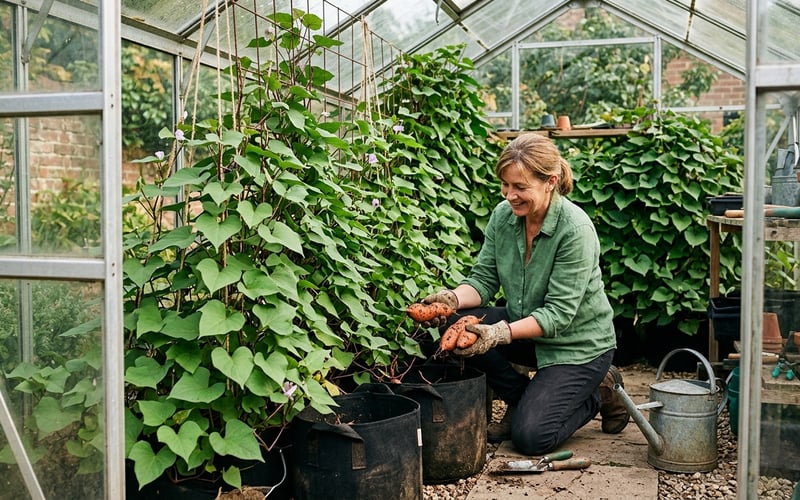
View the Vitavia 8x6 Green Venus 5000 at £540
Expert Tip
I do not count a warm afternoon as a growing season. In February 2026, our closed 8x6 display house reached 31°C with 9°C outside. Overnight lows are the harder test. The same unheated house has held 4.9°C above the outside minimum in our logs. For sweet potatoes, I wait for warm compost and a strong rootball. Early planting into cold compost loses more time than it saves.
Can you grow sweet potatoes in a UK greenhouse?
Sweet potatoes crop reliably under glass when they receive steady warmth, sun and moisture. An unheated greenhouse suits most UK areas.
The ideal growing range is 21–26°C. Growth checks below about 12°C, while frost kills the foliage. A greenhouse stretches the useful season beyond an exposed bed.
Choose the brightest position you can spare. Mature stems easily reach 1.5m, so plan their support before planting. Vertical strings keep paths usable and stop foliage smothering neighbouring crops.
Under glass, one plant fits a 30cm-wide pot or one standard grow bag. Prepared greenhouse soil also works. Loose, moisture-retentive soil produces straighter roots than dense clay.
This crop belongs beside aubergines, chillies and melons. Our guide to unusual crops that value greenhouse warmth shows how protected growing changes UK harvests.
What are sweet potato slips?
Slips are leafy shoots taken from a sweet potato and rooted before planting. They replace the seed tubers used for ordinary potatoes.
Order slips or plug plants for delivery from late April. Pot them immediately into peat-free multipurpose compost. Keep them warm, bright and evenly moist.
Unrooted slips can stand in clean water until white roots appear. Change the water regularly. Pot each rooted shoot before its roots tangle.
You can produce your own slips from a sound stored tuber. Set it in moist sand during spring. Cut off shoots at 5–7.5cm, then root them in small pots.
A propagator helps hold humidity around new cuttings. Our greenhouse propagation guide explains moisture, ventilation and potting without stressing fresh roots.
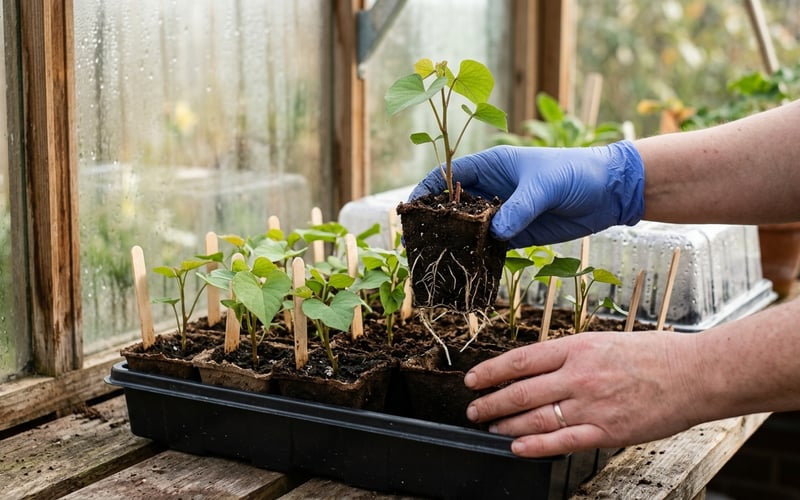
Check compost warmth with the Vitavia Soil Thermometer at £34
Which sweet potato varieties grow best in the UK?
UK growers need short-season varieties that bulk before autumn temperatures fall. Beauregard remains the safest first choice.
| Variety | Approximate time | Flesh | Best use under glass |
|---|---|---|---|
| Beauregard | About 105 days | Deep orange | Best dependable first crop |
| Bonita | About 100 days | Orange | Shorter UK greenhouse season |
| Evangeline | Long season | Sweet orange | Warm greenhouse with extra space |
| Tahiti | Four to five months | White | Different colour and edible foliage |
Beauregard combines useful disease resistance with a 105-day season. Bonita can finish near 100 days. Both suit a late-May planting.
Evangeline needs a longer, hotter summer. Try it only where the house stays warm into September. Tahiti offers purple skin and white flesh.
Buy named slips from a UK nursery. A supermarket root may sprout, but its cropping time and health remain unknown.

|
Matt's Pick for Automatic Container WateringBest For: Potted plants grouped on a flat-bottomed tray. Why I Recommend It: The power-free AQUAvalve5 feeds the tray from a reservoir as plants use the water. It suits busy weeks and holidays without needing mains water or electricity. Price: £35 |
When should you start slips and harvest?
Start or receive slips during April, plant from late May, then harvest before the first autumn frost. Warmth decides each step.
| Month | Plant stage | Temperature check | Job |
|---|---|---|---|
| March | Stored tuber | Warm indoor position | Start home-grown slips in moist sand |
| April | 5–7.5cm shoots | Warm, bright propagator | Cut, root and pot slips |
| Late May | Strong rooted plant | Compost near 18°C | Plant into final container |
| June | Establishing vine | Avoid nights below 12°C | Water regularly and attach strings |
| July | Fast vine growth | Aim for 21–26°C | Train stems and feed every 14 days |
| August | Roots bulking | Vent above 30°C | Maintain steady moisture |
| September | 100-day varieties ready | Watch night forecasts | Test one plant or lift early varieties |
| October | Leaves yellowing | Never wait for frost | Lift, dry and cure undamaged roots |
A late slip cannot recover lost weeks. Pot it on warmly, but do not expect a full crop from July planting.
Use the calendar as a guide rather than a command. Northern gardens may plant later. Sheltered southern greenhouses can start slightly earlier.
Matt's Installation Tip
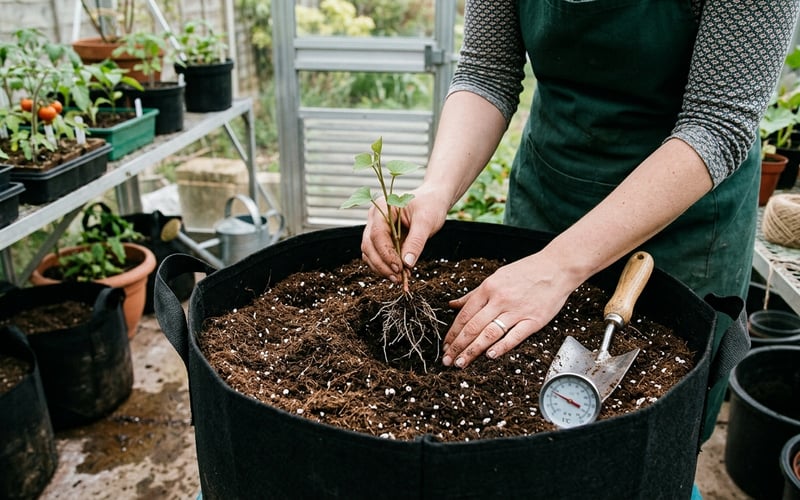
Measure compost at 100mm depth during the morning. Sunny glass can warm the air while a floor-level grow bag stays cold. I plant only when that root zone approaches 18°C and the forecast remains settled.
How do you plant sweet potato slips in a greenhouse?
Plant one rooted slip at its previous depth in loose, warm compost. Space plants at least 30cm apart.
- Choose a deep 30cm pot, grow bag or prepared border.
- Fill containers with peat-free multipurpose compost.
- Add coarse material only when the compost holds excess water.
- Make a hole wider than the young root system.
- Set the slip at its old compost level.
- Firm gently and water with tepid water.
- Insert a cane or hanging string immediately.
Do not bury the leafy stem deeply. Fresh slips need oxygen around their new roots. Waterlogging at this stage causes the quickest failures.
Prepared ground needs two bucketfuls of mature garden compost per square metre. Avoid fresh manure and nitrogen-heavy fertiliser. Both favour leaves over storage roots.
Our guide to setting up grow bags under glass covers bag support, drainage and automatic watering in more detail.
Are grow bags, pots or greenhouse borders best?
A deep container gives beginners the easiest harvest, while greenhouse soil offers the largest moisture reserve. Standard grow bags need closer watering.
| Growing method | Root room | Water demand | Harvest | Matt's verdict |
|---|---|---|---|---|
| Deep 30–45cm pot | Good for one plant | Medium | Tip out carefully | Best first attempt |
| Standard grow bag | Good for one plant | High | Cut bag open | Best where floor space is fixed |
| Greenhouse border | Largest root run | Lower | Lift with a fork | Best yield potential |
| Raised bed | Good depth and warmth | Medium | Easy side access | Best for loose custom soil |
Do not crowd three plants into one tomato grow bag. Tomatoes fruit above ground. Sweet potatoes need space inside the compost.
A 45cm pot gives roots more depth than the minimum 30cm container. It also buffers moisture during hot afternoons.
Heavy greenhouse soil needs opening before planting. Mix mature compost through the top 250mm. Never create a loose pocket above an impermeable clay pan.
What temperature and light do sweet potatoes need?
Sweet potatoes perform best at 21–26°C with full sun and warm nights. Cold checks reduce their limited UK bulking time.
Place bags on the greenhouse floor, not high staging. The floor gives heavy roots stable support and loses heat more slowly overnight.
Open roof vents when temperatures pass 30°C. The crop enjoys heat, but stale extreme conditions encourage red spider mite.
Do not shade sweet potatoes unless leaves scorch during an exceptional spell. Their long season needs every useful hour of sunlight.
Train vines towards the brightest roof area without blocking vents. Keep tomato and cucumber foliage on separate strings. Mixed tangles make pest inspection difficult.
If summer heat becomes excessive, follow our greenhouse cooling method for UK heatwaves. Ventilation should reduce peaks without chilling the root zone.
How often should you water and feed them?
Keep compost evenly moist from planting through root bulking. Containers may need daily water during hot weather.
Check the upper 20mm each morning. Water when it begins drying, then soak the full root zone. Small surface splashes create shallow roots.
New slips need close attention for two weeks. Their leaves lose water before the small roots can replace it. Reduce watering only after strong growth starts.
Feed container plants every 14 days with a high-potassium liquid feed. Prepared ground usually needs no summer feed.
Stop heavy watering three weeks before expected harvest. Drier late compost reduces splitting and makes lifting cleaner. Never allow established vines to wilt repeatedly.
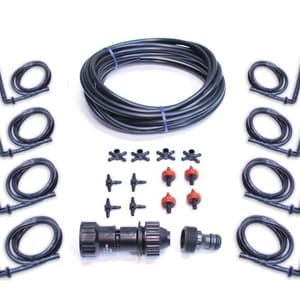
Our greenhouse watering guide compares hand watering, drippers and reservoir-fed systems for thirsty summer crops.
Useful kit for sweet potatoes under glass
How should you train sweet potato vines?
Train sweet potato stems upwards on 1.8m canes or roof strings. Vertical growth keeps paths clear and exposes leaves to light.
Tie the first stems loosely with soft twine. After that, wind new growth around the support every seven days.
The plant needs no routine pruning. Trim stems only when they cover vents, shade other crops or block the door.
Young shoot tips and leaves are edible after cooking. Take small amounts. Heavy cutting removes the leaf area feeding the roots.
Do not let trailing stems root into neighbouring bags. Those extra roots divide the plant's energy and make harvest confusing.
Keep a 150mm air gap between dense foliage and greenhouse glass. Leaves touching wet panes stay damp and may develop mildew.
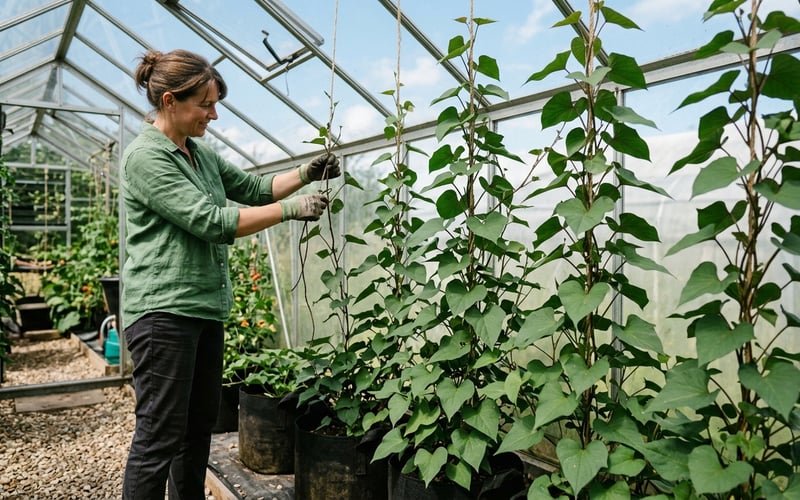
Support greenhouse strings with Elite Tying Eyes at £28
Matt's Tip: Give the vines their own string
I keep each plant on one labelled string. Weekly winding takes two minutes. Untangling a mixed canopy in September takes far longer and snaps healthy stems.
What problems affect sweet potatoes under glass?
Red spider mite and whitefly cause most greenhouse trouble. Cold compost, excess nitrogen and uneven watering cause more disappointing harvests than pests.
- Fine leaf speckling: Check undersides for red spider mite webbing.
- Sticky leaves: Look for whitefly adults and pale scales.
- Huge vines, few roots: Stop nitrogen-rich feeding.
- Long thin roots: Improve warmth and reduce crowding.
- Split roots: Avoid heavy watering after a dry spell.
- Blackened foliage: Lift immediately after cold damage.
Inspect leaves weekly, especially during hot August weather. Red spider mite develops fastest in warm, dry conditions.
Remove badly affected leaves and improve airflow. Wash reusable supports after harvest. Rotate border-grown sweet potatoes away from the same ground.
Wireworm can mark roots in open soil. Containers filled with clean compost reduce that risk, though they demand steadier watering.
When are UK sweet potatoes ready to harvest?
Harvest after four to five months, once foliage yellows or cold weather approaches. Always lift before frost.
A Bonita planted in late May may finish during early September. Beauregard often reaches size later that month. Cooler regions may need October.
Cut away the vines first. Tip containers onto a clean sheet, or insert a fork 300mm from the plant crown.
Fresh skins mark with a fingernail. Lift each root with both hands and place it down gently. Do not throw roots into a bucket.
Separate cut, bruised or split roots. Cook those first. Only unmarked roots should enter a longer curing period.
Do not wash the harvest. Brush away loose compost after the surface dries. Water makes damaged skin more vulnerable during curing.
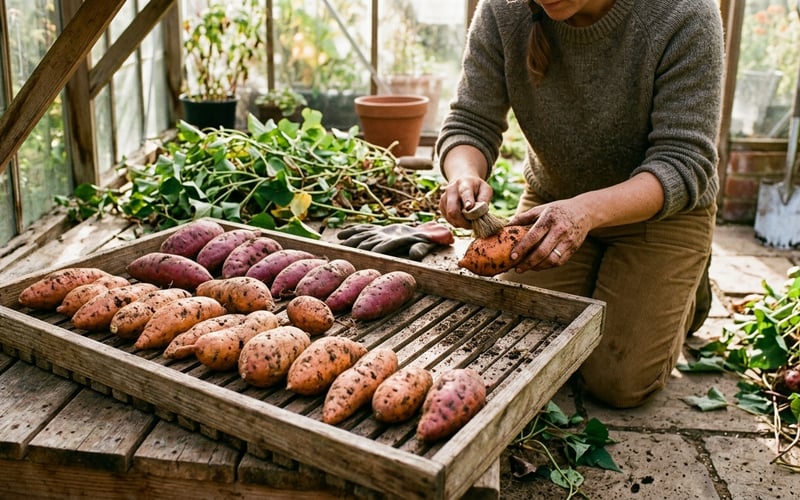
Use ventilated bench space with Vitavia 2 Tier Green Staging at £109
How do you cure and store sweet potatoes?
Curing heals small skin wounds and develops sweetness. Hold undamaged roots warm, humid and ventilated for several days.
Commercial guidance uses 27–29°C and 85–95% humidity for four to seven days. A UK home setup may not hold those conditions exactly.
Use the warmest safe room, an airing cupboard shelf or a controlled propagator. Keep roots in one layer with gentle airflow.
After curing, store them dark at 13–16°C. A refrigerator is too cold and causes hard centres and poor flavour.
Check the crop weekly. Remove any soft, mouldy or leaking root immediately. Do not seal roots inside an airtight plastic box.
A dry greenhouse usually becomes too cold after October. Cure there only while measured conditions remain warm enough.
"For this crop, I choose equipment that measures or steadies the root zone. A soil thermometer and slow watering solve more problems than extra fertiliser."
- Matt W, Greenhouse Stores
What should you do this week?
Your next job depends on the month and the plant's root strength. Do not rush a weak slip into its final bag.
During April, pot slips and keep them humid. During May, measure compost each morning and prepare one deep container per plant.
From June through August, check water daily and wind vines weekly. Feed container plants every second week.
From September, inspect one root system if the variety has passed 100 days. Lift the full crop before frost reaches the greenhouse.
The useful sequence stays simple: warm the slip, protect the root zone, maintain moisture, then harvest gently. The greenhouse buys time.
Frequently asked questions
Can sweet potatoes grow in an unheated UK greenhouse?
Yes, an unheated greenhouse suits most UK sweet potato crops. Plant after the root zone warms and lift before frost.
When should I plant sweet potato slips under glass?
Plant strong rooted slips from late May in most UK areas. Delay planting when compost remains cold or nights fall below 12°C.
How many sweet potato plants fit in one grow bag?
Plant one sweet potato slip in each standard grow bag. Extra plants compete for root space and produce smaller, distorted tubers.
How often should greenhouse sweet potatoes be watered?
Water whenever the upper 20mm of compost starts drying. Hot containers may need daily water during July and August.
Why did my sweet potatoes produce leaves but few roots?
Excess nitrogen, cold compost or a short season usually caused it. Use high-potassium feed and wait for warm planting conditions.
When should I harvest sweet potatoes in the UK?
Lift sweet potatoes before frost, usually during September or October. Most varieties need 100 days to five months after planting.
Can I store sweet potatoes in the refrigerator?
No, refrigeration causes chilling damage and hard centres. Cure them first, then store in darkness at 13–16°C.
Related articles
- Seed germination temperatures for UK greenhouse crops
- Twenty-five unusual crops to grow under glass
- What to grow in an unheated greenhouse each month
- Growing aubergines in a UK greenhouse
- How to grow melons in your greenhouse
Need more protected space? Browse greenhouse structures suited to long-season crops without turning this crop guide into a buying list.