Fruit to Grow in a Greenhouse UK: 12 Crops, Ranked
You can grow at least 12 fruits in a UK greenhouse: strawberries, grapes, figs, melons, kiwi, peaches, nectarines, apricots, lemons, limes, Cape gooseberry and passionfruit. Eight can crop without permanent heating in a suitable site. An unheated greenhouse moderates conditions and extends the season, but it does not guarantee frost protection.
Key takeaways
- Eight fruits need no heat: strawberries, grapes, figs, melons, kiwi, peaches, nectarines and apricots all crop in an unheated UK greenhouse.
- Citrus is the exception. Lemons and limes need a 5C minimum, which cost our Guildford customer about 40p a night in February.
- Peaches do better under glass for one reason: the rain cannot reach them, so peach leaf curl never takes hold.
- Melons want a 6ft bed and warm summer conditions. Vent on hot days and keep night temperatures steady while plants establish.
- Grapes are the best value crop we know. A £15 bare-root Black Hamburgh vine gave one customer 14kg of fruit in year four.
- Match the house to the fruit: wall-trained figs want a lean-to, vines want 8ft of width, citrus wants winter light and a heater point.
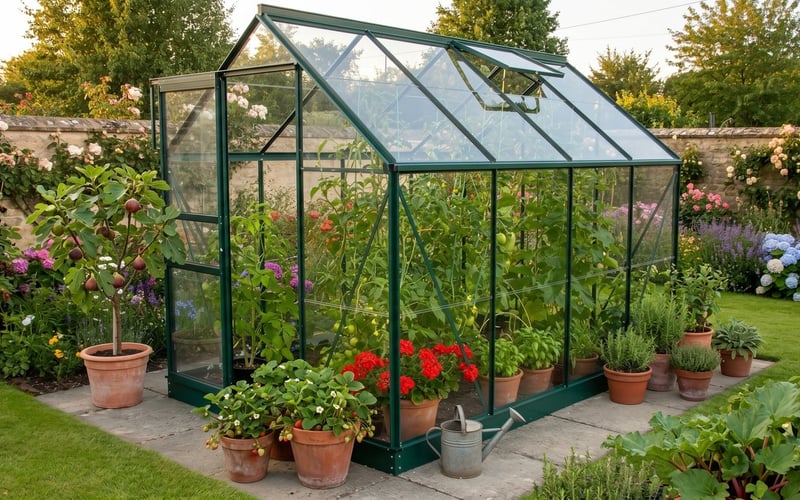
Shop the Vitavia 8x6 Green Venus 5000 →
Expert Tip
Fruit is why many customers buy a greenhouse. Figs, vines and citrus all benefit from the shelter, warmth and longer growing season. The guidance below combines crop requirements with the practical space and ventilation available in current greenhouse models.
What fruit can you grow in a greenhouse in the UK?
A UK greenhouse will grow strawberries, grapes, figs, melons, kiwi, peaches, nectarines, apricots, citrus, Cape gooseberry and passionfruit. The unheated list is longer than most people expect. Glass does two jobs here. It lifts growing-season temperatures by 5 to 10C on sunny days. And it keeps winter rain off plants that hate sitting wet.
Here is every fruit we have seen succeed in customers' greenhouses, ranked by difficulty.
| Fruit | Difficulty (1-5) | Heating needed? | Harvest | What it wants |
|---|---|---|---|---|
 Strawberries Strawberries | 1 | None | May-June | Pots on staging, out of slug reach |
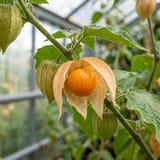 Cape gooseberry Cape gooseberry | 1 | None (grow as annual) | Aug-Oct | One big pot, treat like a tomato |
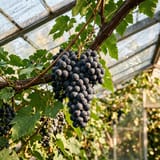 Grapes Grapes | 2 | None | Sept-Oct | 8ft width, roots planted outside the house |
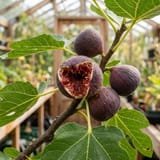 Figs Figs | 2 | None | Aug-Sept | Restricted roots, a warm back wall |
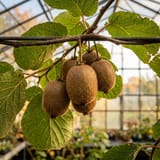 Kiwi Kiwi | 3 | None | Oct-Nov | Strong wires, hard annual pruning |
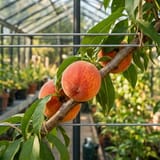 Peaches & nectarines Peaches & nectarines | 3 | None | July-Aug | Dry leaves, hand pollination in February |
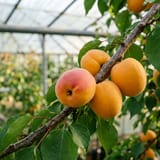 Apricots Apricots | 3 | None | July-Aug | Cold winter rest, then early frost protection |
 Melons Melons | 3 | None, but loves warmth | Aug-Sept | 25C plus, a 6ft bed or growbag per two plants |
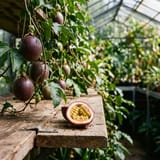 Passionfruit Passionfruit | 4 | Frost-free (2C min) | Sept-Oct | A full season on a wire, winter protection |
 Lemons Lemons | 4 | Yes, 5C minimum | Nov-Mar | Winter light, a frost-watch heater |
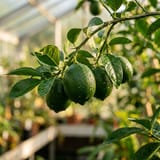 Limes Limes | 5 | Yes, 7C minimum | Year-round flushes | The warmest spot you own |
 Pineapple Pineapple | 5 | Yes, 16C minimum | 24 months from rooting | Patience and a heated bench |
If you want the quick wins, start at the top of that table. Our guide to growing strawberries in a greenhouse covers the easiest crop of the lot. Potted runners brought under glass in February fruit around three weeks ahead of outdoor beds.
Grapes: the best value fruit under glass
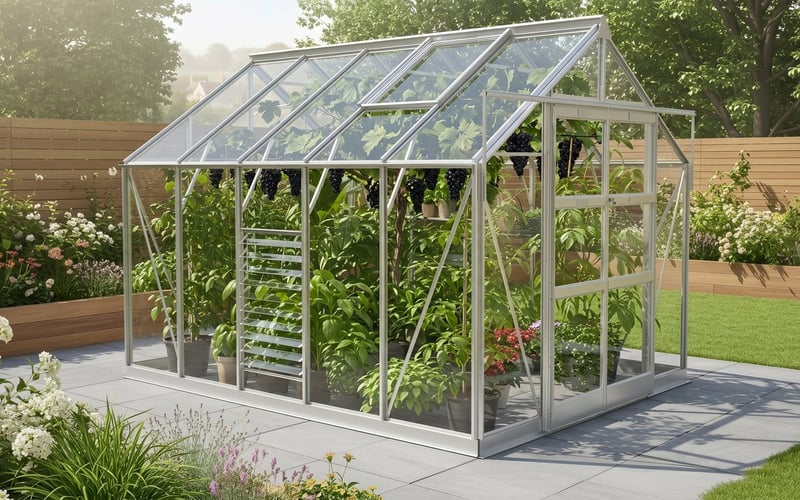
A greenhouse grapevine is the cheapest exotic you will ever plant. A bare-root Black Hamburgh costs about £15. One of our customers in York planted hers in 2021 against the end wall of an 8x10. In 2025 she picked 14kg of dessert grapes from that single vine. No heater, no feed programme beyond a spring mulch.
The trick is planting position. Put the rootball outside the greenhouse and train the stem in through a gap at the base. The roots get every drop of rain. The fruit stays warm and dry inside. Our full guide to growing grapes in a greenhouse covers pruning, which is the part people get wrong.
Vines want width. In a 6ft house a mature vine shades everything else by July. Go to 8ft if a vine is part of your plan. That extra 600mm of width is the difference between a vine and a vine plus a working greenhouse.
Figs: made for a lean-to
Figs crop harder under glass than any other fruit we see. Outdoors in the UK, a fig ripens one crop in a good summer. Under glass it ripens that crop three weeks earlier, and in warm years sets a partial second flush. Brown Turkey is the variety we recommend because it needs no pollination at all.
In 2019 we installed a 6x8 lean-to against a south-facing brick wall in Kent for exactly this job. The customer planted a Brown Turkey in a buried 60-litre pot to restrict the roots. By 2022 she was picking 60 to 80 figs a season. The brick wall stores the day's heat and gives it back overnight. That is why lean-to greenhouses are our standard recommendation for wall-trained fruit.
One warning from that install: restrict the roots or the fig will grow leaves instead of fruit. A buried pot or a 600mm square planting pit lined with slabs both work.
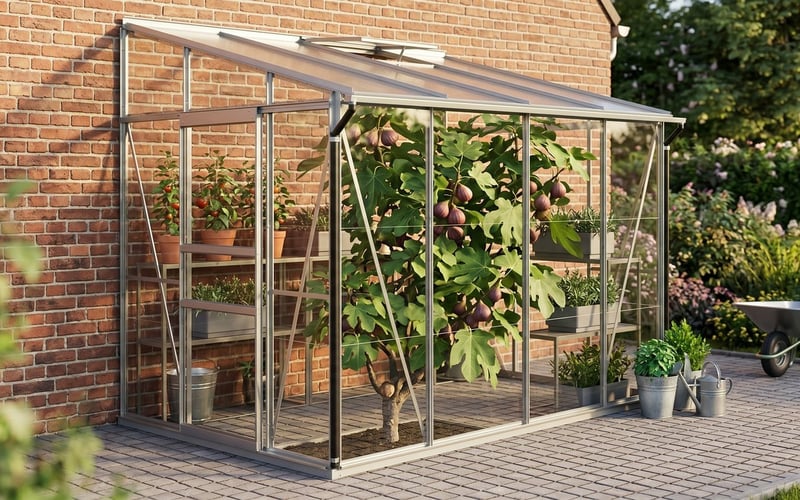
Shop the Vitavia 6x8 IDA 5200 Lean-To →
Peaches, nectarines and apricots: the rain dodgers
Peach leaf curl is a fungus spread by winter rain hitting bare branches. Under glass, rain never touches the tree. That single fact is why greenhouse peaches succeed where garden peaches sulk. We see the same pattern on nectarines, which are just smooth-skinned peaches and grow identically.
There are two jobs glass cannot do for you. First, pollination. Peaches flower in February before UK pollinators wake up, so you hand-pollinate with a soft brush every couple of days. Five minutes, oddly satisfying. Second, winter chill. Stone fruit needs cold dormancy, so never heat a peach house in winter. Leave vents open from November to January.
Fan-train the tree on wires against the back wall of a lean-to, or grow a dwarf variety like Bonanza in a pot in any free corner. A customer near Harrogate grows two potted Bonanza peaches in a wooden greenhouse and picked 43 fruits off the pair in 2025. If a glut arrives, our guide to drying apricots, peaches and plums deals with it.
Apricots follow the same rules with one extra demand. They flower even earlier, sometimes late January under glass. Keep fleece handy for flowering week if a hard frost is forecast.
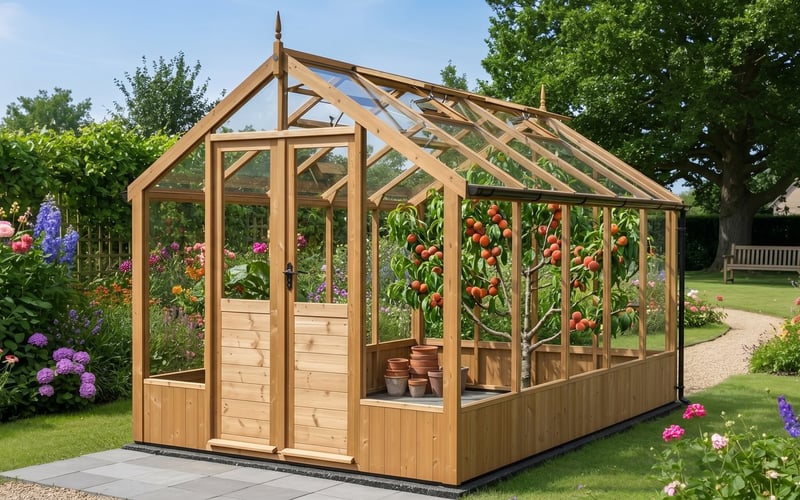
Shop the Swallow Raven 8x10 Wooden Greenhouse →
Melons: the proper exotic that needs no heater
Melons need warmth and a long season. A greenhouse supplies that warmth from late spring onwards, but roof vents must be opened before the space overheats. Aim for steady growing conditions rather than a sealed, excessively hot house.
Grow two plants per growbag, train them up strings, and support each fruit in a net once it reaches tennis-ball size. Emir F1 and Sweetheart F1 are the two we see ripen most reliably. Expect three to four melons per plant. The full method is in our guide to growing melons in a greenhouse.
Width matters again here. An 8ft-wide house takes a 4ft melon bed plus a path plus staging. Melons in a 6ft house mean giving up the whole of one side from June to September.
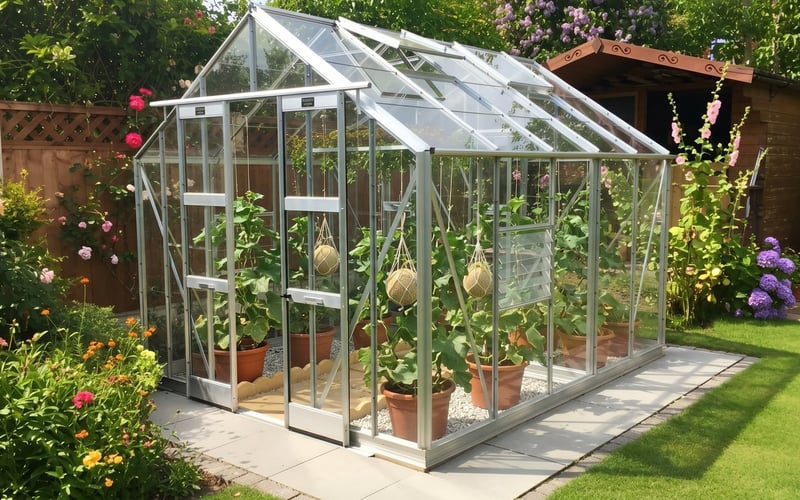
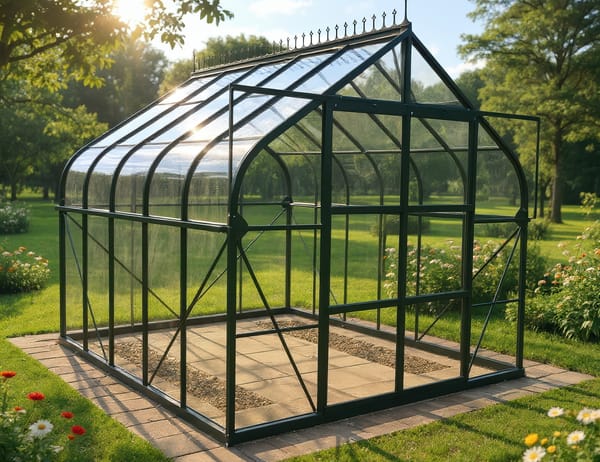
Matt's Pick for a Fruit Greenhouse
Best For: Running a grapevine, a melon bed and potted stone fruit in one house.
Why I Recommend It: The Saturn 9900 is the 8x12 I point fruit growers at first. The 8ft width takes a permanent vine down one side with room left to work. Of the Saturns we have installed, it is the layout customers change least. The 2.5m ridge gives trained fruit real headroom, and toughened glass shrugs off a dropped pruning saw. I have seen it happen.
Price: £1,544
Kiwi: hardy, hungry for space
Kiwi vines are hardier than their reputation. The plant survives minus 10C outdoors. What the UK lacks is the long, warm autumn the fruit needs to finish. Glass supplies it. October inside an unheated greenhouse routinely runs 4 to 6C warmer than outside in our logs, and that is what ripens kiwi here.
Choose the self-fertile variety Jenny unless you have room for a male and female pair. Then commit to pruning. An unpruned kiwi will fill an 8x12 in two seasons. We covered the wire setup, the February prune and the summer pinch in our full guide to growing kiwi fruit in a greenhouse.
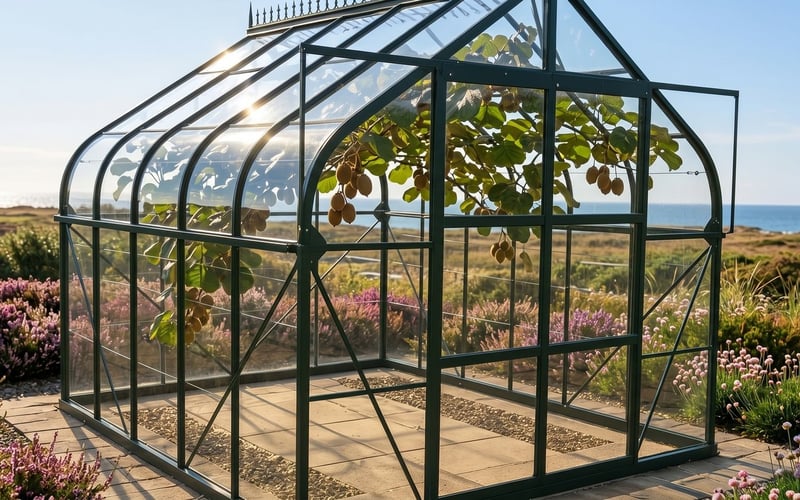
Shop the Vitavia 8x10 Green Saturn 8300 →
Citrus: the one that needs a heater
Lemons and limes are where an unheated greenhouse stops being enough. Citrus keeps its leaves all winter, and those leaves die below about minus 2C. Our working minimums are 5C for lemons and 7C for limes. A 2kW frost-watch heater on a thermostat holds those numbers in any 8x10 or smaller.
The running cost is lower than people fear because the heater only fires on cold nights. In March 2023 we installed an 8x15 Janssens Master Victorian near Guildford for a customer who overwinters nine citrus trees. Her February 2025 meter readings showed the frost-watch heater cost about 40p a night, and only 11 nights that month needed it. Her Meyer lemon carries fruit and flowers at the same time, most of the year.
If you are weighing up the running costs before committing, our breakdown of greenhouse heating costs in the UK puts real numbers on every heater type.
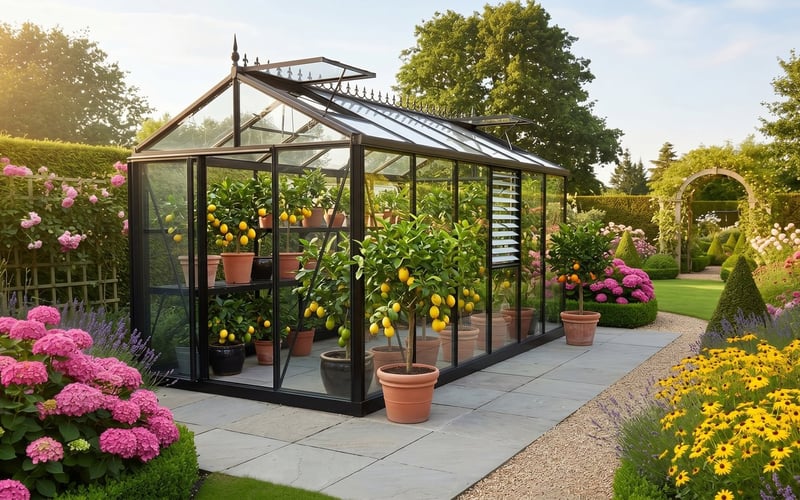
Shop the 8x15 Janssens Master Victorian in Green →
Matt's Installation Tip
If citrus is the plan, tell us before the install and we will position the house within reach of an outdoor socket. A frost-watch heater draws 2kW, which is too much for a long extension lead run off a reel. We have replaced two melted reels for customers who tried. A proper outdoor RCD socket fitted by an electrician costs £120 to £180 and ends the problem.
Cape gooseberry and passionfruit: the cheap experiments
Cape gooseberry (Physalis peruviana) is the easiest exotic nobody grows. Sow it in March like a tomato, pot it into a 30-litre container, and pick paper-wrapped fruit from August until the first frost. It needs no heat because you simply resow each spring. One plant gave a customer in Chester over 300 berries in 2024. She counted.
Passionfruit is the gamble of the pair. Passiflora edulis fruits on new growth and wants a frost-free winter, so it suits a house you already keep at 2C or more for other plants. Train it along one wire and expect your first proper crop in year two. Both plants appear in our roundup of 25 unusual things to grow in a greenhouse if you want more ideas in this vein.
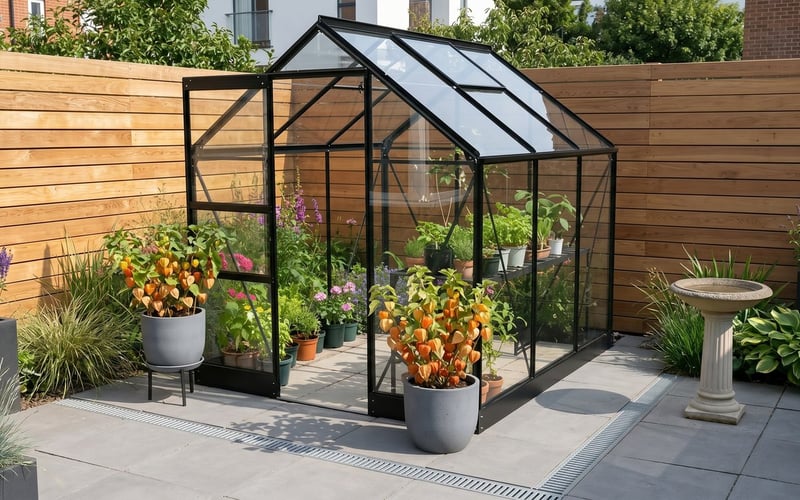
Shop the Vitavia 6x6 Black Apollo 3800 →
Matt's Tip: Start With Three Crops, Not Twelve
The fruit greenhouses that thrive are the ones that start simple. My standard first-year plan is strawberries on the staging, a grapevine planted at the end wall, and one fig or peach in a pot. That teaches you the watering and venting rhythm without crowding the house. Add melons in year two once you know your summer temperatures. The twelve-crop jungle can wait.
Heated or unheated: what actually changes
Most of this article works without permanent heating. Figs, grapes, kiwi and stone fruit tolerate cool winter conditions, but container roots and new growth still need protection during severe frost.
What it will not do is hold the 5C citrus line or overwinter passionfruit in a cold snap. The choice is simple. Stay unheated and grow the eight hardy fruits. Or add a thermostat heater and open up citrus, passionfruit and earlier sowings. Our month-by-month guide to what to grow in an unheated greenhouse maps the no-heater year in full.
Whichever route you take, summer is the season that catches fruit growers out. Ripening fruit needs airflow, and a closed house at 40C aborts melon flowers and scorches grape leaves. Fit automatic vent openers, and read our greenhouse ventilation guide before your first July. Citrus and stone fruit also appreciate light summer shading, covered in our greenhouse shading guide.
Which greenhouse for which fruit
You do not need a specialist structure for any of this. You need the right size and style for the fruit you care about most. These are the models from the Greenhouse Stores range we fit most often for fruit growers, and why.
| Model | Key spec | Price | Best fruit match | Matt's verdict |
|---|---|---|---|---|
| Vitavia Apollo 6x6 (Black) | 3.8m², toughened glass | £735 | Strawberries, Cape gooseberry | The starter fruit house for a small garden |
| Vitavia Venus 8x6 (Green) | 5.0m², toughened glass | £649 | Melons, strawberries | 8ft width at a starter price |
| Vitavia IDA 6x8 Lean-To | Wall-mounted, 5.2m² | £684 | Figs, fan-trained peaches | The wall does half the heating for free |
| Elite Belmont 8x10 | 7.4m², UK-made frame | £1,099 | Melon beds plus general growing | Best value 8ft-wide all-rounder |
| Vitavia Saturn 8x12 (Green): Matt's Pick | 8.9m², 2.5m ridge | £1,544 | Vine, melons and stone fruit together | The fruit garden under one roof |
| Elite Titan 8x10 | 2562mm eaves, toughened glass | £2,259 | Grapes, kiwi | The headroom trained vines want |
| Swallow Raven 8x10 (ThermoWood) | Timber frame, opening roof vents | £4,357 | Peaches, apricots | Timber buffers temperature swings on stone fruit |
| Janssens Master Victorian 8x15 | 4mm toughened, 2.6m ridge | £4,032 | Citrus collections | The orangery alternative at a third of the cost |
"Every model in that table earned its place on installs. The Saturn's 8ft width is the one spec I push fruit growers towards, because a vine plus a path plus a bed simply does not fit in 6ft. And for stone fruit I rate timber: the Raven's ThermoWood frame swings temperature more slowly than aluminium, which means fewer split skins on ripening peaches after a cold night."
— Matt W, Greenhouse Stores
Frequently asked questions
What is the easiest fruit to grow in a greenhouse UK?
Strawberries are the easiest greenhouse fruit in the UK. Pot up runners in autumn, bring them under glass in February, and they fruit around three weeks ahead of outdoor beds with no heating.
What exotic fruit can I grow in an unheated greenhouse?
Figs, grapes, melons, kiwi, peaches, nectarines and apricots all crop unheated. Our February logs show an unheated house holding roughly 5C above the outside minimum, enough for every hardy fruit on this list.
Can you grow lemons in a greenhouse in the UK?
Yes, with a minimum of 5C held overnight in winter. A 2kW frost-watch heater on a thermostat does it for around 40p a night, and only on the cold nights.
Do greenhouse peaches need to be pollinated by hand?
Yes, because they flower in February before UK insects fly. Brush each open flower with a soft paintbrush every two days for two weeks. Miss it and you get a fraction of the crop.
How big a greenhouse do I need to grow fruit?
An 8ft-wide greenhouse is the practical minimum for trained fruit. A 6ft house grows strawberries, Cape gooseberry and potted figs well. Vines, melon beds and fan-trained trees all want the extra width.
Can I grow a pineapple in a UK greenhouse?
Only with constant heat of 16C or more, year-round. A rooted pineapple top takes about 24 months to fruit. It is a fun experiment on a heated bench, not a practical crop.
When should I plant a greenhouse grapevine?
Plant a bare-root vine between November and March. Set the roots outside the greenhouse and train the stem inside through a base gap. Expect your first real bunches in year three.