Greenhouse Too Hot? A UK Installer's Cooling Guide
A closed greenhouse on a sunny UK day reaches 45 to 50C inside, hot enough to scorch leaves and stop fruit setting. Keep it in the productive 20 to 27C band with three levers: full ventilation, shade that cuts solar gain by up to 50 percent, and damping down the floor to drop the air 4 to 6C. After 16 years fitting and cooling UK greenhouses, this is the order we work in.
Key Takeaways
- 27C is the comfort ceiling. Above it, growth slows. Above 30C, fruit set starts to fail and leaves scorch.
- A sealed greenhouse hits 45 to 50C in full sun. We have measured 52C in a shut 6x8 on a 28C day.
- Ventilation is the first and biggest lever. Roof vents plus side louvre vents create a chimney that pulls heat out.
- Shade netting cuts incoming heat by up to 50 percent while still letting air through. It is the single best-value cooling buy at £99.
- Damping down twice a day cools the air 4 to 6C as the water evaporates, and lifts humidity that deters red spider mite.
- An automatic vent opener works while you are at the office. It opens at about 15 to 25C with no power, from £59.
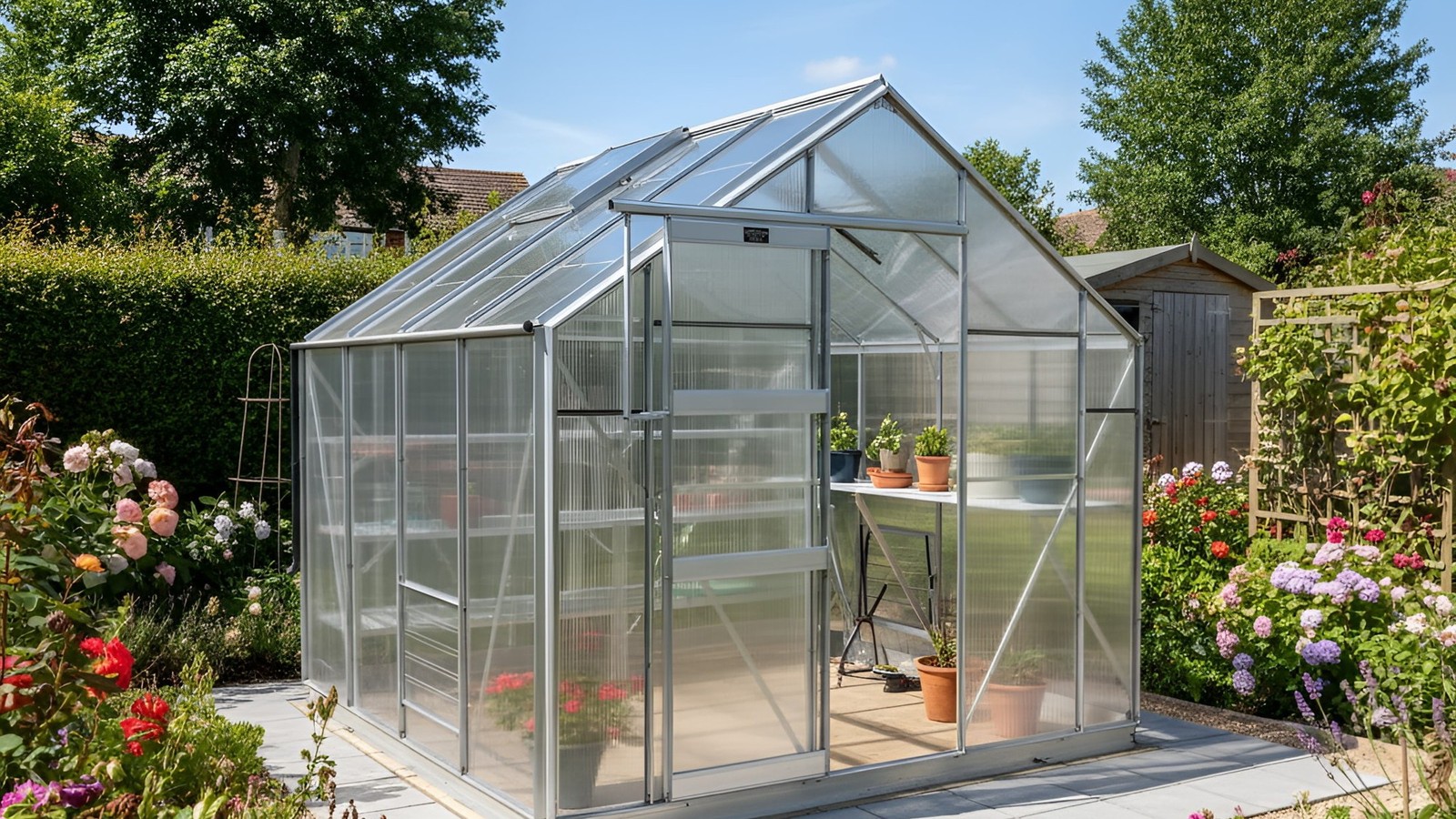
An open roof vent is the cheapest cooling you own. This Elite Belmont has its roof vent lifted and an automatic opener on the gable window.
Browse greenhouse ventilation kit →
Installer's Note
Every July my phone fills with the same call: "my tomatoes have stopped, the leaves are curling, what is wrong?" Nine times in ten the answer is heat. We once put a probe in a customer's shut 6x8 Elite at noon on a 28C day in Surrey. It read 52C. The plants were cooking. We opened both roof vents, fitted a louvre vent low on the gable end and clipped shade netting over the roof. By the next afternoon the same greenhouse held 26C in identical weather. Nothing about the glass changed. We just gave the heat a way out and stopped so much coming in.
How hot is too hot for a greenhouse?
Above 27C your plants stop enjoying the heat and start struggling. Most greenhouse crops grow best between 20 and 27C. Push past 30C and the damage starts: tomato and pepper pollen turns sterile, so flowers drop without setting fruit. Leaves scorch, wilt and curl. Above about 35C growth halts altogether as the plant shuts down to survive.
The problem is how fast glass gathers heat. Sunlight passes through the glazing, warms the soil and benches, and the heat cannot escape back out. This is the greenhouse effect working against you. On a 25C UK afternoon a closed greenhouse easily reaches 45C inside. We have logged 52C in a sealed small house. That is a hostile place for a tomato.
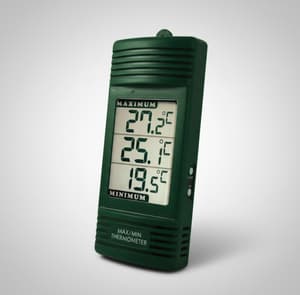
You cannot manage what you cannot measure. A min-max thermometer is the cheapest tool in the greenhouse and the one I tell every owner to buy first. It shows the overnight low and, more importantly, the peak the house hit while you were out.
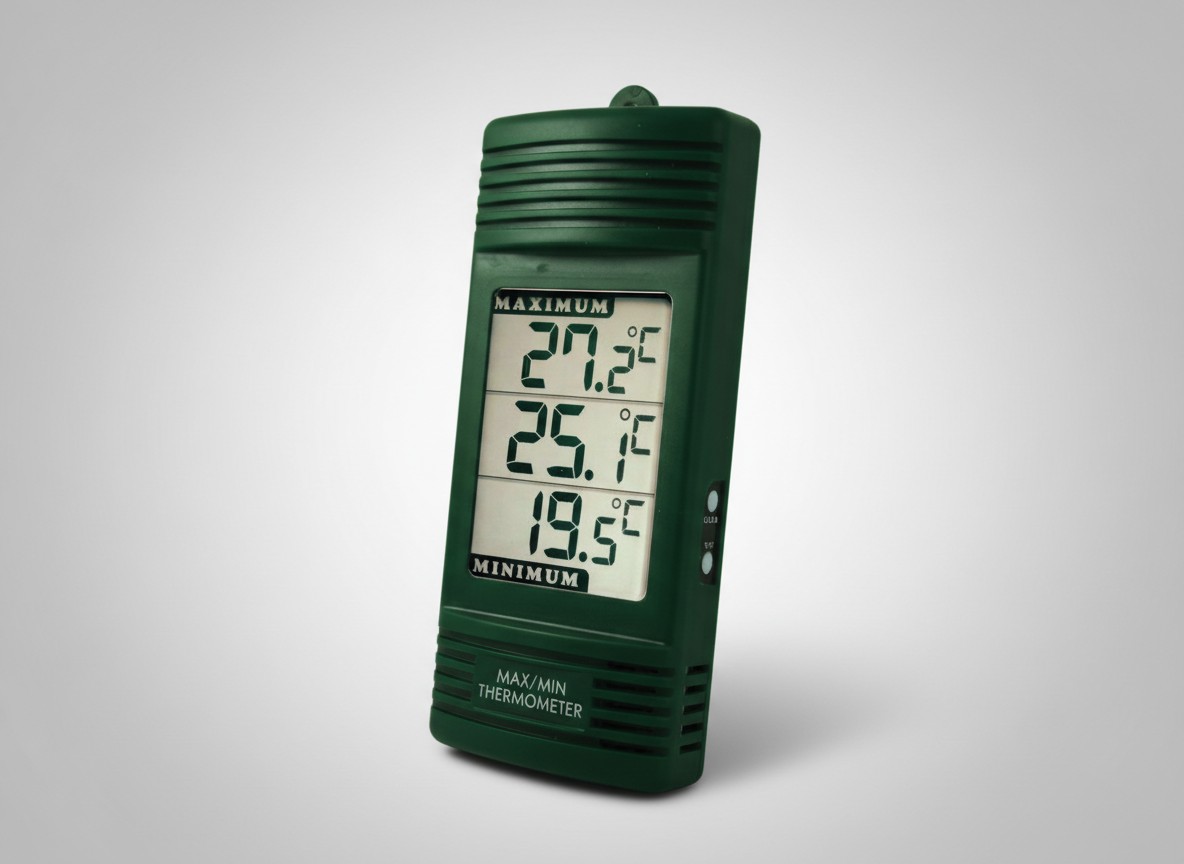
Max, current and min on one screen. The peak reading is the one that matters: it tells you what the house hit while you were out.
Shop the Elite ETI Digital Thermometer →
Matt's Installation Tip
Hang the thermometer at plant height in the shade, never in direct sun or on the sunny gable. A thermometer baking in the sun reads 10C too high and tells you nothing useful. I clip mine to a staging leg in the middle of the house, away from the glass. That gives the true air temperature the plants actually feel.
Why does a greenhouse overheat in summer?
Overheating comes from too much heat coming in and too little leaving. Three things drive it. First, solar gain through clear glazing on a south-facing house with no shade. Second, too little ventilation, so the hot air has nowhere to go. Third, a small house with a low ridge, which heats up faster than a tall walk-in because there is less air volume to buffer the spike.
Polycarbonate houses run a touch cooler than horticultural glass because twin-wall sheets diffuse the light. Even so, no glazing solves overheating on its own. The fix is always the same: let heat out, keep some heat from coming in, and add moisture to the air. Get the order right and you rarely need anything fancy.
How to cool a greenhouse in a heatwave
A heatwave is not just a hot day repeated. Two things change, and both catch people out.
The first is that the glass never gets a chance to dump its heat. In an ordinary British summer the temperature falls away after tea and the greenhouse resets overnight. In a heatwave it does not. The Met Office logged an overnight minimum of 23.5C at Cardiff Bute Park on 25 June 2026. A greenhouse that starts the morning at 25C is already halfway to trouble before the sun is properly up. This is why night ventilation stops being optional. Leave the roof vents open overnight through a hot spell.
The second is that hot nights do more damage to a tomato crop than hot afternoons. Above roughly 21C at night, pollen development suffers, and the damage is done in the bud about nine days before the flower ever opens. You will not see it at the time. You see it a week later when the trusses drop their flowers and set nothing.
2026 has been an exceptional year for this. England had its warmest June on record, with a mean of 17.1C in a series running back to 1884. The Met Office recorded 37.7C at Lingwood in Norfolk on 26 June, a new UK June record that beat the 35.6C set at Southampton in 1976. Across the year so far there have been eight days above 34C, more than any year on record, and 35C has now been reached in May, June and July of the same year for the first time in the UK record. A UKHSA red heat-health alert covered six English regions on 24 and 25 June, and an amber alert ran from 8 to 12 July.
Under glass, that maths is unforgiving. A 35C afternoon outside puts a shut greenhouse comfortably past 50C. We have measured 52C in a closed 6x8 on a day that only reached 28C outdoors.
Matt's Installation Tip
Check your autovent actually still works before you trust it in a heatwave. Wax cylinders lose their travel with age, and the failure is quiet: the vent still cracks open an inch and looks fine from the path, but it is not lifting through its full swing. Stand inside at midday and look up. If the vent is not near vertical on a 30C day, the cylinder is spent. A replacement is £34 and takes ten minutes. We replace more of these than we fit new ones.
Ventilation: the first and biggest lever
Open every vent and the door, and you solve most of the problem for free. Hot air rises and escapes through the roof vents while cooler air is drawn in low through louvre vents and the door. This chimney effect moves a surprising amount of heat. A greenhouse should have roof vents totalling at least a fifth of the floor area, plus low side vents to feed the flow.
Most greenhouses ship with one roof vent, which is not enough. Adding a second roof vent and a side louvre vent transforms airflow on a still day. A louvre vent low on the gable end is the piece most people miss. It lets cool air enter at floor level, which is what drives the whole convection loop. Our greenhouse ventilation guide sets out how many vents each size of house needs.
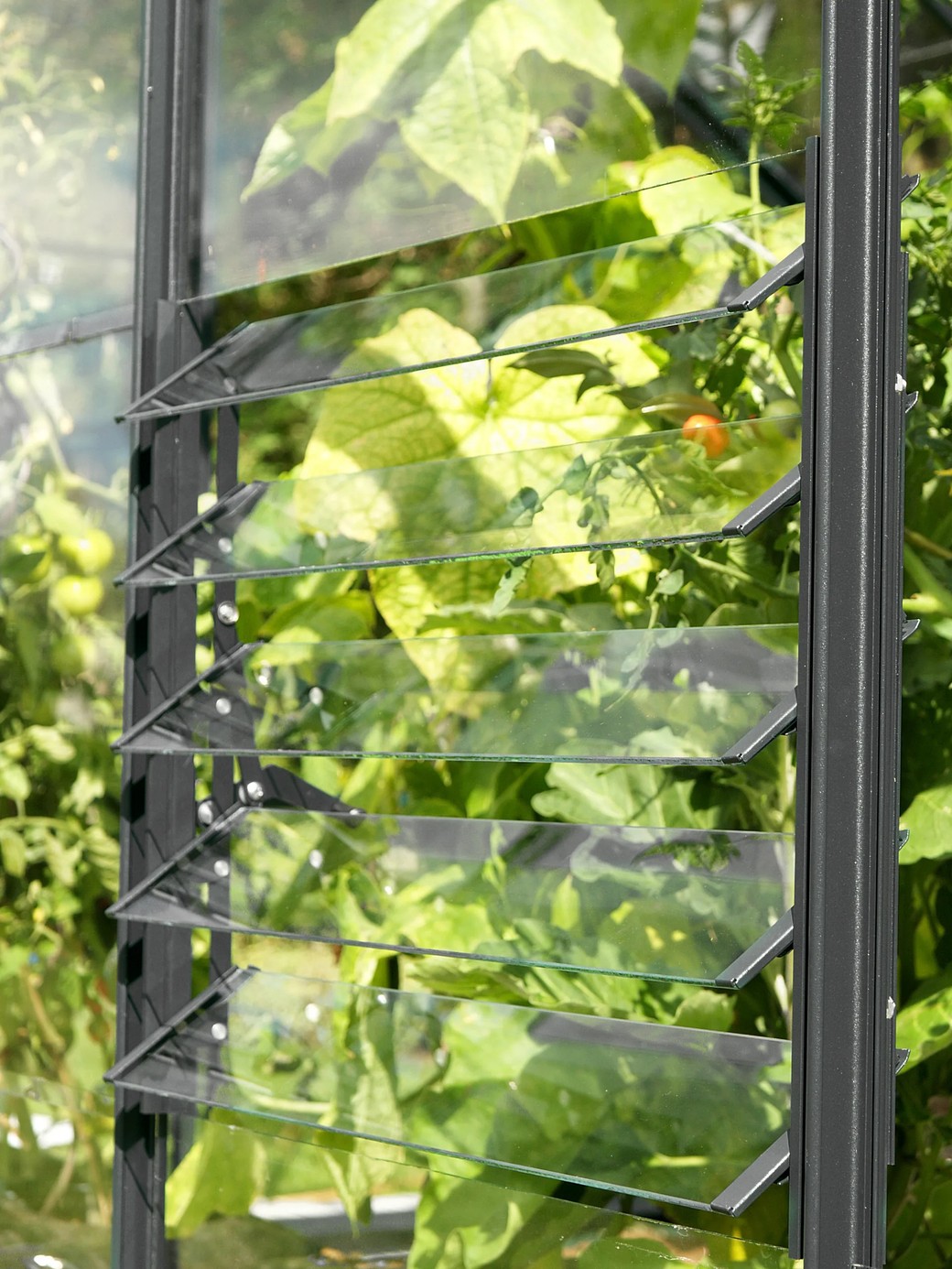
Blades open on a working greenhouse. A louvre low on the gable feeds the cool air that drives the whole convection loop.
Shop the Vitavia 5-Blade Louvre Window →
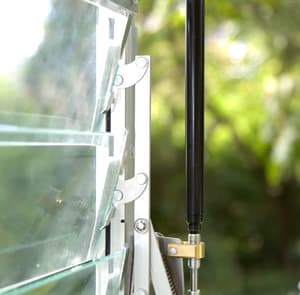
The catch is timing. A greenhouse heats up by mid-morning, often before you are home to open anything. An automatic vent opener fixes that. It uses a wax cylinder that expands as it warms, pushing the vent open at about 15 to 25C and closing it as the house cools. No electricity, no app, no thought. It is the most useful £60 you can spend on a greenhouse. We explain the fitting and adjustment in our auto vent opener installation guide.
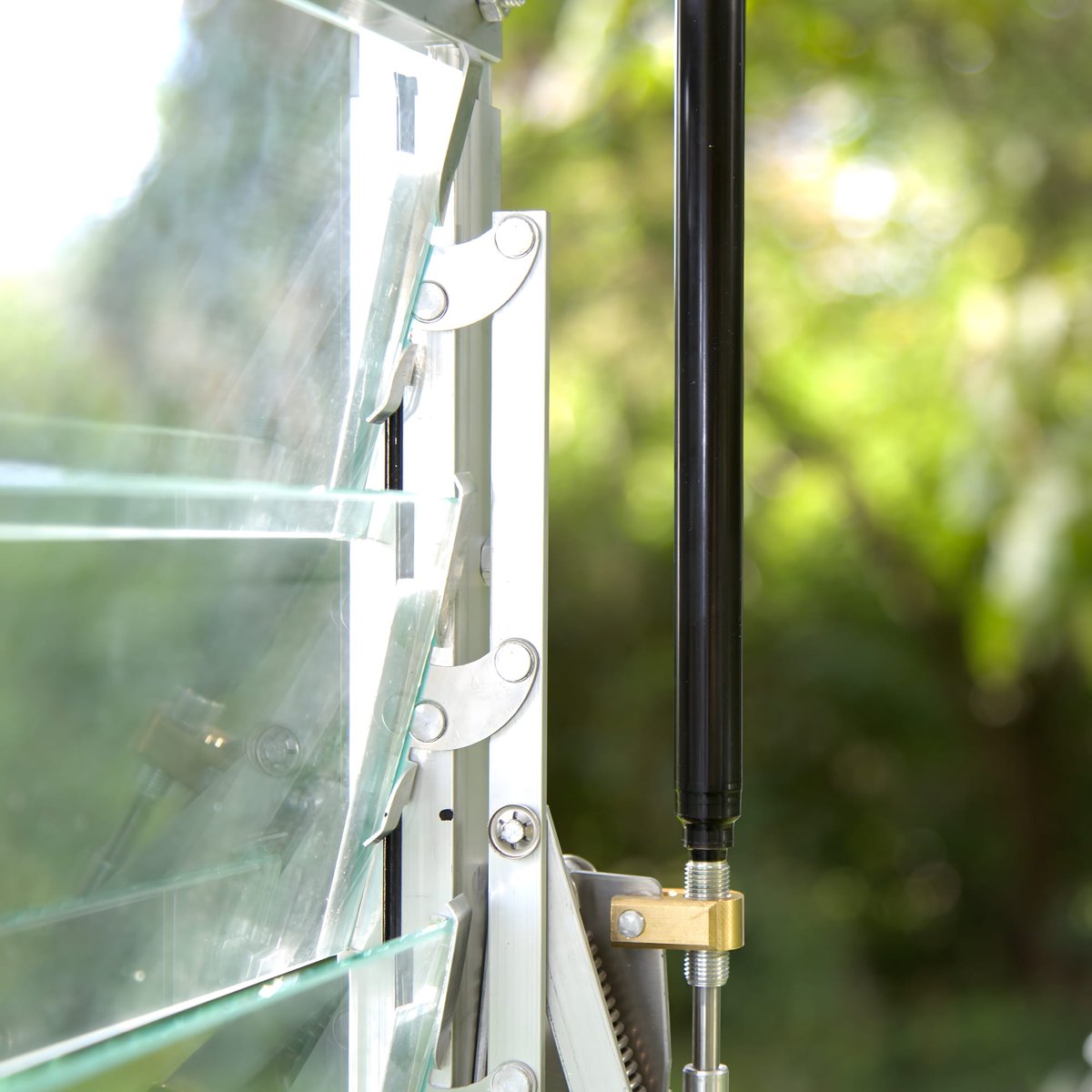
The wax cylinder does the work. It expands as the house warms and pushes the vent open with no power and no wiring.
Shop the Elite Automatic Louvre Vent Opener →
|
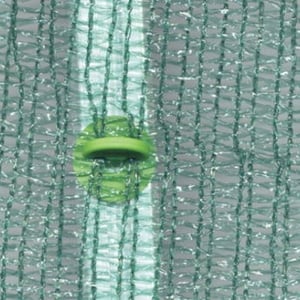
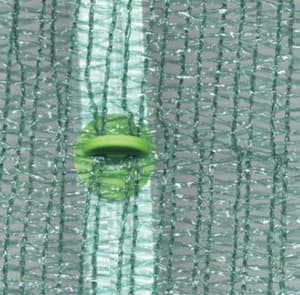
Matt's Pick for Beating the HeatBest For: any south-facing greenhouse that overheats and scorches plants in summer Why I Recommend It: We fit shade netting on more houses than any other cooling kit. The UV mesh cuts solar gain by up to 50 percent yet still breathes, so the air keeps moving. The 30 lining hooks clip it over the roof bars in under 30 minutes, and it strips down for winter in five. Price: £99 |
Shading: stop the heat before it gets in
Shade cuts the sunlight that becomes heat, and it is the second lever after ventilation. The aim is to block the fierce midday sun without plunging the house into gloom. There are three main routes, and they suit different budgets and crops.
Shade netting is the workhorse. A UV-stabilised mesh clipped over the roof reduces solar gain by up to 50 percent while staying breathable, so airflow continues underneath. Shade paint, brushed onto the outside of the glass, is the cheapest option and washes off in autumn, but it dims the whole house whether the sun is out or not. Internal blinds and roller shades give the finest control but cost the most and can trap a layer of hot air against the glass.
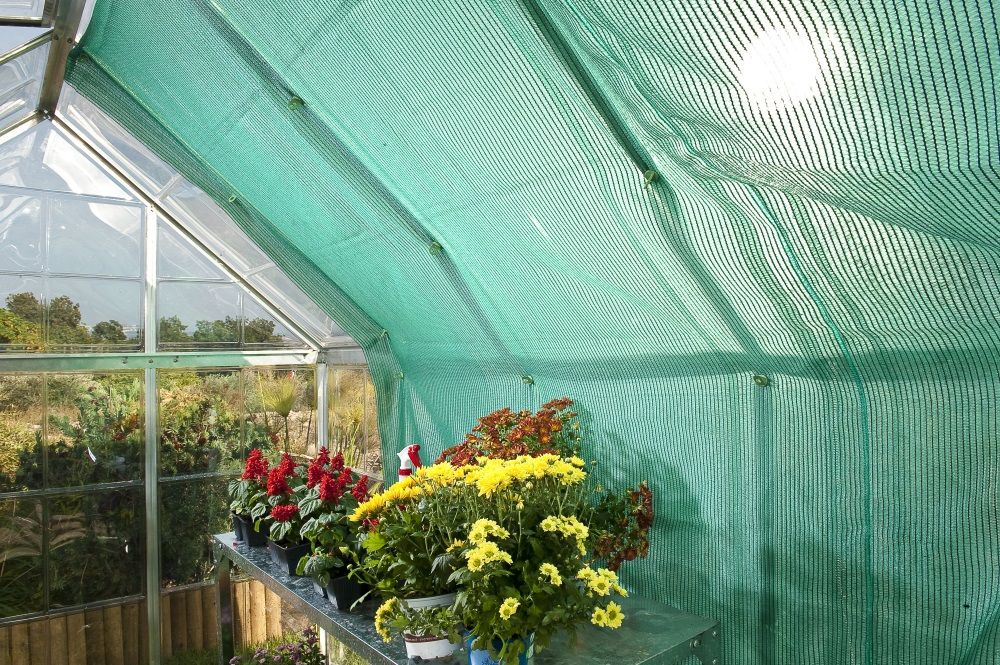
Netting clipped inside the roof. You can see the sun still coming through the weave: it sheds heat without shutting out the light.
Shop the Palram Canopia Shade Kit →
For a small or ornamental house, a fitted curtain shade is a tidy middle path. The Vitavia curtain shading clips inside the roof and pulls across only when you need it. Our older greenhouse shading guide compares paint, netting and blinds in more detail.
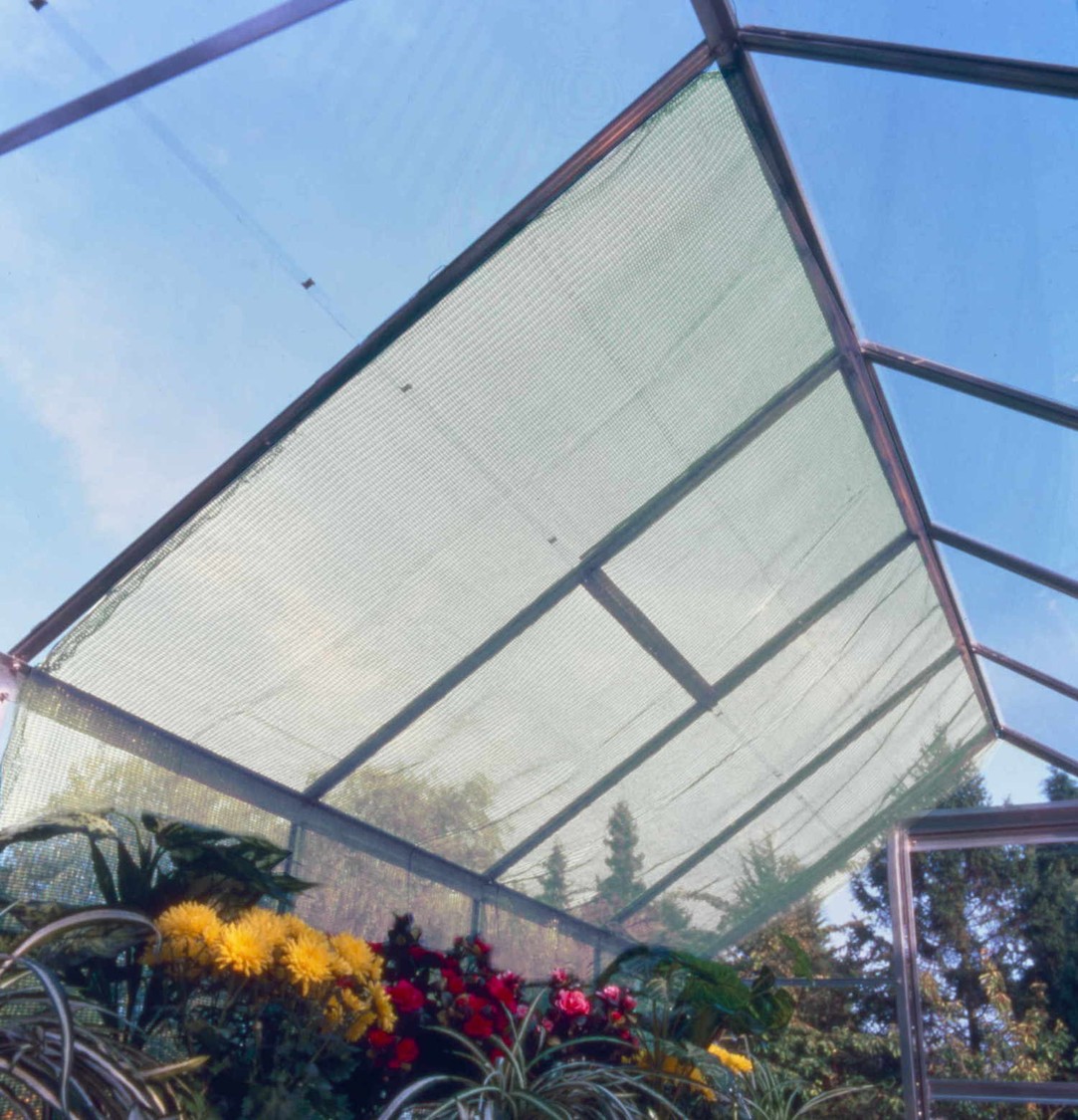
A curtain shade pulls across only when you need it, then stows away for the autumn.
Shop the Vitavia Curtain Shading →
Matt's Tip: Shade the roof, not the whole house
You rarely need to shade the side walls. The roof takes the brunt of the midday sun, so netting the roof and the sunny side is usually enough. Leaving the cooler walls clear keeps useful light for the plants and stops the house going dark. I aim to lose heat, not daylight.
Damping down: the trick the pros use
Splash water over the floor and staging on a hot morning, and evaporation pulls heat from the air. This is damping down, and it is the technique commercial growers rely on. As the water turns to vapour it cools the surrounding air by 4 to 6C and lifts the humidity. That extra moisture also deters red spider mite, which thrives in hot, dry air.
Damp down once in the morning and again at midday on the hottest days. Wet the path, the floor and under the benches, not the leaves of the plants. Pair it with a good watering routine so roots never dry out in the heat. Our greenhouse watering and irrigation guide covers automatic systems that keep up during a heatwave.
The mechanism is worth understanding, because it tells you how to do it properly. Evaporation costs energy. Every litre that turns from water into vapour takes roughly 2,260 kilojoules of heat out of the air with it. That is why a wet floor cools and a damp cloth does not. It follows that surface area matters more than volume. Two watering cans flung across the whole floor and the path will do more than five cans tipped into one puddle, because the puddle evaporates slowly from a small surface. Wet everything thinly.
Timing matters as much. Damp down early, before the house has built its heat, and again at midday. Doing it at five in the afternoon is close to pointless: the day's damage is done, and you leave wet surfaces and still air going into the night, which is how botrytis gets started. Never damp down in the evening.
Be honest about what it buys you. Damping down is a genuine 4 to 6C, and it raises humidity in a way that slows red spider mite down. It is not a control for red spider mite. The RHS is explicit that raising humidity "will not, on its own, control this mite". Treat it as a brake, not a cure.
One practical wrinkle in 2026: several water companies brought in hosepipe bans through July, including South East Water in Kent from 3 July, Southern Water across Hampshire and the Isle of Wight from 10 July, and Anglian Water from 11 July. A watering can filled indoors is still permitted under most companies' rules, so damping down usually survives a ban, but the wording varies by supplier. We set out what is and is not allowed in our guide to watering a greenhouse legally during a hosepipe ban.
Cooling methods compared
Here is how the main options stack up for a typical UK greenhouse. Use them together: ventilation and shading do the heavy lifting, damping down fine-tunes the rest.
| Method | Temperature effect | Cost | Matt's verdict |
|---|---|---|---|
| Open all vents and door | Removes the worst of the spike | Free | Always do this first. The biggest single lever. |
| Shade netting (Matt's Pick) | Cuts solar gain up to 50% | £99 | Best value cooling kit. Breathes, so airflow continues. |
| Automatic vent opener | Opens vents at 15 to 25C unattended | £59 | Essential if you are out all day. No power needed. |
| Extra louvre vent | Feeds cool air in low down | £119 | The upgrade most houses are missing. |
| Damping down floor | Drops air 4 to 6C, raises humidity | Free | A daily habit, not a purchase. Deters spider mite too. |
| Curtain or blind shade | Targeted shade on demand | £36 | Tidy for small or ornamental houses. |
Beat the heat: our top three cooling buys
What about greenhouse fans?
A fan helps move air but it does not cool on its own. It simply circulates what is already there, so on its own a fan in a sealed house just stirs hot air. Used with open vents, though, a fan keeps air moving on a still day and breaks up the hot layer that sits against the glass. It also strengthens plant stems and reduces fungal disease. Think of a fan as a helper for ventilation, not a replacement for it.
Good positioning of the greenhouse helps too. A spot with some afternoon shade from a tree or wall takes the edge off the worst heat. If you are still planning where to site a new house, our guide on the best position for a greenhouse weighs up sun, shade and shelter.
"In 16 years of fitting greenhouses, our teams have never met an overheating problem that ventilation and shade together could not fix. People reach for fans and gadgets first. We reach for a second vent, a louvre low on the gable and a roll of shade netting. Get the air moving and the sun off the glass, and the house looks after itself."
- Matt W, Greenhouse Stores
Frequently asked questions
How hot is too hot for a greenhouse?
Above 30C your plants are in danger. Most crops grow best between 20 and 27C. Past 30C, pollen fails, fruit will not set and leaves scorch. Above 35C growth stops altogether.
How do I cool a greenhouse without electricity?
Open every vent, add shade and damp down the floor. These three cost nothing to run. An automatic vent opener also works with no power, using a wax cylinder that expands in the heat.
Does shade netting really cool a greenhouse?
Yes, by cutting solar gain up to 50 percent. The UV mesh blocks much of the sun that becomes heat, yet still breathes so air keeps flowing underneath. It is the best-value cooling kit we sell.
What is damping down a greenhouse?
It means wetting the floor so evaporation cools the air. Splash water over the path and staging on hot mornings. The air drops 4 to 6C and the extra humidity deters red spider mite.
Should I leave greenhouse vents open at night in summer?
Yes, on warm summer nights leave the roof vent open. It lets the day's heat escape and stops condensation building. Close it only if a cold or windy night is forecast.
Why have my tomatoes stopped setting fruit?
Heat above 30C usually sterilises the pollen. Cool the house with shade and ventilation, and damp down to lift humidity. Our greenhouse tomato problems guide covers the other common causes.