Rainwater Harvesting for Greenhouses: Butts & Diverters
Rainwater beats tap water for almost every greenhouse job. It is soft, near neutral in pH and free of chlorine, which suits seedlings and acid-loving plants. An 8x6 greenhouse roof collects roughly 3,800 litres a year in the UK. A water butt and a downpipe diverter kit from £24 captures it. We have fitted these kits to several hundred greenhouses.
Key takeaways
- Rainwater is softer and slightly acidic (around pH 6), so it suits seedlings, tomatoes and ericaceous plants better than chlorinated tap water at pH 7.5 to 8.
- Your roof catchment is its footprint, not its sloped area. Each square metre collects about 1 litre per 1mm of rain. An 8x6 greenhouse gathers roughly 3,800 litres a year.
- A diverter kit fits in under an hour and costs from £24. It clips into the downpipe and shuts off automatically when the butt is full.
- Size the butt to weekly demand, not roof size. A 6x4 needs 100 to 200 litres; a 10x8 wants 350 litres or two linked butts.
- Drain or part-empty butts before hard frost. A full, frozen butt can split at the seams, a fault we see every spring.
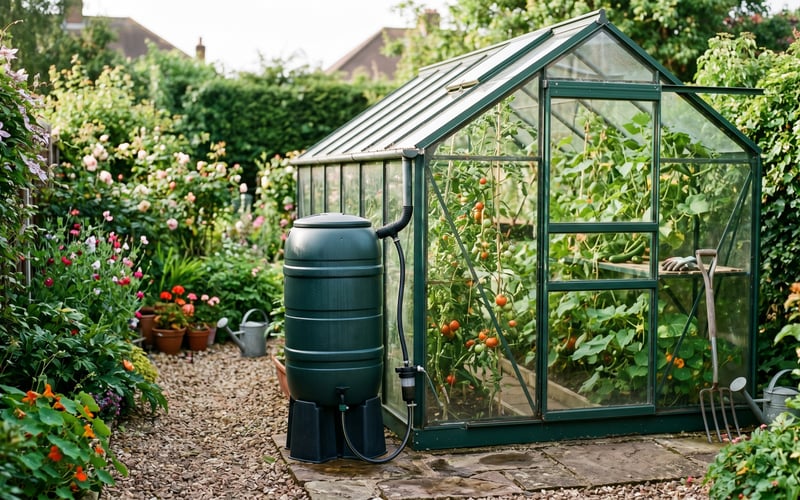
Shop the Elite Rainwater Kit to One Gutter (6ft) →
Installer's Note
From our work with Greenhouse Stores customers since 2012, the rainwater kit is the cheapest upgrade with the biggest payoff. We fit one on most installs while the gutters are still off the box. It takes ten minutes then, against an hour later. The customers who skip it almost always ring back in July asking how to add one.
Why rainwater beats tap water for your greenhouse
Rainwater is soft, chlorine free and slightly acidic, which is exactly what greenhouse plants prefer. UK tap water often sits between pH 7.5 and 8, especially in hard-water areas. Rainwater usually measures around pH 5.5 to 6.5. That gap matters for tomatoes, citrus, blueberries and other ericaceous plants that struggle in alkaline conditions.
Chlorine and chloramine in mains water also knock back the soil microbes that seedlings rely on. Rainwater carries none. It is naturally soft, so it will not leave the white limescale crust that builds on pots and capillary matting when you water with hard tap water.
There is a cost angle too. Many UK households are now metered. Filling cans and trays from the tap through a dry summer adds up. A water butt turns your roof into free storage. For more on cutting bills and waste under glass, see our guide to making your greenhouse more efficient and watering smartly with manual and automatic watering systems.
Matt's Tip: Let stored water warm up
Cold water shocks tender roots. I keep a full can standing inside the greenhouse so it reaches air temperature before it touches the plants. Rainwater straight from a shaded butt can be 6 to 8C colder than the greenhouse air on a summer morning.
How much rainwater can your greenhouse roof collect?
Catchment is based on the roof footprint, not the sloped glass area. Rain falls vertically, so a sloped roof collects the same as its flat plan area. The simple sum is: footprint in square metres, multiplied by rainfall in millimetres, equals litres. One millimetre of rain on one square metre gives one litre.
The UK averages roughly 850mm of rain a year, though Wales and the west get far more and parts of Essex and Cambridgeshire get under 600mm. Even in a dry county, a modest greenhouse fills a butt many times over across a year. The table below uses the 850mm average.
| Greenhouse size | Roof footprint | Rain caught per year (approx) | Recommended butt | Matt's verdict |
|---|---|---|---|---|
| 6x4 | 2.2 m² | 1,900 litres | 100–200 litres | One slimline butt is plenty |
| 6x6 | 3.3 m² | 2,850 litres | 200 litres | Standard butt on a stand |
| 8x6 (Matt's Pick size) | 4.5 m² | 3,800 litres | 200–250 litres | The sweet spot for most gardens |
| 8x10 | 7.4 m² | 6,300 litres | 350 litres or 2x200 | Link two butts together |
| 10x12 | 11.2 m² | 9,500 litres | 3 linked butts | Add a downpipe each gable end |
Remember these are annual totals, not what sits in the butt at once. A 200-litre butt may fill and empty a dozen times across the growing year. The roof catches far more than you can store, which is why overflow management matters later.
How to fit a rain diverter to greenhouse guttering
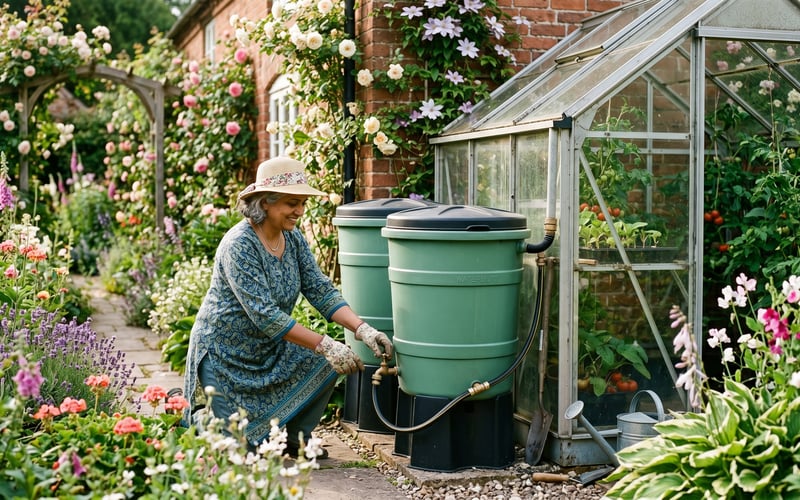
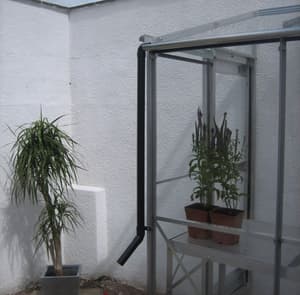
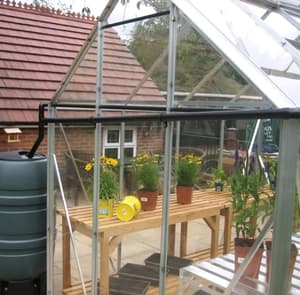
A diverter clips into the downpipe between the gutter and the ground, sending water sideways into the butt. Greenhouse gutters are usually integral aluminium channels along each eave. They feed a downpipe at one corner. The diverter is the part that turns that downpipe into a filling point.
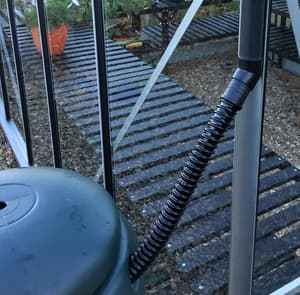
The job is straightforward. Mark the downpipe level with the top of your butt. Cut a short section out with a hacksaw. Push the diverter body into the gap, then run the supplied hose into the butt lid. When the butt is full, water backs up and carries on down the original pipe. No flooding, no manual switching.
|
Matt's Pick for a complete rainwater set-upBest For: Elite, and most aluminium greenhouses needing gutter, downpipe and diverter in one box. Why I Recommend It: It is the kit I reach for on site. Everything matches the frame, so there are no leaking bodge joints. I have fitted dozens with zero callbacks. Price: £49 |
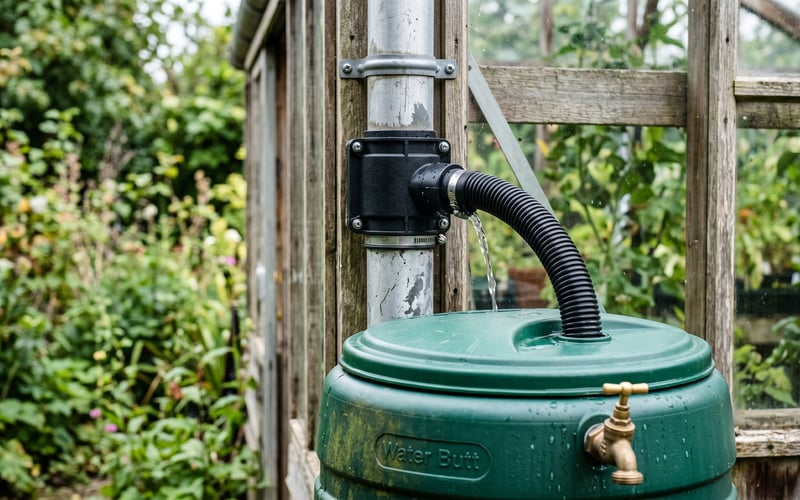
Shop the Vitavia Water Butt Connecting Kit →
If you have a Vitavia greenhouse, the matching connecting kit from £24 does the same job and snaps onto the Vitavia downpipe without cutting. For Elite frames, the gutter-to-one-side kits scale by greenhouse width, so order the size that matches your model.
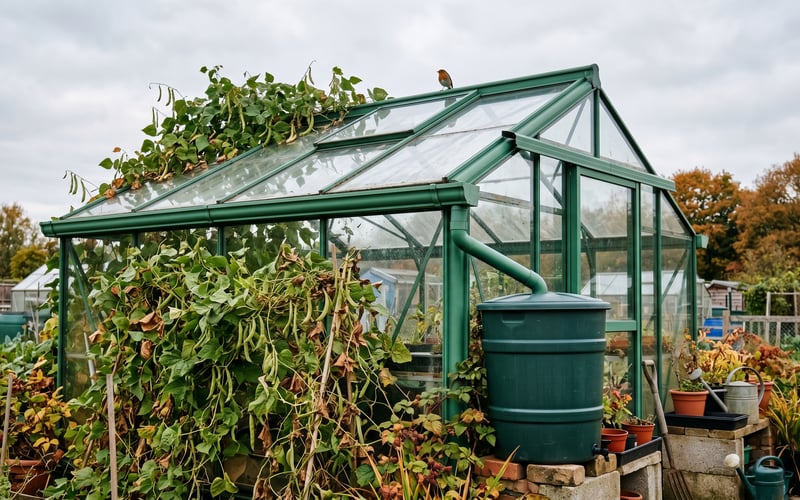
Shop the Elite Rainwater Kit to One Gutter (8ft) →
Matt's Installation Tip
Set the diverter height at the butt's top, never higher. Mount it too high and the butt never fills to the brim; too low and it overflows from the diverter itself instead of the proper outlet. We measure from the butt lid, mark the pipe, then cut. Stand the butt on slabs or a proper stand first, because raising it later changes that height.
Choosing the right water butt size
Size the butt to your weekly demand, not to the roof. The roof will always out-collect your storage. What matters is having enough on hand between rainfalls. A rough rule: a 6x4 greenhouse in summer uses 50 to 100 litres a week, an 8x10 closer to 200 litres.
For most home greenhouses a single 200-litre butt is the practical sweet spot. It is tall enough to fill a can under the tap and small enough to fit beside the frame. Slimline 100-litre butts suit tight spots and balconies. Go bigger only if you can link butts or you grow through long dry spells.
Raise every butt on a stand or paving slabs. Height gives you tap clearance for a watering can and a little pressure for a hose or drip line. A butt sitting flat on the ground is awkward to use and the tap clogs with grit.
Linking water butts for more storage
Two or more butts joined with a linking kit act as one large reservoir. A short connector pipe near the base lets water flow between them, so they fill and empty evenly. When the first fills, the second takes the overflow. This beats one giant tank for most gardens because the parts are cheap and easy to move.
Shop the Vitavia Long Rainwater Downpipe Kit →
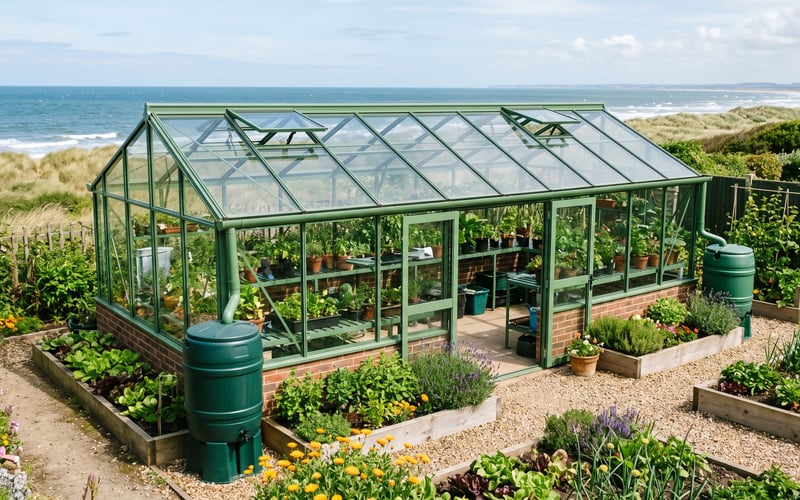
Keep the link low, within 100mm of the base, so both butts drain fully. Fit it before you fill them, not after. On larger greenhouses we often run a downpipe at each gable end into its own butt, then link the pair. That captures both eaves rather than wasting half the roof.
Keeping rainwater clean: algae, overflow and winter draining
Keep light out and debris off, and stored rainwater stays usable for months. Algae needs daylight, so a sealed, opaque butt with a tight lid stays clear. A loose lid also keeps out leaves, mosquitoes and the odd unlucky frog. A fine mesh leaf filter at the diverter stops gutter grit settling at the bottom.
Manage the overflow properly. When the butt is full, surplus must go somewhere safe, away from the greenhouse base and any greenhouse foundation. Run the overflow into a border, a soakaway or a second butt. Never let it pool against the frame, which is also worth reading about in our note on whether your greenhouse should be watertight.
Shop the Vitavia Rainwater Downpipe Kit (x2) →
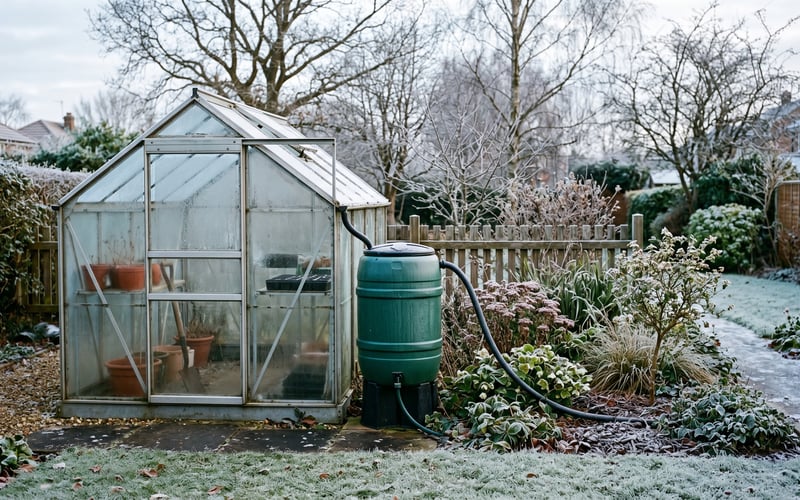
Before hard frost, part-empty or fully drain the butt. Water expands as it freezes and a brim-full butt can split at the moulded seam. We see cracked butts every spring from owners who left them full. Empty it in late autumn, leave the tap open, and fold the season into your wider seasonal greenhouse maintenance. Give the butt a rinse and a scrub once a year to clear sediment.
Using rainwater on seedlings and ericaceous plants
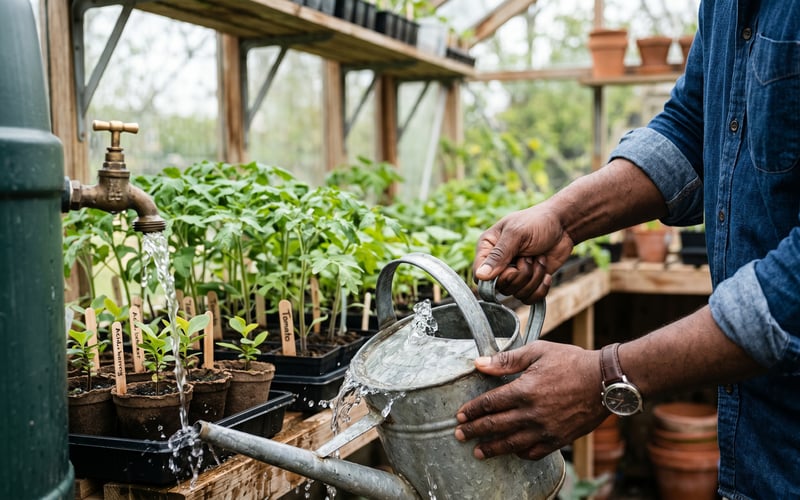
Soft, slightly acidic rainwater is ideal for the plants that hate hard tap water. Blueberries, cranberries, azaleas, camellias and rhododendrons are ericaceous; they need acidic conditions and resent the lime in mains water. Water them with rainwater and the leaves stay green instead of yellowing.
Seedlings and young transplants also do better on rainwater. There is no chlorine to check root development and the temperature is gentler once the can has stood to warm. For citrus and tomatoes, rainwater avoids the salt build-up that hard water leaves in the compost over a season.
Shop the Elite Lean To Rainwater Downpipe Kit →
One caution: in a hot greenhouse, do not store water so long it turns stagnant. Use it and refresh it. Pair rainwater with good airflow and damping down on hot days for the best summer results. The team at Greenhouse Stores can match a rainwater kit to your exact frame if you are unsure which fits.
Shop the Elite Rainwater Kit to One Gutter (12ft) →
Ready to set yours up? Browse the full range of rainwater downpipe kits and pick the size that matches your greenhouse.
"We fit a rainwater kit on most installs because it is the upgrade customers thank us for. Matched gutters and diverters from Elite and Vitavia clip straight to the frame, so there are no leaking joints and nothing rusts. A £24 connecting kit on an 8x6 can save thousands of litres of metered water a year. That is the best value part in the whole greenhouse."
— Matt W, Greenhouse Stores
Frequently asked questions
Is rainwater better than tap water for a greenhouse? Yes, for most plants. Rainwater is soft, chlorine free and around pH 6, which suits seedlings, tomatoes and ericaceous plants better than hard tap water at pH 7.5 to 8.
How much rainwater will my greenhouse roof collect? Multiply the footprint by annual rainfall. An 8x6 greenhouse with a 4.5 square metre footprint collects roughly 3,800 litres a year at the UK average of 850mm.
What size water butt do I need for a greenhouse? Size it to weekly use, not roof area. A 6x4 needs 100 to 200 litres, an 8x6 around 200 to 250 litres, and a 10x8 wants 350 litres or two linked butts.
How do I fit a rain diverter to greenhouse guttering? Cut a short section from the downpipe at butt-top height. Push in the diverter body, run the hose into the butt lid, and water flows in until full, then carries on down the original pipe.
Should I empty my water butt in winter? Yes, before hard frost. A full butt can split at the seams when the water freezes and expands, so part-empty or drain it in late autumn and leave the tap open.
How do I stop algae growing in a water butt? Keep light out. Use an opaque butt with a tight lid, fit a leaf filter at the diverter, and rinse out sediment once a year to keep the water clear and usable.