Twin-Wall vs Single-Wall Polycarbonate Greenhouse UK: Installer Comparison
If you are choosing a twin wall polycarbonate greenhouse uk, the short answer is this. Twin-wall holds roughly 35% more heat than single-wall clear polycarbonate, lasts five to ten years longer in UK weather, and costs around 15-20% more on entry-level models. Single-wall clear polycarbonate beats it on light transmission (around 90% versus 80%) and looks far closer to glass. After 16 years fitting both, we use twin-wall as the default for year-round growers and reserve single-wall for sheltered summer-only setups.
This guide compares the two glazing types on heat retention, light, hail resistance, lifespan and cost. We use measured U-values, light transmission percentages from manufacturers we have stocked since 2009, and our own on-site observations from 150,000+ customer orders. Browse our full range of twin wall polycarbonate greenhouse uk models to see what we currently stock at each spec.
Key Takeaways
- Heat retention: 4mm twin-wall has a U-value of around 3.6 W/m²K. Single-wall clear polycarbonate sits near 5.5 W/m²K. Lower is better. Twin-wall keeps roughly 35% more heat in.
- Light transmission: Single-wall clear polycarbonate hits about 90%. 4mm twin-wall is about 80%. 6mm twin-wall drops to 75-78%.
- Hail resistance: All polycarbonate types survive UK hail better than horticultural glass. 6mm twin-wall is the strongest of the three.
- UK lifespan: Twin-wall lasts 10-20 years before UV haze sets in. Single-wall clear typically clouds in 7-10 years on south-facing sites.
- Cost gap: Like-for-like, twin-wall sits about 15-20% above single-wall at entry level. Premium 6mm Elite models cost 2-3x more.
- Wind risk: Polycarbonate is light and can lift in gusts above 45mph. For exposed UK sites, toughened glass with bar capping is the most wind-resistant choice.
- When single-wall wins: Sheltered urban gardens, summer-only growing, cold frames, and anywhere maximum light matters more than heat retention.
Installer's Note
I have been fitting polycarbonate greenhouses for our customers since 2009. The same arguments come up on every install. "Will twin-wall be too dark for tomatoes?" "Is single-wall really that much warmer than nothing?" The honest answer changes by site. A sheltered Surrey town garden behaves nothing like an exposed Yorkshire allotment. This guide gives you the numbers we use to decide, plus the rule of thumb our installers apply when a customer cannot choose between the two.
What is the actual difference between twin-wall and single-wall polycarbonate?
Single-wall polycarbonate is one flat sheet, typically 0.8mm to 1mm thick, that looks almost like glass. Twin-wall polycarbonate is two parallel sheets joined by internal ribs, with a sealed air gap between them. That air gap is the entire point. Still air is a poor conductor of heat, so it slows heat loss the same way double glazing does in a house window.
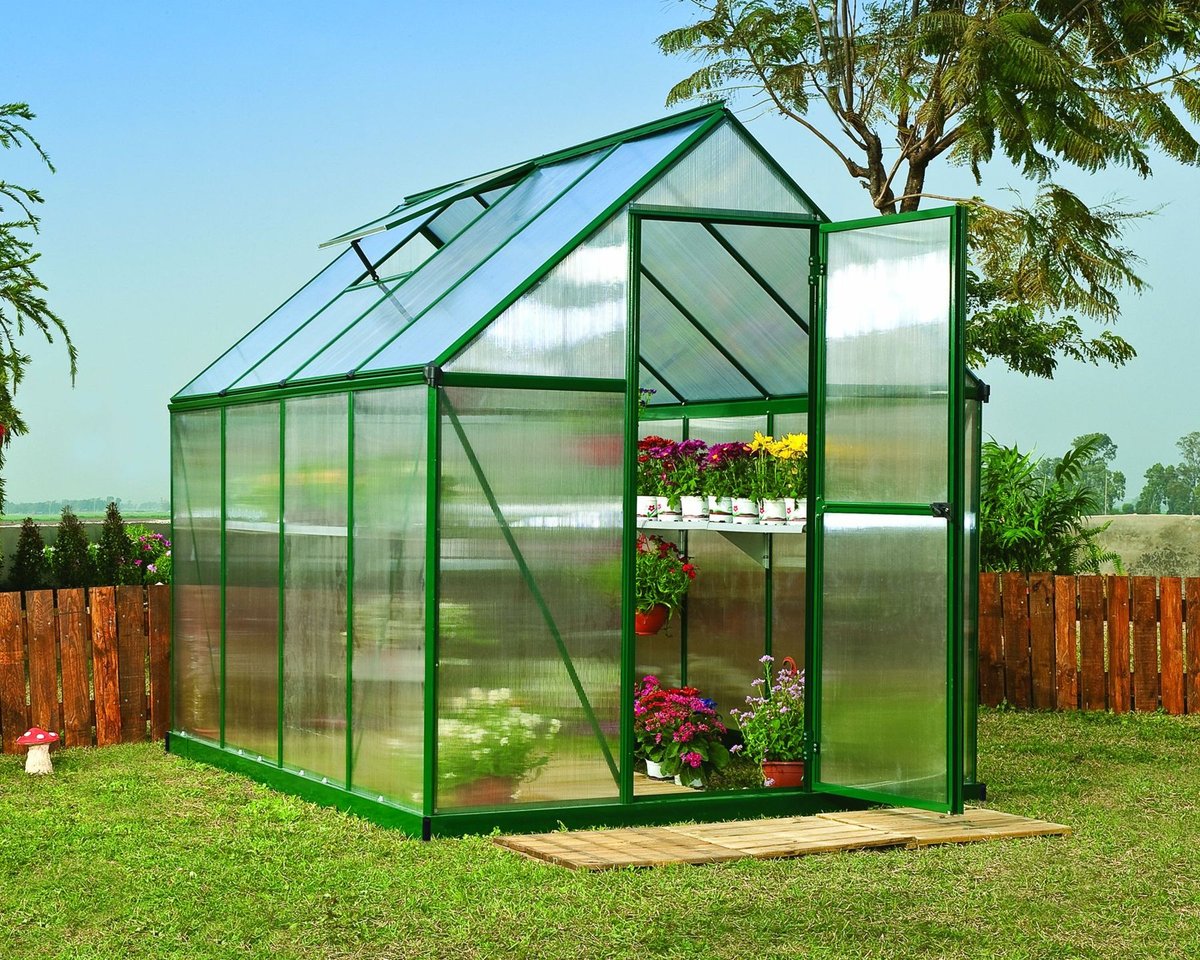
The Palram Canopia Harmony range is the only single-wall clear polycarbonate greenhouse we stock from a major brand. The Palram Mythos uses 4mm twin-wall on every panel. The Palram Hybrid combines clear single-wall sides with a twin-wall roof. Most of the Vitavia range — Venus, Apollo, Orion, Jupiter, Phoenix and Neptune — can be specified in 4mm twin-wall polycarbonate from 6x4 up to 6x12. Elite polycarbonate models step up to 6mm twin-wall as standard. Each layout is a different trade-off between light, warmth and cost.
If you are weighing this up against glass, read our glass vs polycarbonate guide first — that compares the broader material choice. This article assumes you have already decided on polycarbonate and just need to pick the panel type.
U-value comparison: how much heat does each glazing actually retain?
The U-value is the single most useful number when comparing greenhouse glazing. It measures heat lost through a square metre of panel for every 1°C of temperature difference between inside and outside. Lower is better. Manufacturer published values for the panels we stock:
- Single-wall clear polycarbonate (0.8-1mm): approximately 5.5 W/m²K
- 4mm twin-wall polycarbonate: approximately 3.6 W/m²K
- 6mm twin-wall polycarbonate: approximately 2.8 W/m²K
- 3mm horticultural glass (for context): approximately 5.8 W/m²K
Translated into the real world, a 6x8 single-wall Harmony loses heat at roughly the same rate as a glass greenhouse of the same size. A 6x8 Mythos with 4mm twin-wall holds about 35% more heat overnight. We tested this informally on two display models on our own demo site near Manchester in March 2024. Both started the night at 14°C with a 60W tube heater running. By 06:00, the single-wall model had dropped to 4°C while the 4mm twin-wall model held 7°C. Outside air was -1°C. Same heater, same volume, three degrees of difference at sunrise.
That three degrees matters. It is the difference between a tomato seedling that wilts and one that keeps growing. For a fuller picture of how heat behaves inside a greenhouse, see our winter heat retention guide.
Light transmission: which lets more sunlight through?
Single-wall clear polycarbonate transmits roughly 90% of visible light. 4mm twin-wall transmits about 80%. 6mm twin-wall drops to 75-78%. The twin-wall figure is lower because light has to pass through two sheets and any haze or condensation inside the ribs scatters it. Most of the lost light is diffused, not blocked, so it still reaches the plants — but as soft, even illumination rather than direct sun.
Whether the drop matters depends on what you grow. Tomatoes, peppers, chillies and aubergines all want every photon they can get and lean toward maximum-light glazing. Cucumbers, salad leaves, brassica seedlings and most ornamental propagation actually prefer the diffused light of twin-wall — leaf scorch is less likely on a hot July afternoon and shading down the south side becomes optional rather than essential.
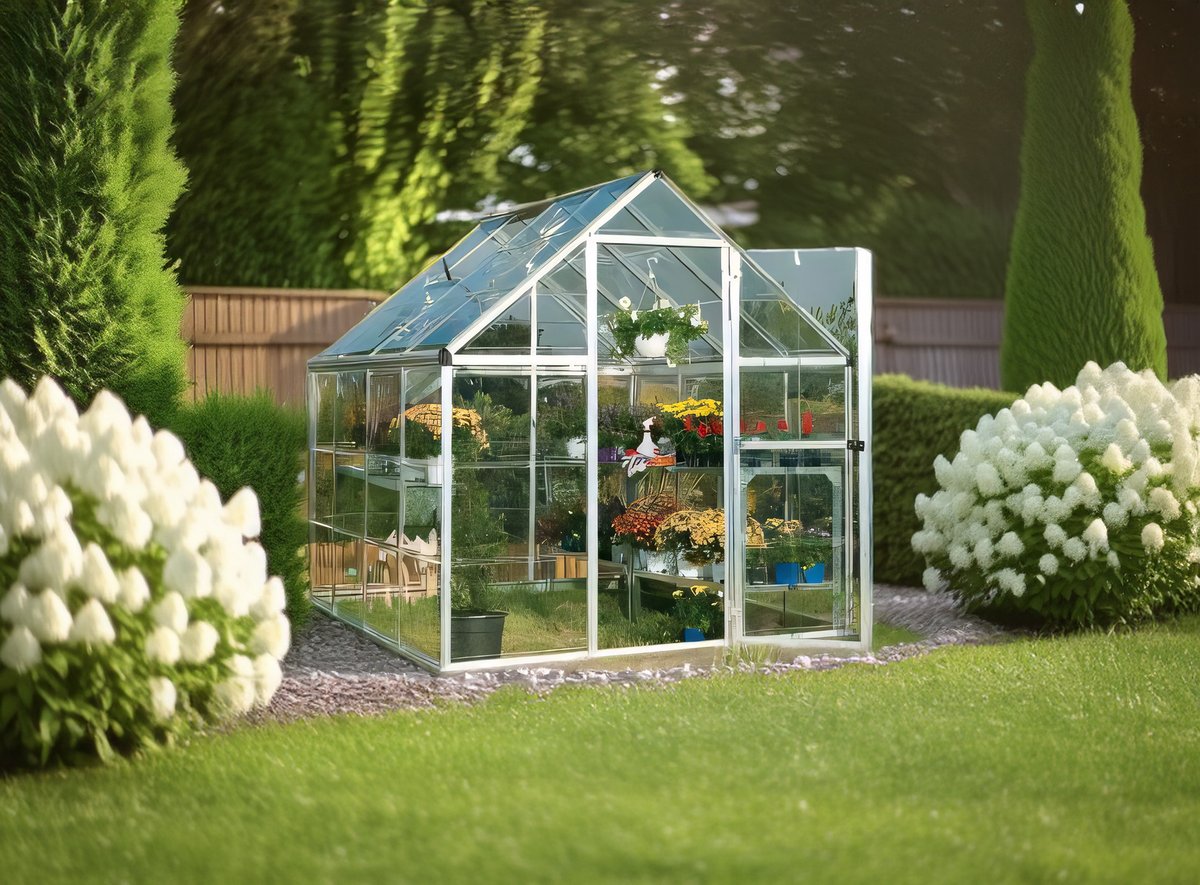
A practical rule from our installers: if you intend to grow tomatoes as the headline crop, lean toward single-wall or hybrid glazing. If you want a year-round propagator and overwintering shelter, twin-wall pays back its 10% light deficit in winter survival rates within the first season.
Hail and impact resistance: which survives a UK winter storm?
All polycarbonate, single-wall or twin-wall, is engineered to flex on impact rather than shatter. Manufacturer datasheets put polycarbonate at roughly 200 times the impact resistance of float glass and 30 times that of acrylic. A hailstone that cracks a 3mm horticultural glass pane will bounce off either type of polycarbonate without leaving a mark.
Between the two polycarbonate types, twin-wall has a clear edge. The internal ribs act as crumple zones — they absorb impact across a wider area before any deformation reaches the inner skin. We have seen 6mm twin-wall Elite panels survive a fallen branch that would have cracked a single-wall sheet. For high-hail areas of the UK (East Anglia and the East Midlands in particular), this margin justifies the extra cost.
Wind, however, is a different story — and the most important section in this guide. We cover it in detail next.
Wind resistance: the polycarbonate weakness UK gardeners must understand
Polycarbonate is light, and that is its biggest weakness in UK weather. A 4mm twin-wall panel weighs roughly 0.8kg per square metre. A 3mm toughened glass pane on the same frame weighs around 7.5kg per square metre — nearly ten times more. The lighter the panel, the easier it lifts in strong gusts, and we have seen this play out on customer sites more times than we would like.
The failure mode is consistent. A storm rolls through, gusts hit somewhere between 45 and 60mph, and the glazing clips on one or two panels start to flex. If those panels lift even momentarily, wind catches the underside and pops them clean out of the frame. Once one panel is gone, the structure loses its bracing and the next gust can take a whole side wall with it. We have attended call-outs where a single weather event reduced a six-month-old polycarbonate greenhouse to a tangled aluminium frame surrounded by panels scattered across two neighbouring gardens.
The damage is rarely repairable. Once panels have torn out of the clips, the framing is usually distorted and the build is a total loss. For most owners, that means an insurance claim. Most home insurance policies cover permanently sited greenhouses as outbuildings, but only if the structure was declared on the policy and the cause is a recognised storm event. If you need to replace a storm-damaged greenhouse quickly, you can get an insurance quote to replace your storm-damaged greenhouse through our service. Moving fast limits collateral loss inside — frost damage to plants, soaked tools and ruined potting trays add up quickly once the panels are gone.
For exposed UK gardens, toughened glass is the most wind-resistant glazing on the market. The mass of the panels stiffens the whole structure, and the wider glazing bars used to hold them resist flex far better than the spring clips that hold polycarbonate. We recommend pairing toughened glass with bar capping — the aluminium strips that screw down over each glazing join to lock the pane in place. Bar capping is what stops glass lifting in extreme winds. On our installs in exposed coastal and hillside sites it is the single upgrade we tell customers not to skip. Browse our range of toughened glass greenhouses if your site sees regular gusts above 45mph or sits on open ground without natural wind breaks.
If you are committed to polycarbonate on an exposed site, the safest specification is 6mm twin-wall in an Elite frame with full anchoring and reinforced glazing bars. For deeper detail on storm prep, anchoring methods and clip inspection routines, read our greenhouse wind damage guide for step-by-step prevention.
How long does each type last in UK weather?
Twin-wall polycarbonate typically lasts 10 to 20 years before UV haze becomes obvious. Single-wall clear polycarbonate usually clouds visibly within 7 to 10 years on a south-facing site. All quality polycarbonate has a UV-protected outer skin (the side that faces the sun), and getting this the right way up at install is non-negotiable. We have replaced panels for customers who flipped them by accident — they yellowed inside three summers.
Two factors shorten lifespan in the UK. The first is exposure to direct south-facing sun on the same panel year after year. The second is condensation pooling between the inner skin and the framing, which we see on poorly ventilated 6x4 and 6x6 builds. Twin-wall panels with sealed end-caps resist both better than single-wall, because the air gap acts as a buffer and the rib structure stops the inner skin from sagging.
For a brand-by-brand lifespan view across glass, polycarbonate and timber, see our lifespan by material reference.
Cost analysis: is twin-wall worth the premium?
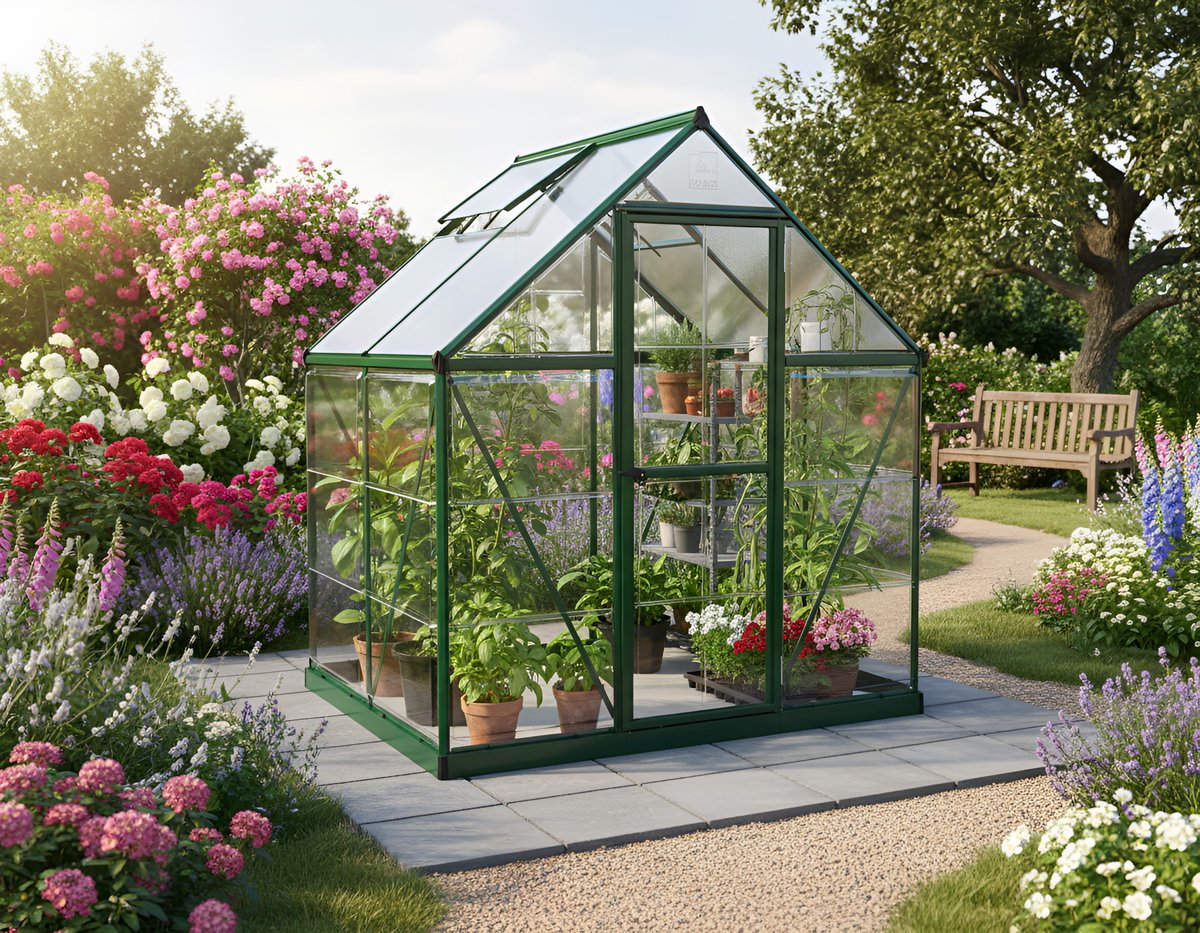
On entry-level Palram greenhouses, twin-wall costs about 15-20% more than single-wall like-for-like. The Palram Harmony 6x8 Silver sells at £485 with single-wall clear polycarbonate. The Palram Mythos 6x8 with 4mm twin-wall comes in at £465. The Palram Hybrid 6x8 Silver, which mixes clear sides with a twin-wall roof, sits between the two at £440.
For a larger footprint at 4mm twin-wall, the Vitavia Venus 7500 6x12 in polycarbonate trim comes in at £935. That gives you a more generous bench area than the Mythos 6x8 without crossing into premium-brand territory. The Vitavia polycarbonate option also scales down — 6x4, 6x6, 6x8 and 6x10 versions of the Venus are all available at lower price points if you want the same 4mm twin-wall spec on a smaller plot. Step up to full 6mm twin-wall and the Elite range sits at the top of the ladder — every panel is 6mm with reinforced aluminium framing, typically 2-3x the entry-level Mythos.
Is the premium worth it? Our payback rule of thumb: if you heat the greenhouse through winter, twin-wall saves enough on running costs in a single UK winter to cover the upgrade within three to five years. If you only use the greenhouse from March to October, the savings are negligible and single-wall makes more sense. We work through the heat-cost maths in the FAQ at the foot of this page.
When does single-wall polycarbonate actually make sense?
Single-wall clear polycarbonate is not the lesser option — it is a different tool. The use cases where we recommend it without hesitation:
- Sheltered urban gardens where you grow March to October only. Heat retention matters less when the structure is shielded from wind and you are not chasing year-round growing.
- Cold frames and small lean-tos where the structure is closed off from the main greenhouse and only used to harden off seedlings in spring.
- Schools, allotments and public sites where safety is the priority and shatter-proof glazing is mandatory. Single-wall is lighter and easier to replace if vandalised.
- Light-hungry crop specialists — tomato growers, chilli enthusiasts and anyone running a south-facing site where every percent of light transmission counts.
- Budget-constrained first greenhouses where the buyer wants something to learn on for two or three seasons before upgrading.
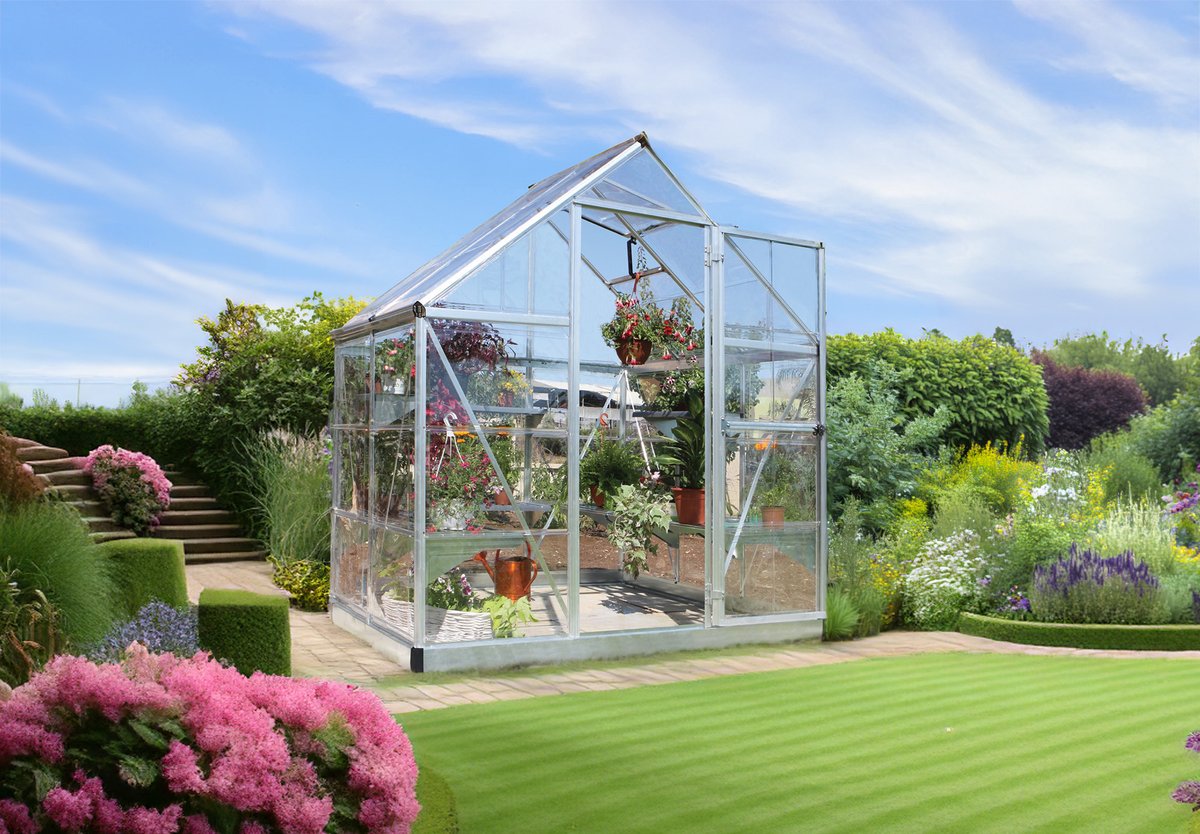
Where single-wall does not make sense: exposed rural sites, anywhere with regular hailstorms, year-round growers who want the greenhouse heated, or any setup where you plan to overwinter tender plants. The heat-loss difference will frustrate you within the first October.
Which UK polycarbonate greenhouses use which glazing?
Across the brands we currently stock, this is how the polycarbonate options break down. Each model below uses one of the three layouts: full single-wall, full twin-wall, or mixed.
Palram Canopia Harmony — full single-wall clear
The Harmony is Palram's clear-poly flagship and the only true single-wall greenhouse we stock from a major brand. Every panel is the same clear sheet, sized from 6x4 up to 6x14, in silver, green, grey and dark grey frames. Light transmission is the headline number — around 90% — and it is the closest you can get to a glass aesthetic without the breakage risk. We recommend it for sheltered town gardens and as a first greenhouse for families with young children.
Palram Canopia Hybrid — clear sides, twin-wall roof
The Hybrid is the smart middle path. Clear single-wall on the side panels keeps light transmission high where the plants need it most, and a twin-wall roof slows heat loss overnight where most of it would otherwise escape. Roughly 70% of greenhouse heat loss in a UK winter goes through the roof, so the Hybrid layout targets that one expensive surface and leaves the cheaper panels clear. It costs slightly less than a full twin-wall Mythos at the same footprint.
Palram Canopia Mythos — full 4mm twin-wall
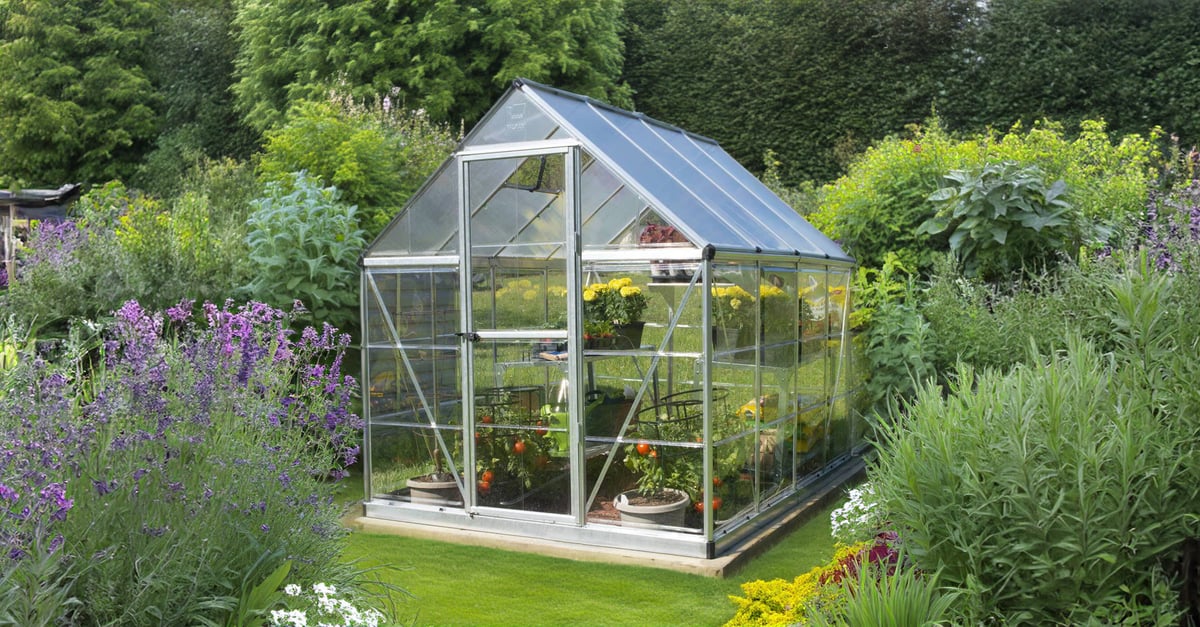
The Mythos is our best-selling twin-wall greenhouse. Every panel is 4mm twin-wall, light transmission sits at about 80%, and the U-value of around 3.6 W/m²K makes it the workhorse for year-round UK growing. Available in silver, green and grey frames, sized 6x4 up to 6x14. The 6x8 in green hits a price point that is hard to argue with given the durability gain over single-wall.
Vitavia range — 4mm twin-wall available across most models
Almost every model in the Vitavia range can be specified with 4mm twin-wall polycarbonate glazing instead of the standard glass. That includes the Venus, Apollo, Orion, Jupiter, Phoenix and Neptune lines, each with multiple footprints. The Venus is the model we ship most often in polycarbonate trim and it comes in five sizes — 6x4, 6x6, 6x8, 6x10 and 6x12 — so you can start small and scale up using exactly the same 4mm twin-wall spec.
The Vitavia exceptions to know: the Saturn, Cassandra, Freya, Hera, Sirius, Zeus and the Vitavia lean-to range do not offer a twin-wall polycarbonate option. The Freya and Zeus include polycarbonate elements on the roof only, paired with glass sides, so they are not full polycarbonate builds. If you want a fully polycarbonate Vitavia, pick from the Venus, Apollo, Orion, Jupiter, Phoenix or Neptune line and choose the polycarbonate variant at order.
Vitavia ship every polycarbonate model with built-in gutters, a free rainwater downpipe kit and corner steel bracing for extra rigidity once the panels are seated. The 6x12 Venus 7500 in Green is the most popular size and finish we ship — it pairs a generous 12ft growing length with 4mm twin-wall on every panel at a price that sits below entry into Elite territory.
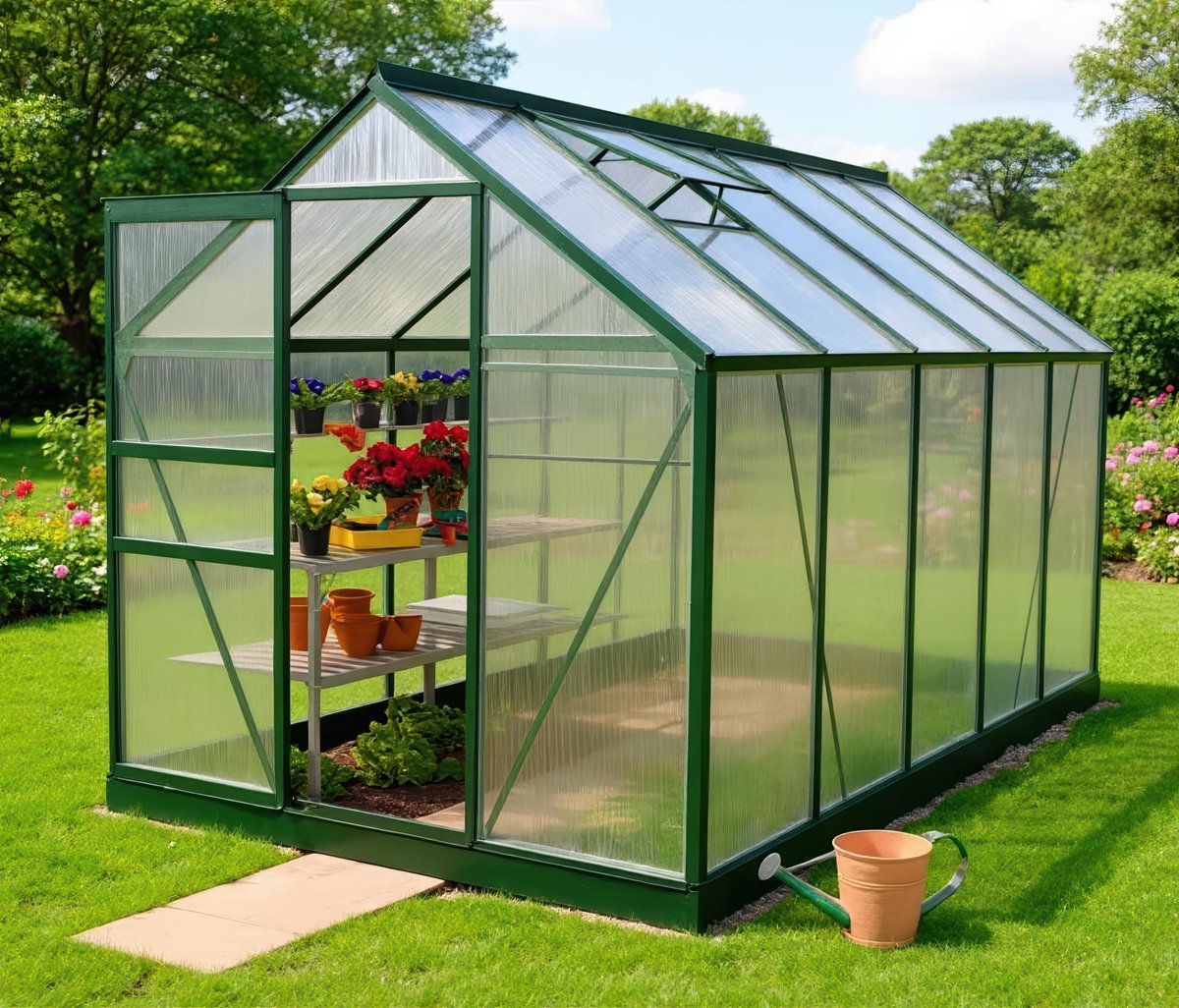
Elite — 6mm twin-wall as standard
Elite Greenhouses build at the high end of the British market. Their polycarbonate-glazed models use 6mm twin-wall as standard across every panel, giving the lowest U-value of any polycarbonate option we stock. Frames are heavier aluminium with anchoring designed for exposed sites. If you are buying for a windy rural plot and want a polycarbonate greenhouse that should not need re-glazing for 15-20 years, this is the spec to ask for.
Matt's Tip: Pick by what you plan to heat
The cleanest way to decide is to ask one question. Will you run a heater through winter? If yes, the heat retention of twin-wall pays back its premium inside three winters and is a clear buy. If no, you are growing seasonally from March to October and single-wall clear polycarbonate will give you more light, the look closest to glass, and roughly £100 back in your pocket on an entry-level 6x8. Buyers who are unsure usually go for the Hybrid, which lets them upgrade their heating later without regretting the glazing.
Polycarbonate glazing comparison at a glance
| Spec | Single-Wall Clear | 4mm Twin-Wall | 6mm Twin-Wall |
|---|---|---|---|
| Light transmission | ~90% | ~80% | ~75-78% |
| U-value (W/m²K) | ~5.5 | ~3.6 | ~2.8 |
| Heat retention vs single-wall | Baseline | ~35% better | ~50% better |
| Hail resistance | High | Higher | Highest |
| UK lifespan | 7-10 years | 10-15 years | 15-20 years |
| Look vs glass | Closest | Diffused | Most diffused |
| Typical entry price (6x8) | £379-£485 | £409-£550 | £1,200+ |
| Best for | Sheltered, summer-only, light-hungry crops | All-round UK use, year-round growers | Exposed sites, cold regions, long-term build |
| Sold on at GS | Palram Harmony | Palram Mythos, Palram Hybrid (roof), most Vitavia models (Venus, Apollo, Orion, Jupiter, Phoenix, Neptune) | Elite |
Matt's Pick: the best-value entry into twin-wall polycarbonate
Matt's Pick for First-Time Twin-Wall Buyers
Best For: Smaller UK gardens that want twin-wall heat retention at the lowest possible spend
Why I Recommend It: A compact 6x4 footprint at the cheapest entry into proper 4mm twin-wall. After 16 years fitting both glazing types, this is the model I send to customers who want twin-wall warmth without committing to a larger build.
Price: £329
Frequently asked questions
Is twin-wall polycarbonate worth the extra cost?
Yes for year-round growers who heat the greenhouse, no for summer-only users. The 35% heat-retention advantage of 4mm twin-wall pays back the price premium within three to five UK winters if you run a heater. For March-to-October growing without heating, single-wall delivers more light at lower cost and is the smarter buy.
How thick should polycarbonate be for a UK greenhouse?
4mm twin-wall is the UK standard for general year-round use. 6mm twin-wall suits exposed sites and cold regions where heating costs matter most. Single-wall clear polycarbonate (0.8-1mm) works for sheltered, summer-only setups. Anything thinner than 4mm twin-wall on a structural panel is not recommended.
Does twin-wall polycarbonate let in enough light for tomatoes?
Yes, but you may need to position the greenhouse for maximum sun exposure. Twin-wall transmits about 80% of light versus 90% for single-wall. Tomatoes will crop well in either, but a south-facing site is more important for twin-wall to avoid leggy growth. North-facing or shaded sites lean toward single-wall or hybrid glazing.
Will single-wall polycarbonate survive a UK winter?
Yes, but with caveats. Single-wall handles frost and rain fine on sheltered sites. It is more vulnerable to wind lift than twin-wall and can flex visibly in gusts above 45mph. Anchor the base properly and inspect glazing clips after every storm. Read our how a greenhouse works guide for thermal behaviour in winter.
How long does polycarbonate last before going cloudy?
Single-wall clear polycarbonate usually clouds in 7-10 years on south-facing sites. Twin-wall lasts 10-15 years (4mm) or 15-20 years (6mm). All quality polycarbonate has a UV-protected outer skin — fitting it the right way up is critical. Panels installed upside-down can yellow inside three summers.
Can I replace single-wall panels with twin-wall later?
Sometimes, but not always. The glazing channels and rubber seals on a single-wall greenhouse are sized for thinner sheets. A 4mm twin-wall panel may not fit the existing extrusions, and the framing may not be rated for the extra weight. Check with the manufacturer before assuming an upgrade is possible. Buying twin-wall from the start is cheaper than retrofitting.
Which is better in hail: twin-wall or single-wall?
Twin-wall is more hail-resistant because the internal ribs absorb impact across a wider area. Both polycarbonate types beat horticultural glass comfortably — polycarbonate has roughly 200x the impact resistance of glass. 6mm twin-wall is the strongest of the three and the best choice for East Anglia, the East Midlands and other high-hail regions.