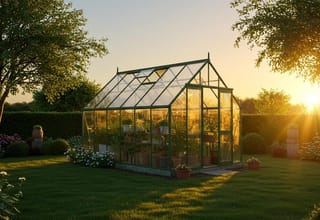
25 Greenhouse Ideas, Uses & Designs UK: From Balcony to Walk-in
Greenhouse ideas in the UK split into three jobs: save space, grow more, or make a feature. From our work with Greenhouse Stores customers since 2012, our most-copied designs are the anthracite apex on a paved base, the lean-to up a side return, and the wooden greenhouse used as a seating retreat. Below are 25 ideas, every one photographed in a real customer's garden.
Key Takeaways
- Greenhouses start at a 2x4 lean-to for balconies and courtyards, from £441.
- Black and anthracite frames now sell faster than silver in our orders since 2023.
- A 6x6 or 6x8 suits most first-time UK growers and fits a small lawn.
- Wooden greenhouses last 25 years or more; aluminium needs almost no upkeep.
- A paved or slab base outlasts a soil base and keeps doors running true.
- Lean-to and wall designs add growing space where a freestanding frame will not fit.
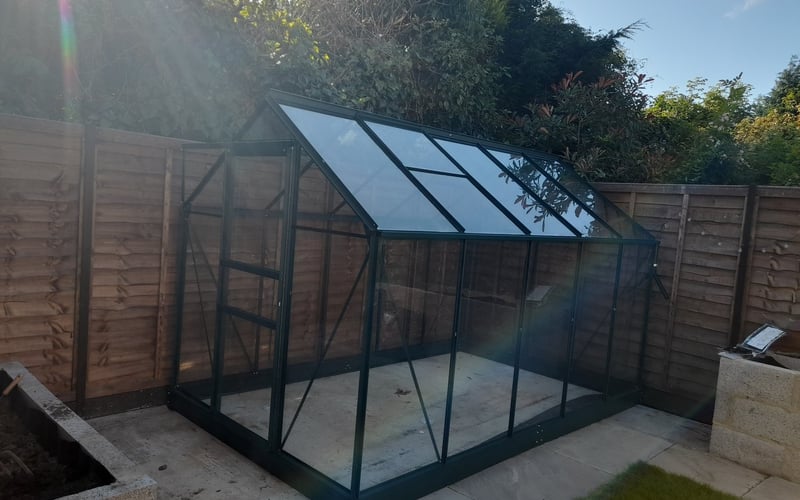
These photos are real Greenhouse Stores installs
Almost every image in this guide is a real greenhouse our own fitters built in a customer's garden. These are not stock photos. We have installed over 3,000 greenhouses across the UK, and 15 of the 16 photos below come straight from those jobs. The wooden greenhouse is our own Swallow product shot.
Installer's Note
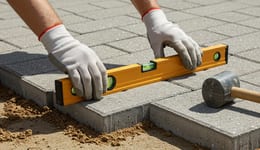
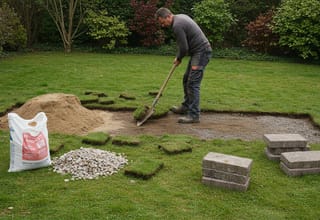
From our work with Greenhouse Stores customers since 2012, the single best decision a customer makes is the base. Last spring we built a 6x8 anthracite Vitavia on a sloping plot near Sheffield. We laid a four-course brick plinth to level it, then bedded the frame on 50mm slabs. Two winters on, the sliding door still glides. Skip that groundwork and the frame racks within a year. Pick the idea you love, but plan the base first.
Use the sections below to shortlist by space, by shape, by size, then by what you want to grow. Every idea links to the real range we sell at Greenhouse Stores. For the full picture on profiles and rooflines, read our guide to greenhouse roof shapes compared.
Compact greenhouse ideas for small gardens and balconies
Small space is the most common starting point. These five ideas grow real crops on a patio, a balcony, or a narrow side return.
1. The balcony and patio mini greenhouse
A mini greenhouse stands against a wall and takes a footprint the size of a doormat. It holds three or four shelves of seedlings, salad and herbs. Most are aluminium with a clear cover, roughly 1.3m tall. They suit a balcony, a courtyard, or a rented flat where a full frame is not allowed. Weigh the base down or strap it to the wall, as the lightweight frame can lift in wind. For ideas on what fits, see our pick of the best mini greenhouses, or browse the full mini greenhouses range.
2. The lean-to up a side return
A lean-to greenhouse uses a wall or fence as its back. That narrow strip down the side of a house is usually wasted ground. A 2x4 or 4x6 lean-to turns it into a sheltered growing wall. The house gives off heat overnight, so plants stay a degree or two warmer. South or west-facing walls work best for light. This is our top pick for terraced and town gardens.
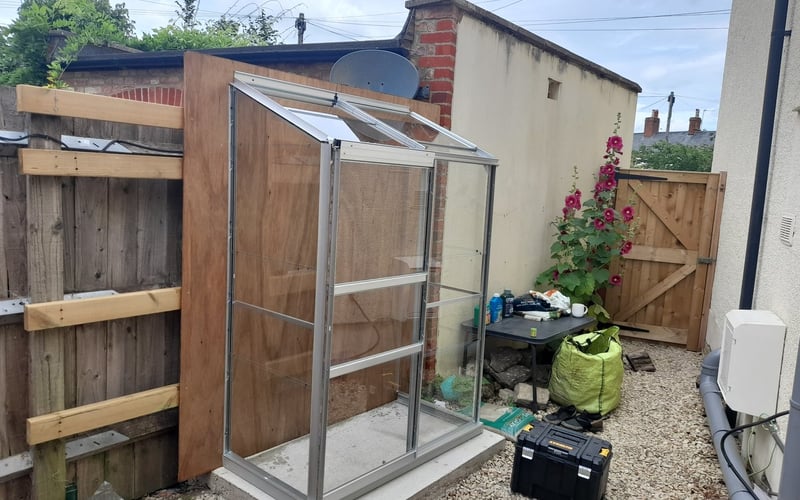
3. The wall-mounted growhouse
A growhouse is a half-depth frame bolted flat to a wall. It projects barely 400mm, so a path stays clear in front of it. Tiered shelves hold trays of cuttings and pots of strawberries. It is the smallest permanent glasshouse idea we sell. Fit it at chest height and you tend plants without bending. Good for a passage, a yard, or beside a back door.
4. The cold frame as a starter greenhouse
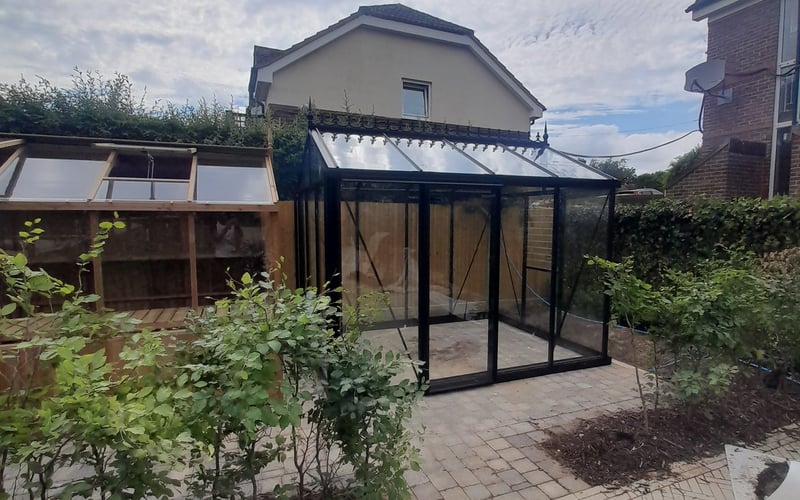
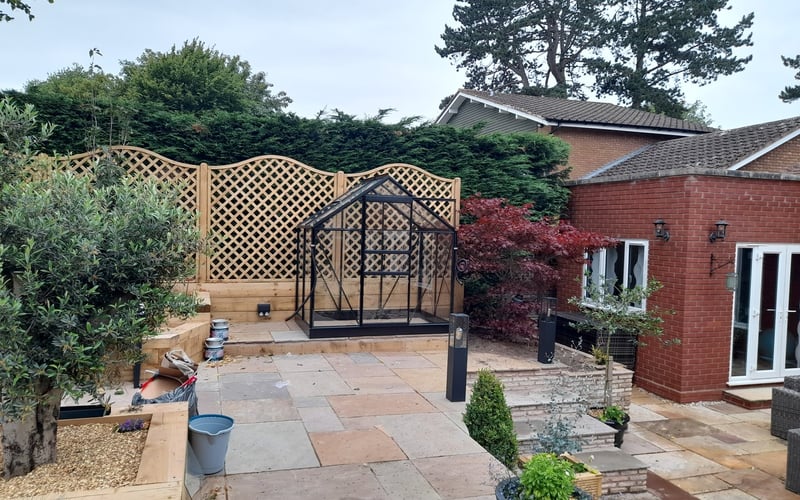
A cold frame is a low, lidded box that does a greenhouse job at ankle height. It hardens off seedlings, protects winter salad, and shelters alpines. Pair one beside a greenhouse and you double your propagation space for very little money. Prop the lid on warm days to vent. The photo below shows one of our installs: a black glasshouse with a matching cold frame alongside on a herringbone patio.
5. The pop-up plastic greenhouse
A pop-up greenhouse is a zip-up plastic shell on a steel frame. It costs the least of any option and stores flat in winter. Use it for a single growing season, or to overwinter a few tender pots. The cover degrades in UV after two or three years. Treat it as a stepping stone before a glass frame, not a long-term fixture.
Greenhouse design ideas by shape and style
Shape sets the look and the growing height. These eight ideas run from the classic apex to the statement Victorian.
6. The classic apex aluminium greenhouse
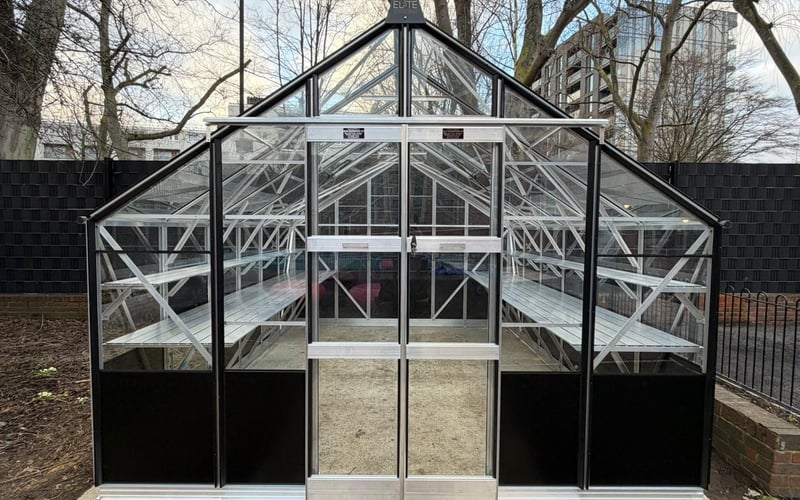
The apex is the shape most people picture: straight sides and a pitched roof. It gives full headroom down the centre and sheds rain and snow well. Aluminium frames never rot and need no painting. Silver is the budget choice and still our volume seller. This is the safe, sensible idea for a first proper greenhouse.
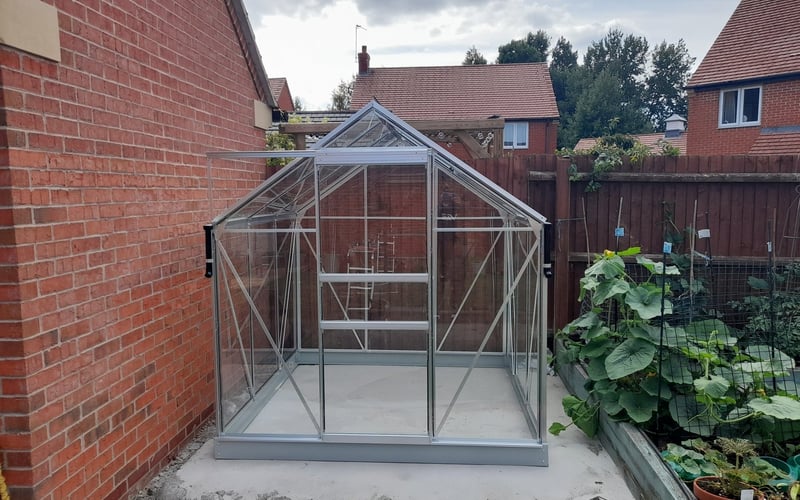
7. The anthracite modern greenhouse
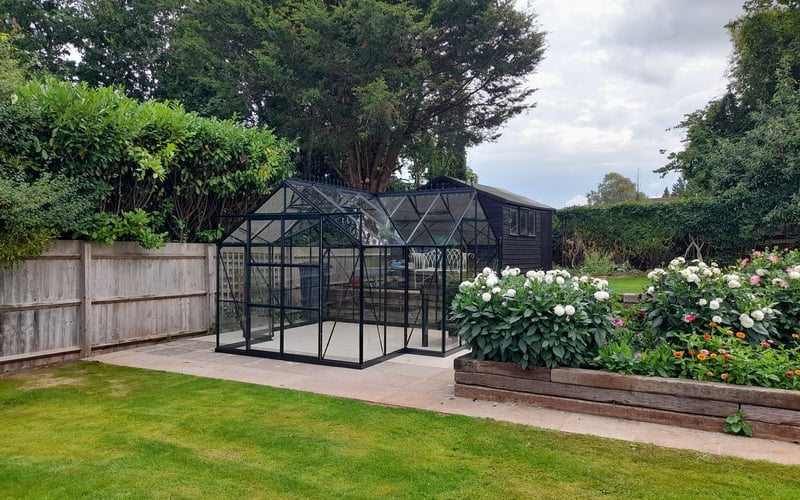
Powder-coated anthracite and black frames have taken over since 2023. They read as modern and disappear against a fence or a dark hedge. The finish is baked on, so it never needs repainting. On our orders, dark frames now outsell silver. They cost a little more, around £60 to £120 over the silver version. Pair one with a slate-grey patio for a sharp, current look.
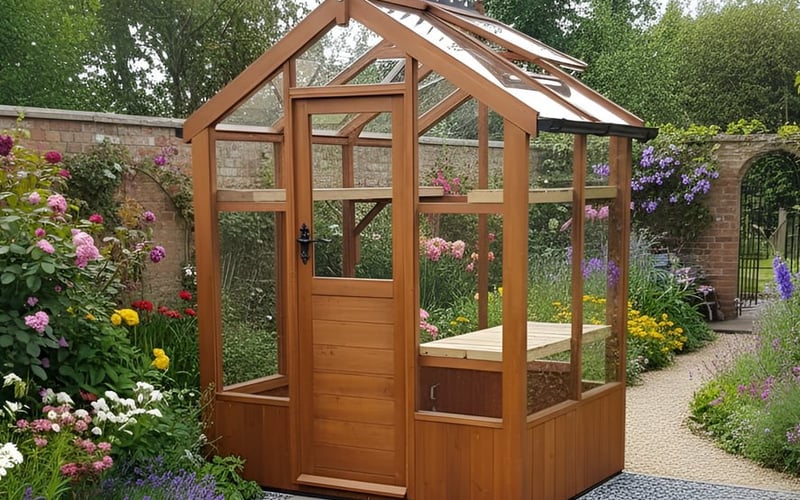
8. The wooden greenhouse
A wooden greenhouse brings warmth that metal cannot. We supply Swallow models built from thermowood, a heat-treated timber that resists rot. Wood holds heat better than aluminium, so it suits colder, exposed plots. It needs a coat of treatment every few years. Expect 25 years or more of life from a well-kept frame. Free installation comes with every Swallow wooden greenhouse we sell.
|
Matt's Pick for a first greenhouseBest For: a sensible, do-everything 6x6 on a small lawn Why I Recommend It: we fit more Venus 6x6 frames than any other model. The toughened glass shrugs off footballs, and spares are easy to get years later. Price: £559 |
9. The Victorian ornamental greenhouse
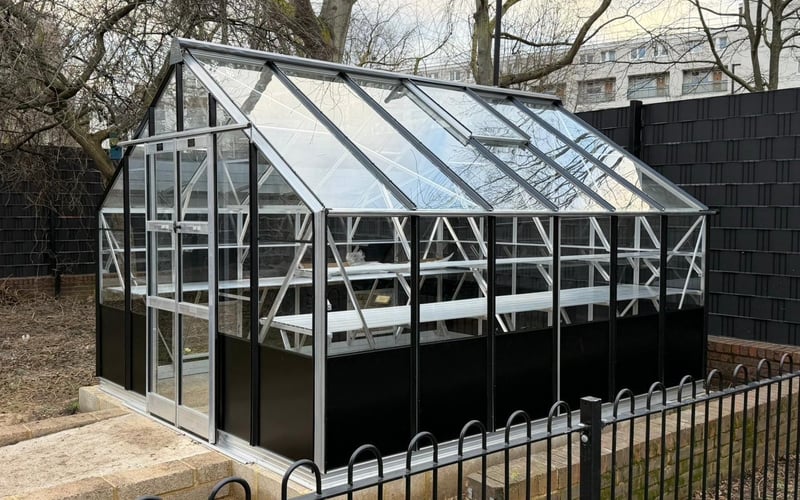
A Victorian greenhouse is built to be looked at. Curved eaves, a roof crest and a finial turn it into a garden ornament. We fit Janssens models with cast-iron styling and toughened safety glass. They sit well at the end of a lawn or path. Add low railings and a gravel surround to frame it. This is the idea for a period house or a formal plot.
Shop the Janssens Victorian greenhouse →
10. The hexagonal greenhouse
A hexagonal greenhouse is a six-sided pavilion that suits the centre of a garden. It looks the same from every angle, so it has no ugly back. The tiered staging follows the walls for a neat display. It is ideal for showing off pot plants rather than rows of veg. Footprint is tight, so think of it as a feature first. Browse the hexagonal greenhouses for sizes.
11. The orangery-style greenhouse
An orangery greenhouse blends a greenhouse with a garden room. It has a higher eaves line and a part-solid roof for shade. Use it to grow citrus in pots and to sit out of the rain. It is wider and taller than a standard apex, so it needs space. This is a halfway house between glasshouse and garden building. See the orangery greenhouses range for the look.
12. The dwarf wall and brick-base greenhouse
A dwarf wall greenhouse sits on a low course of brick rather than glass to the ground. The brick base cuts heat loss and stops mowers cracking low panes. It also lifts staging to a comfortable working height. Match the brick to the house and it looks built-in. We often raise frames on a plinth to level a sloping garden, as below. For the method, read our brick plinth build guide.
13. The wooden lean-to against the house
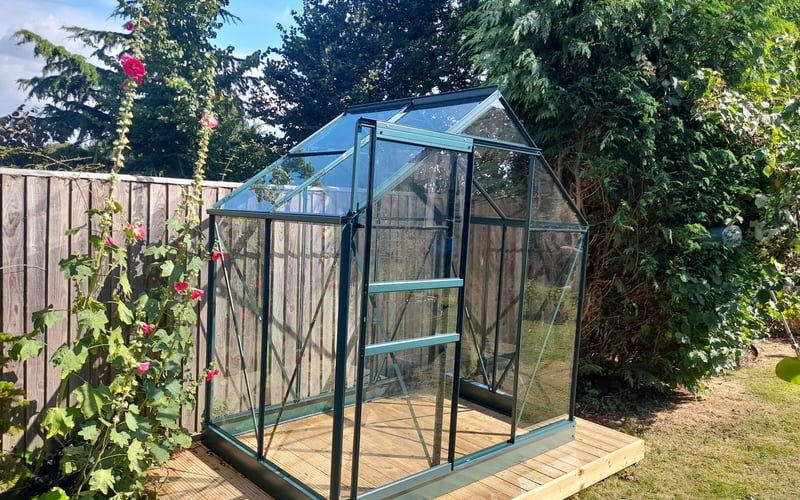
A wooden lean-to marries timber warmth with a wall-backed footprint. It looks like part of the house rather than a bolt-on. The solid back wall stores daytime heat and shelters tender crops. Run it the length of a rear wall for a long, narrow growing bench. Glazed to the ground or on a low wall, both work well. This is a smart way to grow against a south-facing house.
Greenhouse ideas by size: from 6x4 to walk-in
Size decides how much you grow and how the garden feels. Here are four ideas from the smallest practical frame to a full walk-in.
14. The 6x4 starter greenhouse
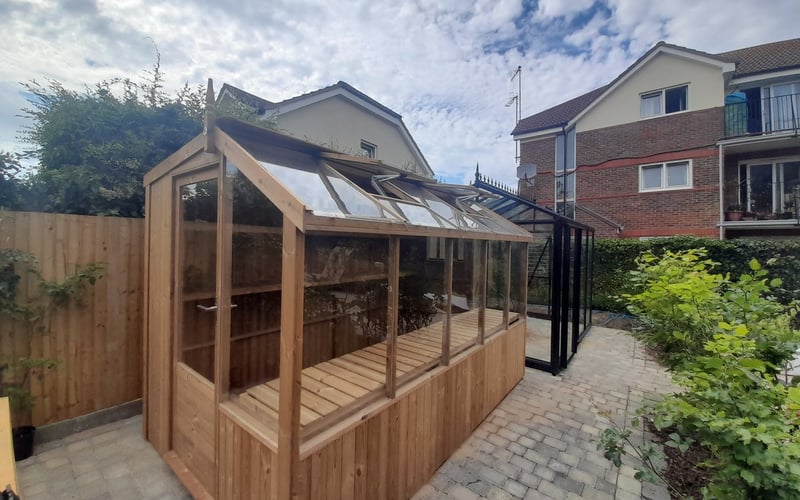
A 6x4 is the smallest frame most growers should buy. It holds staging down one side and grow-bags down the other. You can raise tomatoes, peppers and a tray or two of seedlings. It fits a small lawn or a corner without dominating. Many customers outgrow it in two seasons, so size up if you can. See the 6x4 greenhouses to compare.
15. The small greenhouse for a courtyard
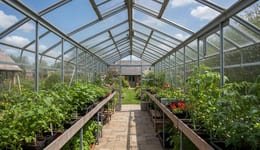
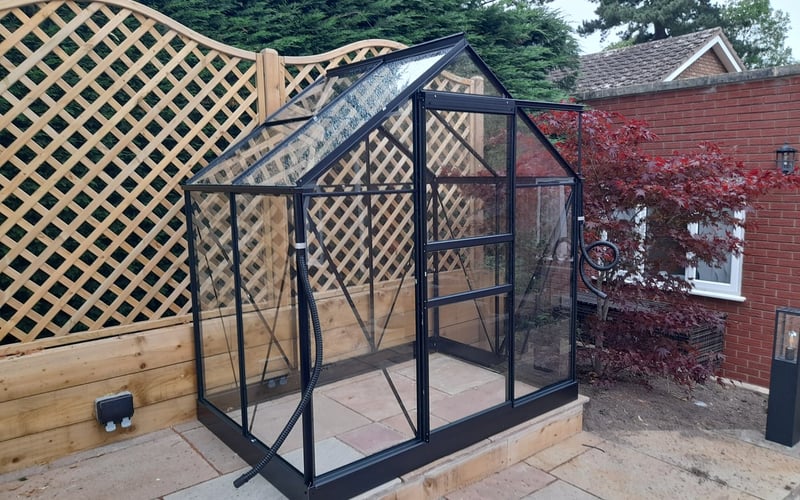
A small greenhouse, around 6x6 or 6x8, is the sweet spot for most gardens. It gives a clear central path with growing room either side. Tuck it against a decorative trellis and it screens a working corner. You get real growing space without losing the whole lawn. This is the size we deliver more than any other.
16. The large walk-in greenhouse
A large greenhouse, 8x10 and up, lets you garden under glass all year. Double doors take a wheelbarrow straight in. You can run staging, grow-bags and a row of cordon tomatoes at once. It changes how you garden, not just what you grow. Give it an open, sunny spot away from overhanging trees.
17. The polycarbonate budget greenhouse
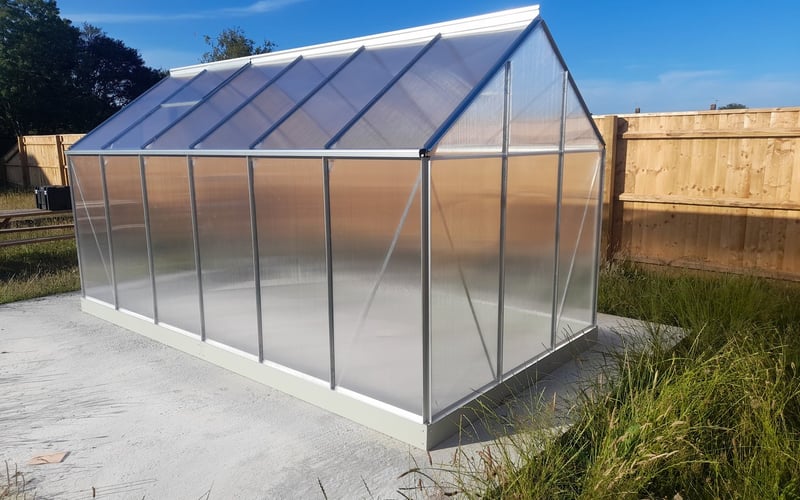
Polycarbonate glazing swaps glass for twin-wall plastic sheets. It will not shatter, so it suits gardens with children or footballs. The twin wall traps air and holds a little more heat than single glass. Light is diffused rather than clear, which plants like. It scratches over time and can flex in gales. A good-value idea for exposed or family gardens.
Shop polycarbonate greenhouses →
Matt's Installation Tip
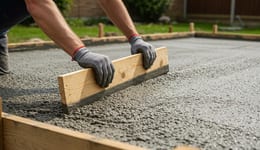
Why 50mm paving slabs beat a solid concrete pad: they flex with ground movement and will not crack the base frame. We have seen concrete pads heave 3mm to 4mm in a hard frost. That is enough to jam a sliding door on a Vitavia. Bed the frame on slabs around the edge, leave soil in the middle for borders, and the doors stay true for years.
Planning the base and the build
The base and a square build make or break a greenhouse. We fit greenhouses nationwide and have written down what we have learnt on the job. Let us handle it with our professional greenhouse installation service. Doing it yourself? Read the 10 most common installation mistakes first. Then plan the ground with our guide to greenhouse flooring and base options.
What people actually use a greenhouse for
The design only matters once you know the job. These six uses are what our customers grow most.
18. Year-round salad and veg
A greenhouse stretches the UK growing season by two months at each end. Sow salad in February and crop it into November. Raised beds inside keep roots warm and drainage sharp. A 6x8 feeds a family of four through summer with room to spare. This is the most practical reason to own one.
19. Tomatoes and cordon crops
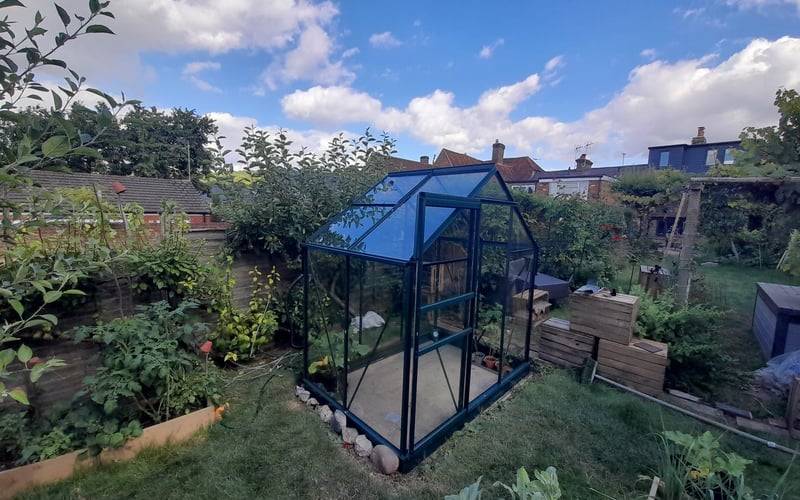
Tomatoes are the crop that sells most first greenhouses. Under glass they ripen earlier and dodge outdoor blight. Train cordons up strings to the roof bar to save floor space. Cucumbers, peppers, chillies and aubergines all enjoy the same warmth. Keep vents open on hot days to set fruit. A taller 6x10 frame gives cordons room to climb.
20. Seed propagation and cuttings
A greenhouse is a propagation engine in spring. A heated bench or a windowsill propagator starts seeds weeks early. Cuttings root faster in the steady warmth and bright light. Prick out, pot on, and harden off all in one place. For the full method, read our guide to propagating seeds and cuttings. Even a small frame raises hundreds of plants a year.
21. Overwintering tender plants
A greenhouse keeps frost off plants that would die outdoors. Move pelargoniums, fuchsias and citrus inside before the first frost. A frost-free 5C is enough for most tender species. Wrap pots in fleece on the coldest nights and cut watering right back. Come spring, you bring out mature plants instead of buying new ones. This use alone can pay for the frame.
22. Orchids, cacti and succulents
Specialist collections thrive in the controlled air of a greenhouse. Cacti and succulents bask in the bright, dry heat of summer. Orchids prefer shade cloth and a humid corner away from direct sun. Staging at waist height puts the display at eye level. A hexagonal or Victorian frame puts a collection on show. This is growing for pleasure, not the plate.
23. Herbs all year round
A greenhouse keeps the kitchen in fresh herbs through winter. Basil, coriander and parsley crop months longer under glass. Grow them in pots on the staging for easy picking by the door. Mint and chives bounce back early after the shortest days. For a month-by-month plan, see our guide to growing herbs year-round. It is the easiest win for a new owner.
Lifestyle greenhouse ideas: seating, potting and combi designs
A greenhouse can be a place to be, not just a place to grow. These two ideas blend growing with living space.
24. The greenhouse and seating retreat
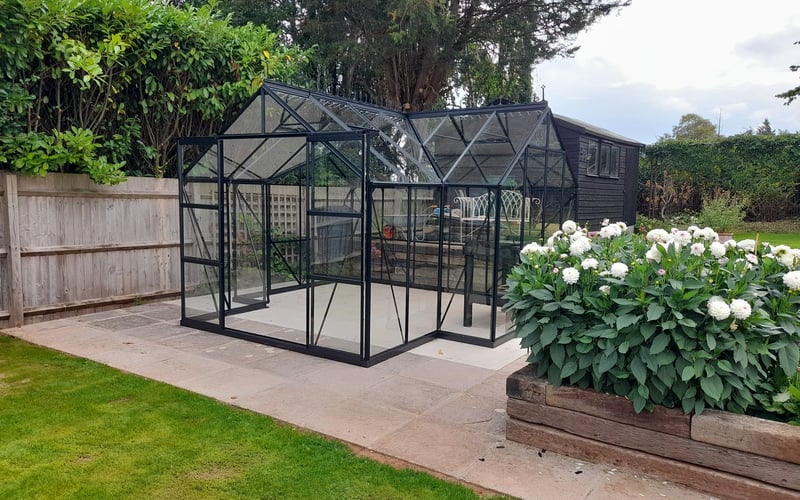
Leave room for a chair and a greenhouse becomes a sanctuary. A bistro set on a paved apron turns it into a sun-trap reading spot. Plants on one side, a cup of tea on the other. It is the warmest seat in the garden on a bright March day. Add a paved terrace in front and it earns its place all year. For more on this, read about your greenhouse as a garden sanctuary.
25. The potting shed and greenhouse combi
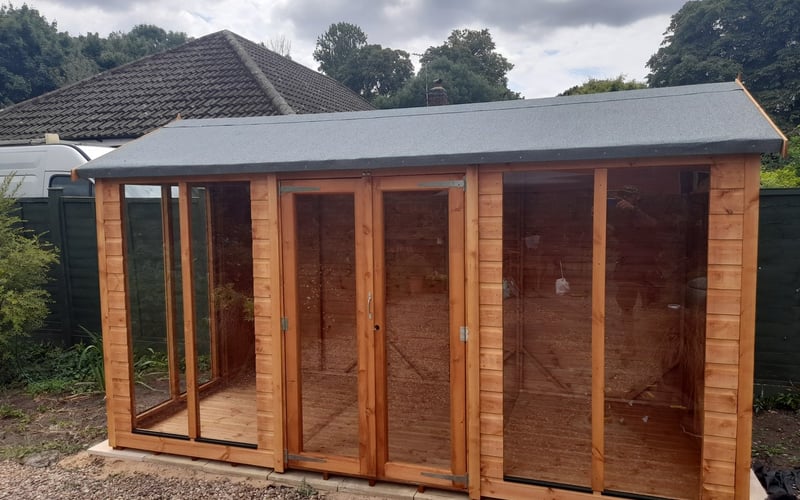
A combi design joins a glazed growing end to a solid potting end. You pot up in the dry, then move trays next door to grow on. The shed end stores compost, tools and the mower out of sight. It is two garden buildings in one footprint. We supply timber combis that look like a single, smart structure. For what to do in the shed end, see our guide to what to grow in a potting shed.
Matt's Tip: pick the idea, then size up one notch
The regret I hear most is buying too small. Almost nobody tells me their greenhouse is too big. Whatever idea you settle on, go one size up from your first instinct. A 6x8 instead of a 6x6 costs a little more but doubles what you can do. You grow into the space within a season, I promise.
How to choose the right greenhouse idea for your garden
Work through four questions in order. They turn 25 ideas into one shortlist.
First, how much ground can you give it? That sets compact, small, or walk-in. Second, what will you grow most? Veg wants width; a collection wants a feature shape. Third, what is the look? Silver for budget, anthracite for modern, timber for warmth. Fourth, what is the budget once a base is added? The table below sets out five proven ideas at five price points. For the full money picture, see how much a greenhouse costs.
| Idea | Best for | Footprint | Price | Matt's verdict |
|---|---|---|---|---|
| Access 2x4 lean-to | Balcony, courtyard, side return | 2x4 | £441 | Cheapest way to start growing |
| Vitavia Venus 6x6 (Matt's Pick) | First proper greenhouse | 6x6 | £559 | The best all-rounder we sell |
| Vitavia Apollo 6x10 | Serious veg and cordons | 6x10 | £829 | Most growing space per pound |
| Swallow Robin 5x4 | Looks and longevity | 5x4 | £2,669 | Buy-it-for-life timber |
| Janssens Victorian 10x15 | Statement centrepiece | 10x15 | £4,640 | The showpiece of the range |
"We pick the ranges we fit ourselves. The Vitavia and Elite frames brace at the eaves and ridge, so they hold their shape on exposed plots where cheaper imports rack and leak. Swallow timber is heat-treated, not softwood, so it lasts decades not years. I will not stock a greenhouse my own team would not want to build."
- Matt W, Greenhouse Stores
Whichever idea fits, the team at Greenhouse Stores can match it to a frame and a base for your plot.
Frequently asked questions
What is the best greenhouse idea for a small garden?
A lean-to up a side return is the best small-garden idea. It uses wasted ground beside the house and borrows wall heat. A mini greenhouse or a 6x4 apex also works where a lean-to will not fit. Match the frame to the sunniest wall or corner you have.
How much does a greenhouse cost in the UK?
Greenhouses run from around £441 for a small lean-to to several thousand for a Victorian. A practical 6x6 like the Venus sits near £559. Budget for a base on top, as it adds to the frame price. Timber and ornamental designs cost the most.
Are black or silver greenhouses better?
Black and silver perform the same; the difference is looks and price. Silver costs less and is our volume seller. Anthracite and black read as modern and now outsell silver on our orders. The powder coat never needs repainting either way.
Do I need a base for a greenhouse?
Yes, every greenhouse needs a firm, level base. Paving slabs or a dwarf wall outlast a bare soil base and keep doors running true. A concrete pad works but can crack in frost. Plan the base before you pick the frame.
What can I grow in a greenhouse all year?
You can grow salad, herbs, tomatoes in season, and overwinter tender plants. Spring is for propagation, summer for cordon crops, autumn for late salad. Winter keeps frost off citrus and pelargoniums. A greenhouse adds roughly two months to each end of the season.
Which greenhouse lasts the longest?
Aluminium frames last longest with the least upkeep. A good aluminium greenhouse runs 20 years or more and never rots. Swallow thermowood timber lasts 25 years or more with treatment every few years. Both beat cheap softwood kits by a wide margin.