Modern Ring Culture with Growbags
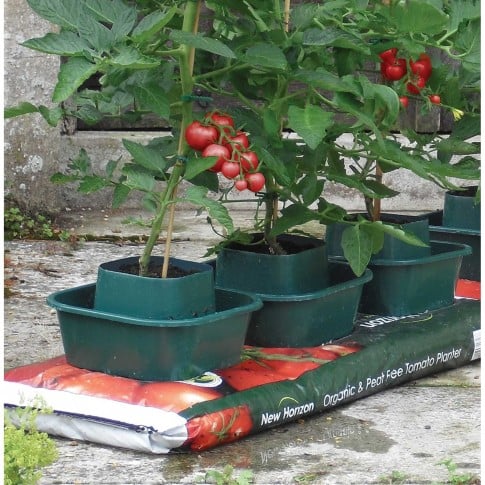
Modern ring culture with growbags means planting into a bottomless pot or growing ring positioned over an opening in the bag. The ring adds compost depth and gives you a clearer place to water and feed. Roots can grow down into the bag below. It is a useful option for greenhouse tomatoes, but it does not turn a growbag into a self-watering system or make plants disease-proof.
Key takeaways
- Use a bottomless pot, not a normal pot resting on an unopened bag.
- Make sure the compost in the ring touches the compost underneath.
- Give surplus water a way out; do not leave the bag sitting in a flooded tray.
- Water the young rootball while it establishes, then check both growing zones.
- Purpose-made double-ring pots have different watering arrangements. Follow their own instructions.
Expert tip
The easy mistake is leaving plastic between the two layers of compost. The ring then behaves like a shallow pot without a useful route for roots. Check the opening and the contact before planting, while you can still see them.
What is ring culture, and how is the growbag version different?
Traditional ring culture uses bottomless pots on a moist, porous aggregate bed. The roots grow out of the pots into that material.
The growbag version replaces the prepared aggregate bed with a bag of growing compost. You gain some planting depth without rebuilding the greenhouse floor. The bag remains part of the rooting space, not simply a tank of water.
Traditional ring culture uses an aggregate bed. That setup should not be confused with placing rings on growbags. This article covers the latter. For ordinary growbag planting without rings, use our growbag setup guide.
What do you need for growbag ring culture?
You need suitable growbags, clean bottomless pots or growing rings, extra potting compost and a planned support for each plant.
Choose rings that fit the bag's planting positions without crowding neighbouring plants. A larger ring is useful only if the whole arrangement leaves sufficient compost, drainage and growing space. Check the bag's crop and spacing instructions rather than adding more plants because you have extra pots.
A purpose-made ring avoids cutting a pot. If reusing one, make sure it is clean, sturdy and has a safe, smooth open base. Do not use brittle plastic that is likely to split.
Set everything in its final position before watering it thoroughly. A wet growbag is awkward to move, especially once tall plants are attached to supports.
How do you set up a bottomless pot on a growbag?
Build the connection between the two compost layers first. The plant's roots need a clear route downwards.
- Prepare the bag. Loosen and distribute the compost, then lay the bag flat in its growing position.
- Check drainage. Follow the bag's instructions for drainage holes. Any supporting tray must allow surplus water to escape.
- Mark the planting opening. Position the ring at the intended planting station and open the bag top beneath it.
- Seat the ring. Press it gently into place so it is stable and the compost connects with the bag below.
- Fill and plant. Add suitable compost, position the young tomato and firm gently. Leave some space below the rim for watering.
- Water through. Moisten the rootball and surrounding compost slowly, checking that excess water drains away.
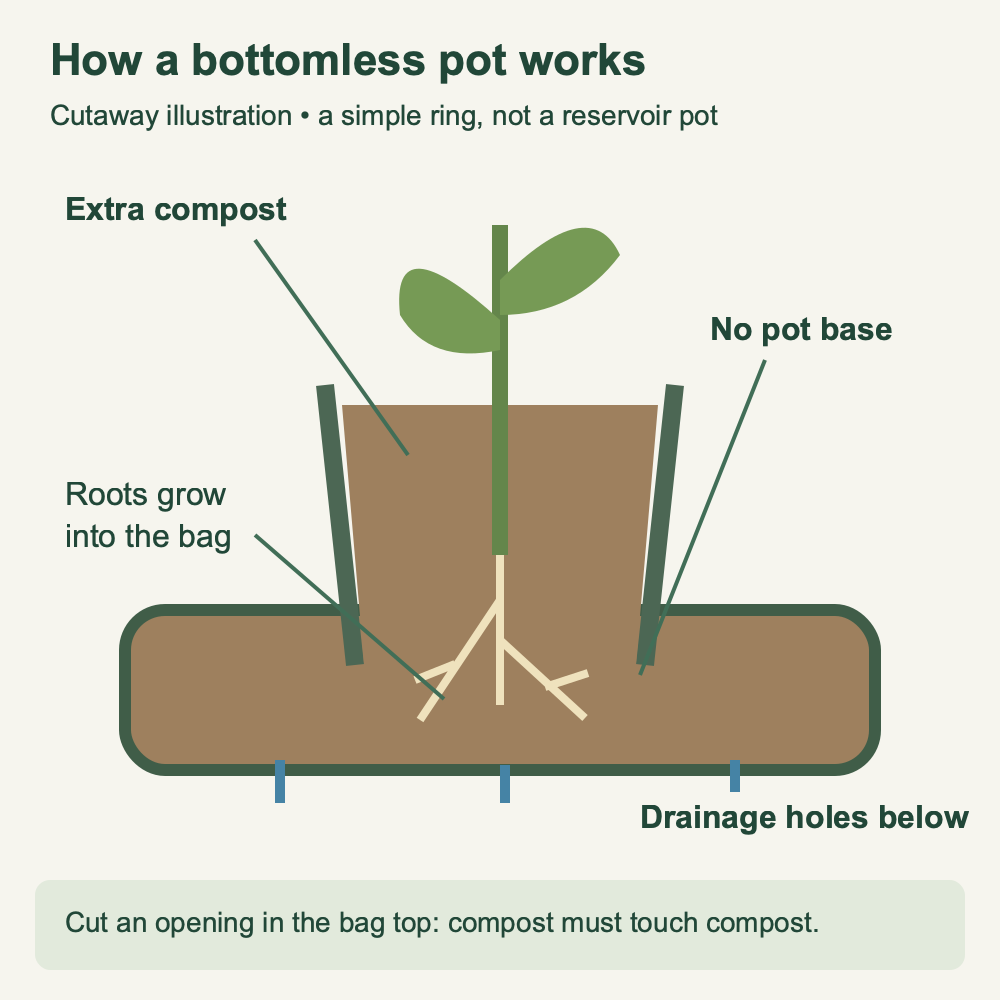
Keep plant labels where you can read them once the foliage fills out. Leave a clear route for the watering can too. Small access problems at planting time become much bigger when tomatoes reach their supports.
Where should you water and feed?
Start by watering the compost around the young rootball. Roots cannot immediately collect water from every part of a large bag.
As the plant establishes, check the growbag as well as the ring. A damp patch on top does not prove all the compost is moist. Water slowly so it soaks in, and allow the excess to escape.
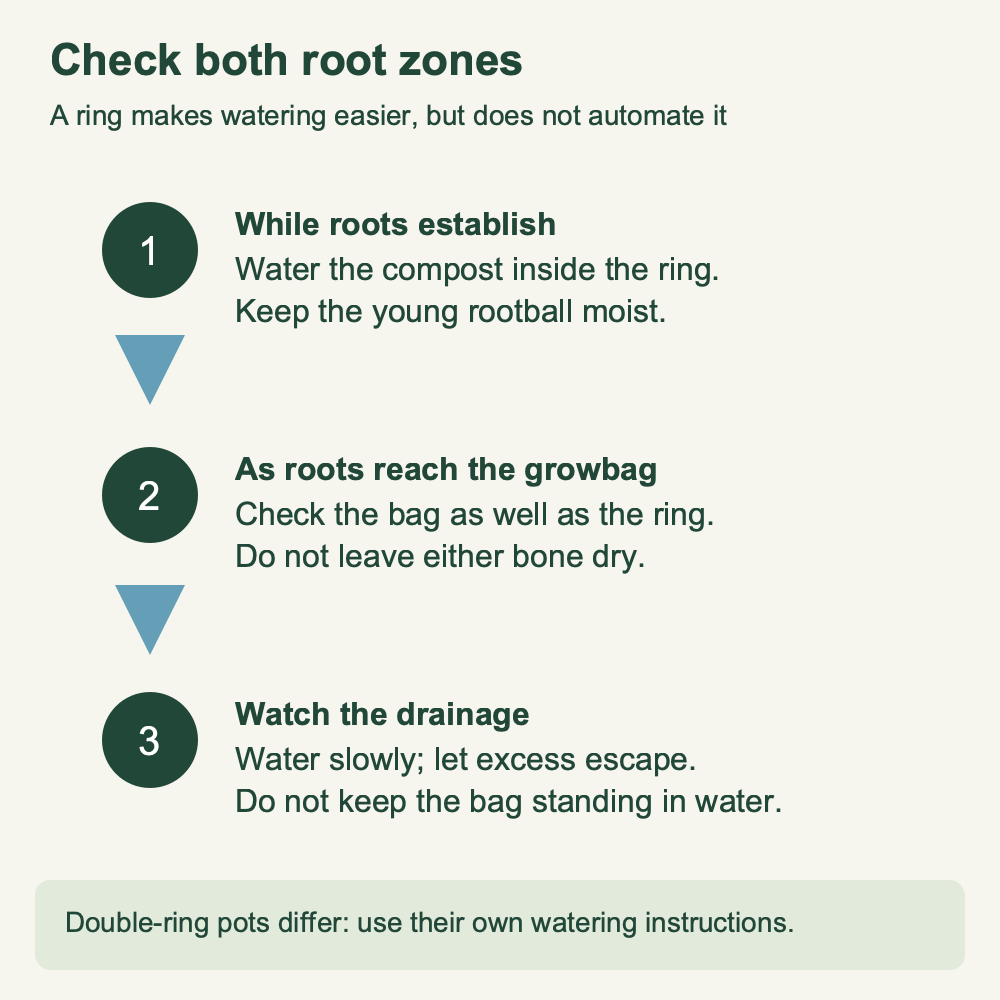
Feed tomatoes with a suitable product at the label's concentration and interval. Fresh compost may already contain fertiliser, so check the bag before adding more. Once flowering and fruiting begin, use the tomato feed's instructions rather than inventing a stronger mix.
Do not let the ring dry out because you have watered the bag, or keep flooding the bag to compensate for a dry ring. Our watering and irrigation guide explains how to check delivery where roots are growing.
Are double-ring growbag pots the same thing?
They use a related idea, but their watering channels are designed into the product. A central planting area may be surrounded by a watering reservoir or outer channel.
Do not assume every design takes plain water outside and feed inside. Follow that product's directions. For example, Garland's Plant Halos use an outer channel with watering spikes, alongside a deeper central planting area.
A reservoir that drains over several hours is not a holiday-watering guarantee. Weather, plant size and the compost affect how long it lasts. Test any arrangement while you are at home and arrange someone to check plants when you are away.
How should you support tomatoes growing in rings?
Plan the support separately from the extra compost. A ring does not automatically anchor a full-height cordon tomato.
Use a suitable cane arrangement or a properly supported string system. Some purpose-made rings include cane sockets; follow their instructions. For frame-mounted supports, check compatibility and loading with the greenhouse supplier.
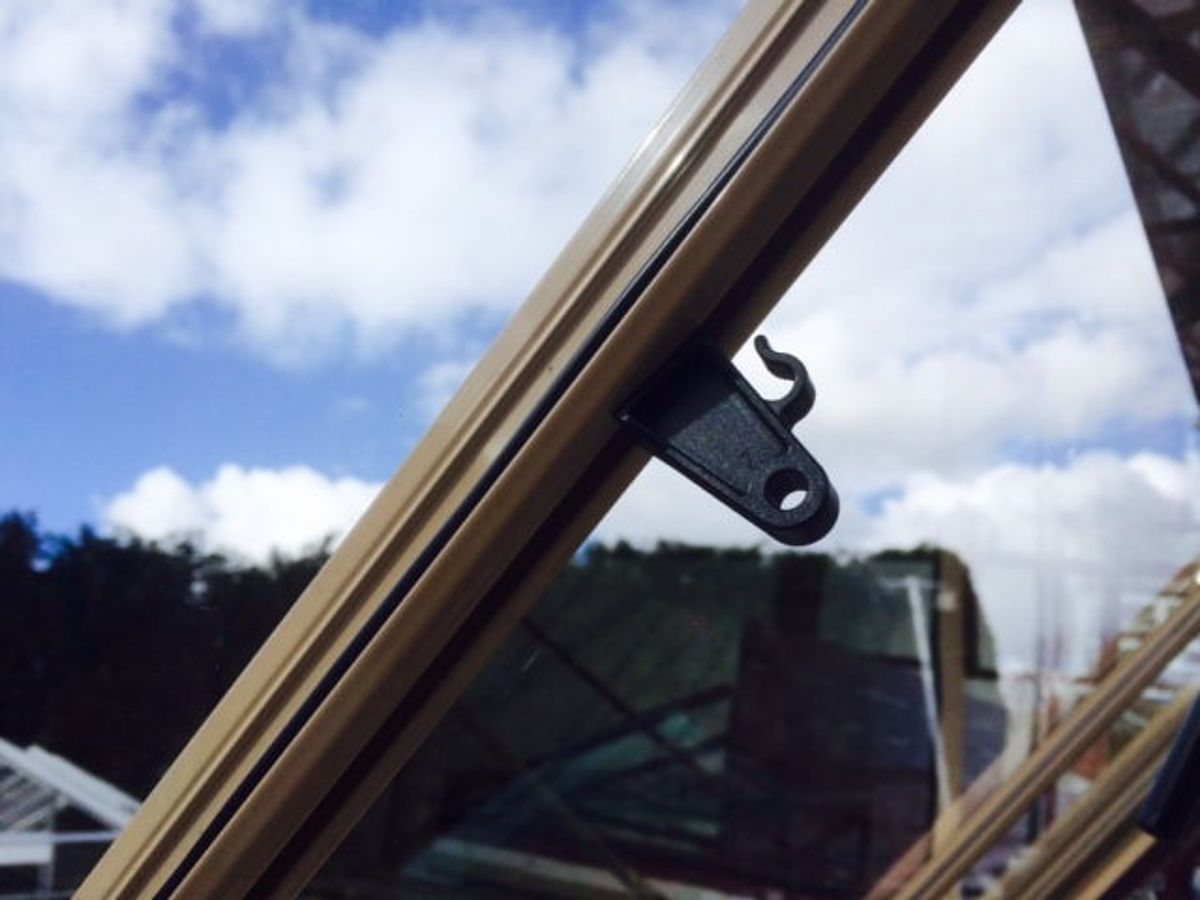
Current price: £28. Check the product page for the available options and fitting details.
These Elite tying eyes are a frame-fitting example, not universal fittings for every greenhouse. They do not make an unchecked roof member suitable for heavy loads. Our tomato support guide covers the wider arrangement. You can compare appropriate fittings in greenhouse accessories.
What can go wrong with growbag ring culture?
The common problems are poor root contact, uneven watering, overcrowding and inadequate support. Extra compost cannot compensate for all of those.
If the plant wilts, feel the compost before watering again. Check whether the ring has shifted, whether the bag is draining and whether roots can reach the lower layer. A waterlogged bag needs drainage, not another can of water.
Ring culture does not prevent every pest or disease. Inspect plants and keep the growing area tidy. Use our tomato troubleshooting guide to identify symptoms instead of assuming every problem comes from feeding.
What should you do at the end of the season?
Remove spent plants and clean reusable rings, supports and trays before storage. Check brittle plastic and worn ties before putting them away.
Healthy spent compost can have other uses around the garden, but it should not be treated as fresh potting compost. If plants showed disease, identify the problem before deciding how to dispose of the roots and compost. Do not spread affected material straight around other susceptible plants.
Matt's tip: try a small comparison
If ordinary growbag planting already works for you, there is no need to change every plant. Try a ring on part of your setup and see whether the extra depth makes watering easier. Keep the method that suits your routine.
Frequently asked questions
Can I use an ordinary pot for growbag ring culture?
Only if its base is open and the pot remains safe. Roots must reach the growbag compost below. A normal pot standing on an unopened bag will not provide that connection.
Does ring culture make a growbag self-watering?
No, you still need to check the plant and compost. Purpose-made reservoirs can slow water delivery, but they do not guarantee enough water for a holiday.
Where do I water a growbag with a bottomless pot?
Water the young rootball first, then check both compost layers. As roots develop, keep the ring and growbag appropriately moist. Follow separate instructions for purpose-made double-ring pots.
Does ring culture prevent tomato diseases?
No, it does not make tomatoes disease-proof. Good drainage, clean equipment and regular inspection still matter. Identify any disease before deciding how to reuse or dispose of affected compost.